



Tests conducted by world cycling’s governing body, the UCI, are unable to detect some forms of hidden motors, according to a media investigation.
TV channel France 2 and Italian newspaper La Corriere della Sera which have both previously collaborated in investigating so-called ‘technological fraud’ partnered with German broadcaster ARD for their latest report.
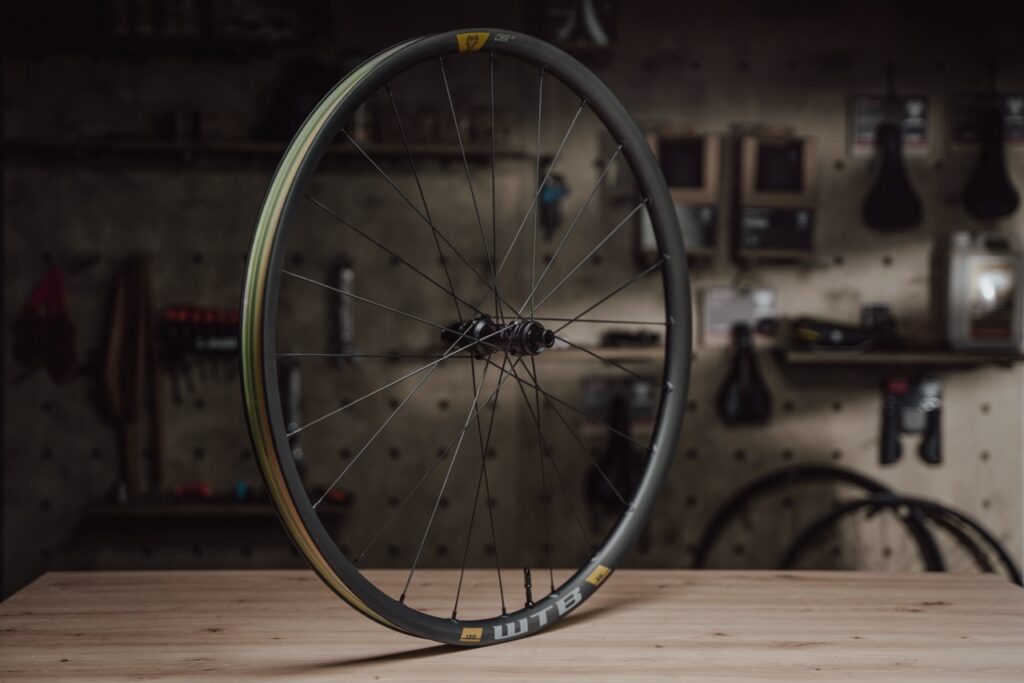
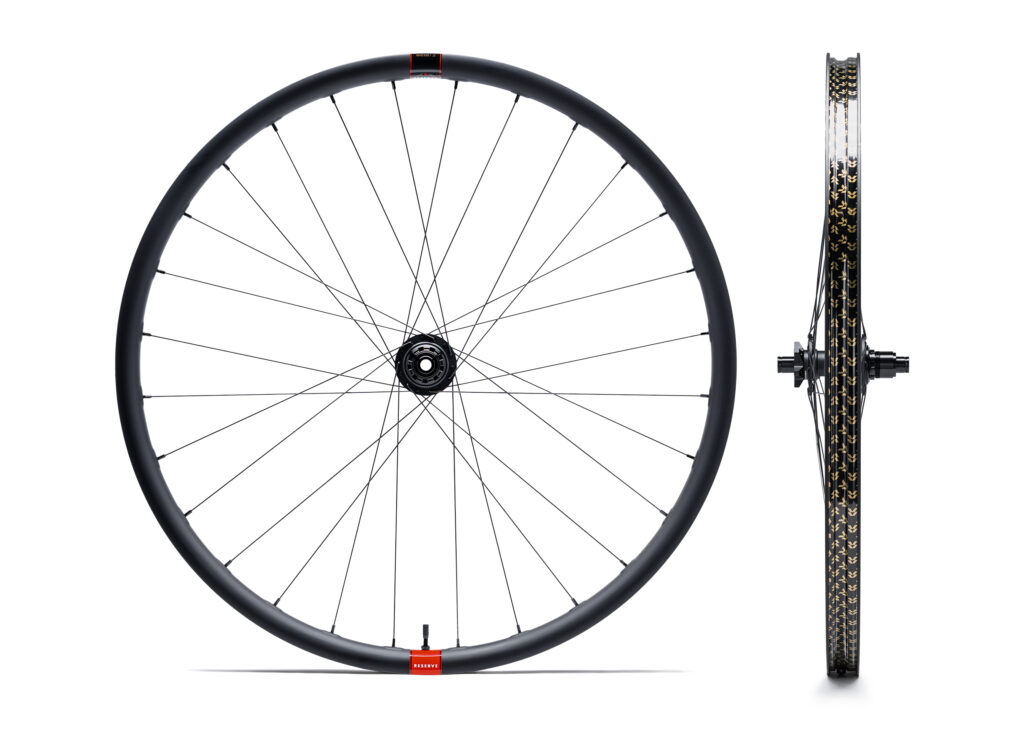
Their report claims that the UCI’s current method of trying to detect hidden motors, which involves a bespoke iPad app that seeks to detect electromagnetic waves, cannot find the latest type of concealed motors, which are believed to be hidden within rear wheel rims.
The only instance of a hidden motor being found in competition happened at the UCI Cyclo-cross World Championships in Zolder, Belgium in 2016.
The motor was found in a bike belonging to the Belgian under-23 rider, Femke Van Den Driessche, but was an older type that was housed in the seat tube.
In a statement, the UCI said that it had carried out more than 40,000 tests for hidden motors in the past two years.
“The main testing method currently used by the UCI, magnetic resistance scanning, has proved to be highly effective both in tests and in actual use,” it said.
“Like any testing equipment, our scanners must be used correctly to be effective,” the UCI continued.
“We provide extensive training to our operators on how to use the equipment and how to interpret the results. It is clear that the people using our device in Sunday’s Stade 2 report had had no training.
“We have, immediately following the report, offered to meet with them to demonstrate how to use our scanners effectively.”
The governing body added: “Thermal imaging has been used on a number of occasions and can be useful, but is limited as it would only detect a motor when in use, or shortly after use when a motor is warm.
“We also occasionally use X-ray, but this is relatively slow, requires a great deal of space to ensure public safety, and is subject to widely varying legislation from country to country.”
The report comes two weeks before the UCI World Congress in Norway votes on whether to give Brian Cookson a second term as president or to replace him with France’s David Lappartient, who has made fighting motor doping a key electoral promise.
Lappartient, meanwhile, has called for preventative checks on team bikes which would be marked to show they had been checked.
“It’s not a witch hunt,” he said; “It’s the certainty that the system is safeguarded from the most underhand kind of doping.”













10 thoughts on “UCI tests can’t detect some hidden motors, claims report”
Lost credibility once it came
Lost credibility once it came from 2 TV stations.
Give the UCI the right to
Give the UCI the right to impound,dismantle and inspect any bicycle used in a race and make the penalty for being caught something draconian.
E.g rider banned for life on first offence. Team banned from competition for 5 seasons. Team director banned from involvement with any cycling team in any capacity for 5 years. Likewise team mechanic responsible for the machine.
OK, I’m commentating without
OK, I’m commentating without seeing the article…
But…
“cannot find the latest type of concealed motors, which are believed to be hidden within rear wheel rims”
Does this mean that said media companies had such a bike to test with the scanner?? Beacuse rather than mess about with a scanner – if they really cared about doing something positive about technological fraud, it would be really useful if the simply showed the flipping bike… All this ‘wink, wink’ business does sound a bit crackpot conspiracy. An actual working ‘wheel motor’ bike (indistinguishable from a normal racing bike) would be the ‘smoking gun’ this story needs for credibility.
“Lappartient, meanwhile, has
“Lappartient, meanwhile, has called for preventative checks on team bikes which would be marked to show they had been checked.”
at last a foolproof system! /facepalm
Marking the bikes when the
Marking the bikes when the issue is the wheels? Because no one has ever swapped wheels on a bike in a race?
Or will riders only be allowed to get a spare wheel from neutral service, in the event of a puncture?
Could it be that the wheel
Could it be that the wheel based motor system is undetectable because they don’t exist? Has anyone anywhere demonstrated such a system working? From my mid-level scientific/engineering background I have to say such a system would be, imho, far more complex than the hidden seattube motors. You’d require special wheel rims and a special frame. And to be honest I’d imagine that if we assume the rim contains permanent magnets and the frame the electrical magnets to drive the wheel, as the distance from the stator and rotor is relatively large you’d need to generate a pretty massive electromagnetic field to get drive. This would be 1. Pretty inefficient, 2. Such a big magnetic field that probably you could detect it with a compass/piece of steel on a string. Demonstrate one to me, with a rider on board and I’ll consider detection needs to be investigated.
Corollary; I’m by no means an expert but pretty good understanding of basic physics plus 40 years working in a technical/engineering background informs my POV.
1961BikiE wrote:
You don’t necessarily need magnets in a wheel to make a working motor (makes it much easier though).
Using an aluminium wheel or aluminium embedded in carbon a wheel, a shaded pole motor can be made surprisingly easy. The chain stays could be used as a location for the coils with the wheel acting as a the disc/rotor
As carbon fibre is a fantastic conductor a coil could theoretically be made from carbon fibre, thus having no magnetic signature when not in use.
Like you said, I doubt it would be very efficient. The physics works in theory at least, whether it works in practice (in a bicycle) is yet to be seen – at least publically…
1961BikiE wrote:
Pah, what would you know! French TV says it’s true, so there! Team Sky
tricheurs etc.
1961BikiE wrote:
Yes, it’s been demonstrated. The problem is that the frame has to wrap around the wheel to a very obvious extent to get good power transfer…
Don’t the UCI have post-race
Don’t the UCI have post-race random bike dismantling/checking, like in motorcycle racing, where even an engine might be stripped to check it’s within the class rules?
If not, why not?