


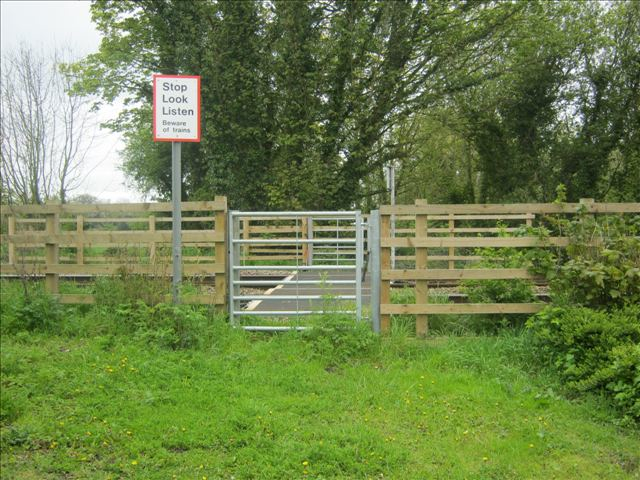

The whole of the English countryside should be opened up to cyclists and others in ann attempt to benefit rural tourism and health, according to the campaign group Cycling UK.
New laws should be passed to bring the country in line with Scotland, say the charity, where responsible access laws, off-road and leisure cycle tourism is estimated by Transform Scotland to contribute between £236.2m and £358m per year to the rural economy.
In a response to the House of Commons Environment, Food and Rural Affairs (EFRA) Committee inquiry “Rural Tourism in England”, Cycling UK explained rural tourism, currently valued at £17bn a year in England, would benefit significantly as a result.
Responsible access laws mean walkers, cyclists and horse riders can access the countryside in all areas unless explicitly told they cannot. In England and Wales, entry to the countryside works to a “presumed trespass” model, restricting rights of way to a limited network, such as public footpaths and bridleways.
Cycling UK argues responsible access laws would not just benefit tourism and the leisure industry, but would also enhance the opportunities for motor traffic-free cycling, particularly for commuters and school children.
Under current laws cyclists have a right to use just 22% of England’s rights of way network.
Whether a route is a footpath, a bridleway or a byway is generally determined by its history of past usage, and not at all by its suitability. This can mean cycling may be permitted on an unrideable muddy bridleway but not on a tarmac-surfaced footpath, even where it is used privately by motor vehicles.
The EFRA Committee reports that while England has seen a rise in tourism spend in the past year from both domestic and international visitors, the majority of this is in the urban environment, with over 50% of international spend in London.
Visit England figures show that in 2014 just 18% of domestic overnight trips were taken to rural areas, down from 22% in 2012.
Roger Geffen MBE, Cycling UK’s Director of Policy, said: “Despite England enjoying a tourism boom, as ever the rural economy is missing out. This EFRA inquiry is right to look at how we can change this, and facilitating cycle tourism is clearly part of a solution which will benefit tourists and locals alike.
“The best way to make cycling easier and more attractive in our countryside is to rethink our rights of way laws. They’re archaic and confusing even to the experts. England should copy Scotland and introduce responsible access laws.
“We’ve seen in Scotland how off-road cycling can thrive in harmony with all other outdoor users while contributing greatly to the local economy. Cycling UK now wants to see England and Wales enjoy the same benefits, which will mean more jobs, less congestion and a greater appreciation of our countryside.”
Cycling UK’s response also includes the following recommendations:
- Bodies responsible for promoting cycle tourism should learn from the success of rural traffic-free recreational cycle routes, and how these routes can promote the tourist economy.
- Extending tax breaks currently available for rural businesses (such as village pubs and petrol stations) to rural cafés and other enterprises which support rural tourism. This could include those selling or hiring out bicycles, adapted cycles (which can be used by people of all abilities) and electrically assisted pedal cycles.
- Rural tourism can and should be seen as complementary to traditional land uses and rural industries, rather than perceived as working against them.
- Where a National Park covers parts of several highway authorities, they should consider delegating their highway powers to the National Park authority, enabling it to manage the provision of parking facilities, public transport and sustainable transport planning within the park.
Just last year we reported how cyclists in Scotland will be able to enjoy a radical extension of the country’s walking and cycle routes thanks to a £25 million cash injection that will create 500 miles of new routes over the next five years.
It’s all part of ambitious plans by Scottish Natural Heritage, Sustrans and Scottish Canals to get Scotland more active, and will see 30 new long distance routes created and numerous others updated and resurfaced.
The Dundee Green Circular, along with routes including Crook of Devon and Kinross, Lochearnhead to Crieff and a new Fife Pilgrim Way from Culross and North Queensferry to St Andrews will be among the first to be looked at.
Others include a Great Trossachs Path — between Callander and Inversnaid — a Hebridean Way on Harris and Lewis and the full-length “Pilgrim’s Way” across Scotland between St Andrews and Iona.
All the cycle ways will conform to high European-style standards, and will be funded by a mix of public and private partnership.


















10 thoughts on “England ‘missing out on cycle tourism due to trespass laws’”
When I used to have a
When I used to have a mountain bike, I used to ride over the footpaths into town and never got told off or had problems with pedestrians.They have now turned the footpath into a gravelly cycle track, which isn’t as good a surface as the hard compacted mud (which being in Suffolk, is usually dry) and people keep parking on the short Tarmac section to walk the dog! It’s all going to be built over soon, and a few more fields too, maybe they will put in a Tarmac path, but I won’t get my hopes up.
The only bridleways and byways nearby are cut up by off-roaders (almost unwalkable in the winter) or are short dead-ends…
If they change the law, I reckon I will buy an MTB again, but until then I have to chance it with townie drivers on narrow lanes or extending dog leads on the cycletrack 🙁
But this is England: Get Off
But this is England: Get Off My Land!
Please don’t tell the Anti
Please don’t tell the Anti-cycling mob in London that people cycle in the hills of Scotland in the beautiful fresh air and scenery, or they’llbe booking shooting weekends to try to bag a MAMIL or two .. If they’re not allowed to kill a cyclist with their car without getting a slap on the wrist, and a £5 fine, maybe shooting one is a freebie !
I spent many a happpy day in Scotland as a youngster wandering the fields (edges if crops planted) and cycling through the stubble after the grain was harvested . . never a problem, although stubble hurts if you fall on it !!!!!
Just back from a mountain
Just back from a mountain bike run here in Scotland. On a ‘private’ road in the back of beyond, and met the landowner walking his dogs. Bid each other good morning, he suggested a good loop I should do through the hills, and even told me the time one of the locals does it in, as a target. Then explained what time stalking started today, and fine to do as I pleased until then.
To me that’s as it should be . For sure not all encounters have been like that, but getting better and better. This morning I was on four different hills and minor tracks, which it sounds would be impossible to try in England, which is a real shame.
It’ll never happen in England
It’ll never happen in England, not in the south at least. Too wealthy land owners with no incentive to free access, if they don’t need the money why
shouldwould they help other businessess?At least we, in Wales, have
At least we, in Wales, have consulted.
https://consultations.gov.wales/consultations/improving-opportunities-access-outdoors-responsible-recreation
Bet the Ramblers hate the
Bet the Ramblers hate the idea, and that alone makes it worth doing.
Ramblers response here:
Ramblers response here:
http://www.ramblers.org.uk/news/news/2016/july/british-cycling-calls-for-increased-access-for-cyclists.aspx
looks like dragging their feet a bit on moving to the support camp – comments below may suggest grass roots very opposed
my only real reason for posting is that Cycling UK really need to study the Ramblers and their success and political influence at national and local level – every time I look at a very fragmented and totally inward looking bunch of cycling (dis)organisations and lack of any clear vision and limited local and zero national input I feel despair
Dunno what I think of this.
Dunno what I think of this. Seems like the devil is in the detail. Which paths, on what routes?
In general, I don’t like the idea of accomodating cycling by taking anything away from walkers. There’s plenty of space still to be taken from motorists.
Set against that, it will annoy the tiresome Janet Street Porter, and that’s a plus.
FluffyKittenofTindalos wrote:
well put I’d always run with that