



Cycle tourism brings £650 million to the UK economy each year, according to research from sustainable transport charity Sustrans.
According to the charity people cycling on the National Cycle Network (NCN) spent, on average, £7 per day, while it estimates the network itself directly supports the equivalent of 15,262 full-time jobs, largely in the food and drink sector.
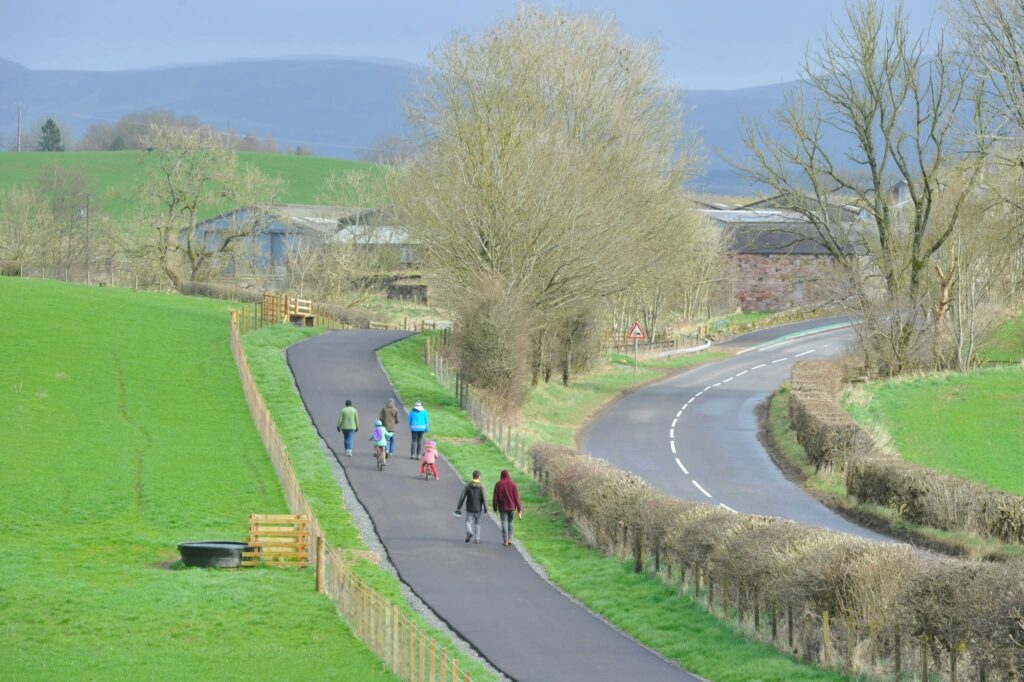
The figures have been released to coincide with the 20th anniversary of the NCN, which now extends 14,000 miles across the UK.
Among those who benefit from the network are the Diglis Hotel in Worcester which, Sustrans says, benefits from a new riverside loop developed with Worcester City Council and Worcestershire County Council.
Steve Pirone the General Manager of the Diglis House Hotel in Worcester, said: “The riverside is a very important part of the tourism industry in Worcester but until the bridge was built there was no way of getting from one side to the other.
"As a result of the bridge being built and the route being part of the National Cycle Network we have experienced a real benefit and I’m sure other businesses near the route have seen an increase in business too. There’s been at least a 20% increase in our bar and restaurant sales and we also think the new route will increase our hotel figures in the future, as it brings more walkers and cyclists to the area.”
Jason Torrance, Policy and Partnerships Director at Sustrans, said: “Since the National Cycle Network was first developed, usage has increased year-on-year, with people using it for all kinds of reasons, from using it to get to work and school as well as going on day trips and holidays.
“The economic benefits of quality walking and cycling routes are significant, both from tourism but also day to day, by reducing congestion, pollution and by enabling people to improve their health.
“The National Cycle Network has identified the potential for changing people’s everyday travel. If as a society we really want more people to get fitter and healthier by walking and cycling then we need to make it more appealing and a big part of that is by making roads safer.
"To enable this to happen, the government must provide consistent long-term funding for cycling and walking to be at least 5% of transport spending, and a Cycling and Walking Investment Strategy that contains a long-term vision and targets, in the same way that already exists for our roads and railways.”













9 thoughts on “Cycling boosts UK economy to tune of £650m per year, estimates charity”
Nice pic of Swansea bay, i
Nice pic of Swansea bay, i was visiting the area last weekend on the bike. Lovely place
The NCN is massively flawed
The NCN is massively flawed
You go onto the Sustrans website and the maps are awful & there’s no information on what types of bikes are usable on each route. They have detailed paper maps that are very expensive for what they are – and not available in digital format.
Then you get out on the routes and you realise that the transitions between different routes are badly handled, the route signage is too small and unclear – and in some cases missing completely.
Worst of all you just don’t know if a route is going to be suitable for a road bike so you end up suddenly having to find on-road alternatives where the route surface goes crap.
If you’re on a recumbent, hand cycle, kiddie attachment, trailer or cargo bike, forget it. The gates at the start and end of each section will mean you’ve got no chance of getting your bike onto it. For regular road and MTBs be bloody careful of your rear mech whilst you’re squeezing through
The NCN could potentially such a valuable resource. Segregated infra is a wonderful thing when done well – but it’s so poorly executed that you have to wonder why Sustrans are considered capable of designing and running it.
Quote:The NCN is massively
I agree with you, there are major flaws, including the surfaces, the signage in some places, the barriers, and – I would say – narrow paths which are shared use with pedestrians.
When I’m on a shared use path, I share it considerately, and never complain. However, I have seen in the Netherlands that there are separate paths for pedestrians and cyclists, and that is logical – we don’t go at the same speed when walking and cycling.
Having said all that, Sustrans have done something, which is definitely better than nothing. Some paths are very good. Really, national cycling infrastructure should be funded and organised by government.
HarrogateSpa wrote:…
+1 (and I have been a Sustrans supporter for a long time now in the place of an almost big fat zero interest from local and national governments)
C’mon Jezza, what you going to do about this? Dave and his chums don’t seem to give a monkeys.
Ad Hynkel wrote:HarrogateSpa
As a Sustrans supporter, are you happy with the quality of the NCN routes?
If not, what would you do to change the organisation that creates them?
Just imagine what it would be
Just imagine what it would be worth if large sections of it weren’t made of mud and horse poo.
Have to agree that Sustrans
Have to agree that Sustrans routes are flawed. I rode the Devon coast to coast (NCN 27) on my Road bike this year, much of it was really good well surfaced segregated paths, and then I was suddenly directed down a steep dirt track that even a hardened mountain biker would struggle on. Ridiculous!
Sustrans stuff that works
Sustrans stuff that works well is quite fun, I’ve used a few of the old Beeching railways for rides with kids or just myself.
I suspect far more dog walker get use than cyclists on those types of routes at least on the routes I’ve used so far.
The name is a bit misleading since it’s mostly leisure riding than for transport, and clearly since they can’t compulsorily purchase, if someone doesn’t want to sell and isn’t in a position that they have to sell at some point. then they have to have work arounds.
The headline is misleading,
The headline is misleading, so the figure seems small, but the article is about tourism only. There’s no discussion of any other contribution cycling makes to the economy e.g. NHS, buying bikes and bike parts, reduced congestion etc.