


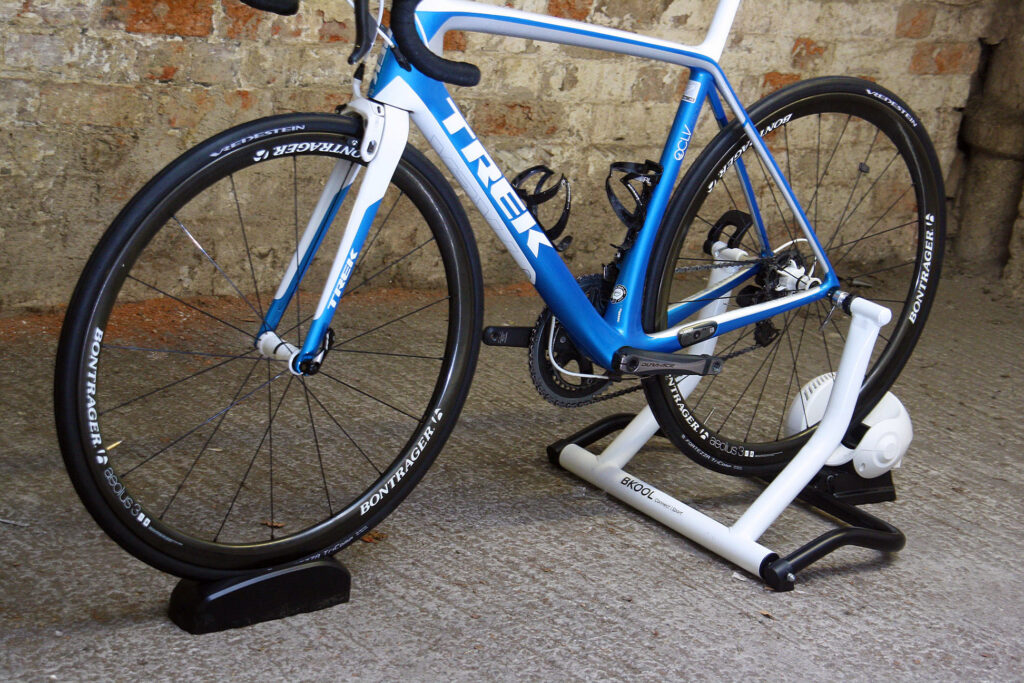

You’ve probably always looked upon the turbo trainer as a source of pain, but apparently it can also alleviate it. That’s the claim being made by a doctor in the US who is recommending indoor cycling as a means of treating migraines.
There is currently no cure for migraines, but Fox 21 reports how Dr Carolyn Bernstein believes that exercise can help alleviate the symptoms. “When we exercise, a lot of the time we feel better afterwards. We get all kinds of neurotransmitters going in our brain that can decrease pain levels,” she explains.
Bernstein is a migraine sufferer herself and favours indoor cycling as a form of exercise, partly because it is low impact. There is evidence to support her view as well. A 2008 study carried out at a headache clinic in Sweden put 26 migraine sufferers through a 12-week indoor cycling training regime and gauged the effectiveness.
The programme was to train three times a week with VO2 max, migraine status, side effects and quality of life all monitored throughout. As you might imagine, VO2 max improved over the course of the 12-week period – but so did quality of life.
At no point during the study period did migraine status worsen, while the last month of treatment saw a significant decrease in the number of migraine attacks, the number of days with migraine per month, headache intensity and the amount of headache medication used. There was one migraine attack which began shortly after the onset of training, but no other side effects were reported.
Dr Emma Varkey, co-author of the study, commented:
“While the optimal amount of exercise for patients with migraine remains unknown, our evaluated program can now be tested further and compared to pharmacological and non-pharmacological treatments to see if exercise can prevent migraine.”
The study claimed that individuals who regularly suffer headaches and migraines are typically less physically active than those who don’t and may even consciously avoid exercise, citing it as a trigger. The effectiveness of indoor cycle training as a treatment may therefore hinge on the frequency, intensity and duration of sessions, so bear this in mind before sentencing yourself to a punishing new routine of hard intervals three times a week.




















9 thoughts on “Do you suffer migraines? At least one doctor recommends a session on the turbo trainer”
I’m on the trainer alot, have
I’m on the trainer alot, have been for the last 5 months, Migraines still come weekly and just as bad as ever, so I think I’ll take this with a bag, rather than a pinch of salt
“I’m on the trainer alot,
“I’m on the trainer alot, have been for the last 5 months, Migraines still come weekly and just as bad as ever, so I think I’ll take this with a bag, rather than a pinch of salt”
That might help – I think mine come on more often when I’m salt-depleted after riding in hot weather etc.
Over sleeping triggers my
Over sleeping triggers my migraines mostly
Over sleeping triggers my
Over sleeping triggers my migraines too
Strangely if I eat too much
Strangely if I eat too much garlic i get full blown migraine with vomiting and visual disturbance other things like stress trigger it too but less so. Frustrating as I have avoided garlic for years now and I love eating it. I don’t know if it coincidence but since January I have been following a Trainer road programe with lots of VO2 max training. I have had a big reduction over that period with no change to diet or stress levels. Perhaps itis the VO2 max training which has an affect?
United States of Sweden?
United States of Sweden?
mine come after 3 cups of
mine come after 3 cups of coffee. so i blame myself.
“The study claimed that
“The study claimed that individuals who regularly suffer headaches and migraines are typically less physically active than those who don’t and may even consciously avoid exercise, citing it as a trigger.”
I get a severe migraine every three – four months on average. I commute 120 miles a week in winter and add Audax rides at weekends in the summer. I’m not ‘less’ active and don’t cite it as a trigger. I wonder where this ‘science’ comes from sometimes.
I’m carrying that same bag of salt and feel for the poster above who states he gets them weekly.
Lack of sleep and low sugar
Lack of sleep and low sugar levels seem to cause mine, both of which are generally due to getting up early then beasting myself in the gym…