



Up until now, there has always been one safe haven for rim brake bikes…hill climbing, but has Andrew Feather’s win at the 2023 National Hill Climb on his new disc brake bike put an end to this? We’ve asked him the big questions and drilled down into his component choices to find out!

Over the past decade or so, many road bikes have gone from externally cabled, lightweight, round-tubed designs to much bulkier, aero steeds which now nearly always have disc brakes. Whether you love them, hate them, or have no real strong opinion on disc brakes, it is undeniably getting rather tricky to buy a new bike with rim brakes, because a number of the top bike brands no longer offer them.
However, as cyclocross bikes, gravel bikes, the aforementioned road bikes and even time trial bikes have turned their back on the trusty rim brake, there has, up until now at least, always been one genre of cycling where rim brakes have continued to rule supreme – hill climbing!
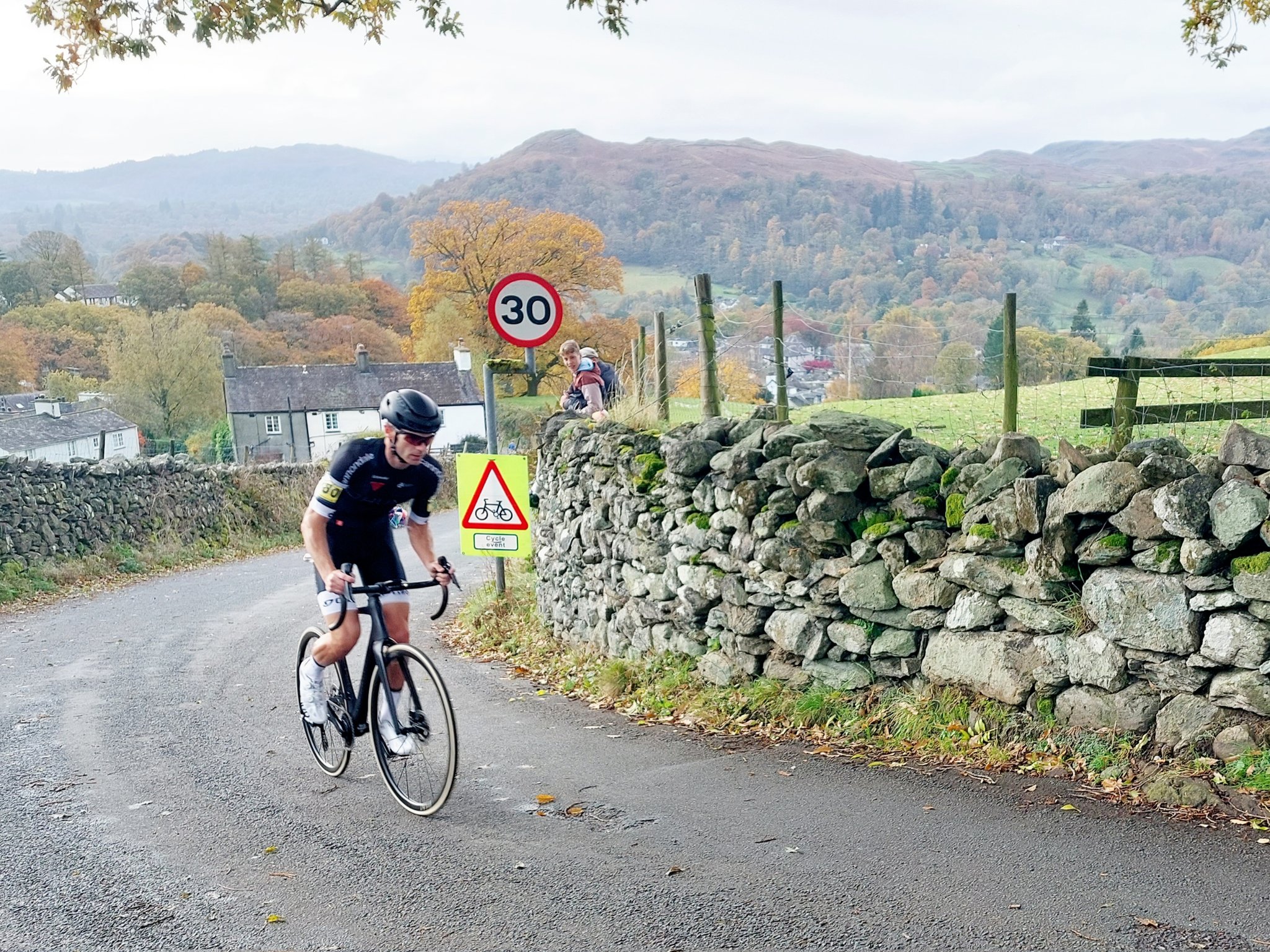
We were slightly surprised, then, when four-time British National Hill Climb champ Andrew Feather rocked up on his new disc brake bike which he has since ridden to victory at this year’s event.
Feather completed the Struggle in an impressive 11 minutes and 48 seconds, outriding Ed Laverack in second place by a notable 18-second margin and leaving Paddy Clark in third a full 1 minute and 17 seconds behind.
> The stuff they never tell you about rim brakes
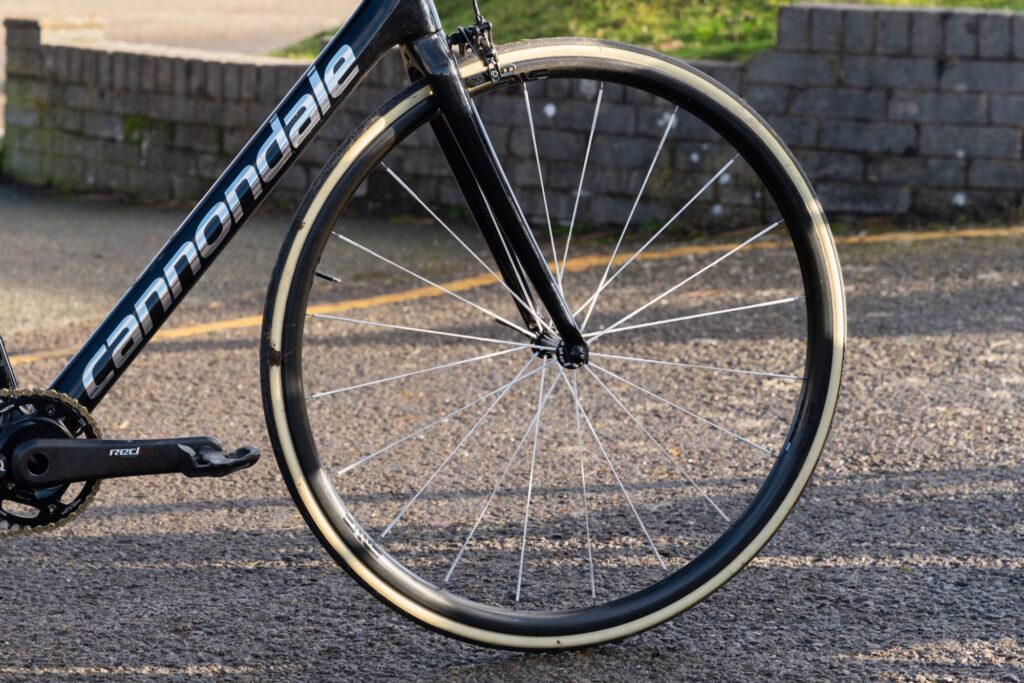
In a hill climb – the quintessentially British racing format which sees competitors aim to get from the bottom to the top of a hill in as little time as possible – it’s incredibly rare that you would ever need to even touch your brakes, and it’s fair to say that they’re only on hill climb bikes to satisfy the regulations and keep the commissaires happy.
Therefore, when competitive hill climbers build custom light road bikes to drop grams and give themselves every advantage, they tend to always go for the most gravity-defying option. Up until now, common knowledge was that such a gravity-defying machine would have to be built around rim brakes to keep things as light as possible.
> The lightest road bike frames and components in the world
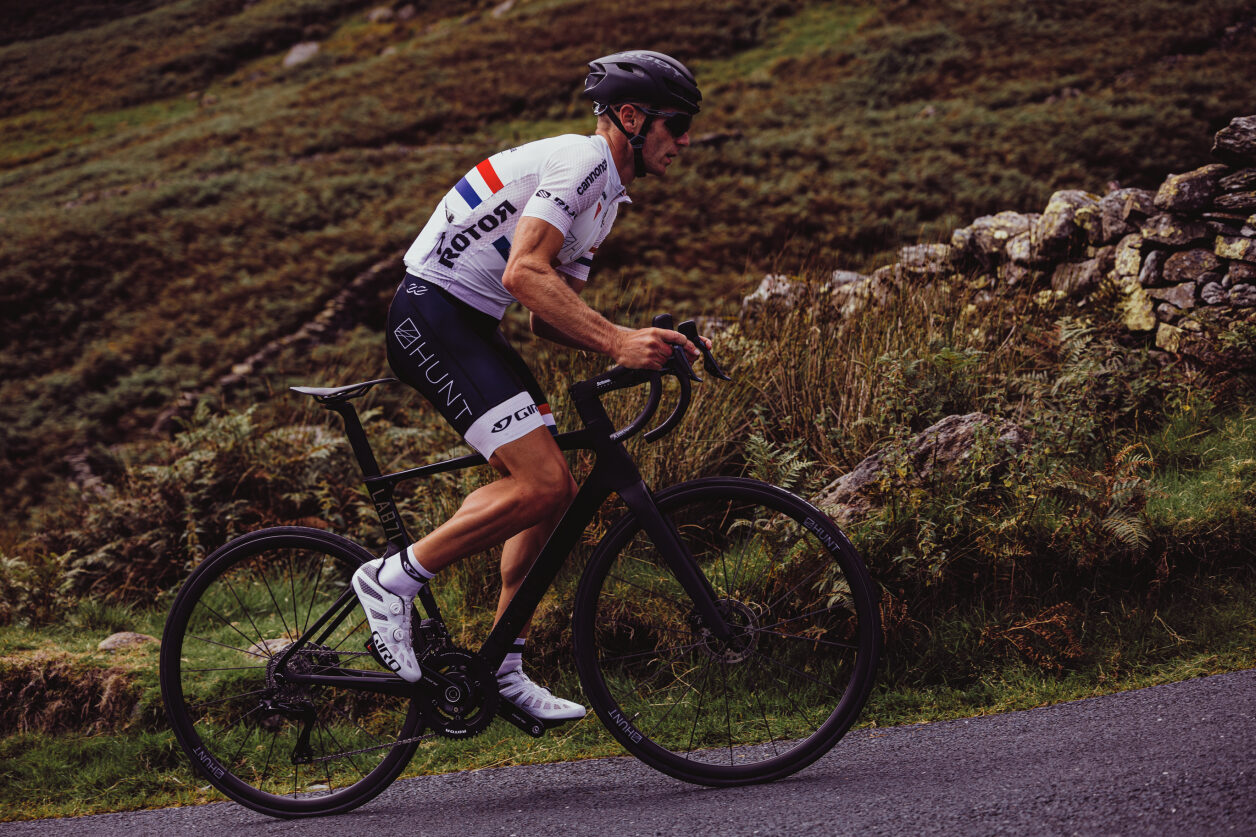
The last time we caught up with the very appropriately-named hill climb expert, Feather had just won the 2022 hill climb champs aboard a custom Cannondale SuperSix Evo Hi Mod weighing in at just 5.39kg. This year, he’s (arguably) upgraded to the newer generation SuperSix Evo LAB71, which has disc brakes.
While this new build is still super light at under 6kg, why would you want to add weight when the aim of the game is getting up a hill as quickly as possible?
“Disc brake bikes in general are becoming lighter and lighter”, says Feather.
“The frame is generally more aero than the previous iterations… there are often certain parts of a climb where you are going downhill or it’s flat, so those advantages will come into play.”
The other bits

That’s not to say Feather hasn’t attempted to get the bike as featherweight as possible, adorning it with components from lightweight carbon specialists Schmolke. The saddle, stem and handlebars are made by the Germans, and that saddle isn’t as rough as it looks, so we’re told: “I actually find the harder saddles are more comfortable. Yes it looks very hard, but it’s fine if you’ve got in the right position and are used to riding like that.”
Although some hill climbers go the extreme length of cutting the drops off their handlebars to cut even more weight, Feather says he isn’t a fan: “There just such nice bars! I’m using the bike as an ordinary bike as well, so I don’t really fancy riding around with bars cut off. It would just look really ugly.”

Things get more technical with Feather’s 3D-printed out-front computer mount, that was specially made by a Swedish farmer (who happens to also be a 3D-printing expert) to fit the Schmolke stem and bar combo.
While he doesn’t tend to look at power for most of his effort, Feather also opts to run a Rotor INspider power meter during races despite the slight weight penalty: “I tend to do my best rides when I’m not looking at my power, but it’s always handy, particularly at the start, to have a quick glance at power to make sure you’re not setting off at 600 watts for a ten-minute effort,” says Feather.
“It’s still 150g, but I’d rather have that on and be able to assess the data than not have it on.”
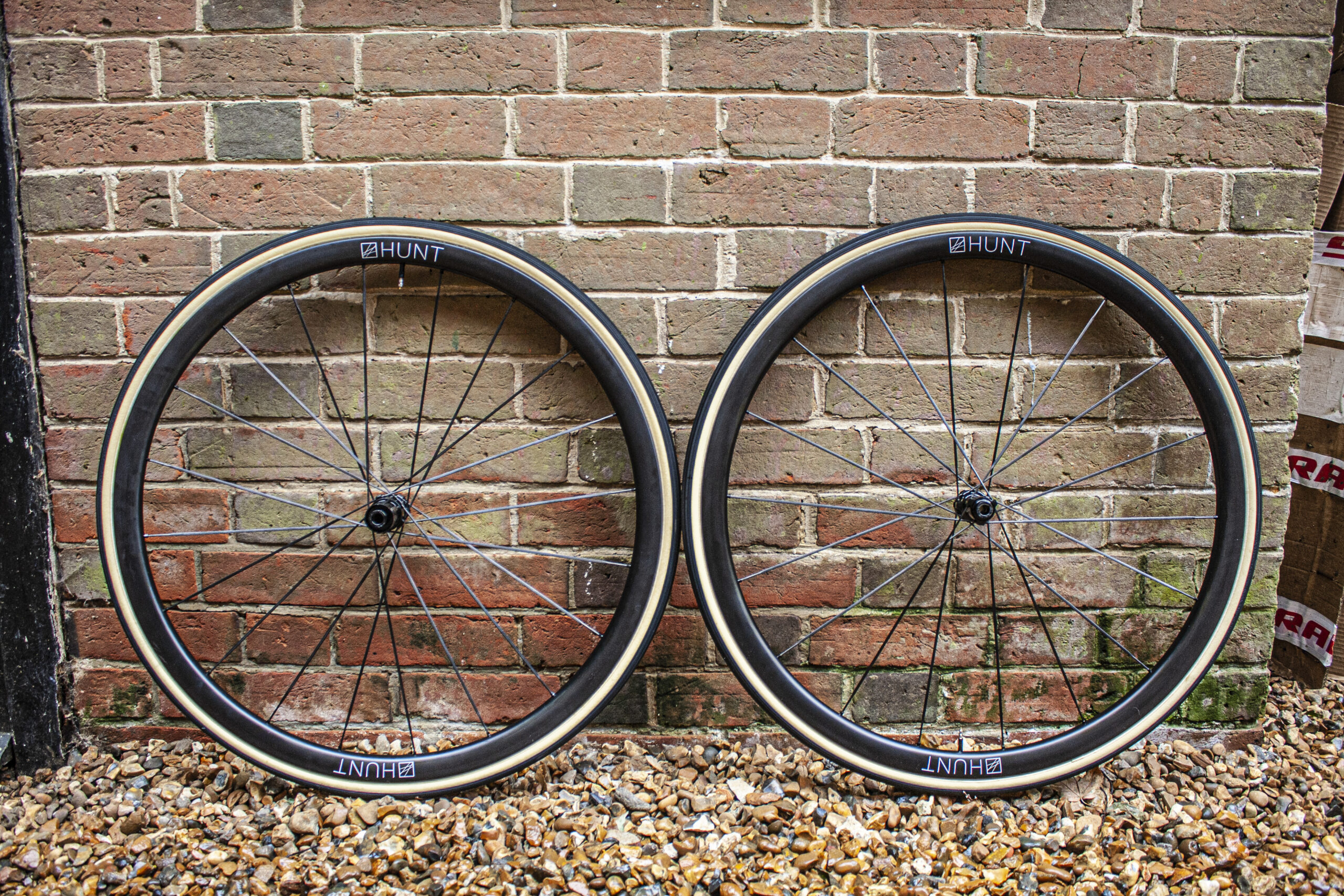
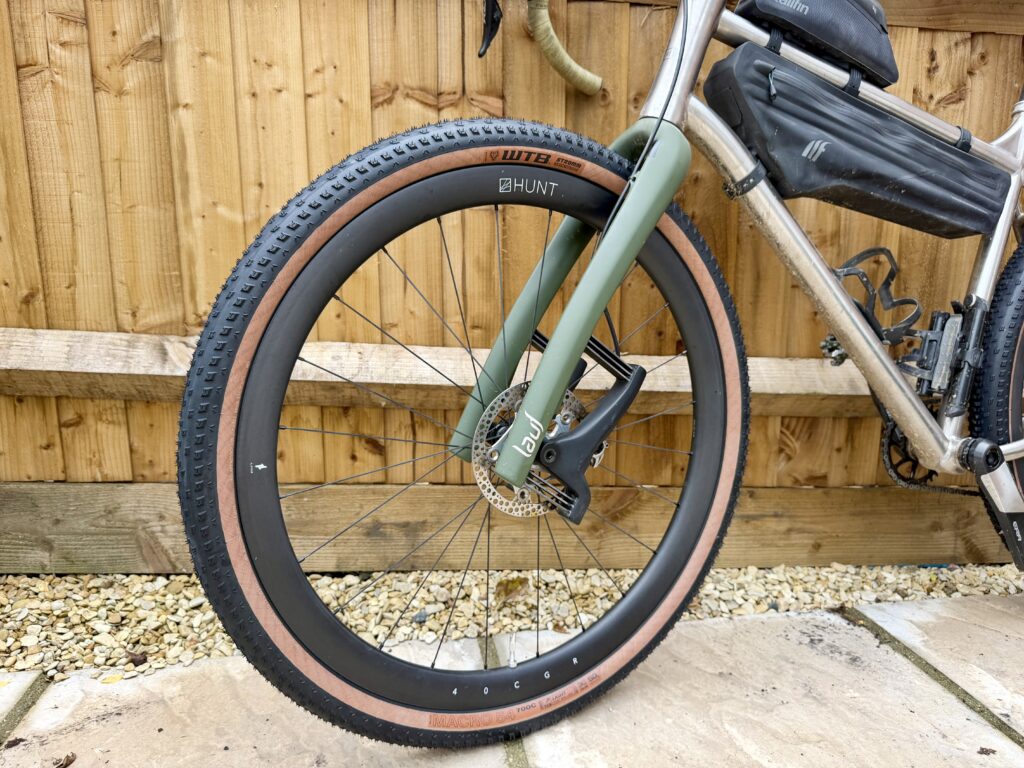
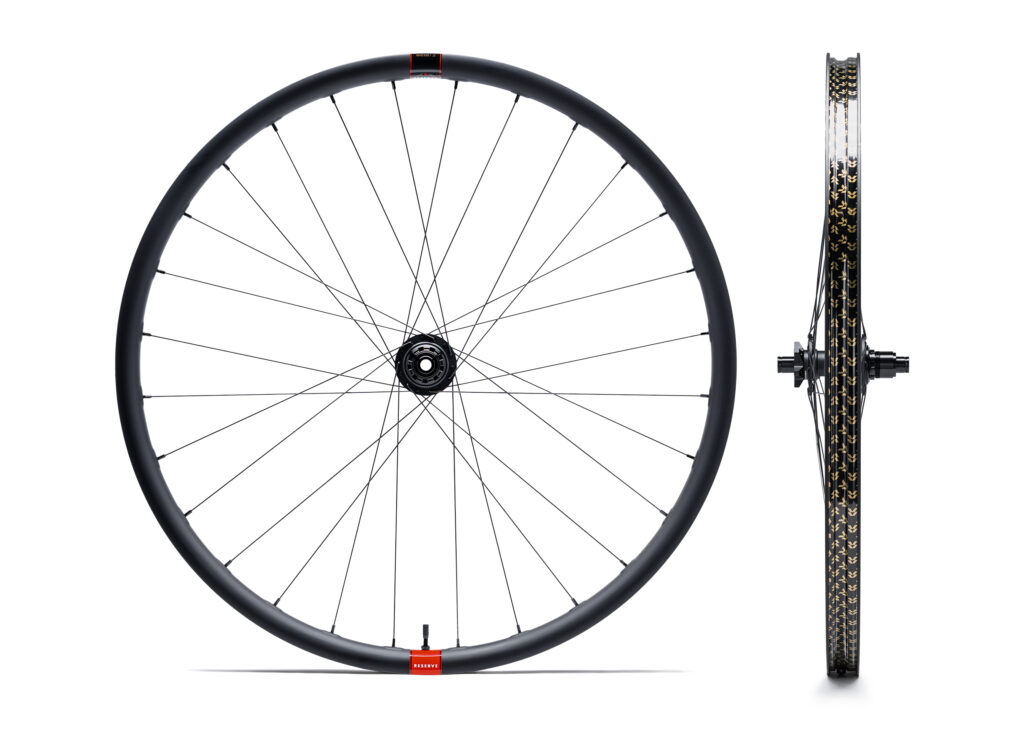
British wheel brand Hunt has done Feather a favour this year by launching some disc brake versions of its Hill Climb SL wheels. They weigh in at just 963g and “ride really nice” according to Feather.
While Hunt was still able to make the wheels super light for disc brakes, incorporating more popular tubeless tyre compatibility without adding significant weight wasn’t so easy, so the wheels take tubular tyres.
Disc brakes??

Even though the disc brake switch has added some weight, that’s not to say Feather hasn’t tried his hardest to reduce it as much as possible. The rotors front and rear are 140mm, rather than the more common 160mm front/140mm rear combination. Although the rotors on Feather’s built bike are Shimano Dura-Ace, he’s planning to replace them with some titanium ones from US specialists Carver Bikes that weigh just 49g.
“I haven’t used them yet, but I’m really interested to see what they’re like,” he says.

So, back to our original musings: what’s the explanation for the switch, especially since this bike is around half a kilogram heavier than Feather’s national title-winning steed we saw last year? Are rim brakes truly dead?
“I think [rim brakes aren’t dead] at the moment, there are still rim brake bikes around, but if you look at the latest technology it is all disc really”, says Feather.
“The weights are coming down and the margins are pretty small”, says Feather.

So, there you have it. Even the best hill climber in the country has made the switch to disc brakes.
Now that discs have infiltrated the top of the hill climbing scene, do you see any way back for road bikes with rim brakes? Let us know in the comments as always…







62 thoughts on “Rim brakes really are dead! Here’s why the British National Hill Climb champion has switched to disc brakes”
…
…
(No subject)
Wots this? No drilled parts!?
Wots this? No drilled parts!?
Them disc brakes could be drilled, especially through the pads and pistons. Perhaps the hoses could also be holed to weight reduction effect, as the fluid would also run out, saving several grams.
Do hill climbers really need to wear clothes? After all, they must get quite warm going like loons up the slopes.
How many have eating disorders?
Cugel wrote:
These days people pay big money to get Swedish farmers, German carbon fibre specialists etc to make ultralight / one-off components. Schmolke carbon bar & stem combo is about 240g and €1,000.
The scales shown in the video showed 5.79 kg, still 0.4 kg more than his old bike.
Ed Laverack runs discs on his Factor and Specialized Aethos-based builds have been popular. Maybe Andrew is sponsored by Cannondale and riding what they gave him. He has tagged them in his recent instagram posts – https://www.instagram.com/andrew.feather84/
Rim brakes are not ‘dead’ but there will surely be fewer and fewer options for those wanting components other than basic OEM level.
Also, if regulations state
Also, if regulations state that only one brake is required why not remove the disc, calipers and hoses for the rear and save even more weight?
kinderje wrote:
It states in the article that Andrew Feather uses this for general riding, not just hillclimbing (which is why the bars aren’t cut), the weight is all the more impressive for the compromises that haven’t been made IMO.
kinderje wrote:
Hillclimb bikes need to be road legal so the only way the could run a single brake is to have a fixed wheel with locknut which will count as a back brake, the other brake must then be on the front wheel.
Thanks, I have no idea why I
Thanks, I have no idea why I had that ‘one brake’ idea in my head. Cheers
kinderje wrote:
Eventually they’ll allow removal of the rider, who will operate the feathery bicycle via remote control. After all, cycling is moving inexorably from being a pastime of humans to being a means to develop and sell over-priced techno-bling that ideally weighs nothing and so doesn’t exist except as “a concept”.
Perhaps the whole hog will eventually be gone and the riderless bikes will be raced by AIs somewhere in Saudi Arabia? However, “owners” will be allowed to pay a vast sum to have their ownership declared in big letters on the bicycles, so they can boast about it in a virtual cafe, via an avatar that looks like Cav although it’s being employed by a “bike owner” that looks more like Jabba the Hutt.
“the quintessentially British
“the quintessentially British racing format which sees competitors aim to get from the top to the bottom of a hill in as little time as possible”
call me a pedant but I thought hill climbing generally went up not down
Best screenshot that before
Best screenshot that before they edit it!
NickSprink wrote:
The hard part is probably when going down, as you’re knackered and your lightweight bits have mostly broken off, including brake parts, so it can be hard to steer, stop or stay on.
Meself, I can think of several different and much more pleasurable ways to be a masochist …. although it helps to have an understanding sadist about. On the other hand, it is traditional in many kinds of cycling to find ways to suffer pointlessly. You can Yorkshire-boast about it later.
Did I ever tell you about the time we went up to the top of Barbondale from Gawthrop in 6 inches of snow and … [No boasting – Lancashire, Yorkshire, Cumbrian or even Westmorland – the forum boring-old-cyclist monitor]
…always handy, particularly
…always handy, particularly at the start, to have a quick glance at power to make sure you’re not setting off at 600 watts for a ten-minute effort…
I know, I hate it when I do that!
“Rim brakes are dead”
“Rim brakes are dead”
Except for those who want compatibility with existing bikes. I have 8 bikes, all rim braked, all set up the same with interchangeable wheels etc. Why would I want an outlier that if it’s broken is off the road, where anything else can get a quick wheel stop and be on my way? One complete outlier to the usual maintenance schedules and protocols, go back to bleeding brakes like I did when I rode motorbikes? No thanks, rim brakes are good enough, simple and reliable and almost never squeal, blocks last longer than disc pads and cost less and are less of a faff to change. (Note – I also don;t have carbon brake surface wheels, avoiding that whole carbon rim / rim brake turd to step in.)
No thanks, rim brakes are
No thanks, rim brakes are good enough, simple and reliable and almost never squeal, blocks last longer than disc pads and cost less and are less of a faff to change
Wow! 7 contentious claims in one sentence, with the last 4 definitely untrue
wtjs wrote:
Rim brakes are good enough – true for many cycling styles, habits and conditions. However, having now used disc brakes for around 7 years, in parallel with other bikes still having calliper brakes, I’ll contend that there are conditions when having disc brakes provides more function, facility and feature than rim brakes.
* Long steep descents when your hands must work harder on the levers with rim rather than (hydraulic) disc brakes.
* Much less wear on pads and discs than on rims and brake blocks in mucky winter conditions.
* No reduction in disc function when its seriously wet, unlike with rim brakes.
* Some others, probably.
***********
Simple, reliable and almost never squeal – true up to a point but …
* Brake cables can get sticky, frozen, rusty, detached and break without constant maintenance, unlike the hoses and fluids of hydraulic disc brakes.
* Some find setting the toe-in of brake blocks very difficult whislt the cantilever users can be reduced to tears by the difficulty of setting them up. It can also be a pain to get and keep some rim brakes centred on the rim. Brake blocks of some kinds can squeal – in winter its the grinding noises that worry me, though. None of these are a problem with hydraulic discs.
**************
Blocks last longer than disc pads and cost less and are less of a faff to change – that depends on the blocks and pads.
* The blocks I use for winter are soft, to improve use in the wet and to try to transfer the wear from rim to block. Metallic disc pads can last a long time albeit some are squealy.
* Some brake blocks cost more than some disc pads.
* It takes far less time for me to change (or take off and clean) disc pads than it does to do so with calliper brake blocks, which usually have to be re-centred and toed in, unlike disc pad replacements which always puts them in the exact same position they were before taking them out, via a small clip and one screw.
* Brake blocks get contaminated with much more grit, bits of aluminium and other detritus than do disc pads.
**************
In short: good rim brakes are good enough but good disc brakes are better.
Cugel, gulping down the chum – yum-yum.
Bigfoz wrote:
Yes, if I were to start again from scratch I expect I would have to give in and get a disc brake bike if buying new, but I’d really rather not.
My two most recently acquired bikes are built up from secondhand framesets and components I’ve swapped between two other existing bikes that all complement one and other. I like the interoperability and not having to buy any more specialist tools. They have rim-brake wheelsets with 8/9/10/11 speed compatible hubs.
Modern off-the-peg bikes – and groupsets – don’t offer what I want in terms of a good all rounder (sort-of Audax mudguard bikes with road triples). So I’m preserving my little fleet in aspic and hoarding stuff. Hey ho…
Quote:
I was in this position recently, the model I wanted was still available in rim or disc guises but (tinfoil hat conspiracy alert!) the shop and distributor seemed to be making it extra difficult for me to order the rim brake model.
Since the shop had a disc brake version in my size and on display I was really tempted, but I baulked at paying the extra money for a bike that would be heavier than the rim brake equivalent and with lower quality parts (despite costing more!), and would re-introduce me to the world of squealing and rubbing disc brakes (from seeing riding buddies with new bikes I am not convinced that manufacturers have adequately resolved either issue).
I couldn’t do it in the end so emailed the manufacturer direct and eventually got my hands on the rim brake model instead.
IanEdward wrote:
Here I can help you with this and hopefully put your mind at rest, there’s no conspiracy and the retailer was not in the pocket of “big disc”
Perhaps the reason the retailer was reluctant to order a whole new bike is there hiding in plain sight in your post:
I hope that’s cleared it up.
Quote:
Yeah… I thought by writing ‘tinfoil hat conspiray alert’ I was sort of aluding to that not being a serious comment.
The one in the shop was another customer’s bike, they would have had to order another one for me regardless, but appreciate I didn’t make that clear in my post.
How much time do you spend
How much time do you spend cleaning your rims and how long do your wheels last ?
Do you do any commuting?
Hirsute wrote:
I’ll respond, I hope that’s OK.
Year-round commuter here, usual route is 11 miles each way on often narrow, muddy country lanes. Cheap wheels (nearly-new Giant PR-2s from someone local) have been on for 2.5 years & 13,500 km with loads of life left. £11 Kool-Stop pads last up to 18 months. When it’s wet I may wash my rims and pads daily but it doesn’t take long.
I’m sure a disc-braked bike would be better but I’m not prepared to buy a complete new bike just to save a bit on rim wear. Also, it’s not worth much so I can leave it in town without fretting too much about the risk of it being stolen.
Am I practicing a false
Am I practicing a false economy by using £1 brake pads? I see they have shards of aluminium in them when I come to replace them. I should really clean my rims and pads more, but never get round to it. Would Kool Stop pads make my rims last longer?
bikes wrote:
All pads will pick up bits of alumium from alloy rims. But yes, you should clean your rims and pads regularly. My commuter bike’s wheels get cleaned daily in wet weather due to the state of the lanes I ride on and my desire to make the wheels last a good while.
Kool-Stop better than standard pads, including Shimano – salmon for the commuter, black for the dry weather bike. For v-brakes I fit cheap Fibrax ASH104, which work well and are kind to rims.
The noise about ‘the death of rim brakes’ is sooo boring. Bikeradar featured some of the lightest bikes at the National HC, not all were hyper-expensive and dripping with bling components:
https://www.bikeradar.com/features/pro-bike/2023-hill-climb-nationals-tech/
That’s all well and good but in the end you’ve still got to pedal, and the bike is a small percentage of total weight.
How do you know your brake
How do you know your brake blocks last longer than disc pads, if you’ve never used discs
Peculiar handlebar setup. I
Peculiar handlebar setup. I would have thought a lower stack with hoods tilted down be more apt when the road points up.
More marketing hype by Jack
More marketing hype by Jack Sexty and the bike manufacturers that pay him to force us into complying with new, expensive, but worthless junk. All any of you have to do is study the history of the average speeds at the TDF, then come back here and prove to us that disk brakes are really doing something…LOL! Spoiler alert, from 1958 till 1984 the average speed only went up about 1.5 mph, then in 1984 the average speed went up another 1.5 mph due to the introduction of clipless pedals, since then…NOTHING! Going from steel to aluminum to carbon fiber to aero to tubeless, you name it, all for nothing. The only reason we even see a slight increase is because since 1958 till today, the average total miles raced in the TDF has been reduced by around 500 miles, thus the riders are not as fatigued as they used to be.
Completely ignoring the facts
Completely ignoring the facts that a) there is considerably more climbing now than in the 80s, very few long totally flat days, and they are choosing tougher and tougher climbs, b) very few if any are on EPO any more, and c) the primary reason for discs is that they’re safer, not faster.
froze wrote:
A strange argument – that a type of brake doesn’t make you faster. Have you not got the idea of these brake things yet, then? 🙂
There are many cogent reasons for preferring disc brakes over rim brakes …. but probably none that have to do with going faster. (Some invent such reasons – “I can approach the corner faster” – but these tend to be made-up-stuff). However, for ordinary folk not “needing” to knock 5 seconds off some strava-striver daft-data thingy, disc brakes have many advantages.
Personally I’ve given up the notions that a couple of hundred grams lighter or more aero by 5 seconds per 50 kilometres is somehow important in a bicycle. That sort of stuff is for professionals (not to improve their performance but to improve their marketing value). But some bike technologies are genuinely useful improvements – to ordinary cyclists of every kind.
In short, unless you’re a top class racing cyclists, you probably need to eschew all that marketing stuff about light weight and aero in favour of other genuinely useful bike tech improvements.
These improvements include STI, disc brakes and tubeless tyres. Of course, they don’t make the older bike tech redundant, just another choice. Many , though, seem to choose them for aesthetic reasons rather than functional reasons, even if they want to bolster their choice by dissing new tech. But perhaps, instead, because of their lock-in (via what they own now) to those older technologies.
Bring back single speeds,
Bring back single speeds, wooden rims and unmade roads! Progress, pah!
What a completely dumb post!
What a completely dumb post! Congratulations…..
Not dead around here, only
Not dead around here, only dead in the minds of bike journalists and an industry desperate to sell us new-new-new.
1 x gravel bike, 1 x CX bike, 1 x random singlespeed and 2 x road bikes ALL on rim brakes. Not a squeak or a rubbing rotor between them, rims last years, adjustment amounts to a very occasional tweak of a barrel adjuster, still descending as fast or faster than (and certainly quieter than) pals on disc brakes blah blah blah.
If rim brakes are dead it’s largely because the industry doesn’t want to sell us them any more.
(and once again I fall for a clickbait article on rim brakes, gah!)
I just euthanised a mix of
I just euthanised a mix of steel, carbon and aluminium road bikes after reading that article. Sad, but roadcc said that is the way.
Hmm….okay….
Hmm….okay….
So we got on pretty well for
So we got on pretty well for about 100 years with rim brakes in one form or another. Then discs came along, and coincidentally, in the same time period, bikes got remarkably, unaffordably more expensive, with people complaining about the preposterous prices every time a bike is reviewed here.
I think the bike industry was trying to sell us more complicated and expensive bikes, and overdid it just as we entered the mother of all cost of living crises. And now we’re seeing a rash of bankruptcies. It’s a mess. Give me simple, effective and cheap rim brakes any day
matthewn5 wrote:
Wrong and therefore invalidates the rest of your waffle. What was available 100 yrs ago is about as different from todays rim brakes as they are from disc brakes.
He waffles a lot less than
He waffles a lot less than you
marmotte27 wrote:
Depending on how you define it, waffle is useful stuff. After all, no one generally gets a clear, unambiguous and truly informative lump of information from them cheep-cheep-cheep posts, eh?
Of course, one must avoid woffle; and piffle should be eschewed always, except in readng a bit for entertainment purposes. (See LifL-piffle for details).
I don’t understand this point
I don’t understand this point of view. Yes, there are incredibly expensive bikes but cheap ones are still available as far as I know. I just looked at Decathlon; there is a Btwin ‘commuter’ bike with rim brakes for £150.
Maybe he doesn’t just want
Maybe he doesn’t just want cheap and awful? Maybe he wants good quality but affordable bikes and components? Just a thought…
Decathlon do them as well.
Decathlon do them as well.
PS: rim brake bikes cost a lot, too
We got on without vaccines
We got on without vaccines and decent sanitation for thousands of years, do you think we should go back to that, too?
We did okay with B&W
We did okay with B&W television, but then more expensive colour came along……Manufacturers, eh…trying to sell us more expensive gear.
Had a perfectly good horse*
Had a perfectly good horse* before this expensive cycling fad was foisted on us. Can’t remember the last time I had to change its chain.
* OK, it was a mule. Actually I’m exaggerating – it was a pair of mules. We had shoes though!
When I got back on my bike 5
When I got back on my bike 5 years ago I bought a Cannondale quick hybrid with rim brakes thinking simple was better. They are a PITA, maybe because their cheap tektro ones, I don’t know. Constant alignment issues and rubbing, and living at the top of a hill the morning commute when wet was one starting with a bum twitching descent to the traffic lights.
I upgraded to a Ribble gravel bike in 2019 with hydraulic 105, and it has been brilliant. All I’ve done with respect the brakes is change the pads and discs once and had them bled once when serviced at the LBS. As an all weather commuter I wouldn’t go back.
Adam Sutton wrote:
Complete your conversion to the wonderous new fangles by learning to bleed them yourself – it ain’t at all difficult although you must buy a fluid hopper, fluid and perhaps a syringe. (Cheaper than one visit to the LBS).
On the other hand, bleeding doesn’t need to occur more than once in a blue moon, despite what the blurbs say. But if you do ….. don’t mangle the teeny nut allen key hole (made of cheese) on the top of the brake levers.
**********
Good rim brakes are fine. Good hydro disc brakes are better, since they do all that the good rim brakes do + some added useful things, especially for those with a weak grip who like to ride in the rain. And they’re much easier to keep reet.
Adam Sutton wrote:
Time for my PSA – check that the pad retaining pins haven’t seized and ideally replace the crappy slot-head Shimano ones with some better hex-head ones. I previously used some XT ones which were slightly longer but worked fine and have now upgraded to some titanium ones from eBay (as if the weight saving is relevant).
More to the general rather
More to the general rather than your superior knowledge HP, but make sure to use a metal containing barrier substance between ti and ally, the binding/galling is worse than between steel and ally.
And of course now is the perfect time to remove your seat post, clean and reapply whatever product floats your boat before reinsertion.
ktache wrote:
I typically put a bit of lithium grease on the threads to prevent them seizing.
I’d be wary of using such
I’d be wary of using such small diameter titanium screws in the brake assembly without some kind of protection on the screw to reduce galvanic corrosion … assuming the brake assembly is made of aluminium, of course.
The threads used in the retaining screw are exceptionally fine, and wouldn’t take much corrosion to bind the threads.
There are various articles online about galvanic corrosion – especially Ti-Al, and as with everything online nowadays, they are only as reliable and trustworthy as you research the authors to be.
Ti-Al is used extensively in the aero industry, but the fixings they use are normally significantly larger than the retaining pin in the brake assembly; from what I’ve been (skim) reading, anodising the titanium will have a reducing effect on the corrosion.
Rim brakes will never die
Rim brakes will never die because the elegance of a classic Italian steel road bike lives forever.
🙂
james-o wrote:
I clearly remember, back in ’48, saying, “Hub gears will never die out because the simple beauty of their design lives forever.”
I wonder whether your prediction will fare any better than mine?
mike the bike wrote:
I’ve bought two brand new bikes in the last two years. One came with a Sturmey Archer 3 speed, and one with an Alfine 8.
Which doesn’t in any way
Which doesn’t in any way convince me that hub gears are anything other than yesterday’s technology for the huge majority of cyclists.
Slight correction there: [..
Slight correction there: […huge majority of cyclists] in the UK.
Meanwhile where there are lots of people cycling (but would you call them cyclists?) it seems they are the rule, rather than the exception. (Also good article here).
Depends what you want. Are you perhaps concerned about performance (maybe you race? Maybe you feel you have to race, sharing the roads with cars in the UK?). Perhaps you’re an “enthusiast”? And maybe you enjoy regularly cleaning, maintaining and replacing parts? Then maybe external gears are “better” for you.
On the other hand if you just want to get on your bike and go somewhere you might not be worried about a couple of hundred grams here or there or a drivetrain that’s less than 96% efficient*. You probably don’t want to get home every day, park your transport and then immediately spend a chunk of time cleaning it. Hub gears offer that – not maintenance free but much less so than the system where you have the key working parts out to get broken, dirty/rusty etc. (There are a couple of other things which make them a “practical” everyday choice also).
Of course the downside with any more complex system is when it does break it’s probably much less likely you’ll be fixing it yourself (or maybe at all…)
* Assuming you’ve got a single speed, or a good chainline on your derailleur system and you keep it well maintained!
Also – best not mention that
Also – best not mention that to those hidebound traditionalists at Rohloff, Kildernay (aiming at mountain bikes / fat bikes) or Shimano (two lines of eight-speed, five-speed for those legacy e-bikes)…
If you mean “as found in UK or US shops” or “as ridden by pro riders” of course you’re correct.
Anyone up for another round of “are quill stems / caliper brakes / clincher tyres / bikes without electric motors dead”?
chrisonatrike wrote:
I have the Enviolo AutomatiQ on my commuter. It’s an absolute revelation for just wanting to get somewhere.
I didn’t mention that one, I
I didn’t mention that one, I thought I’d look like an extremist. I mean, they don’t even publish their efficiencies!
(Personally I think it’s a very cool thing but – with zero consistency – a step too far for me).
There’s still an awful lot of
There’s still an awful lot of Bromptons and other folders sold every year. Most of those will have hub gears.
They’re pretty good low maintenance option for a commuter bike IMHO.
How much did Cannondale pay
How much did Cannondale pay him ?
https://youtu.be/r3A23Y69m2k
Here’s all the action from the NHC. No talking heads.
https://youtu.be/r3A23Y69m2k
https://youtu.be/IRhJwcZ6rOk
I think it’s interesting that
I think it’s interesting that another discipline where rim brakes are still preferred is one that arguably has the most demand on braking; trials riding.
Many winning trials riders stiil seem to opt for hydraulic rim brakes over even the best 4-pot disc brakes.