


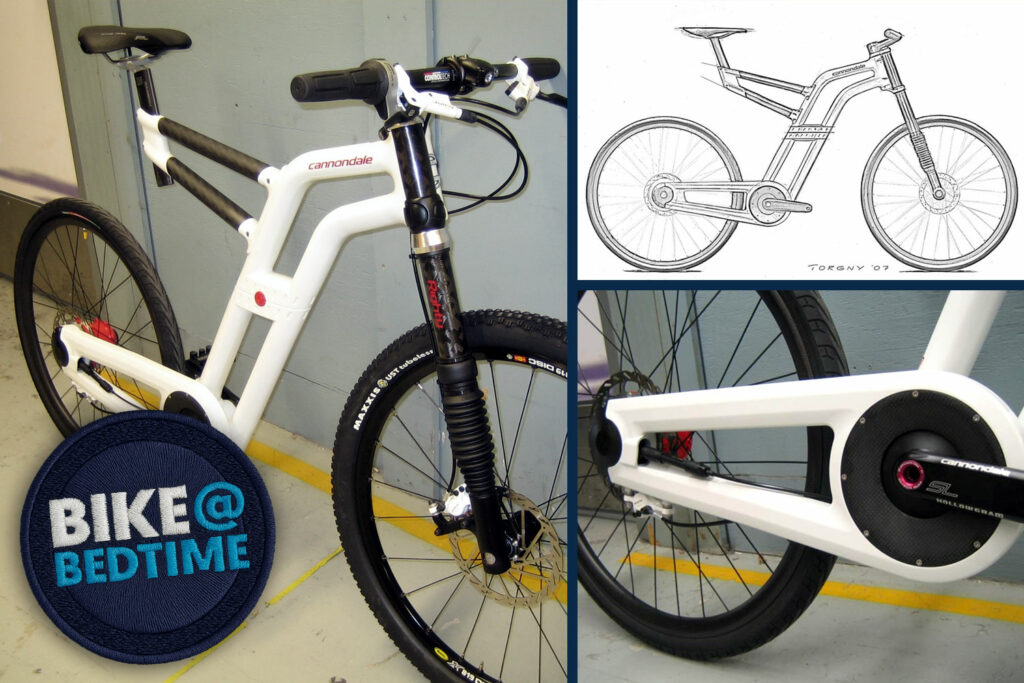

Cannondale has come out with some radical designs over the years, but the ON bike makes a solid case for being its strangest ever, with no rear triangle and a chaincase machined from solid aluminium.
The ON bike was shown as a concept at the Eurobike exhibition in 2007, but unlike most concept bikes, this one actually made it into production. We took the ON bike for a ride at Eurobike a couple of years later (see the video below), and 250 were produced for sale. However, the ON bike – designed for urban riding – never established itself in the market, and these days it’s looked back on as a highly collectable curiosity.
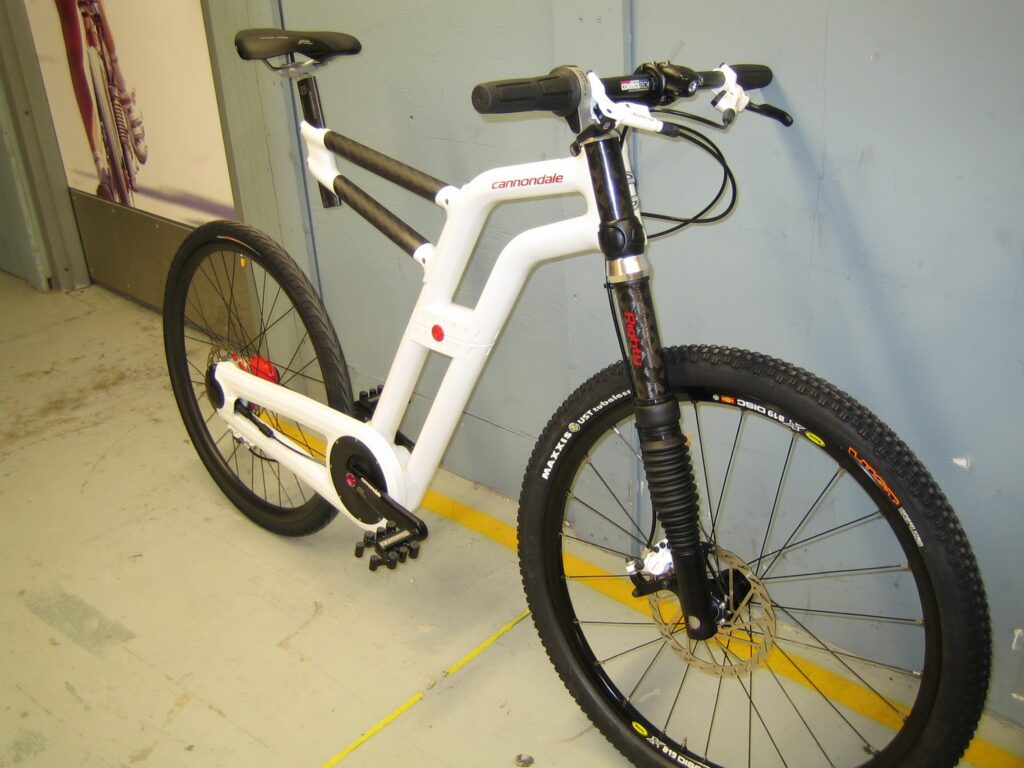
Cannondale has frequently worked on radical concept bikes – such as the CERV, with adjustable geometry that we told you about a few weeks ago, and the bike with rollerblade wheels up front – and it has never been shy about developing unusual products, such as its single-sided Lefty fork that was launched in 1999.
> Check out the crazy Cannondale CERV concept bike with “dynamically adjustable geometry”
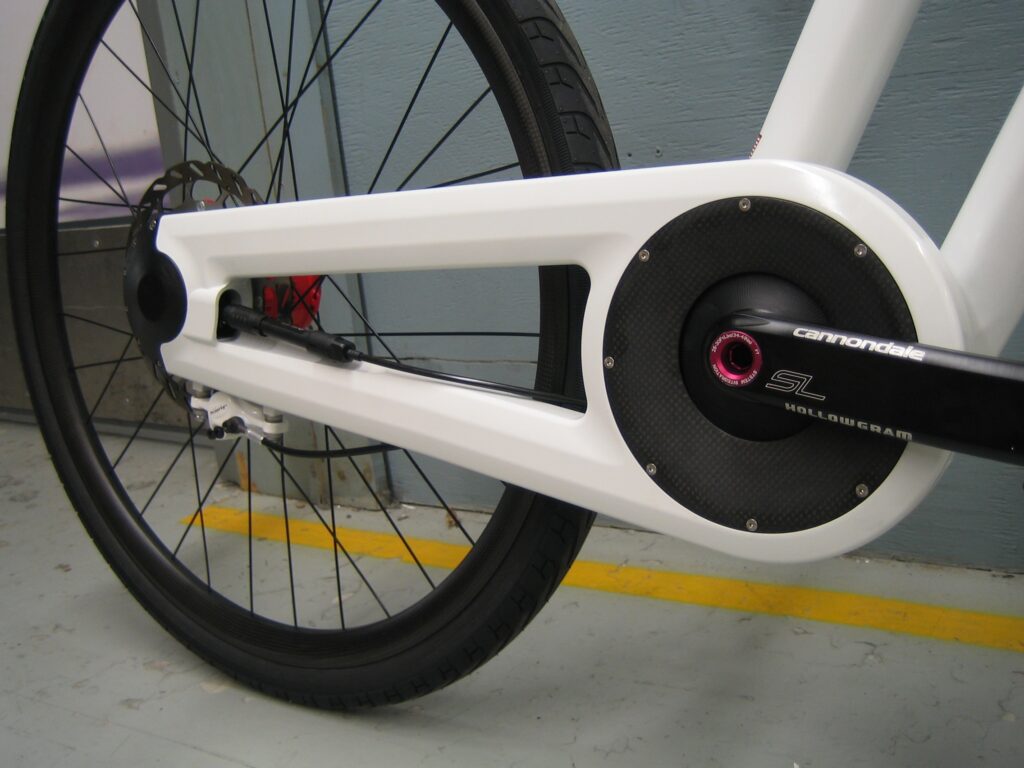
The ON bike did have a single-sided fork – on the right of the first prototype, on the left when it finally came to market – but it was at the back end where things got really strange. Rather than traditional seatstays and chainstays, the designers came up with a chaincase that was machined from solid aluminium. That was what held the rear wheel in place. The chain ran inside the chaincase; it wasn’t exposed to the outside world.
Obvious question: what happened when you needed to lube or change the chain? You could remove two covers on the chaincase, one at the front and one at the rear, and do whatever needed doing inside.
Gears? The Cannondale ON bike used a hub-based system developed by SRAM (we’ll come back to that in a mo).

The chaincase started out as 27kg of aluminium billet. It took 14 hours to CNC into two parts – weighing a total of 1,080g – which could be bonded together, a bit like Cannondale’s existing Hollowgram cranks.
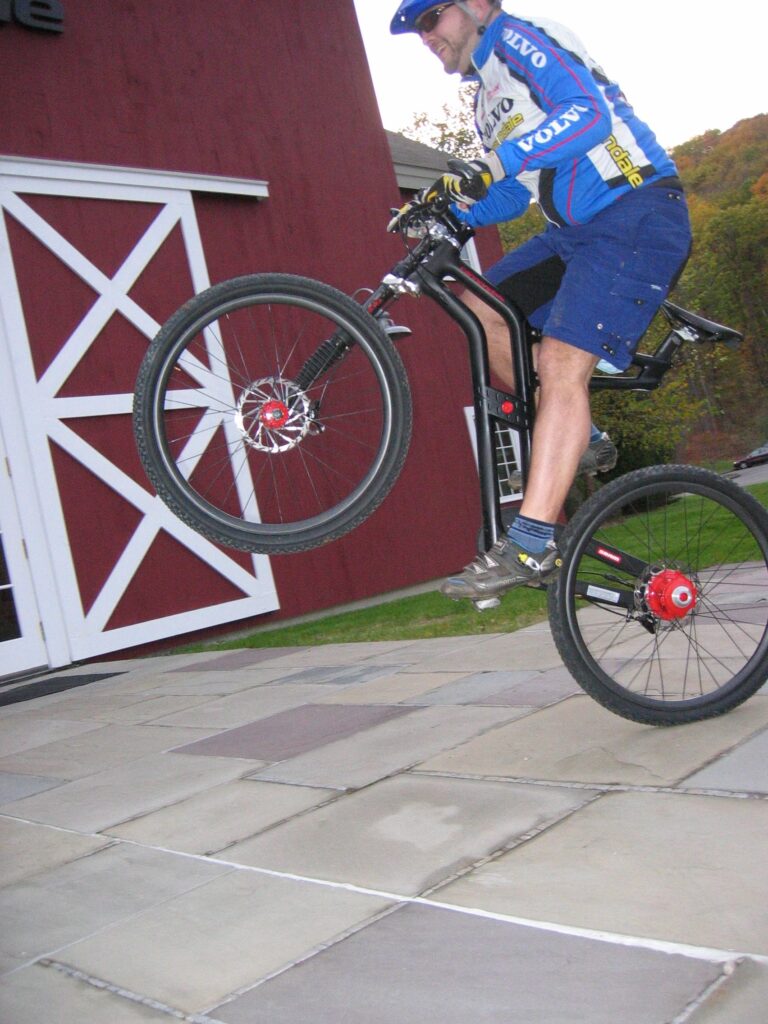
Would a bike with a single-sided rear – even one milled from a solid billet of aluminium – be in any way fragile? Apparently not. The initial concept version of the ON bike apparently passed all of Cannondale’s mountain bike standards.
We caught up with Chris Dodman, Cannondale’s chief engineer for advanced projects, to find out how the bike came about.
“Torgny Fjeldskaar was industrial design director at the time, and he was working with Elisava University in Barcelona, helping some students do a project,” says Chris Dodman.
“We thought an urban concept bike would be cool, so we were brainstorming and gave the students a project to work on, and they ended up making this concept bike called the Jackknife.
“When it came to things like drivetrain, I told them not to worry about that. It could be a hydraulic drivetrain, it could be whatever; just make the bike how you think it should be. We can do single-sided front and rear, whatever you want it to be. Don’t worry about the technical side of it; we can think about that down the road, if things go down the road.
“I’d been involved in original Fatty, Fatty Solo [forks] and things like that, and so was familiar with single-sided stuff. A lot of it was inspired by my teenage university years racing recumbents with the late Mike Burrows, who did everything single-sided. I knew it could work – I saw Chris Boardman win the Olympic gold on it.
“There was consensus within the engineering group: single-sided can work. And if we’ve got a single-sided front, it would be really cool to do a single-sided back end. “
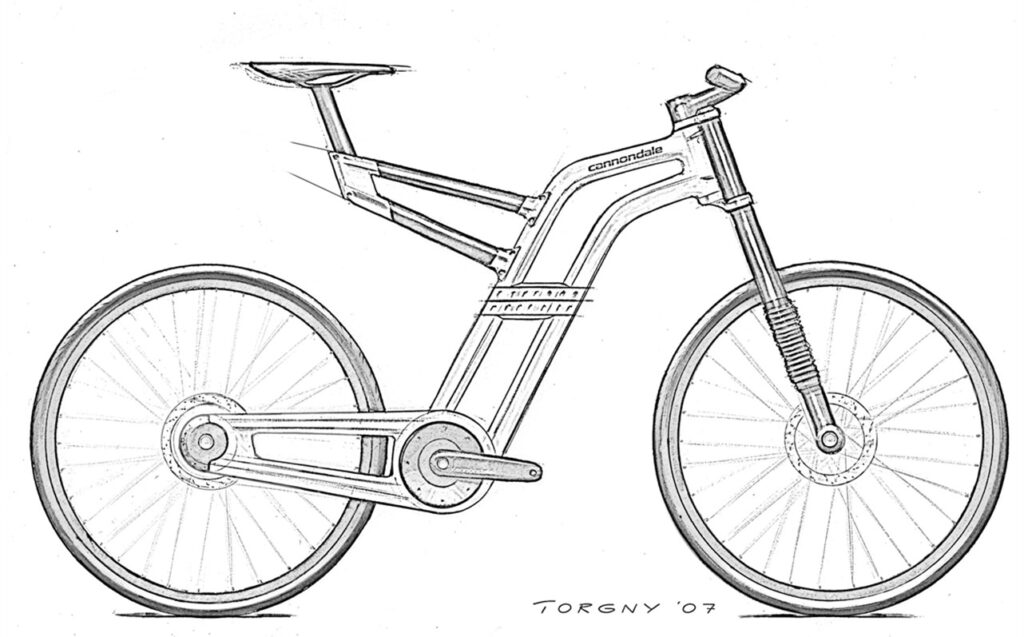
Okay, the next obvious question: why? Why go to all of the trouble and expense of designing and building the radical ON bike when traditional rear triangles have worked well for years?
“The idea started with the student brief,” says Chris Dodman. “You think about what people really want to have when riding in the city. You just give them what they want, and you take away all the nasty messiness that comes along with history, and that’s why the Jackknife concept was super clean. We thought it was really cool. How can we keep that cleanliness, and still make it look light and airy? So that’s where the structural chaincase with a hole through the middle came from.
“There have only been about five or six production bikes ever made with single-sided rear ends, and most of them have smaller wheels, not that many gears, and they’ve all been solid.
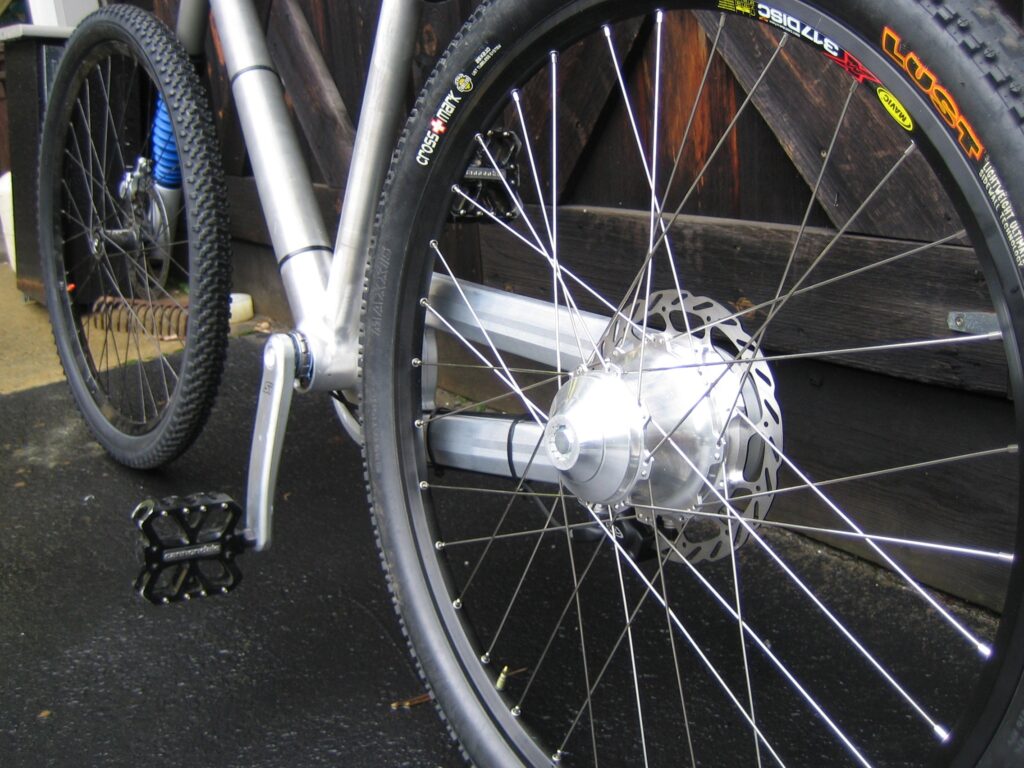
“Keep the bike looking as light and airy; that was the design goal. At the time, SRAM were launching their i-Motion 9 internal-gear hub. Up until then, there had only been an 8-speed Shimano Alfine, or Rohloff.
“We said to SRAM that we were working on this concept bike, and would they be interested in partnering on this? But we needed to do a single-sided version. SRAM came on board, and we drew a line down the middle and said that we’d work on the frame, the chain cage part, they’d work on the hub part, and we’d join it with an M100 thread in the middle. They did a custom disc brake rotor for it and everything, and we worked in parallel.
“That led to being able to do the rear end. The ON concept bike has an eccentric bottom bracket to tension the chain. And then it has a carbon-fibre disc that you can also rotate with the hole off-centre, so you can keep the crank concentric, so it all looks nice.”
There were plenty of other issues to work on.
“As an urban bike, you’d want to store it in your house or apartment, so it’d be great to fold it,” says Chris Hudson. “The whole concept was designed to be folding, so instead of a Lefty fork, it was a Righty because the fork needed to be on the same side as the back end.
“You need to fold the frame without twisting the cables, because the cables run through the middle of the pivot, so we had a lot of things to work out.”
Plus, the disc brakes needed to be fixed on the right-hand side of the bike too – the opposite side to normal. There was nothing to attach them to on the left side of this bike.
To cut a long story short, let’s just say that Cannondale didn’t make things easy for themselves here, but they did manage to produce two bikes for Eurobike in 2007. The goal was that they’d be rideable, and the Cannondale guys did indeed ride them from their hotel to the show.
“Concept bikes are often a one-off, says Chris Dodman. “Our slogan was: It’s not a one-off, we made two.”
Then Cannondale had the task of turning the 2007 concept bike into a production bike that could be sold to the public.
“We’d signed up with SRAM for at least 250 hubs. They’d been tuned inside by the BlackBox racing team to be lighter, and everything was cost-no-object. It was amazing hub technology. They had these crazy bearings, which were like a headset bearings – and we’re talking hundreds, just for them.”
The chaincase technology stayed, but a lot of work still needed to be done. The front triangle – the only triangle – of the production bike (below) was entirely different from the frame of the concept bike, for example. It was welded from 6061-T6 aluminium rather than made from carbon… so yes, big changes were being made.
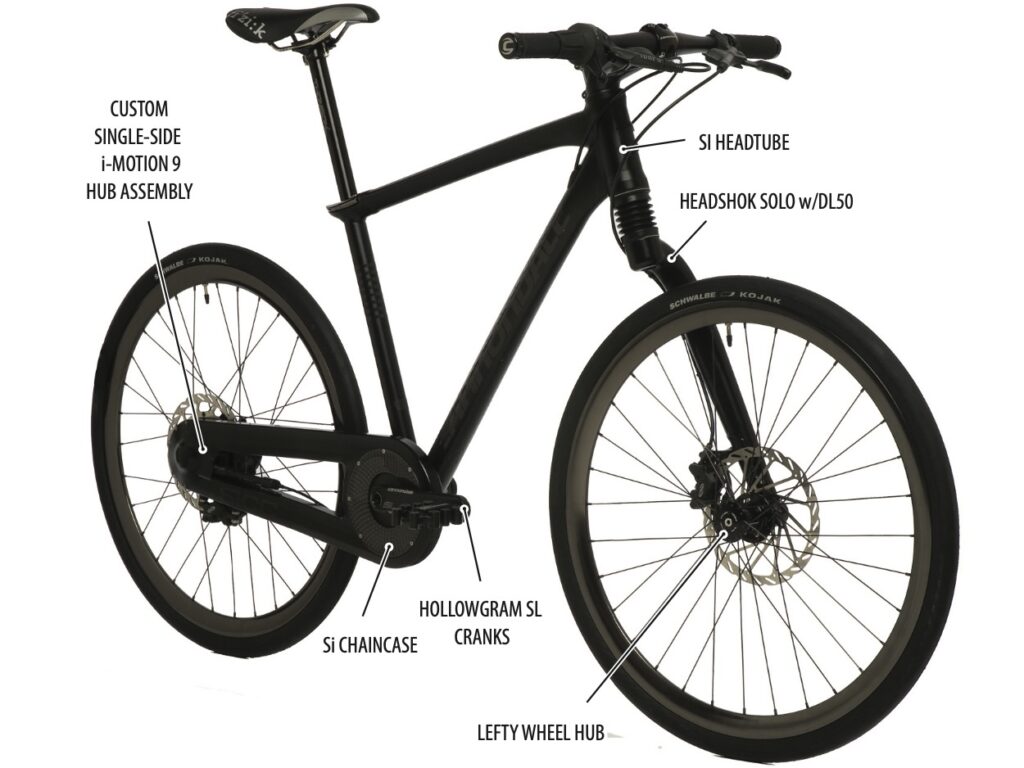
Let’s fast forward and rejoin the action at Eurobike in 2009, when Cannondale had production samples of the ON bike – included in its 2010 range (pictured in the owner’s manual, above) – now with HeadShok Solo suspension, the front fork leg on the left and without the folding mechanism. The custom single-sided SRAM i-Motion 9 rear hub was a key feature of the design.
> Eurobike first look: Cannondale no chainstay On bike + super-light urban concept
“Torgny Fjeldskaar did all of the design work,” says Chris Dodman. “The goal was to be clean and easy to use. You’re not going to get any grease on your trousers. It’s as minimal as it can get, but as functional as it can get at the same time. ”

As mentioned up top, 250 OnBikes were made, and our man Tony took one for a quick spin around the car park. We weighed it at 12.75kg. Price? €3,999.
The ON bike never really found its niche, though. A four grand urban bike is a tough proposition to start with, and the launch coincided with a shift in the market towards electric bikes.

“After the concept bike project, I started working on e-bikes, and we realised there weren’t any bike systems out there good enough to be on a Cannondale, so we wanted to develop a better e-bike system,” says Chris Dodman. “We ended up partnering with Bosch.

“There was a financial crisis in 2008, and all these automotive engineers were sitting around with nothing to do, and they wanted to get into e-bikes. They knew a lot about electric drive systems, but they knew nothing about bikes, so we became their technical development partner.
“At Eurobike in 2010, we launched the Bosch system with the electrified Bosch concept bike – so by the time the analogue version came out, we’d developed the electric version.”
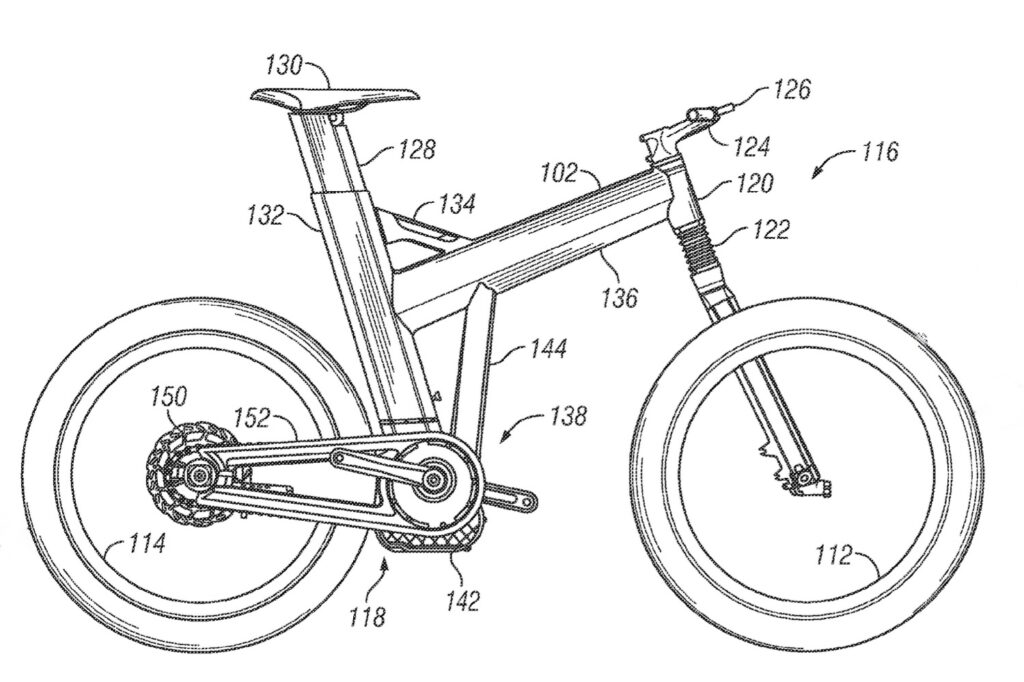
The e-bike used the single-sided chaincase tech from the ON bike, with the Bosch Gen 1 motor integrated and a “removable integrated battery” (which was launched seven years later by Bosch as the Powertube). It was rideable; Cannondale made two of them.
“People who were willing to spend €4,000 on an urban bike could now get an electric one – that was the new in-thing – we superseded it,” says Chris Dodman.
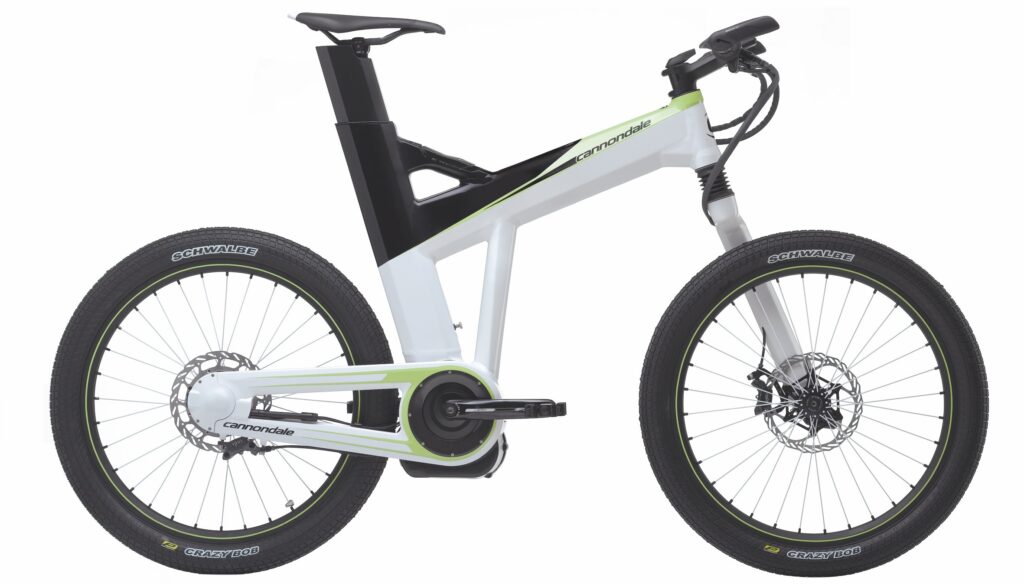
So that’s the story of the Cannondale OnBike. As mentioned, the version that was made available for sale in the 2010 model year is now highly collectable.
“The back end was still made from 27kg of billet for each bike, machined down,” says Chris Dodman. “It still had that boutiqueness, and this was the last new Cannondale production frame project that was made in the US. It has a lot of those things that make bikes collectable.”
Let us know if you’ve seen a Cannondale ON bike out and about.









3 thoughts on “Whatever happened to the ON bike – Cannondale’s strangest bike?”
Interesting reading. Off
Interesting reading. Off topic, and this was my favourite ‘dale. Drops and levers need adjusting) ?.
Reminda me of the Burrow
Reminds me of the Burrows-designed (rather than just influenced) “Gordon”:
https://www.cyclinguk.org/sites/default/files/document/migrated/publication/ctc201601034.pdf
A few – OK several – questionable choices (carbon fibre on a “city bike”, single-sided axles just don’t seem to be what the world wants). I’d love to try one though, but it never made it beyond “shed” production.
EDIT: closer to the Gordon than I remembered – though that one went with a Pinion gearbox also, which I guess at least keeps the rear hub simpler than trying to have a single-side-supported gearbox there.
The concepts looked better.
The concepts looked better.
The folding looks interesting.