


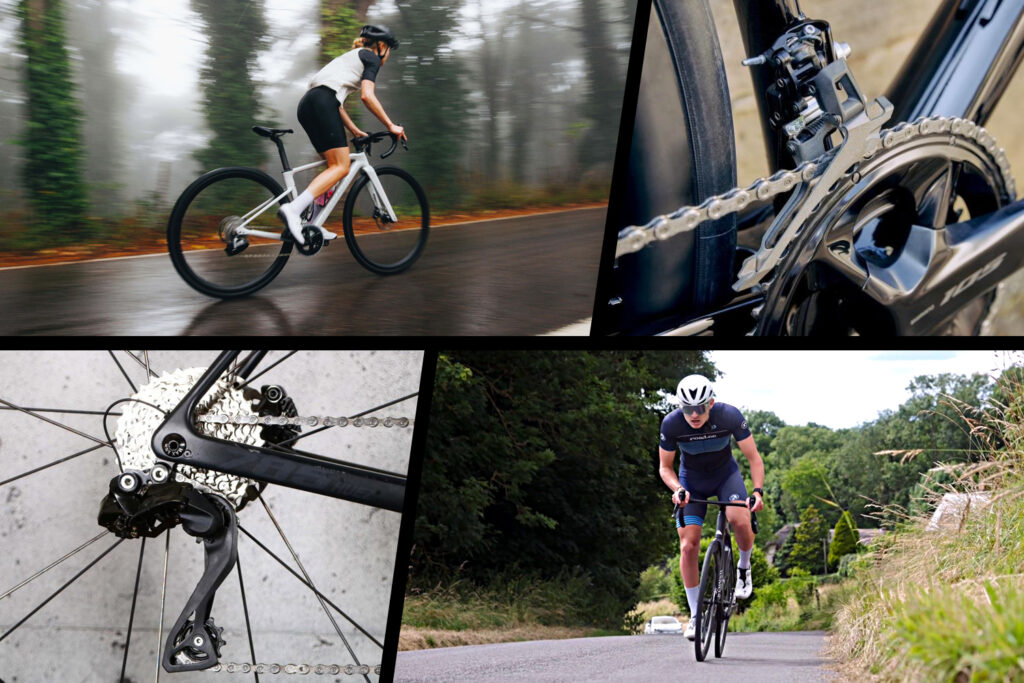

If you find yourself wishing you had a smaller, easier-to-turn gear to take the pain out of riding uphill, there are several ways you can alter your bike to make things simpler.
Follow our advice and you’ll soon be spinning up the climbs, and you might even learn to love them.
> Which chainset is right for you? Should you choose a semi-compact, a compact or something else?
 For this article, we’re assuming that you have a bike with derailleur gears rather than hub gears.
Bike gear basics
If you have a typical derailleur setup on a modern bike designed for the road, the chances are that you have one or two chainrings on the chainset (at the front) and up to 13 sprockets on the rear wheel in what’s usually called a cassette or cluster (the exact number will depend on the groupset you use).
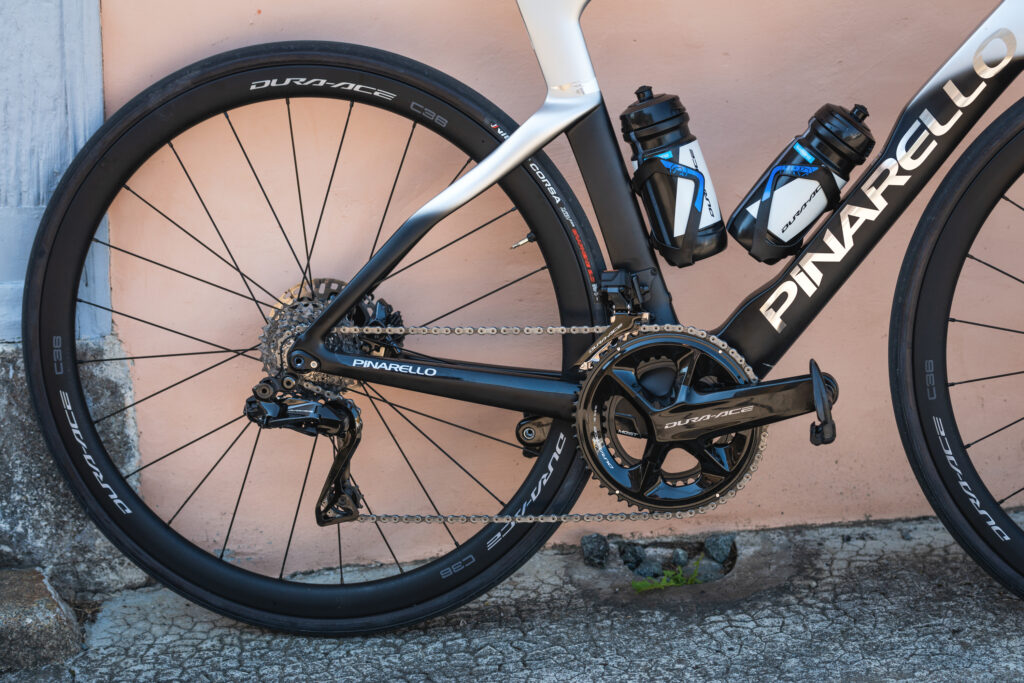
The size of the gear is determined by the chainring and sprocket combination that you use. Running the chain on a larger chainring gives you a larger (harder) gear that moves you further forward with every pedal revolution, as does running the chain on a smaller sprocket.
That’s simple, right?
But what if you’re running the chain on the smaller chainring and the largest sprocket and the gear is still too hard? You can work on your fitness, naturally, but you can also make changes to your equipment.
Changing your cassette
Cassettes come with various combinations of sprockets.
We’ll take Shimano’s fourth-tier Tiagra groupset as an example (the Shimano Cues groupset will replace the Tiagra, Sora, and Claris groupsets on road bikes). Shimano offers its 10-speed HG cassette in several different configurations, including with an 11-tooth sprocket up to a 32-tooth sprocket – often written as 11-32T. It also offers an 11-34T cassette.
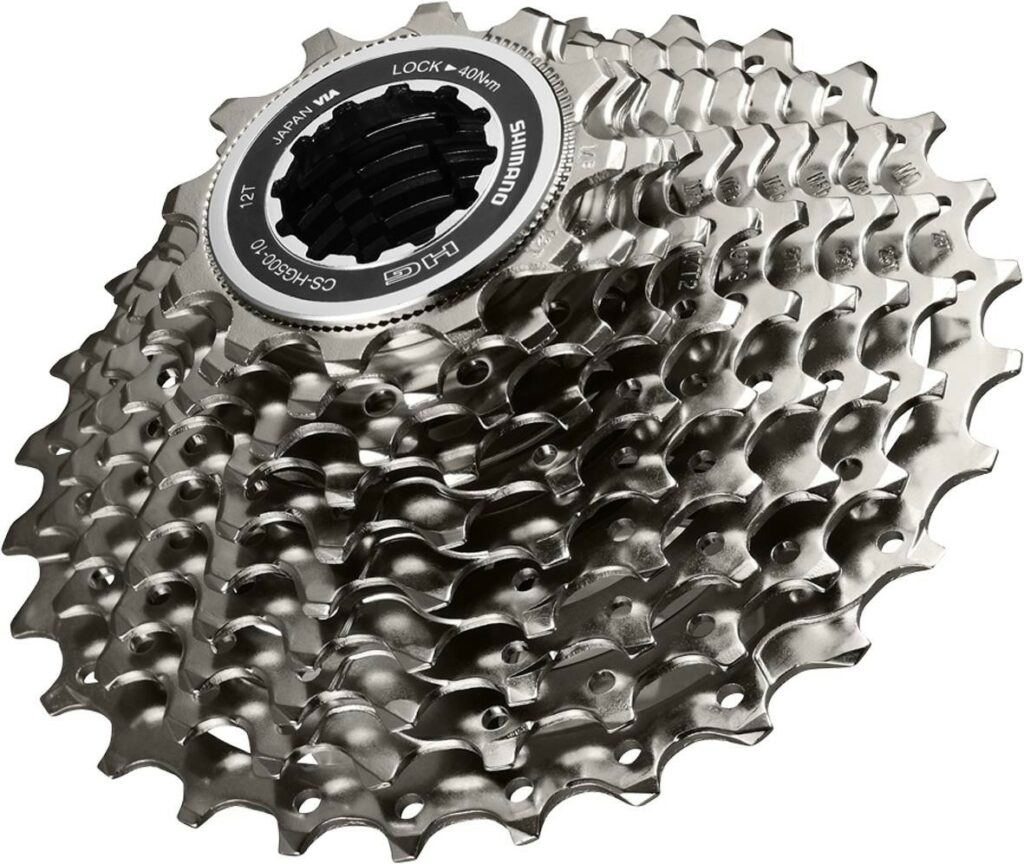
All other things being equal, the 34T sprocket on the 11-34T cassette is going to give you an easier gear. If your bike is currently fitted with an 11-32T cassette, switching to an 11-34T cassette will make steep climbs slightly less of a struggle, although you’ll go a shorter distance for each pedal revolution.
Swapping one cassette for another is a straightforward job, but only if you have the right tools, including a cassette tool and a chain whip. If you don’t have these, you can ask a bike shop to do the job for you.
If you’re currently using a 10-speed system, make sure your new cassette is 10-speed too, and ensure it’s compatible with the rest of your components. The freehub on your rear wheel will be splined, so it’ll only accept certain cassettes. The various systems out there aren’t all interchangeable.
> Learn how to fit & remove sprockets in 12 steps
A Shimano Tiagra CS-HG500 10-speed cassette currently costs £34.99 at full RRP.
SRAM kicked off the use of double chainsets and wide-range cassettes a few years ago with its WiFLi designs, which were the first systems to combine a 50/34T chainset with an 11-32T cassette. That seems conservative by today’s standards.
The latest version of Shimano’s 105 rear derailleur will handle an 11-36T cassette, which opens up a range of possibilities.
Shimano offers 11-34 cassettes at Dura-Ace, Ultegra, 105, and Tiagra levels, and much wider options with Cues. You can get an 11-50T 11-speed Linkglide cassette, for example, which will work with a Cues 10/11-speed rear derailleur.
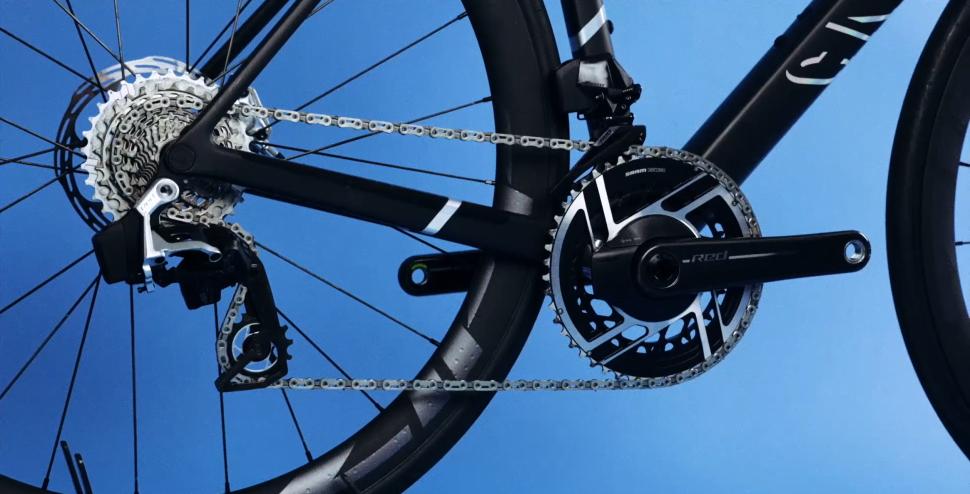
The SRAM alternative
These days, SRAM does things differently, offering smaller chainring combos and wide-range cassettes across the board. SRAM’s top-level Red AXS groupset comes with cassettes from 10-28T right up to 10-36T, for example. The smallest Red AXS double chainset is 46/33T.

SRAM Red AXS XPLR, designed for gravel, comes with a 10-46T cassette, although you’ll need a Red AXS XPLR rear derailleur to go with it because the standard Red AXS option can’t handle a sprocket larger than 36T.
Bear in mind, though, that the upgrade path could be painful as you’ll need a new transmission and wheels with SRAM’s XDR driver, but if you want high-tech shifting and low ratios, it might well be worth it.
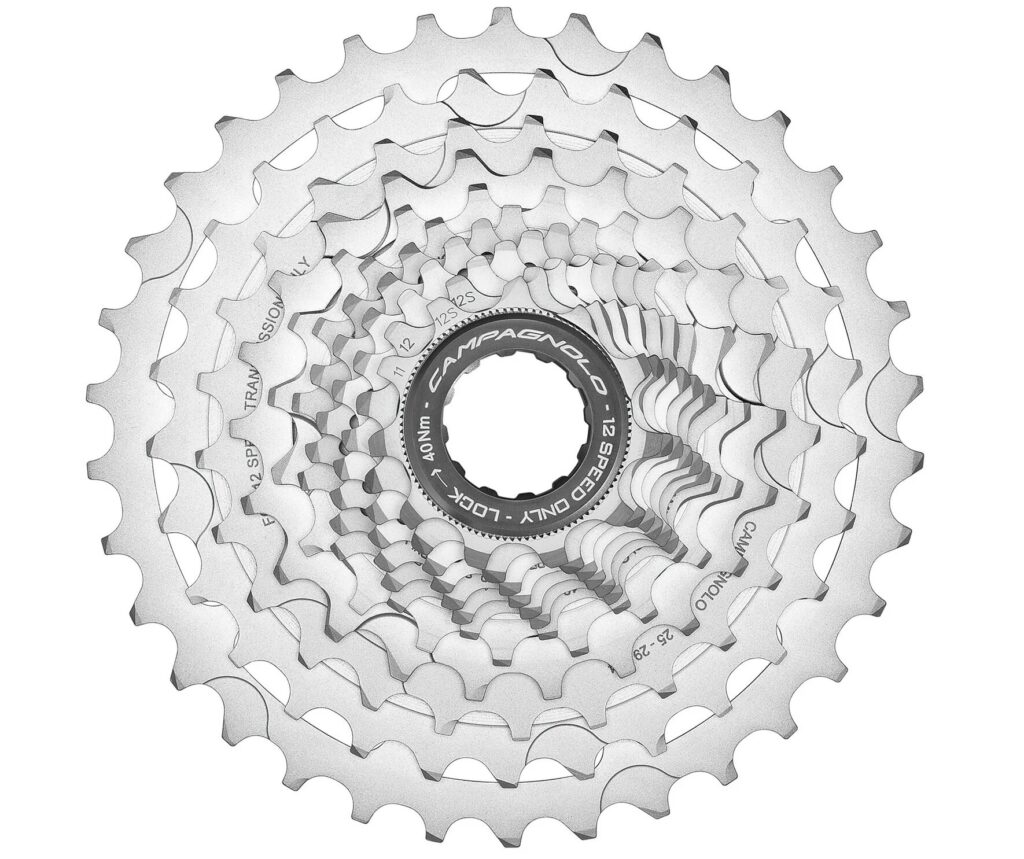
Campagnolo
If you have a Campagnolo system, then up until a few years ago, most groupsets were limited to a 29-tooth sprocket. However, things have changed over in Italy too, Centaur offering 11-32T and 12-32T cassettes, and Chorus going further with an 11-34T option.
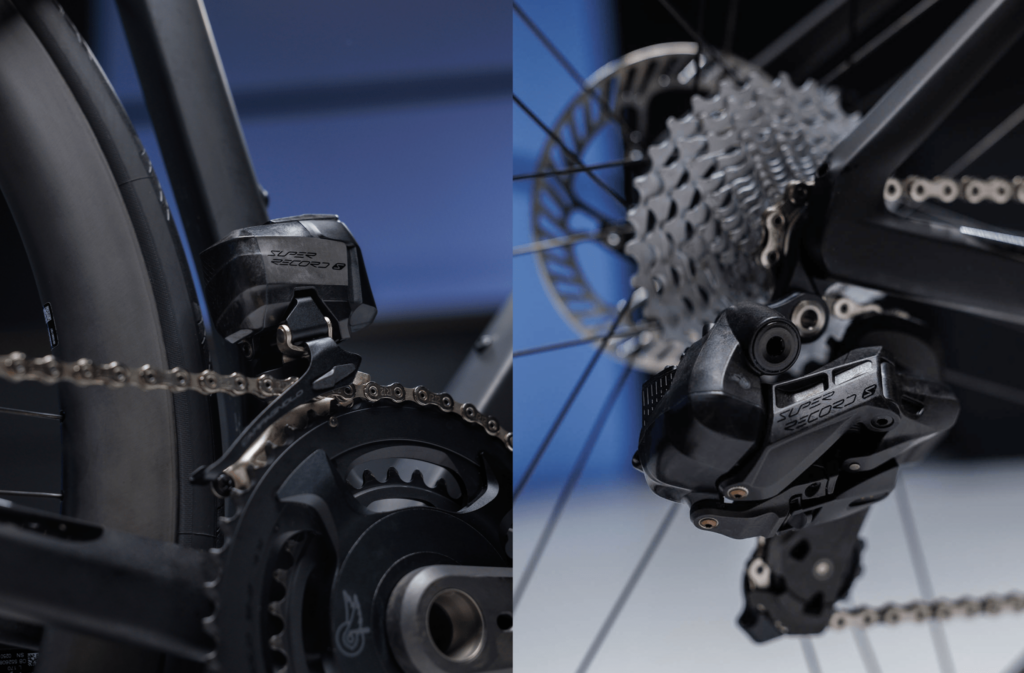
Second-tier Super Record S Wireless and top-level Super Record Wireless come with an 11-32T cassette option that can be matched with chainset combos as small as 45/29T.
We’re going to focus on Shimano systems in this article, as that covers the majority of bikes out there.
Rear derailleur capabilities
If you change your cassette, you need to bear in mind the maximum sprocket your rear derailleur will handle, and its capacity. The capacity is the total difference in chainring and sprocket sizes that it can take. You can look these figures up on the relevant brand’s website. You can choose a new cassette with a wider range than your current one, but only if your rear derailleur can handle it.
Say you have 50-tooth and 34-tooth chainrings: the difference between the large one and the small one (50 minus 34) is 16 teeth.
And say your bike is fitted with an 11-34T cassette: the difference between the large one and the small one (34 minus 11) is 23 teeth.
Add them together and you get a total difference (16 plus 23) of 39 teeth.
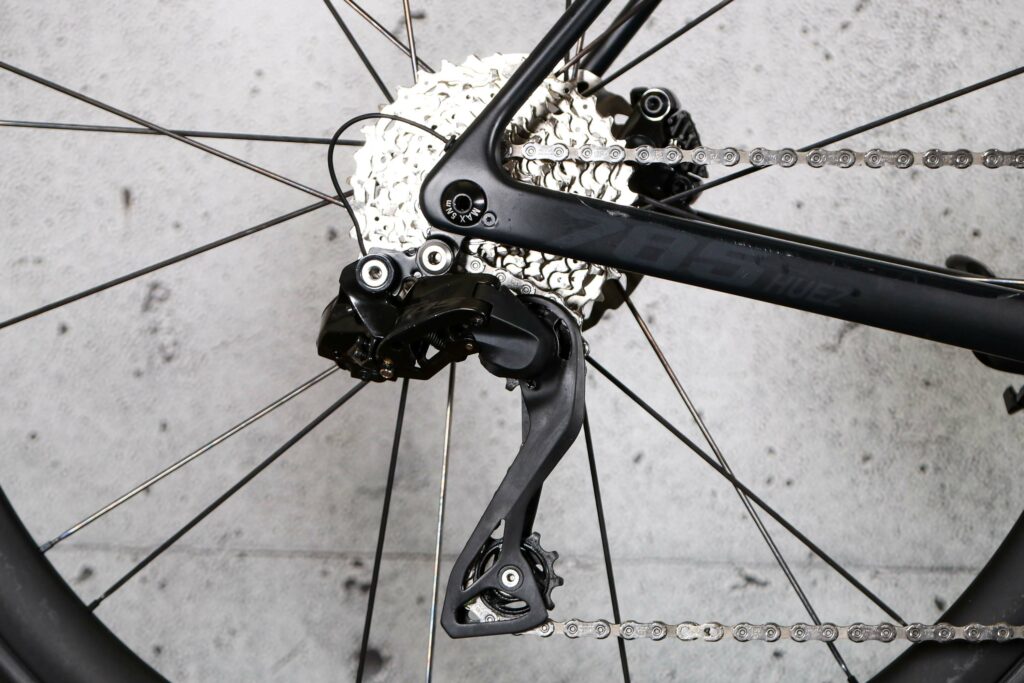
Shimano’s 105 Di2 rear derailleur takes a maximum sprocket size of 36T and has a total capacity of 41 teeth. That means you can use it with the setup described above.
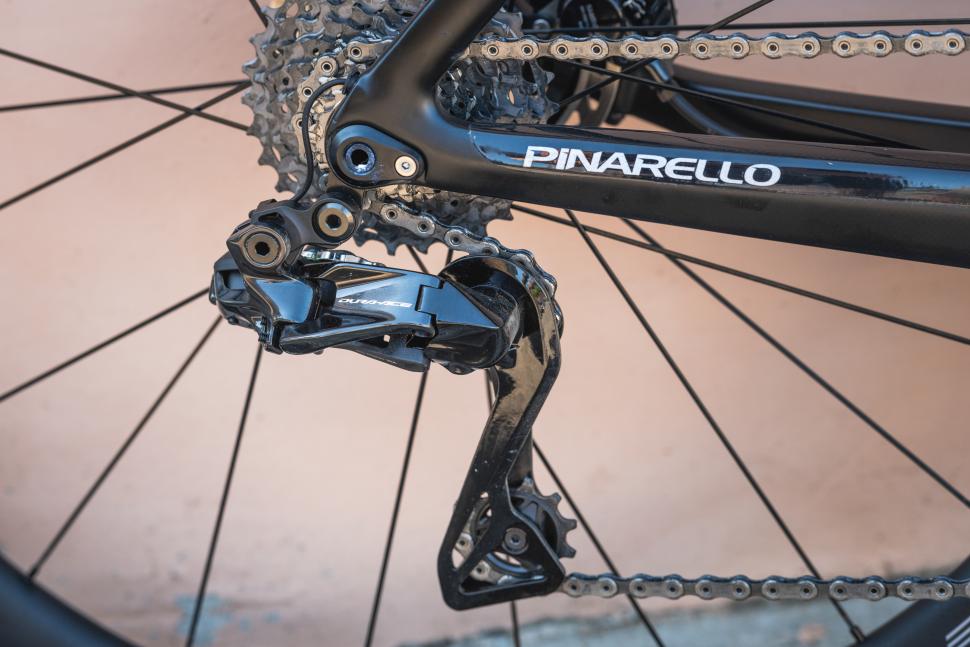 Shimano’s Dura-Ace rear derailleur takes a maximum sprocket size of 34T – which would be fine – but it has a total capacity of 37 teeth, which is less than you need for the combo outlined above. To deal with that, the Dura-Ace Di2 rear derailleur has Shimano’s Gear Position Control (GPC) enabled, blocking the smallest two sprockets of the cassette when the chain is in the smaller chainring.
You might find that in some cases, components work fine outside of the limits stated by the manufacturer, but don’t tell anyone we said that. If we were swapping our cassette for a larger one, we’d certainly try it with our existing rear derailleur before shelling out any money on a new one, even if that wasn’t strictly within the manufacturer’s recommendations – but that’s your call, of course.
Swapping your chainset
If you’re on a road bike, you’ll probably have a double chainset – with two chainrings – although 1x single chainring setups have become more popular over recent years. There are various common double chainring combinations.
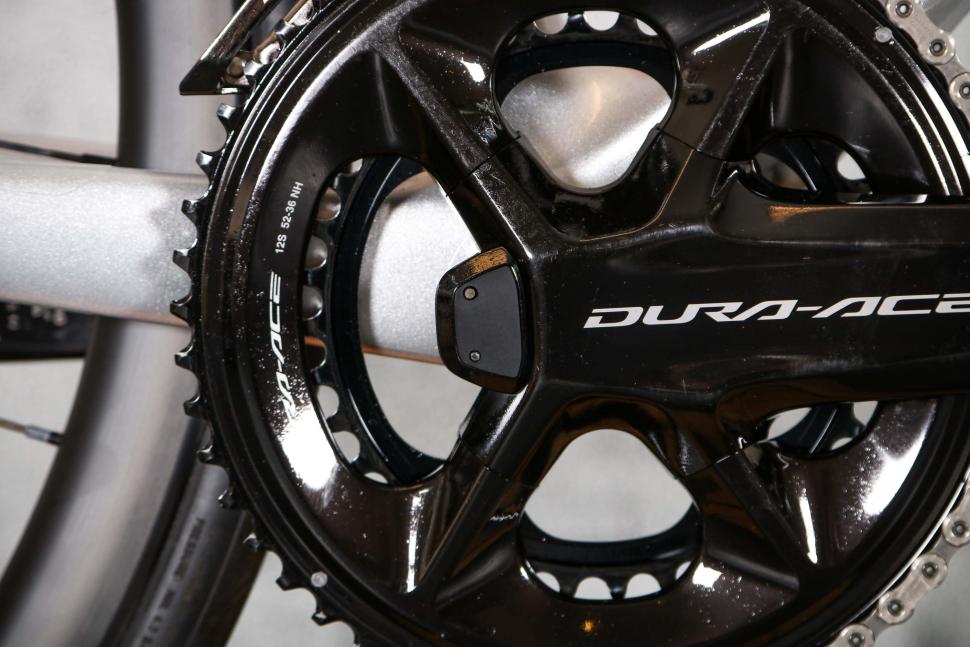 If you have a 52/36T (semi-compact) setup, for example, and you find the gearing too hard, you can buy a 50/34T (compact) chainset or fit smaller chainrings to your existing cranks (check that the new chainrings are compatible with your chainset before buying).
You’ll also need to alter the position of your front mech and get yourself a new chain (or shorten your existing chain).
Like rear derailleurs, front derailleurs have a maximum capacity. Here, it relates to the difference in size between the large chainring and the small chainring. So, say you’re using 50/34T chainrings: the difference is 16 teeth.
 The capacity of a Shimano 105 front derailleur, for example, is 16T so it’ll cover all of the common double chainset combinations.
If a compact chainset isn’t small enough, you can go lower still with a sub-compact option. The gravel/adventure bike movement has been the main driver of sub-compact chainsets. Shimano offers its GRX RX820 gravel chainset with 48/31T chainrings, for instance, while its RX600 chainset comes with 46/30-tooth chainrings.
Going for a triple chainset
One final option for changing your gearing is to swap from a double chainset to a triple chainset, although there aren’t many out there anymore. A typical triple setup for the road has a 30T inner chainring compared with the 34T inner chainring of a compact setup.
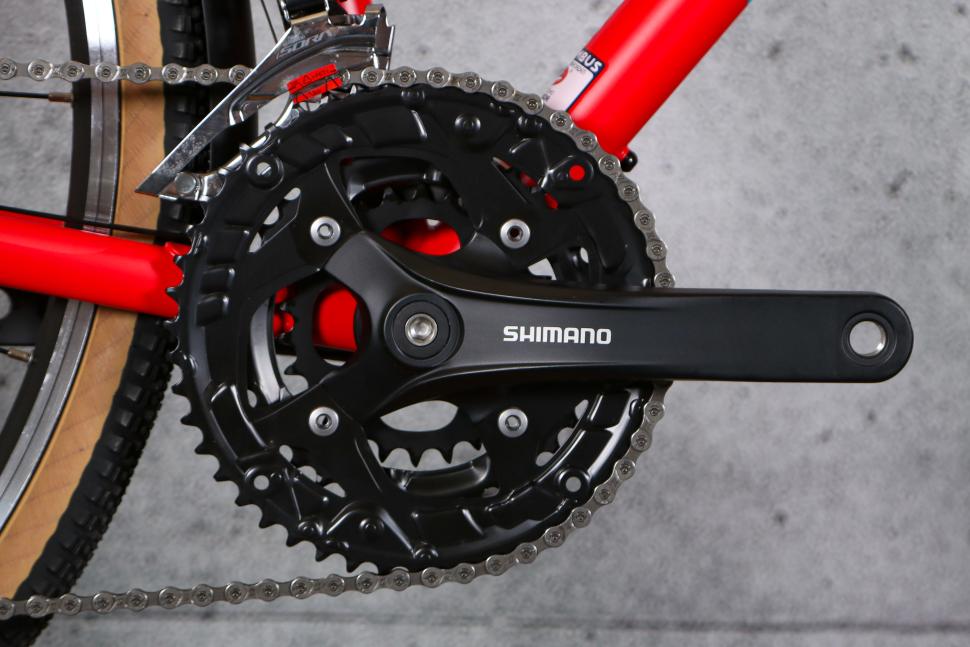 Over the past few years, the introduction of cassettes and rear derailleurs that provide a super-wide range of gears has meant that triple chainsets have fallen out of favour. As far back as 2017, we were asking whether we were seeing the death of the triple chainset, and things have only declined for the triple since then. That said, some people get on well with triples, especially for touring; it comes down to personal taste.
Swapping from a double setup to a triple is pretty complicated. You’d need to change your shifters, your chainset and probably your derailleurs too.
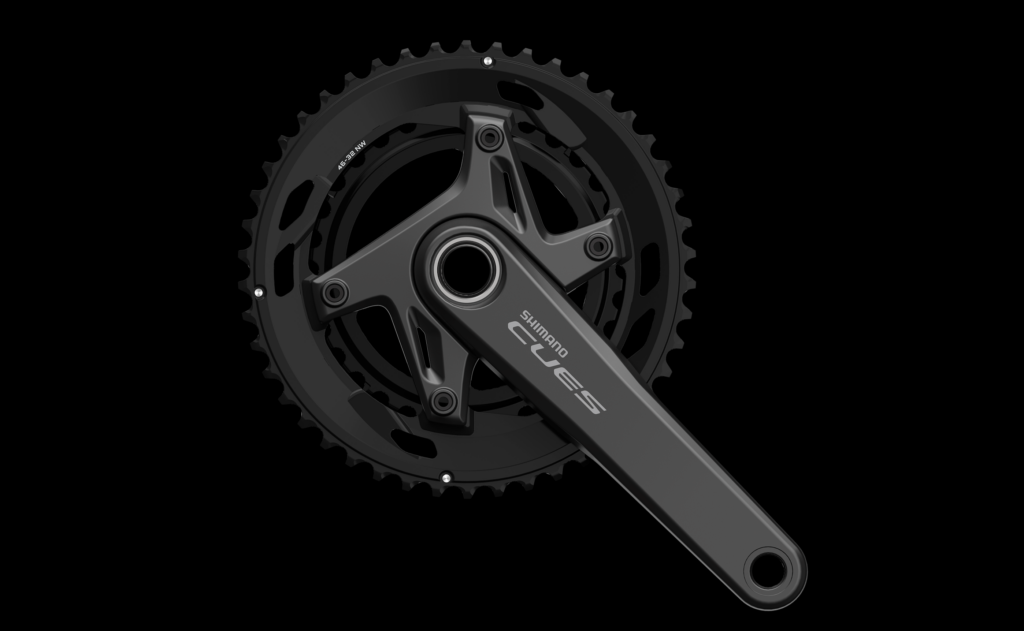
You can still find Shimano’s Tiagra 3×10-speed, Sora 3×9-speed, and Claris 3×8-speed components with retailers, although these groupsets are being phased out in favour of Cues (below), which offers only single and double chainsets.
Good luck out there on the climbs.







17 thoughts on “Suffering on the hills? Find out how to get lower gears to make climbing easier”
I suppose it marks me out as
I suppose it marks me out as an old timer (although actually I never had a bike with a triple chainset until I bought a secondhand Specialized Tricross a couple of years ago) but I really can’t understand why triples have gone so out of fashion. It gives me a 50/11 top gear and a 28/34 bottom and it can climb virtually anything. In ten days we are off to (hopefully, it’s a bit weather dependent) do a 100 mile day ride around Loch Ness with approximately 2300 m climb and I’m taking it with me in preference to my beautiful Roubaix Dura Ace Pro because although it’s at least 4 kg lighter that has a bottom gear of 34/28. Obviously for young strong riders who don’t have 56-year-old knees it might not be necessary but for me it’s a godsend.
I don’t know either, but if I
I don’t know either, but if I ever get round to replacing the cost-amortized-probably-a-decade-before-I-got-it-for-free Dawes tourer … I’ll probably get something with another triple if they’re still out there.
I don’t think you’ll regret the lower gear although that vs. an extra 4kg is definitely a question. Can’t recall which bike I used but if it was the Dawes then I had a low of 28/28 and still did some walking e.g. going up from Fort Augustus to Loch Tarff.
We’re missing out that bit
We’re missing out that bit (General Wade’s Military Road, yes?), not for fear of the gradient (honest!) but because we’re starting in Inverness and don’t fancy the look of the A road all the way down the northside of the Loch, so heading almost all the way to Aviemore, turning south at Craggie (is there a more Scottish name in existence?) on the way back for a 70 km loop through the lochside hills, down to Foyers and along the south side of the Loch home. I think that way we avoid some of the worst gradients, although the route planner does show some spikes above 20% so I’m sure the low gear will come into play!
Lovely. And the A82 is
Lovely. And the A82 is certainly to be avoided. Foyers and the lochside are probably the best of it (without breaking out the gravel / off-road bikes).
If you get the time (and like “old stuff”) a diversion via Clava Cairns might be of interest. OTOH that may depend on “atmosphere” – if I’d visited in the middle of the day in the sunshine and with a minibus full of folk it might have lost something!
Cheers, we are hoping to get
Cheers, we are hoping to get out to Culloden either the day before or the day after so will definitely bear that in mind. Spot of dolphin watching on the cards as well and a cabin on the Caledonian sleeper, can’t wait!
Can’t see why you’d need to
Can’t see why you’d need to change the rear derailleur for a triple chainset, maybe the front derailleur.
A triple generally offers a greater range particularly lowest gear and closer ratios . Nothing more annoying than clicking down one as you’re grinding uphill only to stall because the new gear is so much lower that all momentum is lost, particularly off-road.
anotherflat wrote:
Definitely the front unless you’re still using friction shifters instead of indexed; the rear wouldn’t be compulsory but probably desirable to switch to a long cage to take full advantage of the low gears on offer. If you’re installing a triple with, say, a 30T small ring you’re probably going to want a bigger largest cog on the back than the 28T or even smaller to which a short cage rear will confine you.
anotherflat wrote:
Whether you need to change it depends on the capacity of the derailleur as the article says:
By way of example on my touring bike the rear derailleur has a capacity of 45 teeth.
That means that with standard Shimano mountain bike gears I can run a 44/32/22 or a 48/36/26 chainset and an 11-34 cassette and the rear derailleur will work just fine.
44-22+34-11=45
48-26+34-11=45
However I run 48/32/22 with 11/34
48-22+34-11=49
which is outside of the capacity of the rear derailleur.
And because I have drop bars and road shifters the road front deraileur only has a capacity of 20T, and I’m well outside of that. Even with a 44T chainring I’d still be a couple of teeth outside.
48-22=26
Shifting still works (mostly) but because the front derailleur has to be higher the shifting into the inner ring requires the chain to be on the lower-geared half of the cassette, and also in small-small the chain touches the front of the rear derailleur cage when it is horizontal. It is not ideal but so far I’ve been prepared to live with sub-optimal shifting in gear combinations that I don’t use to get a very low bottom gear for climbing high mountains fully loaded, and a very high top gear for fast decending giving a range of nearly 700%. However, having got a speed record that I’m unlikely to improve upon maybe I’ll swap the big chainring for a 44 and enjoy flawless shifting.
If you look at the specs for your existing components you’ll be able to calculate whether any proposed changes will work properly.
Its good that the article
Its good that the article calls out trying out of spec gears first. Shimano especially are notoriously conservative on the max settings – so you’ll quite often get bigger range for “free”.
For instance my GRX 815 kit is currently running flawlessly on a 36t cassette (max 34) and an 18t front spread (max 17t). 48/30 by 36-11 which gives 18+25 = 43 = 5 teeth above the 38t max.
GRX 11sp is also pretty well known for supporting massive rear sprockets – I’ve seen reliable reports that 42-11 works on 2x with a just Wolftooth link mod.
I fitted an 11-40 on my
I fitted an 11-40 on my 2x11sp GRX Checkpoint. Works perfectly, no other mods, no adjustment, no longer chain and able to use biggy big without issues. I wouldn’t but I know I won’t rip the mech off if I inadvertantly go there!
That’s worth knowing. Useful
That’s worth knowing. Useful information
My 14 year old trek was
My 14 year old trek was recently upgraded to 10-36t rear with regular old Shimano hg free hub (cassette is deore xt 10 sp). I was able to do that by swapping to medium cage 105 rear derailleur and adding a wolftooth road link (derailleur hangar extender link) which increases the max tooth ability of the rear mech, but I’m still subject to the “range” limitations…so to overcome this I decreased the front chainrings from 34-50 to 34-46t. Again a mountainbike chainring was sourced for this…or at least that’s how it looks, it didn’t say ..
Anyway, it took me a while to realize that the solution to getting a bigger cassette gear was to get a smaller big-chainring…so I thought I’d share! 🙂
“Have you ever tried hybrid e
“Have you ever tried hybrid e-bikes? When you run out of power, why suffer with huge gears instead of just switching to a regular e-bike? Sure, it might not look super cool, but it gives you wings again. Honestly, I don’t need one right now, but one day I’ll definitely make the switch. And there’s absolutely no shame in that. I just want to have fun in the hills—no sense pedaling like a hamster for 5/10 km/h
The advice in this article is
The advice in this article is pretty basic, if you *actually* want lower gearing you should check out this road.cc article from 5 years ago. https://road.cc/content/feature/how-get-ultra-low-gearing-gravel-bike-adventures-246424
Most road bikes sold to the
Most road bikes sold to the non-racing public are ridiculously overgeared. Even when I was competing successfully at national level in masters 5 racing, I only had a big gear of 48-11, and now that I’ve hung up my racing wheels, the largest gear I have on any bike is 42-11, with 42/30 or 42/29 being the chainring combination. After all, a 44-11 top gear is exactly the same as the 52-13 that was the standard top gear on racing bikes when I started racing in the 1970s, and riders won the TdF with that.
The same goes with cassettes. Now that the number of rear gears has more than doubled over the last half century, the five smallest cogs on an 11-34 cassette are all single tooth jump spacing, just like the corncob freewheels we raced on when I started.
Agreed. I’m not a racing
Agreed. I’m not a racing cyclist at all. The first thing I did on my last 3 bikes was to put a GRX 46/30 crank on and a 11-36 cassette.
Even then the number of times I usethe 46/11 is tiny.
I think you’re taking a risk
I think you’re taking a risk if you run things outside the maker’s specifications. Sure it will work on the stand but that day miles from home when it breaks?
Can I give a another shout out for the Miche cassettes starting at 13t.
There’s never been a better time for hill climbing with a good range of gears : we’re a long way from 52/42 14-28 back when 2 x 6 was considered exotic.
Finally, I didn’t save it but there was a version of this meme in which everyone’s set-up 1×12, 1 x 11, etc is written on and Homer is 3 x 9.