



If you’re thinking about buying a GPS bike computer, chances are that at least one Garmin Edge has made it on to your shortlist. How do you choose between them? That’s where we can help.
-
Garmin pioneered the cycling GPS unit back in the mid-2000s with the first Edge 205; that first-mover advantage has kept them at the forefront of the category despite strong competition
-
Like other cycling GPS units, Garmin’s fall broadly into two categories: with and without maps. Non-mapping Edge models are good for ride-recording and fitness tracking, mapping units add detailed navigation capabilities
-
Garmin Edge GPS units capable of ANT+ and Bluetooth communication are available with and without sets of sensors; unless you really need a speed and cadence sensor, the premium is usually silly and you’re better buying a third-party heart rate sensor
-
Nominally discontinued Garmin Edge devices often persist in the retail channel at discounted prices
The Garmin Edge GPS bike computer range
We’ve reviewed most of the Garmin Edges here on road.cc, so whether you want something simple to show your speed and track your ride, or you want advanced navigation and/or high-tech training features, we can talk you through what’s on offer.
As ever, we’ve cited the best on-line prices we can find at the time, but they do vary. If you really want to save money you can also consider older Garmin Edge computers. These have been superseded in the range but can still be found second hand.
Read more: The stuff they don’t tell you about GPS bike computers
The current Garmin Edge cycling GPS computer range
Edge 1030 Plus — £420.47 | £499.99 (bundle with sensors)
RRP: £599.99 (Performance bundle)
Size: 58mm x 114mm x 19 mm
Display size: 88.9 mm diagonal, 282 x 470 pixels
Weight: 124g
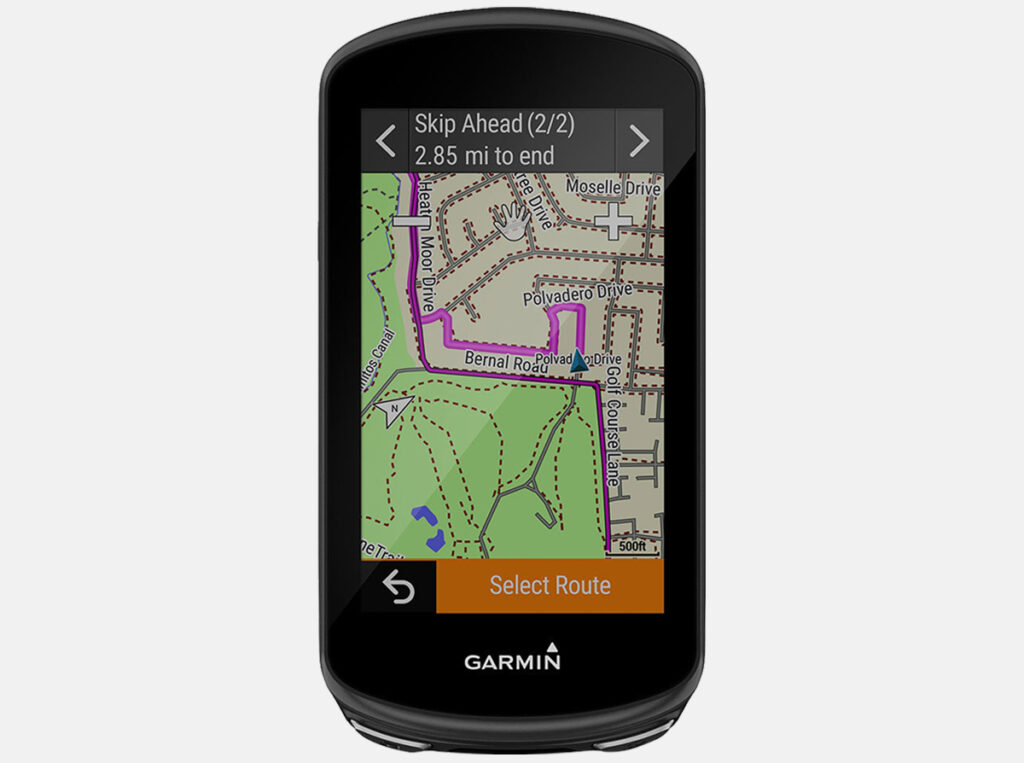
The Edge 1030 Plus is Garmin’s flagship on-bike GPS, but it’s an incremental improvement over the Edge 1030, below, rather than a great leap forward.
In addition to the Edge 1030’s features and 282 x 470 pixel screen, the Edge 1030 Plus gets Garmin’s Climb Pro app which gives you a load of data about the climb you’re toiling up to a) distract you from the pain and b) help you pace yourself so you don’t blow it all on the first steep bit. Climb Pro was first launched on the Edge 530 and has been added via a software update to the Edge 1030.
For off-road riding, the Edge 1030 Plus has the Trailforks app, preloaded with trail details from “more than 80 countries.” Its Forksight mode lets you know about upcoming forks in the trail and shows you where you are in a trail network.
The Edge 1030 Plus also lets you pause turn guidance on a route you’re following and pick it up later. That means you can go explore a newly-discovered byway, or divert into a town for cake without the unit trying to recalculate your route or tell you you’re off course.
Last but not least, Garmin has beefed up the battery compared to the Edge 1030, and now claims it’ll go up to 24 hours even with multiple paired sensors and connected features, including LiveTrack running.
Buy if: You want the latest features, largest screen and longest battery life
Edge 830 — £299.99 (£359.99 with sensor bundle)
RRP: £349.99 – with sensor bundle: £429.99
Size: 49mm x 73mm x 21mm
Display size: 66mm diagonal, 246 x 322 pixels
Weight: 79.1g
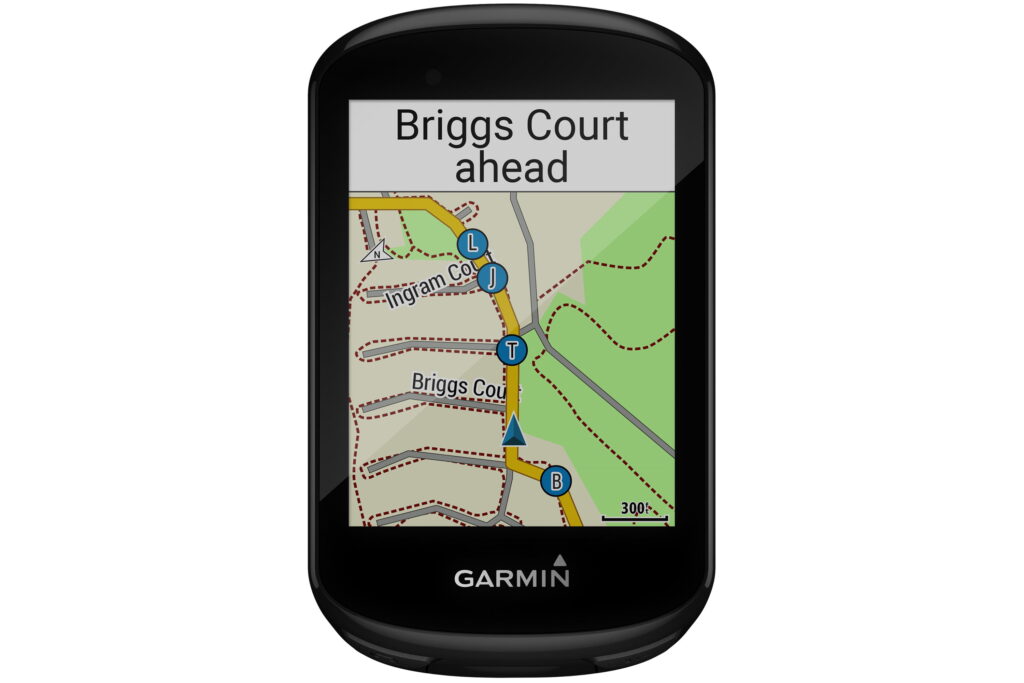
The Edge 830 is the Edge 530’s big brother, with a touchscreen and fewer buttons but otherwise almost identical set of features.
The significant differences between the 830 and 530 relate to navigation. The 830 can find and navigate you to a specific address or point of interest, which the 530 can’t, and you can use the 830 to create a course linking a series of points, or create a roundtrip course. In combination with popularity routing, which uses Garmin’s vast database of rides to point you down the rods other riders use, it should substantially improve navigation compared to previous Edge units.
Edge 530 — £219.00 (£295 with sensor bundle)
RRP: £259.99 – with sensor bundle: £349.99
Size: 50mm x 82mm x 20 mm
Display size: 66mm diagonal, 246 x 322 pixels
Weight: 76g
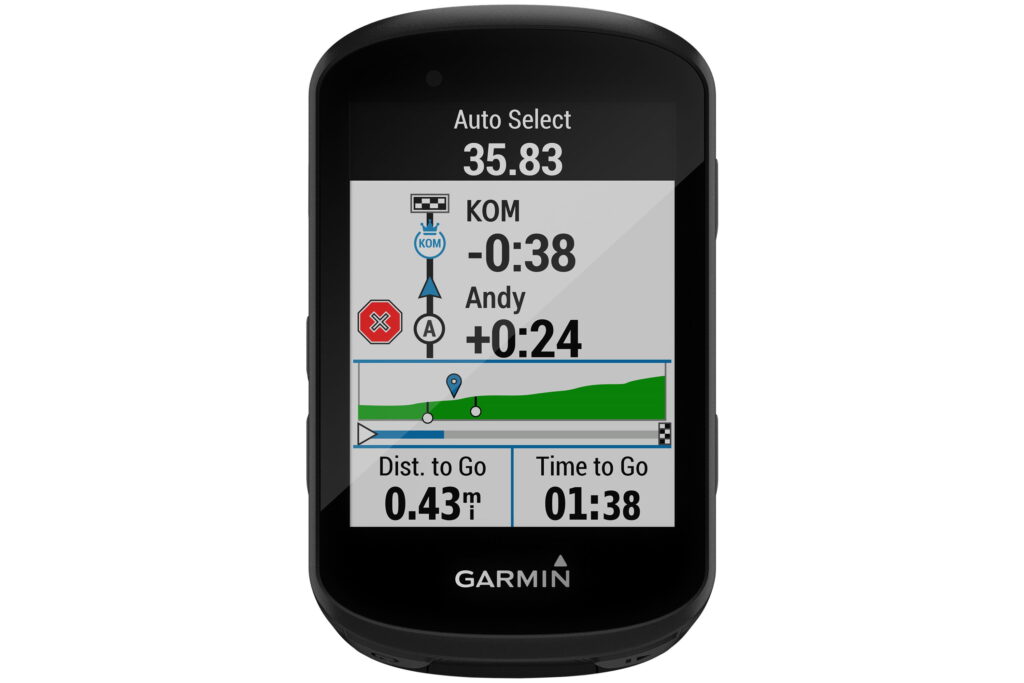
The cheaper of the pair of new GPS units that Garmin launched in April 2019 is physically the larger of the two because its case has room for buttons, while the Edge 830 is mostly touch-screen operated.
The Edge 530 is a mapping GPS with a colour screen and a claimed battery run-time of 20 hours. Plus, it can be used with Garmin’s Charge power pack which was introduced with the Edge 1030.
In fact, what Garmin has done with the Edge 530 is bring the Edge 1030’s feature set to a cheaper unit by trimming the screen size and dropping the touch screen. You therefore get a plethora of training and fitness features such as VO2 max, Recovery Adviser, FTP/Watts/kg tracking, and performance condition/lactate threshold/stress score, among others.
Most importantly, the 530 and 830 boast new processors which substantially improve the speed with which they perform tasks like loading and planning routes.
One major new feature is the ClimbPro app which shows you the remaining ascent and grade when you’re climbing, while following a route or course. The idea is to help you gauge your effort over the remainder of your ride, so burning out on your first climb of the day when there are plenty more to come should become a thing of the past.
Edge 130 Plus — £169.99 | £219.99 with heart rate
RRP: £169.99 – Performance Bundle £219.99
Size: 41mm x 63mm x 16 mm
Display size: 45 mm diagonal, 303 x 230 pixels
Weight: 33g

The latest version of Garmin’s smallest GPS unit gets the Climb Pro app from the Edge 830 and 1030 Plus, and mountain bike metrics, that’ll tell you jump count, jump distance and hang time after you’ve been out shredding the gnar. It’s very much an incremental change over the Edge 130, below.
Edge Explore — £169.99

RRP: £219.99
Size: 105mm x 55mm x 22mm
Display size: 39mm x 65mm, 240 x 400 pixels
Weight: 116g
Not to be confused with the Explore 1000 or Explore 820, the Edge Explore is a mapping GPS unit for riders who don’t need all the training and fitness orientated features of the more expensive Edge units, but who do want a decent-sized screen and map, and the ability to connect to heart rate monitors for basic fitness measurement.
You don’t get the level of customisation of the 1030, 830 or 530; the unit assumes you have just one bike, for example, and there are just two customisable screens. But you still get features such as LiveTrack and GroupTrack for keeping in touch with home base and other riders, support for Connect IQ apps, incident detection to send an alert if you crash, Bluetooth and ANT+ connectivity for everything but power meters and loads more.
And unlike previous Edge Explore and Touring models, the price is sensible.
Buy if: You want a general cycling and navigation GPS without the power measurement and training bells and whistles of the more expensive Edge units.
Discontinued Garmin Edge cycling GPS computers
Edge 1030 — eBay search
RRP: £549.99 (Performance bundle)
Size: 58mm x 114mm x 19 mm
Display size: 88.9 mm diagonal, 282 x 470 pixels
Weight: 123g
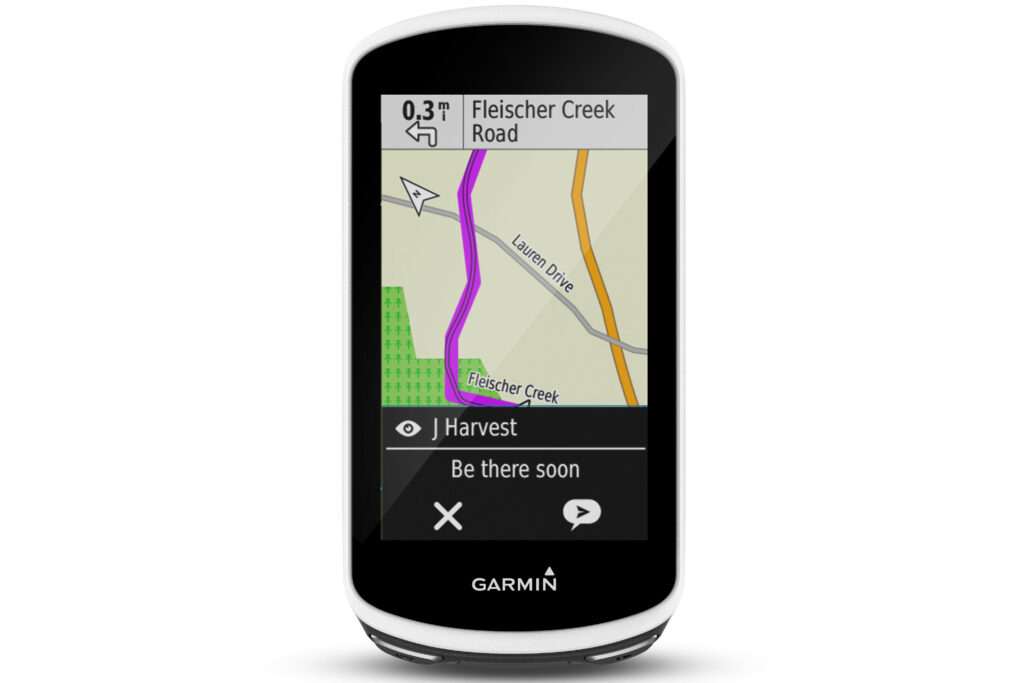
The Edge 1030 boasts the largest screen of any Garmin cycling GPS, aside from the recently-launched Plus version and Garmin says the touch-screen function works in the wet or with gloves. It also has ambient light sensors to automatically adjust the screen brightness to suit the riding conditions. Battery life has been extended to a claimed 20 hours and there’s a new Garmin Charge battery pack accessory to double the run time to 40 hours for longer rides.
Garmin has beefed up the navigation and course planning features. Trendline utilises the many activities uploaded to Garmin Connect to provide routes using the most popular roads and off-road trails, backed up by preloaded Cycle Maps for turn-by-turn directions on all terrain with alerts for sharp corners and elevation information. You’ll also be able to choose from three round-trip suggestions by choosing a distance and starting direction if you want the Edge 1030 to recommended new routes.
Strava fans will be able to make use of the latest version of Strava Live Segments, while Strava Premium users will get further access to real-time races against personal best times. There’s also a new Segment Explore feature that lets you view popular nearby segments. If you want to use the Edge 1030 for serious training, Garmin has developed the new TrainingPeaks Connect IQ app to let you put your daily workouts on the Edge 1030, and it’ll also guide you through the workout in real-time with intensity targets and intervals.
The new Garmin Edge 1030 will cost £499.95 while a bundle option, which includes a premium heart rate monitor as well as cadence and speed sensors, has a suggested retail price of £549.99. There’s a new flush mount that puts the Edge 1030 in line with the handlebars — not above them — for a sleek appearance.
Buy if: You want a big screen and long battery life, but can live without the extra features of the Edge 1030 Plus
Read our review of the Garmin Edge 1030
Edge 520 Plus — eBay search
RRP: £200 – With sensor bundle £290
Size: 49mm x 73mm x 21mm
Display size: 23 mm diagonal, 200 x 265 pixels
Weight: 60g

The Edge 520 Plus was launched in 2018. It packs many of the features from the more expensive 820 and 1030 units into a unit that is the same size as the regular Edge 520.
The big new feature is the integration of Garmin Cycle Maps as opposed to the more basic mapping and navigation on the first 520. The turn-by-turn navigation works for on and off-road courses, and also has alerts that notify you of upcoming turns. It comes with the rider-to-rider messaging service first seen on the Edge 1030, although your ride buddies will need a Garmin computer with this feature too in order for it to work.
Other highlights of the Edge 520 Plus include preloaded Strava Live Segments and advanced performance feedback when used with Garmin Connect and accessories such as power meters and/or a heart-rate device.
Read our review of the Garmin Edge 520 Plus
Edge 130 — eBay search
RRP: £169.90 – Heart rate bundle £219.99
Size: 41mm x 63mm x 16 mm
Display size: 45 mm diagonal, 303 x 230 pixels
Weight: 33g
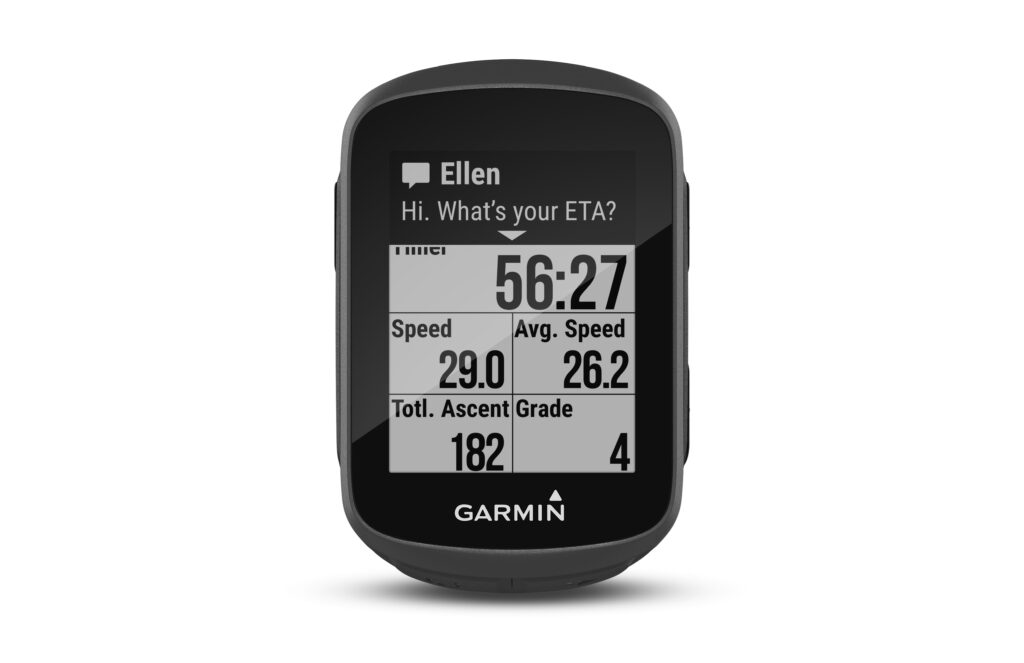
The Edge 130 offers a lot of performance in a small package, with ANT+ and Bluetooth sensor and smartphone connectivity, decent battery life, an easy-to-use button-controlled layout and, perhaps best of all, an absolutely pin-sharp display. You don’t get fully fledged navigation like the pricier Garmin models but the basic setup is usable if that’s not your top priority.
Packed inside the small unit are sensors that use GPS, GLONASS and Galileo satellites for positioning, with a barometric altimeter. We found it picks up the satellites very quickly so there’s no delay to starting a ride, and it hasn’t shown any sign of dropping signal during any rides so far. That’s using just the GPS mode, which the Edge 130 is set to by default. It worked fine. For more challenging areas you could try either the GPS + GLONASS or GPS + Galileo but they come with a battery penalty. Unless you’re having issues in the stock mode you shouldn’t have to worry about changing anything.
The 130 packs a lot more data screens in than Garmin’s previous entry-level GPS devices, with up to 8 viewable at once. There’s no fancy touchscreen, just simple buttons on the side of the unit, and there’s no colour in that screen either, but clarity is excellent in all conditions.
Read our review of the Garmin Edge 130
Edge 520 — eBay search
RRP: From £279.99
Size: 49mm x 73mm x 21mm
Display size: 35mm x 47mm, 200 x 265 pixels
Weight: 60g
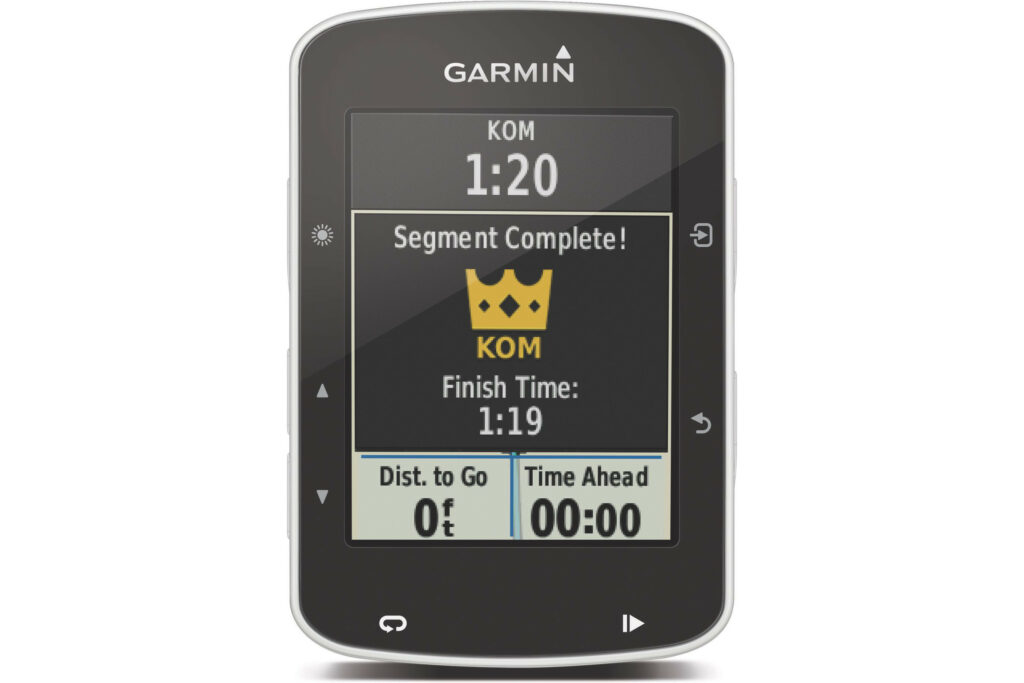
The Edge 520 is one impressive piece of kit. It works smoothly with a good interface and clear display, and is bang up to date with all the features (barring full mapping) you could want from a cutting edge performance monitoring tool.
Headlining with the built-in ability to support Strava Live Segments (also available on the 820 and 1000, below), Garmin takes live monitoring of your performance out on the road to new levels here. It’s a development that will delight segment hunters out there, and it works very well, although you need to pay for Strava Premium membership to enjoy this feature.
Your Strava starred segments are used to populate the 520’s database of live segments, along with a selection of popular segments from your local area. You just ride up to the segment and the device cuts in with warnings of its approach and live comparisons against the KOM, the fastest person you follow, or your own PR.
The Edge 520 has a button interface rather than being touchscreen, and we find that that makes for faster response to commands. Course uploads from Strava and Garmin, and syncing with Garmin Connect, are much quicker than with previous units too.
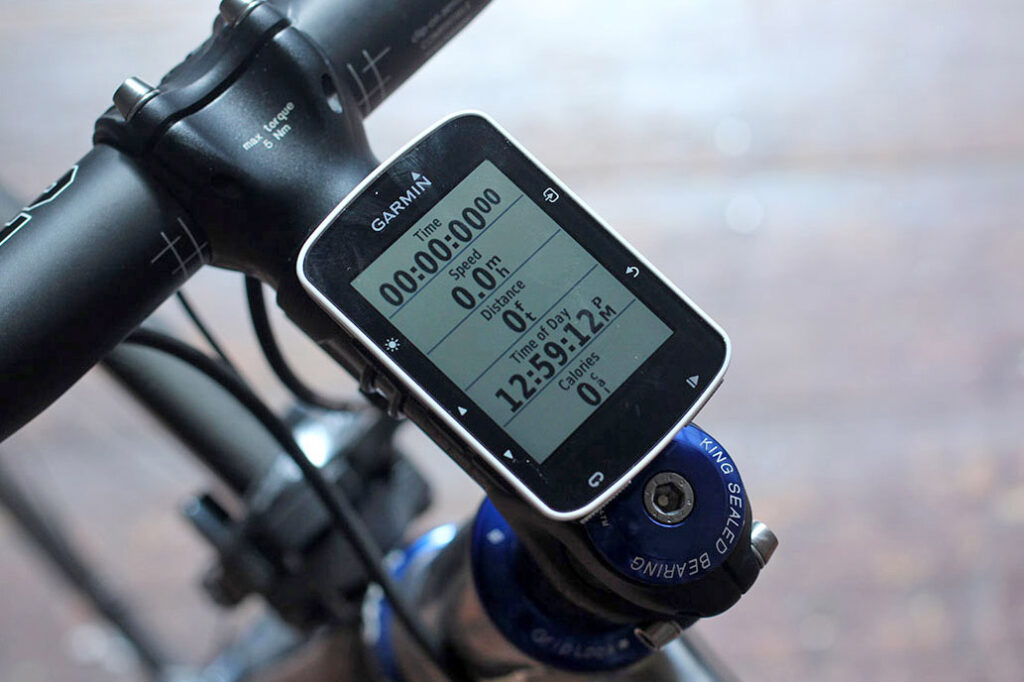
The 520 is packed with features. It includes GPS and GLONASS satellite chips, a barometric altimeter, phone message compatibility, all the usual sensors including left and right pedal power recording from Vector pedals and compatibility with other power meters, Shimano Di2 integration, LiveTrack, Varia bike radar and light compatibility, training zone measuring, Functional Threshold Power monitoring, VO2 recording, and recovery time predictions.
It even boasts a basemap although this can’t be used to plot a route home. Still, it gives a general idea of where you are.
With all the features stashed inside, as well as that improved display and smaller, lighter design, you might expect battery life to take a hit. It has, compared with the previous 510, but the 520 still offers up to 15 hours of life – long enough for a full day’s ride and then some, even with the backlight working and scrolling through multiple pages.
Garmin offers the 520 as a single unit (£279.99) and as a bundle with a heart rate monitor, cadence sensor and speed sensor (£349.99), all of them communicating via ANT+.
There are still a handful of Edge 520 units in retailers, but unless you can find one at a significant discount, you’re better gettking the Edge 520 Plus.
Read our review of the Garmin Edge 520
Buy if: You’re after lots of data in a customisable format and don’t need high-tech navigational features
Edge 20 — eBay search
RRP: £109.99
Size: 40mm x 42mm x 17mm
Display size: 23mm x 23mm, 128 x 160 pixels
Weight: 25g

If you want a simple GPS cycling computer for tracking your speed and distance and sharing rides through popular social training websites like Strava, the Garmin Edge 20 is easy to use, compact and provides a decent battery life.
It’s discontinued, but there are still a few around. However, it’s now as expensive as the more capable Edge 130, so it’s hard to see why you wouldn’t buy that instead.
The Edge 20 isn’t Bluetooth or ANT+ compatible so you can’t use it with a heart rate or cadence sensor. For some, that might be a deal breaker.
The Edge 20 is tiny, barely any bigger than the mount, and looks great on the stem. Garmin’s own quarter-turn mount is a doddle to use and the computer will work with a vast number of aftermarket mounts.
The battery is charged via a special cradle that clips to the back of the computer, and the USB lead also uploads your activities to the web. Battery life is a claimed eight hours and we got pretty close to that in testing.
The display is sharp and shows all the data you really need when you’re riding. You get two different screens and it’s easy to switch between them.
It’s very intuitive to use, and after a couple of minutes you have the measure of the device. The buttons are easy to operate when wearing gloves as well.
While there’s no extensive navigational capability, you can download a route from Garmin’s Connect website and follow a breadcrumb (non-detailed) trail. It’s not as easy as following a map, but does keep you on the right track.
If you’re sure you’re never going to want to keep an eye on your heart rate the Edge 20 will be just fine, but if you might want to add a heart rate monitor in future the Edge 130 is a better buy.
Check out our review of the Garmin Edge 20
Buy if: You want a simple GPS bike computer without Bluetooth or ANT+ compatibility.
Read our guide to 9 of the best cheap GPS cycling computers here.
Edge 25 — eBay search
RRP: From £139.99
Size: 40mm x 42mm x 17mm
Display size: 23mm x 23mm, 128 x 160 pixels
Weight: 25g
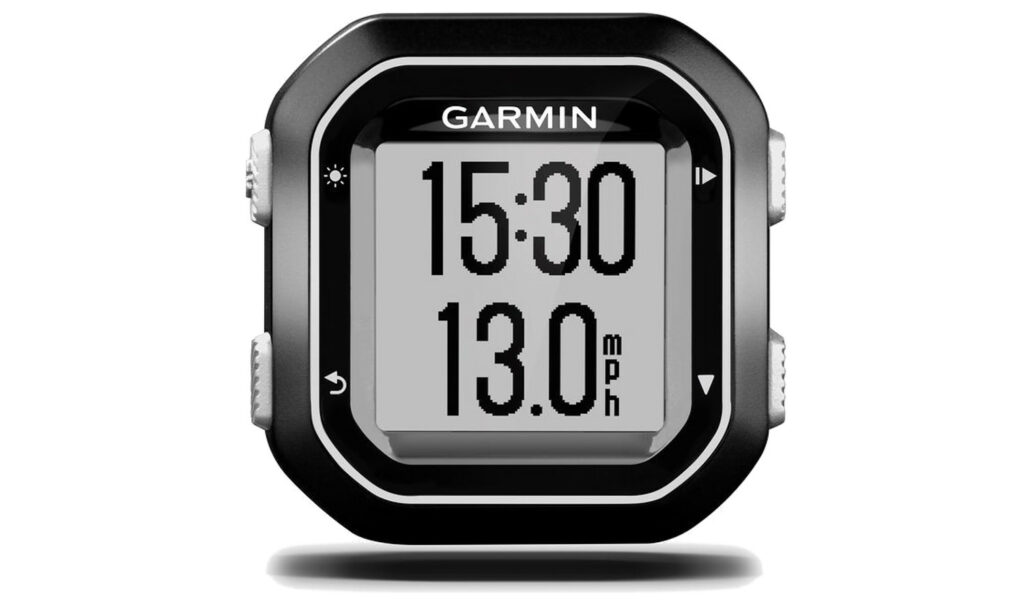
The Edge 25 is very similar to the Edge 20 (above) but with the addition of Bluetooth and ANT+ wireless connectivity. The former allows you to sync the device with a smartphone and Garmin’s Connect app so you can easily upload completed rides.
ANT+ allows you to pair heart rate, cadence, speed sensors, although the Edge 25 isn’t compatible with power meters.
While the Edge 25 isn’t designed for navigation (the bigger Edges are far better at route mapping), you can download courses from Garmin Connect to the Edge 25 and follow a breadcrumb trail which works reasonably well. It even does turn-by-turn navigation, but there’s no base map so you can’t make up a route on the fly.
The Edge 25 will also provide Live Tracking so friends and family can go online and see where you are.
You get three screens during a ride, and you can configure two of them to display metrics from a whole range on offer: ride time, distance, current speed, ascent, calories and so on. You can’t add any extra screens. If you’re a data hungry cyclist that might be an issue.
Still, the Edge 25 is an excellent option if you’re after something small with a good set of features.
Check out our review of the Garmin Edge 25
Buy if: You want a compact GPS computer that’s offers compatibility with a heart rate monitor
Edge 820 — eBay search
RRP: From £299.99
Size: 73mm x 49mm x 21mm
Display size: 35mm x 47mm, 200 x 265 pixels
Weight: 67.7g
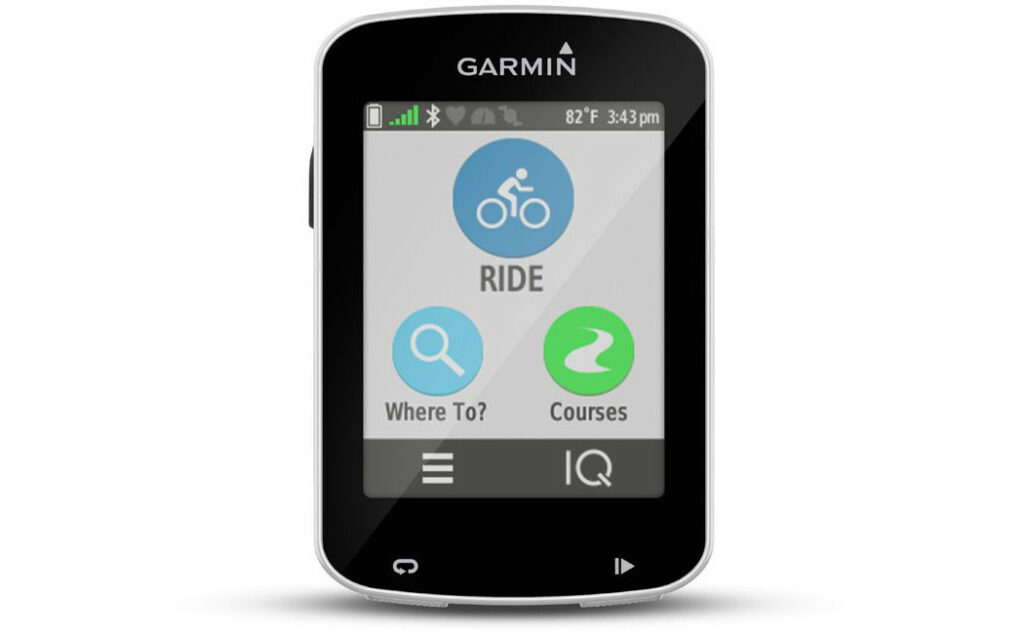
The Garmin Edge 820 is a feature-packed, compact and neat computer – an impressive piece of kit.
It’s aimed at the performance cyclist who wants to be able to navigate, so isn’t as bulky as the 1000 (below), but packs in more features than the 520 (above). The size of the screen means it’s not at the same level as the 1000 in terms of navigation, but it might be enough for your needs.
You get some excellent navigational features such as Round Trip Routing which allows the computer to create a route for you, giving options based on distance, climbing and intensity. Maps have a clear layout making it easy to see exactly where you are going, and turn-by-turn prompts are simple to follow. After adding in a postcode, town or specific site, the 820 will get you to the correct place without fuss.
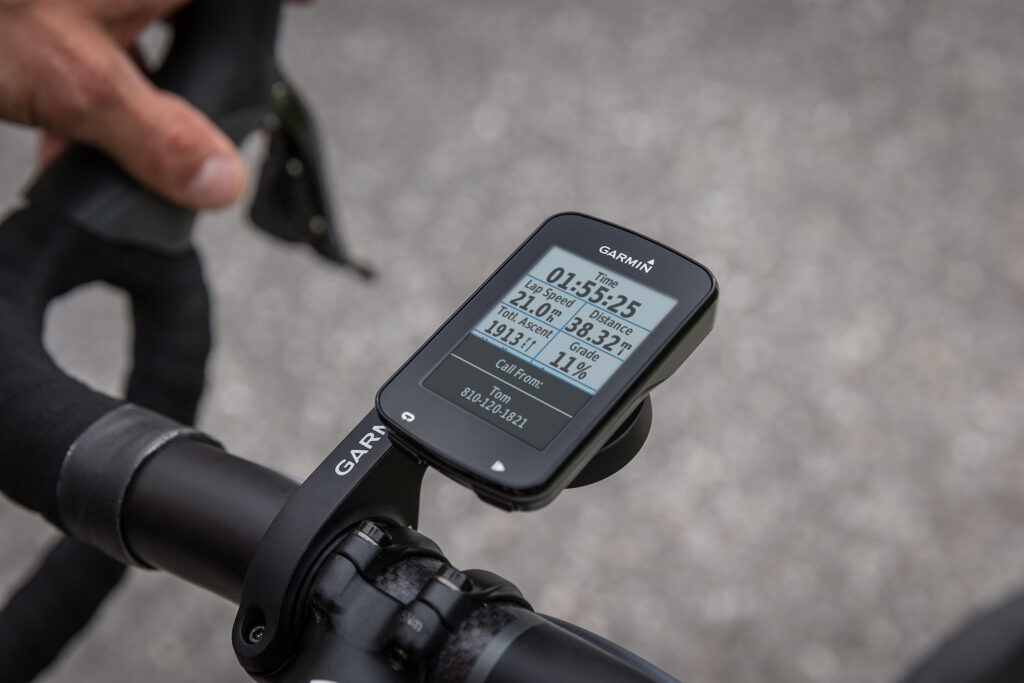
As with other Garmin units, you can customise the data you see on each page and set activity profiles, which means you can have different setups for different uses.
Garmin has also added GroupTrack, which allows you to track up to 50 riders (they must have compatible Garmin computers and follow you on Garmin Connect) within 10 miles of you. If you get dropped or lost, you can easily see where others are.
The unit is operated predominantly through touchscreen, but with two buttons at the bottom and the on/off button on the top left. The touchscreen works okay, but compared with button-controlled computers and the 1000 it seems a little sluggish, sometimes taking a second to react. However, it worked just as well with touchscreen-enabled gloves and was still usable in the wet.
The unit is ANT+ and Bluetooth compatible and is simple to pair with sensors on the bike. It also shows notifications and information from your smartphone.
Garmin is catching up with other bike computers in delivering ‘incident detection’, which means that a text message and location can be sent to a pre-determined contact number in the event of a crash.
Recording is as good as anything we have seen from other GPS computers. There can be a little loss when riding under cover (trees and tunnels, for instance), and occasionally you can see an erratic twitch in your recorded route when riding between tall buildings.
Uploading from the 820 is done through Bluetooth to your smartphone, which is quick and easy through the Garmin Connect app. From there you can either download the file to your desktop or share it with other sites like Strava.
Battery life is around 15 hours, and there are also battery saver modes that can help to extend this, essentially turning off the display while still recording.
If you want heart rate and speed and cadence sensors as well, it’s currently cheaper to buy them separately than to buy a bundle that includes them.
Check out our review of the Garmin Edge 820.
Buy if: You’re a performance-focused rider who wants navigational capability
Edge 1000 — eBay search
RRP: From £499.99
Size: 58mm x 112mm x 20mm
Display size: 39mm x 65mm, 240 x 400 pixels
Weight: 114.5g
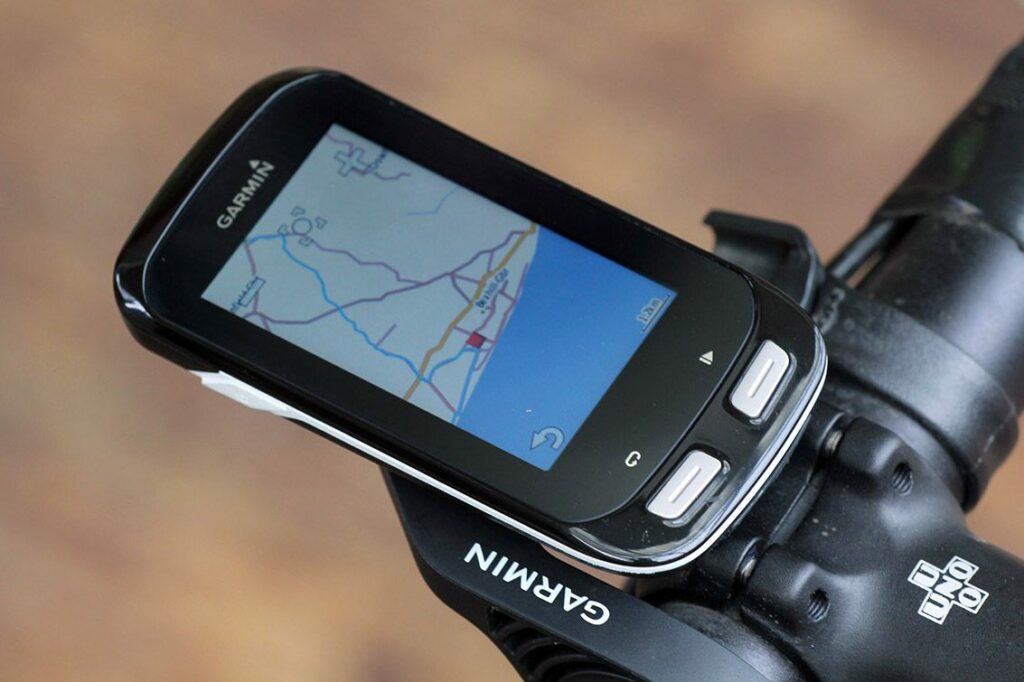
The Edge 1000 is larger than any of the cheaper models in the range, with a screen that’s bigger and easier to read. It’s been superseded by the Edge 1030 and Edge 1030 Plus, and has just about vanished from retailers, but there are plenty around second hand.
Unless you’re planning to go somewhere incredibly remote, you’ll probably find the OpenStreetMap-based mapping to be complete and accurate. The maps are good enough that you can plot yourself a route around an area you don’t know just by using the screen. The maps lose a lot of detail as you zoom out because the screen resolution can’t show you all the little roads on a wide view of an area, so a certain amount of zooming in and out is required if you’re in unfamiliar territory.
The Edge 1000 is capable of turn-by-turn navigation over a prescribed route, or of routing you to a location (or a series of locations) by itself. There are myriad ways of making a GPX file containing a ride you want to do; Garmin’s own Connect portal will do it, as will any number of third-party websites. Once you have your file, you can connect your Garmin to your computer and download it.
Rather than the resistive screen of the 820 (the touchscreen works by sensing the pressure of your finger, not its electric signature), the 1000 uses capacitive technology, like a smartphone (the screen carries a charge and the natural conductive properties of your finger affect the screen’s charge when you touch it). We’ve not had any false input from rain and it has worked fine with gloves on.
The Edge 1000 will pair with ANT+ devices including various power meters and Shimano’s Di2 widget. Displaying the data is simple enough: within each profile (you can set up as many as you need) you can configure five data screens with up to 10 metrics on each. Essentially, if it can be measured and you have an ANT+ sensor capable of measuring it, it can probably be displayed!
The Edge 1000 also has a low-power Bluetooth 4.0 chipset, predominantly so that it can pair with a smartphone. This makes uploading rides simple via the Garmin Connect app. As soon as you save a ride it’s automatically uploaded to Garmin Connect, and because Connect now plays nicely with Strava, from there it’s automatically synced to Strava.
The Bluetooth tether to your phone also allows you to use Garmin’s Live Tracking to broadcast your position to whoever you choose using the phone’s data connection. It relies on a data signal being available, so if you’re riding through somewhere with limited coverage, updates will be patchy.
The Edge 1000 is also WiFi enabled. That means you can set it up on your home or work network, and as soon as you get back it can auto-sync your ride data that way instead.
The Edge 1000’s stated run time is up to 15 hours, but we’ve found that in real world conditions it’s more like 10-12 hours. The screen backlight has the most obvious effect on battery life; if you have it always on at maximum brightness you’ll not get anything like 10 hours out of it.
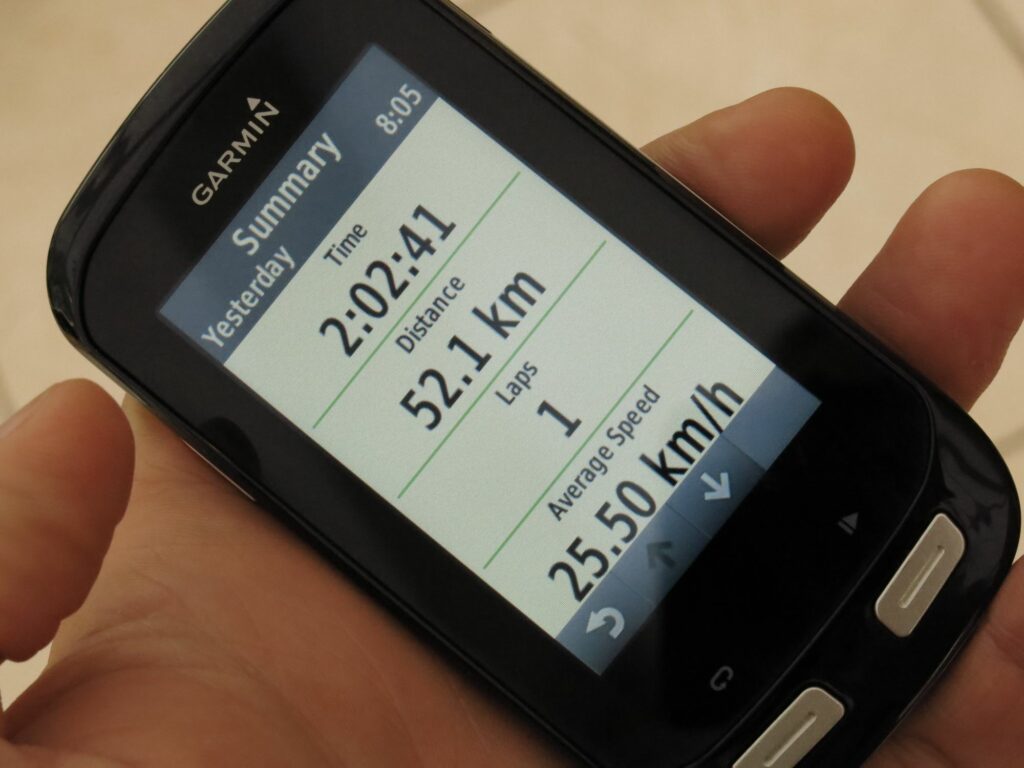
Check out our review of the Garmin Edge 1000.
Buy if: You’re after a dedicated GPS unit with good connectivity to other devices and a large, easy-to-read screen (and you find a great deal on a second-hand unit)
For more info go to www.garmin.com
Explore the complete archive of reviews of cycling GPS units on road.cc



















73 thoughts on “Get to know the Garmin Edge GPS bike computer range”
Never had a Garmin that hasn
Never had a Garmin that hasn’t been riddled with bugs.
Currently have a 520 that often crashes and sometimes uploads rides.
My next computer won’t be a Garmin.
I had an Edge 200 that was
I had an Edge 200 that was great until it died. I now have an Edge 20 which is fab. I also have an Edge Touring Plus which is the biggest pile of chode I’ve ever wasted money on.
guyrwood wrote:
the 200 was the best unit they ever made….. it went downhill after that
My 810 crashed today after
My 810 crashed today after about 220km. Never in a million years will I buy another crappy garmin.
Johnnystorm wrote:
I thought I’d lost a long ride on mine but thankfully even though you couldn’t see it from the menu the flat file could be dragged off by USB.
Like everyone else, I don’t see me buying another. If their car units had all these problems they would be out of business, but until now they’ve had no competition for bike stuff.
Johnnystorm wrote:
I had a Edge 810 as well after 6 months of trying to get the navigation to work and hours spent contacting tech support, I sent it back.
After many years of dealing
After many years of dealing with flakey Garmins i have just hit buy on a leyzne super GPS unit……watch this space…..
I have had 2 Garmins and have
I have had 2 Garmins and have sent them back 6 times, my next GPS unit will be a wahoo.
Just in the interest of
Just in the interest of balance, my two Garmin watches are superb.
My Edge Touring is a bit meh and was crashy for a bit, but that seems to have been resolved since an update. It was £150 for touchscreen, proper maps and turn-by-turn. Who else does that?
My Wahoo has yet to miss a
My Wahoo has yet to miss a beat.
Every weekend on Strava a I notice someone i follow having Garmin issues.
Market leaders!
had an 800 about 6 years ago,
had an 800 about 6 years ago, loved it.
Started cycling again this year and got an 820…what a frustrating bucket of turd that thing is! even after all the bug fixes it still feels like a beta device. Speed sensor kept cutting out all the time.
Finally lost it with it, now boxed up and going in the junk box. Got myself a Wahoo Elemnt bolt yesterday and already like it more than the Garmin.
Up your game Garmin, there are competitors out there now.
r.glancy wrote:
This is what’s stopping me from upgrading my 800. Would like an 820 simply for due to the advances in screen tech and easier data upload to Garmin connect but so many horror stories – presumably brought about by the more complex system not being properly tested/ functional.
Bought an Edge 1000 two years
Bought an Edge 1000 two years ago and it really is utterly hopeless and unreliable as a satnav.
In addition, at times it fails to record rides or segments.
It used to just stop following a pre-planned route. You’d be miles further along and your marker would be stuck miles back. The only way to force it to get back on track was to turn it off and on again, then wait until it figured out where you were along the route. It seems a little better in that respect now – it’s just developed new routing ‘foibles’ as the software updates have been applied over 2 years.
It regularly decides – out of the blue – to tell you to do a u-turn a certain distance ahead, whilst still telling you you’re on-course. Then when you pass the point of the u-turn it complains you’re off course for about 30 seconds before deciding you’re actually back on the correct course you’d been on all along.
I have to deliberately avoid route loops that may cross over, as this fools it entirely. I have to create a separate course that stops just before the route crosses itself and another course that starts just after that point.
It sometimes decides it won’t bother giving turn-by-turn guidance. It’ll show you the route and where you are on it, but no advance warning of upcoming turns, so you need to keep looking down at the map to check you’re still going the right way. Stopping the course and starting it again a couple of times usually gets turn-by-turn to start working again.
Basically its only consistently reliable use is as a glorified bike speedo / mileometer and temperature guage. I’d never by Garmin again based on my experience of the Edge 1000, that’s for sure.
TheScotsman wrote:
Garmins take a route based on a map used by the route planning software and then interprets that route against the loaded maps on the satnav. The symptoms you describe are generally caused by differences in maps which in some areas can be significant enough to stop turn by turn instructions working. Check you have turn by turn enabled and try some different route planning software. I have used ridewithgps and strava without too many issues. Although some routes given to me failed in the way you describe. I now import all routes into a trusted routing platform and then export from there. Also some auto routing between points can go wrong on planning software if you are not very careful, resulting in odd U turns and getting confused instructions at junctions. I think many people are dissatisfied as they expect it to be as easy to use as a satnav, but it’s not just a simple satnav function but a route following function, which has added complexity.
sooper6 wrote:
Garmin navigation: tempting, beguiling, but will let you down just when you’ve started to trust it again.
The U-turn nonsense can occur even when you’ve used the device as a route planner, using only the internal map! Moreover, it may ask you to make a U-turn, not here and now on this grass track or single carriageway, but way down the road – I think 1.77 miles is the longest that I’ve seen. It seems to me that a sensible cyclist could make a U-turn anywhere on a road or track that doesn’t have a central barrier.
As TheScotsman says, Garmin software is full of these absurdities and unreproducible glitches. Garmin really should take time out* to fix all their known bugs before they even think about upgrading their software or introducing new hardware. Then they could come back with a product that would really flatten the opposition. While they’re at it they could also upgrade the new Garmin Connect Mobile, to allow older Garmins to connect to mobile phones via usb cable.
* a year, or more?
I use a Magellan Switch Up
I use a Magellan Switch Up which is a GPS tracker (though has a breadcrumb trail feature) similar to the Garmin 20/25. it’s ANT+ and can do HR/cadence and power meters, the screens are extemely interchangeable data wise and you can add screens if you so wish but the ones already there show you 99.9% of what most will use.
The other advantage is that you can just clip the Switch UP onto the provided watch strap which it comes with and use it for swimming and running/walking.
for Nav i use a Teasi One which replaced my venerable Magellan meridian (which is still working fine) it’s a great little Nav, wouldn’t touch overpriced Garmin’s with a bargepole!
^ I’d never seen the Teasi
^ I’d never seen the Tahuna stuff, but that answers my “£150 for touchscreen, proper maps and turn-by-turn. Who else does that?” question!
Looks a decent alternative – very good shout.
davel wrote:
There’s a second answer to that question too…. I use a Garmin Edge 25 most the time, has all the functionality I need and nothing more.
But when I need mapping etc I do have an alternative.
My alternative cost me £100, it has bluetooth, wifi and GPS, has open source maps as well as google maps. It also has a built-in camera and enough storage to save several HD movies to it (if I want), it’s waterproof AND it’s able to call and text people.
Pretty good for an old phone!
wellsprop wrote:
Whilst i’ve kept my samsung S2 for similar reasons you’re stating, how many phones even when stripped of the bloatware can get anywhere near the run times of a standalone GPS unit?
I had being using my phone but honestly unless I’m really going somewhere that is unfamiliar and I need to make lots of turns/multiple destinations I’ll just use a map/directions I’ve drawn onto a bit of paper and use the Magellen switch for data after the fact. The Teasi I got for £75 in April and it’s a nice toy but it doesn’t come out on every ride, probably not even 10% as I simply don’t need it but for more serious riders and those that feel the need for a turn by turn/data recording for everything then a standalone GPS unit has distinct advantages over a phone which in turn does have advantages over a GPS.
wellsprop wrote:
Yeah, that’s the obvious choice, but I don’t think I’ve ever had a phone that is properly (torrential rain) waterproof and useable with gloves, which has a battery that’ll last for 8 hours with screen/navigation on. As such, it’s a separate satnav gizmo for me.
Sounds like I have a standard
Sounds like I have a standard 820 i.e a pile of sh*t, like others have said it frequently just decides to stop giving me turn by turn directions or weirdly has added turns that aren’t on the route usually down a dead end street. I can’t have a route that starts and ends at the same place i.e. my house, as this confuses the Garmin into thinking I’ve finished a route before I’ve even started. Like r.glancy mine’s getting boxed up and probably sold while I’ll be getting myself a Wahoo Elemnt.
schlepcycling wrote:
stick it on the bay, it will sell quickly..then get an elemnt bolt. now back in stock at Wiggle. love it already, less guff and actually useable in daylight..oh, and you wont be left screaming at the useless touchscreen.
r.glancy wrote:
Very true, but I can’t decide if I should hold out for one of these coming around August https://www.hammerhead.io/
schlepcycling wrote:
I kind of hope you didn’t, because I’m not sure August has arrived yet…
I was on the introductory offer list earlier in the year, but decided against, partly because I had the feeling even then that they weren’t likely to deliver on time, and partly because it was going to ship from the States and not a UK or even EU distributor (meaning extra faff with import duties and any necessary returns).
I went for a Wahoo Elemnt Bolt instead, which existed, had UK distribution in place, and as a bonus, is smaller. It has worked flawlessly and I haven’t regretted it for a moment.
Had the Wahoo Elemnt for
Had the Wahoo Elemnt for around three weeks now and cant fault it. I know it’s quite a step up from my Garmin 500 in terms of features and nav, but i’m just blown away by it. I did a ton of research on forums and reviews etc. before pulling the trigger and read sooo many Garmin users complaining about issues, I really think Garmin are on borrowed time in the bike computer/gps market.
Just for some balance I have
Just for some balance I have a 520, reluctant upgrade for a Cateye Stealth 50 (which is pretty solid unit in its own right) after reading all the horror stories.
It’s been spotless so far. It will ocasionally lose my phone, but usually it’s back within a minute. Outside of that, no issues. Battery will last me through the week after charing it Thursday or Friday night.
Yes, the setup is clunky, but it’s a one-and-done sort of thing. And still much easier than my Cateye (but again, that was a one timer). To be fair, though, I rarely use the navigation, and the things I’ve most enjoyed about the upgrade have been the faster signal adquisition, the pretty and customizable screen and the wireless connectivity. But those three things have made a huge difference in convinience. And it’s nice to know all the other features are there if I need them / get around to using them.
Another member of the no
Another member of the no Garmin ever again club here. Don’t do it people.
Quite amusing that this piece
Quite amusing that this piece of advertorial is accompanied by a comment thread panning pretty much every current Garmin product.
Like others, I think Garmin will be the next Kodak or Nokia – and they’ll deserve it.
I have an Edge 25 that works
I have an Edge 25 that works fine. Simple, gives me what I want to know, and is easy to operate.
I also have an Edge 25, first
I also have an Edge 25, first cycle computer I’ve had with built-in GPS (note though, does not really do good map-based navigation), and it syncs to Garmin, and then to Strava. Works fine.
Couple of nit-picks. No built-in odometer – worked around that in my account in the Garmin Connect website by adding a fictitious piece of gear (equipment) when the bike was on a round number of miles, for example at xx miles create gear called “Odo + xx miles”. Don’t think you can pause mid-ride and power down the unit, you have to leave it on but paused. However, neither is a big problem to me.
I’m using an Edge 500 that is
I’m using an Edge 500 that is a few years old now. While it still works fine and I’ve been really happy with it, I’m thinking of getting something new, mainly for the convenience of uploading rides via my phone instead of having to plug into a PC (it should be possible via a USB OTG adaptor, but I’ve tried getting that to work and it’s been a big faff with no success yet). I was looking at the Edge 520 but have been put off by all the neagtive comments I’ve seen about it, so I’m now thinking about the Elemnt BOLT. The question I have with that, which I haven’t yet found an answer to, is can it be charged while in use from a dynamo or battery pack? I’m hoping to start doing some longer / multiday bikepacking type riding so I’d like something I can charge on the go.
The touchscreen, on my 510
The touchscreen, on my 510 has just died (well most of the time), so deciding whether to spend the £96 for garmin to replace it, or change to a different model. Don’t really want to change brands as have the speed / cadence sensors on all the bikes.
MODonnell wrote:
ANT+ isn’t unique to Garmin. Should work with any other computer using it. It’s Garmin that are compatible with fewer peripherals as they don’t support BT LE iirc.
MODonnell wrote:
Spend the £96 on a new one. Sell it on eBay. Get a Wahoo. Your sensors will still work.
I’d be very wary about
I’d be very wary about selling a duff Garmin on ebay. Chances are the seller will just ask for a refund or lodge a complaint.
Just checked the reviews on
Just checked the reviews on Wiggle for the Wahoo and thought that there were plenty of negative comments. Then I looked at the reviews for the Garmin 820
I’ve been using an 810 with very few issues.
I’ve just spent half an hour
I’ve just spent half an hour on my phone researching the Wahoo Elemnt and it sounds brilliant. I’d never even consider buying a higher end Garmin again!
I’ve an 810 which had to have
I’ve an 810 which had to have a hard reset perfomed a while back. Before this, the maps worked quite well and gave me a good display, showed the route I needed to take when following a set ride etc.
However, since the hard rest, the maps aren’t really displayed. There’s just a screen with a line showing where I’ve been but not where I should be going. There’s no background, nothing. I’ve got Euro maps downloaded onto the SD card (re downloaded them after the re-set just to be sure).
Can somebody please point me in the right direction (arf, arf) so that I can get the full maps back?
Thanks in advance.
I bought a Lezyne thinking it
I bought a Lezyne thinking it was a steal. It wasnt. It was the original Y9 not the newer models, but so flaky that I woudn’t risk it again. Their support consisted entirely of the Factory reset variety.
I now have an ELEMNT Bolt and its RLLY RLLY GD. Hasn’t let me down once.
Ditch Garmin until they sort
Ditch Garmin until they sort them out… Wahoo Elemnt is a great piece of kit and cheaper.
I’ve mentioned the
I’ve mentioned the awesomeness of my fenix 5X on here more than once (on this thread even). Seemingly unable to fuck that up, Garmin have done the next best thing…
The latest update to the Garmin Connect app (at least on Android) seemed to nobble bluetooth communication between the app and various devices: loads of complaints from owners of different types of devices who use the app for settings and to extend their devices’ functionality. After a few days of pissing about, I reverted to an old version from some shared site.
The 5X remains awesome, but Garmin really are hopeless. They deserve to spiral out of existence.
Just to balance out the
Just to balance out the negative comments, I’ve had mostly very good experiences of Garmin’s fitness products. I’ve owned the Forerunner 201, Edge 200, 305, 705, 800 and 1000, and Vivoactive and Vivoactive HR. The 305 died after the second battery melted down. All the others are still working – the 705 has now done something over 20,000 miles on my ex-wife’s bike and, after 3 batteries and a couple of replaced micro switches, its shortly going to be retired. I’m not sure what she’ll replace it with, but I’d happily recommend the 1000.
TimC340 wrote:
You’re recommending Garmin to your ex-wife?
Bit harsh.
To provide yet more balance:
To provide yet more balance: my 1000 has been a piece of sh*t since purchase on its release a couple of years ago. Many issues characterised by these headings: navigation, segments, connectivity and barometric sensor.
I genuinely don’t think I’ve ever experienced such appalling quality control (mainly, but not totally, relating to firmware updates) with anything I’ve ever owned as my Garmin 1000.
Like a previous poster, I spent some time researching the Elemnt this evening after reading previous comments. Sounds like a great piece of kit and is seriously tempting. If only it had Varia Radar integration (another Garmin product with issues).
I bought a Garmin Edge 820
I bought a Garmin Edge 820 bundle for £340 this year and have had nothing but trouble. The unit keeps locking up when I start out on a ride and I need to perform a reset most times I go out. The routes and segments I set up on garmin connect don’t download properly, if I edit and download again the edge shows the old route, meaning I end up cycling the wrong route. I think it is all down to software bugs, software not being fully tested before release, not surprising since they have so many models. Have had dozens of email exchanges with support, some of the responses are really poor. Now they have offered to replace the unit. So on top of the £339 I paid they now want me to pay for return postage and insurance so they can send me a second hand unit that has been back for repair and supposedly tested by them. I have zero confidence that the replacement will be as good as the original never mind better.
The experience isn’t helped by them sending random software releases without release notes identifying any bugs they might have fixed.
Their staff need to get on their bikes and use their poor products.
i would advise avoiding any garmin products. I think their software dev, test and release processes are really amateurish.
Long term Wahoo fan but they
Long term Wahoo fan but they’ve always been a bit flaky/quirky. Support is good though – currently chatting to them about an issue with ride truncation on my OnePlus 6, even though the RFLKT+ is long out of support.
Most of the issues I’ve had with them is slow pairing with sensors and the RFLKT, this is the first time I’ve had ride truncation. Definitely a OnePlus 6 issue (rides consistently truncate between 35 & 40 mins) because I’ve dusted off my old Pixel this morning and had no issues whatsoever.
I’ve bought an Edge 25 s/h for my son for Father’s Day so I’ll see how that goes. Having done a couple of test rides I’ve been impressed so far, and Garmin Connect seems to be working fine too.
Just to give the view of a
Just to give the view of a happy Garmin user. I had an 800 then went to the 1000 when it came out. I’ve also got a Vivosport as a fitness tracker so all the data comes together via Garmin Connect and Strava.
I import/create all my routes via RidewithGPS. I’ve never had any problems with turn-by-turn directions on routes via RidewithGPS. I do use the Discoverer OS maps on the Micro-SD which originally came with my 800 in the Trail bundle. I’ll admit I never use the built in route creator which is where a lot of people seem to have problems.
I don’t even plug it in the PC anymore as I use the IQ app routeCourse to pull in my RidewithGPS routes wirelessly. Several of the people I ride with also have the 1000 so we find it easy to wirelessly share a route via the sharing function when we meet up.
It gets used across several bikes some with the old GSC-10 sensor and some with the newer wireless sensors. I also move my Vector 3 pedals from bike to bike with no problem.
It’s used every weekday on the commute and then weekend riding so the Edge 1000 has probably recorded about 1000 rides over 12,000+ miles with no real problems. I use the Garmin silicone case and a glass screen protector which has kept it good condition
I won’t bother with a 1030 as the 1000 has been fine but will likely get what ever comes next.
820 hunk of junk. Worst
820 hunk of junk. Worst Garmin I have owned.. 305 and 705 were ace straight out of the box, 810 was bad but this 820 takes the top prize for the most time consuming useless item of tech I have owned.
I was bought a 820 as a surprise to replace my 810 as it was getting on. It seemed okay out of the box (i didn’t try a route initially), so I sold the 810. How dumb am I!
List of issues I can remember:
– erratic speed recording and displayed
– re-calculating routes even though I have set ‘do not recalc’
– useless touch screen – fingers dont work 75% of the time, but my sweat changes pages no problem
– rubbish battery life – I think this is now fixed
– automatic uploads to the app dont work – I have tried all the normal remove, rename but still its dead
– accident reporting for no apparent reason, and I cant cancel it sending when it gives you the option
– tiny screen, oh why didnt I check the screen size 🙁 I am thinking of going to the 1030 but I am scared/scarred. I am starting Audax’s so the bigger screen would really help. 810 was bad enough, 820 is tiny
sick and tired of it. To be honest I have given up fiddling with it…
wish I could have my 810 back 🙁
FerrisBFW wrote:
There seem to have been some serioud quality control issues with the 820 production. My 820 is brilliant. I’ve not had any of the issues you mention – it just works and works really well. I think that for those who have got a unit that works properly, like me, it’s an absolutely spectacular model, but for those who have a less than perfect unit it is worse than strapping a rotten fish to your bars
For what it’s worth, I had
For what it’s worth, I had some really bad experiences with my Edge 810 – random crashing mid-ride, mid-route, etc. Worst was losing the entire Fred Whitton ride I did… I caved in and bought the 520, which has worked flawlessly. (Mapping also works just fine if you only want to follow a route with a proper map – DC Rainmaker’s post explains how to do that. Many articles / reviews imply that it doesn’t do mapping, but it’s just turn-by-turn it doesn’t do.)
I just bought the Edge 1030 to get long battery life for a week on the Cent Cols Challenge this summer (the 520 battery was fading a bit), and was very nervous that it would revert to the buggy 810 experience – some forum posts had suggested this. But I upgraded firmware straighaway and have kept it up to date, and it’s been fine so far. It’s noticeably quicker to do everything than the 520. (However, I’ve probably jinxed it and it will start crashing….)
Just got back from touring in
Just got back from touring in France with an Edge 1000. I stupidly used the built-in route planning as I couldn’t get my route, created in Ride with GPS, to load onto the Edge.
Certainly an interesting experience. Morlaix was only about 33km from Roscoff via the route I planned on Ride with GPS but Garmin’s version was over 40km. On another day, it simply wouldn’t calculate a route, despite it being fairly straightforward. I was obliged to use Google maps and that was a nightmare, directing me down a bridleway that a slim mountain goat would have struggled to negotiate.
I wasn’t that impressed with the battery life either. I turned off Wi-Fi and had auto-brightness enabled but still couldn’t get a full day out of it. On the plus side, the display was easy to read…
Eton Rifle wrote:
the route that the device follows is a function of the route you plotted, and the map in the device. It uses its map to find a way between each of the way/routepoints you entered. If you entered them with a different map or a different routing algorithm / constraints then it will do things differently on the ground.
If you tour a lot it is worthwhile learning to use Basecamp because you can plot a route using the map that is on your device, using your own profile, and preview what it is going to do when you are actually riding.
if the preview doesn’t go where you want then you can move waypoints around or add new ones.
one little trick is to put waypoints in the middle of road segments that you want to go through, rather than at junctions.
Note, i’ve always used eTrex devices rather than bike-specific ones as I came to GPSes via hiking rather than biking.
lastly, always take paper maps as back-up. In France the IGN Top100 series is best for cycling. You would have found Roscoff-Morlaix very easy to navigate…!
Asking for a friend who would
Asking for a friend who would like a unit for use on both a bicycle and motorcycle.
Is it possible with these Garmin thingumies to have the mapping and navigation functions but to turn off the speed and location history?
Mungecrundle wrote:
delete the tracks when you’ve finished.
I recently bought a Garmin
I recently bought a Garmin 520 and I’m happy with the basic functions it provides but what I’d really like is car like navigation. A couple of times I’ve been on a club ride and needed to leave the group early and get home when in an unfamiliar area.
As far as I can tell it’s not possible to enter a postcode or street into the 520. Can you recommend the best device that will allow me to navigate to a specified place like a car satnav? I have Garmin speed, cadence and HRM monitors that I’d like to keep if possible.
Thanks
Another Garmin user who would
Another Garmin user who would never buy another garmin
Had an Garmin 800 for a 3 years and amazingly it was fault free!
Decided to buy a 820 to use on the mtb due to some of the newer features
Was buggy as hell, zoom in and the map detail failed to load etc….
Returned it to my local store the same day and got a refund and went back to my trusty old 800
Couple of months later i accidently dropped my 800 and cracked the screen, no problem i thought, ill return it to Garmin for repair
One week later and £70 repair fee and i had my 800 back, well i thought it was my old garmin but it seems the dont repair your unit they exchange it
Anyway new 800 back on the bike, all fine for 4 months and happy with it
Then it begins to play up, map display just completely loses all detail, press the start button and it powers off!!
Spoke to garmin and they say sorry exchange units only come with 3 months warranty and ill have to pay another £70!!!!!
The garmin magnet-less speed
The garmin magnet-less speed/cadence sensors are awesome
My garmin 520 has been fine for 3 years no problems, I use open steet maps but it doesn have turn by turn.
I would buy the 520 plus if it had a battery upgrade over the 520
I cant afford the 1030 price
I’ve had 3 Garmin devices.
I’ve had 3 Garmin devices.
Started with an Edge 200 which was good but upgraded to an Edge 25 so that I could start using a heart monitor. The battery life on the Edge 25 couldn’t cope with all day rides (e.g. 200 km audax rides) so I upgraded in June this year to an Edge 130 as the advertised battery life was 15 hours. However, the battery life can be significantly less with other sensors attached and when using navigation, surely one of the main reasons for owning a bike GPS.
Also, the software on the Edge 130 is currently very poor. I have applied 4 firmware upgrades since I bought the Edge 130 and these have fixed some issues and broken others. Check out the Garmin Edge 130 forum if you want to see a list of the ongoing issues.
I therefore feel that the Edge 130 was released too soon and I’ve been part of a testing program on behalf of Garmin. This isn’t really acceptible when you are buying a device for £170 or for £200 with the heart rate strap as I did.
Simon.
After only owning 3 GPS bike
After only owning 3 GPS bike computers I can say Garmin seems to have nailed it with the Edge Explore. It has the features I like to use except for one, that being the gearing display for electronic shifting, but what’s more important is the mapping. I like the touch screen alot better than pressing a button. I can see the color screen just fine even though my eye sight is poor. And best of all is the integration with the Varia radar from Garmin. You really have no idea how nice it is to be warned of traffic coming from behind. I can ride down the middle of my lane in the road comfortably where the surfases are better and not have to keep looking back for cars and if something is coming I have plenty of time to move over to the side of the road. I used the Wahoo Elemnt before buying the Explore and I only got 16 months of use out of it before it started going crazy on me. Warranty was only one year so basically the Elemnt was money wasted. Every feature of the Explore works as stated in the reviews and I like how fast the device pares with my phone. The only thing I don’t like about Garmin is they don’t sync to the Ride With GPS app and I have to plug into my desktop to download the file but that’s not that big a deal because I’m the only one viewing that record but Strava is automatic. I wish I could talk more friends into buyin a GPS that has friends tracking because we do get separated on group rides and with the Explore being so affordable I hope more people choose a device like this one. So far my experience has been one of total satisfaction and I’m still imressed it only costs $250 US. I strongly recommend this device.
I also have a bolt, which has
I also have a bolt, which has been brilliant. The screen failed on it about a month or so ago. Hadn’t been dropped or bashed and wasn’t cracked. I’d bought it second-hand off a forum and thought I’d be lucky to get off with a hefty repair bill.
How wrong I was – customer support said if I didn’t have the receipt they could “only” send me a refurbished one, rather than a brand new replacement. They handled all the shipping costs and within a week I had what looked like a brand new replacement unit.
Absolutely faultless customer service.
Love my Edge 800. How else
Love my Edge 800. How else can I tell how slow I really am! No problems worth mentioning. Be sure to get a silcone case because you will drop it once or twice. I have a little chipping on the long edges that happened before I got the case.
I would strongly avoid Garmin
I would strongly avoid Garmin products, especially if you intend buying OS maps which time expire after 12 months, meaning (as happended to me) if your device becomes corrupt you will not be able to reinstall them as Garmin limit the download time (via Garmin Express) to 12 months, and there is no way (that I know of) of off line storing them in case of disaster. Cost me circa £250:-(
I offered Garmin a part payment on replacement but they refused saying I would have to pay the full purchase price.
So now I have an unusable (for me) Edge 1000….
bobuffs wrote:
Ditch the maps and head on over to Talky Toaster or openstreetmaps – your unit will work just fine with those maps and some are free!
Article says for 520 Plus:
Article says for 520 Plus: “road.cc hasn’t yet tested this computer despite asking Garmin very nicely for a review unit. Hopefully that changes soon so we can test it for you all”
But there is a review on this site from July?
https://road.cc/content/review/245932-garmin-edge-520-plus
Miller wrote:
Looking at the dates on the comments, I’m guessing recycled article with no updates or acknowledgement of the original publication date … as usual.
I don’t mind them recycling stuff to keep things moving and have seen some interesting articles from a year or two back that I wouldn’t otherwise have seen, but the site does need to do better at pointing out when an article was written and at least acknowledging stuff like this.
Very recycled article – the
Very, erm, “recycled” article – the Edge 20 and 25 are now discontinued.
Not sure if I’m just lucky, but I recently upgraded from a Lezyne GPS computer to a 1030, and it is simply brilliant (plus with my increasingly crappy eyesite, I can actually read it!). The navigation has been great, it connects with power and HR meters and the touch screen has been good in all sorts of weather, even over Winter with gloves on. It seems reliable, although I only have about 1000 miles on it. I use it on a couple of bikes, and it just picks up the two different power meters quickly. It just seems fuss free. Based on my experience of this I bought an 820 as a gift for my wife, and this is perfect for what she needs. She just wants the navigation, and that has so far been flawless – we usually plot routes on the computer and upload them via Garmin Connect, and we’ve only used the on computer destination search and navigation a couple of times, but it’s worked ok both times.
Just an interesting thing – I’ve found that if I try and plot the same route on Garmin, Strava and Komoot, I get 3 different routes, sometimes using some interesting off-road sections (thanks Strava!), and over a route of 70 miles or so, there can sometimes be a variance of 6 or 8 miles.
The Lezyne was pretty good as well, just a bit small and the sat nav was really difficult to follow at times, I can’t ever see myself going back to breadcrumb type mapping…
I have the Garmin 1030 Edge.
I have the Garmin 1030 Edge. It’s my second one, as the first one got replaced due to a blue haze starting to creep in around the edge of the screen, which it appears is a fault on that computer. Now 6 months on, my replacement one is starting to do the same. Customer care was rubbish, Will I be buying another Garmin in the future, the answer to that is a big ‘No’.
Also an Edge 1030 here. Can
Also an Edge 1030 here. Can’t fault the hardware -so far- but it absolutely does not integrate at all with one of their Fenix watches. I own a 5X plus and if you think that you could use the edge for navigation and speed data but the watch to record heart frequency and that everything would come together seamlessly, you’ve got something coming. Use them together and your data goes to crap. Suddenly you burned double calories, rode at an average speed of 100 kmph for 5 minutes etc. Very annoying and if there’s a way to fix it, I haven’t found it yet. If you own a unit, thank whatever spiritual being tickles your fancy for youtube manuals because the official documentation is a disaster zone. For the price I expected better.
Does anyone know of a master
Does anyone know of a master feature comparision sheet for all the major GPS’s?
In the main I love my Lezyne Super GPS which seems to cover every need I have at a great price point, apart from full live mapping, but sometimes with usability niggles like slow or painful syncing. But I also have a Garmin watch and apart from being stuck on my wrist for HRM functions is a serviceable cycle computer in its own right, so I every so often I find myself contemplating drinking more Garmin KoolAid, but not knowing what I might be missing with a given Edge and that they are usually premium priced I usually just live with the Lezyne niggles.
The other problem I have is that you can always find horror stories about each GPS vendor – niether Garmin or Lezyne being exceptions.
I rather suspect that given this area is so complex there is never going be a GPS unit thats even close to perfect for an individual…
Its worth noting that the
Its worth noting that the older Edge 1030 had Climb Pro added with a firmwear update if the Garmin Forums are to be believed.
Yep, ClimbPro is on the
Yep, ClimbPro is on the regular 1030 and has been for the 14 months I’ve owned one. Think most of the features are the same across the two, DCRainmaker certainly recommends getting the regular if you can pick it up cheap.
I got one for £290 last Autumn. Was a bit reluctant to spend that much given the amount of bad feedback for Garmin products on pages such as this but mine has been faultless so far.
I have had a Garmin 500 for
I have had a Garmin 500 for years and never had a problem with it. Unfortunately, the battery is finally starting to go on it so I am looking at a new unit.
Had a loan of an Edge Explore and really liked the touchscreen but now quite like the idea of Climb Pro. Do I go for an Edge 830 or does the Edge Explore have Climb Pro? I don’t have power meter or cadence sensor so is the 830 overkill?
TIA.