There is no ‘original content’ in saying that Holy Week, and the two Sundays that comprise the Tour of Flanders and Paris-Roubaix, matter.
Everyone enveloped in the sport knows it, books have been written on the history, pedigree and mystique that shrouds the cobbles of French and Belgian Flanders. But, in the history of record-making, record-chasing, an accessibility of numbers and statistics like never before – the following week has the capacity to redefine our entire perception of this cycling era.
The Merckx-Pogačar debate is exhausting. It reduces the sport’s two greatest ever male athletes to statistics, annals of history that we do not have the scope to fully process. Days after Tadej Pogačar finally vanquished everything that had prevented him from winning the sprinter’s classic, Milan-Sanremo, attention turned ahead, marching relentlessly onwards to what else lay un-ticked on his palmares. I am guilty of it, posting on Bluesky what I thought about Pogačar’s chances of catching the Cannibal in numerical terms.
Bonkers Monuments palmares for Pogačar but his major stage race results are (comparatively) light. Romandie and Suisse are due later this year leaving just Itzulia though. Meanwhile he’ll need to start riding two GTs a year if he wants to catch Merckx. Or at least another Vuelta at some point…
— Callum Devereux (@devereuxcallum.bsky.social) 21 March 2026 at 17:31
But with victory in Sanremo finally secured, Pogačar has the opportunity to become the first rider to win all five Monuments in a season. All whilst wearing the rainbow jersey. It’s not about chasing an existing record, but setting a new sporting standard beyond any level previously thought possible.

Winning all five Monuments has only been achieved by three Belgians in the course of their whole career, at a time when the sport was significantly more restricted to its provincial hinterlands. Thrice Eddy Merckx won three in a year, Pogačar is now bidding for his fifth monument in a row. Two-time consecutive world champion Rik Van Looy won four Monuments in rainbow bands, two-time World Champion Pogačar already has five and is favourite for a third rainbow-striped season running in Canada if fit after the Tour de France.
And then there’s Roger De Vlaeminck, a grump whose supremacy on the Roubaix cobbles a half century ago is enough to ensure Belgian journalists are never without a quote, should they wish to pooh-pooh anyone’s achievements.
There is a consensus going round that, with Milan-Sanremo won, surely Pogačar’s Paris-Roubaix triumph is inevitable, despite the state of the competition. The sport has globalised, petrochemical and oil-state money has flooded in. The glories are concentrated towards only a few teams, a few individuals. Raw talent and genetics are suddenly the sworn keys to success, teams more willing to abandon 20-somethings approaching their peak, instead chasing children ripping up VO2 max charts, mixing it with pros for Strava segments. Without their prodigies’ potential, when Pogacar takes the startline, many riders settle for second, knowing only misfortune could let them aim higher.
Epitomising this for me is Stage Two of the 2024 Giro d’Italia, the first summit finish to Oropa since Pantani. Not even a crash could derail the Slovenian from bouncing back up to take a comfortable stage win and the race lead. The day’s loser was Ben O’Connor who flew too close to the sun, thinking he could match his fellow professional’s pace only to lose touch with both the winner and his rivals for the podium. He would ultimately finish the Giro fourth, an Icarus punished for his ambition of matching the best.
“Así fue el hachazo de Pogacar en la subida al Santuario di Oropa, en la segunda etapa del Giro” El corredor esloveno pegó un fogonazo a 4,5 kilómetros y ninguno de sus rivales pudo seguir su ritmo demoledor, ganando en solitario en meta y vistiéndose con la maglia rosa.🤩💪👍 pic.twitter.com/gAnHWZiEw3
— ⚡MazaCiclismo⚡ (@RuedaPedal) May 6, 2024
We are blessed therefore that Mathieu van der Poel exists. The race formerly known as Gent-Wevelgem offered us a reminisci-package on Sunday when he bounded up the road with Wout van Aert. In the post-Sky era, Van Aert and Van der Poel made the sport a spectacle, along with Julian Alaphilippe. After years of controlled tempo-ing up and over most climbs they gave the racing a feeling. Only Van der Poel is less of a romantic cyclist than those heady days of a Poulidor-inspired yellow jersey suggested.
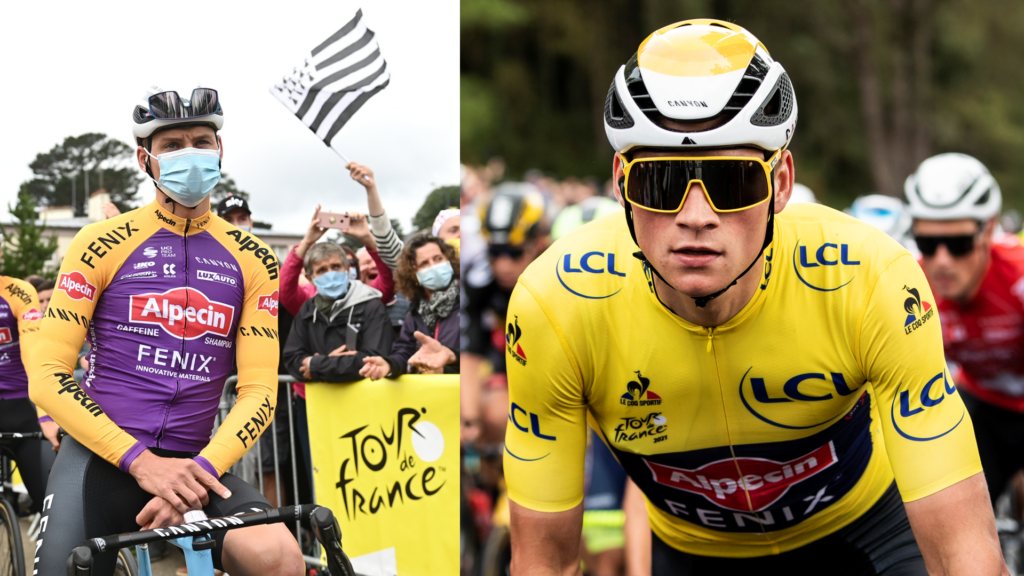
He morphed into something more all-conquering. Where his peers raced into and out of form, often in service of teammates and supposedly loftier ambitions, he became a sniper, identify the race targets for each season on one hand, and duly crossing them off. His team exists entirely in his image, only when he senses his own chance of victory is futile or behind him will he service Jasper Philipsen with a lead-out. Even Jonas Rickaert’s popular combativity prize in last year’s Tour de France came as part of a slim hope of stage glory for Van der Poel.
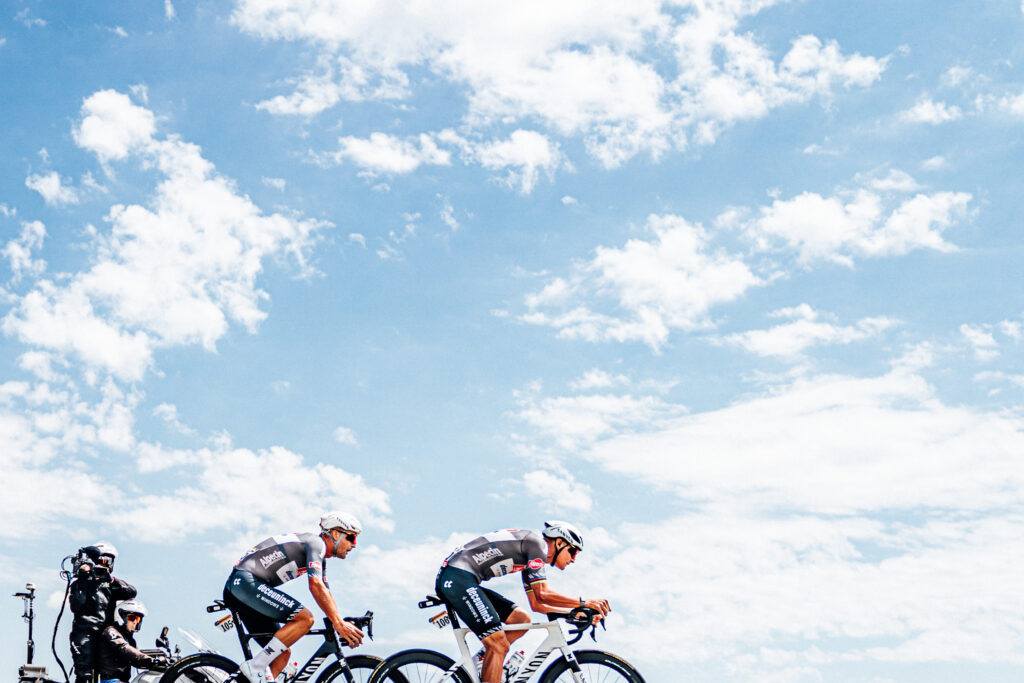
The consolation of this talent consolidation is age, the knowledge that Van der Poel, like Jonas Vingegaard, has fewer years left on his strongest rivals and soon will not be the rider he was. That is the logic that supports the hypothesis that he was weaker due to form as well as injury at Milano-Sanremo, lucky to avoid a crash at Omloop (Het) Nieuwsblad, and then saved by the incompetence of those chasing him at E3. Can all three be true?
This weekend will offer the first inkling as to whether Tadej Pogačar can place himself beyond the aforementioned greats and grumps to end a debate that has brewed far too long, in the classics at least. Defeat in De Ronde, barring crash or bad puncture, must make Roubaix out of reach. If you can’t drop a classics specialist on steep uphill gradients, what hope remains for dropping them on the flat? A sprint finish is a possibility, but when Tom Pidcock was only a wrong sprint lane and 4cm away at Sanremo, what hope does Pogačar have against Van der Poel, Van Aert or Pedersen?
5-in-a-row in rainbow for Pogačar, it’s now-or-never to uniquely etch himself into history, not only matching the records otherwise forgotten, but setting new records that surely can’t be matched. Maybe Filippo Ganna is right, maybe you do want to be in front of the telly with a big Easter dinner after all…