


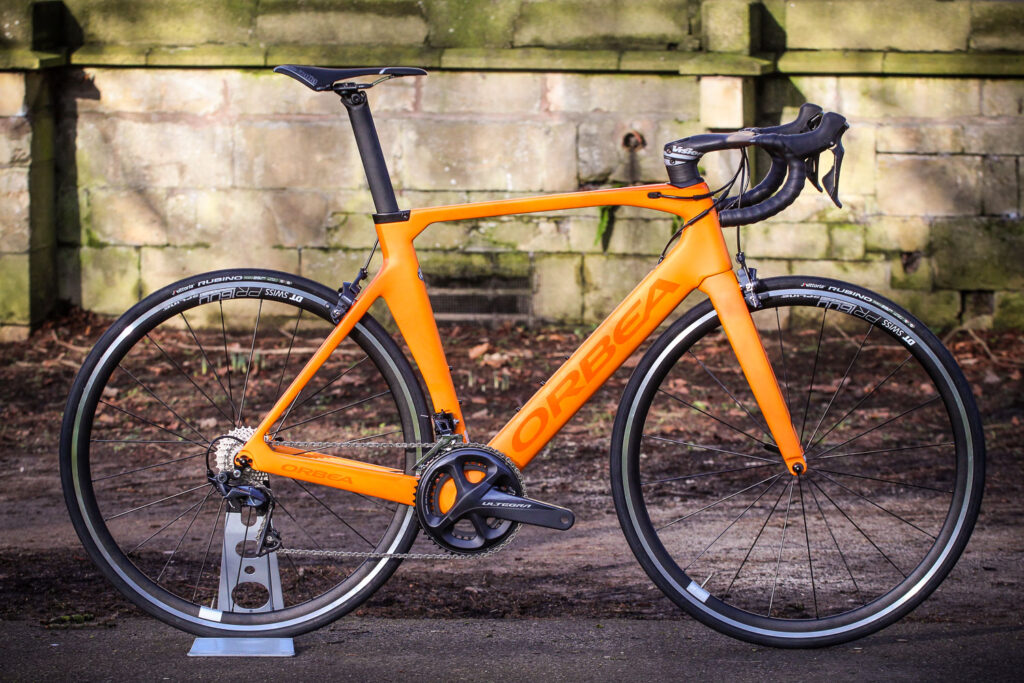

Orbea launched its brand new Orca Aero road bike at the Tour de France last year, and we’ve finally managed to get one into the office for review. Here it is in its orangey glory, with a Shimano Ultegra mechanical groupset, one-piece Vision handlebar and DT Swiss wheels.
The proudly Basque company has been making some really interesting bikes in its 86 years, but it was the sponsorship of the Euskaltel-Euskadi professional racing team during the 1990s and 2000s that really put the bike brand on the map. This bike is definitely channelling those old race bikes. And if you’re wondering what I’m going on about, check out these examples.
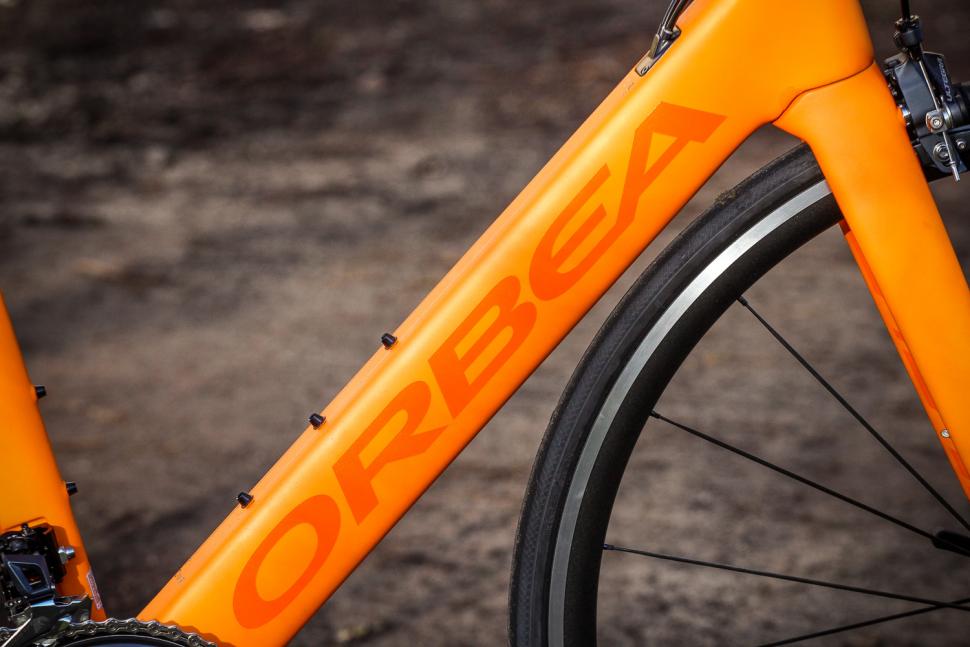
Since those heady days, it does rather feel like Orbea has been struggling to find its voice in a fiercely competitive marketplace, but there’s much evidence the brand has found its way again. In recent years it has been turning out some interesting bikes across the various disciplines (including 13kg road e-bikes) and developing cool initiatives like MyO, which offers fully customised bikes at no extra expense to the customer.
But no self-respecting bike brand can be without an aero road bike these days, and while Orbea’s Orca has gotten more aero over the years, it was no fully fledged aerodynamic road bike like a Trek Madone or Specialized Venge ViAS. The Orca Aero changes all that and takes aerodynamics to the max.
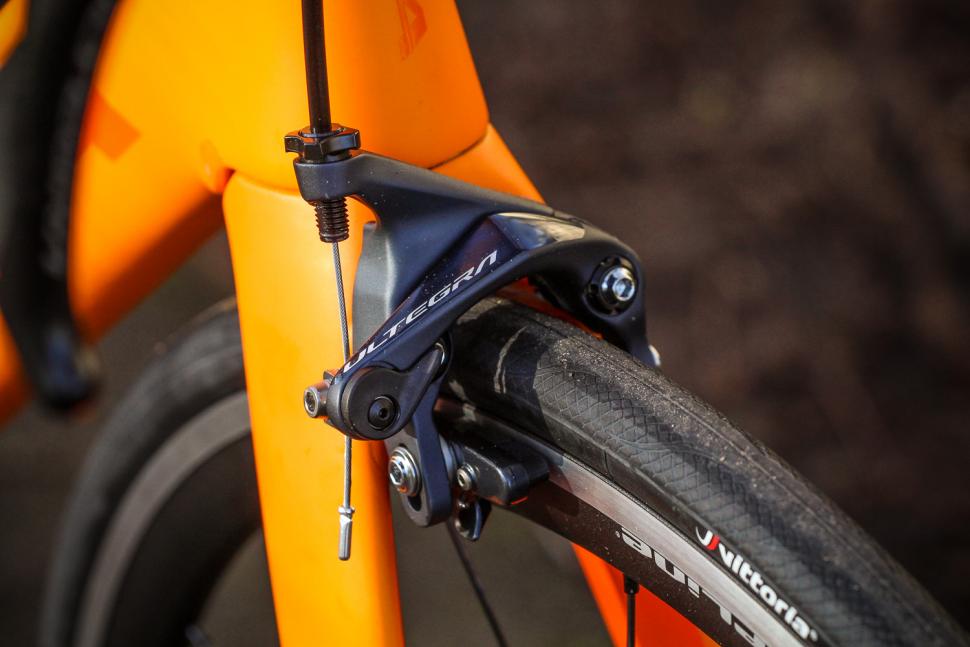
It’s no surprise that aero bikes are beginning to look very similar, there are only so many ways to reduce drag on a bicycle frame whilst being restrained to the UCI’s strict rules. But one of the key UCI rules, the 3:1 ratio that governed the overall size of the tubes, has been relaxed for 2018. And the Orca Aero is the first bike we’ve seen to make use of this rule change. The key difference is in the deeper profiles of the down tube, seat tube and fork blades.
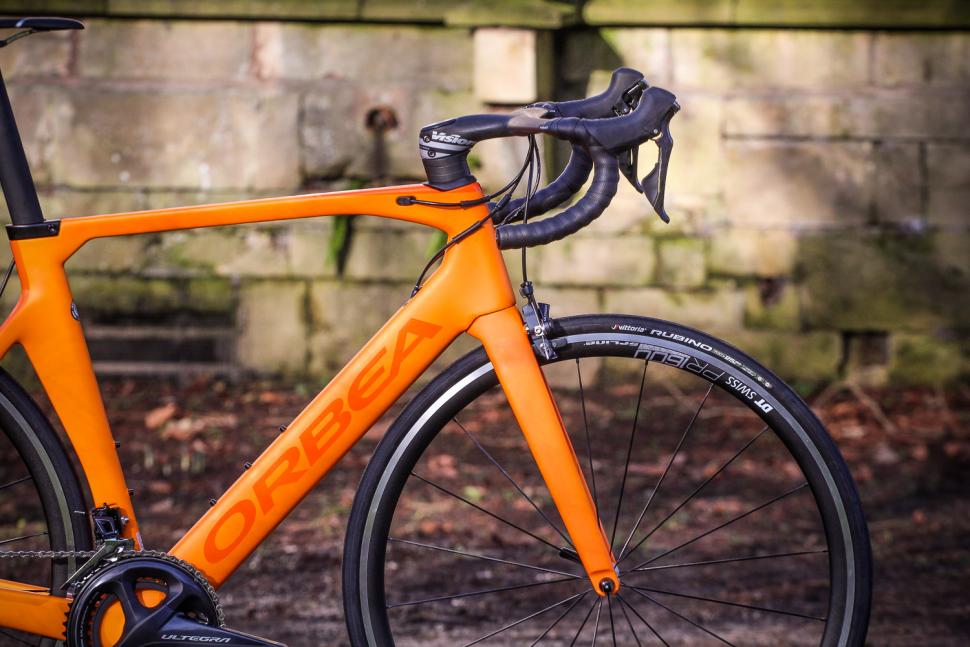
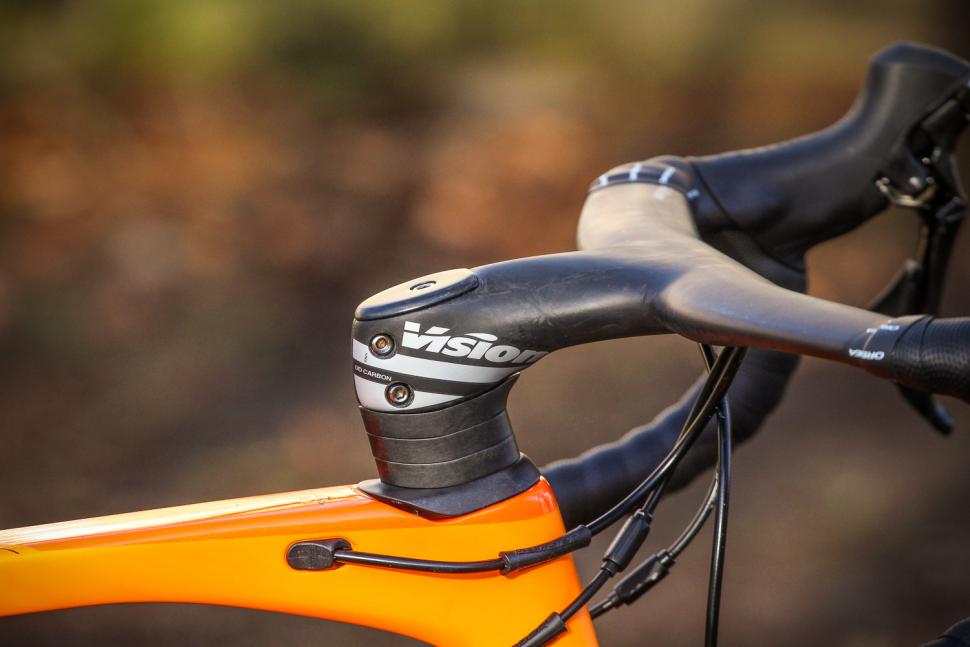
One of the big focuses for the new bike has been at the front of the bike, with a new fork that has wide stance legs to reduce the turbulence between the fork and spinning wheel. There’s also an attempt to reduce the frontal surface area, and the one-piece Vision (an optional extra on most models) is a key attempt to smooth the airflow around the handlebar area. The use of direct mount brakes has allowed the fork crown height to be reduced, further decreasing the frontal surface area.
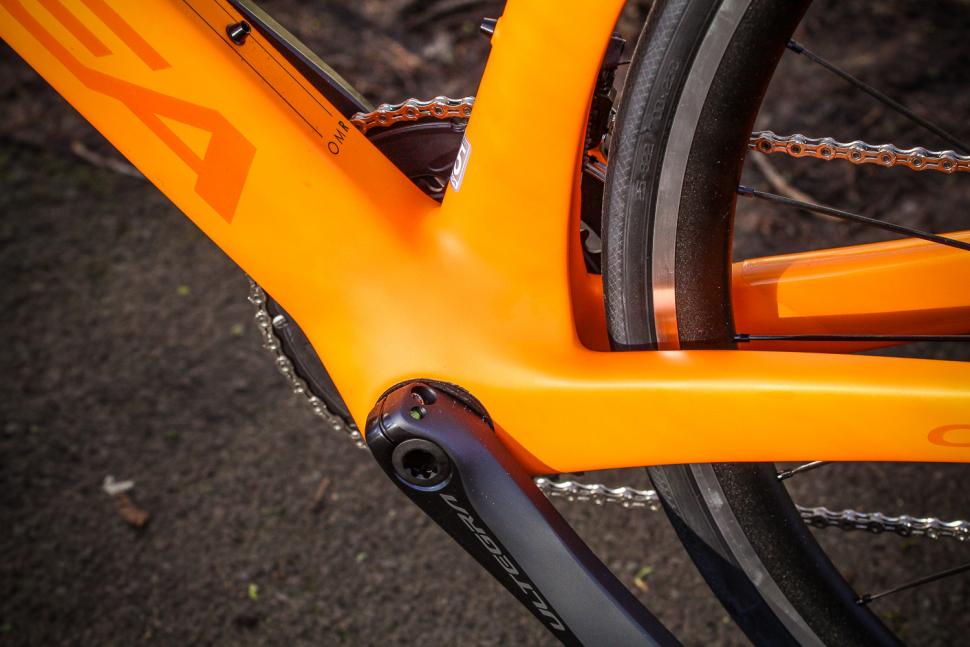
Orbea has adopted the increasingly common direct mount brake standard, which comfortably enables the bike to accommodate 28mm tyres. While there has been no mention of a disc version of the Orca Aero, we would imagine the company has developed one as well, it just hasn’t launched it yet. It would be mad not to.
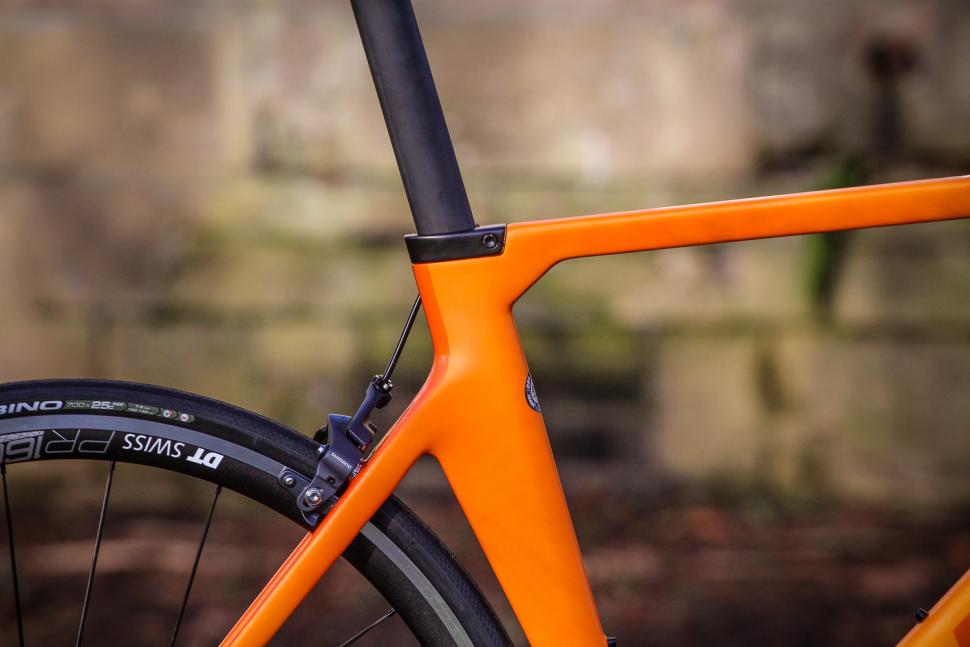
One really nice detail is the seat clamp. Most brands are hiding the clamps inside the top tube, which usually means adjusting the saddle height can be a bit fiddly, but Orbea has rather sensibly used a design that sits flush with the top tube but allows easy access. It’s just a shame it’s not colour-matched to the frame. Into the seatpost slots an aero seatpost with a reversible clamp so you can set the bike up for time trialling or triathlon.
And the downtube has two bottle cage mounts, the lower one offering claimed improved aerodynamics. It’s similar to what we’ve heard from other brands, that placing the water bottle lower on the downtube reduces drag. Makes it trickier to reach down for the bottle though.
Naturally, all cables are routed inside the frame, and there’s the now familiar downtube port – Orbea calls its ICR Plus – for concealing the junction box if you spec a Shimano Di2 groupset and is fully compatible with all the different groupsets on the market right now.
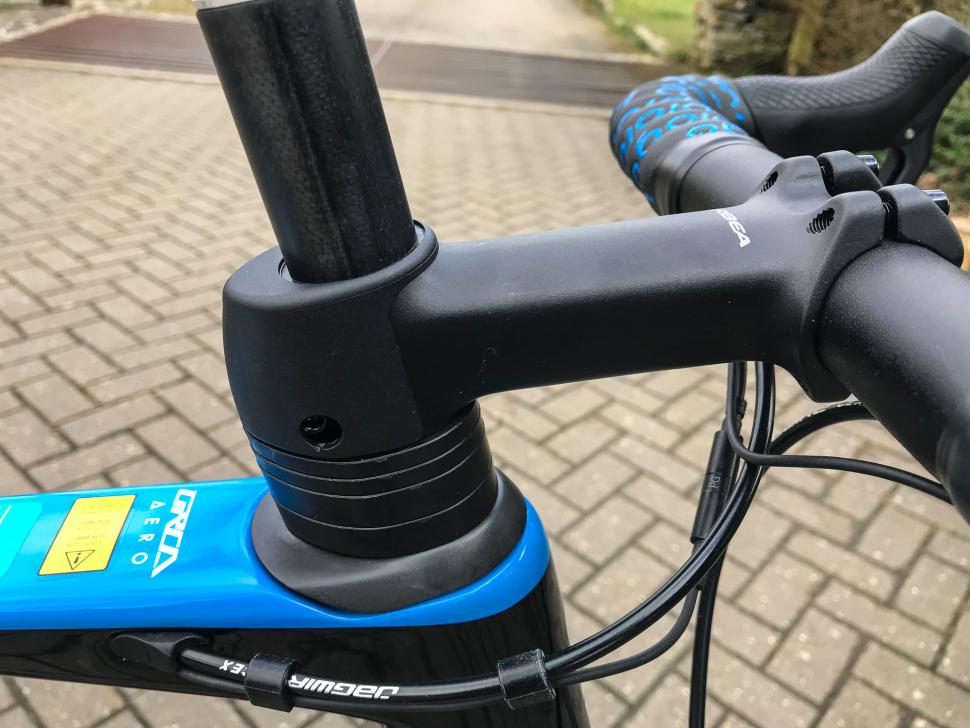
If you opt for the Vision Metron aero handlebar the spacers are aero-shaped to smooth the airflow and provide a really nicely integrated appearance. If you opt for a regular stem, Orbea has cleverly developed a small plastic shroud that sits on the back of the stem and combines with aero spacers to give the appearance of an aero stem, but with the practicality of a conventional stem.
The Orca Aero range includes six models, priced from £2,599 to £6,799, with a frameset costing £2,499. You can customise each bike, however, and not just the colour of the frame and decals but also the components.
Our review bike is a case in point. Taking the £2,799 M20Team as the starting point but upgrading the handlebar to a Vision Metron 5D Compact one-piece unit along with DT PR 1600 Spline 32 wheels, the price jumps to £3,632. You could change anything though, from the saddle to the chainset to the tyres, it’s all possible. The pictured bike is a size 56cm and weighs 7.8kg (17.1lb).
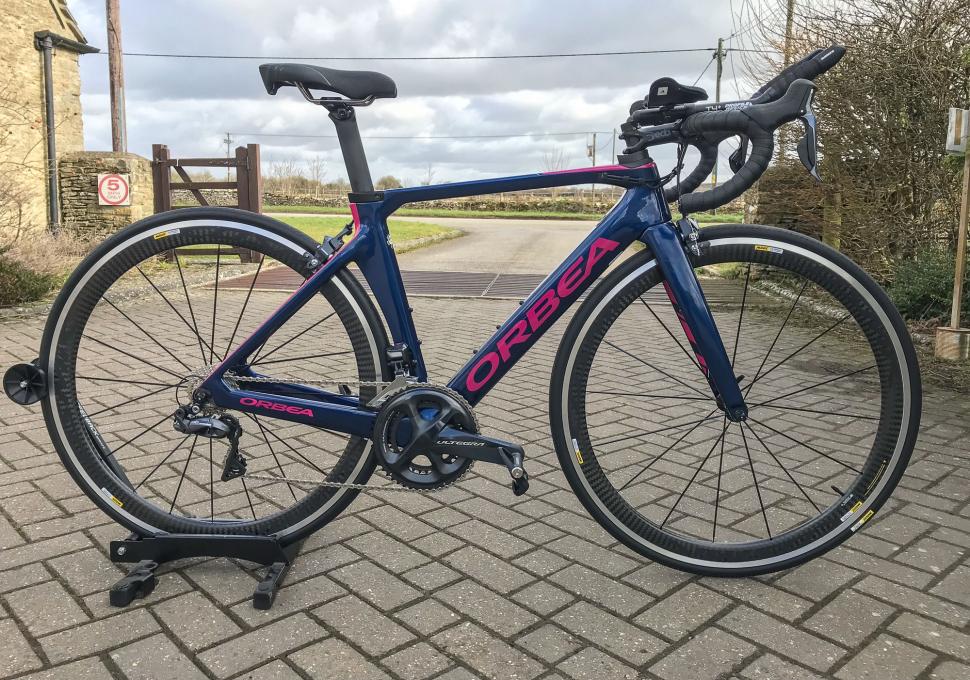
To see what sorts of colour options and builds are possible, I popped along to my nearest Orbea dealer, Performance Cycles in the Cotswolds, and they showed me a couple of new MyO builds they had recently finished. They also tell me the MyO has been hugely popular with customers because it allows a wide choice of personalisation without any surcharge.
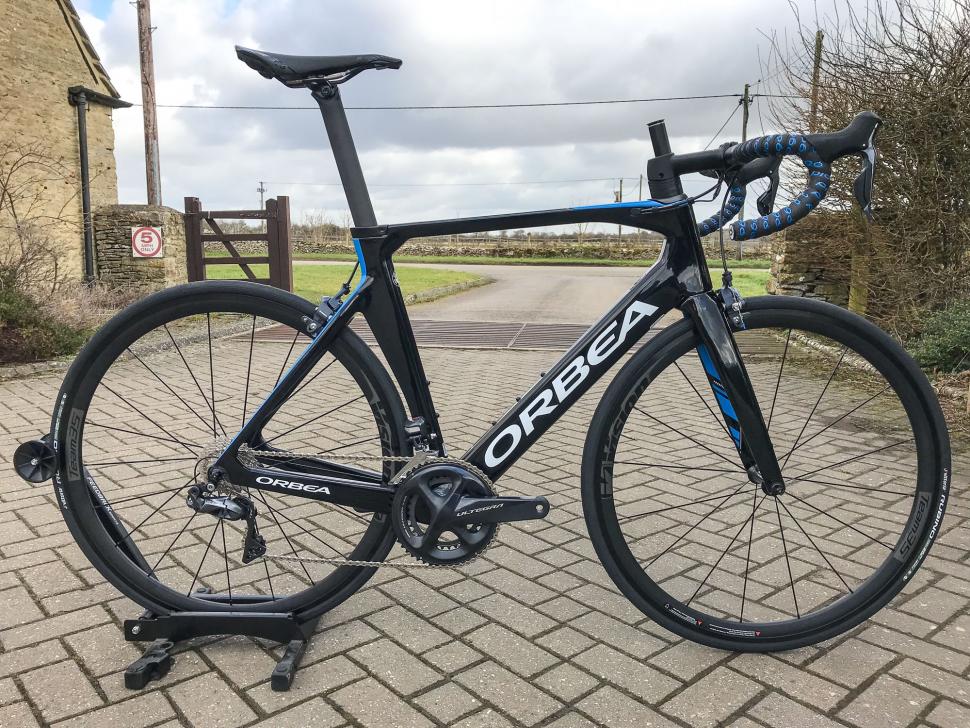
If you’re presented with a choice of a custom frame colour at no extra cost you’re going to take it aren’t you?
Stay tuned for a full review soon.






4 thoughts on “Just in: Orbea Orca Aero – Basque company launches first aero road bike”
Looks pretty smart, and
Looks pretty smart, and definitely a winner being able to spec differnt colours etc without having to pay a fortune for it. Hopefully a few more brands will take notice of this and consider offering the same. Any idea on the lead time?
Wanted to buy this one. I
Wanted to buy this one. I even called the shop but after we put bike on the scale….and it was 7.8 for size 56, di2, i decided not to buy it. 7.8 is about half a kilo too heavy for rim brake bike made in 2018. Even Vias and Cervelo are lighter, not to mention Canyon and Madone.
However, I still don’t know the frameset weight. My guess would be that frame+fork are close to 2kg. The shop owner said that Orbea hasn’t released it and that even after they asked, they wouldn’t give them average frameset weight. After we put bike on the scale it was immediately clear why they didn’t want to release weight…
Nice enough – but I think I
Nice enough – but I think I prefer the Orbea Orca from back in the day. Mighty nice bike.
Looking forward to a ride
Looking forward to a ride review. With DA and some different wheels that coould get close to 7 kgs. Not far from the 6.8 minium for an aero bike.