



Objections have been heard over a planning proposal to turn a pair of World War 2 air raid shelters — housed at the end of Bath properties’ gardens — into bike sheds.
The work, listed in a planning application on Bath and North East Somerset Council’s website, would see the walls closest together between the two sheds opened up and a new roof and entrance installed.
Somerset Live reports that a statement on the planning application explains: “The bomb shelters are used as sheds but are not readily accessible. The alterations will maintain their historic significance whilst making them utilitarian.”
However, comments submitted on the application, one from a neighbour and two from conservation organisations, “strongly” object to the proposal on the grounds that it would diminish the historic significance of the shelters.
The air raid shelters are found at the end of gardens in Park View, the application concerning the two located on the grounds of number three, one which extends into the garden of number four. It is believed one of the shelters was originally publicly funded by terrace residents, while the other was likely to have been privately constructed when Bath was targeted during three bombing raids by the Luftwaffe in 1942.
The Bath Blitz Memorial Project, Bath Heritage Watchdog and a neighbour, Susan Walker, who part owns one of the shelters, have all objected to the proposal.
The conservationists at Bath Blitz Memorial Project, who provide a historical record of the bombing of Bath during the Second World War, called the structures “very rare” and argued that the doorway positioning is “of particular historic interest”.
“The risk of a bomb hit on one shelter causing blast damage in the other had been thought of, which is why the doorways that face the two structures in number three are staggered so that the blast from one hit would not blow the door of that shelter into the door of the other, which would be a weaker point than the brick surrounding the door,” the letter of objection said.
Bath Heritage Watchdog added: “Private shelters built in the style of public shelters will have been quite rare even in the wartime; to have such shelters survive through the 80+ years since built makes them an important and very rare heritage asset, and fully justifies the Grade II listing they currently enjoy.”
Ms Walker claimed the shelters are part of the street’s “charm” and questioned why a separate bike shed could not just be built elsewhere.
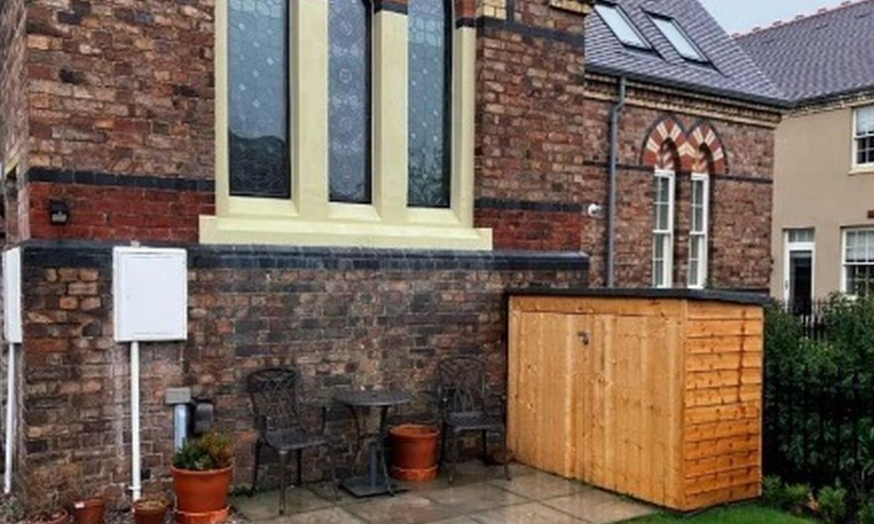
Building bike sheds near Grade II listed buildings can be problematic too. In November, we reported that a homeowner who installed a wooden bike shed outside his one-bedroom property in a Grade II listed former workhouse would not be allowed to keep the “very modest” bicycle storage facility after the council and a planning inspector objected to the structure, claiming it would “lead to a harmful cumulative change to the listed building”. This assessment came despite a council member initially walking “past the bike storage without even noticing it”.
Writing her objection to the Bath proposal, Ms Walker continued: “The idea of owning a listed house is to be able to live in a property that will have its setting preserved by the listing; it is the gardens to the east of the terrace that are the location of the shelters and those shelters are part of Park View’s charm.
“There is no clear and convincing justification supporting the applicant’s proposal and there is no public benefit. Rather, there would be public disservice in that historians will be denied the chance to examine the shelters in their current configuration. Also the shelters do attract visits from people interested in the history of wartime Bath.”
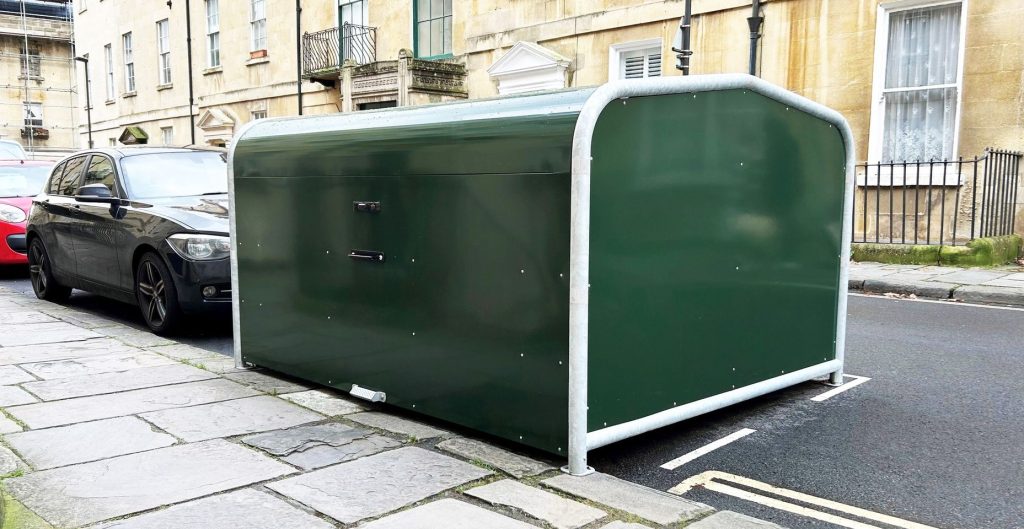
Last year, some residents of the Somerset city objected to “green measles” bike hangars being installed on the city’s streets — allowing other residents a safe place to store their bikes if they do not have room at home — due to fears it may affect the city’s Unesco World Heritage status.
That assessment came despite, on its website, UNESCO noting that Bath “remains vulnerable to transport pressures”, with “improved transport” based around public transport and pedestrianisation part of the management plan to protect the city’s integrity and authenticity as a World Heritage site.
And while cycling is not mentioned explicitly, the advised shift to walking and a “bus-based network” implies the “need for improved transport” will not be answered by overdependence on car use.
Last week, the installation of some new bike parking shelters in the seaside community of Southend-on-Sea triggered fervent debate, a portion of disgruntled residents up in arms about the “eyesore” structures that they believe “ruins” the sea views.
On the other hand, the complaints were met by rolled eyes from some locals who argued it is “not really the end of the world” and the outraged “clearly don’t have a lot to worry about in life” if they are “bothered about a bike shed”.


















16 thoughts on “Planning objections over bike storage idea for WW2 bomb shelters — despite structures already being used as sheds”
It’s not clear in the article
It’s not clear in the article, and I really don’t want to wade through the council planning pages, but who wants to convert the sheds for bike storage? The property owners? If so, and the conversion keeps the external appearance in keeping, what is the problem? I’m assuming members of the public aren’t able to visit these historic monuments that sit in someone’s private back yard.
The problem is
The problem is
the structures [are] “very rare” and argued that the doorway positioning is “of particular historic interest”.
We didn’t defeat nazi Germany for this !
They don’t like it up ’em!
They don’t like it up ’em!
These objectors are just
These objectors are just standard issue anti-cyclist who want every road filled with parked SUVs
To be consistent with all the
To be consistent with all the historic building legislation the only non-human powered vehicles Bath should allow on the roads should be powered by horses.
If you haven’t already, I
If you haven’t already, I heartily recommend reading the comments by the neighbour Mrs Walker
Mrs Walker wrote:
Much as i suspect that she’s a NIMBY who enjoys living in an open air museum, she may have a point if it’s true that there are other parts where you could quote legally build a bike shed?
(Not sure how she knows that the applicant keeps their bike in the house, though…)
If there is already an
If there is already an existing structure that would make a suitable bike shelter with some minor modifications, then I can understand wanting to use that rather than build something new, especially given it’s not a huge garden to begin with (as far as I can tell from the google image provided). Plus there is no guarantee an application for a new bike shelter in front of the house would be approved either…
Absolutely rediculous.
Absolutely rediculous. Another classic example of anti cyclist.
Questionable whether this
Questionable whether this will get anywhere since not only is the structure listed, it is in the curtilege of a listed building.
They would need a solution that is reversible and does essentially nothing to the fabric, especially in a self-regarding place such as Bath.
Suspect there is more hope for a separate anchored down mobile shelter. Or maybe a small cargo container.
Lest we forget
Lest we forget
I know we all love our bikes,
I know we all love our bikes, but why does a bicycle shed need roof insulation?
…edit: Because the original article failed to distinguish between the roof works to the house and the work to the bomb shelters. I wonder if such a fuss would be being made if nobody had mentioned “bike shelter”?
At this stage, I honestly
At this stage, I honestly think that if you needed planning permission to keep your bike in your bedroom somebody would object to the applications.
Why is this a bike shed story
Why is this a bike shed story?
Pure clickbait. Its an alteration to a historic building story, the purpose is irrelvant.
Why must we try to polarise everything for clicks?
The UK is obsessed with being
The UK is obsessed with being stuck in the past.
As a kid, every bomb shelter
As a kid, every bomb shelter I encountered was full of old furniture and other crap that was forgotten about. Most of the back garden brick-built and concrete-roofed shelters had dog-leg entrances which would have made it nearly impossible to get a bike in, thus necessitating some modification or removal of the end wall. Not impossible, though.
I don’t think I recall a single one that had any real use made of it – they were just junk aggregators.
Yeah, they really added to the “charm” of the place. Like feck.