


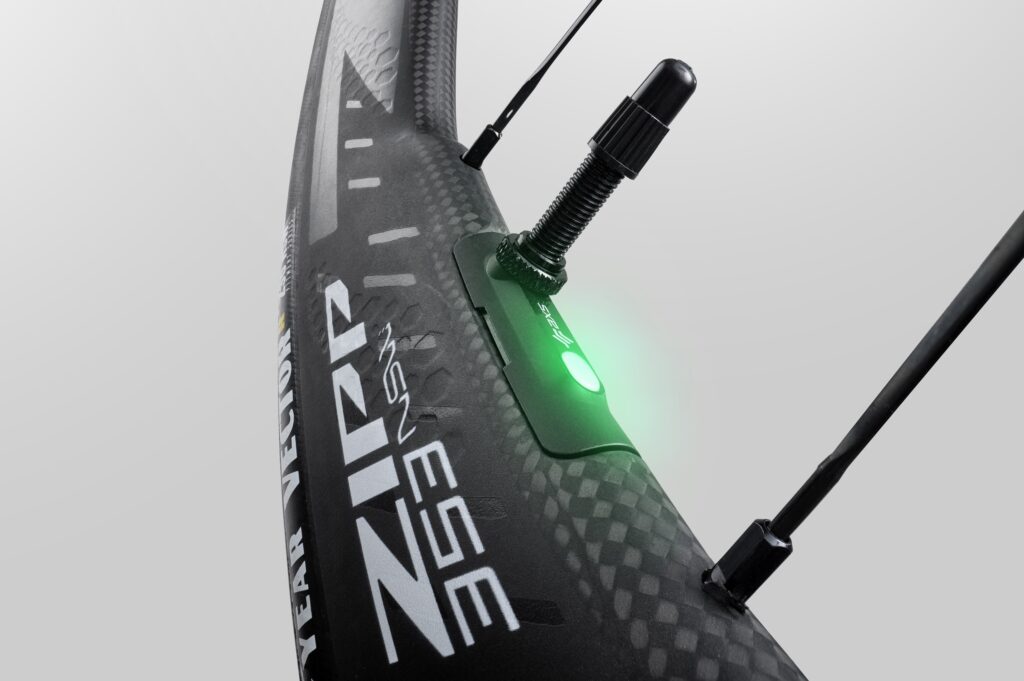

Zipp has launched two new sets of wheels with integrated sensors that monitor your tyre pressure and feed that information to you via Bluetooth in real-time. This is the tech that Tom Pidcock was spotted using at Strade Bianche back in March, and it comes in the 353 NSW and 303 SW tubeless disc brake wheels.
Zipp has offered its TyreWiz pressure monitor for a few years now – a small device that fits onto the valve and uses Bluetooth low-energy technology to send info to your bike computer and SRAM AXS app. SRAM-owned Zipp has taken things a stage further by incorporating the tech into the design of the wheel itself.
Zipp category manager David Morse takes up the story…
“The Zipp AXS Wheel Sensor is an integrated tyre pressure monitoring system in two of our top-selling wheels [see below]. It provides you with instant tyre pressure information, as well as some other features that make the whole experience confidence-inspiring and convenient.
“This device pairs to our AXS ecosystem. You can connect to the device as you would any other AXS component. In that connection, you’ll be able to understand and set up your ideal pressure target, get that wirelessly transmitted to your device, as well as set up custom pressure ranges, high and low, when you want to be notified on your bike, your phone, or on the device itself.
“The device pairs with all popular head units, including Wahoo, Garmin and any head unit that uses Bluetooth. It uses Bluetooth transmission and also works natively with our Hammerhead unit. The display you’ll see on Hammerhead is a rich set of information where you can see front and rear wheels separately, with that pressure information displayed in a couple of different formats.
“You can choose your pressure units that you want to display, as well as how you want to be notified if the pressure is high or low. This gives a really interesting set of information that you can use to stay confident in your bike setup, whether you’re repairing a flat or you’re in a race and you want to understand if you’ve had a slow leak, as well as if you’re really into experimentation and optimising your bike setup. Now you have that data at your fingertips to compare tyre pressure with rolling efficiency.
The idea is that you bounce your bike to wake up the Zipp AXS Wheel Sensor – many SRAM components use “shake to wake” to conserve battery life – look at the LED and know whether it is ready to go.
“One of the main goals of this product is to bring convenience to the ride,” says David Morse. “We do this mainly with a bright LED on the device that is coded to flash green or red, depending on the pressure status. A flashing green light means that the device is reading a pressure that’s within the custom-set target range. Quite simply, green means go.
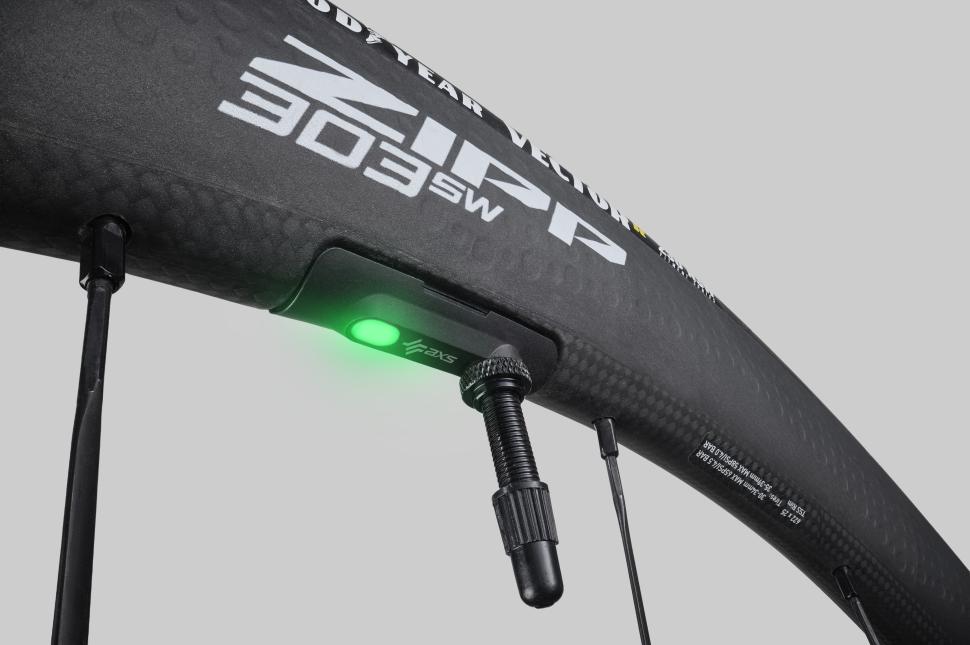
“Conversely, if you notice that the LED is flashing red, that means you need to add a little bit of air. No need to even look at a pump gauge, just hook up your pump and keep pumping until the device turns green.
“The other main benefit of using the Zipp AXS Wheel Sensor is to have confidence all the time. This can come in the form of hitting a pothole and wanting to know with certainty whether or not you have a slow leak. You can pull up the data page on your bike head unit, and watch the pressure live to see if it’s slowly leaking.”
The AXS Wheel Sensor is powered by a standard CR2032 coin cell – available all over the place and used elsewhere in the SRAM AXS ecosystem, so you can swap them over according to your priorities if one runs out of charge.
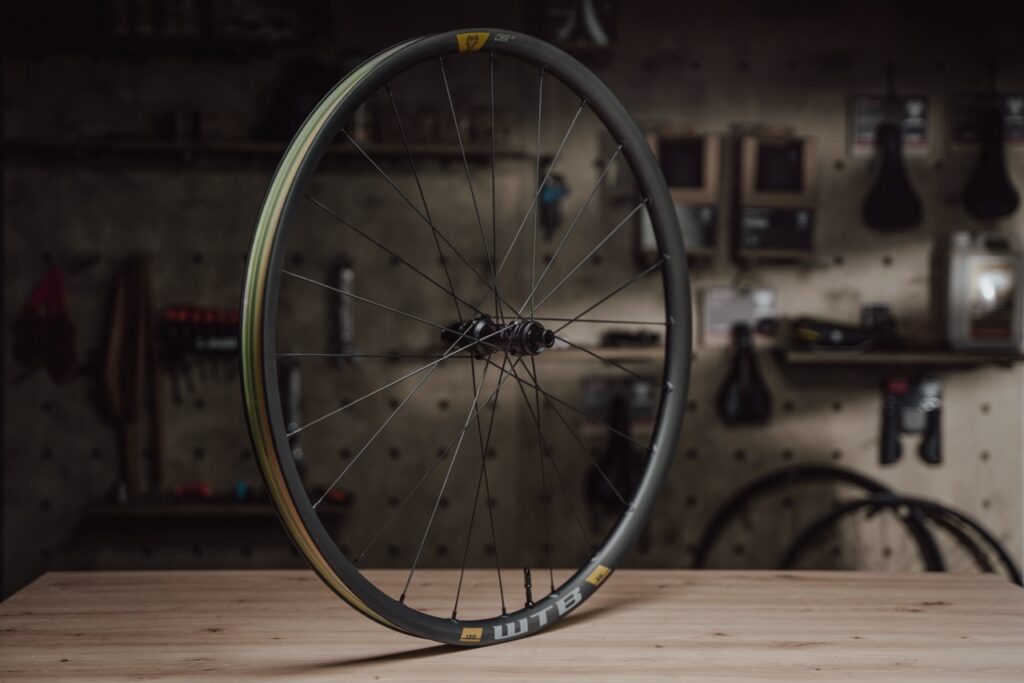
The Zipp AXS Wheel Sensor sits in a pocket that has been designed into the rim, and Zipp says it does not affect the balance of your wheel (it weighs about 15g). The sensor is easily replaceable if damaged.
The Zipp AXS Wheel Sensor comes fitted to tubeless wheels. Zipp says that if you do want to run an inner tube inside for any reason, it must be a Zipp TPU tube or the wheel sensor data won’t be correct.
Zipp 353 NSW
The new AXS Wheel Sensor is integrated into the Zipp 353 NSW tubeless disc brake wheelset –which Zipp likes to call its “most advanced wheelset in every performance area”.
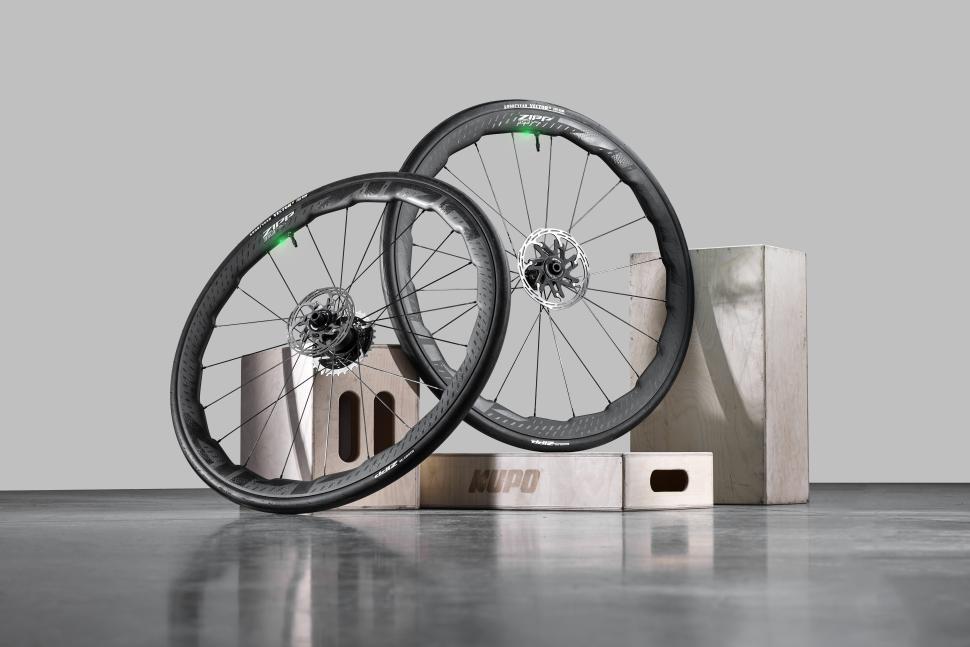
> Check out our 2022 review of the Zipp 353 NSW Tubeless Disc Brake Wheelset
“This is our lightest weight wheelset, designed for the modern road racer on hilly to mountainous courses,” says David Morse. “It’s designed to be aerodynamically efficient with a range of tyres, but optimised around 30mm.”
Zipp says, “A revised carbon layup and design infused the already strong 353 NSW with a more than 16 per cent higher rim impact strength”
Hooray! Our first engineering-based stat of the day.
The rim depth varies from 35mm to 40mm deep, Zipp saying that the Sawtooth profile with Hyperfoil nodes and HexFin ABLC dimple pattern “offers top aero and crosswind-stability performance”. If you’re not familiar with Zipp’s terms, find out about them here.
The rims have a 25mm internal width, they’re hookless and compatible only with tubeless tyres.
> What’s the difference between hooked and hookless bike wheels, and which is better for you?
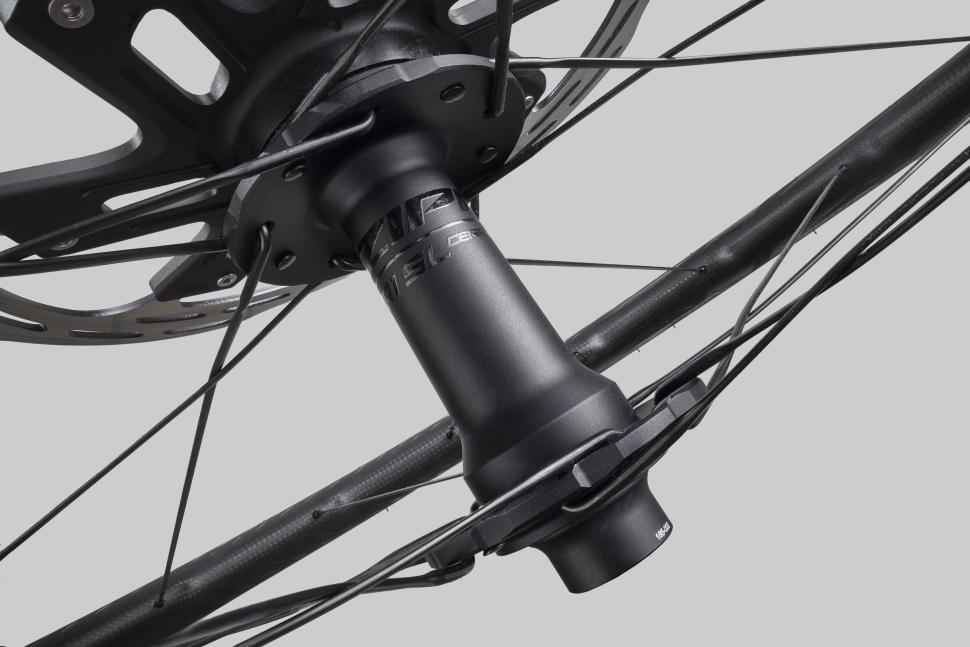
The 353 NSW features Zipp’s new ZR1 SL hubset that’s based on the standard ZR1 that it has been using in its Firecrest wheels for the past five years. It has a lighter weight hub shell and ceramic bearings on all NSW wheels.
“The goal of our ceramic bearings is to create a bearing that spins as freely as possible, but is also durable in inclement weather and resistant to corrosion if you expose it to water,” says David Morse.
“To get that free spin, you need to use non-contact seals. That allows some moisture into the bearing but corrosion resistance is a key property of our bearings. We have a corrosion test that we do to quantify how well these bearings will stand up to environments, and our bearings will last 96 hours in our salt spray corrosion test. When you compare this to the leading aftermarket ceramic bearings, which cost $800 for a hubset upgrade, they only last 24 hours in that same salt spray test. So we have a 4x improvement over the leading aftermarket upgrades for ceramic bearings.
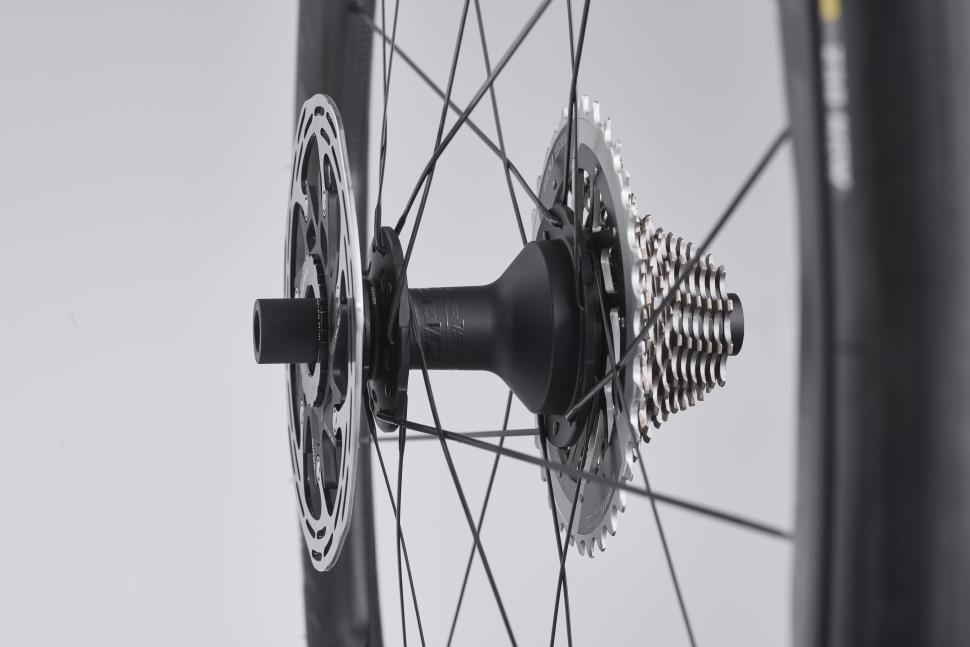
“This is in our standard offering for ZR1 SL on all NSW wheels. It has a special medical-grade stainless steel for the races. It’s the same kind of stainless steel that gets used in joint replacements, so it has to be really corrosion resistant. And then the balls themselves are ceramic.”
The ZR1 SL hubset is 30g lighter than the predecessor hub (Cognition V2) used on NSW wheels, and the rear hub has 66 points of engagement.
The Zipp 353 NSW wheelset weighs a claimed 1,310g and is optimised for 30mm tyres. It isn’t approved for gravel riding.
The Zipp 353 NSW wheels are priced £1,550 (front) and £1,950 (rear).
Zipp 303 SW
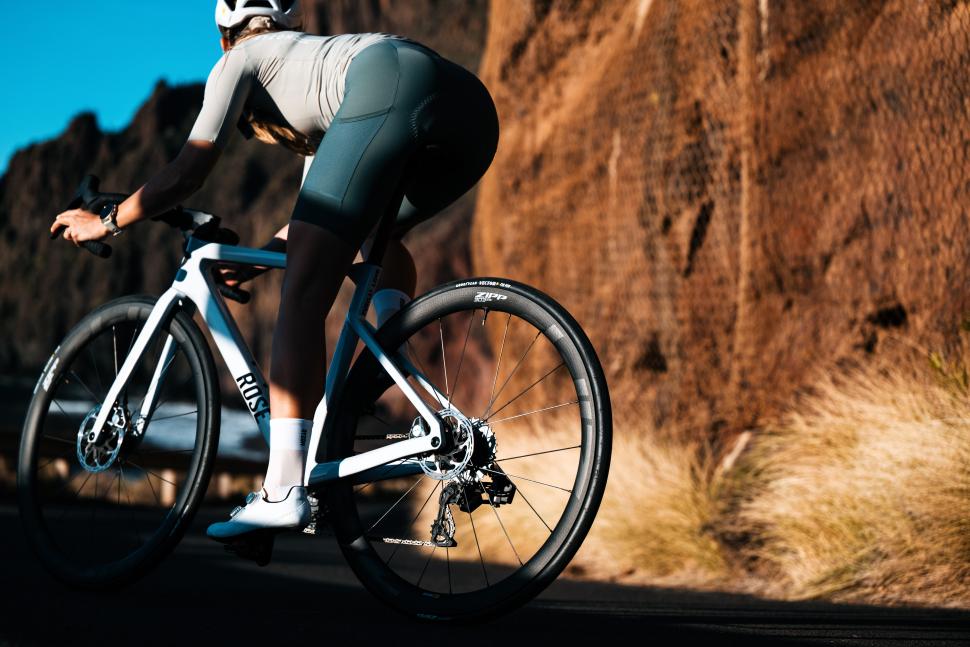
The other wheelset to come with the new AXS Wheel Sensor is the Zipp 303 SW, designed to handle gravel, cobbles and cyclocross, as well as road. This wheelset has a new rim design and is the one used by Tom Pidcock at Strade Bianche.
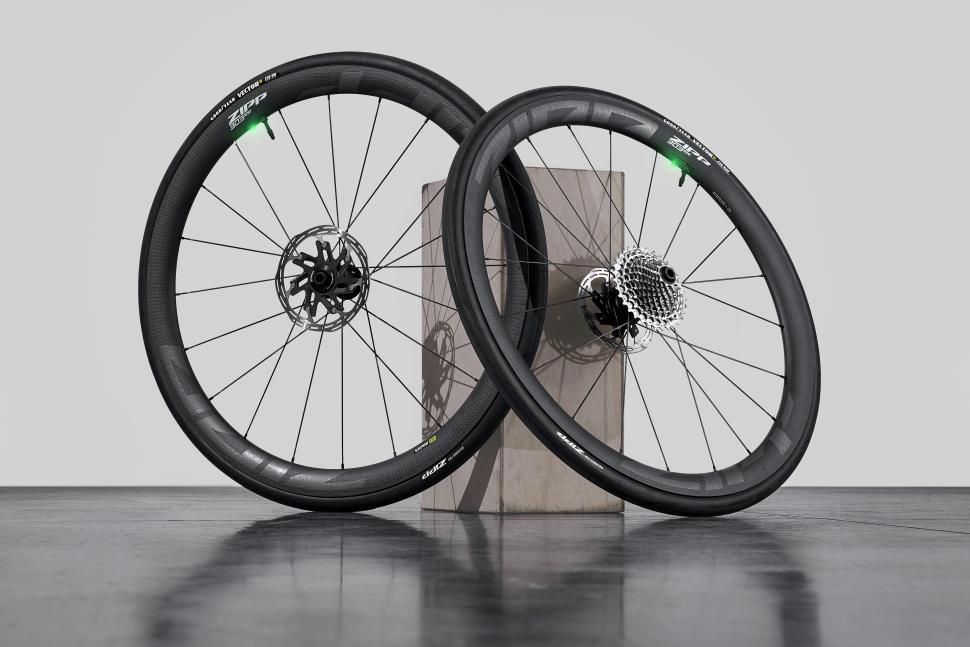
Zipp says, “The 303 SW’s 40mm deep rim design takes design cues from the gravel-specific 303 XPLR to utilise a wide rim design for high aero efficiency and low rolling resistance on a wide tyre platform designed for modern riding at lower tyre pressures.
“The rim’s profile provides low drag and an improved transition between rim and tyre, boosting aerodynamic efficiency with wider tires.
“A revised carbon layup and design also infused the already bombproof 303 SW with an almost
10 per cent improvement in impact strength at a light weight.”
That weight is a claimed 1,440g. That’s roughly the same weight as the model it’s replacing, the 303 Firecrest, while being 10% stronger, according to Zipp
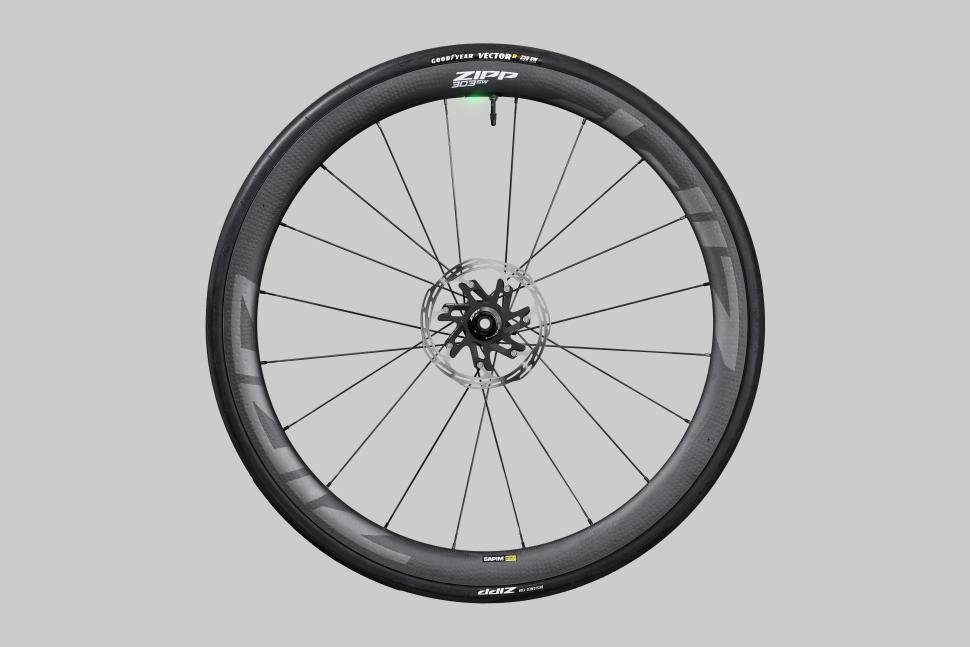
The inner width of the hookless rim is again 25mm. Zipp says the 303 SW is optimised for 30-35mm tyres. This time you get a ZR1 hubset with stainless steel bearings.
The Zipp 303 SW wheels are priced at £800 (front) and £900 (rear).
Other wheels
Zipp has also updated its 454 NSW and 858 NSW wheels. They use the same rim shapes as before and there are no tyre pressure sensors, but they do include the new ZR 1 SL hubset with ceramic bearings that’s 30g lighter than the Cognition hubset previously used.
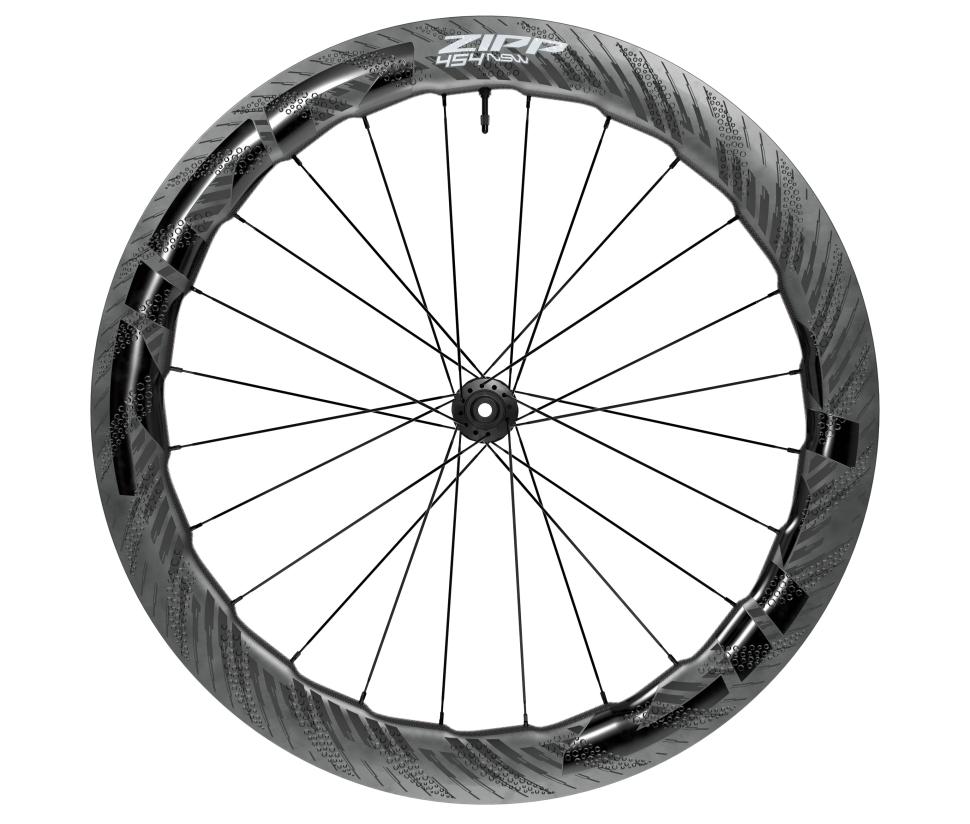
Zipp claims a 1,400g wheelset weight for its 454 NSW tubeless disc brake wheelset. The rims have a Sawtooth profile that varies in depth from 53mm to 58mm.
The rim depth for the Zipp 858 NSW is 82-85mm and Zipp claims a wheelset weight of 1,500g.
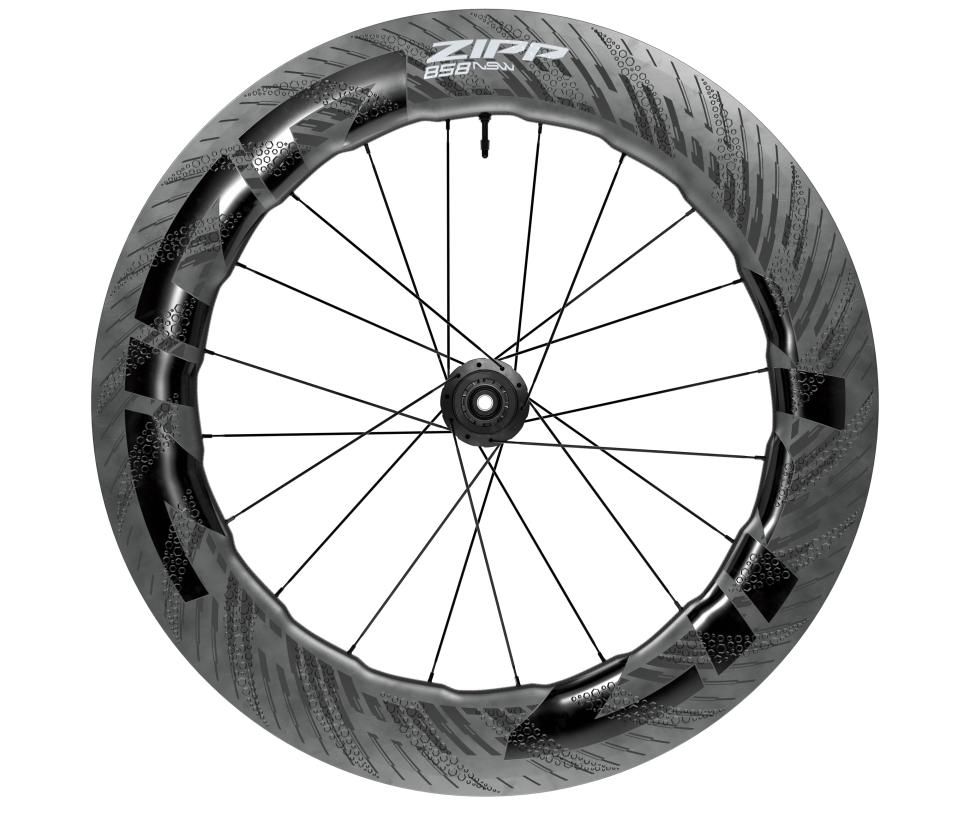
Both the Zipp 454 NSW and Zipp 858 NSW wheels use hookless rims and are £1,500 (front) and £1,900 (rear).





12 thoughts on “Zipp’s new wheels offer integrated tyre pressure monitoring”
How do you Balance 15 grams
How do you Balance 15 grams in rottional weight?
The same way higher end
The same way higher end wheelsets have been doing so for a long time, as the joint side of the rim is typically heavier. You can make the rim slightly thicker on the opposite side or use a couple oversized spokes on the opposite side. Campagnolo for example loves to brag about this in their marketing.
By adding 15 grams to the
By adding 15 grams to the other side. So this is effectively adding 60 grams to the weight of the wheelset. Of course, Zipp won’t mention this in their marketing.
why is stuff getting more
why is stuff getting more expensive? Lol
Oh, how nice. Red and green
Oh, how nice. Red and green flashes which are worthless to me and others in the 10 percent of the male population that is red-green blind. But it least this will save me being tempted to spend any money on the latest techno-gadget.
I expect those 10% of men can
I expect those 10% of men can still read the display on their phone or bike computer that displays the same info in more detail.
I suspect you’ve never heard
I suspect you’ve never heard of ableist thinking? Seems SRAM havent.
I ride a bike to get away
I ride a bike to get away from tech.
I’m not a fully wool-clad retrogrouch, but my bike has external cables, mechanical rim brakes, and I would sooner poke my eyes out than use a bike computer or a helmet camera.
Stuff like this (maybe?) has a place in the professional peloton, but for pretty much all recreational riders surely it’s just an excuse to ramp the prices up?*
*like my Microsoft Office subscription and #!#@## Copilot…
*like my Microsoft Office
*like my Microsoft Office subscription
Good- problem solved. Get rid of that, use the fantastic free LibreOffice and get some proper brakes and a highly entertaining cycle computer. A headcam is a different matter…
wtjs wrote:
Don’t watch entertainment on your computer while cycling.
Don’t watch entertainment on
Don’t watch entertainment on your computer while cycling
Aye! In my day we made our own entertainment and did not assume that has to be in the form of moving pictures. With that in mind, I can assert that it is entertaining to glance at the maps and physiological measurements on a Garmin!
One thing which comes up time
One thing which comes up time and again with successful designs of categories of things is that “simple” is almost always better, if only because humans and because “one less thing to break / be forgotten”.
Horses for courses … but for an awful lot of cycle usage a bike from the 1920s would be completely fine. But … perhaps a much smaller fraction in “non-cycling countries” like the UK and US where we have more self-identified “cyclists” who are at least partly interested in much faster / further / more sporty uses?
I’m significantly less retrogrouchy in the last decade – before then it was steel + 3×7 + rim brakes. But … I discovered modern dynamos / LED lights (well OK have had battery / rechargeable LEDs for while). I definitely wouldn’t go back to before with those! These deliver simplicity for the user here – once fitted there’s no forgetting them or having to charge them or worrying about the right mode to balance light output and battery life. Cycle forward – lights come on!
Other things have crept in also which are more “nice-to-have”: a 1×10 and an 8 speed hub gear. The latter is “simpler” from a user perspective – especially maintenance e.g. none! Then disc brakes, first cable then hydraulic (not essential, but convenient, work in bad weather without fancier pads, there’s less of the black crud on the rims, lighter than a drum brake). I’ve a couple of Al alloy frames now – not a big change but a little lighter is nice-to-have in a hilly place.