


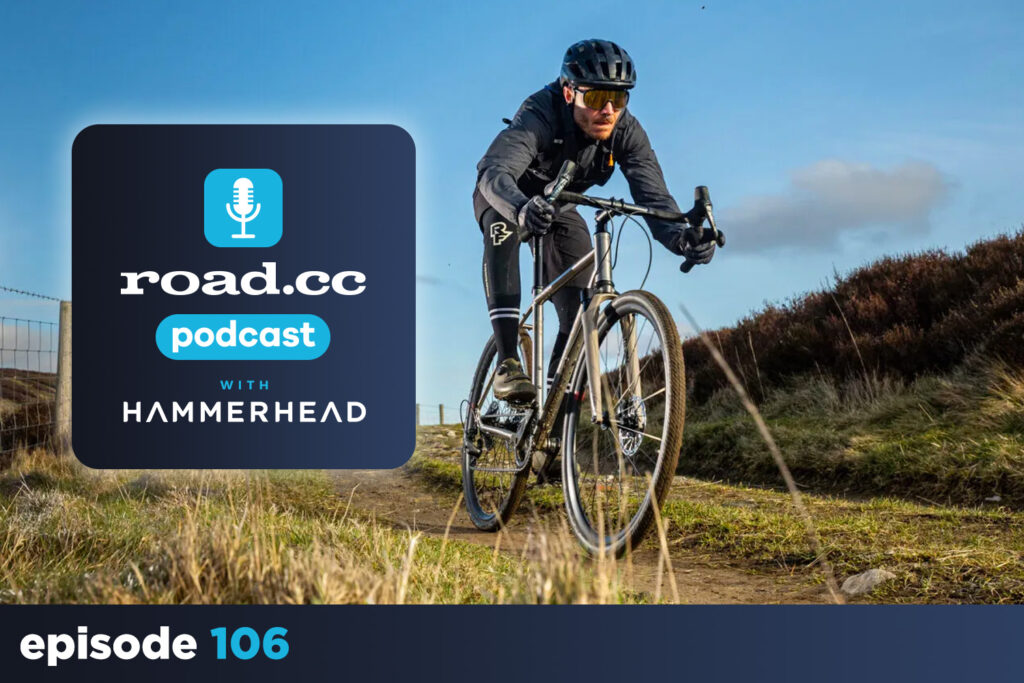

Gravel bikes are all the rage these days, but can they really do anything and go anywhere? Well, according to their marketing – invariably packed with images of cyclists descending fearsomely steep slopes against a rugged, mountainous backdrop, complemented by claims that they can handle “any terrain” – they certainly can.
But, according to the lawyer who secured a £4.5m payout from Planet X’s insurers after his client was paralysed when his gravel bike’s carbon forks sheared in two on a grass slope, there is a “clear mismatch” between what the cycling industry loudly and proudly tells us gravel bikes can do and the apparent restrictions and limitations placed upon their use, often hidden away in the small print.
Listen to the road.cc Podcast on Apple Podcasts
Listen to the road.cc Podcast on Spotify
Listen to the road.cc Podcast on Amazon Music
That distinction between the marketing and reality of gravel bikes was brought sharply into focus last month, when it was reported that cyclist Dr Daniel Gordon was awarded £4.5m after sustaining a life-changing injury after crashing a new Planet X bike in August 2020.
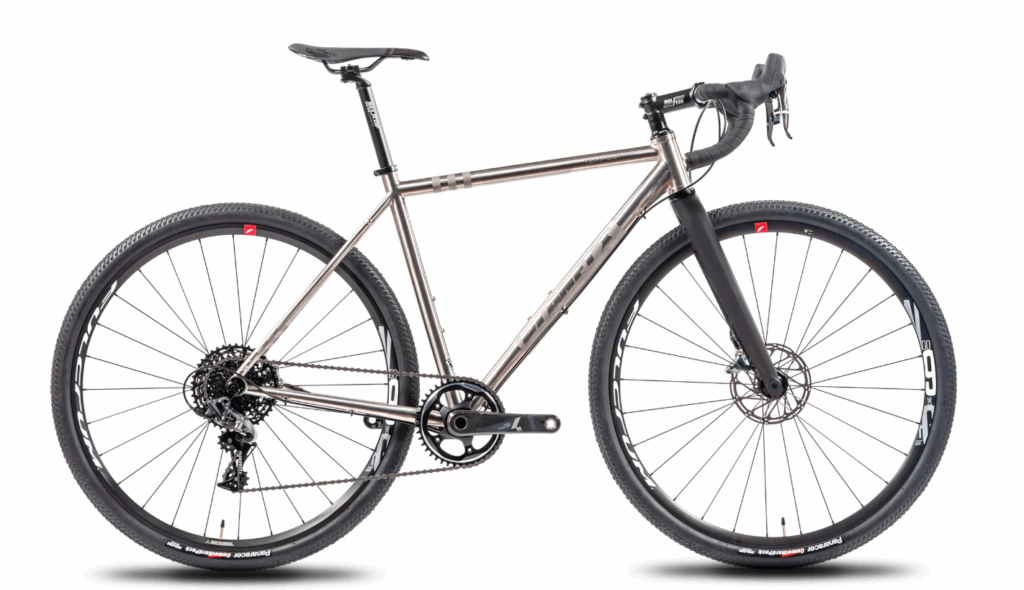
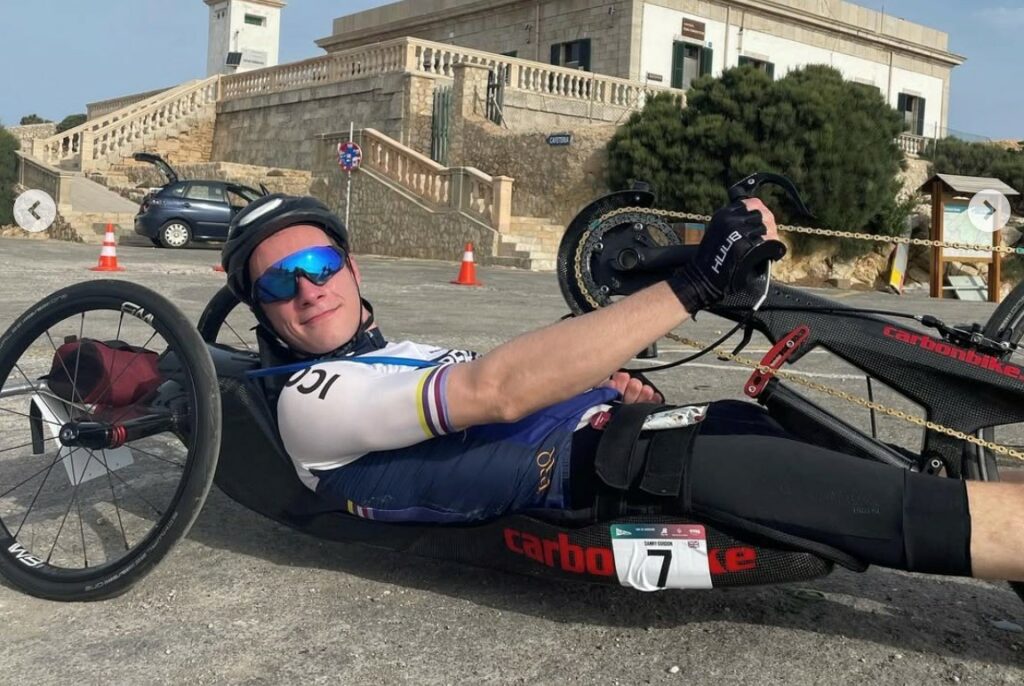
Dr Gordon was testing out his new titanium Planet X Tempest SRAM Force 1 when its carbon fork sheared in two on a grass slope in Inverness. Dr Gordon was left with no neurological function in his legs or trunk and will be dependent on a wheelchair for the rest of his life.

Lawyers from UK firm Stewarts confirmed in May that a £4.5m settlement had been secured ahead of a five-day trial that was due to commence at the High Court. Following Planet X’s financial woes in 2023, when the British brand was made insolvent, a claim for £10m was pursued against the bike brand’s insurers Arch Insurance Limited and Chubb European Group SE.
According to Planet X’s website, the Tempest gravel bike bought by Dr Gordon is described by the brand as a “go-anywhere” model that is “lively on the road but confident enough to play MTB on the trails”.
Pictures on Planet X’s website also show the bike being ridden in rocky mountainous terrain, alongside the claim that the “the only thing Tempest doesn’t have is limits” (those pictures, one of which is used at the top of this story, and the description remain on Planet X’s site).
However, during legal proceedings the defendants reportedly suggested such advertisement was “marketing puff” that should not be relied upon.
“From a legal perspective, I found it remarkable that they described that as ‘marketing puff’,” Julian Chamberlayne, a partner at Stewart’s, and a cyclist himself, told the road.cc Podcast this week.
“When you’re selling products to the general public, if you’re going to describe them in one way, you can’t then distance yourself from that description if something goes wrong, especially something as serious as what happened to Danny here. It doesn’t feel right to say they didn’t really mean it, especially when the wording is still on their site.
“Don’t get me wrong, Planet X isn’t alone in this. If you look at the marketing of most gravel bikes, it’s pretty similar. They’ll have a beautiful image of the bike being ridden in mountains or down steep forest tracks.
“And lots of people who own gravel bikes, me included, do ride them in that way, and believe them to be safe, and to have been built and tested to standards that enable them to be ridden in that.
The case was also defended partly on the basis that an American standard of classification for bikes (ASTM) applied to Dr Gordon’s bike. This ASTM categorisation, as applied to gravel bikes by other manufacturers, suggested a model should not be ridden over jumps or drops greater than 15cm.
However, Chamberlayne points out that Planet X’s website made no mention of the ASTM categorisation, nor did any manuals or instructions for the Tempest bike sold to Dr Gordon impose any restrictions on use.
“There’s a clear mismatch between usage restrictions and limitations like ASTM and the way gravel bikes are actually marketed and sold to the public,” he says.
“They need to be clearer on their websites, and not tucked away on a subpage or not there at all. Most people have no idea and regularly ride their bikes in more challenging terrain. It’s just an inconsistent message.”
Elsewhere, in the podcast, Chamberlayne discusses what went wrong to lead to such a horrendous crash, the inspiring resilience shown by Dr Gordon since his life-changing crash, and the possible implications the case could have for the cycling industry in general.
“I really hope that Danny’s case will get some people in the industry thinking about being more transparent and honest,” he says. “And they need to make sure their design and testing can make sure that these bikes are able to be ridden in the way they know their customers are actually riding them.”
Calling for a specific gravel bike testing standard, based on field testing, he continued: “I love cycling, and I don’t want to put undue regulations on how bikes are made. This is still a pretty rare incident, and I don’t want to worry anyone at home who’s got a gravel bike with carbon forks on it.
“Clearly the vast majority of those bikes are capable of being ridden off-road in pretty challenging ways. So, it isn’t common for people to shear their forks like this, it’s very rare.
“But the industry needs to accept that’s the way they’re being ridden, and they need to be clear about it, and there needs to be tests in place to ensure that the bikes are truly up to that spec.
“The whole premise of gravel bikes and the sales pitch is that it’s a fun bike you can ride in this really challenging terrain. And that’s what’s enabling these bikes to be sold and has fuelled their rise in popularity.
“So manufacturers just need to be honest and open, and make sure they’re tested adequately, and they’re equipped to deal with the consequences. Because accidents do happen.”
Meanwhile, in part one of this week’s episode, Ryan and Dan chat about THAT staggering ending to the Giro d’Italia, the tactical drama that unfolded on the Colle delle Finestre (and the raging debate that ensued afterwards), and whether Simon Yates’ pink jersey triumph places him firmly in the upper echelon of British cycling greats.
The road.cc Podcast is available on Apple Podcasts, Spotify, and Amazon Music, and if you have an Alexa you can just tell it to play the road.cc Podcast. It’s also embedded further up the page, so you can just press play.
At the time of broadcast, our listeners can also get a free Hammerhead Heart Rate Monitor with the purchase of a Hammerhead Karoo 2. Visit hammerhead.io right now and use promo code ROADCC at checkout to get yours.








10 thoughts on “Should brands stop claiming gravel bikes “can go anywhere”? Lawyer discusses £4.5m Planet X fork failure case, its implications for the cycling industry, and the need for honest, transparent marketing”
This is essentially cobblers
This is essentially cobblers and 1 lawyers opinion and thus a no-story.
The bike was faulty and the accident seems somewhat extreme given the circumstances (on grass FFS) so its not really extrapolatable to the Gravel bike market as a whole. Both manufacturing errors and accidents happen.
They will never be honest,
They will never be honest, they’ll just put in a disclaimer that it’s only meant to be ridden on gravel driveways and nothing more. And everyone will know it’s a nudge and a wink to get along with legislation. It’s like when the food industry was told to put nutritional information in “portion sizes” on the back of the packet, and instead of being honest that their chocolate bar that everyone is obviously eating in one sitting has a gazillion calories in it they declare a “portion size” is just 3 squares.
Can’t see how the chocolate
Can’t see how the chocolate bar manufacturer is dishonest in that case. If you can’t help yourself to eat an entire chocolate bar in one sitting, you have a problem, not the food industry. And no, most people with healthy minds don’t eat a whole chocolate bar in one go.
Most healthy-minded people
Most healthy-minded people probably aren’t sufficiently obsessed about counting calories to think too much when eating a chocolate bar.
I think the person you’re replying to has a good point. I suspect the reason chocolate bars aren’t sold in single-portion sizes will be more related to cost than anything else.
C3a wrote:
Almost all brands and flavours are sold in bite-sized sizes these days.
Far bigger problem is parents allowing children to gorge on this stuff, often deliberately using sweets as a reward for good behaviour or to bribe disorderly kids to be quiet leave parents alone. The marketing industry allowed to advertise junk food at every corner and store managers placing junk food in locations where shoppers’ focus is likely to concentrate within the store.
Glad Danny is back to cycling
Glad Danny is back to cycling. Though, I can’t think how his fork might have sheared riding a grass slope, other than hitting a hidden hole or gulley.
Unfortunately this sounds more like a quality control issue where a dodgy/damaged fork made it through and a freak accident, rather than a wider industry problem.
Even the lawyer states, “This is still a pretty rare incident, and I don’t want to worry anyone at home who’s got a gravel bike with carbon forks on it.
“Clearly the vast majority of those bikes are capable of being ridden off-road in pretty challenging ways. So, it isn’t common for people to shear their forks like this, it’s very rare…
Thousands of miles are ridden on gravel every week by cyclists, and we’re not seeing a spate of shearing forks.
This is Road CC and I simply
This is Road CC and I simply don’t care about the question in the headline – move this to Off Road CC please.
Surreyrider wrote:
But you cared enough to see the headline, open the story and comment on it? Anyway, the point of gravel bikes is that they are (supposedly) the Swiss Army knife of bikes, as happy on the road as off it, so articles about them are just as appropriate here as on the sister site.
I have the exact same bike
I have the exact same bike and fork and wrote Planet X if should worry and whether they would issue a replacement fork after the story came out, but they never replied to my mail. Don’t know if they are still in business….
well perhaps the lawyer could
well perhaps the lawyer could define what they think gravel is for a gravel bike,and after theyve spent 10 years trying to work that out, the bike industry will have moved on to the next naming fad