


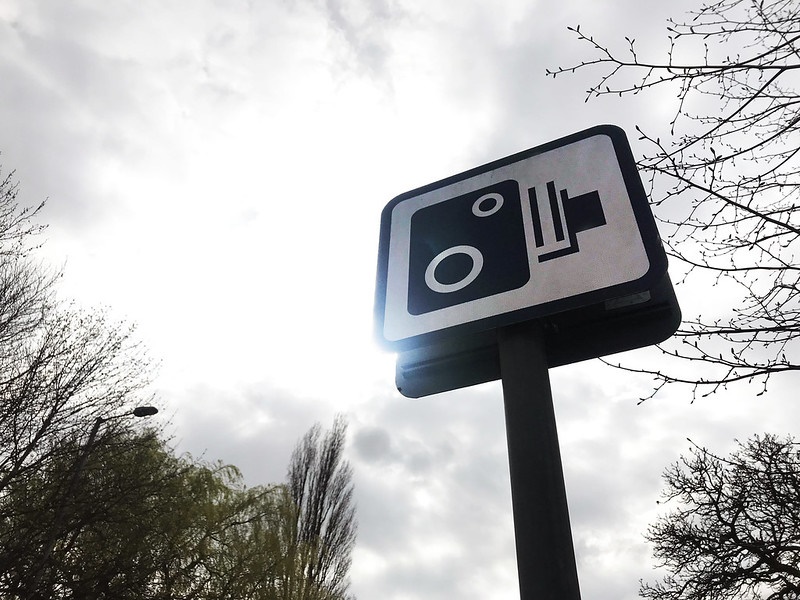

The Metropolitan Police’s Roads and Transport Policing Command (RTPC) has again urged drivers to slow down after reporting a large number of cases of extreme speeding on quieter lockdown roads.
Speaking last month, Detective Superintendent Andy Cox from Scotland Yard’s traffic teams said that while the number of motorists on London’s roads had dropped during lockdown, the number of people suffering life-changing injuries in road traffic collisions had remained about the same.
He said the force had been seeing, “incredible speeds, incredible risk,” on the roads of the capital.
Transport Xtra reports that speeds have increased in all road categories, from 20 to 70mph.
The highest speeds seen per limit category have been:
- 163mph: 70
- 119mph: 60
- 121mph: 50
- 134mph: 40
- 110mph: 30
- 73mph: 20
“The majority of Londoners have followed government advice and have stayed at home,” said Cox.
“However, a small number of individuals have gone against the advice and have used this opportunity to abuse the less congested roads and drive at excess speed and in many cases extreme speeds.
“In doing so, their actions increase the risk to their own safety and that of other road users and in the event of a collision can lead to devastating consequences for themselves, and bereaved family and friends.”
There have now been 10 fatal collisions in London since lockdown began – a period during which there have been 1,656 extreme speeding offences compared with 684 for the same period in 2019.
Overall, there has been a 71 per cent rise in speeding enforcement notices from 2,300 to 4,000 despite 40 per cent less traffic on the road.
Speaking ahead of the Bank Holiday weekend, Cox urged drivers to only make the most essential journeys and to do so sensibly, safely and lawfully.
“The objective of any journey is to get from one location to another safely, and there is absolutely no reason to travel at speeds above the limit, posing risks to yourself and other road users,” he said.
“To keep people safe and make a real change to driving standards and behaviour we all need to treat speeding as socially unacceptable in the same manner society rightly treats drink driving.
“To this end I urge everybody to challenge drivers who speed and ask them not to do so; whether that be a family member; friend; work colleague or yourself.”
Image: DPP Law via Flickr Creative Commons












46 thoughts on “Met Police urges drivers to slow down after catching driver doing 110mph in a 30mph zone”
You simply can’t trust some
You simply can’t trust some people to restrain themselves from speeding, it’s just not in the psyche of risk-takers. The only way is a widespread reintroduction of speed cameras which actually work, so everyone knows speeding will always lead to a penalty. The authorities will have to hold their nerve against the inevitable backlash and cries of money making etc etc. Drivers only have themselves to blame, and obviously, fines are easily avoidable.
There is one clear cut way of
There is one clear cut way of ending speeding and the technology is already installed in most cars. It is called GPS and the engine management computer. Link the 2 with an algorithum, that a GCSE student could write, and the car simply wll not exceed the posted speed limit. Considering what VW managed with with their emissions fiddling software I think that would be a piece of piss, but admittedly political suicide for any politician to campaign for.
Dropped wrote:
Unfortunately that involves retro-fitting systems to existing vehicles and ensuring that people don’t bypass the restrictions when they are enabled.
What really prevents people from mis-behaving is the expectation (or not) that they’ll get caught, so I think we should focus more on using speed cameras and introduce increasing fines for repeat offenders (say, double the fine each time you’re caught in a rolling 5 year period). It could literally pay for itself.
How many average Jo’s would
How many average Jo’s would know how to hack their engine management computer? Far far less than those who will speed in areas where there are no police or speed cameras. As for retro fitting – easy make it a requirement of MOT and or insurance.
hawkinspeter wrote:
It’s trivial to prevent the restrictions from being bypassed by encrypting whatever module they’re using on the car’s computer to limit the speed in the first place. The only reason this isn’t already done ‘properly’ is because car manufacturers are lazy and cheap and don’t want to expend the energy or money in doing it
If the engine management is
If the engine management is encrypted then how does it work without also having a means to decrypt it? It sounds to me like the efforts to encrypt DVDs back in the day. It’s not a trivial solution.
hawkinspeter wrote:
It’s entirely trivial. Every modern laptop and most desktops is fitted with a TPM chip which is used to encrypt data on the hard drive at rest (to prevent people from nicking the drive out the machine and re-mounting it somewhere else to access the data from another device). It’s how all corporate disk encryption (and private disk encryption, if you care enough to do it) works. The TPM module has part of the encryption key, so the key itself can’t be retrieved from the data on the disk. In order to read/write to the disk you need to either be authorised (ie: logged onto the device with an approved account) or decrypt the disk entirely using the key (requiring you to have either the device already mounted and enter a passphrase, or the ‘recovery key’ – which is generated at the time the disk is encrypted and stored elsewhere)
The technology to do this has been around for more than ten years
It isn’t completely flawless – you could, for instance, hack the system where the recovery keys are stored and potentially have access to all encryption keys for all cars made by the manufacturer (would be trivial for anyone to protect against this, but it costs money to do that and this is the car industry we’re talking about so…) – but it absoluteky is easy to implement
The problem with this is that car manufacturers (and I speak from painful and current experience) are not remotely interested in anything that affects their bottom line when it comes to technology and security. Unless it is government mandated, there isn’t a snowball’s chance in hell of them doing this
I think you’re missing the
I think you’re missing the point – to use a laptop (or start the car engine) you need to unlock the key. Encrypted data at rest would be equivalent to encrypted engine management with the car parked. To start the engine, it would have to possess the key to unlock it.
No… Perhaps I’m not
No… Perhaps I’m not explaining myself properly. I’m not talking about encrypting the entire system. I’m talking about encrypting a small part of it – the part that controls the instruction set about limiting engine speed – and making that part tamper proof. That way, it’s still possible for the ECU to be programmed, for the car to be started, to be driven, to be upgraded etc. The instructions related to the limiter aren’t by passable because that part of the instruction set isn’t writable at run-time, only readable – and can’t be reprogrammed without the encryption keys
I see – more like a signed
I see – more like a signed piece of code, probably similar to UEFI secure boot.
There’s still plenty of by-passes available as the main problem is that the car and engine is in possession of the person trying to by-pass it. There’s also the issue that car mechanics would most likely need to update/re-program the engine management system and if they have privileged access to the hardware then that opens up some more vulnerabilities. It might be possible to get it all working flawlessly but it’s not an easy thing to get right.
Dropped wrote:
All our works vehicles have GPS trackers and we have individual fobs which must be used to silence a loud buzzer. You couldn’t drive with it buzzing for long. It’s not accurate enough to to prosecute, but it does show up the bad drivers. It’s not infallible, as one of our vans tracker doesn’t need the key fob to drive it, so the driver using this van can’t be identified. But it’s a step in the right direction.
These trackers were all retrofitted, so could be installed at MOT time
Unfortunately no government will have the will power to introduce anything like this.
So in the meantime CRUSH the feckin cars
Dropped wrote:
Except numerical differentiation of GPS is a dismal way to get reliable, near-instantaneous speed? Useful perhaps over distance to check the calibration of the actual speedometer, but not much else.
werics wrote:
There is one clear cut way of ending speeding and the technology is already installed in most cars. It is called GPS and the engine management computer. Link the 2 with an algorithum, that a GCSE student could write, and the car simply wll not exceed the posted speed limit. Considering what VW managed with with their emissions fiddling software I think that would be a piece of piss, but admittedly political suicide for any politician to campaign for.
— werics Except numerical differentiation of GPS is a dismal way to get reliable, near-instantaneous speed? Useful perhaps over distance to check the calibration of the actual speedometer, but not much else.— Dropped
You misunderstand – the GPS tells the engine management computer what the speed limit is in that specific location and the EMC limits the speed using its own sensors i.e. the speedometer.
Dropped wrote:
Our car dates back to 2004, dont think it has any “modern technology” in it.
I’ll up you on that. Ours was
I’ll up you on that. Ours was registered in 2002. You have to crank it to start it.
Lukas wrote:
Mine was first registered in November 1970 (and my wife’s in the middle of 1973).
<mic drop>
😀
alchemilla wrote:
There is one clear cut way of ending speeding and the technology is already installed in most cars. It is called GPS and the engine management computer. Link the 2 with an algorithum, that a GCSE student could write, and the car simply wll not exceed the posted speed limit. Considering what VW managed with with their emissions fiddling software I think that would be a piece of piss, but admittedly political suicide for any politician to campaign for.
— alchemilla Our car dates back to 2004, dont think it has any “modern technology” in it.— Dropped
The first EMCU was produced by Motorola in 1980 so you will find even your car has a engine management computer.
Ah yes, that well known
Ah yes, that well known tactic of “urging” drivers to do things. Share the road, not speed, not use mobile phones, all of that…
None of which has worked in the slightest. The only “urging” that drivers understand is the bit where they’re “urged” to return to their cells as it’s lights out in 10 minutes. Just a shame that’s not used more widely. Along with astronomical means-tested fines and a short period of walking or cycling everywhere before being allowed back behind the wheel.
Are those just Met police max
Are those just Met police max speed figures as Norfolk/Suffolk police seem to be catching vehicles over 120mph regularly on the A11,A47 and have had 123mph in a 60 limit, but look how the local press covers it, almost like they are more interested in the comedy angle the biker was transporting a goldfish… https://www.edp24.co.uk/news/crime/biker-and-goldfish-doing-125mph-on-a47-norfolk-1-6636030
I believe the Met are to
I believe the Met are to adopt similar softly softly approaches with other types of crime.
With an armed situation, rather than deploying armed officers, a PCSO is to approach the armed person on bended knee with doey eyes and quivering lip and request the weapon by asking, “Pwease can I have your gun? Oh pwease, oh pwetty pwease?”.
These are speeds that you
These are speeds that you would hope would result in bans and seizure of vehicles, these are not merely breaking speed limits, this is dangerous driving,
ktache wrote:
Points, fines etc, the only way to guarantee that the driver won’t speed in that car again is seizure. Six months ought to give the driver time for reflection.
The police could also look at pre-crime! Drivers of cars with smoked out number plates are advertising their intention. And they are legion round these parts.
I’ve considered cycling with
I’ve considered cycling with a sponge and waterpack on my back, every car I see with obscured license plates gets a free plate-wash.
How the hell do you even get
How the hell do you even get to 110?
You’d need a lot of straight, unrestricted road
But cyclists are the real danger as we all know.
hirsute wrote:
Can only assume it was coming into a village or town where a NSL changes to a 30mph limit, rather than accelerating from zero to 110 in an urban area.
I can think of plenty of 30
I can think of plenty of 30 mph roads in London where I could accelerate a reasonaby powerful car to that speed. I live in an affluent area of North London (I’m not in case your wondering) and theres a lot of young men driving exremely powerful cars which could easily reach that speed quite quickly.
here’s a thought: catch a
here’s a thought: catch a driver doing more than 2-3x the speed limit, take away their license for 5 years.
problem solved…
if drivers aren’t careful we
if drivers aren’t careful we will start hearing tales of people leaving spike strips across the road to catch out speeding drivers >.>
got to stop them from hitting someone and putting a strain on the NHS after all, even if it means sending them to the ICU -_-“
Dao wrote:
bUt iT wiLL pUt mA fAmiLEE iN eCoNoMiC haRDshiPPs.
Only if they have a parallel
Only if they have a parallel suspended prison sentence with a direct car to gaol activation on being caught breaching the ban.
People have shown time & time
People have shown time & time again they can’t be trusted to drive safely, time to make speed limiters law on all cars.
Ourselves and other
Ourselves and other neighbours were sick of the amount of cars driving at high speed in a 40 zone.One local both with a motorbike and a car was a total menace.Neighbours tried to slow him down at the side of the road but he’d turn the car around and shout abuse.We couldn’t read the registration of the bike because of the high speed.The police could only visit him and give him a warning.
Now we have set up a community speed watch and have the speed camera here.Only warnings can be issued and we have to meet a high percentage of speeders before the police will station an official camera for a few hours.
The local council were not interested in the situation.They said that without fatalities then there is no reason to look at traffic calming measures.Basically it’s up to us to try and reduce the speeds.
joeegg wrote:
Basically, ‘please wait for someone to die before bothering us’. Astounding.
I think that’s the attitude
I think that’s the attitude of most councils, unfortunately.
samcritchlow wrote:
In industry the same attitude would lead to jail time for directors. You can’t just wait for a worker to die falling off a ladder before you take action. The whole of H&S regulation is premissed on mitigating all risk factors at the base of the triangle to prevent one fatality at the apex. If there is a fatality and it turns out the attitude was to wait for that before taking action against the identied risks then jail beckons.
We had exactly the situation
We had exactly the situation you describe but in a 20mph zone. We tried everything: The Resident’s Association, police, local MP, Cllrs, Community Speed Watch. They were all supportive – even the police wrote to the council to express their concerns! The council said to us, I quote: ‘when someone is killed we will look at measures to reduce traffic and speeding’
We tried to explain that it wasn’t just about death – it was about the local roads feeling like intimidating places to be. (And the noise, pollution, law breaking)
When we did the Community Speed Watch we and the police (PCSO) would clock dozens of speeding vehicles. And they were just sent a letter telling them off. (If the car was legit – if it wasn’t registered it didn’t even get that) It was so frustrating, almost pointless. I have to say the Police were quite supportive – they assisted with the Speed Checks and did their own independent stops and checks (CSW is a ‘civilian’ operation even though it does have PCSO support and it does not have the power to stop) But the Police were only available once in a blue moon and kept repeating the mantra – only the council can fix this problem, they need to put in restrictions / measures. To which the council always replied ‘speeding is a police matter’
Fuckin hell!!
So we moved in the end.
joeegg wrote:
Hmmm, I don’t wish to sound cynical but if the Council state they are not going to do anything until there is a fatality, ask for confirmation in writing, keep the letter very safe and when the fatality occurs pass the letter or a verified copy to the police to charge the Council leader with Corporate Manslaughter, they made a concious decision which resulted in a death so can pay the penalty.It will only take one conviction to overturn Council thinking.
I think this would need some
I think this would need some thought about the psychology of drivers – it might be wonderful but might have unintended consequences.
Too many think the limit is actually the recommended speed, so they’d have their foot to the floor all the time, not thinking about whether the speed was safe for the conditions. Would they use the headspace released by not worrying about speeding to concentrate on other tasks, such as observation, or just drift off into slack jawed hypnosis?
My experience of contraflows with average speed cameras is that nobody keeps their distance from the vehicle in front, and truck drivers are particularly bad if they feel they are being held back by all of 2 mph. I do not think this makes anything safer for vehicles – though it might for the road mending crews.
I’m certainly with the speed bumps at village entrances though, and proper penalties for bad offenders. If jail is what it takes, bring it on. We will need more traffic policing to make a proper difference, and significant penalties for the offences that go with speeding – dodgy plates and other construction and use infringements. I would also be tempted to look at the penalties for driving without insurance, as that is still a major problem.
In many civilised countries
In many civilised countries in Europe speed humps are installed on the entry and exit to every village in rural areas. These are clearly signed to motorists and physically prevent motor vehicles from entering populated areas at excessive speed. They do not seem to inhibit energency vehicles in their duties, but they provide a low-tech and effective solution to speeding in these areas with virtually zero ongoing costs (apart from re-painting periodically).
They are obviously not a complete solution as they do not address speeding on rural roads, but thay can surely be part of the solution. In the UK whenever they are installed they are usually done so very poorly, and/or are opposed vociferously by the motoring public (incl by many local residents!). But if the French and Spanish can accept this ‘infringement on their liberties’ (in the interests of protecting lives) then I see no reason why it should not be possible to do so here. They are cheaper and more effective than cameras, and limit speeds as effectively as GPS-based systems (which presumably can be bypassed by those willing to break the laws to put themselves first?)
Crazyhorse wrote:
My wife and i went out for a walk with our dog this morning. We went a bit further awya to a different park from usual, walking along a road near where we used to live. This road has had a bit of a rep as a racetrack for years and there have been some nasty crashes, so the council has installed numerous measures including pinch points and speed humps in a bid to tackle speeding. But it still doesn’t seem to work.
While we were walking, a car overtook another on the road (which now has a 20mph speed limit), continued on the wrong side of the road to avoid a speed hump and then veered sharply to avoid a cyclist who was doing nothing wrong at all. The fact is that some people in cars are idiots and will drive like idiots, no matter what.
We now have far fewer traffic police on UK roads, with enforcement having been taken over by speed cameras.
two (among many) problems
two (among many) problems with speed humps are that they slow down fire engines a lot beacuse of the way the equipment is attached to them and cars brake and then accelerate beween them.
nicmason wrote:
I know. It’s terrible how the French villagers have all died in house fires as the engines take so much longer to arrive.
smartass sarcasm corner still
smartass sarcasm corner still open in the pandemic I see. Well done.
One thing that worries me
One thing that worries me about this is the Police asking speeding drivers to slow down, they should be telling them. No wonder the different forces throughout the Country are now regarded as a very sick joke.
TfL were totally out of touch
TfL were totally out of touch with reality lifting the congestion charge, it was an unnecessary birthday present to wannabe gangsters to go drag racing round central London. Some of these drivers are totally out of touch with normal society and can’t be trusted like adults, that’s just a simple fact.
Here in Switzerland the
Here in Switzerland the people/govt got really fed up with people racing, and now if you go much too fast (50mph too fast on a motorway, 40mph too fast out of town and 30mph too fast in built-up areas) you get at least an automatic minimum 1 year suspended sentence, with 2 years automatic minimum loss of licence (extended retest to get it back). And your car/bike gets confiscated and crushed.
Plus there are lots of police checks and hidden cameras.