
Best cheap cycling computers
Best cheap cycling computers (Image Credit: Farrelly Atkinson)

Best cheap cycling computers 2026 — get GPS on the bike for less and record speed, distance + more on a budget

Want some on-bike data without breaking the bank? There are loads of good quality, affordable bike computers out there nowadays, some even with GPS and Strava-sharing capabilities
Mon, Jul 27, 2026 16:22
3
This article contains links to retailers. Purchases made after clicking on those links may help support road.cc by earning us a commission but all of our reviews are fully independent. Find out more about road.cc buyer’s guides.
Google icon
Add as a preferred source on Google

Nowadays, the best cheap cycling computers can record your route, track your speed and other data every second or so, and provide you with a rich and complete log of each bike ride. Some can also guide your ride with on-screen maps and turn directions, which is a far cry from computers of decades gone by that involved lots of wires and simply recorded speed and distance. 
Coospo Realroad CS300 GPS Bike Computer
Best cheap cycling computer with GOOS tracking: Coospo Realroad CS300 GPS Bike Computer
Magene C506 Smart GPS Bike Computer
Best cheap cycling computer with touchscreen: Magene C506 Smart GPS Bike Computer
Coospo BC107 GPS Bike Computer
Best cheap cycling computer for the basics: Coospo BC107 GPS Bike Computer
Beeline Velo 2 Cycling Computer
Best compact cheap cycling computer: Beeline Velo 2 Cycling Computer

The basic function of any good cycling computer is to track your effort level – whether that’s simply using speed as a pointer or connecting up a power meter and/or heart rate monitor to truly gauge how hard you’re working – and to measure how far you’ve ridden. If you do just want to know how far and how fast, budget GPS-equipped computers are now so affordable and accurate that for most of us, it’s worth spending a little more for the extra features they often come with. If you literally only want to know your speed and distance then don’t worry, we’ve got you covered in this guide too with basic computer recommendations starting from just 33 quid.

If you do go for a budget GPS computer, it means you probably won’t get maps and full car satnav-style directions like on higher end units, but some have rudimentary breadcrumb navigation that can help you find new routes. Many cheap GPS cycling computers also have a ‘back to start’ function that’ll help get you home if you get lost. If you also want fitness data, pick up a cheap GPS cycling computer that can read heart rate or even power from ANT+ or Bluetooth sensors.

‘Cheap’ is obviously subjective, but there are options here from £33 up to £99.99, which arguably all fall into the budget computer category considering top-end units can cost £500+. For a wider selection and to see what you can get with a heftier spend, see our main cycling computer guide, or keep scrolling to see our top budget picks…

The best cheap cycling computers

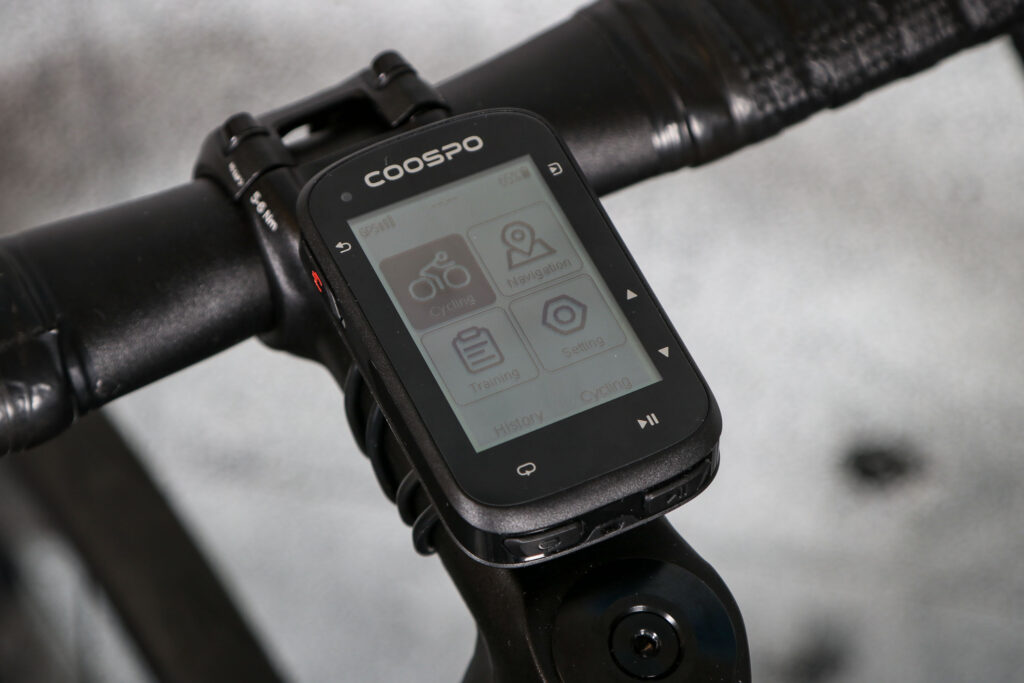
Coospo Realroad CS300 GPS Bike Computer
Coospo Realroad CS300 GPS Bike Computer (Image Credit: road. cc)

Coospo Realroad CS300 GPS Bike Computer

Best cheap cycling computer with GOOS tracking

Good selection of data

Easy to use

Works with other sensors

Syncs with Strava

Needs better instruction manual

Lap display data permanent

No navigation

The Coospo Realroad CS300 bike computer is a simple but extremely effective GPS computer that can be a very useful aid for serious training.

When it comes to metrics, the CS300 will show and record old favourites such as speed, time and distance, including associated maxes and averages. But these are augmented with extras like temperature, calories burned, elevation, gradient and – when combined with third-party Bluetooth and ANT+ sensors – heart rate, power and cadence.

While it doesn’t have navigational abilities, if you want a reliable training aid, it’s really rather good.

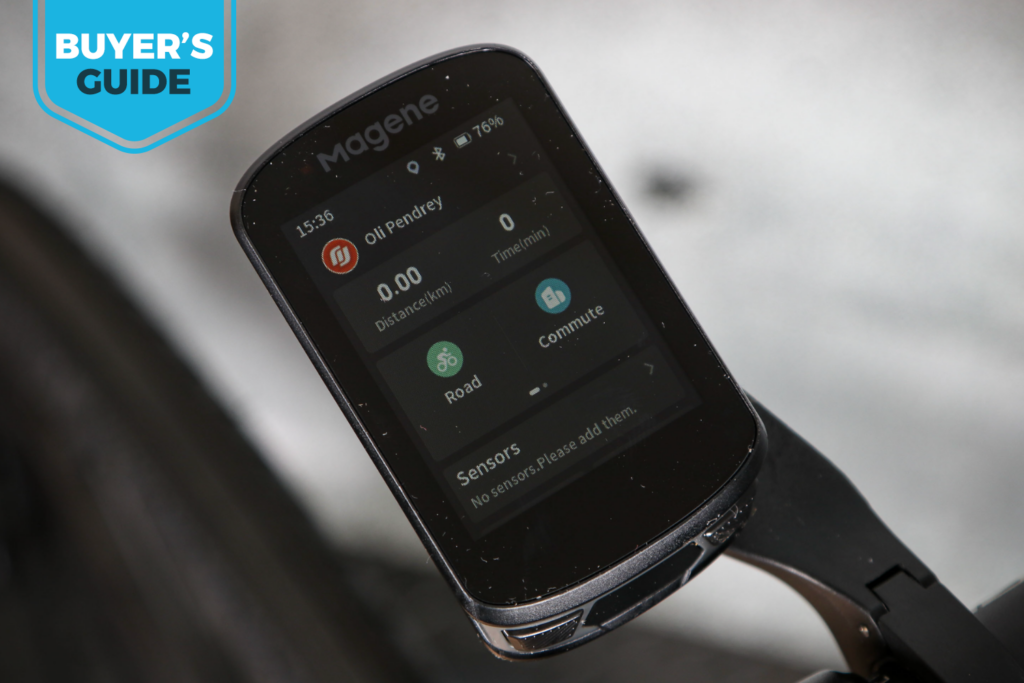
Magene C506 Smart GPS Bike Computer
Magene C506 Smart GPS Bike Computer (Image Credit: Farrelly Atkinson)

Magene C506 Smart GPS Bike Computer

Best cheap cycling computer with touchscreen

Decent display

Easy setup

Great value

Lots of deeper capabilities

Hesitant touchscreen

Magene’s C506 can be as simple or advanced as you want it to be. As a standalone bike computer, it offers a solid set of features for recording rides without becoming overly complicated.

The 2.4-inch colour touchscreen is one of its highlights at this price point, offering clear route map graphics. Riders can upload routes to follow, making use of the C506’s navigation features.

Overall, it’s a capable budget bike computer that’s easy to use despite also having fairly extensive capabilities.

Coospo BC107 GPS Bike Computer
Coospo BC107 GPS Bike Computer (Image Credit: Farrelly Atkinson)

Coospo BC107 GPS Bike Computer

Best cheap cycling computer for the basics

Included out-front mount

Long battery life

Inexpensive

Easy to use

Time zone setting requires app

Calorie algorithm ignores power

The Coospo BC107 is a very tidy and extremely well-priced GPS bike computer. Coospo have kept things simple which has made it very easy to use.

The interface is straightforward, it gets a location fix quickly and it works with ANT+ sensors, including power, which is unusual for such a cheap GPS.

With Coospo’s Android and iPhone app you can have it send your rides straight to Strava, though it’s slightly odd that the app is the only way to download your ride data from the device.

Beeline Velo 2 Cycling Computer
Beeline Velo 2 Cycling Computer (Image Credit: Farrelly Atkinson)

Beeline Velo 2 Cycling Computer

Best compact cheap cycling computer

Small

Easy to use

App doesn’t give elevations – yet

Can’t connect sensors

The Beeline Velo 2 cycling computer is simple and easy to use with fundamental computer functions such as speed, distance and turn-by-turn directions.

The head unit is sleek, with a clear display that auto-adjusts the brightness based on the ambient light, and it weighs in at just 28g.

The battery life is good too, lasting for around 11 hours.

More of our cheap cycling computer recommendations

Coospo Realroad CS500 GPS Bike Computer
Coospo Realroad CS500 GPS Bike Computer (Image Credit: Farrelly Atkinson)

Coospo Realroad CS500 GPS Bike Computer

Good value

140+ ride metrics

Works with third-party sensors

Syncs with Strava

GPS route following

Ultra-basic graphics

The Coospo Realroad CS500 is a well-specced GPS budget bike computer that comes with a comprehensive range of more than 140 metrics on tap, including old favourites such as speed, time and distance, as well as slightly rarer options like temperature, calories burned, elevation and gradient.

It will also pair with third-party Bluetooth and ANT+ sensors to record heart rate, power, cadence, as well as recognise smart trainers.

There’s route guidance capabilities too, but don’t expect multi-coloured mapping with that route guidance.

Cateye Quick Computer
Cateye Quick Computer (Image Credit: Farrelly Atkinson)

Cateye Quick Computer

Well-made

Intuitive to use

Easy to read

The Cateye Quick computer is sleekly designed with an integrated out-front bracket – it’s also the only computer in this guide that isn’t equipped with GPS.

It can measure your speed and distance – offering current, maximum, and average speed, total distance, moving time and clock. Usefully, there’s an auto stop/start function and pacer arrows denoting when you’re exceeding or dipping below your average speed. It operates using a CR1616 battery and the head unit is said to last a year (based on an hour’s daily use).

While our reviewer said this unit was expensive for what you get at the time, we’re including it because you can find it cheaper than the RRP and if you really do just want the basics, it looks great.

Sigma ROX 4.0 Cycling Computer
Sigma ROX 4 (Image Credit: Farrelly Atkinson)

Sigma ROX 4.0 Cycling Computer

Lots of functions

GPS with a barometric altimeter

Navigation

An excellent price for a modern ride-recording GPS with a barometric altimeter and a nice big clear display.

The ROX 4.0 connects to external sensors such as power meters, speed, heart rate and cadence via ANT+ and BLE.

You can also connect to the Komoot app on your smart phone which enables you to download routes onto the ROX 4.0 for turn-by-turn instructions.

Best cheap cycling computers: how to choose and everything you need to know

What features will I get on a cheap cycling computer?

Less expensive units that use GPS to replace the sensors of a traditional bike computer offer basic features for tracking essential ride data such as speed, trip distance and time, as well as recording your ride for later analysis.

They are unlikely to have features like turn-by-turn navigation, advanced training metrics, integration with external sensors (heart rate, power, etc.), or detailed mapping capabilities that are found in more expensive models.

If you go very budget and spend less than £40, unless you’re buying second-hand or a reduced item it’s unlikely your computer will use GPS to record data. These ‘traditional’ computers use sensors to track speed and distance based off the revolutions of your wheel instead of satellites.

What's the cheapest GPS bike computer with maps?

GPS bike computers with maps are around the £100 mark such as the Magene C506 GPS Bike Computer.

Some cheaper bike computers also have navigation capabilities but while they offer some turn-by-turn navigation, they are limited in what they provide and may not show a map or breadcrumb style display, rather instructions on when to next turn.

Is a GPS cycling computer worth it?

If you’re someone who values accurate data tracking, navigation, and durability, a GPS cycling computer could be a worthwhile investment. However, if your rides are shorter and less performance-focused, and you’re comfortable using your smartphone for navigation and data tracking, a cycling computer might not be as necessary.

That being said, cycling computer tend to have a longer battery life compared to smartphones, are built to withstand the elements and can connect to sensors like heart rate monitors, cadence sensors, and power meters providing you with more accurate data for your training.

They are also useful for providing turn-by-turn navigation without having to constantly stop and check a map on your phone.

How much should I pay for a cycling computer?

You can get started with on-bike GPS logging for as little as £40 if you shop around. Mapping GPS units start around £150 because of the larger screen and battery and more sophisticated electronics.

How do GPS cycling computers work?

GPS-enabled bike computers pick up signals from a network of satellites that orbit the earth at an altitude of about 20,000km. These satellites use atomic clocks to transmit time and position very accurately. A GPS receiver uses the signals from several satellites to work out its position to within five metres.

Technically, GPS is the name for the United States’ satellite constellation and signalling system. Others includes Russia’s GLONASS, the European Union’s Galileo and China’s BeiDou. The tech industry wants us to call these global navigation satellite systems, GNSS for short, but non-nerds seem unlikely to stop calling them all GPS any time soon.

What are the best cycling computer brands?

US-based company Garmin dominates the field of GPS-enabled cycling computers, partly because it has a wide range of good quality products, partly because it was first to market with the Edge 205 and 305 models in 2006.

As GPS receiver chips have become more widely available in the last few years, more manufacturers have entered the market. GPS-enabled computers are available from traditional bike computer makers such as CatEye and Sigma, as well as new players like Lezyne, Bryton, and Mio.

If you have multiple bikes, a big advantage of GPS computers is that you can swap them from one to another without faffing changing set-up.

Do all cycling GPS computers have maps?

No, only the more expensive ones. There are two types of GPS bike computer. Less expensive units use GPS to replace the sensors of a traditional bike computer and display data such as speed, trip distance and time, as well as recording your ride for later analysis.

More expensive GPS units have full satellite navigation functions, with map display and turn-by-turn navigation of a preset route, or one the computer generates on the fly.

Some GPS units are able to pick up signals from heart rate monitor straps and on-bike sensors to log additional data such as heart rate and cadence.

Emily is our track and road racing specialist, having represented Great Britain at the World and European Track Championships. With a National Title up her sleeve, Emily has just completed her Master’s in Sports Psychology at Loughborough University where she raced for Elite Development Team, Loughborough Lightning. Emily is our go-to for all things training and when not riding or racing bikes, you can find her online shopping or booking flights…the rest of the office is now considering painting their nails to see if that’s the secret to going fast…  

3 Comments

3 thoughts on “Best cheap cycling computers 2026 — get GPS on the bike for less and record speed, distance + more on a budget”

  1. Bryson 420 unit

    Have the Bryton and do not recommend it. Quit uploading data after three months and Bryton HRM I got with it drifts all over the place, like swings of 40-50 bpm within 5-10 seconds. Totally unreliable. Have submitted three or four tickets to Bryton with no response. Otherwise, it is great.

    • We did consider adding the
      We did consider adding the Mega XL but the price point probably just counts it out of this guide, it’s in the main one though. The cheaper Lezyne units didn’t score high enough in the reviews to make it in.

Leave a Comment


Read more...

Read more...

Read more...