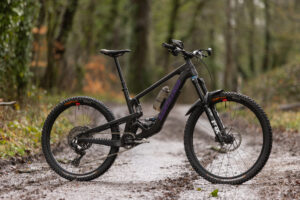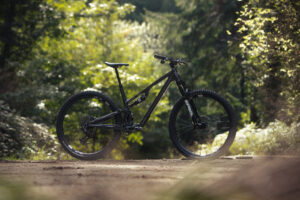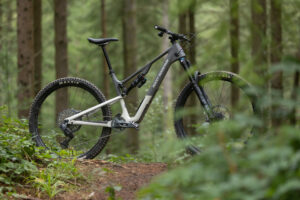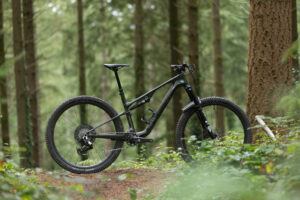


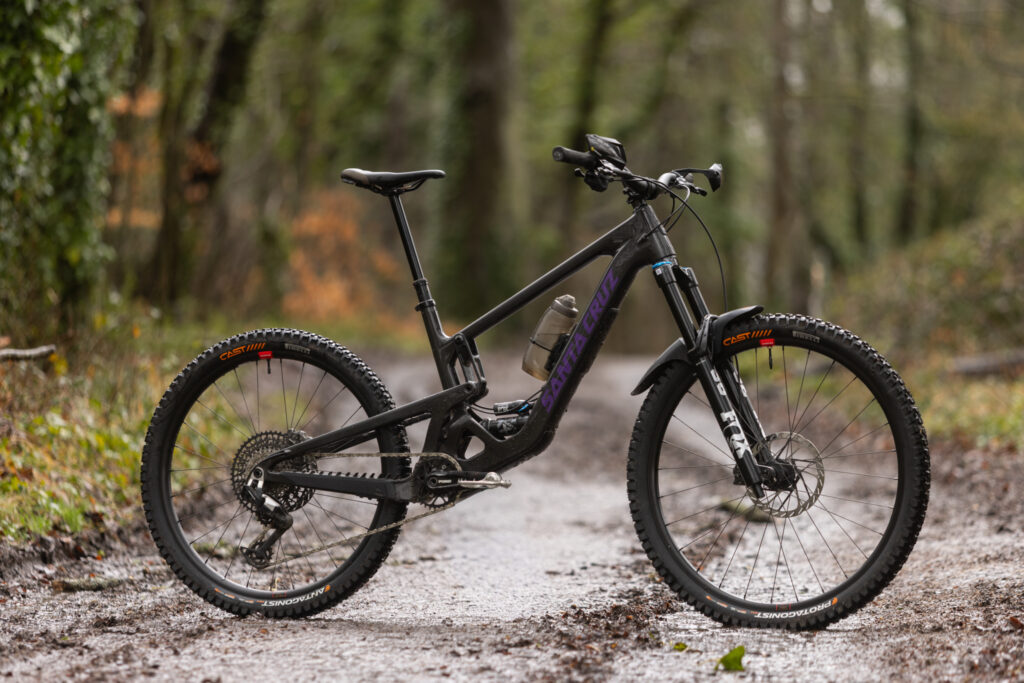

Santa Cruz touts the Bronson as its ‘one bike for everything’ machine, and after spending a year with it, I can safely say that the brand has done an excellent job. With awesome trail manners both up and downhill, the Bronson errs more towards the fun end of the spectrum with a lively and engaging ride that’s easy to crank back uphill for another run. The only things that hold it back are some quality-of-life niggles and a slacker-than-ideal actual seat tube angle.
Santa Cruz Bronson 90 long-term – Technical details
The Bronson revolves around what Santa Cruz reckons is its best VPP linkage to date. With that, the bike offers 150mm of rear suspension combined with 160mm at the front. It runs a mixed wheel size, too, so a 29-inch wheel at the front and a 650b, or 27.5-inch hoop, out back. There is no provision to change this around.
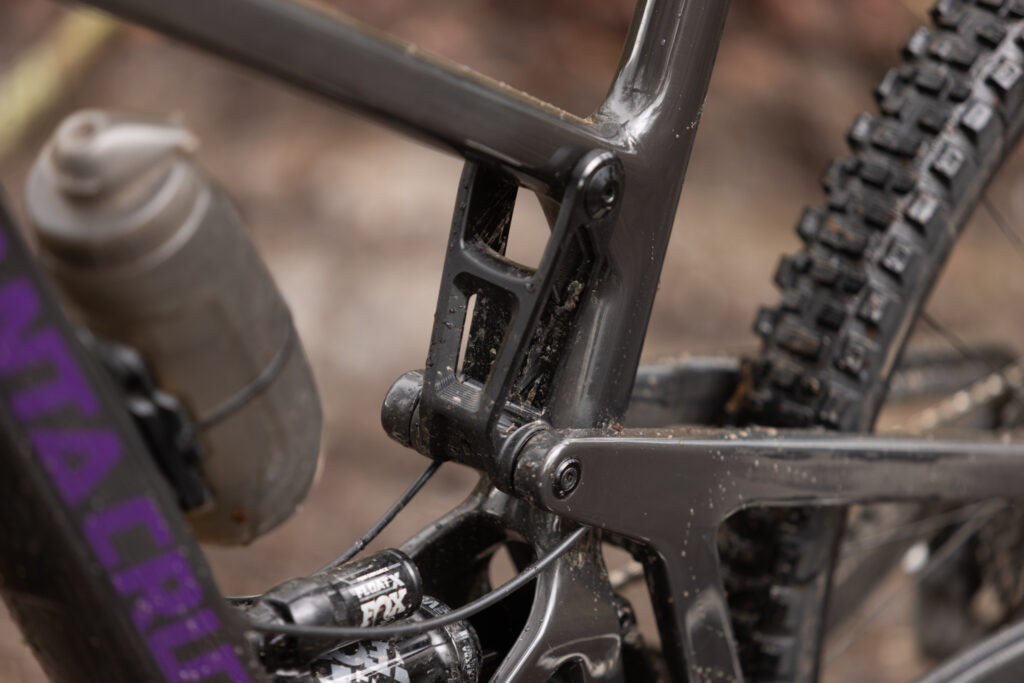
This version of VPP benefits from a link that’s lower and placed a bit further forward than previous generations, which results in ‘optimised’ anti-squat. The whole idea here is to develop strong traction but with a plush feel, to use the brand’s words. Apparently, there’s less pedal kickback happening here, too.
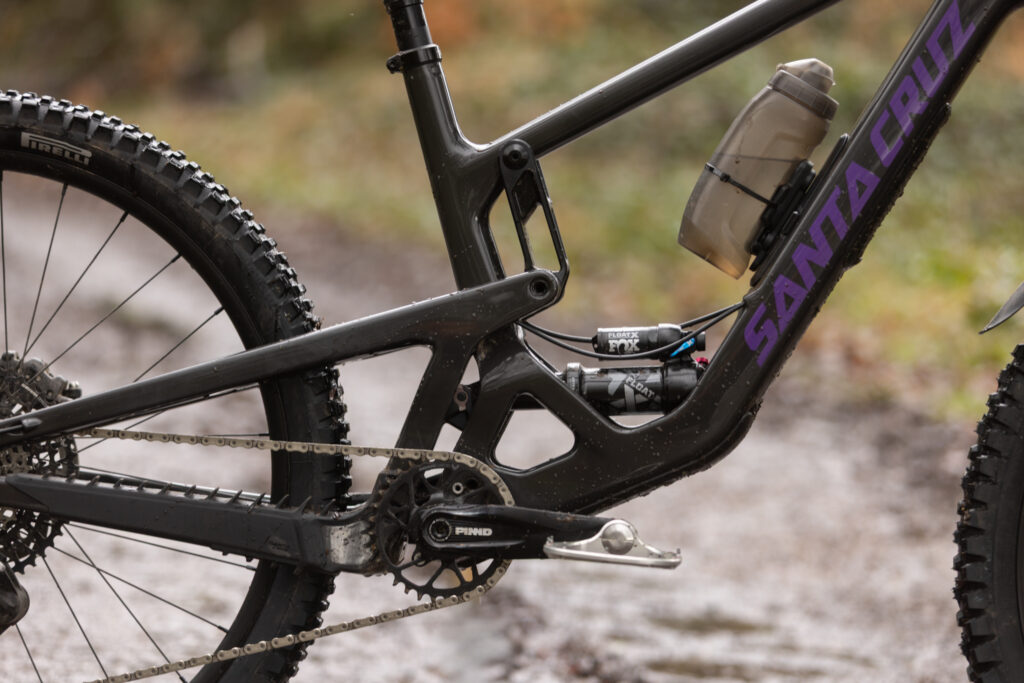
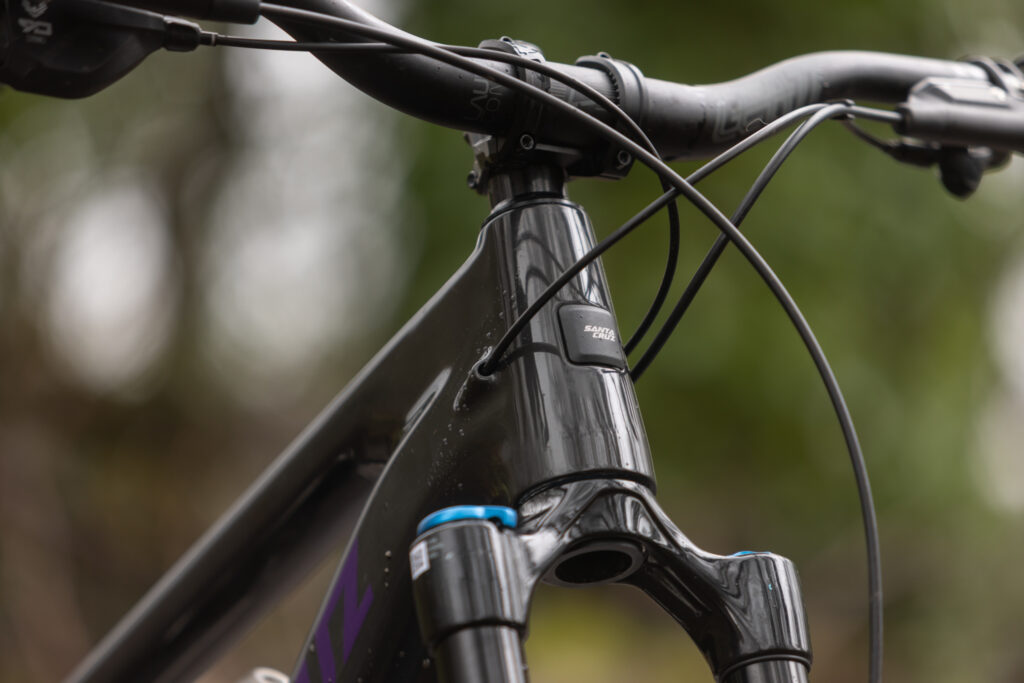
All Bronson models use a carbon fibre frame which is nothing short of modern. It features UDH compatibility, a threaded bottom bracket and internal cable routing that exits either side of the head tube. This routing is also moulded into the frame, so cable and hose maintenance is as straightforward as it gets.
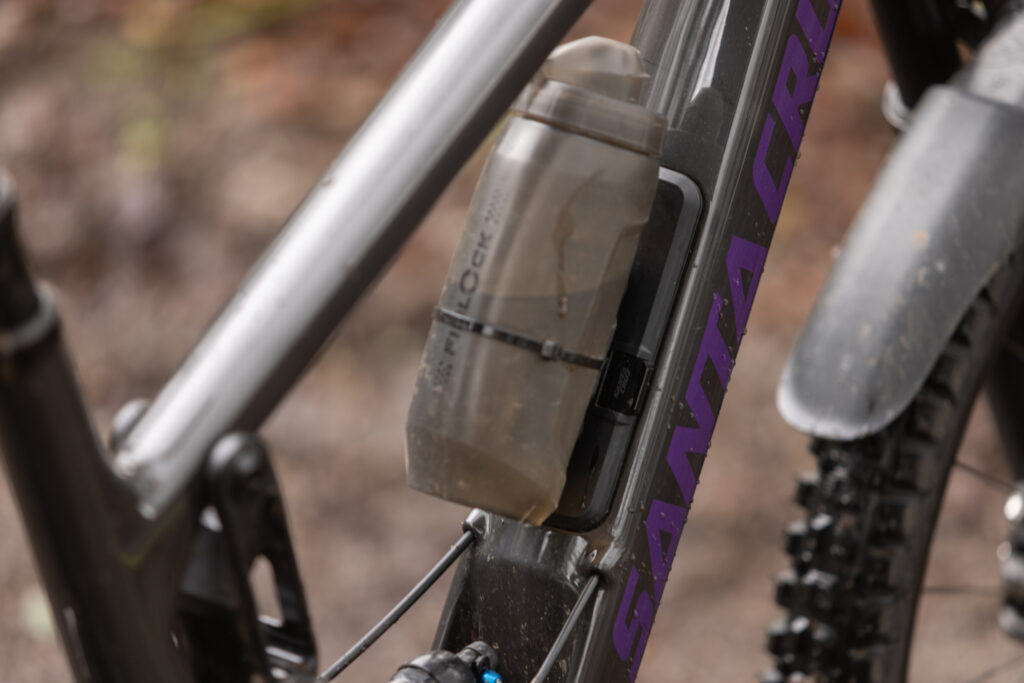
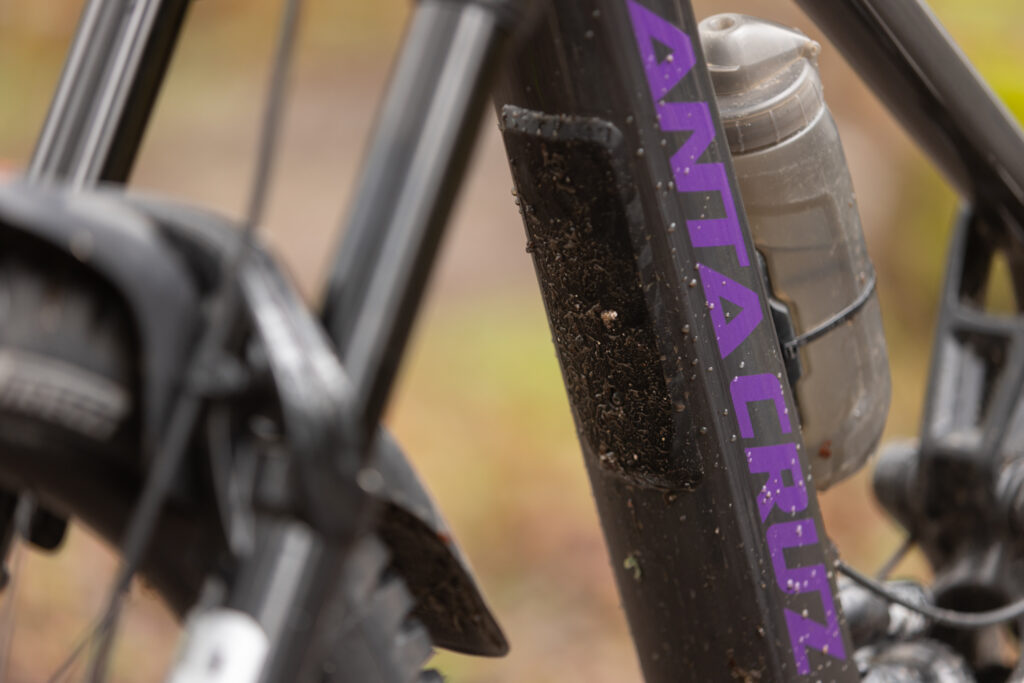
As well as space for a bottle in the front triangle, there’s internal frame storage, dubbed Glovebox, that comes with a neat bag to carry whatever you like in. Alongside that bag, there’s extra space for a small, packable jacket, for example.
The Bronson’s geometry really leans into its adaptable but fun ride. On the large frame I’ve been riding, there’s a 480mm reach and a 442mm chainstay, which is specific to the frame size. Additionally, there’s a 64.2-degree head tube angle and a 78.2-degree head tube angle, though Santa Cruz doesn’t state whether it’s an actual measurement or effective. I’ll assume the latter.
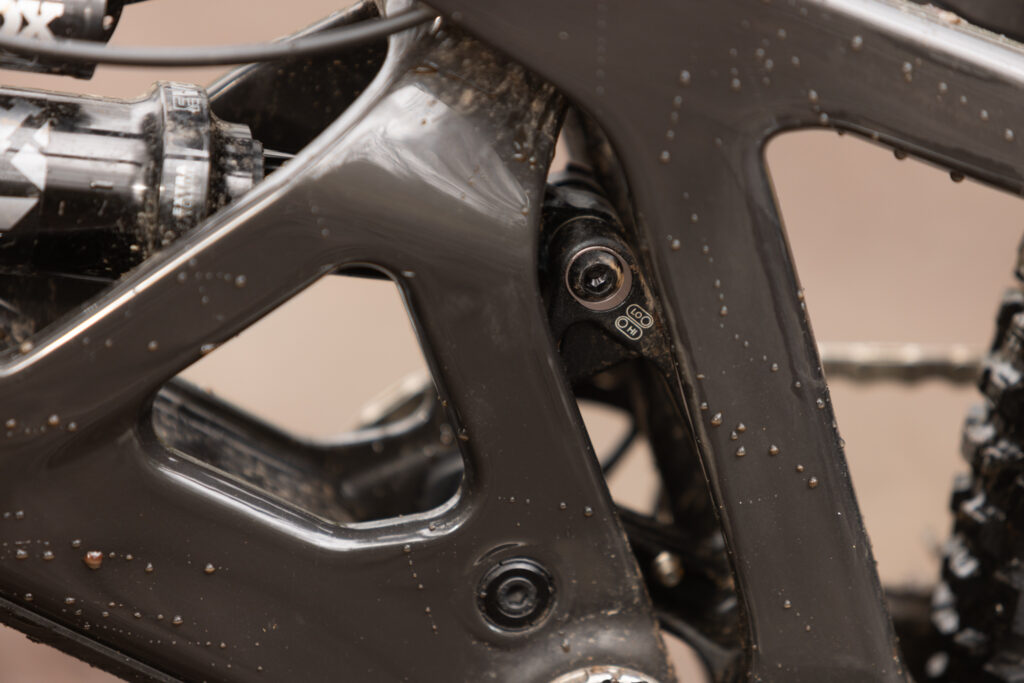
That geometry is adjustable, which is always a nice touch. Thanks to a flip chip sat on the shock’s rearward mount, users can slacken the angles to 63.9 degrees at the head angle and 77.9 degrees at the seat tube. The reach then shrinks to 478mm. I kept the flip chip in the HI position for the most part, and I’ll explain why in a bit.
Santa Cruz Bronson 90 long-term – Componentry
£5,500 buys you a bike with a workhorse-type build. Although there are some changes I would make, just to achieve an extra touch of refinement, it’s an awesome starting point, and one that’ll see you through a lot of the riding the Bronson is primed for.
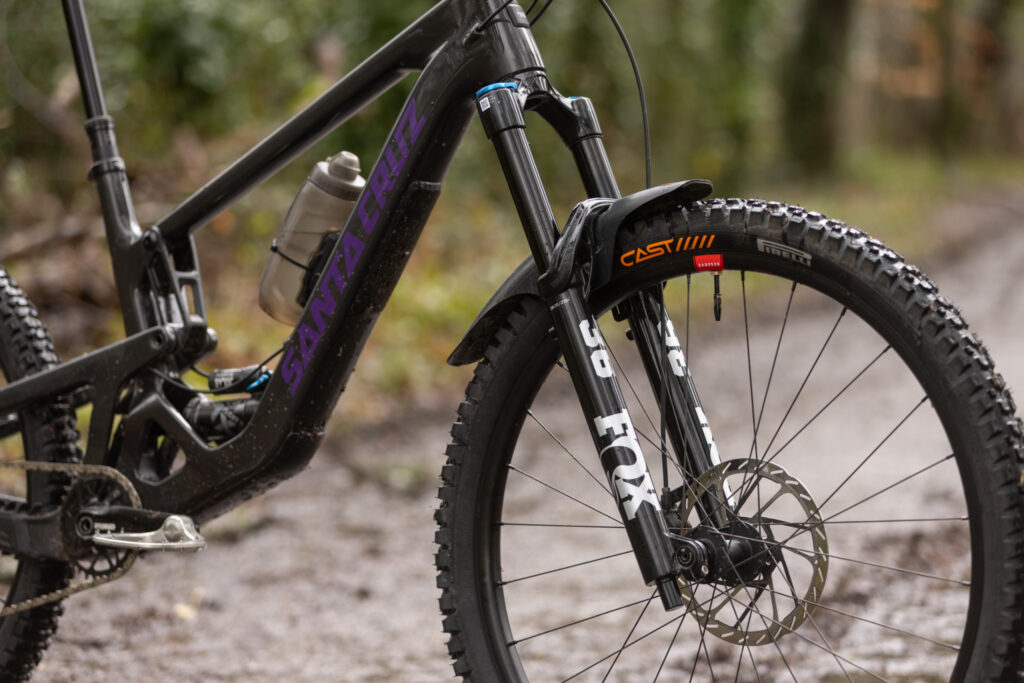
Up front, there’s a Fox 36 Performance fork donning that 160mm of travel, and that’s joined by a Fox Float X Performance shock, damping 150mm of bounce.
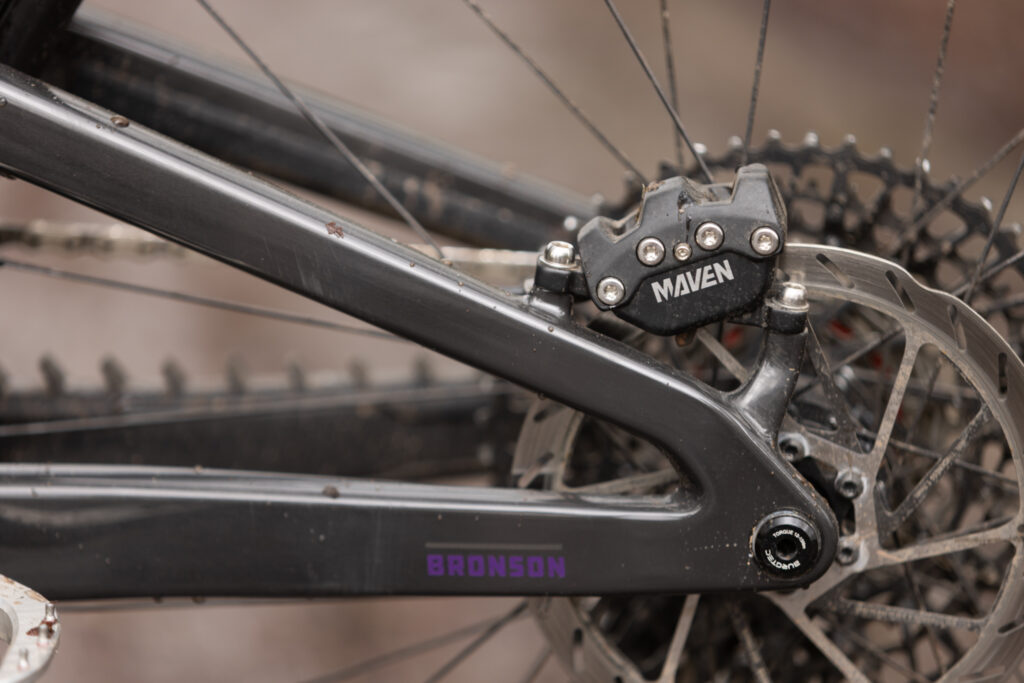
Shifting is provided by SRAM and its Eagle 90 drivetrain, one of my favourites that shines for its simplicity and consistency. That’s complemented by a set of SRAM Maven brakes that slow a 200mm rotor at the front and a 180mm rotor at the rear, both in SRAM HS2 flavours.
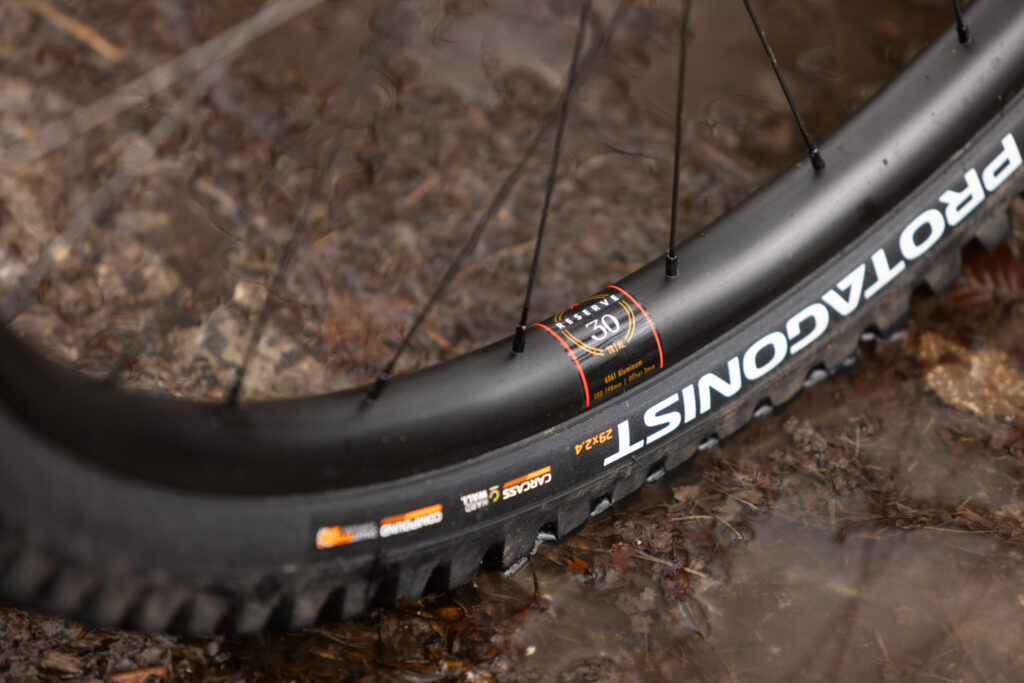
The wheels come from Reserve in the form of the aluminium-rimmed 30TR AL, and they’re wrapped with a Maxxis Assegai up front and a DHR II at the rear. Both get EXO+ casings, whereas the Assegai dons a MaxxGrip compound and the DHR II gets a firmer MaxxTerra rubber. Makes sense.
OneUp Components then sorts the Aluminium Handlebar and V3 Dropper Post, while Santa Cruz throws its own-brand grips into the mix. The dropper post comes with 210mm of drop and although this bike is the correct size for my height, I found it to be a little too tall.
Throughout my time with the Bronson, I swapped most of the componentry as test kit rolled in, so there are some differences between the actual spec and what you’ll see in these pictures.
Santa Cruz Bronson 90 long-term – Performance
I was pretty excited upon receiving the Bronson for a long-term test for a couple of reasons. It was my first time with the brand’s famous VPP linkage, and it came as a bit of a test to see if I could convert myself to liking a mullet wheelset on a regular mountain bike. Before, I’ve not been the biggest fan because I’ve felt that each wheel performs differently from one another, as you might expect of different wheel sizes.
However, I’ve become rather fond of how the bike rides, and in practice, it really suits my tastes as it’s an effective climber, it’s agile, but it’s capable and composed enough for my frequent riding. Everything I look for in a mountain bike.
To start with how it climbs, it’s pretty darn good, but not perfect. As we’ve seen with the latest Tallboy, the Bronson has seen a small reduction in anti-squat, which introduces a touch of pedal bob to the mix. Now, it’s far from excessive, but there’s some energy lost when pedaling. That said, the shock’s freedom to move while pedalling means that there’s plenty of traction to be had when pedalling uphill.
That said, it’s a surprisingly easy-going climber to the point where it’s had me pretty shocked, even when set up with heavy downhill-cased tyres. Unless I’ve been riding with some proper fast folk on lighter, faster rolling bikes, I’ve been more than happy pedalling the Bronson around, and more so compared to other bikes in its category.
The seated position is where it’s mildly iffy. While its effective seat tube angle is nice and steep, the Bronson’s actual seat tube angle is a little slacker than I would like, so the further the saddle is raised, the further over the rear wheel it places weight. As you might see from the pictures, I’ve slammed my saddle forward to counteract this. Practically, it’s mendable, of course, but I have felt on the odd occasion that I would have liked the saddle to be a little more forward. Those occasions would be steeper and more technical climbs.
This is why I kept the flip chip in its HI position. After testing the LO position, I felt that the actual seat tube angle was slacker than I wanted, though it does bring a touch of extra composure and stability at speed, owing to the slacker head tube.
But the Bronson provides a rather roomy cockpit thanks to a slightly longer effective top tube angle. With the 42mm OneUp stem that comes with the bike, it was a smidgeon too long for my tastes, but swapping this for a 31mm Renthal Apex2 sorted this right out, without a negative impact.
On the descents is where the Bronson shows its true character, and what a character it is. I’ve ridden it pretty much everywhere during my year with it, and it’s proven to be one versatile number. I’m talking bikepark, trail centres, and natural, unkempt tracks. And honestly, it’s a riot. It does what few bikes manage in balancing a playful, lively and agile feel with a level of capability which punches well above what its 150mm of rear wheel travel suggests.
It’s far from the longest bike around, with its 480mm reach and 1267mm wheelbase, but as Santa Cruz has stretched its chainstay compared to earlier models, it still maintains confidence at speed. And at speed, the rear suspension shows real balance and poise owing to its active feel and open ability to absorb chatter. Though because it’s not terribly long, and thanks to the little wheel in the rear, whipping the bike around tighter corners is pretty breezy. Tipping the Bronson into turns feels natural and lighter than full-on 29ers, so the bike doesn’t require much muscle to navigate around tight corners.
That suspension only ever uses its travel when it’s needed, too. So while it does squat under heavier compressions, it never feels wallowy or unnecessarily deep in its travel. Instead, it remains spritely as a result of its progression. It’s tuned rather well for the 650b rear wheel, too, as it’s not overly lively and uncontrolled. Rather, the Bronson takes advantage of the lesser rotational mass for agility, while calming what could be an overexcited rear end (I’m definitely talking about the bike).
As such, it’s a predictable bike to ride, which you would hope for from a bike like this. Instead of throwing surprises, it lets the rider create their own. Quick unweighting of the rear brings a welcome level of flick, while getting heels down makes for a bike that’s more than happy to plow through chunky sections, where it rarely gives up traction.
Towards the front end, it’s all good stuff. The head angle sits at a good point at 64.2 degrees and, paired with the 480mm reach, it instills plenty of confidence when the gradient drops. The stack’s fairly tall, too, which only aids the cause by encouraging a better-supported body position when rolling into steeper trails. However, the front end still feels rather taught and easy to control, without the front wheel ever feeling wandery. It’s a neutral but predictable feel that instils plenty of control, whatever the gradient.
The frame itself sits towards the stiffer side of things, which lends itself well to the whole playful feel. There is just enough compliance to stave off fatigue, but the stiffness keeps the whole thing feeling cohesive, taught and in one piece when pushing harder through trails. It feels right on the money for a machine of this lively but composed intention.
It’s even pretty happy being beefed up a bit with a slightly longer travel fork, if you’re keen to morph this into a bit of an enduro rig. I threw on the 170mm XFusion Vengeance38 for a bit, and it changed the bike’s character a touch. Although it slackened that seat tube again, it brought a more assured character to the bike’s front end without really harming the geometry all that much, aside from that seat tube angle.
While I’ve become enamoured with the ride that the Bronson offers, there are a couple of quality-of-life issues which would bring great improvements if addressed. Mainly, the split in the seat tube with two ‘prongs’ that wrap around the shock means that there’s an awkward angle for the dropper post’s cable to navigate. If you drop the post too low, which I’ve had to, it kinks the cable, which can then affect the post’s performance. Even after swapping it for a fresh cable, it’s needed a good deal of jiggery-pokery to get it working properly.
Speaking of the dropper post, that split seat tube arrangement limits the insertion depth. So while it’s great to see a generous 210mm dropper installed as standard, without taking advantage of the OneUp posts’ adjustment, it’s a little too tall for me, even at 5’10” in height (a large is recommended by Santa Cruz for my height). For most of my time with the bike, I ran a shorter 200mm Resolve dropper post from Wolf Tooth Components, which is clearly shorter in travel, but it’s a shorter post overall, so I’ve been able to get my saddle lower when dropped for more room over the bike… it would be nice to see an accessory mount under the top tube, too.
Additionally, the Glovebox internal storage isn’t waterproof. It’s definitely water resistant, but after wet rides and washes, I’ve found moisture to ingress, keeping whatever I’ve kept inside wet. Better sealing, of course, would improve this. However, it is easy to use.
Aside from that, the frame does offer awesome quality-of-life features, such as the molded-in cable routing. That means that you can pop a cable in one end of the frame, and it’ll transport itself out the other end with no issue at all, or no extra tools. There’s also a grease injection port on the bike’s main link, making greasing simple, though I haven’t felt the need throughout my time with it. Having chopped and changed every component on it, I found it to be delightfully easy to work on.
Though that VPP linkage is a bit of a bugger to clean. There are lots of moving parts nestled behind parts of the frame, so when giving it a proper deep-clean spruce up, it’s taken more time and required more care to get slim brushes into all of the bits and pieces.
Santa Cruz Bronson 90 long term – Verdict
To say that the Bronson 90 is reasonably priced is definitely a bit of a stretch. It is a Santa Cruz, after all. But it does get good branded components throughout, and a bunch of features that just make working on the bike simpler. And while the build kit is solid, better value can certainly be found elsewhere.
An excellent example of such is Trek’s Fuel MX 9.8 Eagle 90. It’s fairly similar in its intention. You then get RockShox’s ZEB and Super Deluxe Ultimate suspension, a similar setup to how I’ve been running the Bronson, as well as the SRAM Eagle 90 drivetrain. There’s also a set of SRAM Maven Bronze brakes.
It’s a super adjustable bike, too, as it’s able to run both 29” and mullet wheels, while allowing for suspension progression adjustments and changes in suspension travel, if you wanted to go that far. The Trek’s effective seat tube is a little slacker, though, and its head angle is a little steeper. The reach is a touch longer, too, as is the chainstay. All that said, the Fuel MX’s suspension spec definitely trumps what Santa Cruz has on offer. It will set you back £5,800, however, so it’s a bit pricier, but I believe it offers considerable upgrades for a few hundred quid more.
If you’re in the market for something exotic, Deviate’s Highlander II is worth a glance. Its Elite build will set you back £5,000, and it boasts Fox Performance Elite suspension with a 36 fork and X2 shock. Though here you’ll be getting Shimano’s Deore shifting and brakes. It is £500 cheaper, though. However, that bike is more of a hard charger than the Bronson, which steps more into the enduro realms. It’s more stable and not quite as playful, so it suits a different taste.
It’s easy to throw the words do-it-all at bikes equipped with all kinds of travel, but I think with the Bronson, Santa Cruz has nailed it. It’s capable and comfortable when tackling more demanding terrain, yet lively, responsive, and relatively easy to pedal about when the trails mellow. There are some quality-of-life improvements that could be made. It would be good to see its internal storage become waterproof, its actual seat tube angle to be steepened a hair, and a revised seat tube, which would quash my qualms around dropper insertion and cable kink.
Yes, it’s been around for a little while now, and I wouldn’t be surprised if we see an update in the near future, but although it’s got those years under its belt, the Santa Cruz Bronson 90 is still a very valid option for those who prefer a lively, fun, and engaging bike over an all-out brawler. That said, it’s still no slouch when the gnar dial turns to 11.
Test Report
What does the manufacturer say about this product?:
Santa Cruz says, “From manicured bike parks to blown-out loamy berms, alpine lines to backyard trails, the Bronson feels just as at home in the air as it does in the dirt.”
Tell us some more about the technical aspects of this product:
160mm front travel, 150mm rear, carbon frame, VPP linkage.
Any further comments on quality?:
Very good build quality.
Any further comments on performance?:
Excellent on trail performance
How does the price compare to that of similar products in the market, including ones recently tested?:
Pricier than Trek Fuel MX and Deviate Highlander II.
List the components used to build up the bike:
Fox 36 Performance fork, Fox Float X performance shock, SRAM Eagle 90 shifting, SRAM Maven brakes, OneUp Components finishing kit, Reserve wheels, Maxxis tyres.
Tell us what the bike is for and who it’s aimed at. What do the manufacturers say about it?:
It’s a do-it-all all mountain bike.
Where does this model sit in the range? Tell us briefly about the cheaper options and the more expensive options:
Mid-range. Prices top out at £8,799 and start at £4,899.
Tell us about the materials used in the frame:
Carbon fibre.
Tell us about the geometry of the frame:
480mm reach, 64.2-degree head tube angle, 77.9-degree seat tube angle, 442mm chainstay length.
How was the bike in terms of sizing and angles? How did it compare to other bikes of the same stated size and intent?:
Spot on, but the actual seat tube angle (unlisted) feels a little steep.
How much suspension travel does the fork have?:
160mm
How much suspension travel does the rear end have?:
150mm
Was the bike comfortable to ride? Tell us how you felt about the ride quality:
It’s a stiff frame but good comfort.
Did the bike feel stiff in the right places? Did any part of the bike feel too stiff or too flexible?:
A stiff frame.
How did the bike transfer power? Did it feel efficient?:
Yes, for a bike of this type.
How would you describe the steering? Was it lively, neutral or unresponsive?:
Neutral.
Tell us some more about the handling. How did the bike feel overall? Did it do particular things well or badly?:
It’s definitely a more fun and lively bike but it’s not scared of tougher riding.
Which components had the most effect (good or bad) on the bike’s performance? Would you recommend any changes?:
Good components.
Did you enjoy using the product? Yes
Would you consider buying the product? Yes
Would you recommend the product to a friend? Yes
Use this box to explain your overall score
The Bronson delivers an excellent ride with few shortcomings. However, a rethink of the seat tube would make it better, and the downtube storage could do with waterproofing.
About the tester
Age: 34
I usually ride: Santa Cruz Bronson
I’ve been riding for: 10-20 yearsI ride: A few times a weekI would class myself as: Experienced
I regularly do the following types of riding: Mountain bike Enduro