


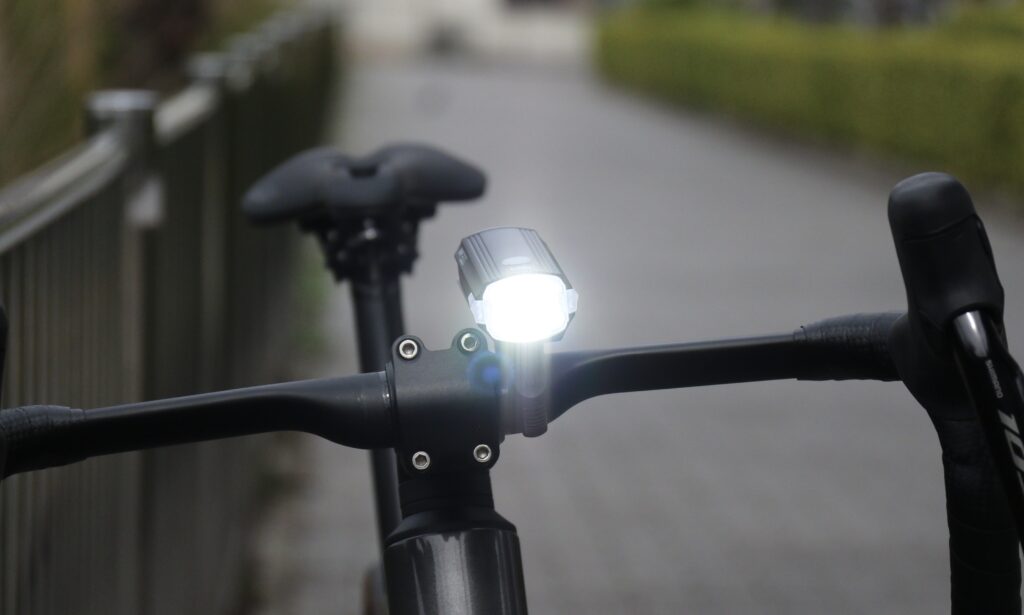

We’re willing to bet that every cyclist who has taken to the road or trail at night has, even if only for a moment, excitedly put their front light in full-power mode just to marvel at the sheer brightness of it. With modern bike lights capable of outputting multiple thousands of lumens, it’s a light show that can take the breath away.
However, a bike light’s maximum power shouldn’t really be the default mode for a typical ride. While you may need to crank the front-facing lamp up to full power in some select situations – such as new roads, tricky descents or particularly dark sections – for the vast majority of your cycling, you simply won’t need such illumination.
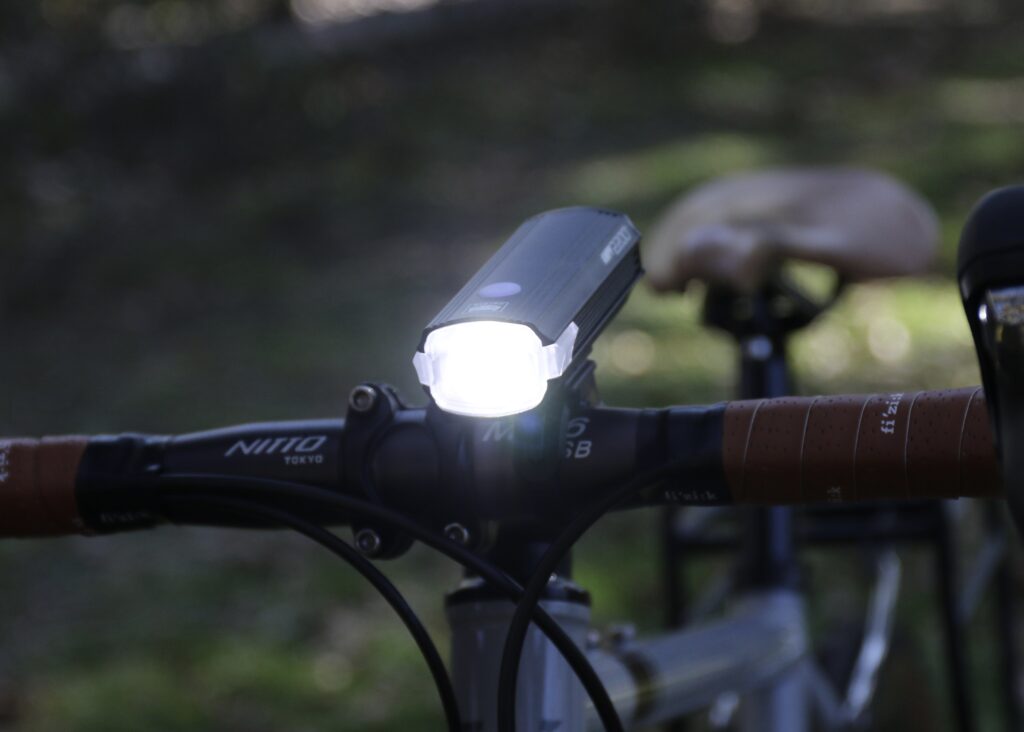
However, there is something that committed night-time riders really do benefit from: enhanced battery life and longer runtimes.
It is that concern – providing more useful runtimes while maintaining effective illumination – that sits at the heart of CatEye’s AMPP1300, AMPP1700 and AMPP2200 lights.
Rather than treating maximum brightness as the only measure of performance, each model gives riders a choice of carefully regulated output levels. The result is a product range that delivers immediate absolute power when needed, but combined with practical runtimes that are able to cover longer winter training rides, Audax events, extended evening commutes, or rides that simply go further than planned.
Power on (double) tap
Let’s talk about real-world performance, as this is what drives CatEye’s approach: what kind of practical runtime efficiencies can CatEye’s lights actually deliver?
If we take the flagship AMPP2200, it can produce 2,200 lumens of illumination for one hour in full-power Ultra Boost mode. Drop to its still-powerful 800-lumen Middle mode and the stated runtime increases 150% to 2.5 hours. At 400 lumens, it runs for five hours, or 400% longer than Ultra Boost. And its dedicated 200-lumen Enduro mode lasts for up to 12 hours, an 1,100% increase in runtime compared with maximum output.
It all means that Ultra Boost is a valuable resource to deploy when needed, but not a setting that has to be used continuously. Just double-click the AMPP2200’s operating button to bring all 2,200 lumens into play for fast descents, poor surfaces or dark roads. Then – once the road becomes less demanding – return to a lower output and conserve battery power.
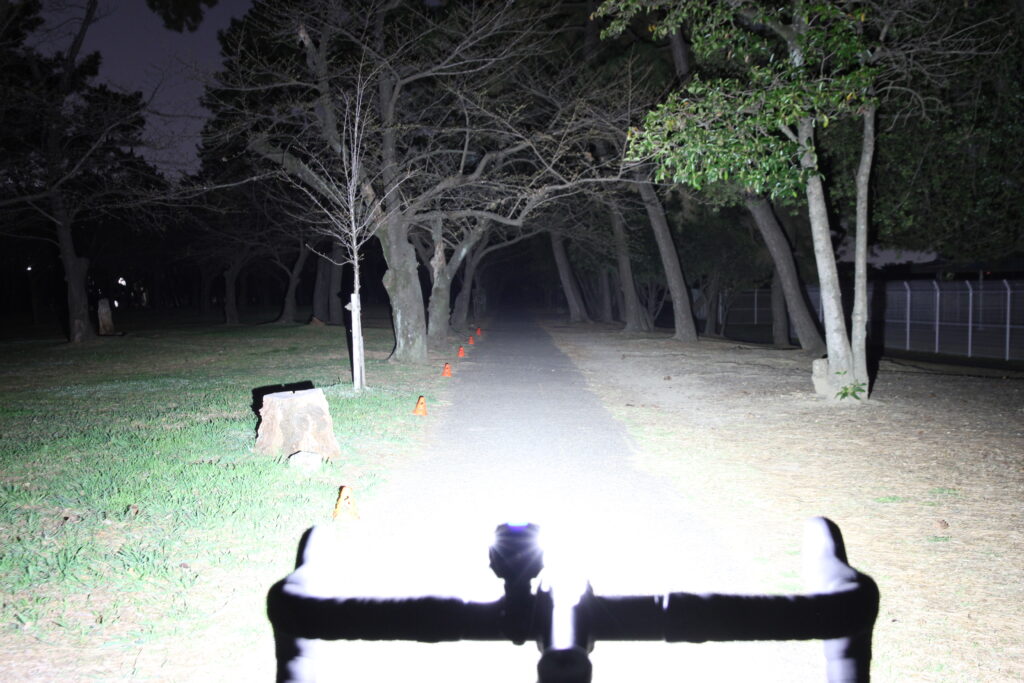
The AMPP1700 applies the same principle. Its 1,700-lumen Ultra Boost runs for a stated 1.25 hours. Select the 1,300-lumen High mode for 1.75 hours or 40% longer runtime; 700 lumens extends this to three hours, or a 140% increase; and 400 lumens provides five hours, or a 300% increase in runtime.
And the AMPP1300 starts with a stated two-hour runtime at full 1,300-lumen output. Middle mode supplies 600 lumens for 3.5 hours, extending runtime by 75%. Low mode provides 300 lumens for 7.5 hours, a 275% increase over High.
The important point, CatEye says, is not that riders should choose the lowest setting. It is that the light can be adapted to the speed, conditions and character of the road. This turns battery capacity into something the rider can actively manage; not something they have to helplessly watch disappear.
Brightness management
Of course, the rider has the final say in how a front light is used, but inside each CatEye light is a range of technology designed to help maximise the rider’s choices.
CatEye’s approach is to optimise usable brightness through electronic power management, matching output to battery capacity and thermal conditions. Unlike some light manufacturers, CatEye looks to achieve regulated performance, allowing the light to deliver a dependable level of illumination through its stated mode, rather than relying solely on a brief initial peak.
For a road rider, regulated output means greater confidence when judging which mode will cover the planned ride. Clever battery management helps balance brightness, heat and remaining capacity, while the three-colour illuminated button provides a clear indication of charge: blue means above 50%, orange means between 50% and 20%, and red means below 20%.
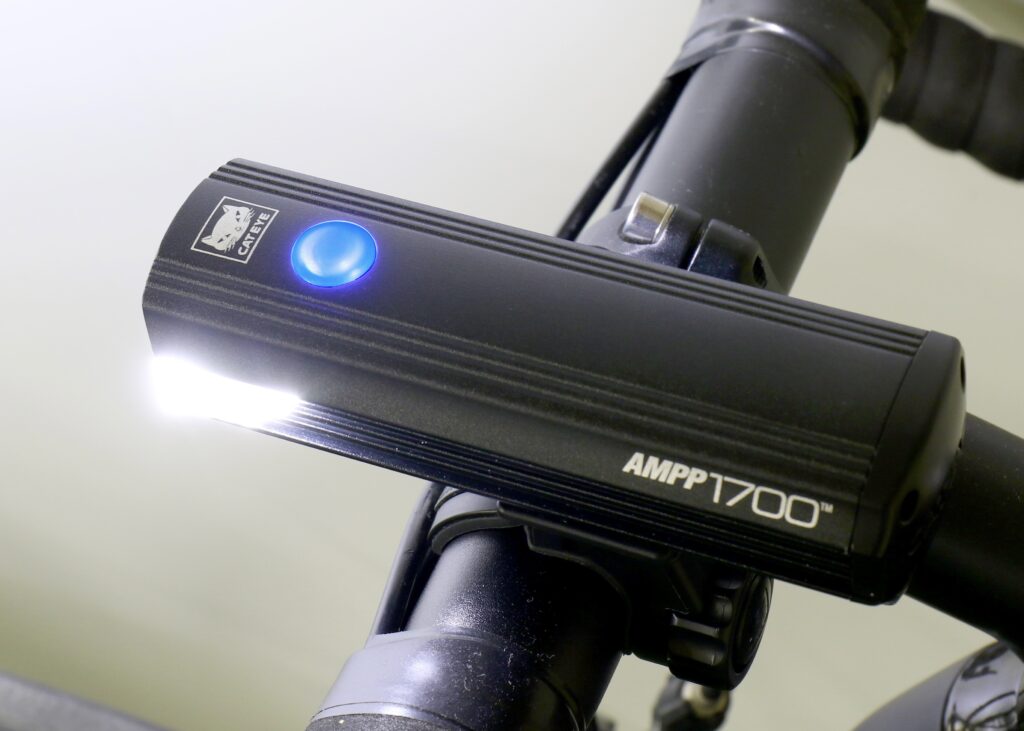
Mode memory adds another practical benefit. Switch the light off and it remembers the mode previously selected, so the rider can return to a familiar setting rather than having to cycle through every option again. A separate Lock mode helps prevent the light accidentally activating in a kit bag before the ride has even started.
Then there are the lens designs and optics, which matter just as much as power management. Each model combines a single high-intensity white LED with CatEye OptiCube lens technology. Rather than concentrating attention solely on the highest numerical output, the optics create a wide, evenly-spread beam. This results in a lower-power setting that is bright enough for most riding situations, meaning maximum output can be kept in reserve for moments when it genuinely makes a difference.
And it’s not only forward visibility that’s important, side visibility is key, too. This is particularly relevant for road riding, where a rider needs light projected ahead to read the surface, pick out potholes and judge corners, but also requires lateral visibility for junctions, roundabouts and side-road entrances. CatEye’s large side-lens sections allow some light to be seen beyond the direct forward-facing beam.
Extra details, easy performance
Beyond the intelligent power management and optics technology, CatEye ensures functionality and day-to-day performance is maximised with other key design details.
First of all, there is the control interface. All three lights use a large, raised and illuminated top button, giving riders a clear, tactile control point that is easy to locate without taking their eyes off the road. Small controls can become unexpectedly awkward once the temperature drops and winter gloves come out but a single large button is ideal for cold, dark and wet rides. Simply double-tab for max output.
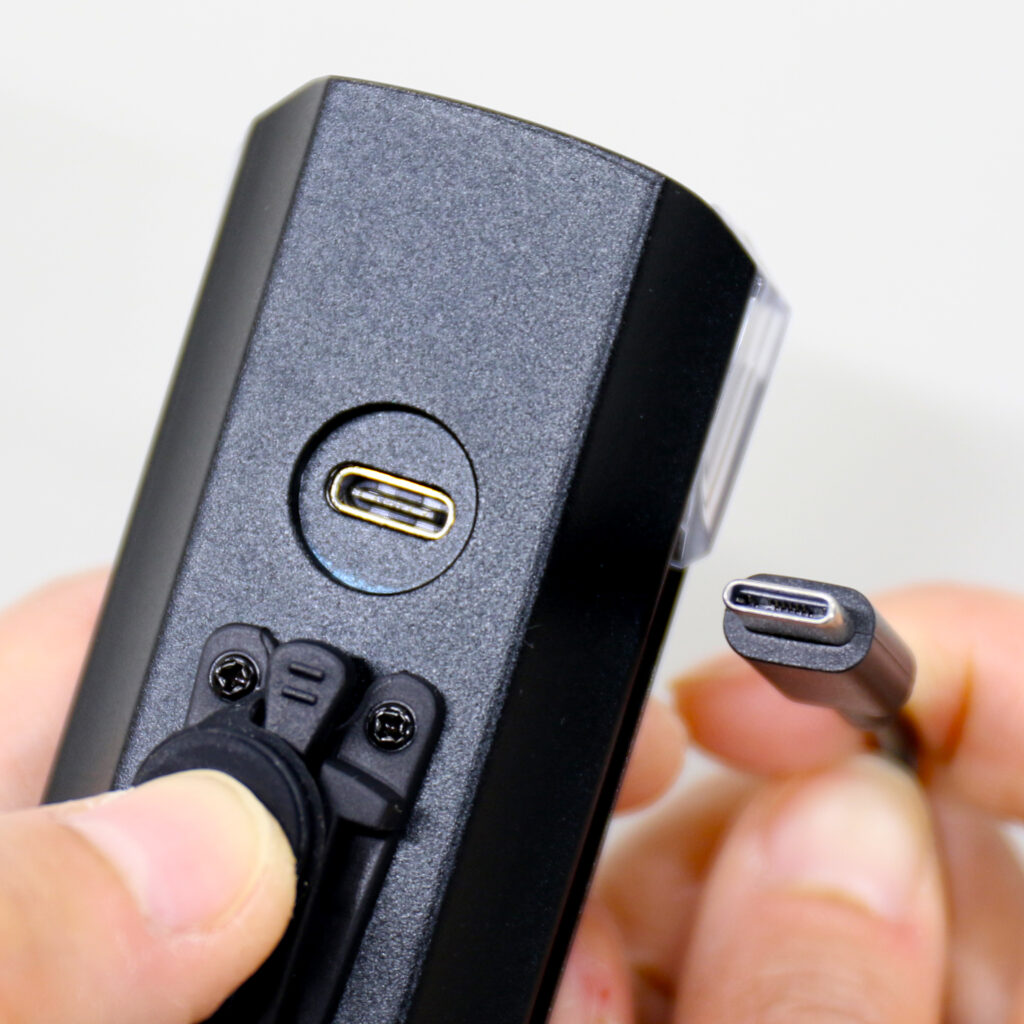
Then there is build quality and longevity. With bike lights most commonly needed for rides when the temperature has dropped and the weather has turned, they need to be sturdy. These CatEye lights are all based on a tough aluminium body, which has the added advantage of efficiently dissipating the heat that naturally occurs with high-powered LEDs and high-capacity batteries, helping to support the lights’ electronic and thermal management.
And what of those batteries? All three lights use a high capacity 5,000mAh lithium-ion rechargeable battery which has an approximate four-hour recharge time with a 2A supply. Meanwhile, USB-C charging makes it easier to integrate the lights into the type of charging routine many riders already use for phones, computers and other cycling electronics.
Finally, there’s CatEye’s FlexTight bracket, which is designed for handlebars up to 35mm in diameter. The bracket allows lights to be fitted or moved between bikes without tools, with optional helmet and centre-fork mounts also providing alternative positions. It’s a proven mounting system that road riders already trust.
So which light is right for me?
CatEye AMPP1300 £94.99
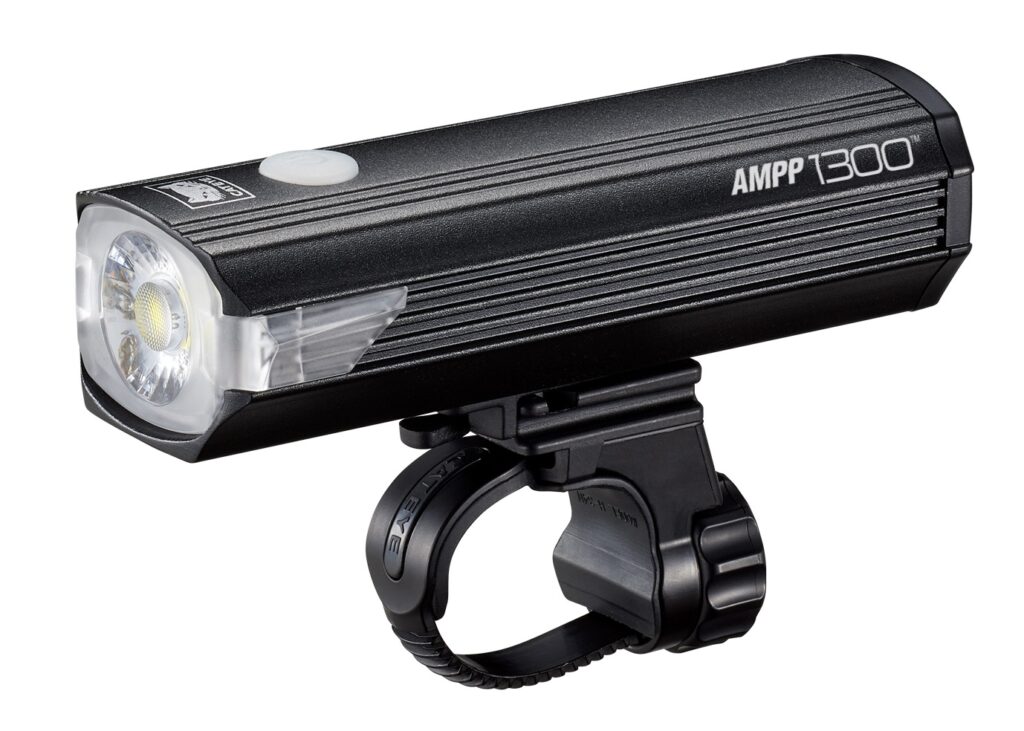
The AMPP1300 is the natural choice for riders who want a capable light for unlit lanes, winter training and everyday riding. Its 600-lumen Middle mode and 3.5-hour stated runtime provides a particularly attractive balance between outright power and efficient usage.
CatEye AMPP1700 £139.99
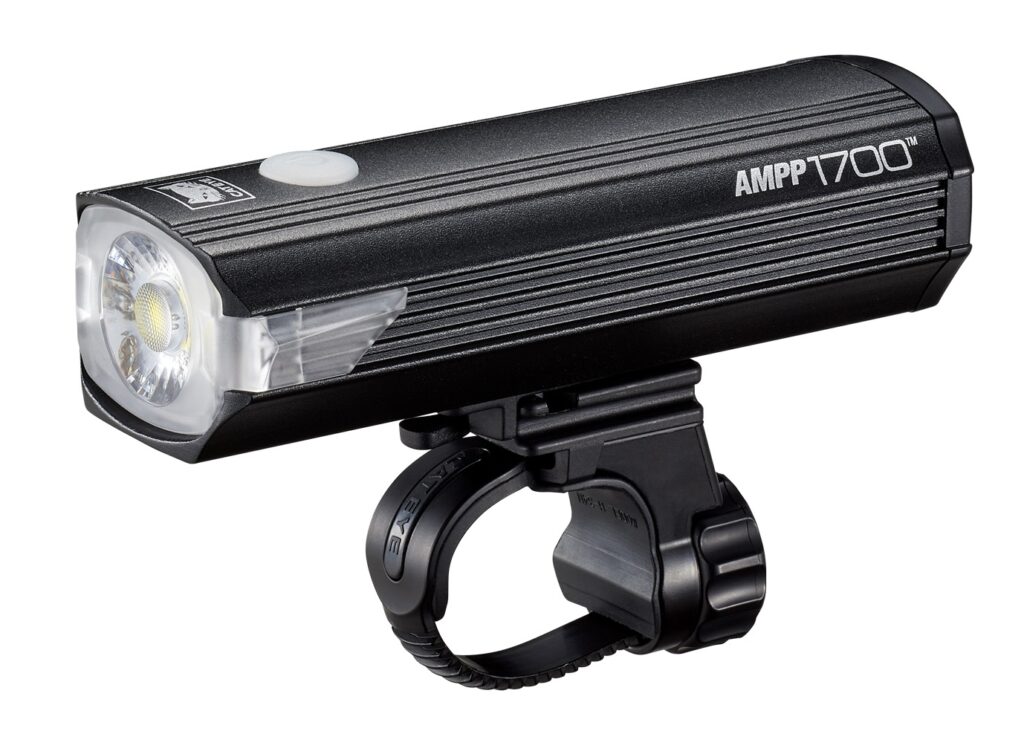
The AMPP1700 adds Ultra Boost to the mix and creates a useful middle ground for faster riders who want greater output in reserve. Its 700-lumen, three-hour Middle mode could cover a substantial evening road ride, while 1,700 lumens remains only a double-click away.
CatEye AMPP2200 £179.99
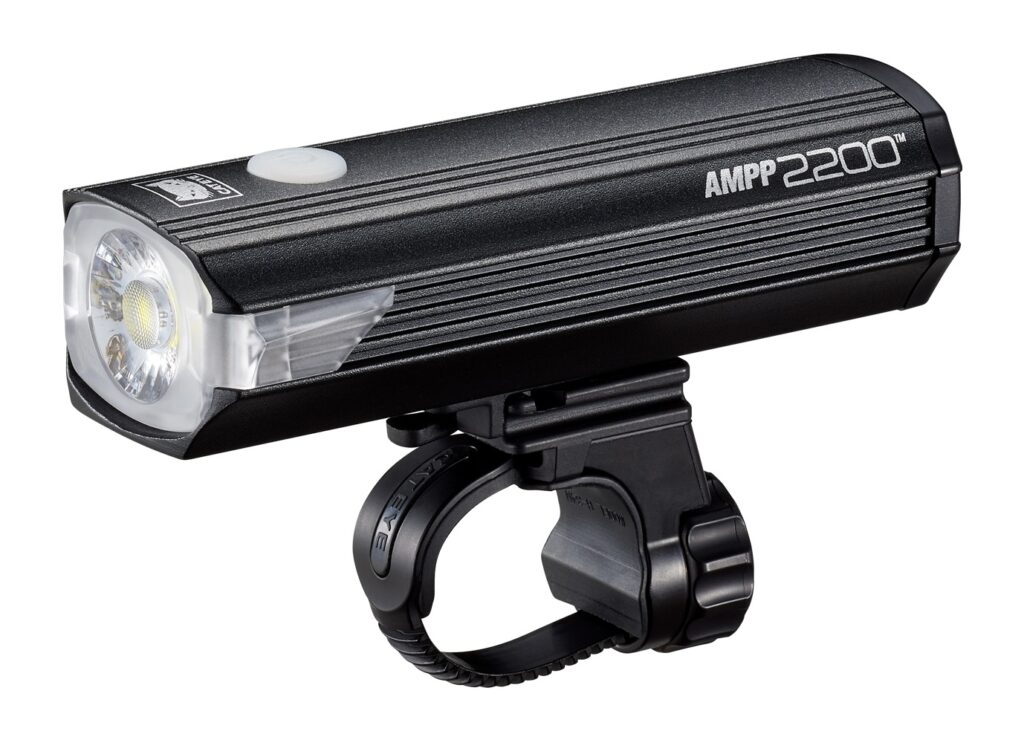
The AMPP2200 offers the widest choice of steady modes and also features the exclusive 12-hour Enduro setting. It is the perfect option for riders who want maximum headroom for very dark lanes, high-speed descents or mixed-surface adventures, but who also value the ability to stretch battery life considerably.
To find out more about CatEye’s range, visit cateyecycling.co.uk





1 thought on “How you can ride brighter for longer with CatEye’s cutting edge light and power management technology”
That photo in the park is tweaked so badly it’s ridiculous.
That’s what happens when you try too hard.