


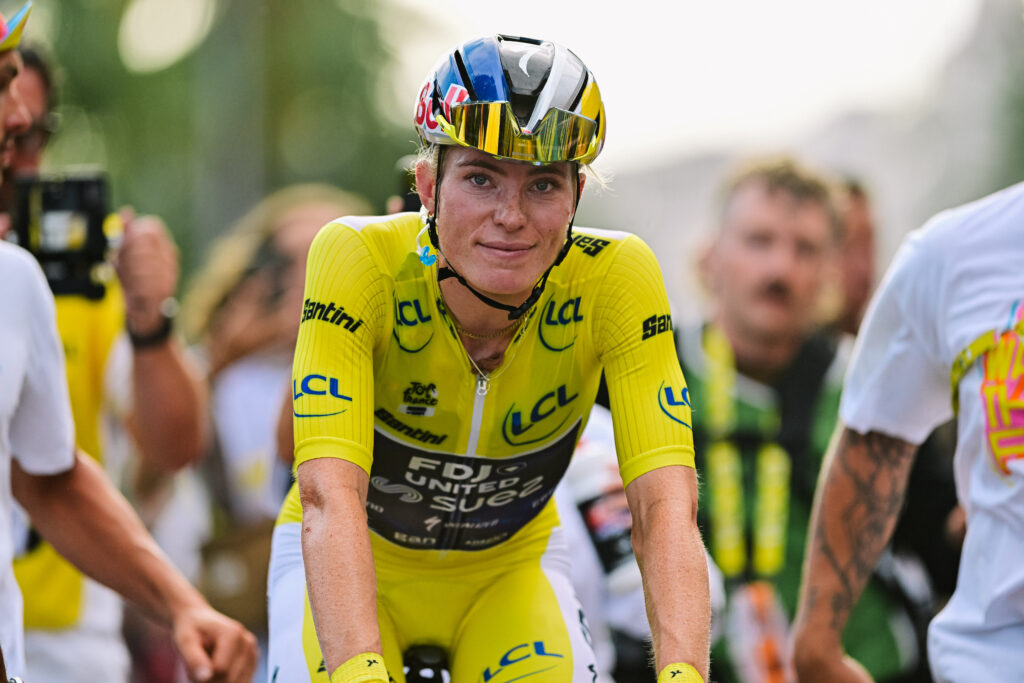

Demi Vollering might be the most complete Tour de France Femmes (TdFF) rider ever. Having pulled off her second TdFF overall victory this weekend, the Dutch rider demonstrated not only the physical strength that has made her one of the world’s best, but also an ability to respond to adversity when the race didn’t go her way.
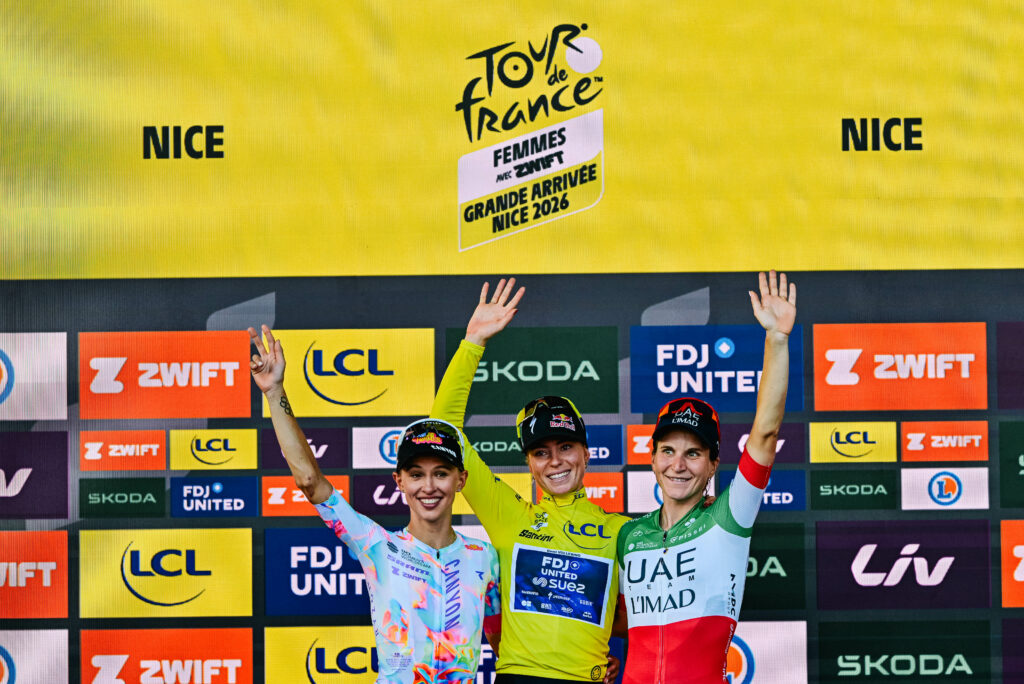
As a sport psychology practitioner, I was particularly interested in how Vollering handled the final three stages – and how her response to setbacks, pressure and controversy helped shape the outcome of the race.
The final three stages of the TdFF provided a dramatic shift in momentum between Vollering and Kasia Niewiadoma-Phinney – but this was far from an isolated battle. The two riders have shared the TdFF podium in every edition since the race’s modern revival in 2022, with Vollering finishing ahead of Niewiadoma-Phinney in 2022, 2023 and 2025, before Niewiadoma-Phinney took the title in 2024 with Vollering second.
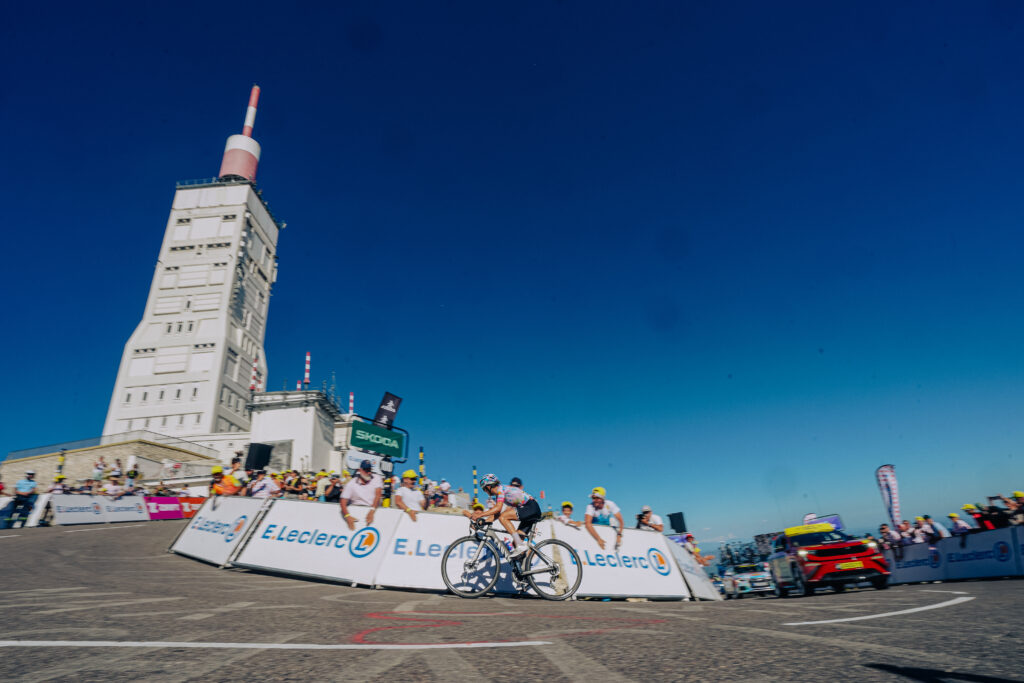
Stage 7, the queen stage, finished at the top of Mont Ventoux, where Niewiadoma-Phinney counter-attacked Vollering and went on to take the stage win. Vollering finished 1:16 behind, leaving her 15 seconds behind Niewiadoma-Phinney in the general classification. Although the race was far from over, this was undoubtedly a massive blow for the pre-race favourite.
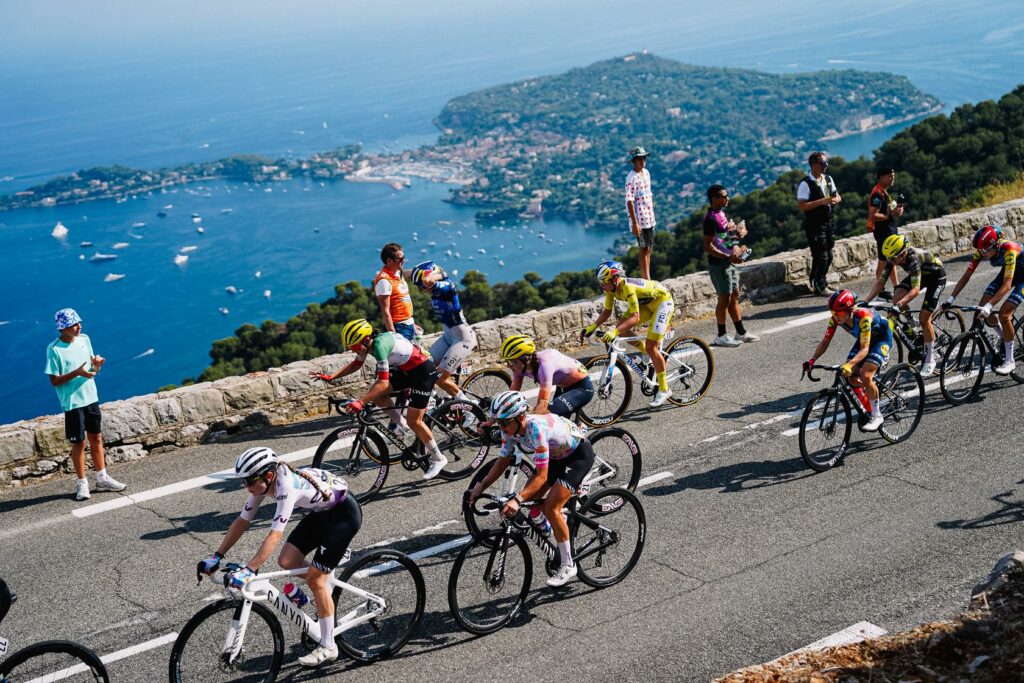
Vollering’s response came on Stage 8, where she took the yellow jersey with a late attack on the short, steep Chemin de l’Arieta, with around 6km remaining. She dropped Niewiadoma-Phinney and Elisa Longo Borghini just before the summit and finished the stage with a 17 second advantage. The time bonus then took her into the final stage with an eight second advantage over Niewiadoma-Phinney.
The stage was followed by controversy, however, with Niewiadoma-Phinney confronting Vollering’s FDJ-Suez teammate Célia Gery, claiming Gery had cut her off on a corner before Vollering’s attack.
That left 99km and 2,315m of climbing between Vollering and the Tour title on Stage 9. With only eight seconds separating the two riders at the start, there was still everything to race for especially given the challenging parcours. Vollering attacked on the final ascent, dropping Niewiadoma-Phinney, who finished third on the stage. Vollering continued to push all the way to the finish, eventually crossing the line 1:04 ahead of Niewiadoma-Phinney and comfortably securing the overall victory.
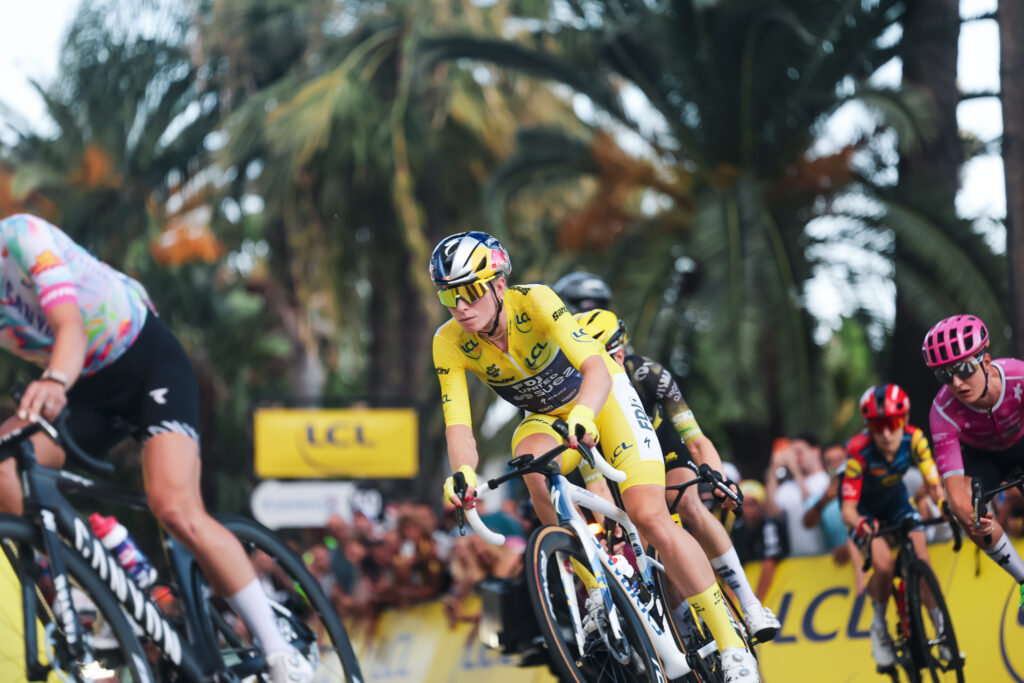
Vollering went into this year’s TdFF as the pre-race favourite, bringing with it a weight of expectation that can add another layer of pressure to an already demanding race.
The final three stages tell a story of physical strength, but what makes them particularly interesting from a sport psychology perspective is how Vollering responded when her biggest rival took the yellow jersey on the queen stage, and how she maintained her focus when controversy followed.
In her post-race commentary, Dani Rowe highlighted this balance of physical and psychological strength, praising Vollering’s resilience and her ability to inspire those around her. But what did that psychological strength actually look like across those final three stages?
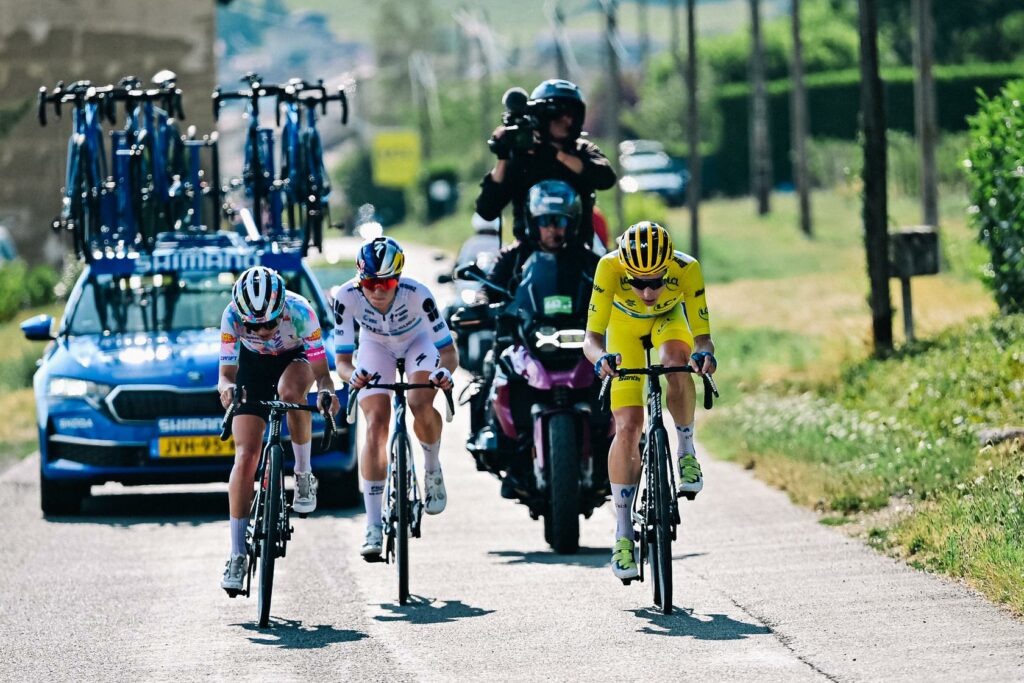
Part of the answer appeared to be an ability to keep moving forward. As Vollering explained after Mont Ventoux, “In a stage race, you live day by day. So you can be disappointed tonight, but then the next morning you need to put on a new mask and you go again. You try again, you make a plan with the team”.
Vollering didn’t wait for the final stage to try to claw back the deficit, instead attacking the next day. This highlights her ability to respond effectively to a setback, to acknowledge and accept the disappointment, then move on from it and refocus on what she could control.
Responding to setbacks is one thing, but managing your emotions when controversy follows is another, and Vollering’s composure after stage 8 was particularly striking.
Niewiadoma-Phinney was visibly frustrated after the stage, confronting Vollering’s teammate Gery over the incident. Vollering could have responded defensively, but instead offered a more measured interpretation of what had happened. In her post-race press conference, she suggested Gery probably hadn’t seen Niewiadoma-Phinney and hadn’t deliberately blocked her, describing it as one of the difficult and unpredictable parts of racing.
Speaking to TNT Sports, Vollering added: “I have a lot of respect for Kasia. I was a bit disappointed when I saw her interview yesterday directly after the finish line, because she really attacked my team-mate and I think it’s not fair to do that so high on emotions.”
Vollering acknowledges that she was disappointed, but she appears to recognise the heightened emotions surrounding the situation. She separates the behaviour from the person, maintaining that she still has respect for her rival.
That response becomes even more significant given the history between Vollering and Niewiadoma-Phinney. Niewiadoma-Phinney took the title in 2024 after Vollering’s late crash left her chasing the yellow jersey. Yet speaking about that incident, Vollering said: “I don’t blame her. In the end, we always forget that we are still human and a person next to the bike.”
That doesn’t mean Vollering was unaffected by what was happening at this year’s Tour. She spoke about how angry she was, particularly after abuse was directed towards her and her teammate online. But rather than allowing the controversy to become a distraction from the race, she redirected that emotion towards the final stage, describing the situation as “extra motivation” to show that they could still do it without getting caught up in what had happened.
Psychological strength doesn’t mean never experiencing anger, disappointment or frustration, it’s what you do with those emotions. Across the final stages, Vollering appeared able to acknowledge those emotions without allowing them to negatively impact her next action.
So, is Vollering the most complete rider we’ve seen at the Tour de France Femmes in its current format? Physically, it’s difficult to argue against her, and the final three stages she showed that her strength extends beyond her physical capabilities. Vollering responded to setbacks, managed her emotions when controversy followed, supported her teammates and continued to focus on what she could control.
There’s a reason Vollering has stood on the TdFF podium in each of the last five editions. With that combination of physical and psychological strength, I expect we’ll be seeing Vollering on the Tour podium for many years to come.


















2 thoughts on “Mentally and physically, Demi Vollering has shown why she is arguably the most complete rider we’ve ever seen at the Tour de France Femmes”
Emily, thank you for such an insightful piece. I’m a man, but I enjoy watching the women’s races, possibly more than the men’s. The racing is so much closer, we rarely know who’s going to win. You painted a wonderful picture of how a true champion is able to ‘rise above’ setbacks and distractions, and focus their energy on the task in hand. ‘All’s fair in live and war -and sport, but always good to hear riders expressing their admiration for their competitors
Great piece, thank you Emily