On the afternoon of 30 June 2006, around two kilometres outside Malaucène, Nicole Cooke – one of Britain’s greatest ever bike racers – launched arguably the most audacious, most panache-filled attack of her illustrious career.
Wearing the leader’s yellow jersey of the Grande Boucle Féminine – the watered-down successor to the long-gone women’s Tour de France – Cooke accelerates just as Mont Ventoux’s breathtaking northern side begins to show its teeth. Nobody follows her, because nobody can.
By the time she reaches Ventoux’s barren, exposed, sun-bleached rocky summit, guarded by its iconic observatory, Cooke has three minutes over her nearest rivals. By the finish in Bédoin, she’s four minutes clear, the Grande Boucle in the bag. Only one rider, Maryline Salvetat, crosses the line within five minutes of the rampant British star. The tenth-placed rider finished just under 19 minutes down.
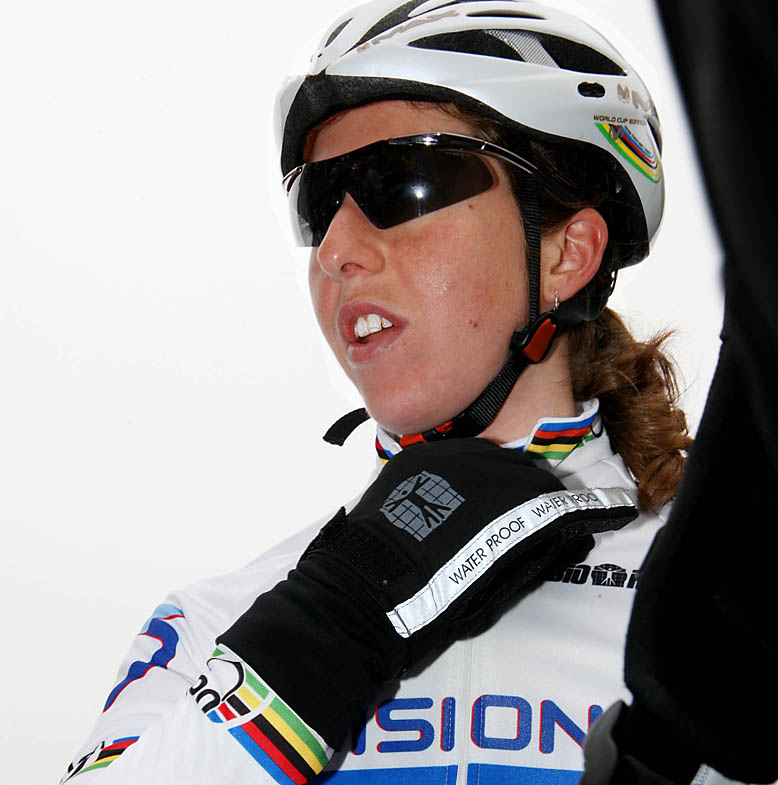
20 years on, Cooke’s ride in the blistering heat of June in Provence, on one of cycling’s most feared, mythical ascents, is now remembered as one of Mont Ventoux’s most spectacular, singular exploits.
At the time, however, no-one really noticed. In the summer of 2006, media coverage of women’s cycling – for all its aggressive racing and array of talent – was barely a thing, and Operación Puerto was dominating the agenda.
Cooke would later chastise the male-dominated cycling press for being more fixated on the Machiavellian shenanigans of men’s cycling’s latest doping scandal than one of the greatest days of her career.
Fast forward two decades and things, thankfully, have changed. On Friday afternoon, the Tour de France Femmes – the real deal this time, not the ‘Petite Boucle’ of the 2000s – will pay a visit to Mont Ventoux, finishing at the summit from the classic, oft-used Bédoin side, and right the wrongs of Cooke’s forgotten triumph.
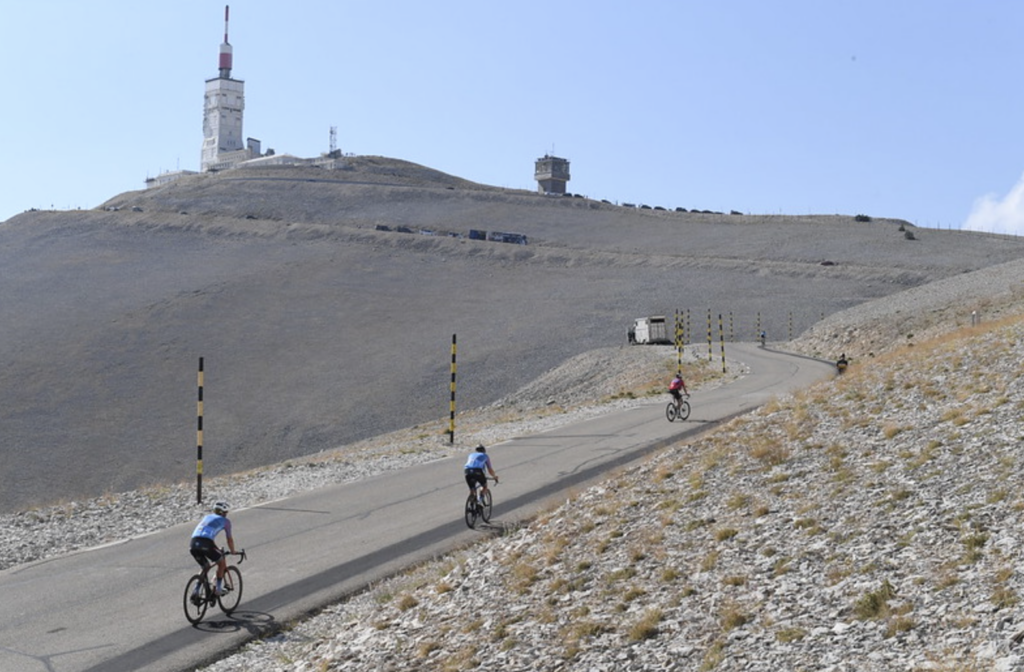
Ventoux, much as it does over Provence, has loomed large throughout this year’s Tour de France Femmes. Almost every interview, every press conference, every casual chat outside a team bus has featured some reference to the Giant.
The women’s peloton, of course, has raced on Ventoux since Cooke’s solo masterpiece 20 years ago. In 2022, Marta Cavalli won the only women’s edition of the Mont Ventoux Dénivelé Challenge, while the fourth stage of the 2018 Tour de l’Ardèche finished at Mont Serein, the ski station on the climb’s north side. That day, Kasia Niewiadoma – one of the big three contenders for yellow this afternoon – finished fourth, laying the groundwork for her overall victory.
But, after stages over the Tourmalet and a spectacular finale on Alpe d’Huez in recent years, the Tour de France Femmes’ Ventoux showdown feels different, another watershed moment for a sport that lately has been full of them.
> The Tour de France Femmes’ Long and Winding Road: A brief history of the women’s Tour de France
“It crosses a Rubicon, it’s a Rubicon moment,” cycling writer Jeremy Whittle, the author of the brilliant Ventoux: Sacrifice and Suffering on the Giant of Provence, tells road.cc the day before the Tour Femmes’ visit.
“It’s perhaps the most daunting climb in France, it’s got the most fearsome reputation. The French still refer to it as the killer mountain.”
That reputation, that mythology surrounding the Ventoux, Whittle points out, is based almost entirely on the men’s side of the sport.
The history of the Ventoux in men’s cycling is defined by suffering, tragedy, and chaos. It’s where Tom Simpson died, where Ferdi Kübler descended into madness (and rode off in the wrong direction), where Eddy Merckx collapsed, and where Chris Froome ran.

But Whittle also emphasises the historic centrality of women to the Ventoux’s mythology. As well as Cooke’s 2006 triumph, Tom Simpson’s daughter Joanne has developed a close connection with the mountain where her father died in July 1967, when she was just four.
Later in life, she began riding the climb in a bid to connect with her father’s memory, and led the restoration work on the steps leading up to the Simpson memorial, where she still collects some of the more meaningful items left by cyclists paying tribute to Britain’s first men’s world road race champion.
In a press conference at this week’s Tour Femmes, Demi Vollering became emotional when recounting her visits to Ventoux with her team of speed skaters in the summers of 2016, ’17, and ’18, her first experience climbing a mountain on a bike and where she realised she had what it takes to make it as a cyclist.
Her old teammates and friends will be there on Friday afternoon to cheer her on as the 2023 Tour winner targets another yellow jersey.
For the modern peloton, and its stars like Vollering, the Tour Femmes’ Ventoux visit offers a new generation of female talent the opportunity to create their own myths and legends on a climb defined by them.
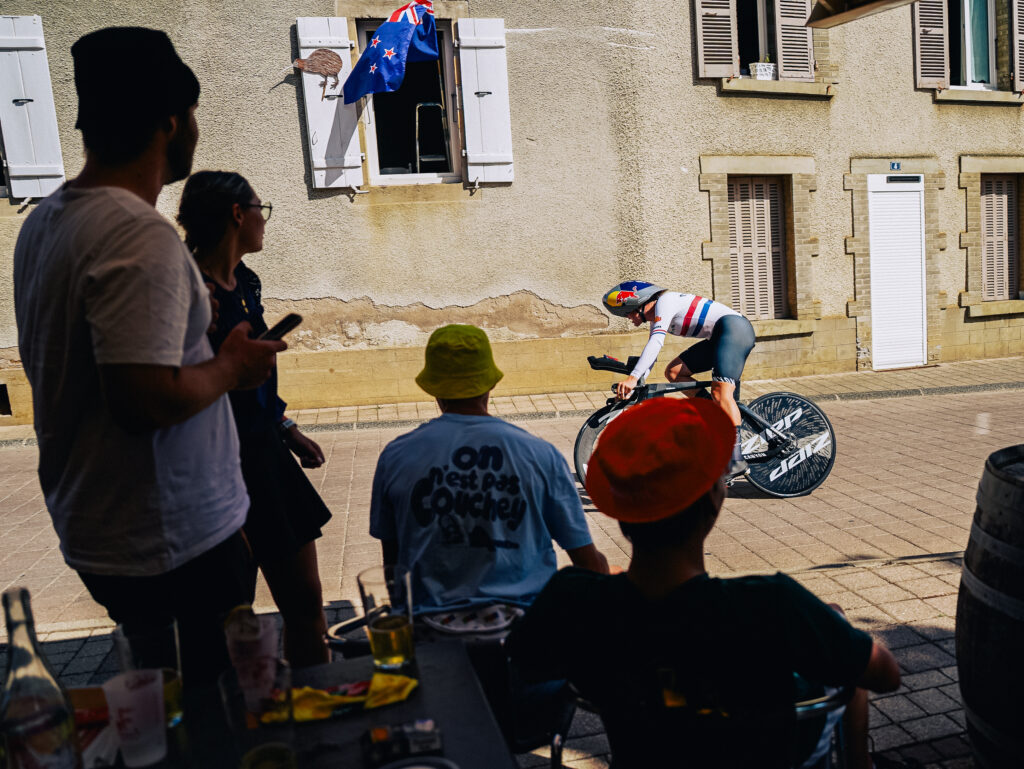
For British champion and Tour debutant Zoe Bäckstedt, the Ventoux offers her to chance to follow in some iconic wheel tracks, like those of fellow Welshwoman Cooke. And, as she’ll be tasked with positioning her Canyon-SRAM leader Niewiadoma into the foot of the climb, the 21-year-old should, in theory, be able to enjoy the atmosphere on the climb.
“It’s going to be super cool. I’ve never ridden it before as I didn’t do the recon, because it’s not necessarily for me. I hope there are going to be lots of people there, cheering us on,” she told road.cc.
“The other day on the final climb, it was super cool. I was riding up with Alice Towers, and we couldn’t stop smiling, it was just flooded with people left and right, and I hope it’s going to be like that on Ventoux. It’ll be a super fun day.”
Asked about the historic significance of Cooke’s victory, Bäckstedt said: “It’s really inspiring, that we finally have a Tour de France and we’re going up Ventoux. Even when I started, or my sister started, it wasn’t a race, Paris-Roubaix wasn’t a race.
“We’ve made such a step now and following some iconic British talents in the cycling world, like Nicole, and Lizzie [Deignan]. It’s really motivating to know what they’ve done and now we have some big shoes to fill.”

Bäckstedt’s climbing mate Alice Towers, meanwhile, was not aware of Cooke’s 2006 solo spectacular, but says she’s keen to soak in the Tour Femmes’ next legendary climb.
“Oh wow, I didn’t know that,” the EF rider said when road.cc gave her an impromptu cycling history lesson after stage six.
“It’s definitely a mythical climb. It’s one that I haven’t done before, so it’ll be nice to tick it off the list. But it’s definitely a climb to be feared. It’s not super steep, but it is really long, and it can be barren at the top.
“Every year, we do the Tour de France, we can tick off another mythical climb. I can’t say I’m going to be delivering British history on Mont Ventoux, but I want to play my part.”
“I think there’s going to be a general atmosphere of celebration amongst the riders that they’ve done the Ventoux,” Whittle says. “Marion Rousse said when they did a poll of the riders to find out which climbs they’d like to see included, and 80 per cent said Ventoux.
“So I think there’s really going to be a sense of ‘we’ve arrived’. And that’s why it’s so important.”
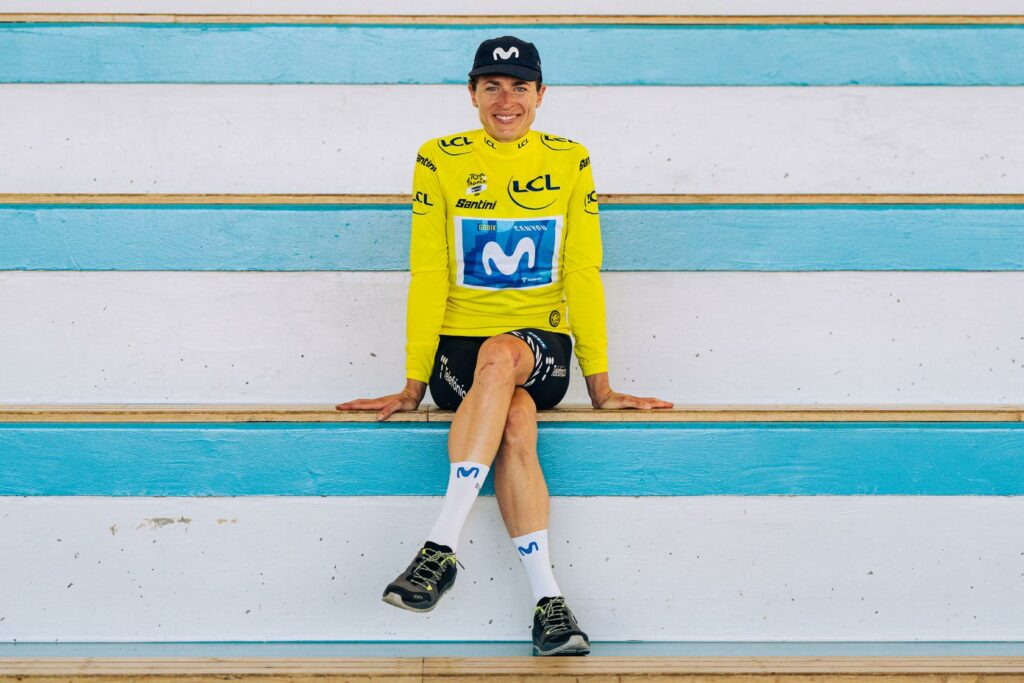
That sense of arrival, for some, feels long overdue.
During her final pre-Ventoux press conference, asked for her take on the opinion, held by many in cycling for decades, that climbs like the Giant of Provence are too difficult for the women’s peloton, yellow jersey Marlen Reusser scoffed.
“I think it’s just proof that the human being isn’t always such a smart species,” she said.
I reckon Nicole Cooke would approve of that retort.