


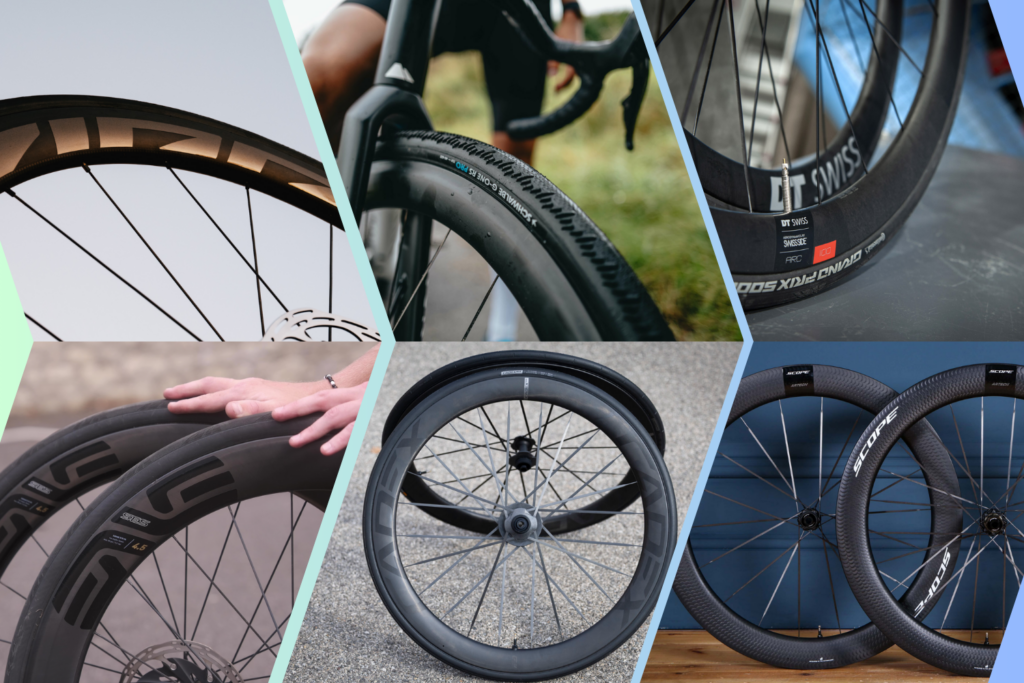

Wheels are huge business to the cycling world. They’re one of the biggest aesthetic choices riders makes, and one of the components we obsess over most. Once you’ve owned a bike for a while, I suspect a new wheelset becomes the most desired ‘upgrade’. The ease of swapping wheels and their striking visual makes it an upgrade that’s easier to square with our conscience (and our partners) in a way that a new frame sort of isn’t an upgrade… that’s a new bike.
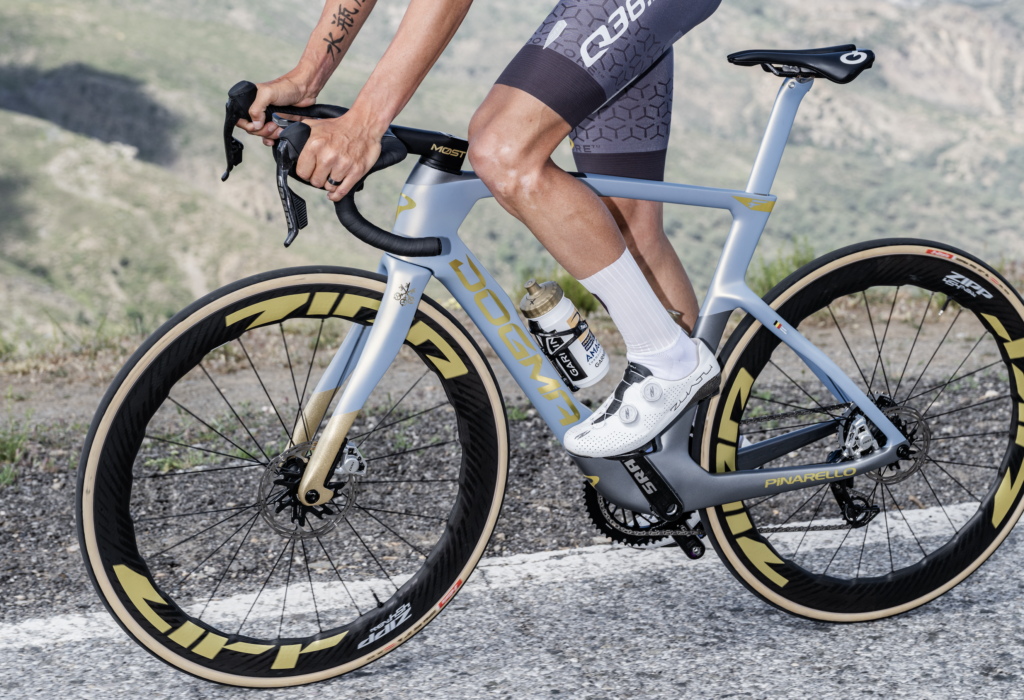
At the very top of the market, the fastest wheelsets are separated by only a handful of watts. Though there are much larger differentiators in terms of feel, comfort, handling, responsiveness, brand values and philosophies, aims and obviously aesthetics.
To find out where high-performance wheel technology is heading, I spoke to 12 of the industry’s leading manufacturers. This feature is split into two parts. In Part 1, we hear from DT Swiss, Enve, Zipp, Cadex, Scope and tyre specialist Schwalbe about the thinking behind their latest products, as well as their views on the hookless debate.
Here’s the best of the present, and all the cool ideas and tech just around the corner…
DT Swiss
There’s something about putting the word ‘Swiss’ into your brand name, it communicates a lot of adjectives in just one word, at this stage, ‘Swiss’ is basically a byword for precision. I talked to Simon Waßmer, Product Manager at DT Swiss, and Senior Marketing Specialist Ralf Eggert to see how they maintain the Swiss in DT.
One of the things that sets DT Swiss apart is that it designs and manufactures every major component of its wheelsets in-house, from hubs and spokes to nipples and rims. This allows the company to develop the wheel as a complete system from the outset, rather than as a collection of individual parts.
Rather than designing a wheel in isolation, DT Swiss starts with the tyre and the wider system it needs to optimise. This means they work closely with tyre manufacturers, including Continental and Schwalbe, to understand future trends and use that information to define what the next generation of wheel and bike systems need to deliver. Once the basic design is established, DT Swiss turns to wind tunnel testing.
Another factor that sets DT Swiss apart is its huge OEM presence across the cycling industry. “OEM is maybe 60%,” says Eggert. Alongside DT Swiss-branded wheels, the company supplies components to major brands, including Canyon and Specialized’s Roval wheels. The reputation of the DT Swiss brand, (and ratchet hub system) is such a hallmark of quality, brands are keen to communicate the DT Swiss ‘inside.’
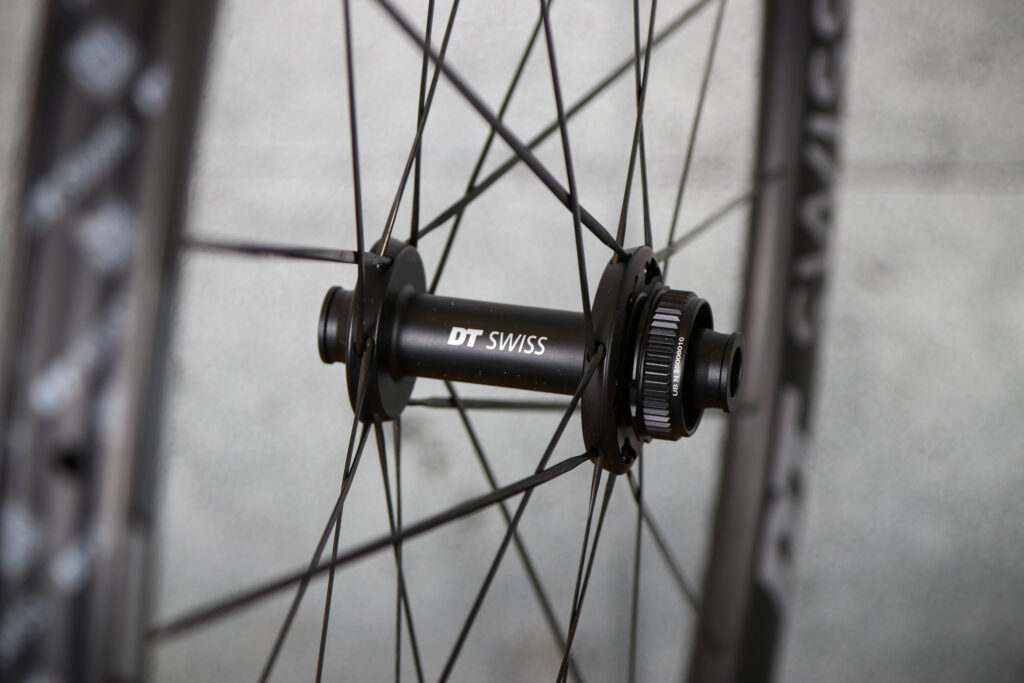
While aerodynamic performance is a key focus, DT Swiss says it isn’t the only consideration. “It’s great to have low drag for professional riders,” says Waßmer, “to save half a watt, but for a normal rider like me, what’s really important is the handling of the wheel.”
The company will sometimes trade a small aerodynamic gain for a bigger improvement in handling, creating a wheel that feels more stable and allows riders to stay in an aerodynamic position for longer. The goal is not just low drag, but predictable handling and smooth behaviour.
However, the company does prioritise aerodynamics over aesthetics when designing road wheels. “We don’t design the rim to look a certain way,” says Simon. “We use the shape that comes out of the optimisation with Swiss Side and then include graphics on there.”
What about hookless?
DT Swiss test both hooked and hookless designs, with Waßmer explaining: “In the end, you can make a hookless gravel rim quite fast, and you can make a hooked gravel rim quite fast.”
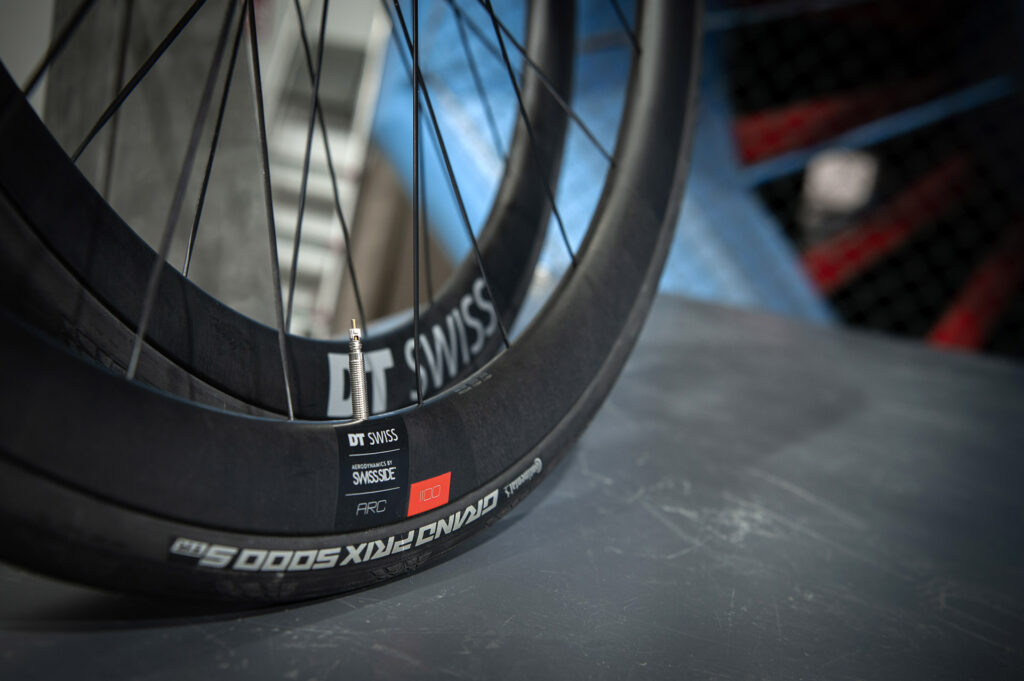
DT Swiss has chosen hooked rims for its ARC, ERC and GRC ranges because it believes they offer an extra layer of safety and familiarity for everyday riders. “Many riders don’t know about this five-bar pressure limit. They don’t know they can only use tubeless tyres”, says Waßmer. However, as gravel tyres continue to grow wider, Waßmer believes hookless could have a role in the future – if implemented correctly.
Future technologies
An area that DT Swiss believes is important for development is carbon spokes. “It’s really important [as we’re] one of the main spoke producers in the world,” says Waßmer. “They increase the performance of the wheel system because it reduces the weight.”
However, the company remains focused on quality over chasing the lowest possible weight. Simon points out that all DT Swiss wheels are “trued and finalised by hand, no matter the price point”, adding: “We are not on the forefront of the lightest wheels, but this is because we have really high quality standards.”
Enve
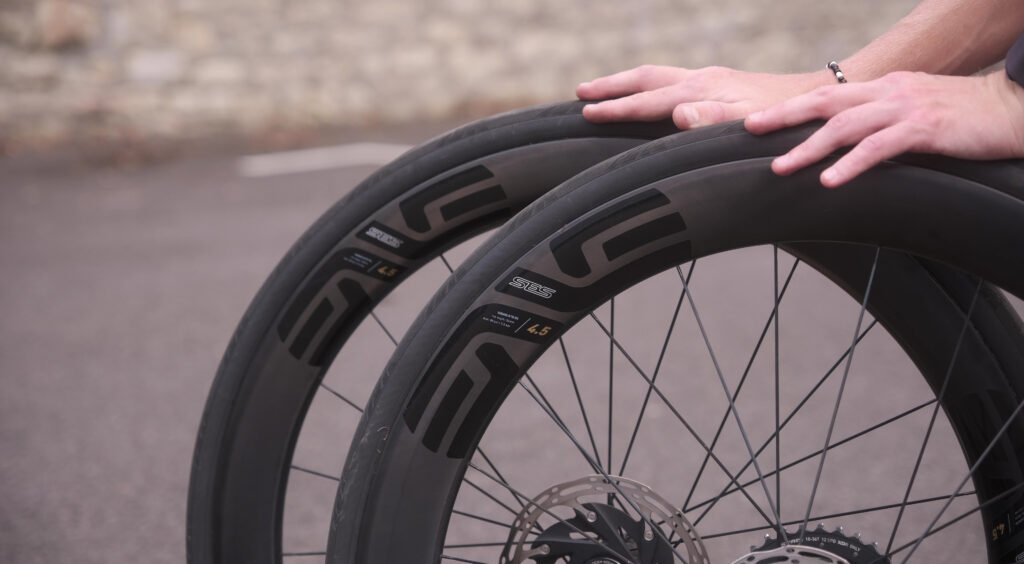
Enve’s always been an ultra-desirable brand, but certainly their now inseparable association with a certain inhuman Slovenian cyclist has cemented them as the unimpeachable performance brand too. I spoke to Enve’s Jake Pantone, to see how everything goes together.
One of the first things I learn is that Enve has never made an aluminium rim. The company was founded with the goal of “catering to the strengths of carbon fibre,” says Pantone. In the early days, many brands were trying to replicate aluminium rim designs in carbon, Pantone explains, but Enve took a different approach, designing rims around carbon’s key advantage: its tensile strength and ability to carry load under tension.
Enve works with all sorts of different weights of carbon, mostly sourced from Mitsubishi, but avoids relying heavily on ultra-high modulus materials. “They’re great for weight savings and stiffness, but they tend not to be great for impact,” says Pantone. Instead, Enve uses more complex laminates, combining different modulus fibres and tuning carbon angles to balance weight, stiffness and durability.
One of Enve’s key design features is moulded spoke holes, meaning the rim doesn’t need to be drilled after manufacture and the carbon fibres remain continuous. “The thickest portions of the rim are the spoke face, where the spoke nipples sit, and then the tyre bed or rim channel,” says Pantone. These areas can be eight to 14 layers deep, compared with around four layers in the sidewalls.
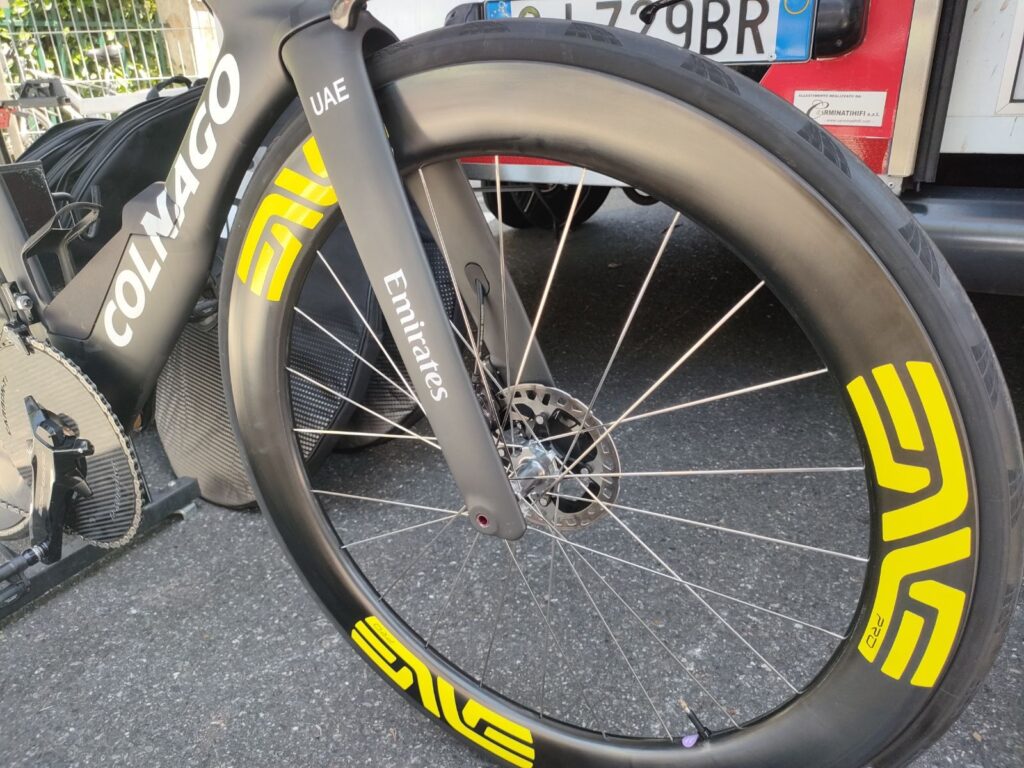
The new 4.5 Pro was born from feedback from UAE Team Emirates XRG. “Last year, the feedback from the team was that your 4.5 rim shape is fantastic… we want it to be lighter,” says Pantone.
A further complication was tyre compatibility. Enve’s 4.5 wheel uses a 25mm internal rim width, which under ETRTO guidelines is designed for 29mm or wider tyres, while UAE was using 28mm Continental tyres. To remain UCI compliant, Enve had to rethink the wheel. Enve chose not to chase weight savings through smaller bearings or axles, as Pantone says the team “wouldn’t want the trade-off of bearings going bad, axles breaking, or being too soft.”
Enve’s current stance on hookless rims
Interestingly, the 4.5 Pro also moved from a hookless rim to a hooked design. “Originally the story was that hookless saves weight,” explains Pantone. “You shave the hook off, you save weight.” It also allowed Enve to create a stiffer rim edge, but the narrower profile led to pinch flats. “The leading edge of the rim was effectively like a butter knife blade… impacts would just slice through the tyre.”
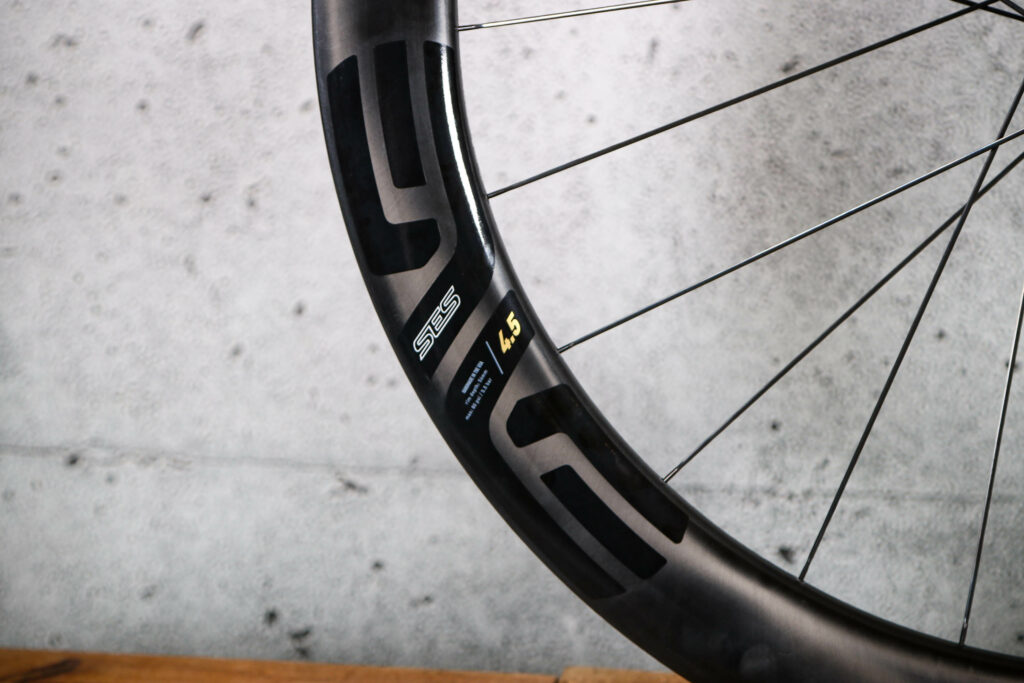
Enve responded by developing its wide hookless bead, increasing the width of theleading edge to improve impact protection. However, the additional material added weight, so for the 4.5 Pro, Enve found another solution: bringing back the hook and removing material elsewhere.
Future technologies
Looking ahead, Pantone says spoke materials are one of the most interesting areas of development. Enve currently uses steel spokes because it has yet to find a carbon spoke that outperforms options such as the Sapim CX-Ray or Alpina Ultralight for aerodynamics, but he says there is significant development happening in the space.
Pantone is also interested in Dyneema as a potential material, particularly for gravel applications. For now, Enve already has a strong offering across road and gravel, with further material innovations likely still to come.
Zipp
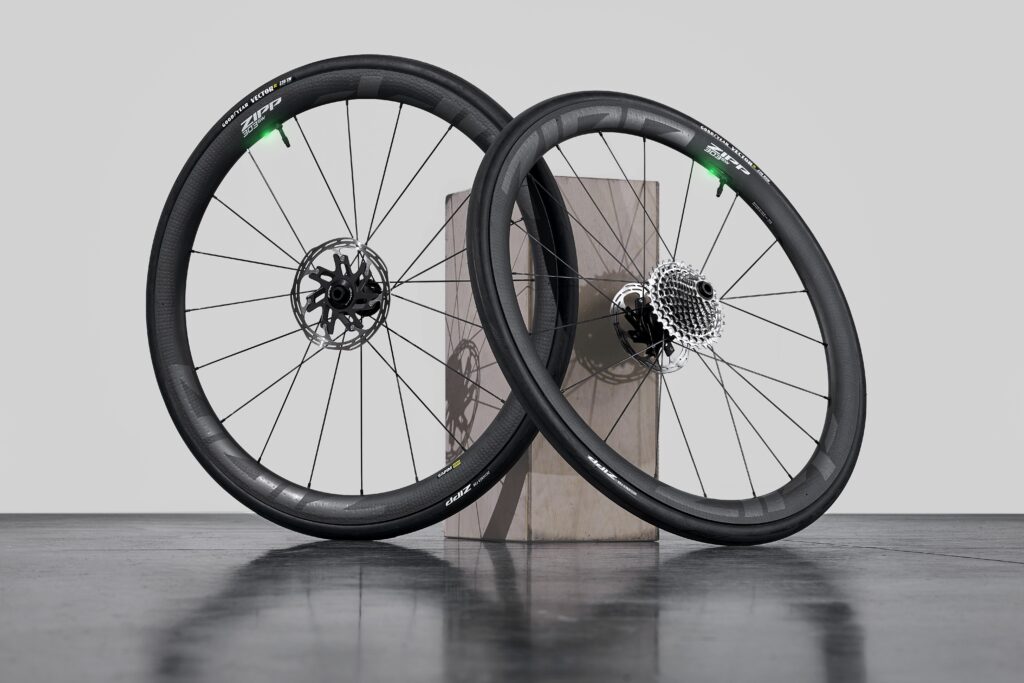
I spoke to Zipp’s Ben Waite, a 15-year veteran Wheel Design Engineer and David Morse, Chief Engineer and Product Management) to see how they kept things true. “Zipp has always been steadfast in pursuing overall speed,” says Morse. “If your goal is to be competitive in a race, speed must always be the North Star.”
A major advantage for Zipp and SRAM is their global scale and access to feedback. “Because of our worldwide distribution, we have access to sales reps around the world that are in distributors and dealers, like our race techs working with teams every day,” says Morse. This gives the company a huge pool of real-world data and rider feedback.
Additionally, Waite highlights the resources available and the large engineering team. “We can sketch out an idea, walk outside, get our hands on carbon fibre, lay it up into a tool, mould it in, and literally have our wheel tech build it and we’re riding it immediately,” he says. If they need new tooling, 3D printing allows them to create moulds quickly and test concepts within hours. “The fastest way to know exactly what the best design is just to try it and then go and test it,” says Morse.
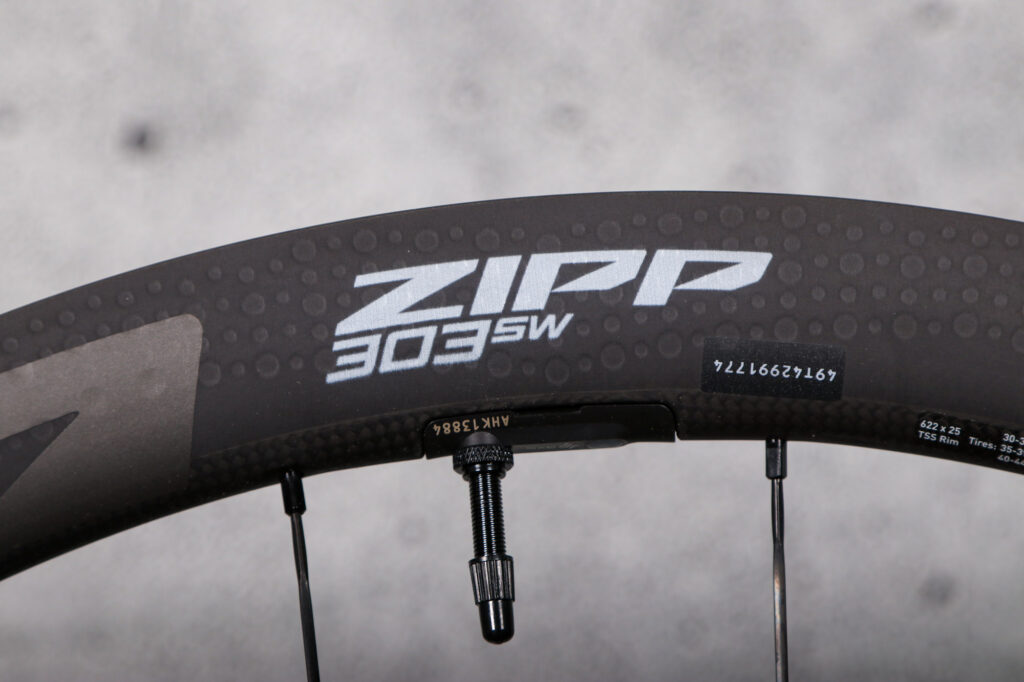
Waite says Zipp has produced around eight different rim builds in a day, with a new design moving from pre-preg carbon sheets to a rideable wheel in around 90 minutes.
So, what trends is Zipp following? Zipp believes tyre sizes are approaching an optimum rather than simply getting wider. “I think that 28 to 30mm is optimum once you’ve accounted for vibration loss on the road,” says Morse. For gravel, he believes the sweet spot is around 50mm.
That thinking led Zipp to launch the 303 XPLR, a wheelset that looked unusually wide at the time but proved to be ahead of the curve. “We went three years into the future,” says Waite. However, he doesn’t expect widths to continue increasing indefinitely.
Zipp is still one of the biggest hookless proponents
Zipp’s move to hookless rims was driven by the wider shift towards wider tyres and lower pressures. “We saw there were benefits to using the tyre as suspension, lowering rolling resistance by running a wider tyre at lower pressures,” says Waite. This approach made hookless possible, allowing Zipp to reduce weight and cost while improving performance.
“Once we did that, we dropped 20% off the wheel weight and we took 20% off the retail price. At the same time, we made the wheel faster,” he says.
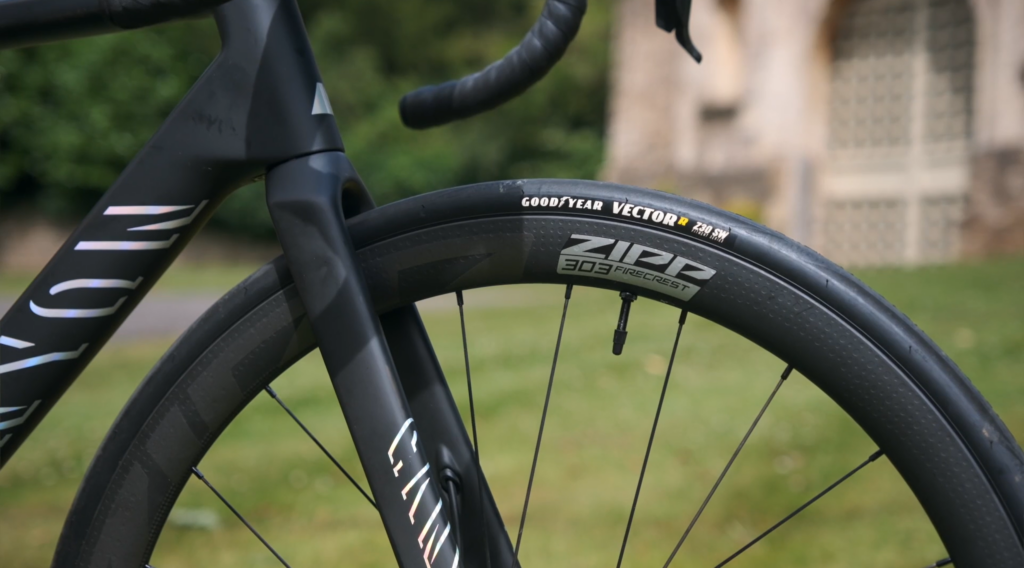
Defending the safety of the system, Waite argues that tyre manufacturers have a strong incentive to ensure their products remain secure: “Conti, Pirelli, Vittoria, they all want to make tyres that stay on rims. They don’t need a standard to incentivise them, what they’re doing behind the scenes is far beyond what’s required in the standard anyway.”
Wheel balance is another area Zipp has paid increasing attention to, particularly with its new wheels featuring integrated tyre pressure sensors. “We’ve done significant testing,” says Waite, explaining that a wheel that appears to bounce in a stand does not necessarily reflect real-world riding conditions.
Future technologies
Waite hinted at more good stuff to come. “Our next couple wheels that are coming out, we‘re using materials that we honestly never thought we could have available to use. It is this really high module, high stiffness, and we found that [if used] at a certain place in the rim it helps reduce shrink, [gives us the ability] ability to control the failure mode in an impact, which is way better than it ever has been before.”
Cadex

I spoke to Giant/Cadex’s Rob Lyne and Cadex’s Head of Product Jeff Schneider to find out how Cadex has established itself as a performance brand distinct from its parent company. According to Schneider, the project began with a simple brief: “the pursuit of a pinnacle product”. Giant gave the team complete freedom telling them, “We don’t care how much the product costs. We don’t care if you make money. We just want the best product.”
One of Cadex’s biggest innovations is its patented Dynamic Balanced Lacing (DBL) system. “We have a patent that I can’t believe nobody ever thought of,” says Schneider. Rather than using equal spoke tensions throughout the wheel, DBL uses different static tensions on opposing spokes so that, under pedalling load, the tensions balance out. “This improves a wheel’s transmission stiffness, which increases efficiency.”
The system has certainly impressed the pros. “We had Matteo Trentin come to me and say, ‘I’ve never experienced anything like this… I just push and I go,'” recalls Schneider.
The downside is that DBL makes wheel building considerably more complex. Different spoke lengths, tensions and lacing ratios mean the wheels must be built in a precise sequence, rather than using traditional wheel-building techniques.
“100% hookless”

The hookless debate is where things get spicy. “We’re 100% hookless,” says Schneider, who believes much of the criticism stems from tyre standards rather than rim design. He argues that current ETRTO standards place too much emphasis on wheel compatibility and not enough on controlling tyre bead stretch. “They should be regulating the bead stretch… We put carbon and Kevlar in our bead. It doesn’t stretch – and they just don’t regulate that.”
Cadex also manufactures its rims to tighter tolerances than those permitted by ETRTO, which Schneider says reduces variation and improves consistency. In his view, “it doesn’t matter if you’re on hooked or hookless, if you have air escape from your tyre, that tyre is coming off the rim. That hook is not going to hold it on.”
Schneider says Cadex has worked closely with Maxxis and Vittoria to develop tyres with reinforced carbon-reinforced beads that resist stretching, claiming the company pushed its tyre partners beyond existing standards.
Strong words, but after also speaking to Schwalbe (which is covered in more detail below), it’s clear Cadex isn’t alone in calling for tighter bead diameter tolerances and a rethink of the current ETRTO standards.
Tyre widths are also influencing wheel design, with riders and teams increasingly favouring wider options. “I just came back from team camp and they’re asking for 32s now,” says Schneider. “Alan Hatherly wants 34s. He said he’d race those all day long.”
Future technologies

Cadex’s latest development is Max Technology, which uses aero carbon spokes bonded directly into thin aero hub flanges to create a “one-piece” hub and spoke interface. The result is a wheel designed to maximise stiffness, responsiveness, weight savings and aerodynamic performance.
“We launched Max Technology in early 2024, and it’s a good technology. I think it’s phenomenal for road. We’re actually looking at how we can take it into gravel,” says Schneider.
Looking further ahead, Schneider believes there is still potential to push carbon technology further, including the use of boron to improve material toughness and potentially reduce rim weight. However, he says the challenge is applying it in the right way: “You have to be very specific about how you do it.”
Scope
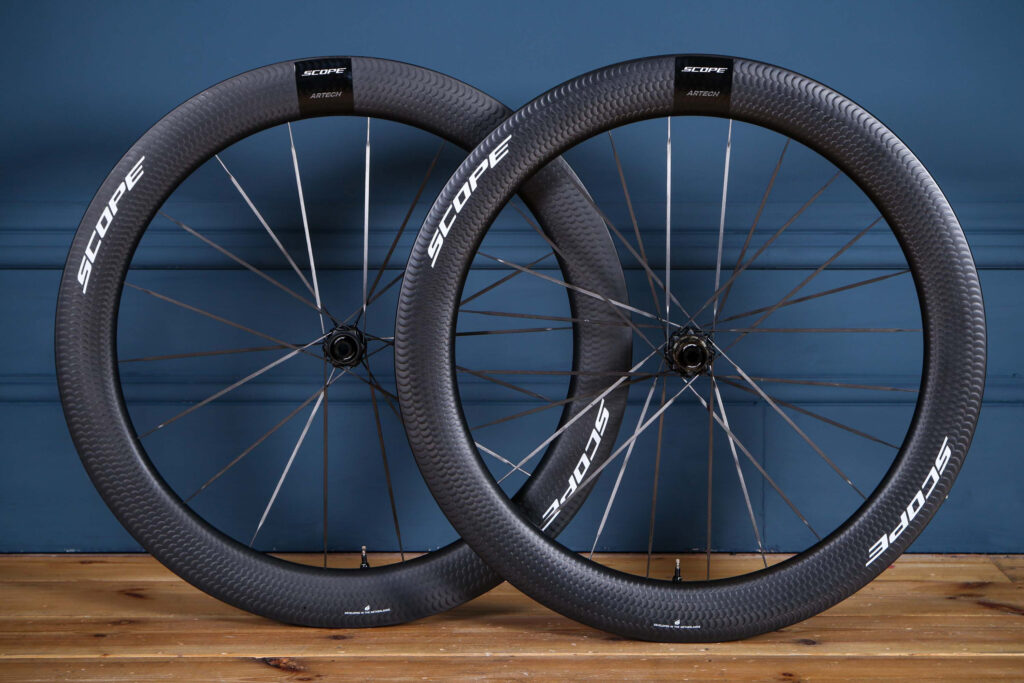
Dutch wheel company Scope Cycling announced their partnership with Netcompany INEOS cycling team this year and I spoke to the company’s founders, Nieck Busser and Rik Kusters.
Their goal is “to develop the best wheels on the market”, says Busser, which have to be “lightweight, aerodynamic, wide (so it has very low rolling resistance and good grip and comfort,) but at the same time you must also be able to race with it”.
Scope gained huge notoriety when they unveiled their Artech (a combination of ‘art’ and ‘tech’) wheels a few years ago. It was something of a philosophy shift and a risky move; as Kusters explains, “previously, we made the best price/quality wheels, and then we stepped into let’s forget about the price, just make the best wheels possible”.
The 3D-printed Scalmalloy hub is expensive and time-consuming to produce. “In hindsight it looks very straightforward to make a lightweight hub for additive manufacturing,” says Kusters, “but it was at least a two-year investment from idea to reality.”
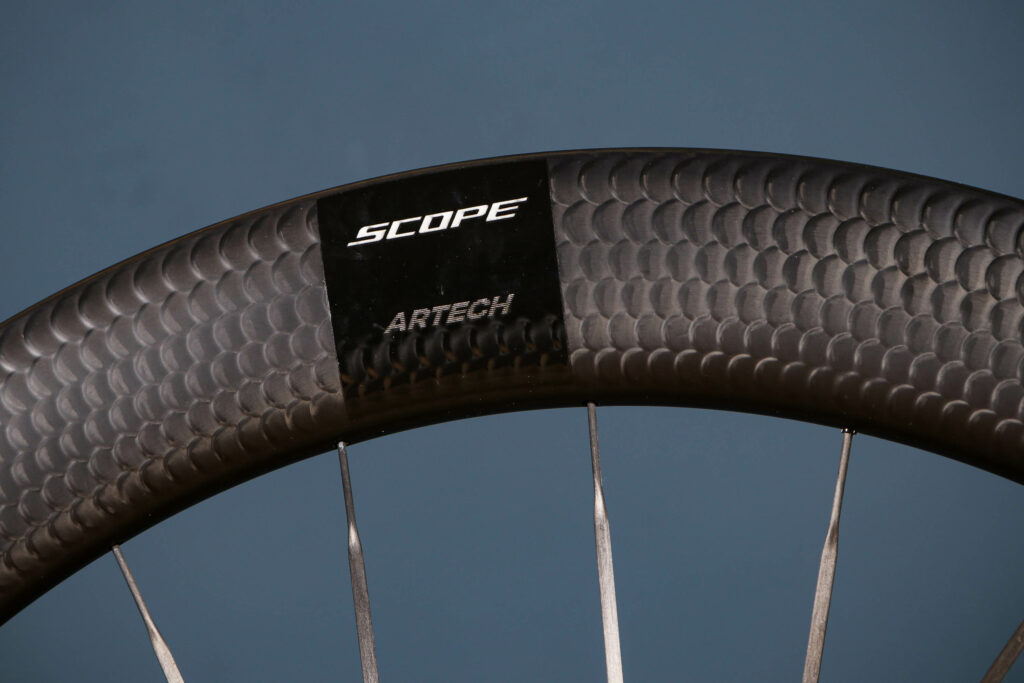
The rims also underwent extensive development, with Kusters explaining: “We developed an algorithm to optimise the rim shape” before adding the AeroScales. Like the 3D-printed hub, the AeroScales increase manufacturing costs. Scope initially struggled to meet demand for the Artech wheels because of the lengthy production process, and had only just caught up before announcing its partnership with Netcompany INEOS, which inevitably increased demand further.
So where did the distinctive AeroScales come from? “We identified some papers from aerospace researchers that were doing tests with applying scales to aerofoils… to wings,” says Kusters. “They could identify an advantage in the order of magnitude of about twenty percent”, but the brand didn’t reach this level because a wheel rotates unlike a static wing.
The challenge was adapting the concept to a spinning wheel, where the leading and trailing edges constantly change. Scope had to carefully orient the AeroScales so they could act as a leading edge without creating additional drag when they became the trailing edge.
“For road we believe only in hooked wheels”
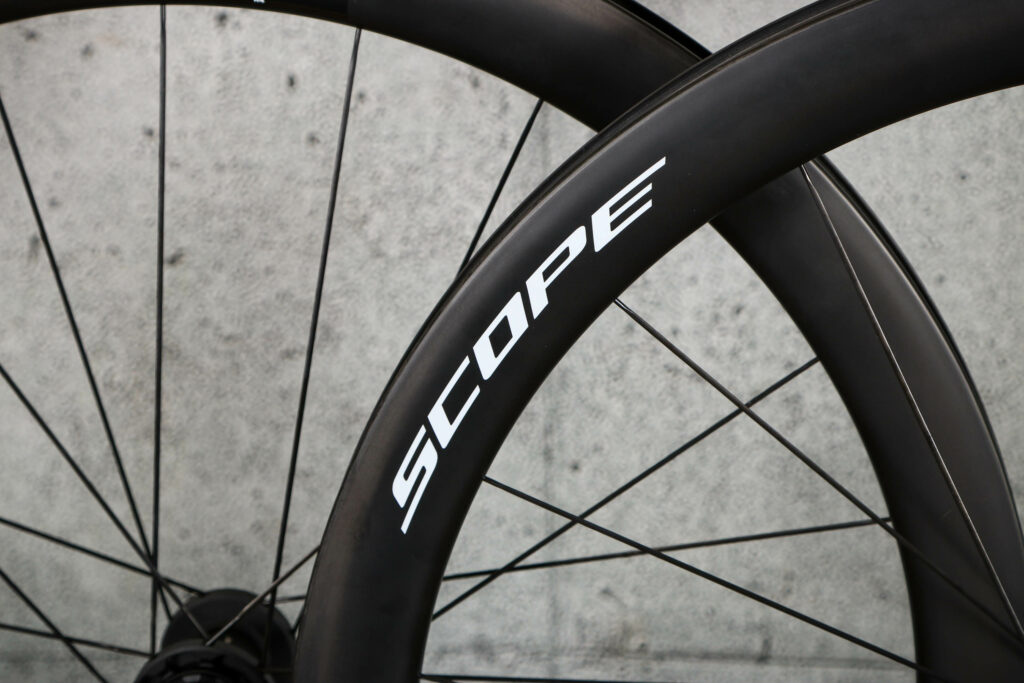
Scope had a pretty simple philosophy on hooked/less rims. “For road we believe only in hooked wheels. For off-road, where you ride wider tyres also at a lower tyre pressure, there we do believe these see the benefit of hookless.” Says Kusters. Bussers added that it was a “hard decision” they made five years ago when they started developing the Artech series, and they bucked the then growing trend for hookless. It was a “50-60 gram penalty per pair… that [they] had to make up for somewhere else to still become the most lightweight wheel on the market.”
Future technologies
I was told the brand is working on new technology too, but Kusters couldn’t disclose any more as it’s not yet patent pending. Therefore, “ anything we now disclose would mean that the patent will not make it”.
Schwalbe
>My favourite road tyres ranked (in early 2026)
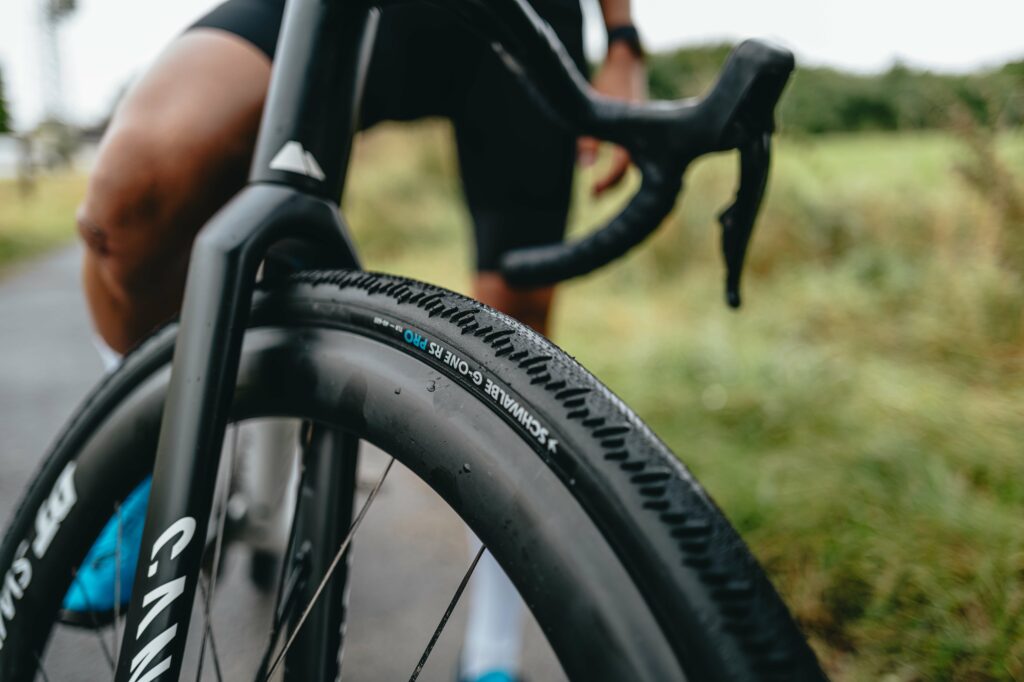
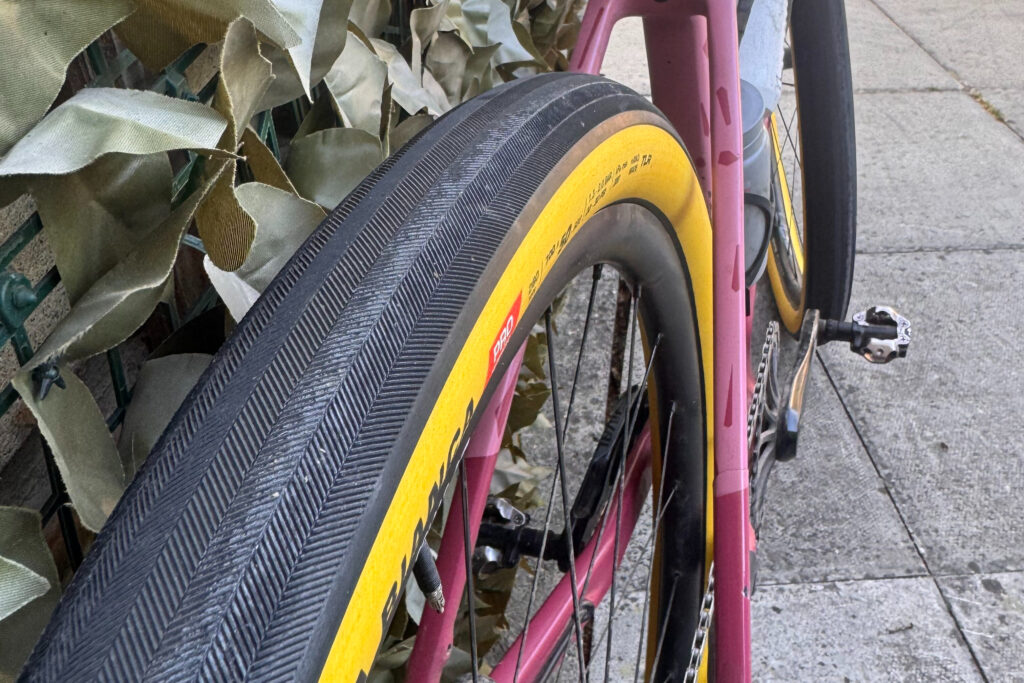
I thought when talking about wheels, it was prudent to talk to at least one tyre manufacturer. I’ve been riding on Schwalbe’s exceptional G-One RS Pro almost uniquely for the last year, so I picked up the phone and spoke to Jakob Maßen, Schwalbe’s dropbar Product Manager.
“I think what sets us apart as Schwalbe is that we only produce and are solely focused on bicycle tyres,” says Maßen. The company’s priorities are clear: “We focus on grip, safety and durability.”
Schwalbe also sees its agility as a key advantage. “We can make decisions and prototypes very fast,” says Maßen, explaining that engineers can turn ideas into physical prototypes within days.
So how does a new tyre start? “Everything starts with our pro athletes,” says Maßen. Using the G-One RS as an example, he explains that Schwalbe began receiving feedback from gravel racers about punctures in a specific area so they quickly developed an improved construction for its athletes to test in competition. Rather than being a small production update, the changes were substantial enough for Schwalbe to launch the Pro version.
On the topic of hookless, Schwalbe believes current hookless safety standards don’t go far enough. “The ISO safety standard for hookless blow-off tests is 10% above the indicated maximum pressure for five minutes,” says Maßen. “That’s a really easy test to pass.”

Schwalbe’s own testing goes significantly further, with tyres tested at 60% above their maximum pressure for at least an hour. “We see a lot of defects happen after a while because everything has stretched a bit,” explains Maßen, who believes a 1.5x safety factor should become the future standard.
For Schwalbe, much of this comes down to bead-core construction and the brand uses a proprietary bead-core material rather than the Kevlar or Aramid commonly found in folding tyres. While more expensive, Maßen says it is “completely non-negotiable” for a safety-critical component.
What about wider tyres? Schwalbe’s testing reflects the trend towards wider tyres. Its data shows that pairing narrower tyres (around 40mm) with very wide rims (32mm+) offers little performance benefit, while increasing tyre volume towards 50mm can significantly improve handling and rolling resistance on rough surfaces.
Future technologies
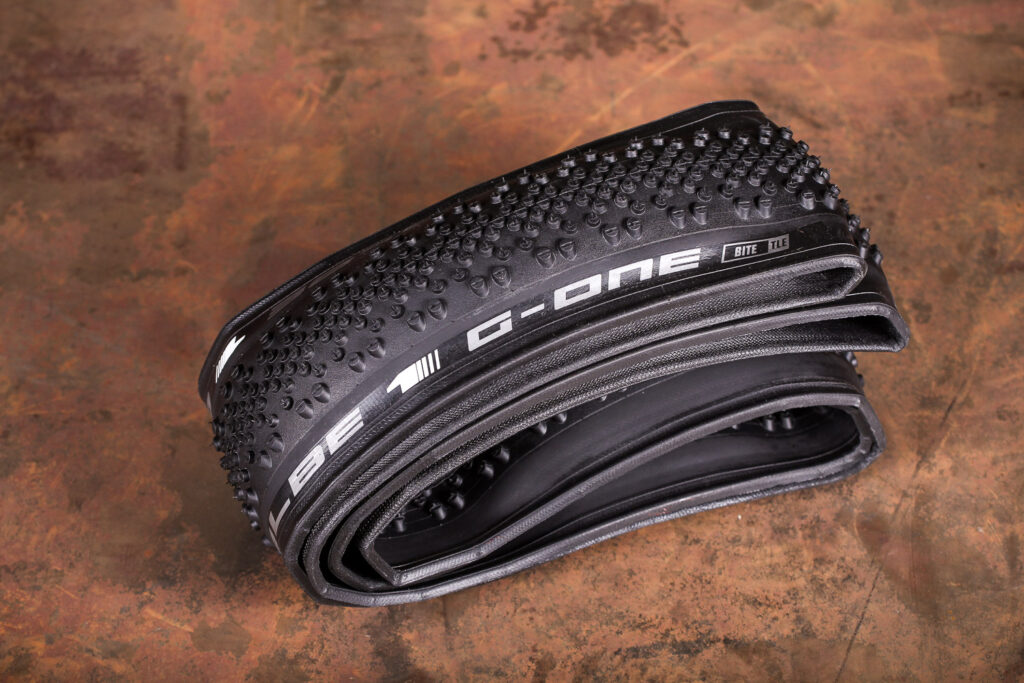
Schwalbe continues to invest heavily in material development, with a dedicated chemist in Germany focused on exploring new rubber compounds. Maßen points to the introduction of silica-based Addix compounds as a major breakthrough, improving performance across many of Schwalbe’s tyres.
The company is also looking beyond the tyre itself with its new Clik valve system. Whether Clik becomes the next widespread standard remains to be seen, but adoption has already begun at the highest level: “All our pro athletes have gone to Clik,” says Maßen.
So there we have it: an insight into the technologies, testing methods and philosophies shaping the future of high-performance wheels. From carbon layups and spoke materials to tyre integration and the ongoing hookless debate.
But this is only part one. In Part 2, we’ll hear from the brands that sit alongside the wheel manufacturers, including key suppliers, to find out how they are influencing the development of the next generation of performance cycling products.


















1 thought on “Schwalbe says hookless safety standards need tightening, while Cadex argues tyre beads are the real issue – we speak to the brands shaping the future of wheel and tyre technology”
I bought a Giant Defy (bad move, moved it on) in 2021. The Giant dealer told me rims would only be hookless within two years and scoffed when I doubted his claim. And here we are. And here am I on hooked rims.