


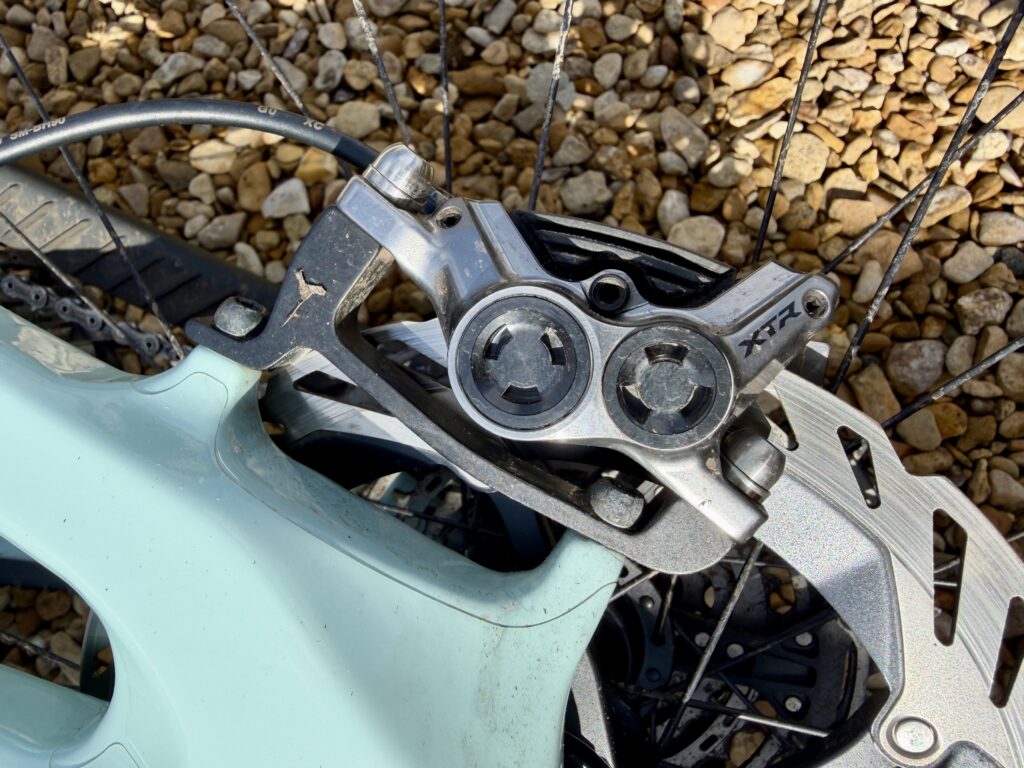

For one reason or another, you’ll eventually contaminate your brake pads and rotors. Usually, this’ll mean that you’ll need to replace them to regain solid and silent braking performance. But what if I told you that contaminated brakes could be fixed?
Your bike uses a whole host of lubricants to make it work properly. Bearings are filled with grease, the chain should be oiled or waxed, and hydraulic brakes use mineral oil or DOT fluid. But if any of these found their way onto your brake pads or rotors, that’s pretty much the end of their performance.
This can happen in a variety of ways, but the most likely is that you might have spilled some brake fluid during a bleed. At least, that’s how I usually contaminate my brakes.
When a brake’s friction surfaces are contaminated, you’ll know. They’ll squeal horrifically, and you’ll have absolutely no braking power. You’ll likely also find that your brake pads lose that matte surface and will become shiny or glazed. So fixing this isn’t just a matter of protecting your ears, but general safety.
While these tips can save your pads and rotors from a bin-based destiny, there’s absolutely no guarantee that they’ll work. But give them a go with full knowledge that there’s a good chance you’ll need to replace the pads and rotors, despite your best efforts.
Don’t move your bike or apply the brakes
If you know that you’ve spilled a lubricant or oil onto your braking surfaces, do whatever you can not to move your bike or pull on the brakes.
Unless you’ve thrown a gallon of brake fluid onto your wheels, there’s always some chance that any contaminants may not have touched your brake pads yet. But rolling your bike about and/or applying the brakes might spread the contaminant and give you a little more work to do. So if you can, keep everything as still as you can.
Isopropyl alcohol and sandpaper are your friends
My go-to method of bringing brakes back from the dead is to reach for the isopropyl. First up, clean absolutely everything that may have had oil spilled on it. I’m talking brake levers, calipers and even the fork and frame. Leaving oil on your bike could lead to the recontamination of your pads, ruining your hard work.
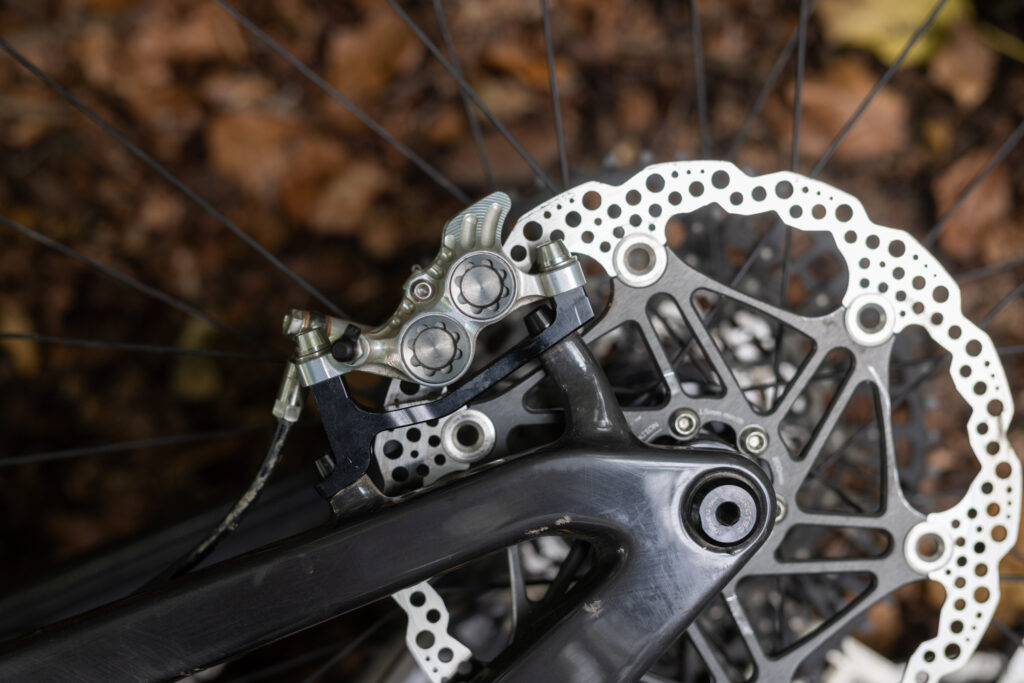
With your wheel out of the bike, douse both sides of the rotor in isopropyl alcohol and rub with a clean paper towel or cloth to clean away any spilled oil. There’s no harm in repeating this step if you want to be doubly sure that your rotors are as clean as possible.
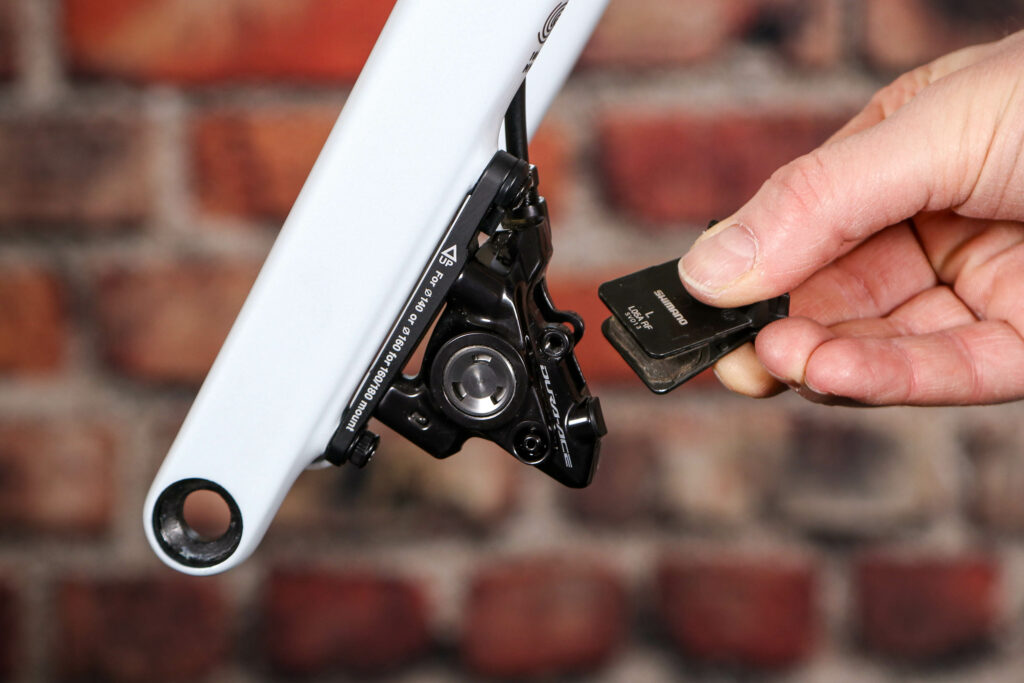
Then, for the pads, there’s every possibility that any oils may have soaked into the pads’ surface. When addressing contaminated pads, I like to apply a bunch of isopropyl alcohol and give them a rub over some fine sandpaper on a flat surface to remove just a touch of its material and bring a glossy braking surface back to a matte finish, while dissolving any leftover oils.
Heat can help
Applying heat to a brake pad is another good way of ridding it of those pesky oils, but do this with utmost caution. This works best with metallic (sintered) or semi-metallic pads, but it can ruin organic or resin pads, so it’s best to steer clear if that’s what you’re running.
With the brake pad clamped in something that won’t set ablaze, quickly swipe a flame from a torch over the braking surface. Do this with a bit of speed and don’t keep the flame over the pad for too long, or you might melt the bonding that holds the material to the backing plate.
The idea here is to evaporate any oils that may have found their way onto the surface and into the pad.
Once you’re happy that the oils have disappeared, give the pad face a brief sand and you’re good to go.
Bed in your brakes
With all of that cleaning and sanding, you’ll have also removed the meshes from the rotor and the pads that make them work at their very best. So, you’ll need to bed in your brakes properly.
It’s the usual affair of pedalling the bike up to speed and applying the brakes with increasing pressure but without bringing the bike to a stop, multiple times over.
Initially, expect some noise from your brakes as the surfaces bed together once again, but they should quieten after some time.
This is where you’ll find out whether you’ve been successful in freeing your brakes from contamination. If you’re still lacking power, and you can’t shift the squeal, then you know it’s time to replace your pads and rotors.




















5 thoughts on “Spilled oil on your brakes? Here’s how to revive your contaminated brakes, rid the squeal and restore their power”
“This can happen in a variety of ways, but the most likely is that you might have spilled some brake fluid during a bleed. At least, that’s how I usually contaminate my brakes.”
Who bleeds their brakes with 1. the pads in – you should have the pistons pushed back and pads removed 2. the wheel should be removed completely to allow you to do no.1
|So how are you contaminating pads or discs when bleeding ????? Or are you failing to wipe down everything properly when you reassemble?
@Smoggysteve During a bleed, it’s the most likely time when oil can get into places you least expect. While you’re correct in that friction surfaces should be removed as bleeds take place, accidents happen.
@Liam Mercer Thats why do this thing called ‘washing’
takes 2 mins to spray it with a bit of degreaser and rinse it off.
@Smoggysteve I had no idea!
@Liam Mercer Clearly 😉