
Raised riding the roads and trails on the edge of the North Yorkshire Moors and now based in Devon, Alex McCormack was a relatively latecomer to the racing side of bikes, but he soon made his name in the thriving ultra racing scene.
With victories in some of the most prestigious off-road ultra races around, he recently took to the road to claim a weeklong distance record and is currently leading the Colorado Trail Race at the time of publishing this feature.
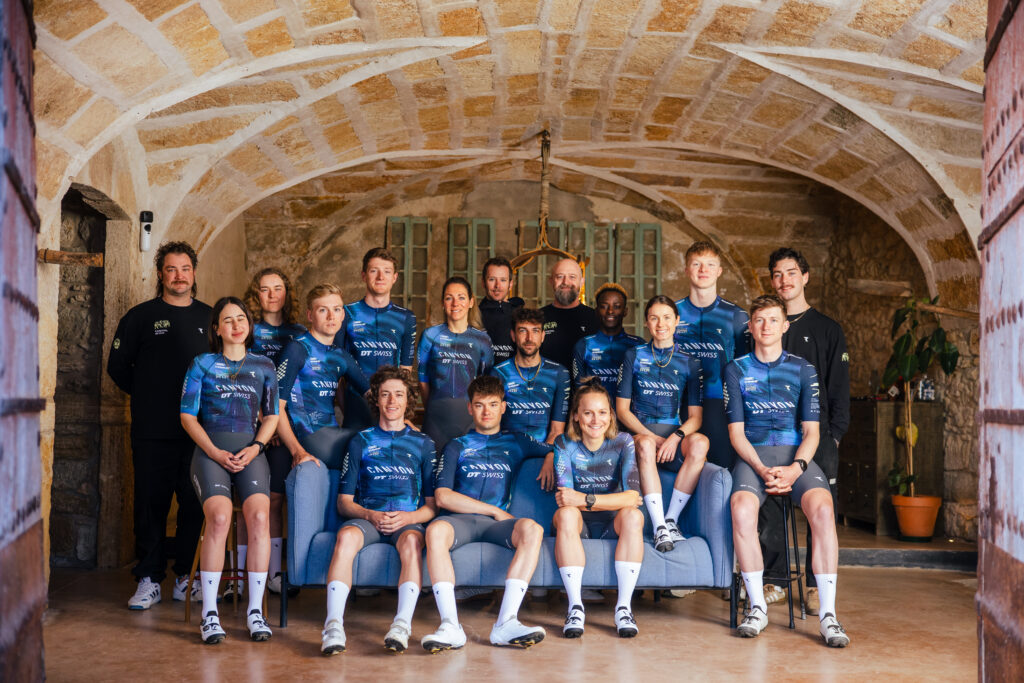
Having signed with the new Canyon x DT Swiss All Terrain Racing team, this is his first season as a full-timer. We caught up with him to learn more.
off.road.cc: How did your cycling journey start?
Alex McCormack: I’ve always ridden bikes but didn’t race them until much more recently. My family is pretty outdoorsy, so it was always family holidays in Scotland riding mountain bikes.
I’ve got a few friends who are pretty strong on the road, and my uncle used to ride a bike, so I got a road bike and rode with them. I always rode mountain bikes in the woods for fun and built trails, as most kids did. I did a lot of sailing too, which was my competitive outlet. I always thought I’d race boats and just ride bikes for fun.
Seeing the light
ORCC: Can you tell us about how the bike racing started?
AM: I always wanted to do a bit of cross-country racing, and was looking out for a bike for a while. There was a bargain on eBay; I think it was about £350 for the whole bike. It was a Chinese knockoff frame, with cheap bits on, so I bought that as it was local (Newnham Park in Plymouth).
The Exposure 24/12 race was on at Newnham in 2021, so I thought I’d go and give that a go, and I won it, which was a bit of a surprise. There were some fairly serious elite cross country racers there, so it was nice to beat them.
ORCC: Was that what got you into ultra racing? Or was it just in your DNA doing long-distance racing?
AM: I think it was more of a draw for me anyway. Off the back of the 12-hour (Exposure 24/12), there was a bike brand called LIOS which picked me up and helped me with a bike and some kit, on the proviso that I was going to do a bit of the UK XCO circuit.
I started doing those, but I just didn’t enjoy it too much; driving five or six hours up north, park in a car park somewhere, slip your pedal at the start, and that would be your day done basically. It just didn’t really add up to me.
I’d seen stuff like the Highland Trail and thought it was pretty cool, and maybe I should give that a go. I signed up for three or so ultras the year after, because I hadn’t really enjoyed the cross country.
The first Highland fling and Atlas, at last
ORCC: How did that first Highland Trail race go for you?
AM: I ended up scratching. I had too many punctures. My legs felt pretty good, and I was at the front – ahead of a few big names, which was a surprise, and I thought maybe I’m actually alright at this; so, I was pretty hooked.
ORCC: The Atlas Mountain Race, which you won in 2025, is of very high stature and difficulty. How much of a surprise was it that you won, and how lucky or unlucky did you get with the way it panned out versus what you’d anticipated?
AM: Going into it, maybe I didn’t think I was a bit of a favorite, but I knew I stood a chance of doing well. I went with the strategy to essentially try and be on target with how Robin Gemperle rode it when it was a similar course.
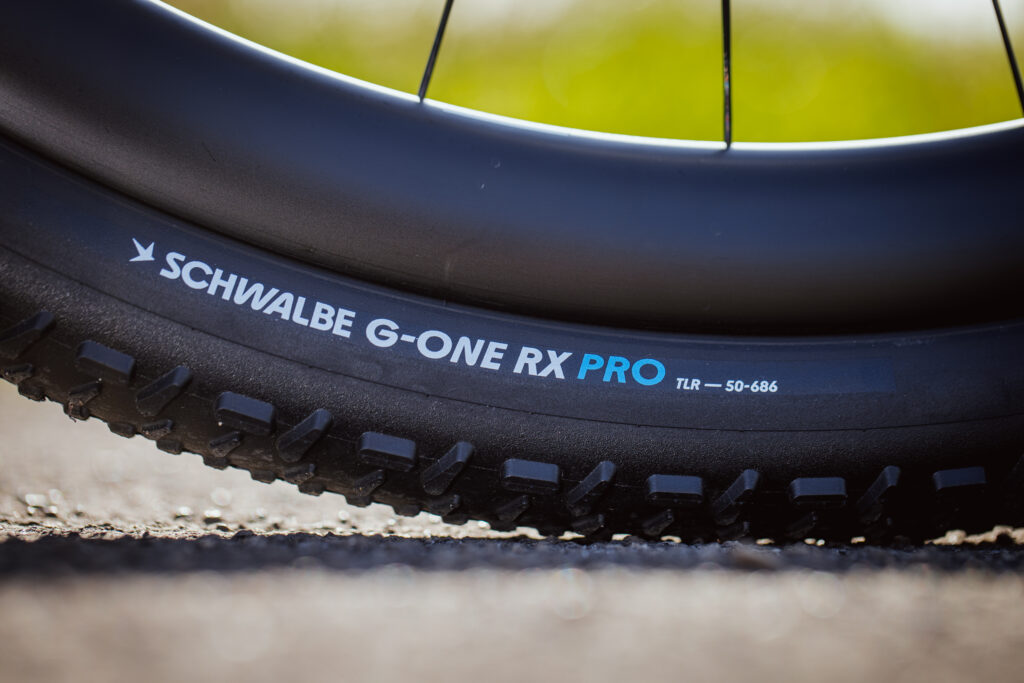
I had his timings, and I thought I’d try and hit these. If it means I can win it, cool. If not, and someone else is doing it and is stronger. It went pretty much to plan, although I had a few issues. Robin is a bit of an icon in the sport, and he always says you make your own luck. You do get lucky at times, but with punctures especially, people often blame them on user error, but when I get punctures, I always think it’s a lapse of concentration or a bad line choice, or you’ve chosen the wrong tyre – as I did at the first Highland Trail. Most things you can mitigate.
It went to plan, and with having a strategy and sticking to it, I was within about 15 minutes of my predicted time at the end of the race.
I did get lucky in the end; the axle in my wheel had blown up, and my free hub was getting sticky, and I was thinking that’s a bit odd. When I got to the end, the axle wouldn’t come out of the rear wheel; when I pulled it out, the whole thing exploded, and the cassette fell off with bits of shrapnel and everything all over.
Going full time
ORCC: With ultra racing being relatively new in cycling terms, and with just a handful of riders making a full-time living out of it, was there a crunch point for you where you thought maybe you could make a living out of it, and how did that play out?
AM: I think I’ve been fairly lucky. In terms of the sponsors from, say, three years ago, who picked me up and gave me a bit of cash to start with, then it was just covering race costs and flights and such.
Last year it was at a point where I dropped my working hours; I started dropping a day each week and working four days. The cash I was getting from these sponsors filled that gap. And then towards the end of the year, with the win bonuses that were on offer, I was doing a bit better from the racing than I anticipated. I thought I could probably drop to three days a week. That was already surreal, to be able to go part-time with the engineering, and then have that top up from the racing.
This year was maybe a bit of a crunch point, but I’m fairly risk-averse, so I was trying to get sponsorship commitment together before handing in my notice. Then Canyon came along with this opportunity, and that really helped. It made it a really safe no-brainer decision to transition from engineering into bike riding.
A grand week out
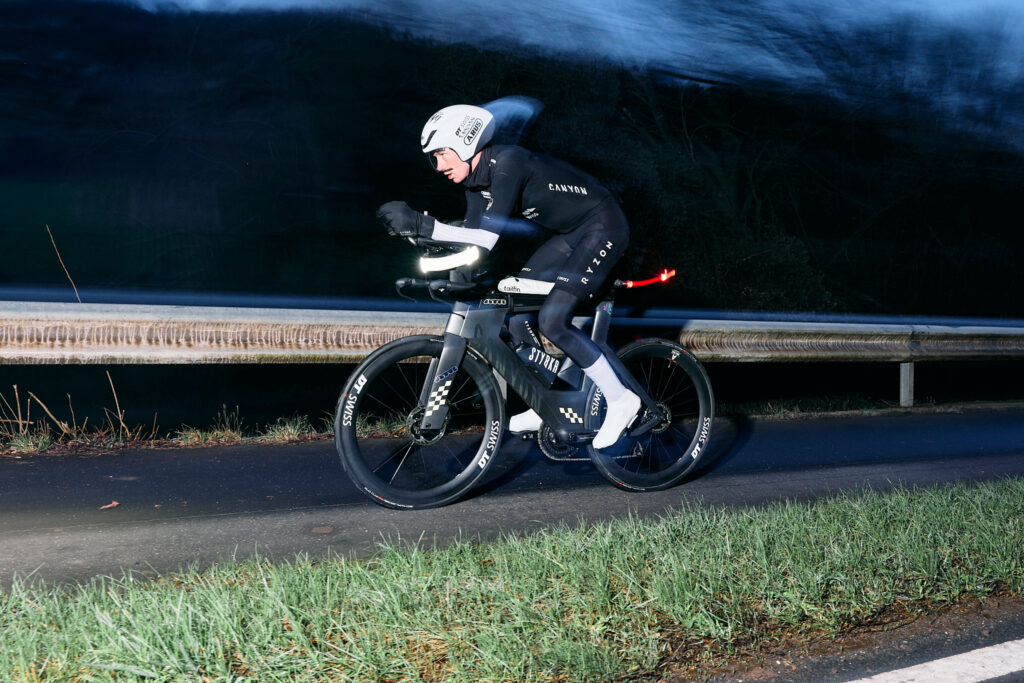
ORCC: You’ve done various things on the road too, like the double Everesting record, but that’s a very different prospect to getting on an aero bike and riding in all sorts of weather conditions to set a weeklong 2,377-mile world distance record, which you recently did. How much of a departure and transition from off-road racing has it been?
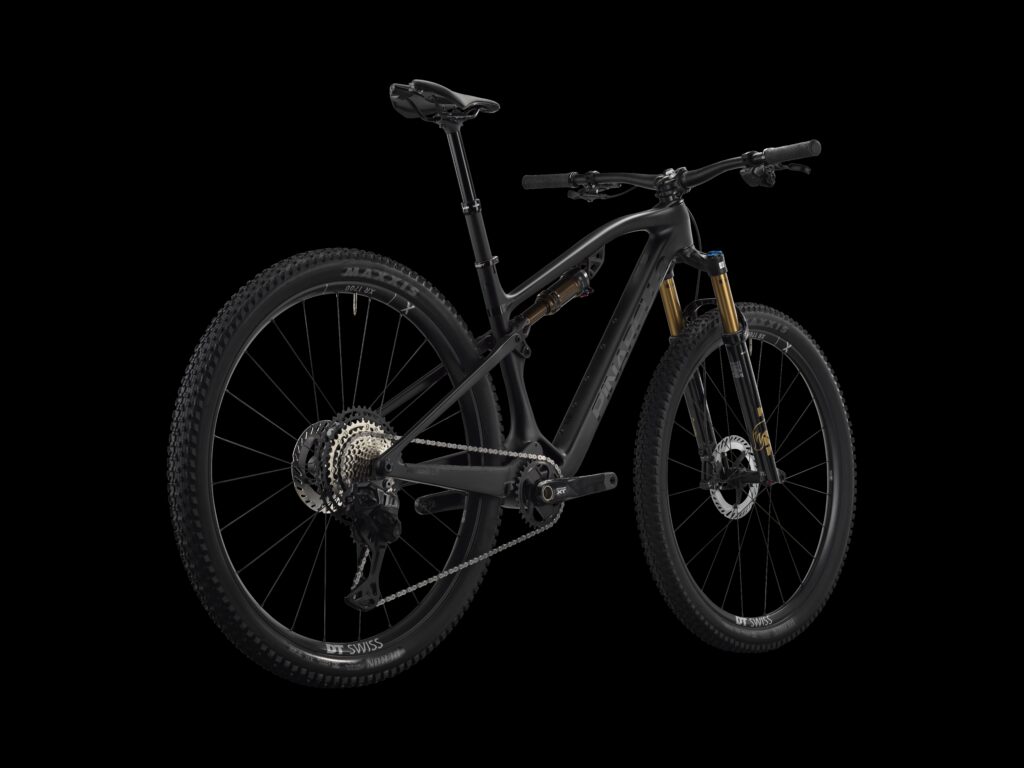
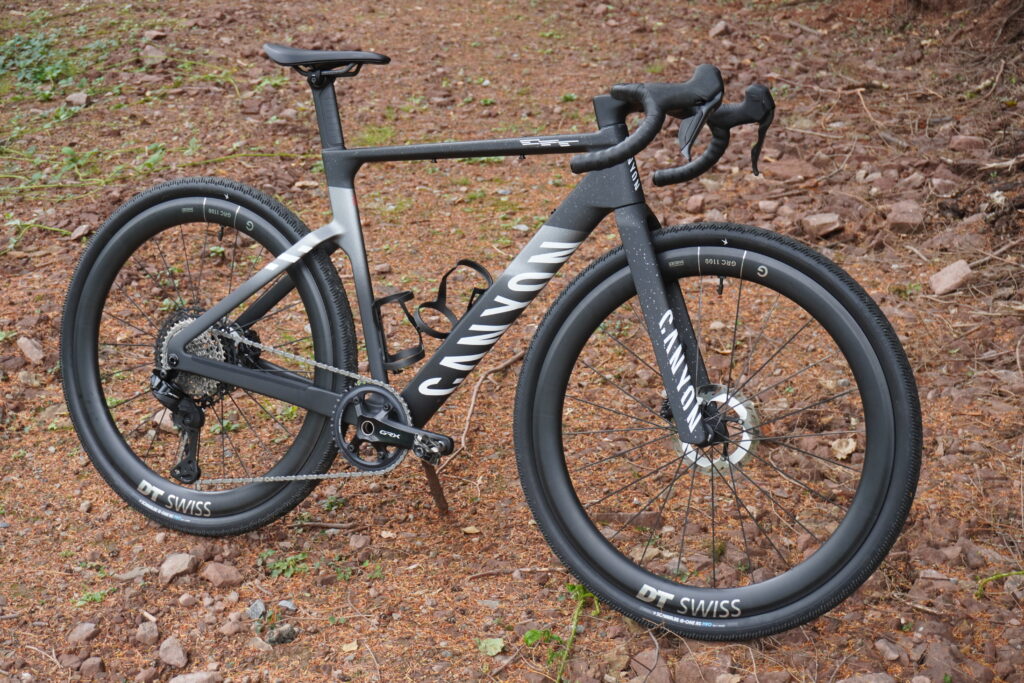
AM: I do the majority of my training on the road. I really like the mix of disciplines; I ride enduro, cross-country, gravel, on the road a lot, and now on the TT bike. Having Canyon as a sponsor, with its full lineup of bikes, is great for me. I’m essentially able to pick anything I want to do, and Canyon will have the right bike for the job.
As much as it’s not the kind of racing I’ve made my name with, I do enjoy doing it. I’m fairly numbers-oriented; I like looking at various distances, speed numbers, and aero stuff, and with coming from a bit of an engineering background I am drawn to that side of things. But I also do lots of mountain biking; it’s nice to have something to offset the other.
The not-so-great Divide and the triple crown
ORCC: You scratched very early on from the Tour Divide; can you tell us what happened?
AM: I think that I just had too much going on this year already. By the time I got to the start line, maybe through Unbound, the travel, and a few logistical problems, I was already having a few energy level problems before this.
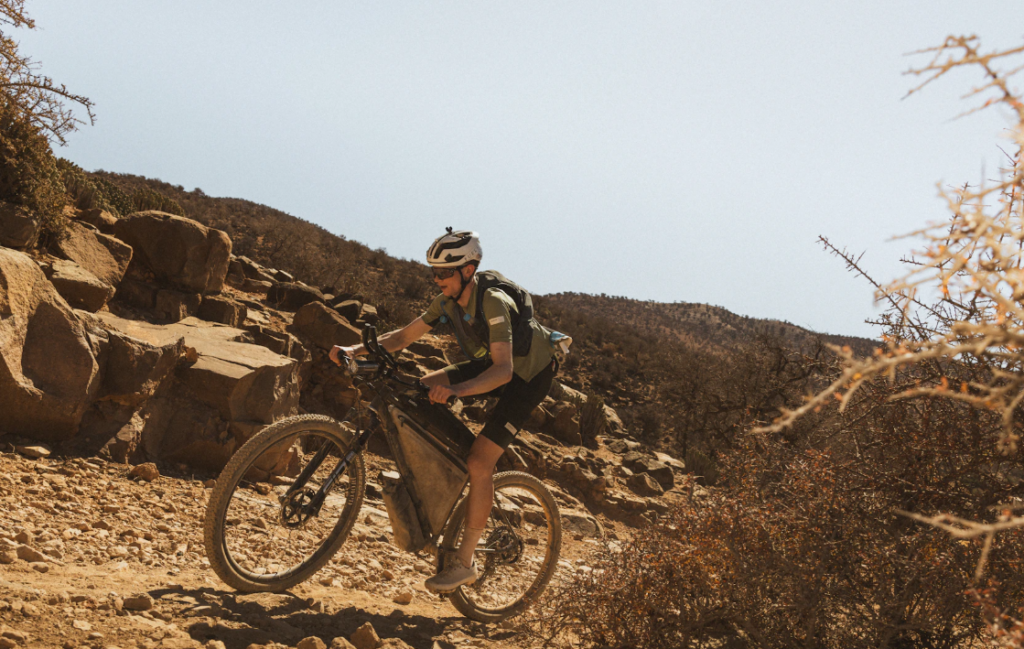
I got to the start and was already feeling pretty burnt out. It’s a shame, but I just couldn’t get my head and body into the race and into enjoying it, and into a place where I was happy to push myself to the level needed for the rest of the race.
ORCC: Has the Tour Divide scratching changed your plans for the year?
AM: The plans for the year are still the same. I still want to go and ride the Colorado Trail Race and Arizona Trail Race (Triple Crown – with Tour Divide). To me, they look like super cool races. Colorado Trail especially is all singletrack and high-altitude mountain biking, and that’s what I love to do, and I’m excited to go back to do that. I’ve been at home trying to get a bit of form back, to get some recovery, and to try and get the energy levels back up before this starts in August.