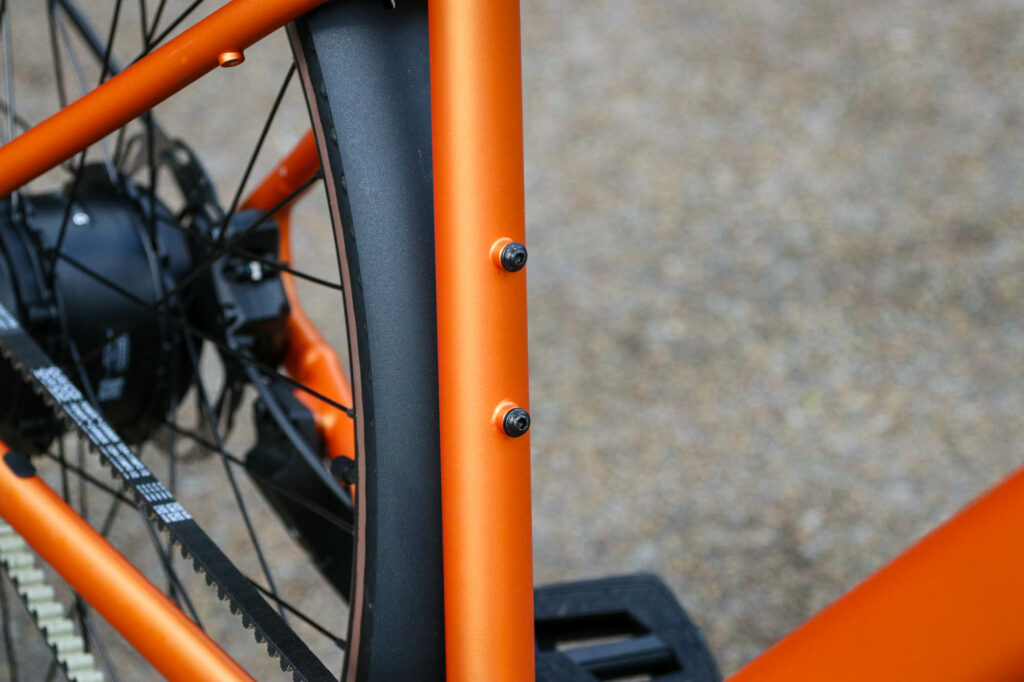
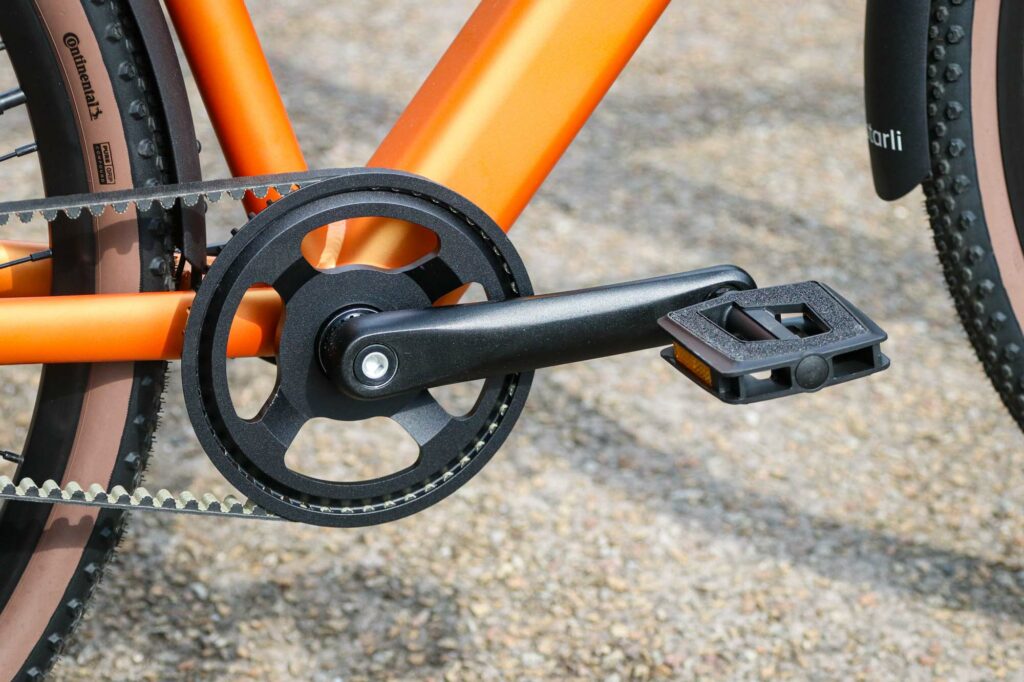
The estarli e28.X is a little different from most commuter e-bikes. At first glance, it looks like a stylish single-speed urban hybrid, but look a little closer, and you’ll find a drivetrain that’s unlike almost anything else in this price bracket. Instead of a traditional chain and derailleur, the e28.X combines a maintenance-free belt drive with Bafang’s latest three-speed automatic rear hub motor, eliminating gear shifters altogether.
> Buy the estarli e28.X 3-speed from estarli for £1,945.00
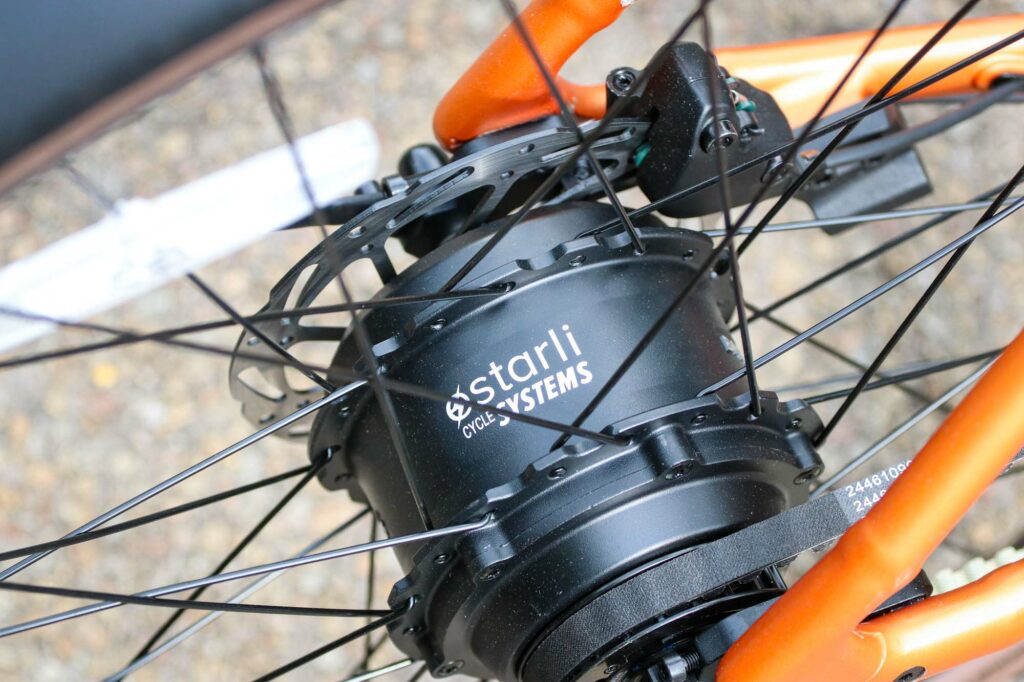
Over the past few years I’ve ridden several e-bikes using Bafang’s automatic hub motors, including one fitted with the original H700 two-speed system and, more recently, the updated H720 on the Eovolt Afternoon Pro. Both offered an interesting alternative to conventional gearing, although the earlier version felt rather clunky and never quite convinced me. Naturally, I was keen to find out whether the latest three-speed system had finally come of age.
Over the last three weeks, I’ve been using the estarli daily, for shopping trips, local errands and the occasional longer leisure ride. During that time it tackled everything from busy town streets and gravel paths to steep Cornish hills and plenty of potholes along the way. So, has estarli got the formula right?
estarli e28.X – First Ride
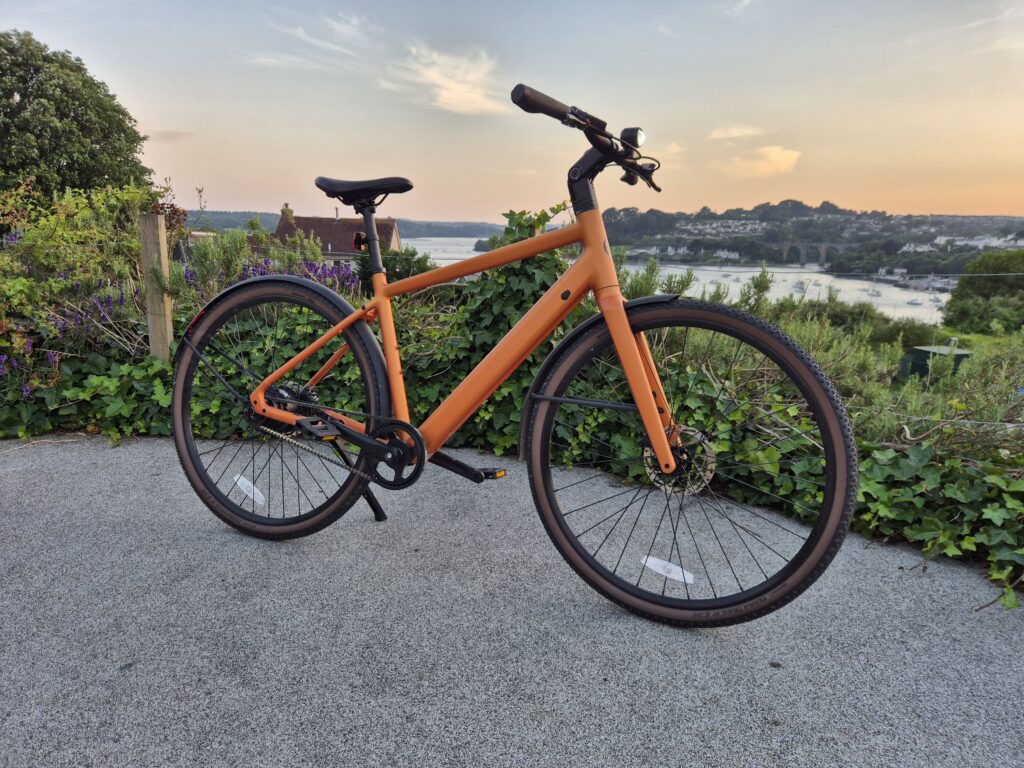
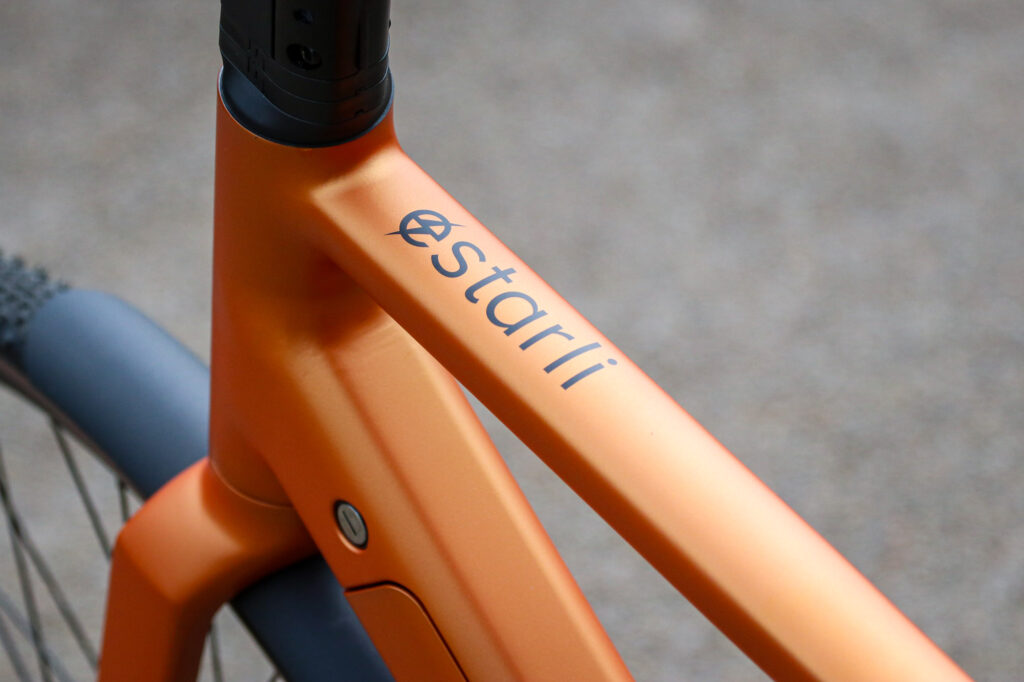
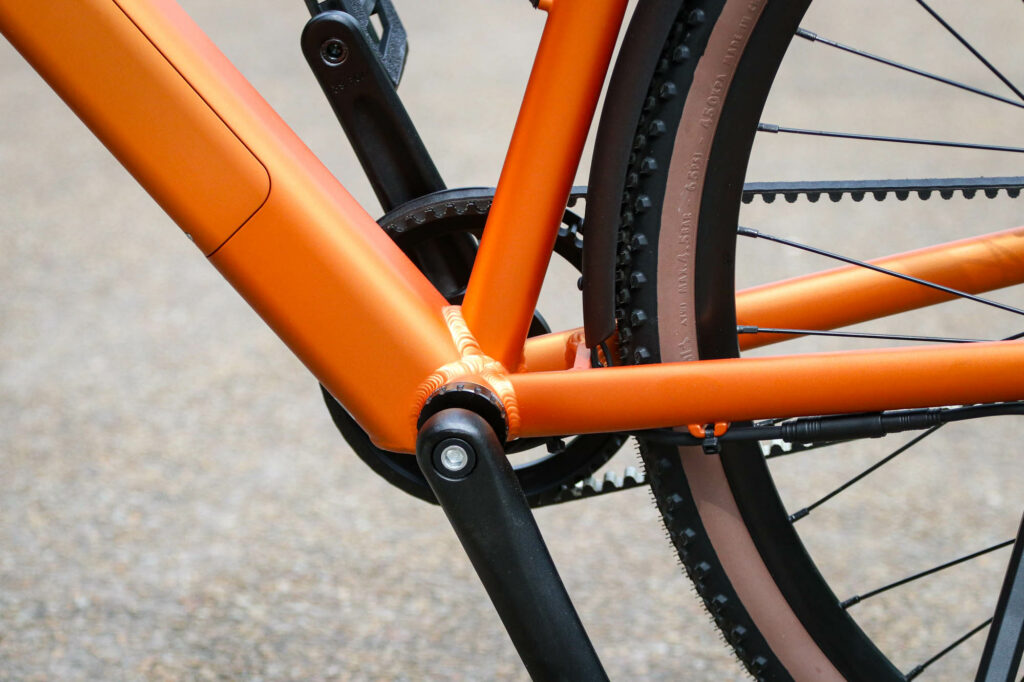
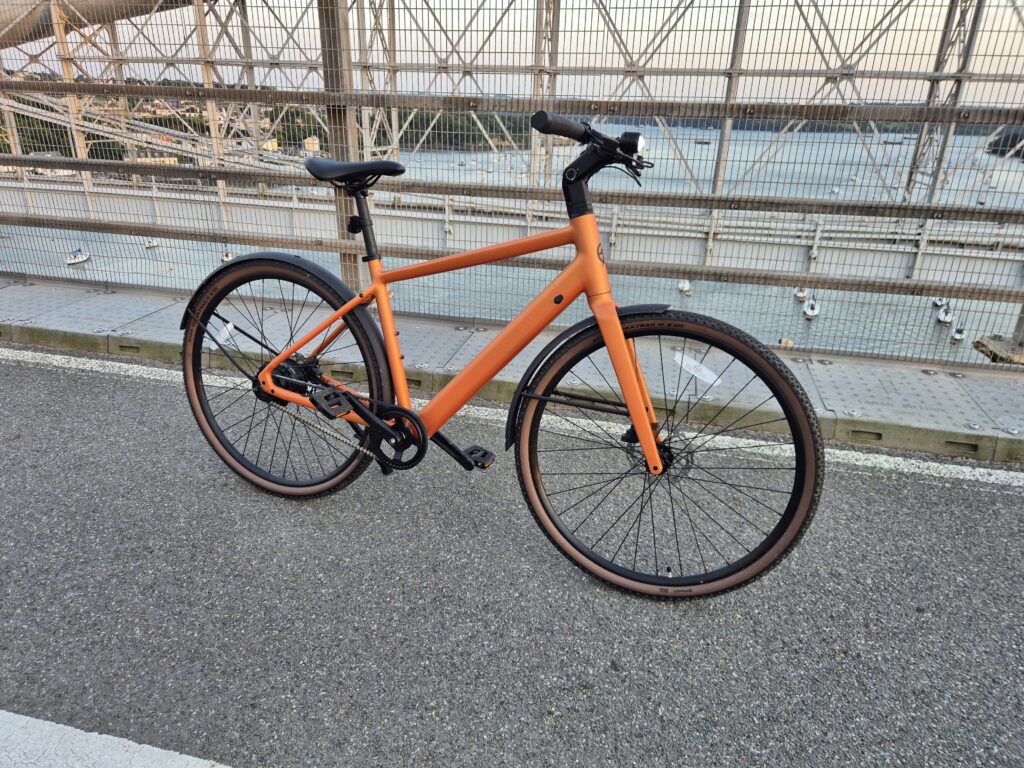
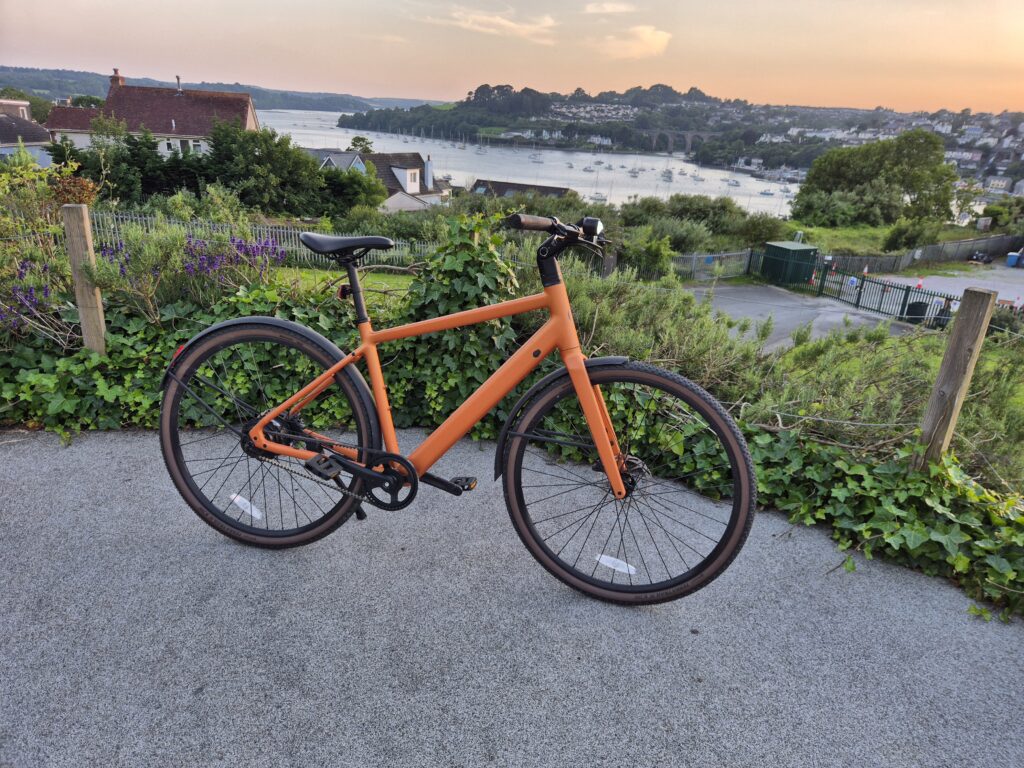
The test bike arrived in Bronze, although I’d describe the colour as more of a matt metallic orange. Straight away it made a good first impression. The finish is excellent, the frame looks clean and uncluttered thanks to the belt drive, and the wide, flat handlebars give it a purposeful, sporty appearance rather than the upright stance of a traditional Dutch-style commuter.
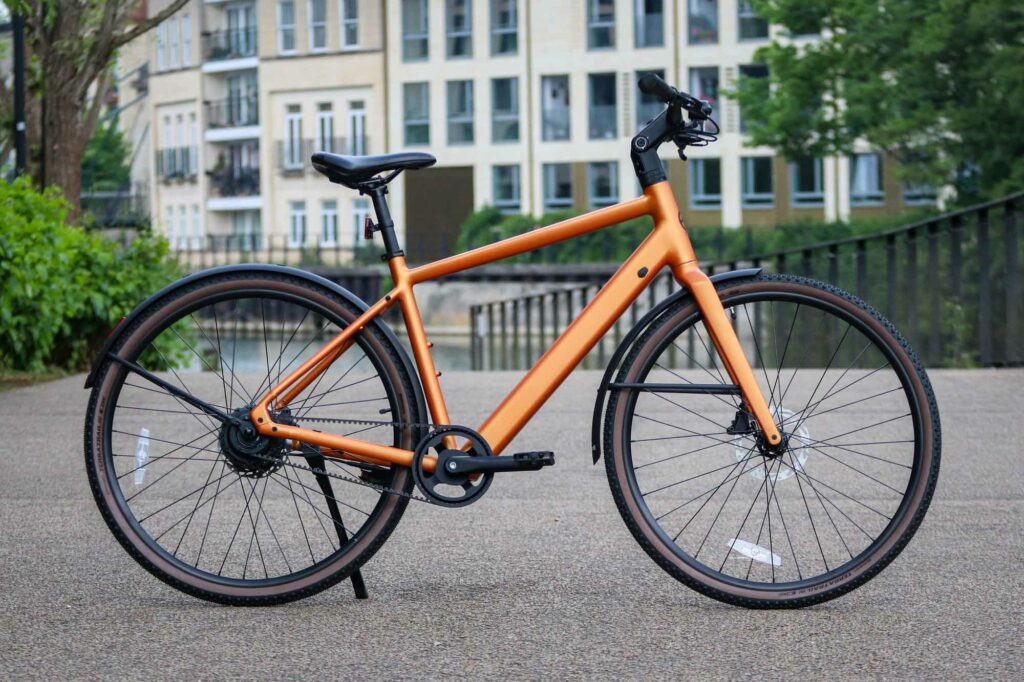
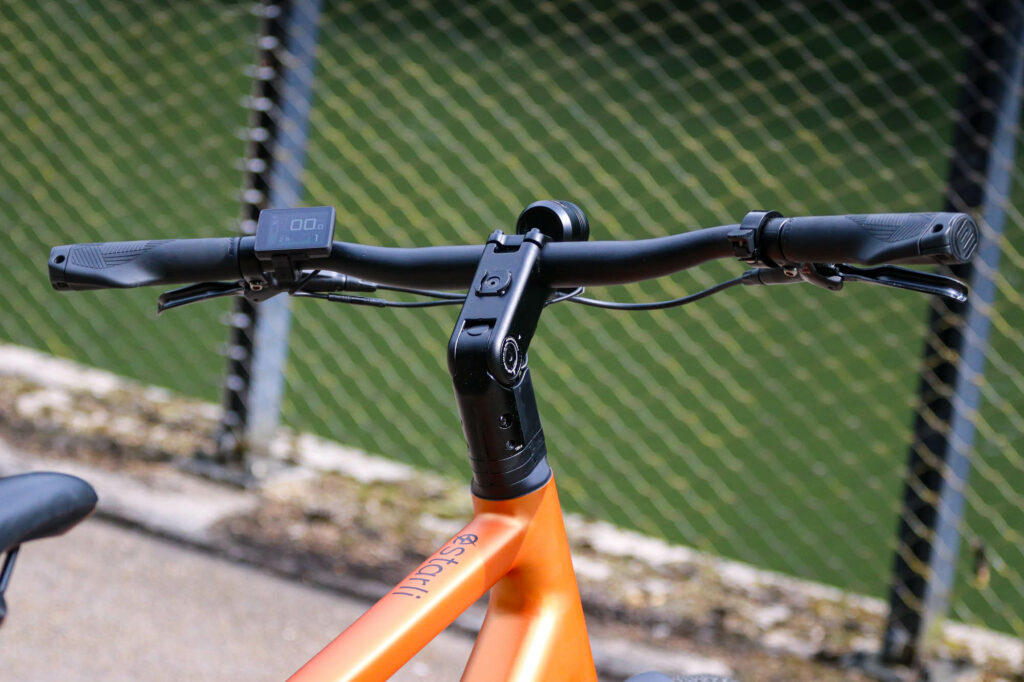
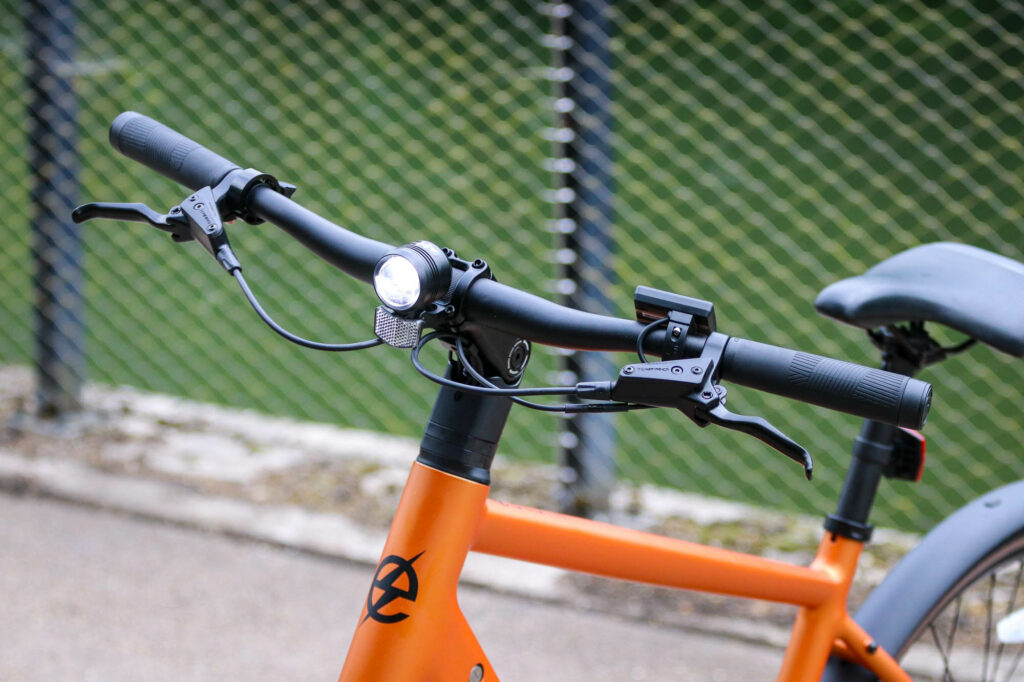
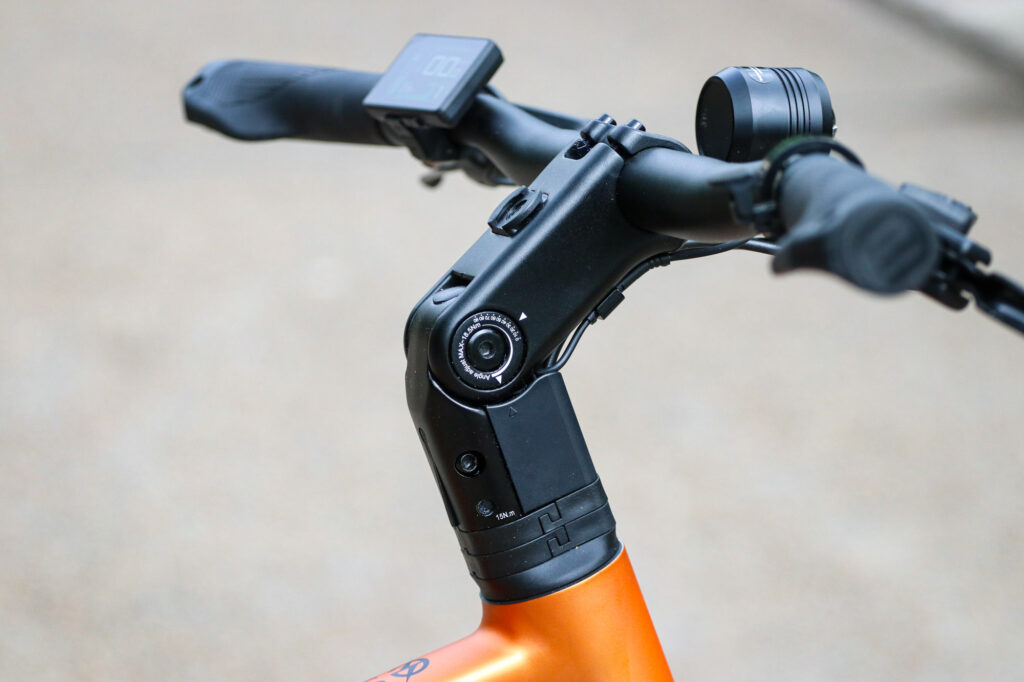
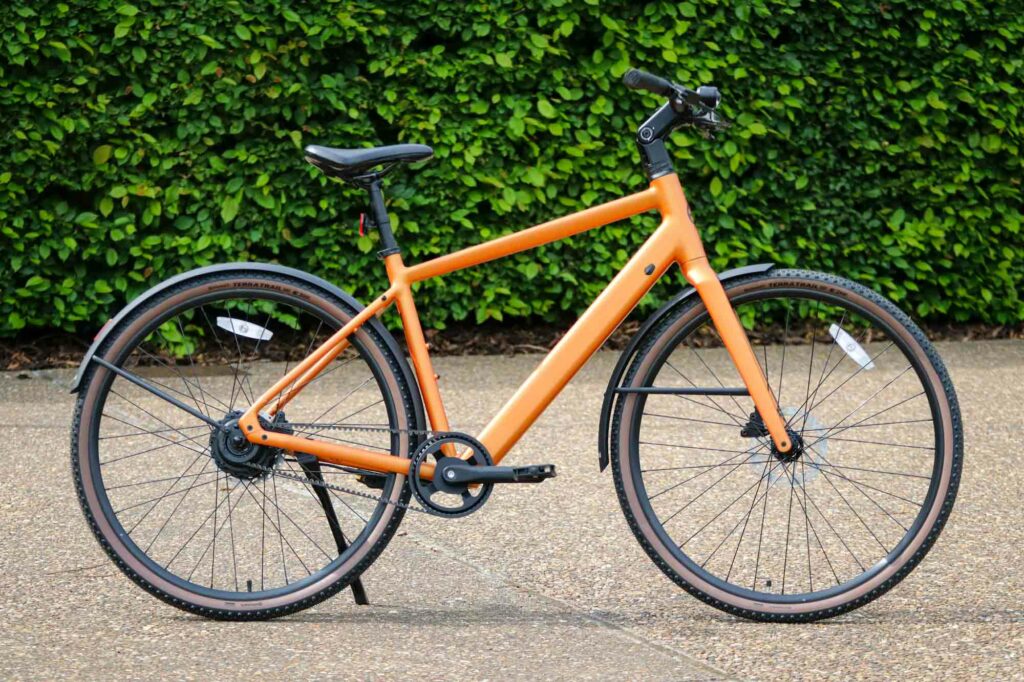
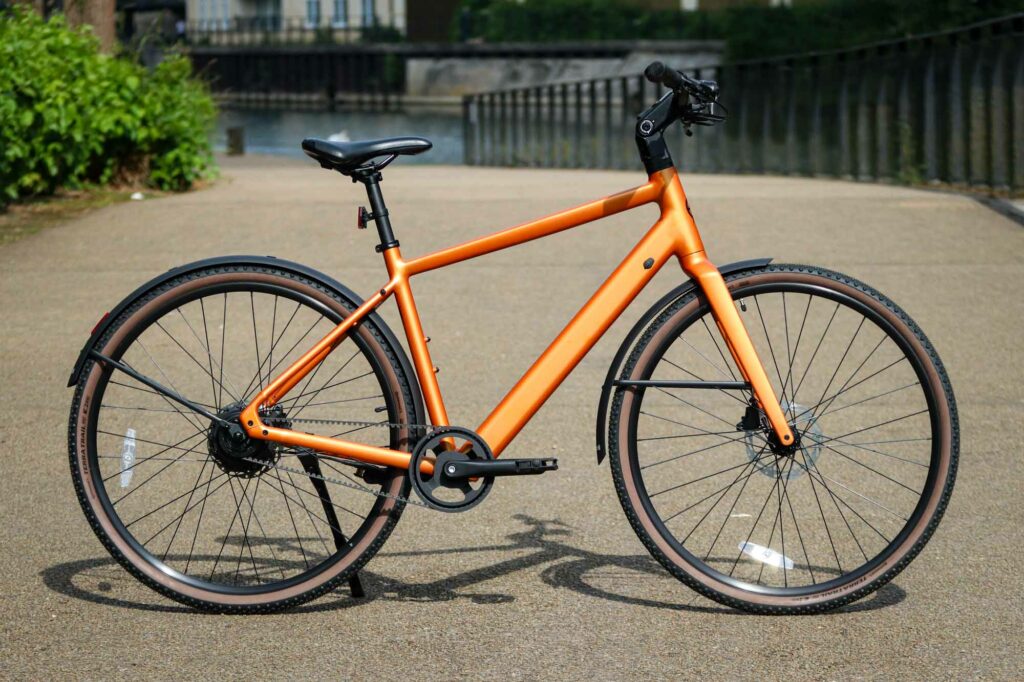
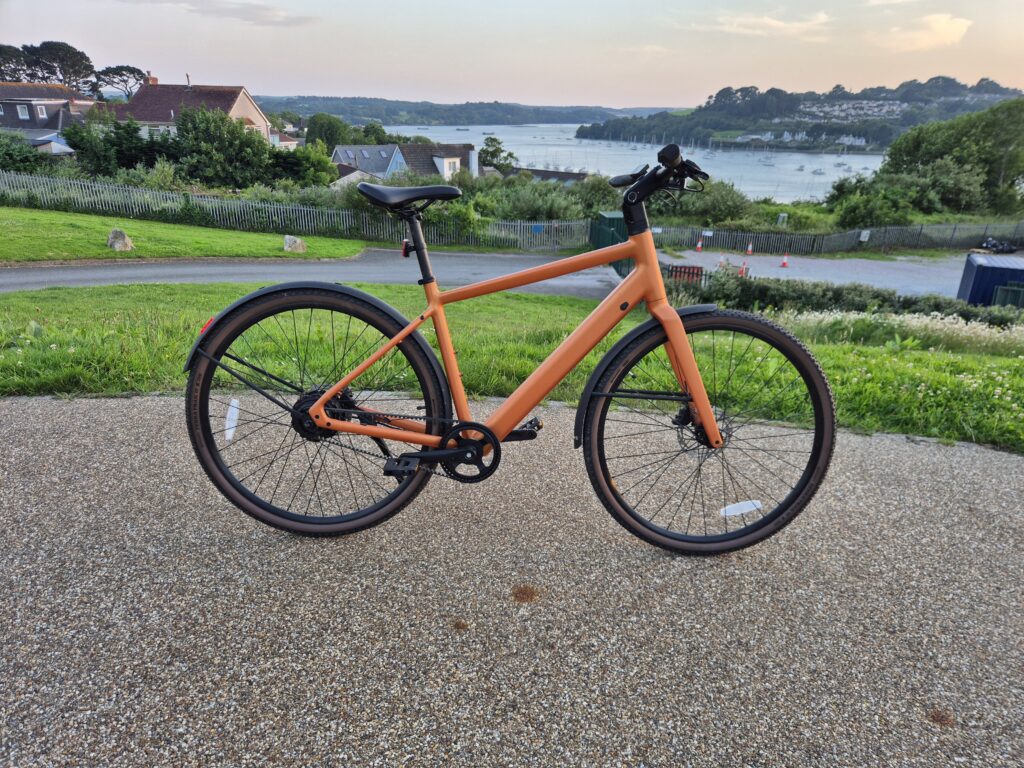
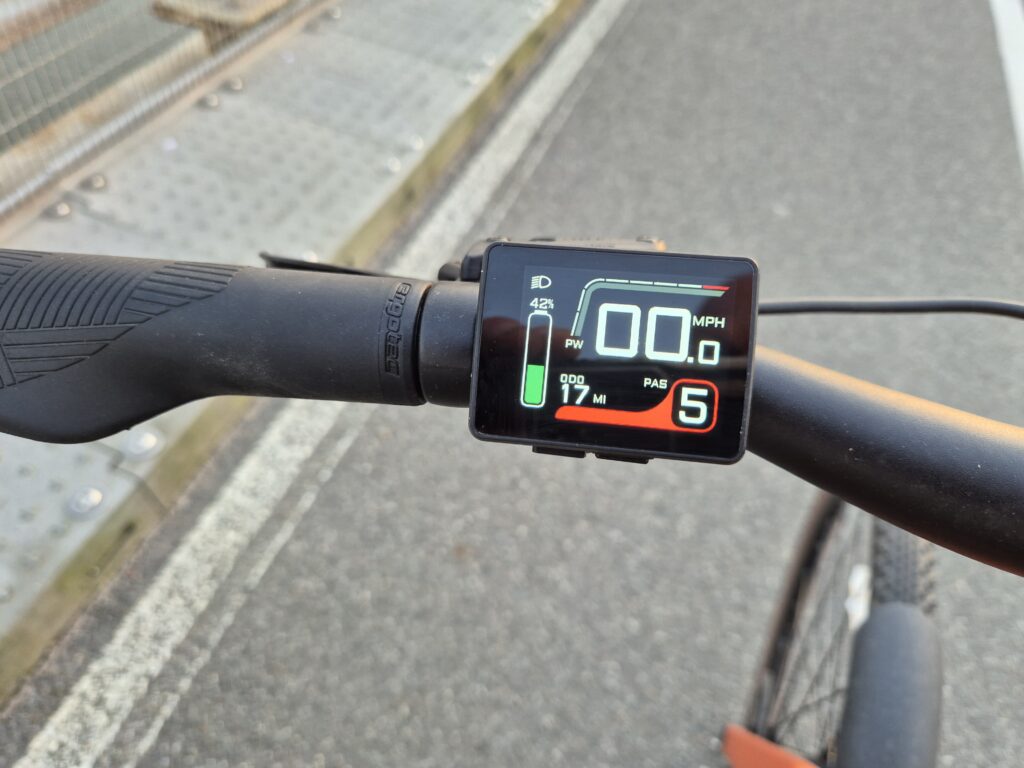
Selecting the middle assistance level, the first thing I noticed was just how refined the motor felt. Assistance arrived instantly from the first pedal stroke. The torque sensor responds naturally to your pedalling effort, and the motor itself is incredibly quiet; so quiet, in fact, that it’s barely perceptible once you’re moving.
Riding an automatic e-bike does take a little getting used to. My regular bike uses a conventional thumb shifter, and for the first ride my right thumb instinctively kept reaching for a gear lever that wasn’t there. Instead, the Bafang system quietly gets on with the job itself. The first shift happens quickly after setting off, with second gear arriving at around 8mph and third shortly afterwards at around 12.5mph.
Having ridden both previous generations of Bafang’s automatic hub, it’s immediately obvious this latest version is more refined. Gear changes are smoother than the original H700 and a noticeable step forward from the later H720 system I tested last year. Personally, I’d still prefer the shifts to happen slightly later, but that’s more a matter of riding style than a criticism of the bike. Riders who simply want to jump on and ride will probably appreciate not having to think about gear selection at all.
The one-mile route to my local supermarket climbs gently most of the way, but the estarli made light work of it. Even in the middle assistance mode there was ample power for the modest gradient, and I never felt the need to increase the power.
The return journey provided an equally useful test. With around 10 kg of shopping on my back, I expected the bike to feel noticeably different, but in truth it carried the extra weight without complaint. The road back into town is slightly downhill, allowing speeds to creep up. The estarli had no trouble keeping pace with the flow of traffic, spending much of the ride above 15.5mph electric assist limit.
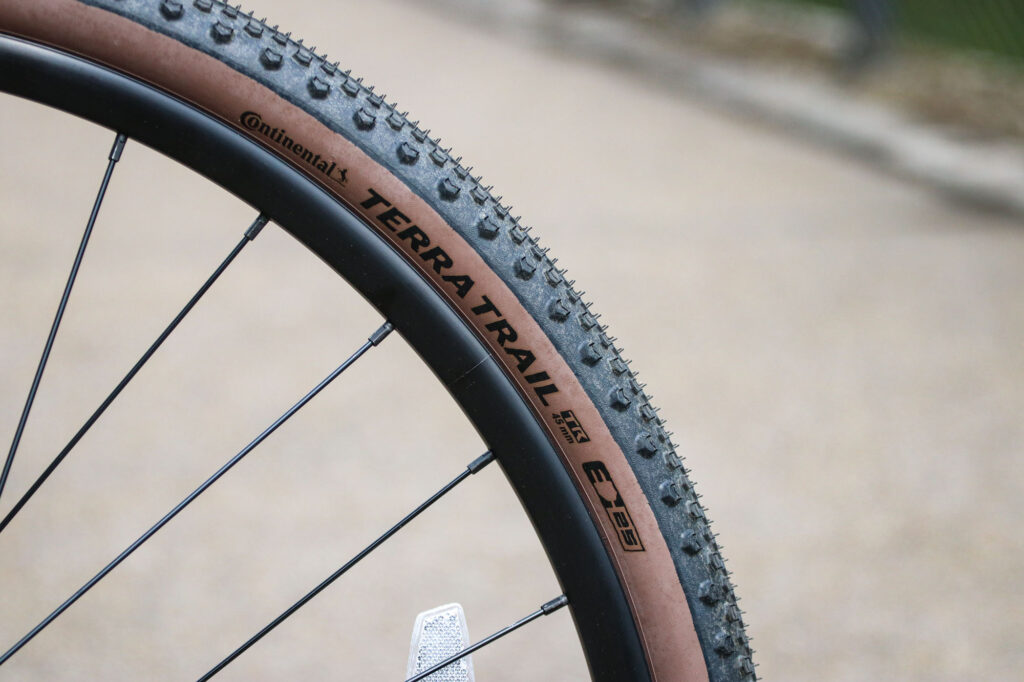
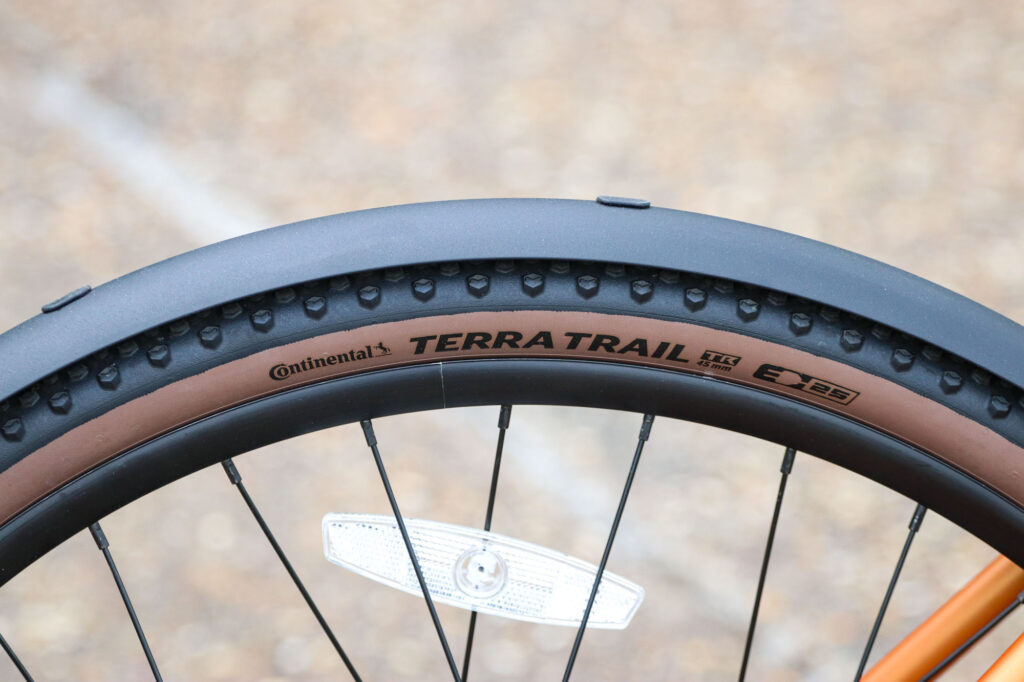
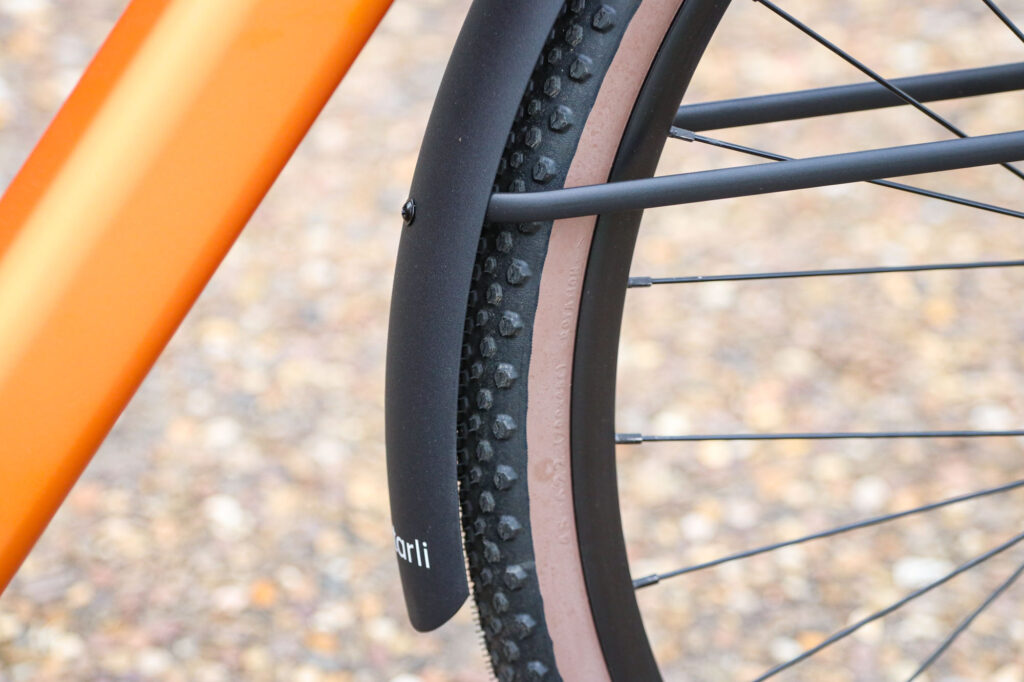
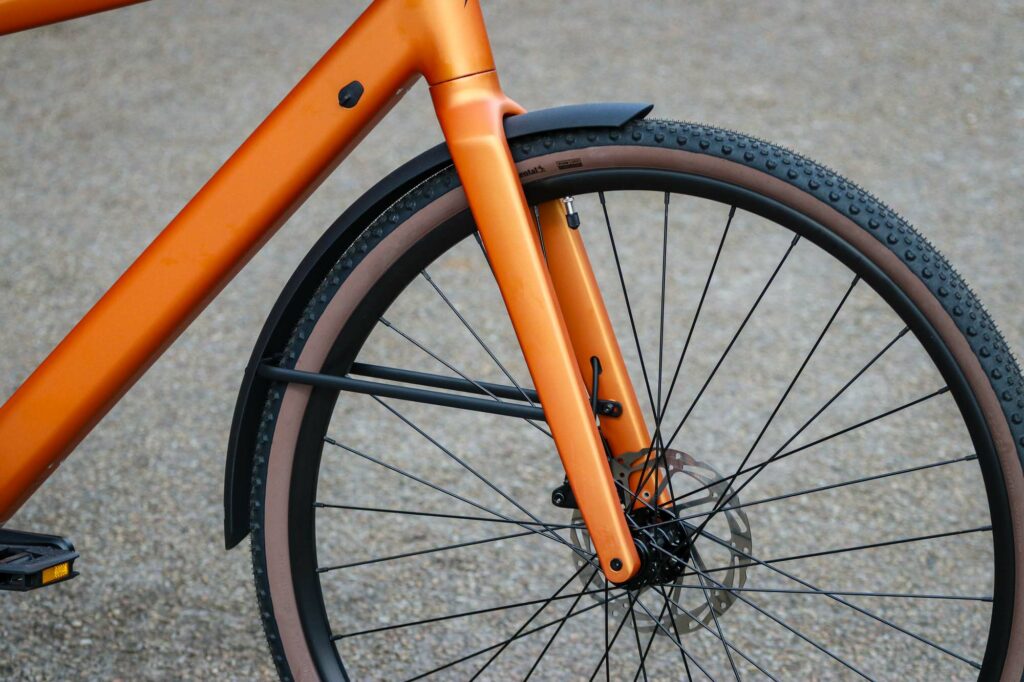
One thing that stood out straight away was the handling. The combination of the wide handlebars and generously sized Continental tyres gives the bike a planted, confidence-inspiring feel. Tight turns over the local footbridge, hopping kerbs and weaving through town all felt completely natural, and despite the extra shopping on my back, the estarli remained stable and predictable throughout.
Although it was only a short outing, my first impressions were positive. The e28.X has a sprightly, playful character that’s difficult not to enjoy. It feels responsive, eager to change direction and perfectly suited to the sort of stop-start riding most urban riders experience every day.
My only minor criticism after that first ride was it felt under-geared once speeds crept above the electric assist limit. By the time I reached around 20 mph, my cadence was very high, and I couldn’t help feeling the ratios could be spread a little wider. It’s a relatively minor quibble, and one that will matter more to experienced cyclists than everyday commuters, but it’s worth mentioning nonetheless. There’s a lower cadence option (with a 48T drive ring instead of 42T) which might have suited me better.
estarli e28.X – Daily Riding
Over the following three weeks, the estarli quickly settled into its role as my daily hack. Rather than taking it out for dedicated test rides, I used it exactly as most owners would, like popping to the shops, collecting the occasional takeaway and running local errands.
Without gears to think about, or a chain to lubricate, riding the estarli becomes almost effortless. After a couple of days, I stopped thinking about the automatic gears altogether and simply jumped on it and rode. The belt drive remained completely silent throughout the test period, even during the occasional summer shower, and the whole drivetrain felt very refined.
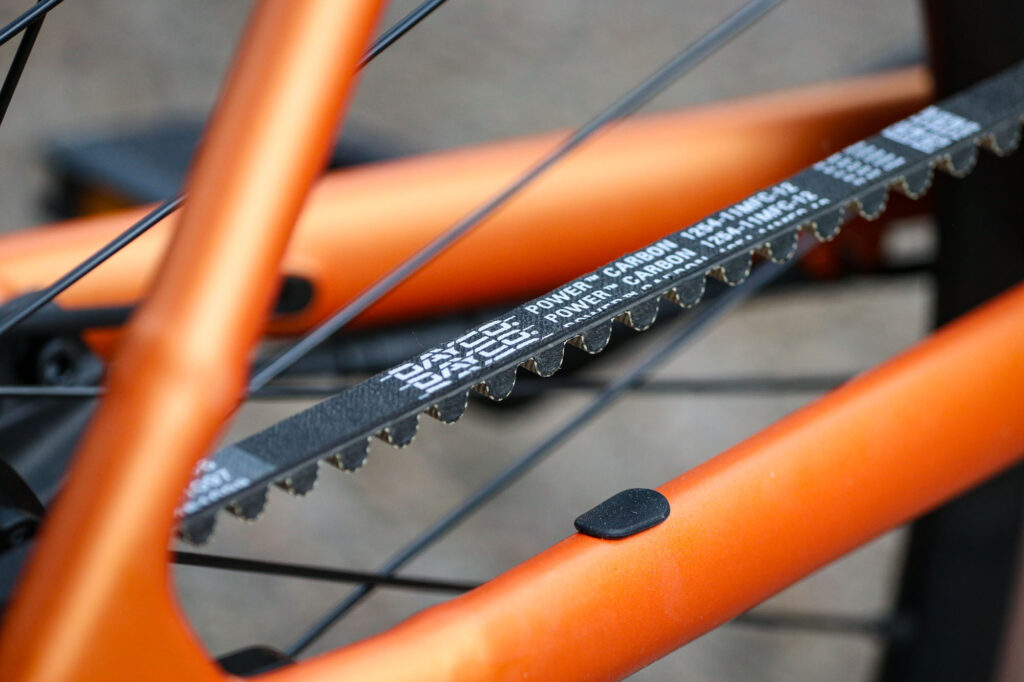
I’ve ridden several Gates belt-driven bikes over the years and, in terms of noise and smoothness, I honestly couldn’t distinguish the Dayco system fitted to the estarli. Long-term durability is something only time will tell, but given Dayco’s reputation for manufacturing automotive timing belts, I’d be surprised if many owners ever needed to replace it during normal use.
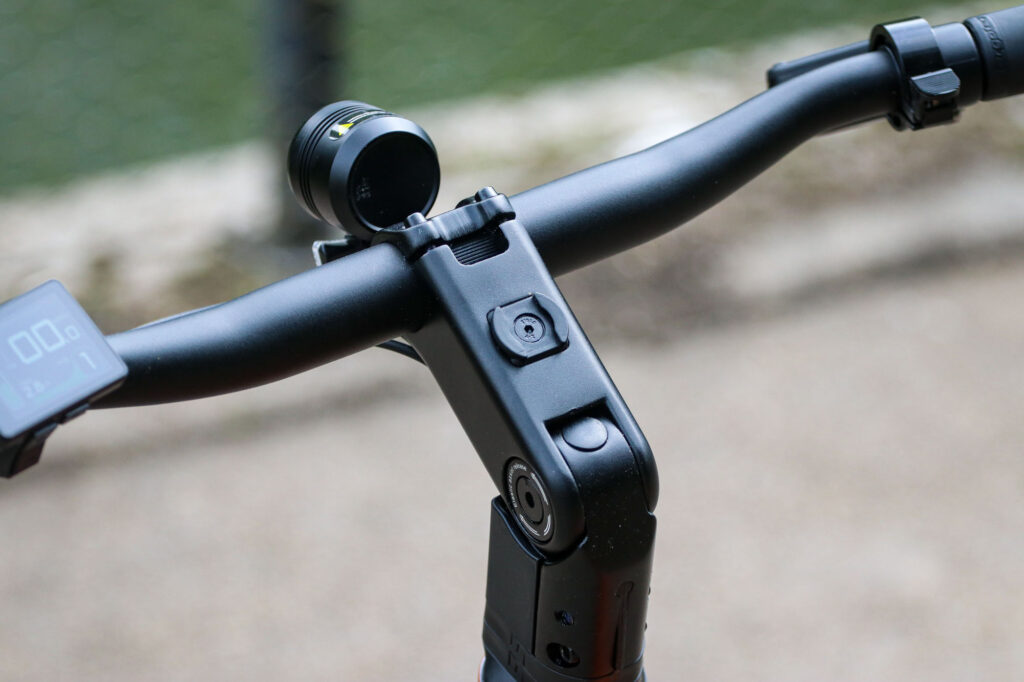
Comfort also proved to be one of the bike’s strong points. Aluminium-framed bikes can sometimes feel harsh on British roads, but the estarli was surprisingly forgiving. The large Continental tyres absorbed much of the vibration from potholes and rough tarmac, while the riding position struck a pleasing balance between sporty and relaxed. Although the handlebars on my test bike were the flat mountain bike-style option, the adjustable stem makes it easy to tailor the reach and height to suit different riders.
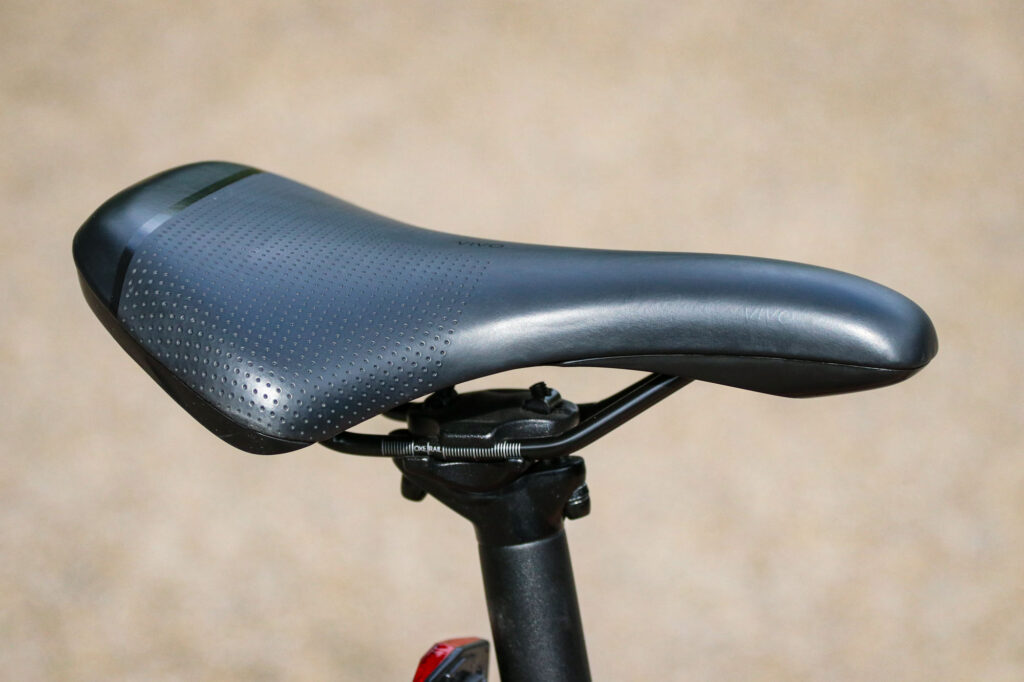
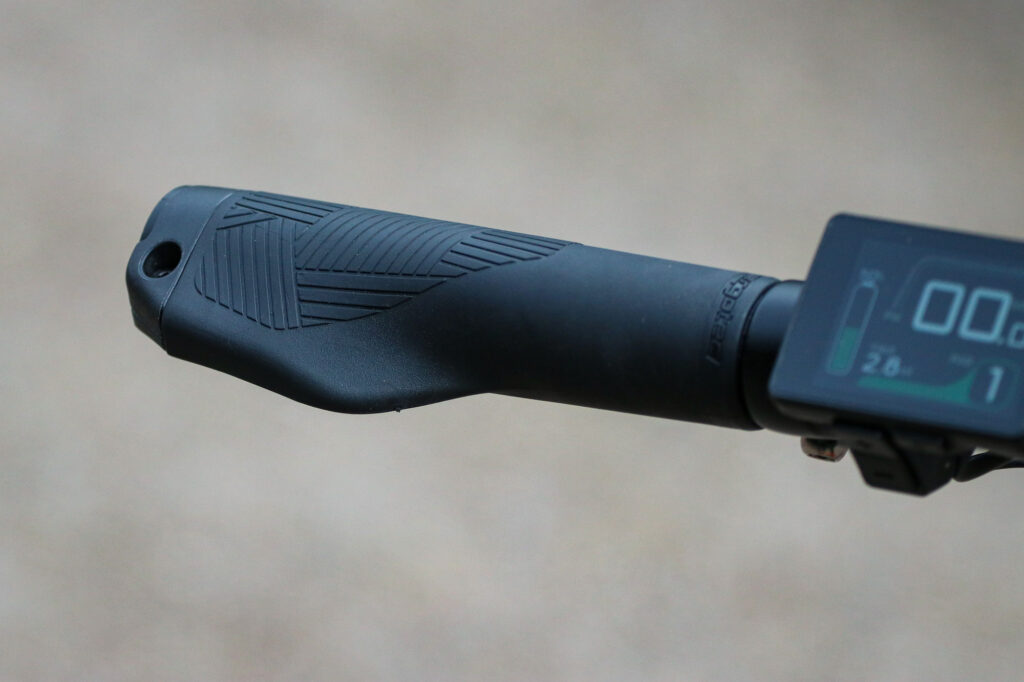
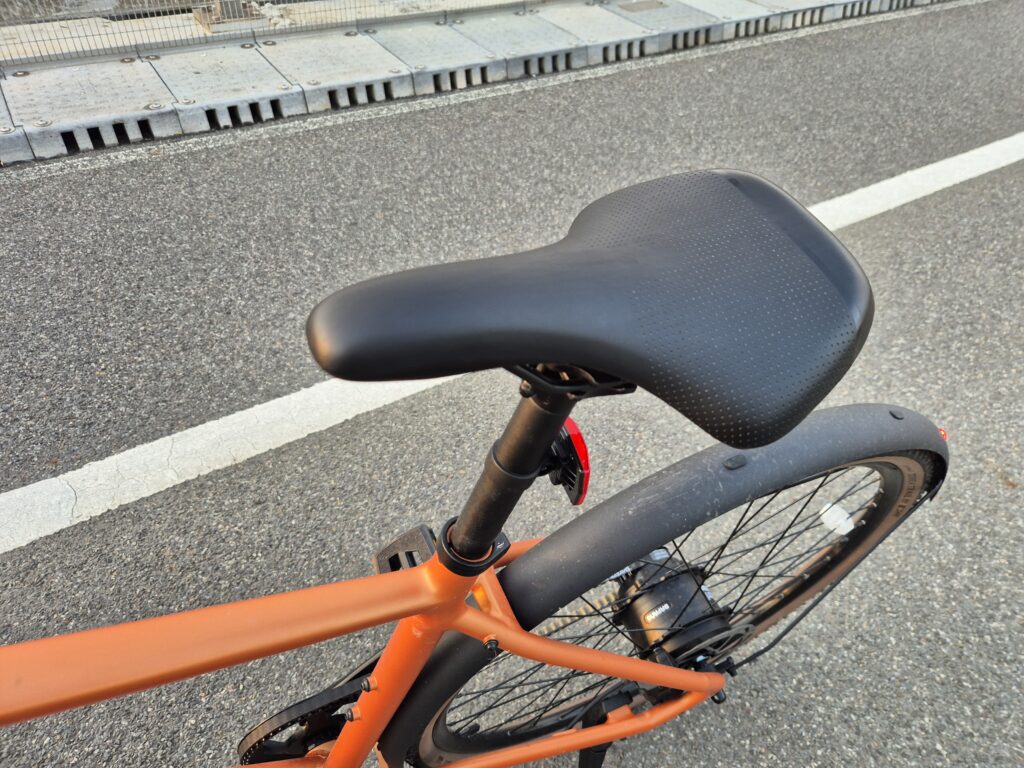
The saddle is certainly more performance-oriented than the broad, heavily padded seats often found on city bikes, but I found it pleasantly comfortable. Even after longer rides, I never experienced soreness or discomfort, and the ergonomic grips with their palm support helped reduce fatigue on rougher roads.
Build quality also impressed. The matt bronze finish continued to look excellent despite daily use; there were no annoying rattles, and the wheels remained perfectly true despite regular kerb hopping, potholes and the occasional detour onto gravel tracks.
Although the majority of my riding consisted of shorter journeys, I did manage one longer outing along the Plym Valley Trail, following National Cycle Route 27 towards Yelverton on the edge of Dartmoor. It proved to be the perfect environment for the estarli.
The route climbs gently for around eight miles before levelling out, and I quickly discovered that level three was the bike’s sweet spot. The electric assist felt natural and well matched to the terrain, allowing me to settle into a comfortable rhythm without draining the battery unnecessarily. The wide tyres coped confidently with the occasional rough patches, and by the time I arrived in Yelverton I felt as fresh as when I’d left home.
The complete ride covered just under 30 miles, and I returned with one battery bar remaining. Considering the modest 360 Wh battery capacity and using the middle assist setting throughout, this is a respectable range for a battery of this size.
estarli e28.X – Hill Climbing
Living in Cornwall is both a blessing and a curse when testing e-bikes. It’s a great place to ride, but the relentless hills quickly expose any weaknesses in a bike’s motor or gearing.
It’s also worth remembering that the estarli isn’t trying to be an all-round touring e-bike. It’s marketed primarily as a lightweight urban commuter, and for that role its performance is perfectly judged. On moderate gradients up to around 8%, the motor coped just fine and never felt underpowered. Even longer climbs were easily managed in the middle power mode.
Once the gradients climbed into double figures, however, the limitations of the three-speed hub became more noticeable.
My town has several short climbs exceeding 20%, so I tried the estarli on one of these and quickly reached the limits of the motor and gearing. I found myself having to stand on the pedals, zig-zagging up the hill as I tried to maintain enough momentum to get to the top, by which time I was pretty knackered.
Hill climbing also highlights a quirk of Bafang’s system. Because gear changes are triggered mechanically by road speed rather than electronics, you need to be mindful of how quickly you’re climbing. If your speed creeps above the shift point, the hub changes into the next gear, which can upset your rhythm on steeper hills. Once you understand how the system behaves, it’s easy enough to adapt your riding style, but riders coming from conventional gearing will notice the difference.
Would I choose the estarli for riding somewhere really hilly like Cornwall? Probably not. For flatter towns and cities, though, it’s more than capable.
estarli e28.X – Specification
The estarli e28.X is available as either a step-through or crossbar frame and offers several options to tailor the bike to your riding style. Buyers can choose between Bafang’s two- or three-speed hub, standard or lower cadence gearing, wide, flat handlebars as fitted to the test bike, or swept-back Dutch bars for a more upright and relaxed riding position
Suspension is also optional. My test bike used the standard rigid aluminium fork, although estarli also offer a suspension fork for an additional £120. There’s also the option of a suspension seatpost, although at £245 I’d probably put that money towards other accessories unless maximum comfort is your priority.
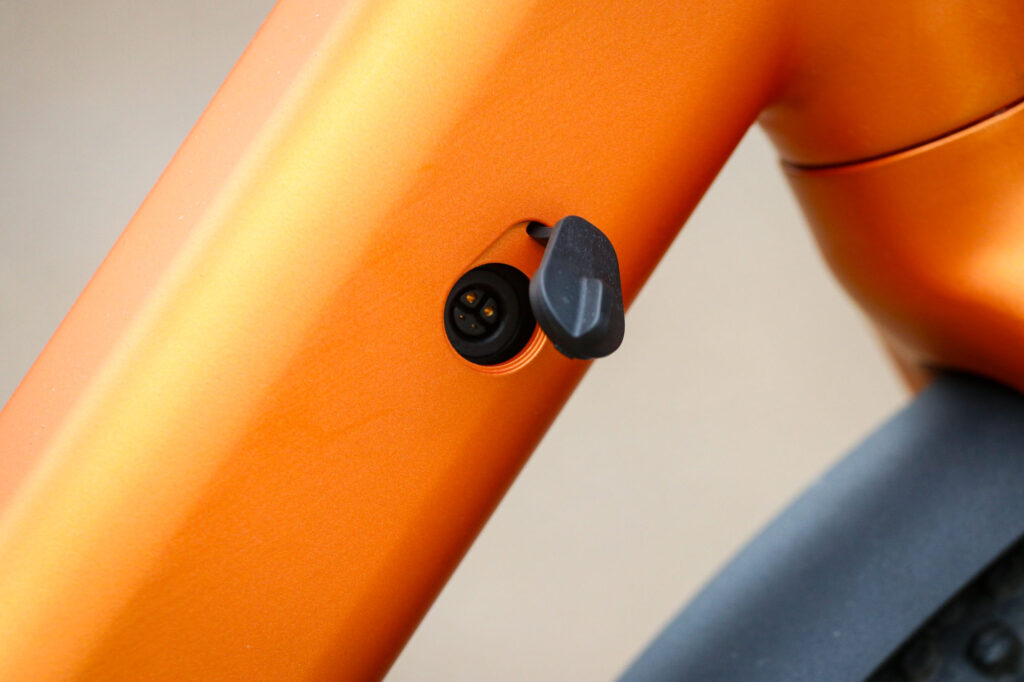
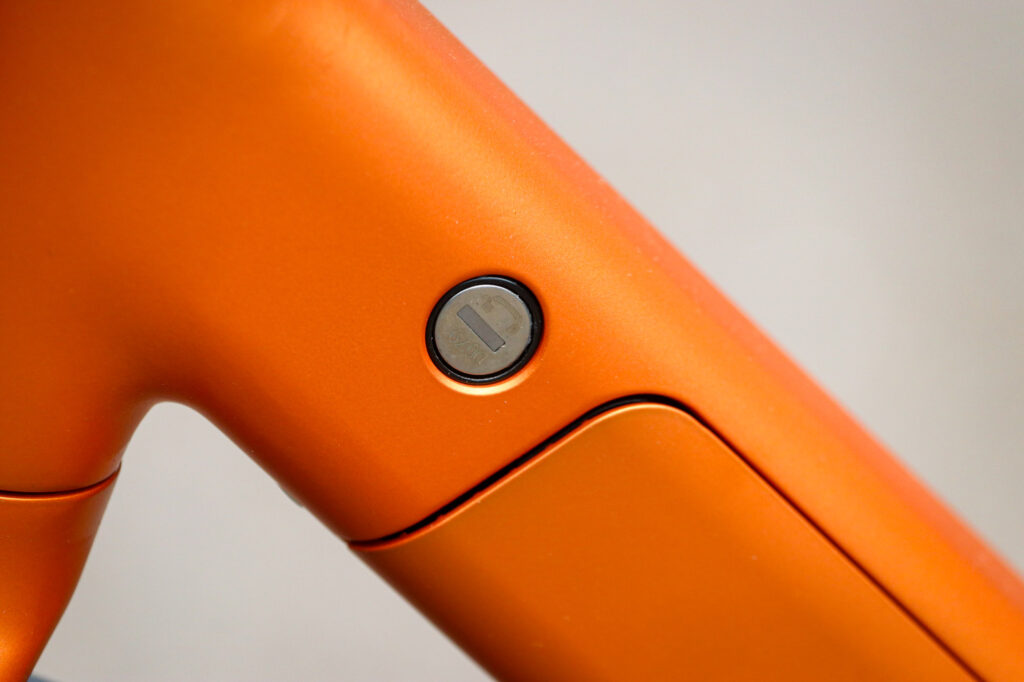
Power comes from a 250W Bafang rear hub motor producing 50 Nm of torque, paired with a 360 Wh Samsung battery that can be removed for indoor charging. It’s a modest capacity by modern standards, but is well matched to the bike’s intended purpose and helps keep the overall weight down to around 19.5kg with the battery installed.
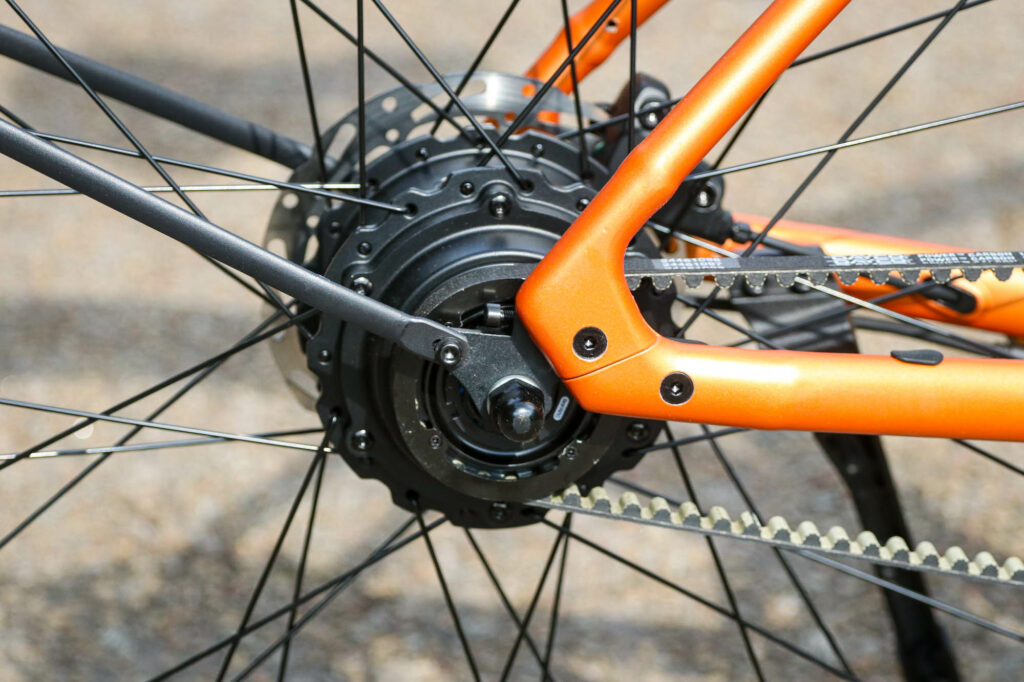
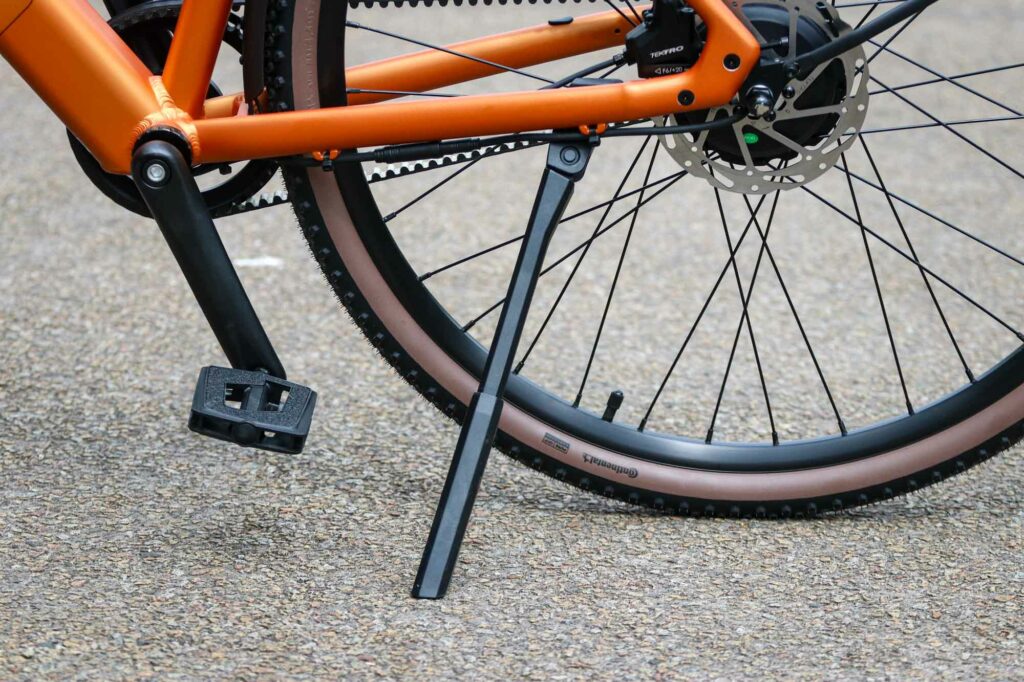
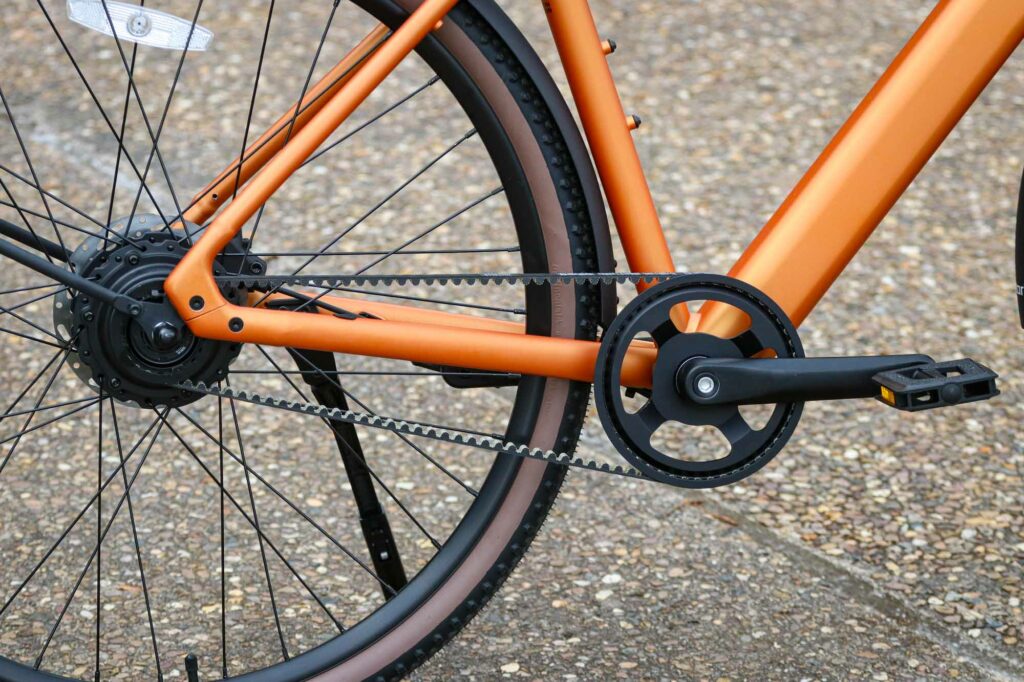
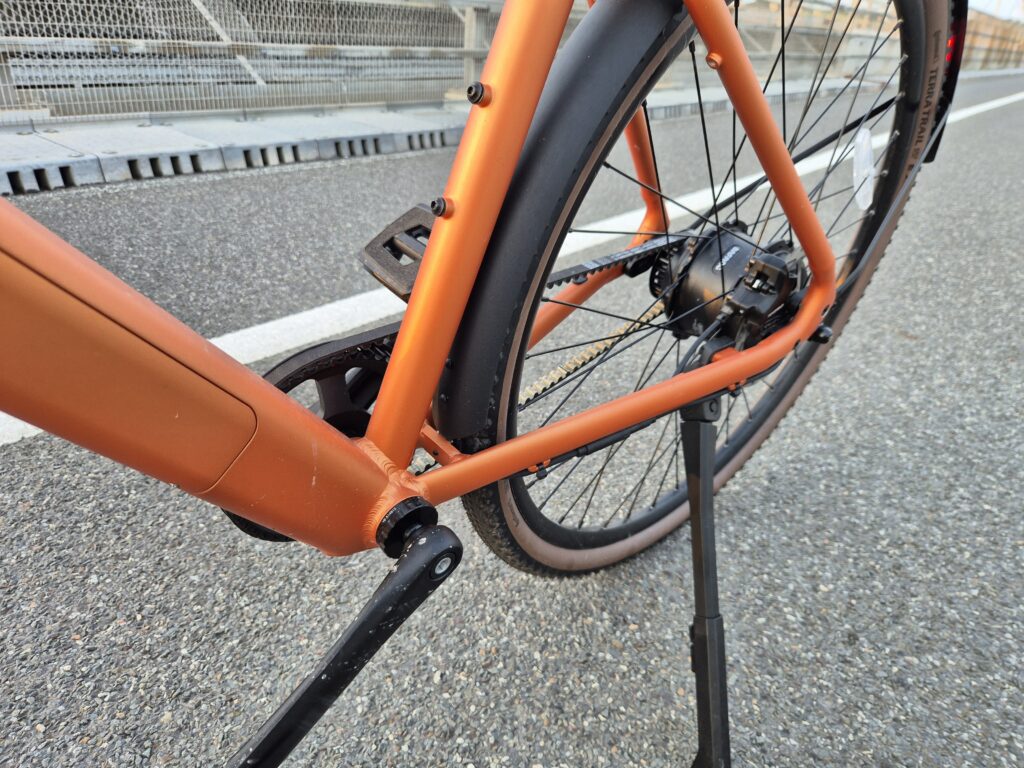
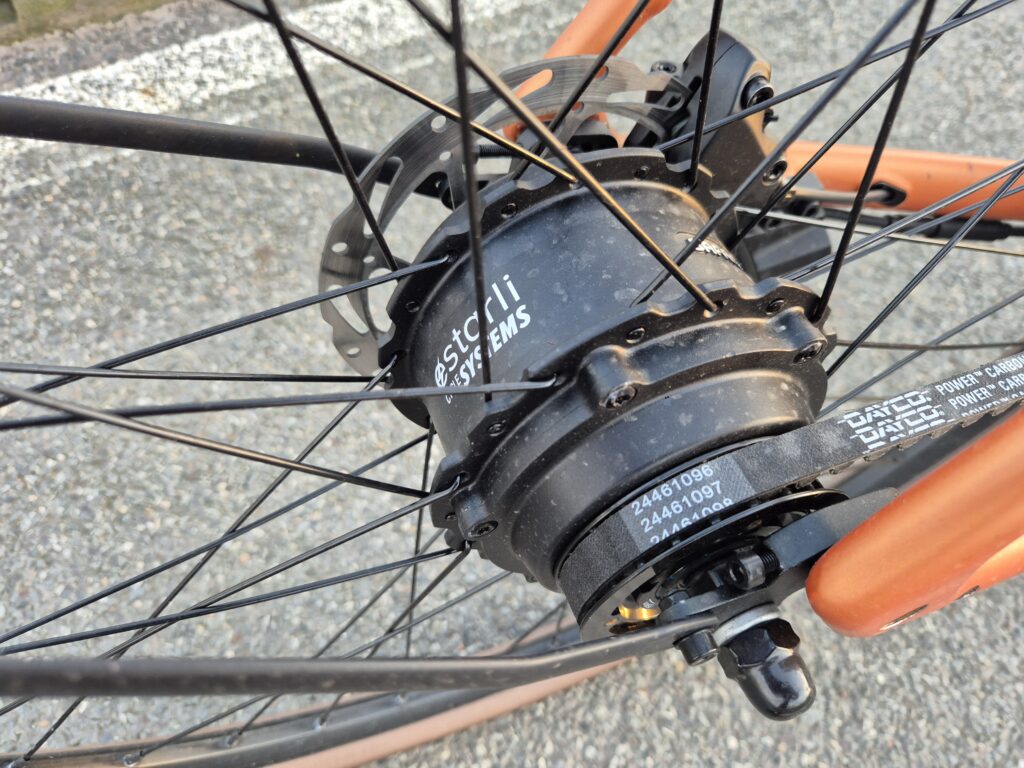
One of the estarli’s biggest selling points is the Dayco carbon belt drive. Most riders will be familiar with Gates belts, but Dayco are hardly newcomers to belt technology, producing timing belts for the automotive industry for decades. During the test period, the system was completely silent, required no maintenance and remained spotless regardless of the weather.
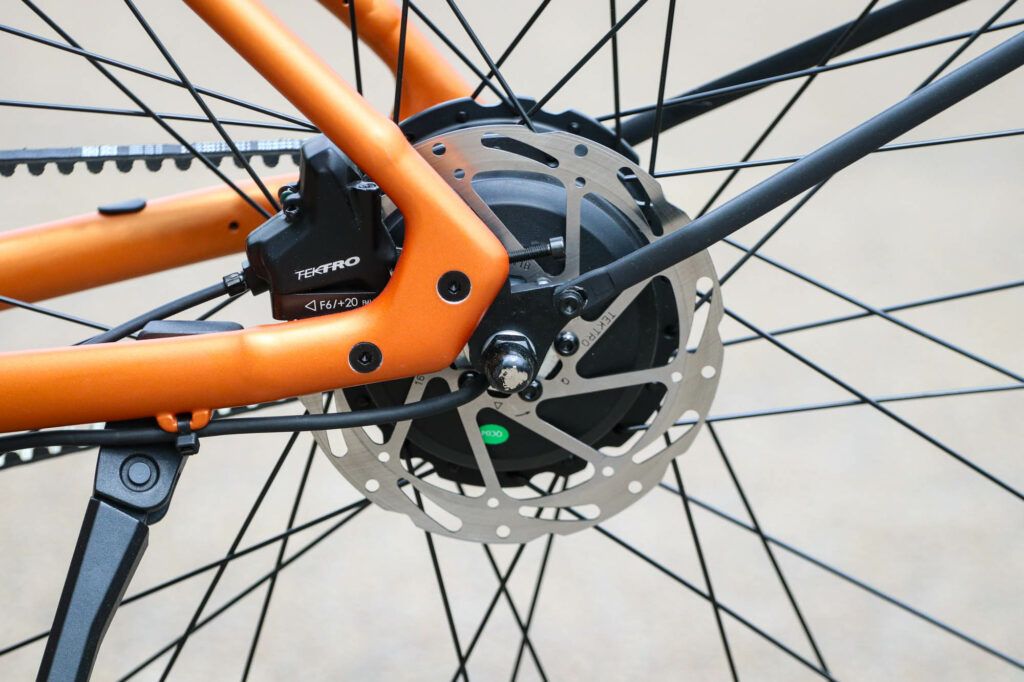
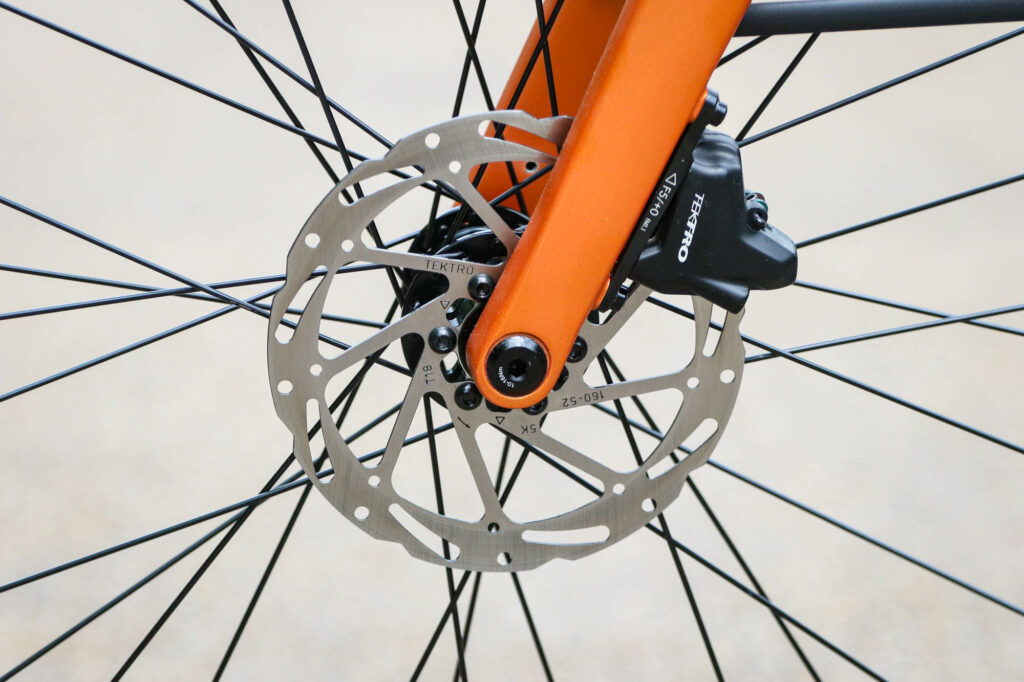
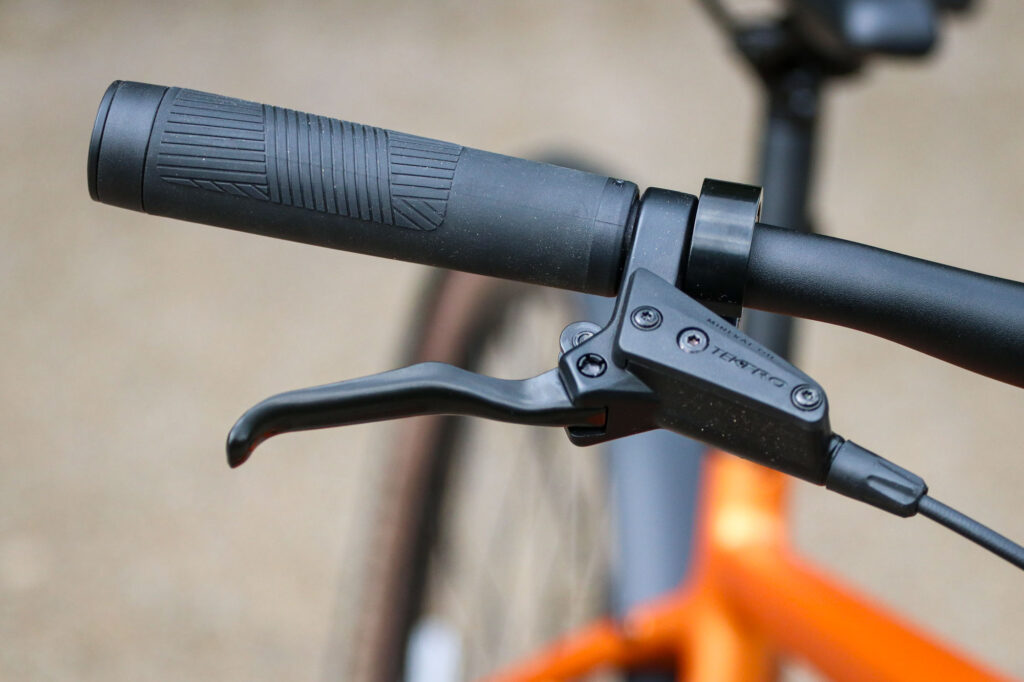
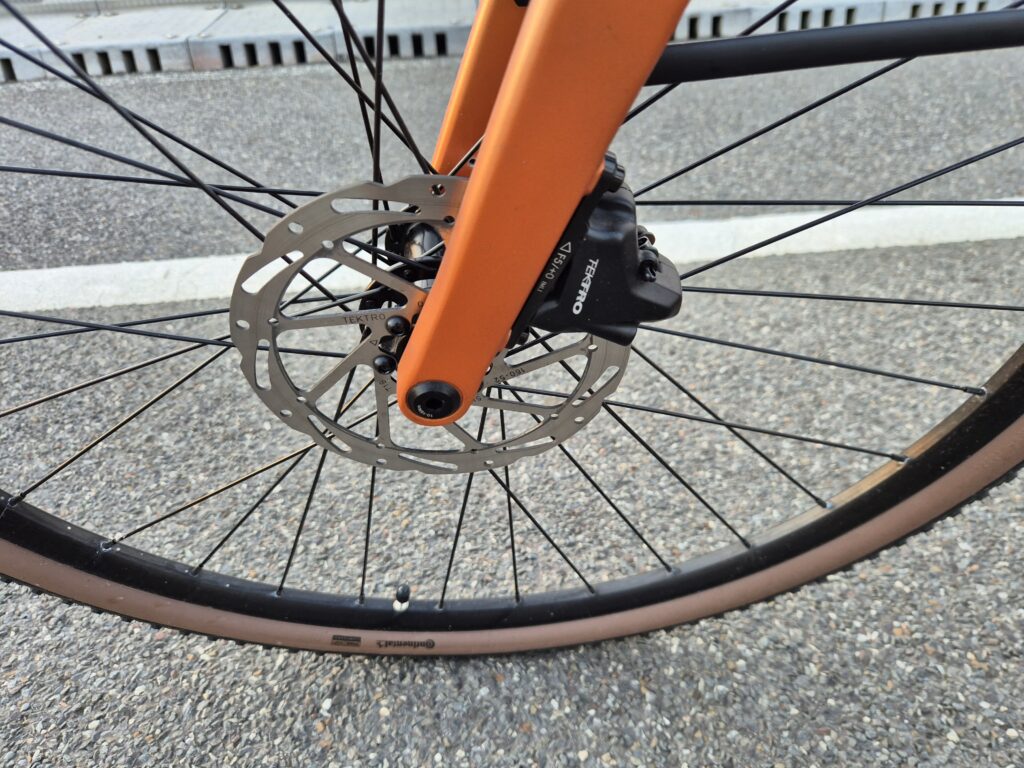
Stopping power comes courtesy of Tektro hydraulic disc brakes, which performed well throughout the test period. They offered plenty of power with good modulation, allowing gentle speed control around town while remaining reassuring on faster descents.
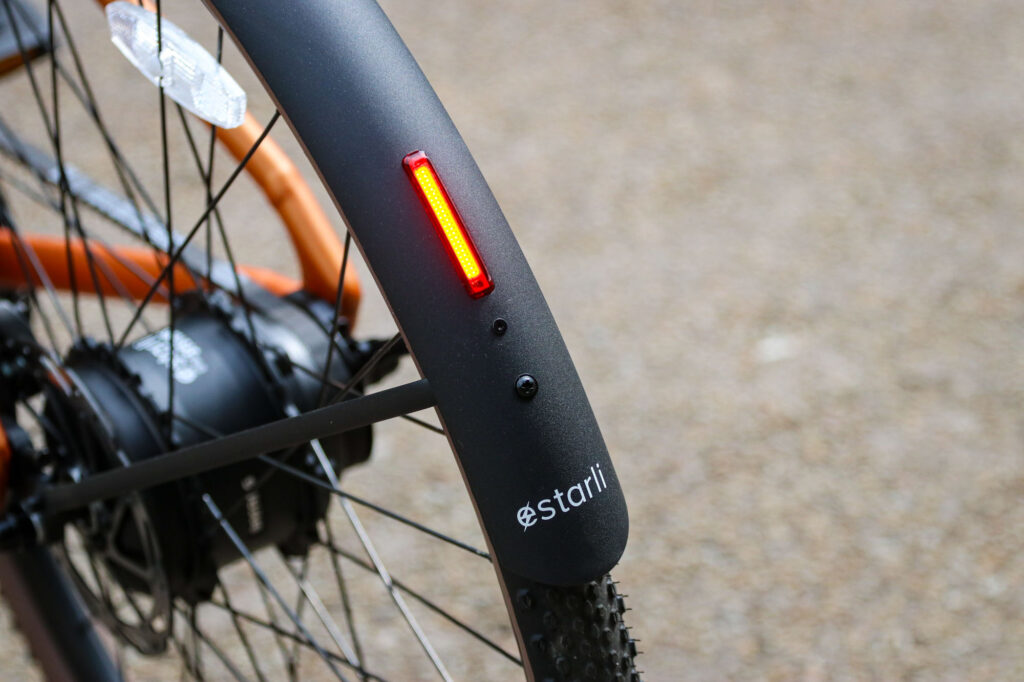
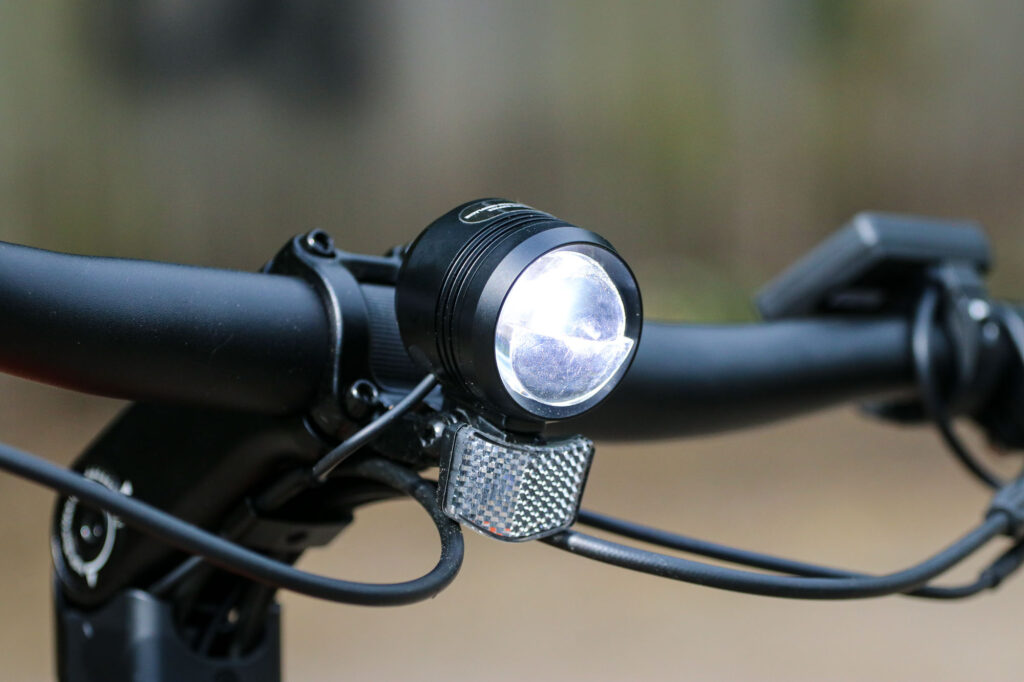
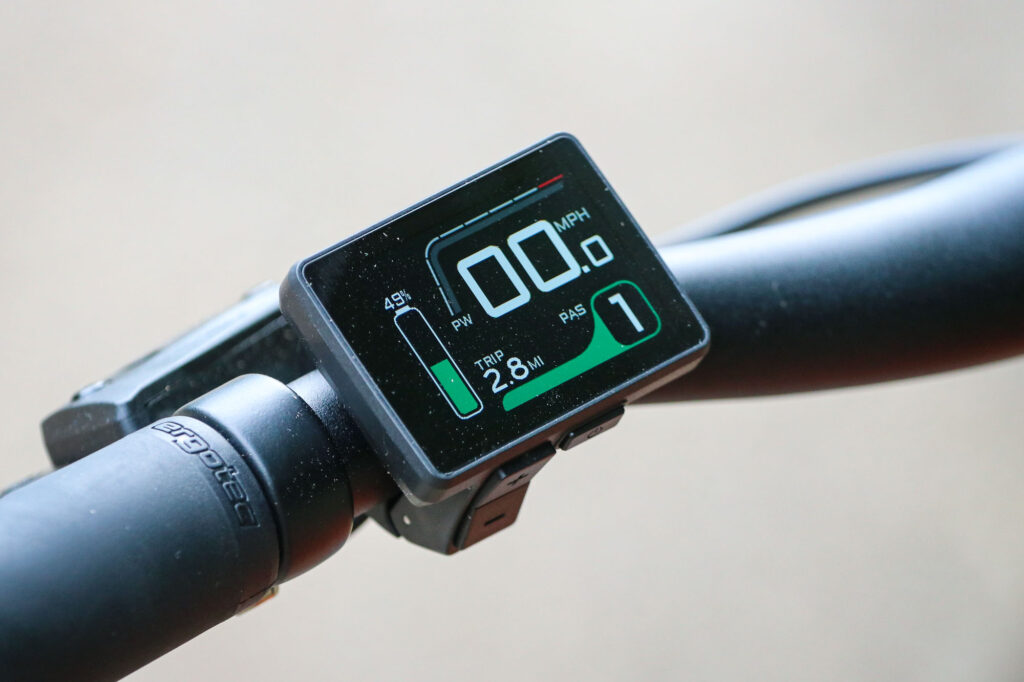
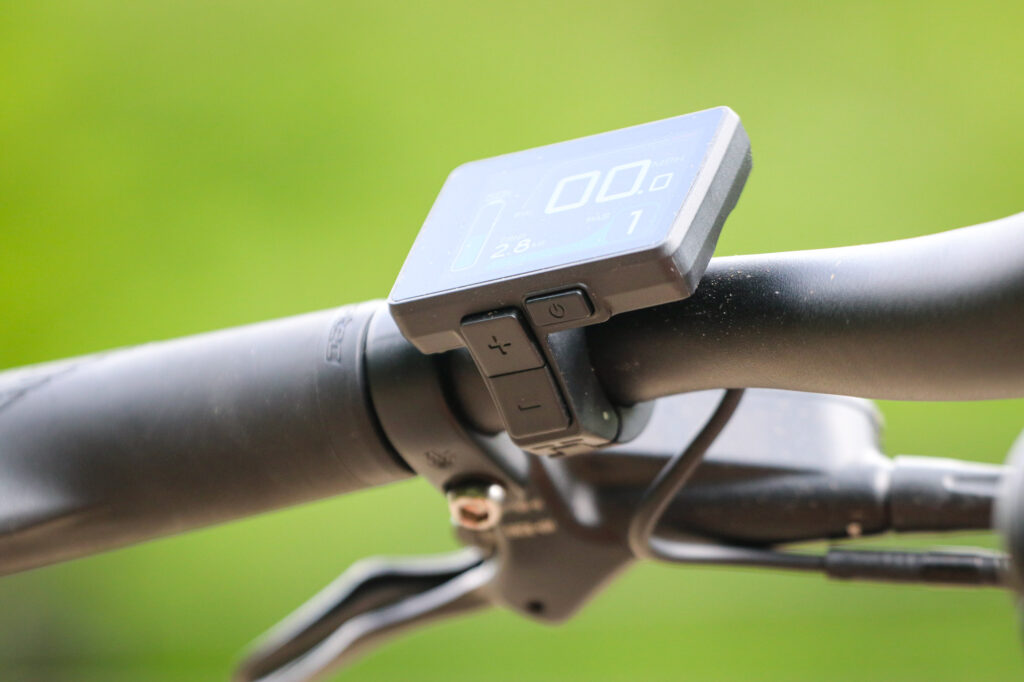
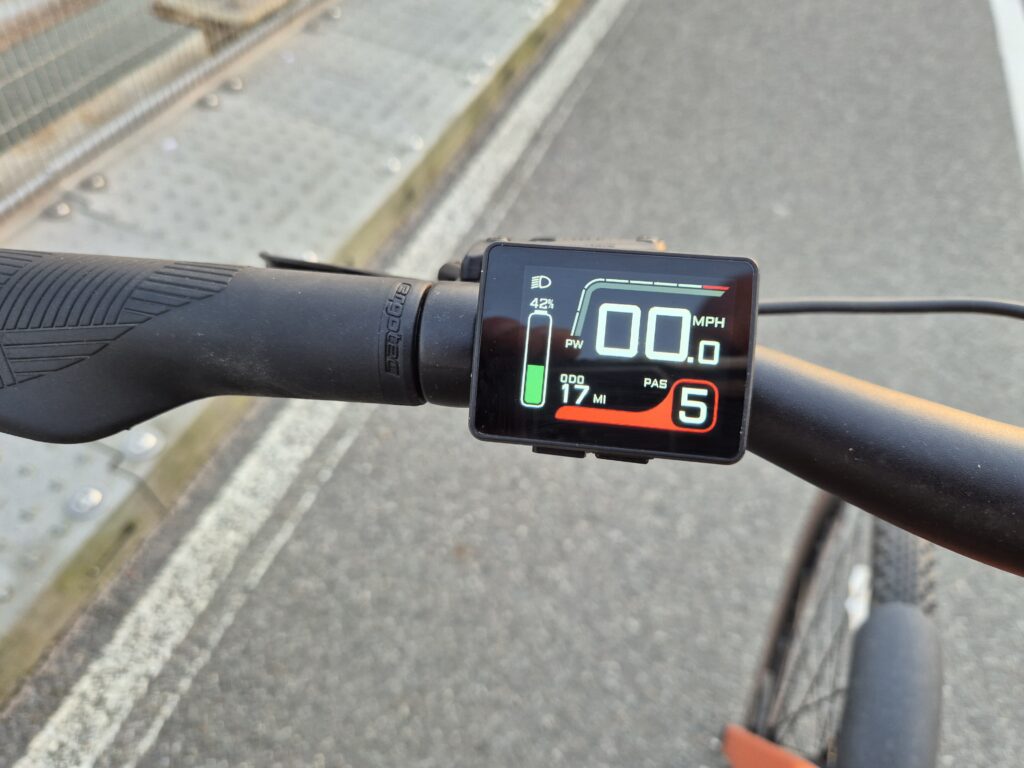
The colour display is bright, easy to read and positioned neatly beside the left-hand grip, where the controls are within easy reach. It has basic functionality, but gives all the information needed, such as speed, 1-5 assist levels, motor power output and battery level. Integrated front and rear lights come fitted as standard, with the rear light neatly incorporated into the mudguard. The front light is perfectly adequate for riding around town, although I’d still want something more powerful for regular riding along dark country lanes.
Mudguards, a sturdy kickstand and mounts for an optional rear rack complete the package, making the estarli ready for commuting straight out of the box.
The Bafang 3-speed automatic hub is undoubtedly the star of the show, and it’s what separates the estarli from the majority of similarly priced e-bikes on the market. There are no electronic actuators controlling the shifts. The system relies entirely on centrifugal weights and springs inside the hub. As road speed increases, these weights move outwards under centrifugal force, automatically selecting the next gear. Slow down approaching a junction or climb, and the gearbox quietly shifts back down again.
Working alongside the torque sensor, the system creates a simple riding experience. The torque sensor constantly measures how much force you’re applying to the pedals, delivering assistance in proportion to your effort, while the automatic hub takes care of the gearing in the background.
Compared with the original H700 system I tested several years ago, there’s a big improvement. The early version felt clunky and a little agricultural. The later H720 was a noticeable step forward, but this latest three-speed hub is the smoothest version yet.
It’s still not perfect. Personally, I’d prefer the shifts to happen slightly later, particularly when riding quickly, and on steeper climbs you need to be aware of the automatic change points. Once you adapt your riding style, though, it becomes second nature.
For many riders, particularly those using an e-bike purely for transport, the simplicity is likely to outweigh any minor compromises. There’s no need to think about gears, no cables to adjust and no derailleur hanging below the rear axle waiting to be damaged. You simply pedal and let the bike do the rest.
estarli e28.X – Pricing and Alternatives
The estarli e28.X as tested costs £1,945, with various accessories available during the ordering process. Buyers can choose from Bronze, Pistachio, Cobalt Blue and Midnight Blue, along with several handlebar, gearing and suspension options.
We’ve tested several other e-bikes using Bafang’s automatic hub system over the past couple of years.
The latest ADO Air 20 Ultra uses the same three-speed automatic motor and impressed our reviewer Dave with its smooth ride quality and excellent value. Priced at £1,499, it’s a folding bike with 20-inch wheels that’s well suited to commuters short on storage space.
Alex recently reviewed the ADO Air 30 Ultra, which uses the older two-speed Bafang hub. Despite lacking the refinement of the latest three-speed system, it still delivered an enjoyable ride and represents good value at £1,799.
I tested the Eovolt Afternoon Pro at the end of 2024. It featured the updated H720 2-speed system, and while it was noticeably smoother than the original H700, it still doesn’t quite match the refinement of the latest motor fitted to the estarli, plus it costs substantially more at £2995.
estarli e28.X – Conclusion
Over three weeks of daily use, the estarli proved reliable, comfortable and genuinely enjoyable. I quickly warmed to the fact that you just switch it on and ride, and it made everyday errands more enjoyable and reminded me that using an e-bike daily doesn’t have to be complicated. If you’re looking for a lightweight, low-maintenance urban e-bike that simply gets on with the job, the estarli e28.X deserves a place on your shortlist.
Test Report
What does the manufacturer say about this product?:
The Estarli e28.X is a lightweight urban commuter e-bike designed to make everyday cycling as simple as possible. It combines Bafang’s automatic 3-speed rear hub motor with a maintenance-free Dayco carbon belt drive, eliminating the need for manual gear changes. Designed and assembled in Britain, the e28.X is available with a choice of frame styles, handlebars and suspension options, and comes equipped with integrated lights, mudguards and hydraulic disc brakes. Estarli says the latest 3-speed drivetrain offers smoother hill climbing, a more relaxed cadence and an intuitive “get on and go” riding experience while keeping the bike under 20kg.
Tell us some more about the technical aspects of this product:
Power comes from a 250W Bafang rear hub motor producing up to 50Nm of torque, paired with a torque sensor and 360Wh Samsung battery. The Bafang automatic 3-speed gearbox shifts mechanically using centrifugal weights inside the hub, removing the need for gear levers or electronic actuators. Drive is transferred via a low-maintenance Dayco carbon belt, while stopping is handled by Tektro hydraulic disc brakes. The e28.X weighs approximately 19.4kg in 3-speed guise and is supplied with integrated lighting, mudguards, kickstand and provision for an optional rear rack. Buyers can choose between step-through or crossbar frames, flat or Dutch-style handlebars, plus optional front suspension and suspension seatpost.
Did you enjoy using the product? Yes
Would you consider buying the product?
No – not suitable for the very steep hills in my area
Would you recommend the product to a friend?
Yes,if they lived in a flattish town or city
Use this box to explain your overall score
The Estarli e28.X is a well-designed urban commuter. It’s enjoyable to ride, well equipped and built to a high standard. It isn’t ideally suited to very steep terrain, but for commuting, shopping trips and everyday riding it’s one of the most user-friendly e-bikes I’ve tested.
About the tester
Age: 57 Height: 182cm Weight: 106kg
I usually ride: Road/gravel My best bike is: Pinarello Monviso
I’ve been riding for: Over 20 years I ride: Most days I would class myself as: Experienced
I regularly do the following types of riding: Gravel riding, commuting, fitness riding, leisure riding