



The government says it wants 60 per cent of all children to cycle, walk, or wheel to school by 2035, as part of a new active travel strategy which aims to install 5,000 new safe routes and 10,000 crossings in the next four years, while focusing on “everyday travel needs” that do not divide cyclists and motorists into separate categories.
The government’s new Cycling and Walking Investment Strategy – the first to be published under the current Labour administration – is set to be formally unveiled tonight at 10pm. Details of the document, however, were reported on Thursday morning by the Guardian’s Peter Walker, who revealed that the government has promised an active travel spend of £4.5bn over the next five years.
That investment marks a significant rise from the £3.78bn earmarked for active travel by Boris Johnson’s Conservative government in 2022, the last time the UK’s cycling and walking strategy was refreshed.
The 2022 strategy aimed to increase the percentage of short journeys in towns and cities that are walked or cycled to 50 per cent in 2030 and to 55 per cent in 2035, by delivering a “world-class cycling and walking network” in England by 2040.
However, the Johnson-era strategy was criticised by Cycling UK for presenting “a glaring mismatch between the increases in cycling and walking the Department for Transport is aiming to achieve, and the funding available for doing so”.
> Government knew it wasn’t investing enough in cycling, according to new document
Nevertheless, the 55 per cent target for short urban active travel journeys outlined by Johnson’s government remains intact in Labour’s new strategy. However, it has been modified slightly to simply include some form of active travel as part of these short journeys. Essentially, that means if someone combines active travel with another mode of transport, such as the train, their journey still counts towards the 55 per cent target.
The strategy also outlines Labour’s plans to build 5,000 new cycling, walking, and wheeling routes in England by 2030, as well as 10,000 safer crossings, connecting homes to schools, town centres, and other services.

Those new routes around schools form part of Labour’s bid to have at least 60 per cent of all children, aged between five and 16, cycling, walking, or wheeling to class. Currently, only 45 per cent of pupils use active travel, with most school schemes focused on primary-aged children, who tend to live closer to their schools.
The inclusion of these targets come after the initial draft of the new Cycling and Walking Investment Strategy was criticised for failing to include any specifics.
Earlier this week, Local Transport Minister Lilian Greenwood told MPs that the Department for Transport had “considered the evidence to help us shape a strategy with clear targets, one that weaves cycling and walking into the fabric of our national transport network”.
As reported by the Guardian, transport secretary Hiedi Alexander said the new strategy represents a renewed focus on “everyday travel needs”, following the “distractions” of major infrastructure projects such as HS2 and the formation of the state-owned Great British Railways.
“There is a world in which you only talk about planes, trains, and automobiles, and I’ve been very clear that I didn’t want that to happen,” she said.
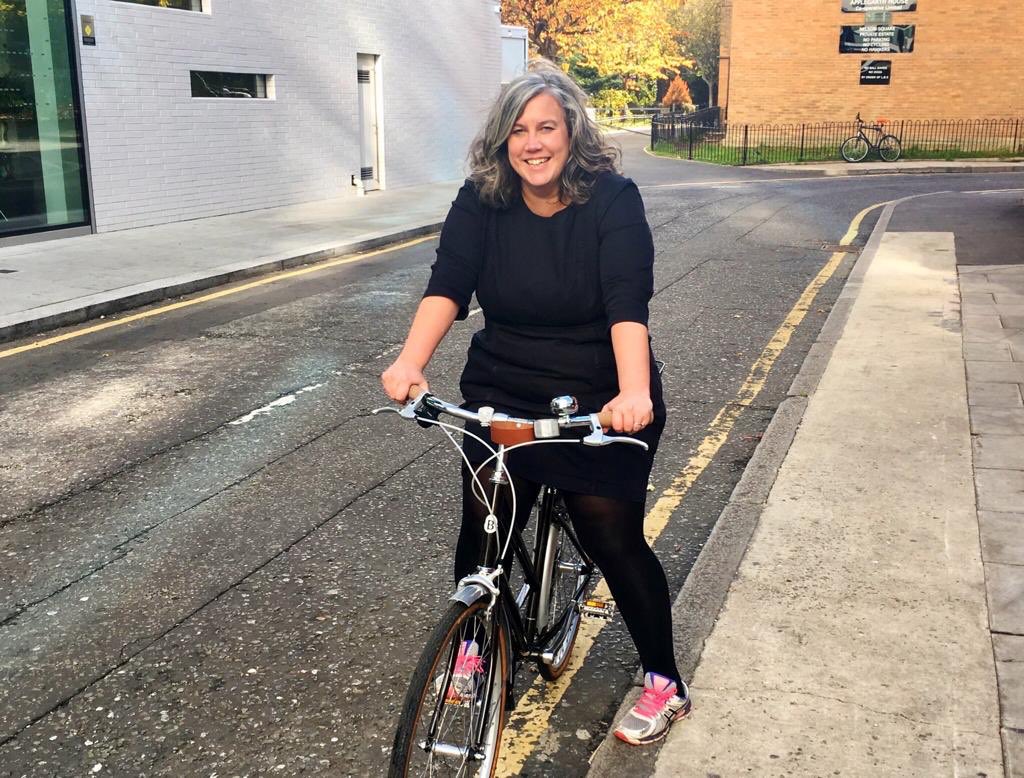
However, Alexander also insisted that there is to be “no war on motorists”, the phrase coined by former Conservative prime minister Rishi Sunak as he attempted to roll back some of Johnson’s more active travel-friendly policies.
“Most people in this country drive. They walk, they cycle, they might use public transport, they might jump on a bus, they might use a train, and so trying to divide people into different categories is a complete waste of time,” she said.
According to Alexander, promoting cycling as a form of transport has both economic and health benefits, with Labour recognising that a shift away from formal sport or exercise schemes, such as ‘couch to 5k’, is key to encouraging more people to be active and healthy.
“The most important thing that we could do from a public health perspective is get the people who do absolutely nothing at the moment to do something,” she said.
“It’s something I think about quite a lot myself, in terms of this job being absolutely insane, in terms of the number of hours I have to work, and how do I build in a little bit of physical activity into my life.
“I’m an overweight 51-year old woman, and what we’re doing through this cycling and walking investment strategy is about how we get, frankly, people like me to be a little bit more active.”
“I tried couch to 5k, and found it really difficult. But ask me to leave my car at home and cycle five or 10 minutes to the supermarket when I want to pick up some milk and a loaf of bread, that’s something that I could easily do.”




















10 thoughts on ““No war on motorists”: Dividing cyclists and drivers “a complete waste of time”, insists transport chief – as government pushes for 60% of children to cycle or walk to school with new £4.5bn active travel strategy”
When I was a kid (that was during the previous millenium when phones were connected to a plug in the wall), I rode my bicycle to school, music academy, sport grounds, parties even during the winter. The government didn’t have to spend, correct that, didn’t have to think of spending massive amounts of money to build cycling specific infrastructures. Over the past 3 or 4 decades, cars have grown bigger, taller, safer (for their drivers) and faster. Meanwhile, motorists have become abusive, aggressive, hypersensitive to people moving on two wheels, aka cyclists. Spending billions upon billions on new infrastructure won’t address the crux of the matter. Sadly.
@MaxiMinimalist Agreed. The big problem I see now is today’s parents grew up being driven to their schools, and therefore, see private motor vehicles as the only viable form of transport. The vast majority of UK infant and primary schools have a catchment area that is within easy walking distance from home to school. Yet, the traffic caused by pupils being driven to/from school is astonishing. Banishing the “School Run” should be a priority for all schools.
@Mr Anderson
Agreed.
Perfect example is this parent doing an, approximately, 700 METRE school run.
I worked t out by finding where the vehicle was parked on the residential road when I first encountered it.
Whilst I can’t be 100% sure, I am certain the children had no physical disability that would prevent them walking.
@mitsky Do happen to know what offence the points and fine were for?
@Bungle_52
My note on the description states
“CD20 Driving without reasonable consideration for other road users”
I’ve chased the police to explain which specific action this relates to, close passing and cutting me up or driving onto the pavement near pedestrians.
@mitsky Alas for a second there I was awarding the motorist in the window there points for wearing hi-vis in their car, then I realised they were also wearing a motoring helmet…
@mitsky I can’t reply to your reply so I’m trying this. Thank you for the info. I was under the impression that driving on a pavement is an offence in it’s own right so I assume it would have a different code. In Gloucestershire the police seem to be very reluctant to take action on video evidence of pavement driving so may be it’s a national thing.
It’s a real pain trying to second guess what the police will take action on.
We also have a greater volume of traffic, including on residential roads which were once quiet.
Spending billions on infrastructure such as protected cycle tracks and modal filters is the only thing that will lead to mass cycling.
Look at London. Why is there mass cycling there? Infrastructure. The Netherlands? The same reason.
And often the only way to achieve meaningful change is reallocating some space and priority from motor vehicles, which is why the government’s ‘don’t scare the horses’ attitude is concerning.
Your correction is accurate – it’s almost always been “the (lack of) thought that (doesn’t) count”.
“Massive” – less than a billion a year spent on active travel (trying to catch up / building a network across the entire country)
Not massive – 6 billion every year (2026-2030) spent on road *maintenance* of existing “already built, goes everywhere, very convenient” road network for inactive travel
Ultimately the reason “cycle infra” is *needed* is those unbelievably colossal amounts spent every year (and for more than a century now) on making mass motoring not just viable but apparently the “best choice” for most journeys.
As the Dutch and others have shown, the majority of people *are* prepared to cycle and even mix with very light, slow local motor traffic *if* cycling is also made safe and convenient for the whole of their journey (including secure parking at both ends).
(The history of the financial drivers of the current situation are a complex topic but note that while people complain about “crumbling roads” and underfunded motor infra – with some reason – by us continuing the fuel duty escalator freeze (for example) we’re actually helping motorists pay *even less* for that activity / subsidising more of the cost of driving than ever.)
There are a number of causes of “the divide between motorists and cyclists”. Only one is to do with the technology (of bicycles and cars) and that’s the nature of the car, which is designed to induce the sort of dangerous and careless behaviours that providing humans with a lot of power and glamour fetches out of us.
Other causes are much more insidious –
A culture of hyper-individualism bordering on solipsism, with violently ultra-selfish and aggressive anti-heroes being promoted in every mass media channel as the ideal.
A “news” media that overwhelmingly seeks, creates and offers pariahs and scapegoats to the rabid individualists, which pariahs and scapegoats includes all kinds of those perceived as less powerful and therefore easy victims, including cyclists.
The near complete lack of any curb upon the dangerous antics of vast numbers of media-maddened motorists by the forces of law and order, many of whom are actually members themselves of the mass media maddened motorist ilk.
********
No amount of a more rational discourse about active travel or the means of making it safer will change these root causes of the vast numbers of deaths and maiming due to inept, incompetent and deliberately violent antics of vast numbers of motorists allowed their dangerous “weapons of choice”. Yet many other highly damaging aspects of modern societies would be solved by a much more effective curbing of mass media mob-building and goading along with a serious attempt to prevent motorists and a whole range of other damagers from behaving as badly as so many do.
It’ll not happen, of course. Large and powerful elements of the modern world obtain far too much ultra-riches and power from current conditions for them to allow any significant change. And vast numbers of the population have long had their minds, attitudes and behaviours captured and directed by various oligarchical monsters and their mass media propaganda horns.
About the only chance of safe active travel becoming extant is for the population at large to become mostly too poor to afford a car, ironically one other likely outcome of the machinations of those same power and money-mad monsters that have created the car-issue in the first place. Their need for zero-sum socio-economic arrangements degrades everything, including the wallet-contents of the masses.