



Tuned mass dampers have been showing up on the downhill circuit for the past couple of years with the promise of smoothing out a 200mm-travelled mountain bike while shaving seconds off of race runs. They’ve been mighty successful, too, with units being found on Jackson Goldstone’s bike, and we all know that he’s rather quick. However, have you thought about adding a mass damper to your gravel bike? Rimpact has with the introduction of the TMD Gravel. Here’s what it’s all about.
Designed to stop the Burj Khalifa from toppling, and being a credited facet to Fernando Alonso’s two F1 World Champion titles, tuned mass dampers are found everywhere from motorsports to industry, and they have one main purpose: damping vibrations. But Rimpact is one of the few brands that reckon that such technology can bring benefits to cycling.
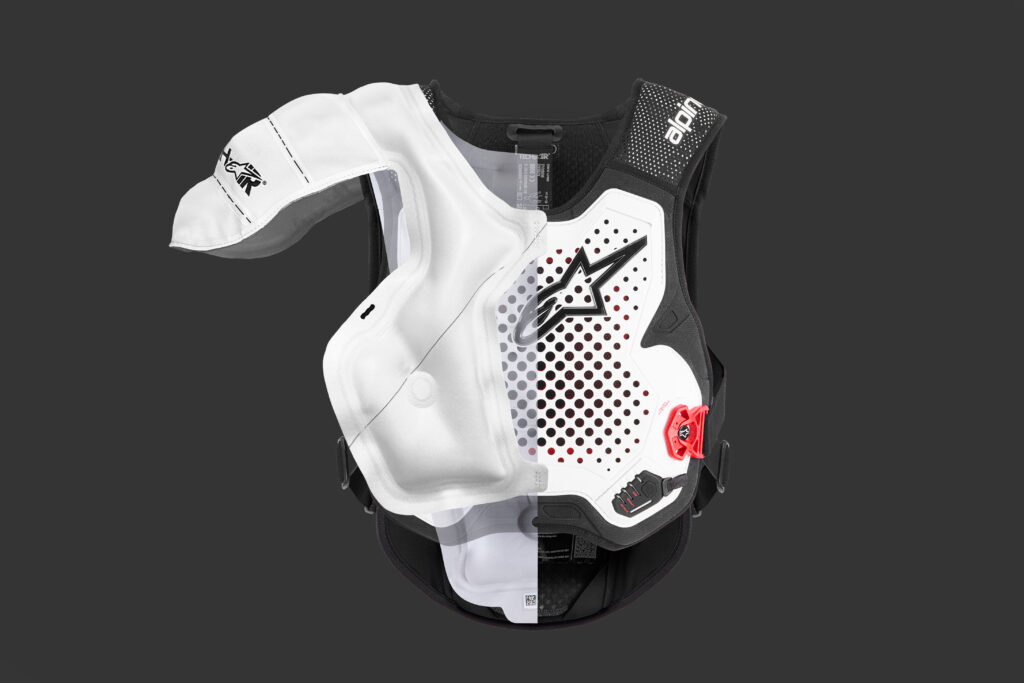
Essentially, the TMD is a weight, or mass, that’s suspended between a pair of springs. As the front wheel impacts against a rock or similar, the front end will move upwards, while that sprung mass will move downwards between those springs, and vice versa as the wheel returns to form after an impact, or is lowered. The result, Rimpact says, is a smoother, more planted ride.
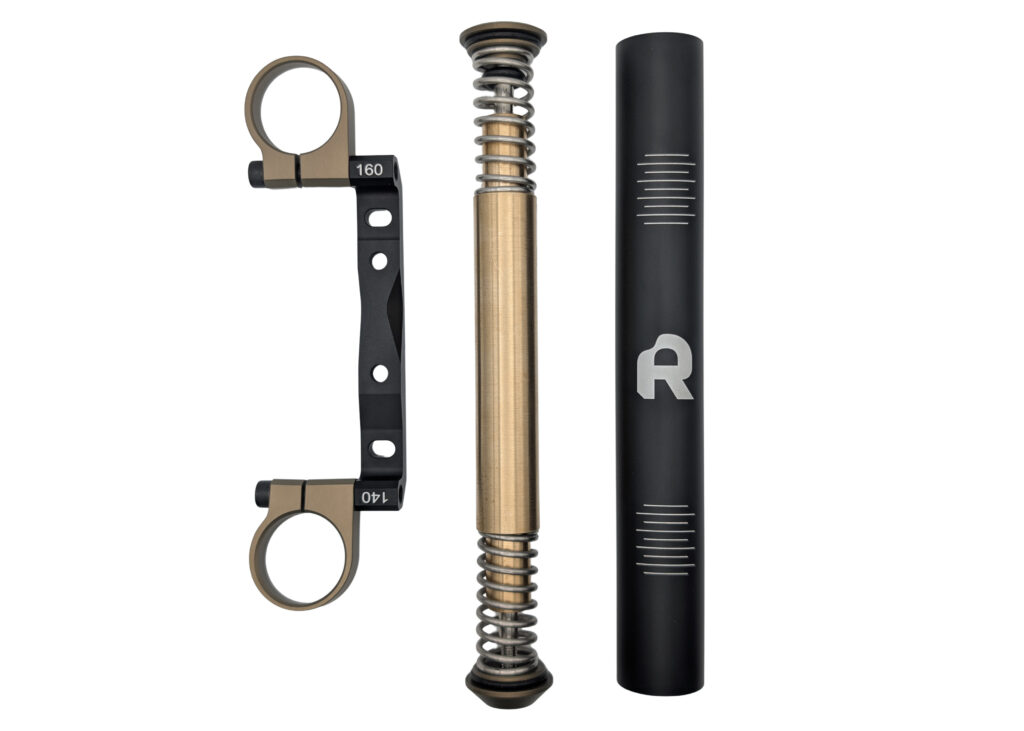
Before now, the Rimpact TMD was (and still is) a product that hid inside of a fork’s steerer tube, but for gravel, that can pose a few issues, as the carbon forks common on gravel bikes simply cannot accommodate the brand’s system. So the TMD Gravel is held within a tube that’s bolted externally to your bike via its front brake mount. Of course, if you’ve got a gravel bike with a suspension fork, the standard TMD V2 will likely sit nicely within its steerer.
Though the TMD Gravel is built to fit forks that use flat-mount brakes only, and to be paired with 140 or 160mm brake rotors.
When attached to your bike, the TMD Gravel is designed to ‘manage’ feedback caused by a bike’s front wheel as it rattles over rougher terrain, before it reaches the rider’s hands. As such, Rimpact suggests that it can help riders ride fresher for longer before fatigue sets in.
The downside is that it adds 450 grams to the front of a bike, but could this be a case of extra weight actually making riders faster?
If a smoother ride is something you think your gravel bike needs, the TMD Gravel will set you back £229.99, and a full suite of spares is available directly from the brand.
How will it perform? Luckily we’ve got one on its way to the office right now, so we’ll be able to report back with a full review very soon.







5 thoughts on “Downhill tech comes to… gravel? Rimpact unveils gravel-specific Tuned Mass Damper”
I would like a version that somehow uses water bottle mounts of the seat tube. AND still makes it possible to mount a water bottle or toolkit. But given the weight of the TMD this may be a wild dream.
Surely it still moves upwards – just more slowly than the fork, and then continues to move upwards after the impact?
If you’re going to add 450g to your fork why not just get a proper suspension fork or a lauf? Bizarre.
Yep, it will go up. Bad description.
Of course it’s a coincidence that this is used on DOWNHILL mountain bikes.
What’s next, downhill gravel riding? Essentially it works to filter out a specific frequency range of vibrations. In buildings it’s mostly used to filter out resonant vibration (which can cause big time problems) from the wind etc. Or in a bridge from people passing over it in step.
Want to cut vibrations? Larger tires and lower that pressure.
Want to lug an extra 500 grams along for 1k? Buy yourself a high purity tungsten bar. For road.cc: when you test it, do a blind test over a couple of days: leave one mounted but without the inner. Then ask the rider when he did/did not feel a difference. I think I can guess the outcome.