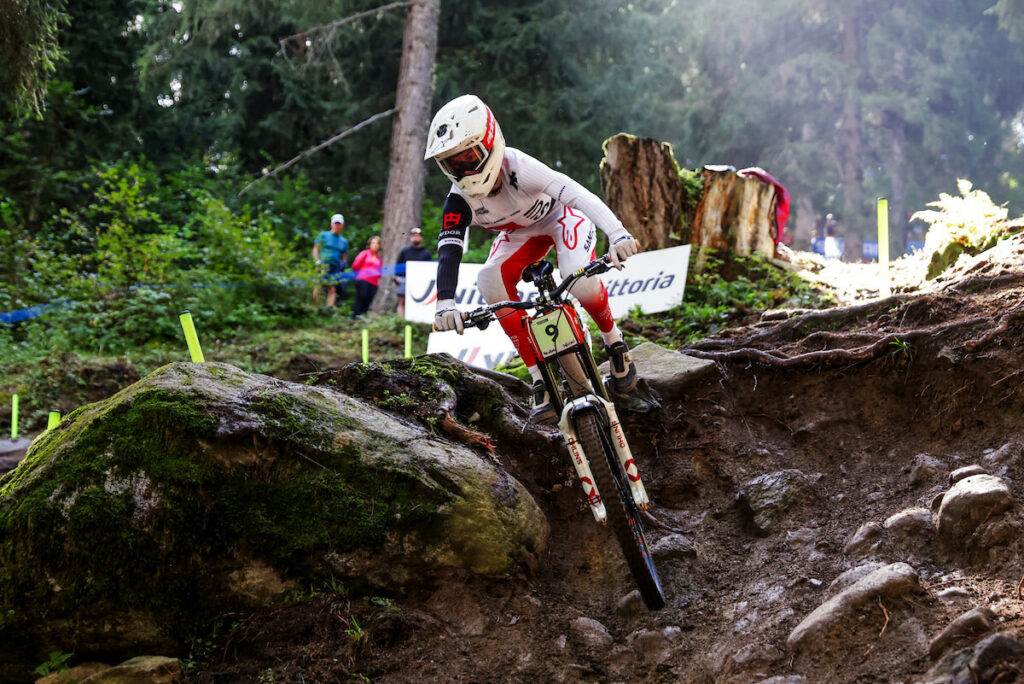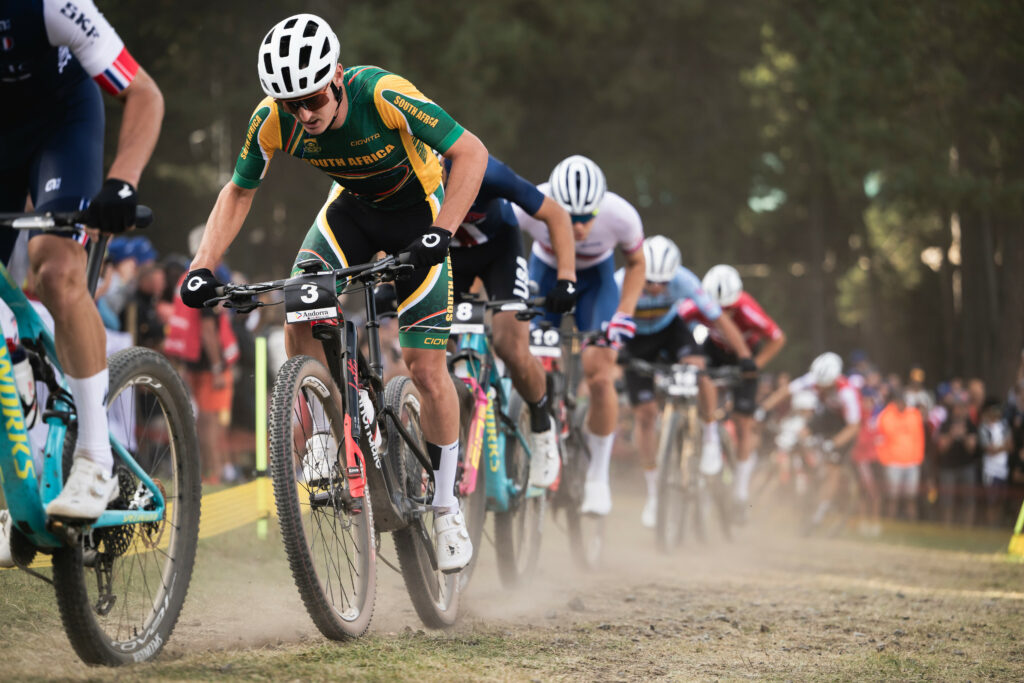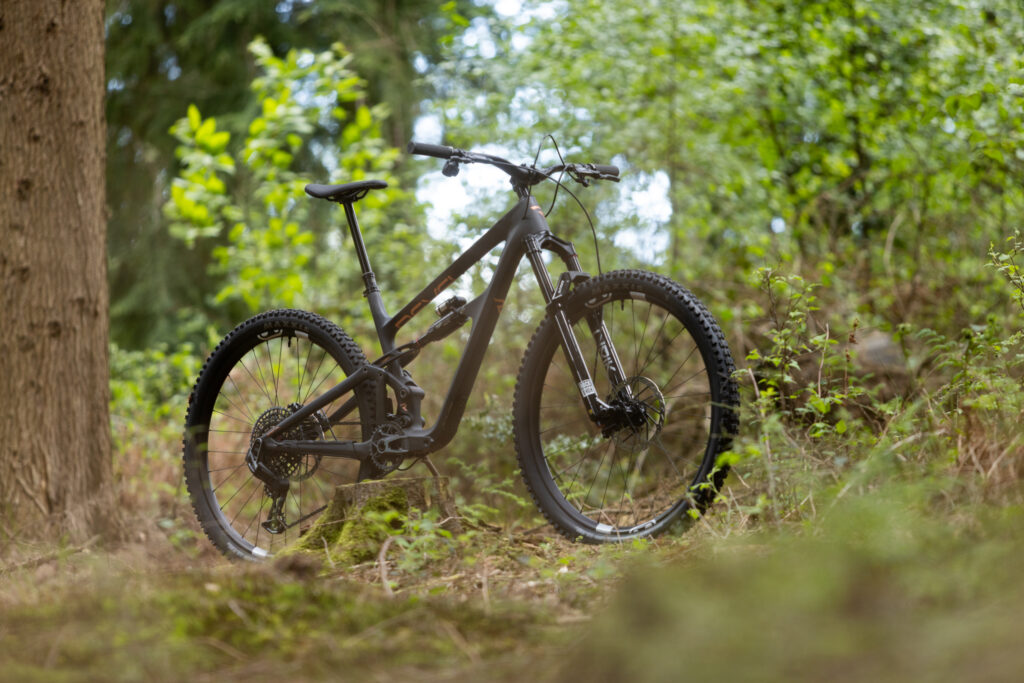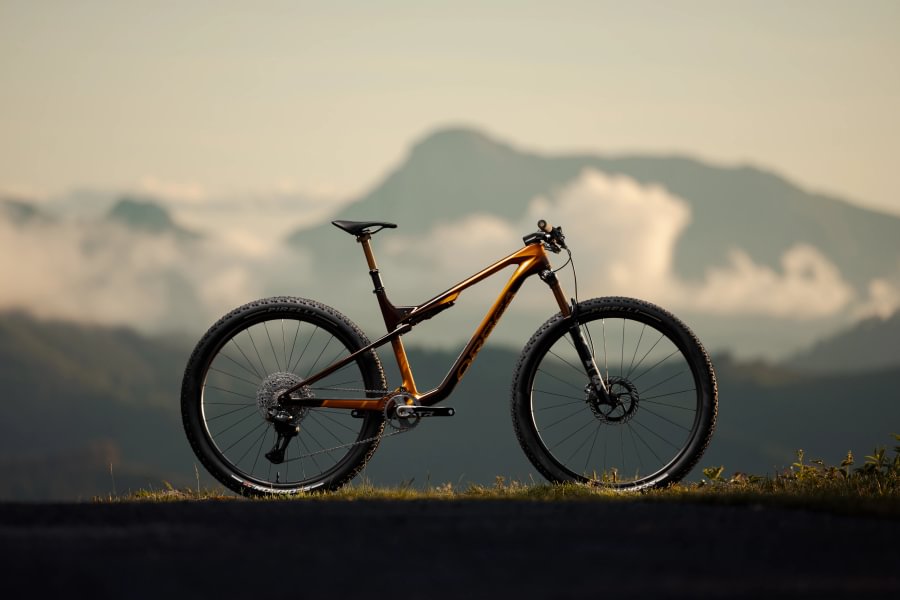

Orbea is constantly updating the Oiz to the point where it follows a similar release pattern to the Call of Duty video games. However, with each update to the cross-country platform, the brand has aimed to bring improvements via increased stiffness and less weight. Once again, that’s what Orbea has claimed to achieve with its latest XC bike… and no, it doesn’t run 32-inch wheels.
The biggest question on everyone’s lips in the off-road cycling world revolves around 32-inch wheels. We’re seeing an impressive rise with the new, larger wheelset standard, whether the customer likes it or not, especially with Scott seeing such success at Unbound with its 32-inch-wheeled gravel bike. Although the larger wheel size is seemingly coming for cross-country MTB, it’s not for Orbea – or at least not yet. The reason behind that is that the technology isn’t quite up to the brand’s discerning standards.
Anyway, onto the new Oiz. It’s been developed for improved performance by making it stiffer and lighter. Classic XC moves, if you ask me. One of the ways in which Orbea has realised those goals is by gracing the bike with an all-new frame using ‘Finite Element Analysis’ before putting tyres on dirt. In fact, every facet of the frame has received the brand’s attention, all in an effort to bring just the right level of stiffness to the right places. One of which is the bottom bracket, where it’s claimed that it’s now lighter but without a compromise to stiffness. Orbea says that this has been achieved thanks to its work in refining the bonding process and the carbon layup.
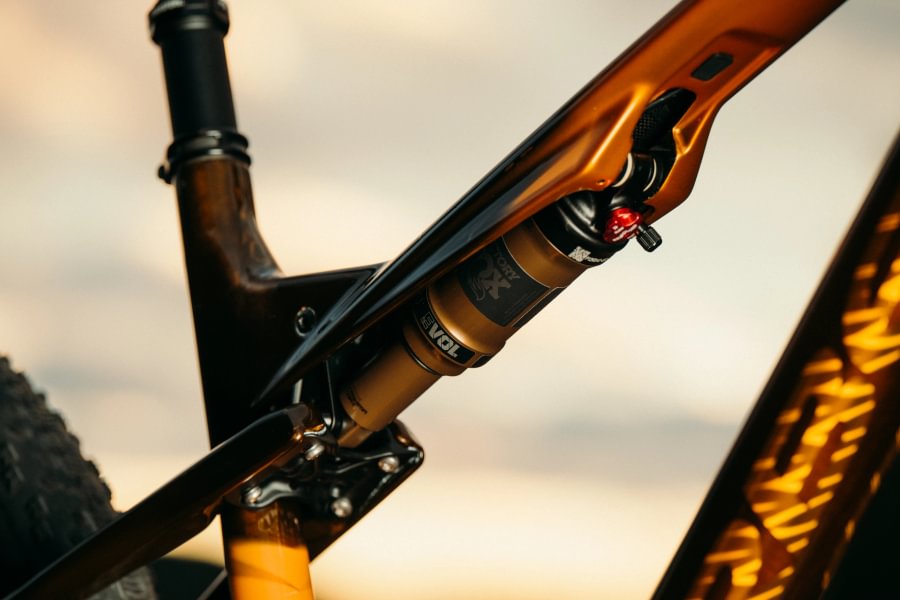
The Oiz runs a different linkage setup than before. Now taking a similar look to that of Specialized’s very light Epic 9, the shock now sits closely under the top tube, welcoming a smaller but stiffer linkage. Rather than carbon, the linkage is built from forged aluminium, which is sorted with cut-outs in the material, which apparently brings a 30% weight reduction compared to the previous version. There’s then a new bridge at the seat stay to bring another boost in stiffness, promising rear-end alignment even when under load.
With that, both the chainstay and seat stays have been shaped to bring more stiffness, and the frame as a whole has fewer ‘abrupt transitions’. Orbea reckons that this allows for better carbon compaction, which reduces the amount of epoxy resin needed to bond the carbon sheets together. According to the brand, this improves the stiffness-to-weight ratio of the Oiz.
All of Orbea’s hard work results in a frame that weighs 1,700g in a size medium. So it’s not quite as light as Specialized’s competitor.
Adapting to modern cross-country, the Oiz dons 120mm of suspension at both ends, although it can accommodate a 130mm fork. As before, the rear end employs a regressive kinematic, which is said to offer support early in the stroke to fend off pedal bob. Orbea has then chosen a small volume shock to bring just enough progression towards the end of the travel to avoid harsh bottom outs.
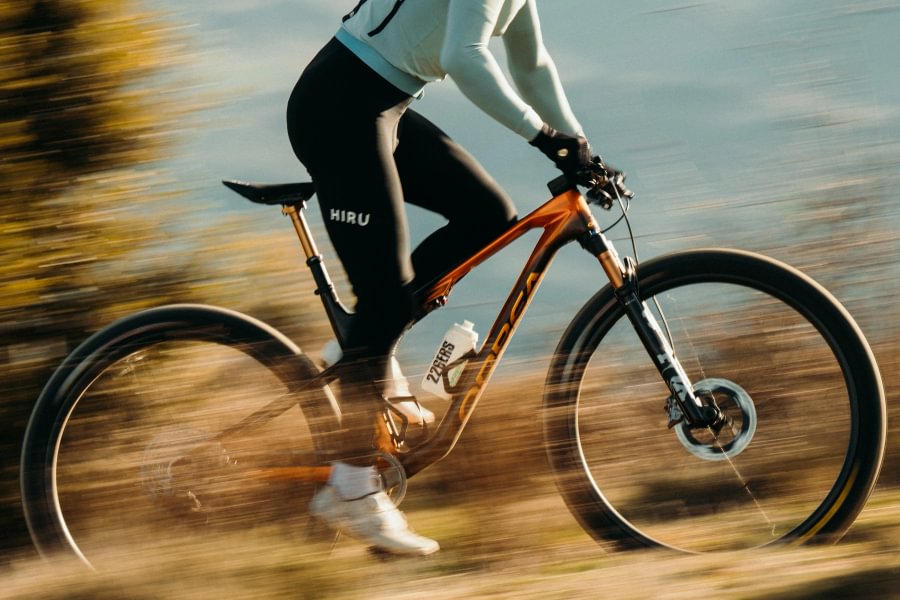
With a whole new frame, you bet that there are a few geometry tweaks. Surprisingly, the chainstay length has been reduced by two millimetres with the aim of delivering better responsiveness and acceleration. The seat tube is steeper to improve power transfer and throw a bit more weight over the front wheel for traction, and the head angle has been slackened by 0.2 of a degree for a welcome touch of stability.
In numbers, a large Oiz welcomes a 472mm reach, a 66.8-degree head angle, a 76.6-degree seat tube angle and a 430mm chainstay.
There are 10 Oiz models available, including two hydroformed alloy builds with prices starting at £2,199 and going up to a lofty £9,999.