



Cycling fans of a certain age (or any age, really) can be forgiven for feeling a bit bewildered at times this season.
First, we were ordered by our televisual overlords to migrate to yet another streaming service – Discovery+ is dead, long live HBO Max – the latest in a litany of decisions that have transformed my phone into a graveyard for defunct cycling platforms (while also making my wallet considerably lighter). Then, once we’ve finally, painfully navigated our way through to the newest app’s racing schedule, we’re increasingly being forced to carry out some race name code breaking worthy of Bletchley Park.
For almost eight decades, the start of June has been home to the definitive pre-Tour de France tune-up race, known for most of its history as the Dauphiné Libéré, or more recently, the Critérium du Dauphiné. This year, however, the race remains, but the Dauphiné has been ditched entirely, in favour of the much less evocative but more commercially viable new name, the Tour Auvergne-Rhône-Alpes.
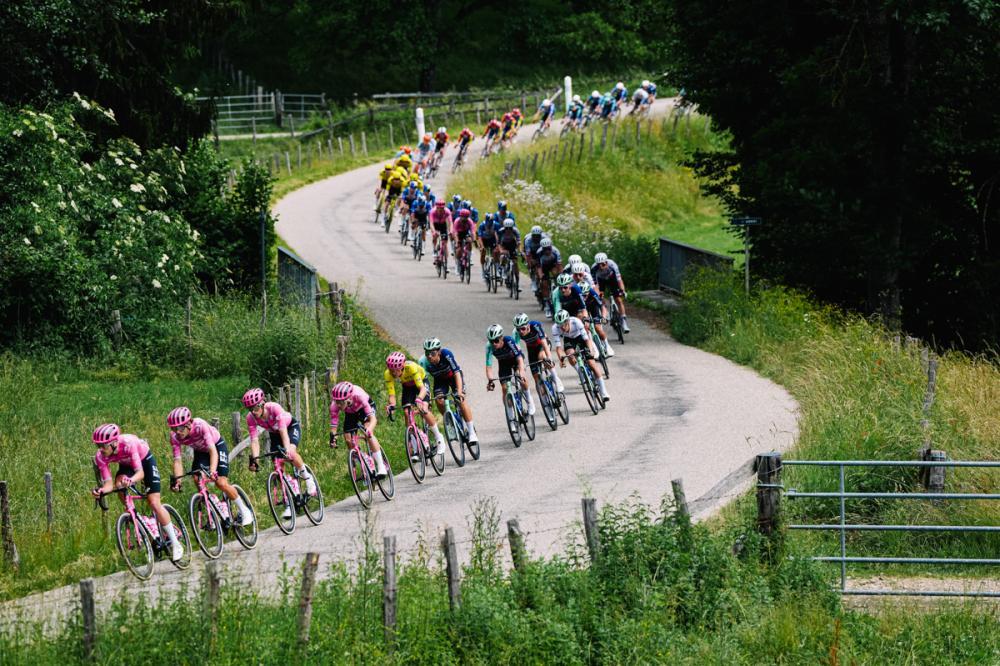
And that’s not all. Cycling’s illustrious classics, that heady list of season-defining events crammed within the space of a few spring weeks, are jampacked with historic, familiar names steeped in drama and tradition. Like, err… In Flanders Fields – From Middelkerke to Wevelgem.
Never heard of it, have you? Are we sure it isn’t the title of an obscure World War One documentary? Nope. Apparently, it’s just the new mouthful of a moniker for the race formerly known, simply, as Gent-Wevelgem. Well, at least were treated two weeks later to the sport’s most famous one-day race, right? Here it is: Paris-Roubaix Hauts-de-France. Hauts-de-what?
But if you’ve spent this week searching in vain for the Dauphiné, don’t worry, all these changes are just part of cycling’s never-ending obsession with tweaking names, rules, and well anything and everything, basically.
> I’ll still be calling it the Dauphiné… Do pro cycling’s rebrands ever work?
In fact, for a sport that revels more than most in the past, professional cycling just loves to change things up. Even if that means tacking the name of a regional government onto the end of one of its most venerable, sacred races.
So, in honour of cycling’s fiddling fixation, we’ve gathered together the changes that have worked – from calendar switch-ups to leader’s jersey designs – and those that haven’t…
Name Changes
Strade Bianche: Don’t let the Dauphiné or Gent-Wevelgem fool you, not all name changes are misguided and convoluted. Strade Bianche, after all, represents the gold star in cycling marketing.
Originally dubbed the Monte Paschi Eroica when it was founded in 2007, an homage to the vintage tech-focused gran fondo which sparked the creation of cycling’s modern classic, the Tuscan gravel-based race’s name was updated to Strade Bianche (simply meaning ‘White Roads’) two years later.
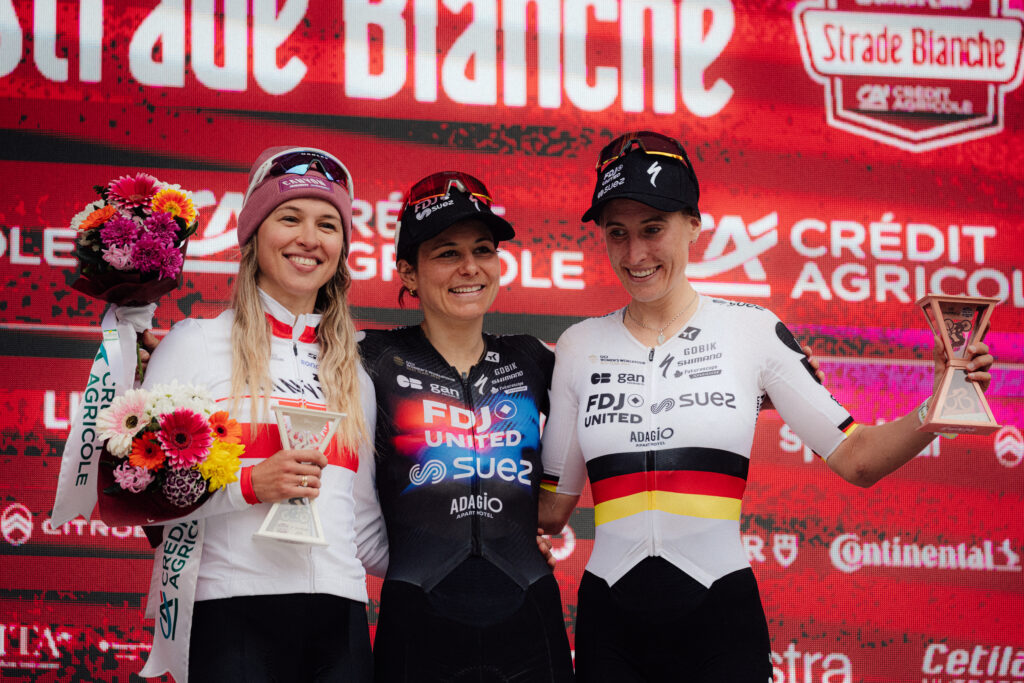
That name change allowed the race to distance itself from its gran fondo, old fogies on even older bikes origins, creating an identity that has led Strade Bianche to vie for that coveted, imaginary ‘sixth monument’ crown. And it does what it says on the tin, which always helps in cycling.
Il Lombardia: On the other end of the Italian classic name change spectrum, we have Il Lombardia. The Giro di Lombardia – or the Tour of Lombardy – evoked the sport’s historic age, images of Fausto Coppi and Tom Simpson racing solo along stunning lakes, the autumnal light fading, the leaves slowly turning orange.
Il Lombardia, on the other hand, sounds like a soap manufacturer.
Calendar positions
Vuelta a España: Where would cycling’s third grand tour be if it weren’t for its mid-90s move from its historic pre-Giro spring slot to September? Well, it certainly wouldn’t have carved out its place as the de-facto Tour de France rematch, leading to a series of scintillating encounters between Froome, Contador, Quintana, and the rest in the 2010s.
-1024x727.jpg)
For a race that largely failed to live up to its billing as a ‘grand tour’ throughout its first half-century, the Vuelta’s smart late-summer switch has cemented its status as one of cycling’s biggest prizes in its own right, while also acting as a perfect warm-up for the world championships. Speaking of which…
World Championships: Not all calendar switches in 1995 were inspired, if I’m honest. Before the mid-90s, the worlds were held a few weeks after the Tour, meaning the sport’s biggest names were on peak form and hadn’t yet started thinking about their winter beach holiday.
The move to the end of the season, post-Vuelta, has changed all that, meaning any rainbow jersey contenders have to be extremely motivated to keep up those interval sessions until late September. Case in point: the best worlds road races in recent years were in Glasgow, when they were held in August as part of the inaugural super-worlds. So, at least we get a nice throwback every four years now.
Leader’s jerseys
The Vuelta’s red jersey: Another big tick for the Vuelta with this one. Throughout most of its history, the Spanish grand tour flitted between orange and yellow leader’s jerseys, before settling for a rather garish gold number between 1998 and 2009, an era that coincided with a plethora of long, flat, and very hot stages on dual carriageways (and widespread doping too, of course).
But the move to red in 2010 has been a masterstroke, giving the Vuelta its own distinct identity to sit alongside the pink and yellow of the Giro and Tour. And it looks cool.
Paris-Nice’s move from white to yellow: No, just no. While the Vuelta’s decision to opt for a red jersey enabled it to stand out from the pack, Paris-Nice’s shift from its iconic white leader’s jersey to plain old Tour-style yellow in the 2000s – a result of Tour organisers ASO taking over the Race to the Sun – did the opposite.
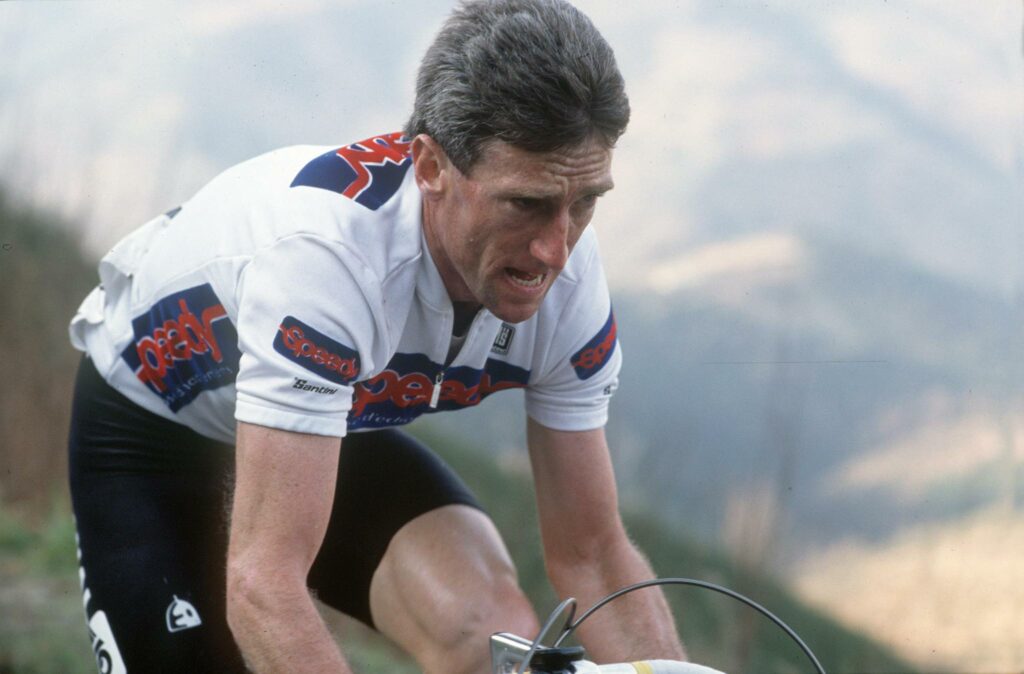
Look at Sean Kelly riding in white on Col d’Èze – iconic. Thanks for nothing, ASO.
Tech and safety rules
Helmets: The introduction of mandatory helmets in bike races, following the tragic death of Andrei Kivilev at the 2003 Paris-Nice, has undoubtedly proved the sport’s biggest success on the safety front. Sure, casquettes may have looked a lot cooler, but 20 years on it’s crazy to think that pros used to hurtle down Alpine passes with only a bit of cloth covering their heads.
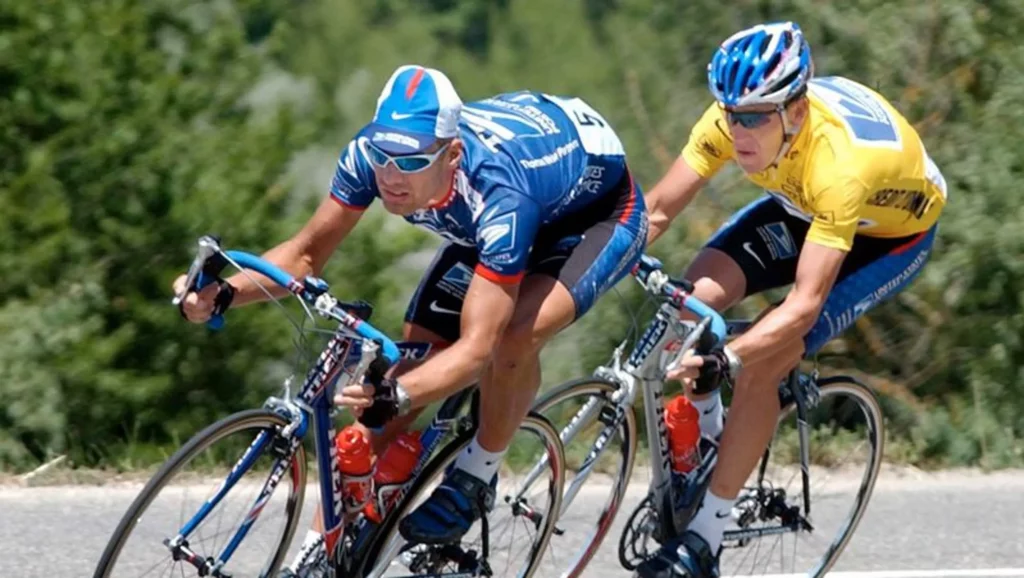
Bike weight limit: The UCI’s 6.8kg bike weight limit may have been necessary when it was introduced a quarter of a century ago, but is it now past its sell-by date? Bike tech has come on leaps and bounds since the turn of the millennium, and there are now plenty of examples of lighter bikes that are being used safely. Is it time for the minimum weight limit to be scrapped? We reckon so.
Racing rules
The Hour Record: Faced with the space-age, superman-positioned epoch of aero geeks Boardman and Obree, the UCI decided enough was enough in 1997, winding the Hour Record clocks back to the early 1970s and ruling that, if you wanted to break cycling’s most prestigious record, you had to look like Eddy Merckx and ride a bike just like the one used by the legendary Belgian.
Barring Boardman’s soul and body-destroying record-breaking non-aero ride in 2000, all the governing body succeeded in doing was to rip the prestige out of the event, effectively mothballing the Hour Record for almost 20 years.
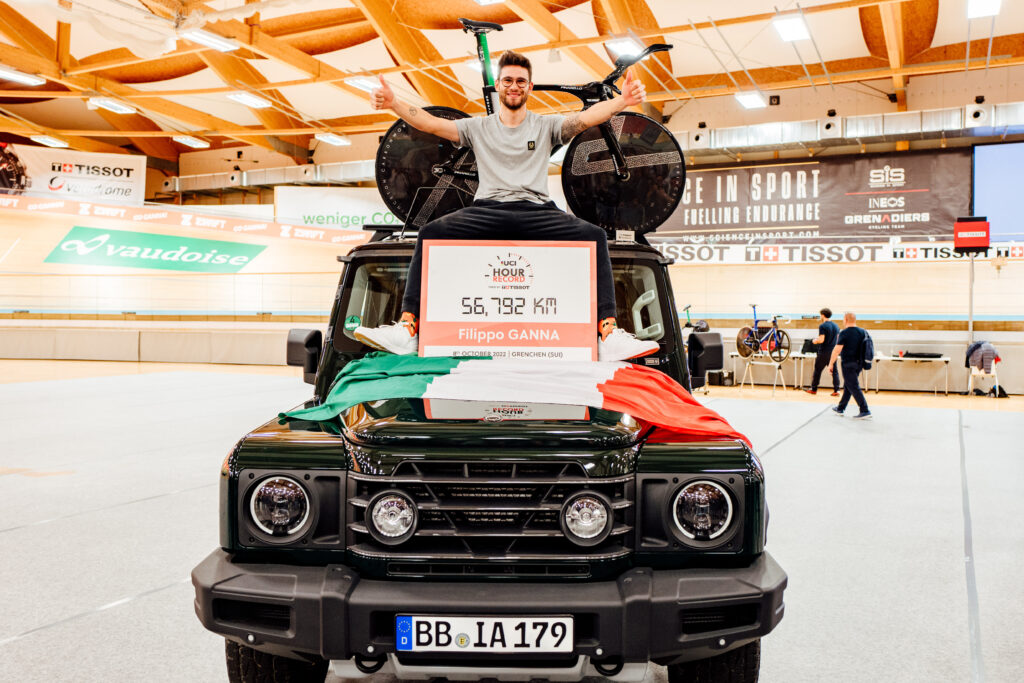
However, the ‘unified’ rule change in 2014 – allowing riders to use modern TT bikes – breathed new life into the Hour, encouraging some of cycling’s biggest names (including a certain Brad Wiggins) to take on the challenge. And, tying things up in a neat bow, Filippo Ganna’s current record of 56.792km is 400 metres further than Boardman’s outlawed, superman-assisted 1996 distance. It all worked out alright in the end.
Promotion and relegation: Pro cycling sponsorship is a precarious thing at the best of times. So why not pile more pressure on teams struggling to survive by introducing a promotion and relegation system that no-one really understands and which is impossible to follow for fans? Great move, UCI, way to make the sport sustainable.
Race routes
Liège-Bastogne-Liège: Let’s face it, the uphill finish in the suburb of Ans, introduced by ASO in 1992, made La Doyenne a bit dull. That final kicker succeeded in encouraging conservatism from the climbers with fast finishes, while the ride through Liège’s industrial heartlands made the finale of one of cycling’s monuments less than picturesque.

However, the move back to the centre of Liège in 2019 has brought the race back to its roots, putting greater focus on iconic climbs like La Redoute, and encouraging the very thing all classics need: attacks.
Tour of Flanders: The Ronde’s Muur-Bosberg finale into Meerbeke, a fixture since the 1970s, was basically perfect. The climb to the chapel produced some of cycling’s most iconic imagery, and the undulating run-in allowed for a tactical crescendo in a race that was always hard enough to produce an elite selection, but which also enabled brains to sometimes beat brawn (the final edition on that route in 2011, won by the unfancied Nick Nuyens, the perfect encapsulation of that delicate balance).

But the move to Oudenaarde (where the Tour of Flanders museum is located) and the introduction of circuits based around the VIP tent-strewn Oude Kwaremont and Paterberg in 2012 tipped the balance for good. The Ronde is now definitively a race built for brute force… and for champagne-swigging hospitality merchants, of course.
What do you think? Are there any changes – good, bad, or ugly – that we’ve missed? Let us know in the comments…








2 thoughts on “Bizarre race names, silly calendar tweaks, and tech overhauls: Pro cycling changes that worked (and those that didn’t)”
In Flanders Fields does pass a lot of war cemeteries, it’s not the worst name change. It was a good race today too.
I rather like Il Lombardia rather than Giro di Lombardia. The latter is pretty prosaic, a Tour of Lombardy whereas the former makes it sound like one of the great Renaissance paintings like La Primavera or Il Paradiso; not like a soap manufacturer at all. Of course if they really wanted to make it evocative they should have used its nickname, Classica delle foglie morte…incidentally it was originally just called Milano-Milano, I wonder if the old boys of 1907 grumbled about the name change?