[Header image by SurSun Bike Holidays]
Joe Breeden was a very talented footballer in his early days, until, in his pre-teens, he was introduced to mountain biking and duly swapped his shin pads for kneepads.
Luckily, Joe was born and bred in remote Mid Wales, which was then prime Atherton turf, and has since become a global Mecca for downhillers and gravity stars. This was all the first-hand inspiration he needed to chase his two-wheeled racing dreams.
- The Charlie Hatton interview – the new King of Downhill
- Rising from the dust – the Lachlan Morton interview
- “I had the mindset that I’d being going for a helicopter trip or coming down in first. We didn’t take the helicopter trip”: Ronan Dunne on the thrills and spills of elite downhill racing
By the time he hit 16-years old, Joe was already racing as a sponsored rider on the World Cup circuit and had scored a silver World Championship medal. Soon enough, he found himself signed to some of the biggest teams in the world and was climbing the World Cup rankings. However, despite being only in his early 20s and on the rise as a racer, Joe made the decision to create his own world-level downhill team – Axess Intense Factory Racing, which has recently become Nukeproof Axess Factory Racing.
We spoke to Joe to find out how, at just 26-years of age, he has created a top-tier downhill race team while also chasing his own racing career.
Off.road.cc: What brought about the decision to take things into your own hands and set up the team? Do you handle everything? How did you learn the ropes?
Joe Breeeden: Through my junior years, the team I always wanted to be on was Intense Factory Racing. I rode three years for Intense Racing UK and always looked up to the factory team, the atmosphere, the kit, the bikes, everything. I had an emotional attachment and wanted to be on that team.
I was presented the opportunity to be on the team when Aaron Gwin took over, and to ride under him, there was no way I could say no – it was a no-brainer. I did two years there, and that program was folding. I had just started my factory career and had put so much work into developing the Intense M1. I’d sacrificed two years of racing to help them develop a really good bike, and as it came to production, the team was folding, and it was time to move on.
It just didn’t feel like the right time to move on.
We’d built a great bike and relationships, and we didn’t want more change. I’ve always been entrepreneurial and interested in the business side of it (not just in MTB), and having been involved in how Aaron Gwin ran his team, I was always very interested in how contracts came in, how things worked, and how it was operated. I’d also seen this with my previous privately run Polygon team, and was always engaged and involved in how all of this was going on, rather than just turning up and riding my bike.
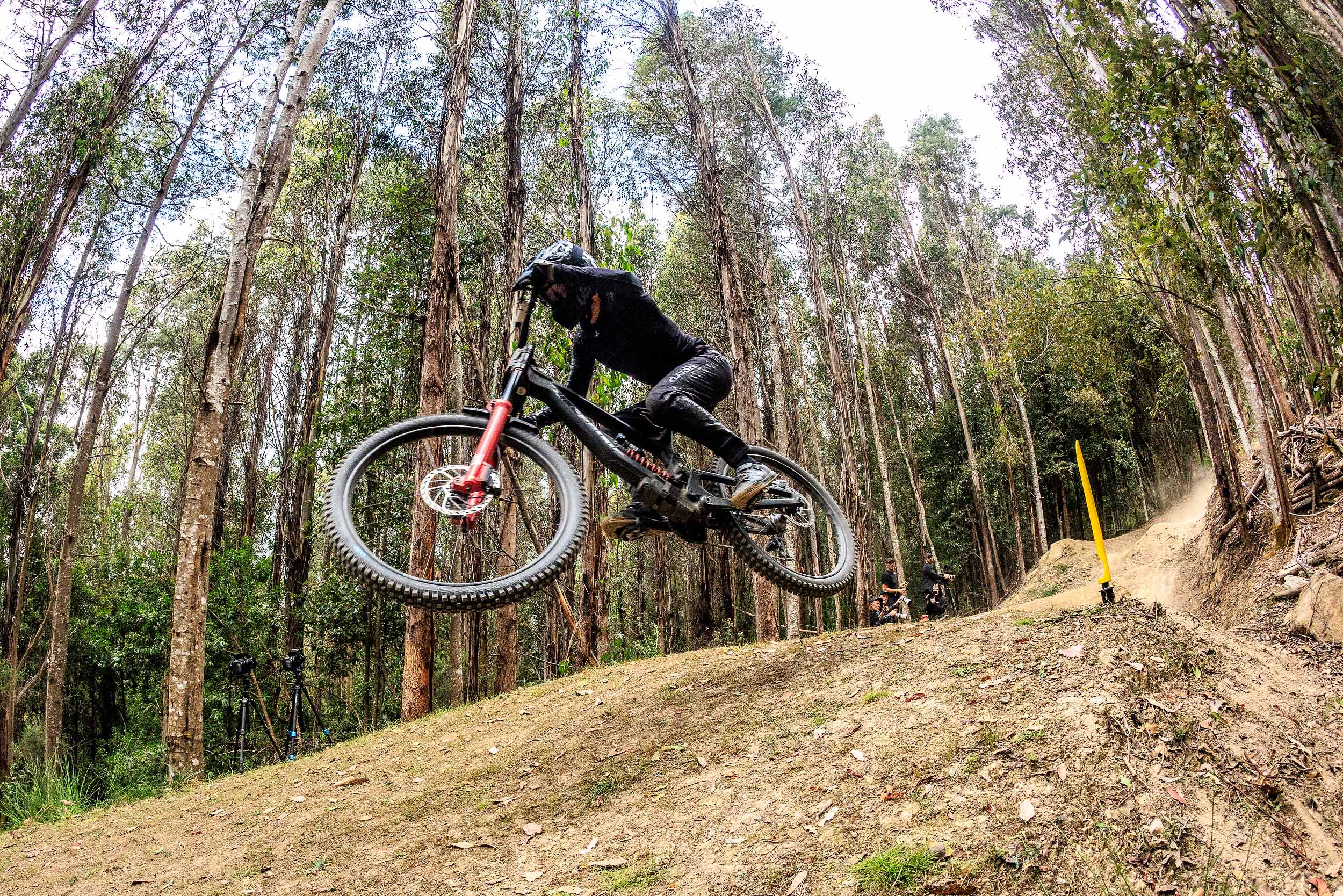
I felt like I had quite a good understanding, and that things could be done much better. That’s a terrible thing to say, but I felt that on every program I’d been on, there were big gaps that could be improved on with the right processes, the right people in place, and ultimately the right commitment.
I thought, let me see if I can present an opportunity to keep Intense Factory Racing going under my ownership. They took a risk and put their trust in me, which was crazy, because then they only knew me as an athlete on their program, and so I took the punt to run the team.
There’s no way I would have done that if I couldn’t foresee and visualise really strong people in the right places. I had my mechanic for four years (seven now), who had been head mechanic for a massive team – Polygon UR for 10 years; he had the skills there. I thought, ‘Could I just be like the manager and performance coach on the skills side?’ Yes. Then I brought other experienced people together.
I was more the entrepreneur behind it and had the vision. I don’t have the skillset of John the mechanic or Olly the manager, but I knew how to bring it all together as a full package.
Balancing beliefs
ORCC: How has running the team impacted your own racing?
JB: It’s a question I ask myself most days. It’s definitely had a big impact on me, and my ability to commit time to racing has been significantly reduced. I’ve been forced into a situation where I need to be more efficient across the board and in life in general. I can’t slack anywhere if I’m going to get the team and my athletic jobs done.
I know that if I don’t find ways to do that, then both areas of my life will fail: the team and my athletic career. I quite like being forced into that position, because you have to be better. It’s more of a workload, sure; I work most days until 12-1pm on team stuff at the desk, and then the rest of the day on my athletic duties. Before it was a full day of training, and if I wasn’t training, I was resting.
The most difficult thing is the financial pressure, or at least it was in the first two years. Paying bills, getting paid on time, sponsors not paying, things going wrong on vehicles and unexpected expenses, and in delivering to those people I’d contracted when the industry was in a really shit place.
We had a very small budget, and that pressure has definitely got on top of me (at times). I wouldn’t be able to sustain that for too many years; it would be too much. I hope the industry can recover, and that we can build a more sustainable platform financially for the team, and in terms of support for my team and staff.
It has been very difficult and had a huge impact on my racing. But, at the same time, I’m racing with more purpose than before – it’s my own race program, with people I love working with and want to please, and with brands that I’m very confident to go as fast as I possibly can and lay it all out there with.
There’s a benefit on that side; there’s nothing like dropping in for your own race team, too. There’s a big reason to do so, and I think purpose is a huge part of any athlete who goes fast; they have to have a real reason to go out there, lay it all down, and take a huge risk to get a fast time down, a purpose.
Intense endings and Nukeproof beginnings
ORCC: How did the Nukeproof switch come around?
JB: We knew we were out of contract with Intense. We had an option to continue with them, and I was motivated to do that – but they couldn’t support the team at the level required to take the next step. We didn’t want to stay stationary; we wanted to build it every year and needed increased support.
With Intense no longer selling bikes in Europe and focusing on North America, their ability to support us wasn’t aligning with what we needed, and we had to entertain new options. Fortunately, the team had a good year and gained a lot of attention, so we had a few options with different brands, and we negotiated for some months.
After this time, it felt like Nukeproof was the most natural and exciting fit. It was a huge opportunity for us, especially given their legacy and more British focus. I met the owner of Belgian Cycling Factory (which now owns Nukeproof). He’s extremely passionate about racing and wants to make bikes that go exceptionally fast. He’s committed to doing that, and they have the ability to do it. They want to win races and go fast, from the top down, and that’s what we wanted to do for them in downhill mountain biking.
ORCC: Did you have any input or time on the bikes early on, and how long does it take to get a bike fully dialled?
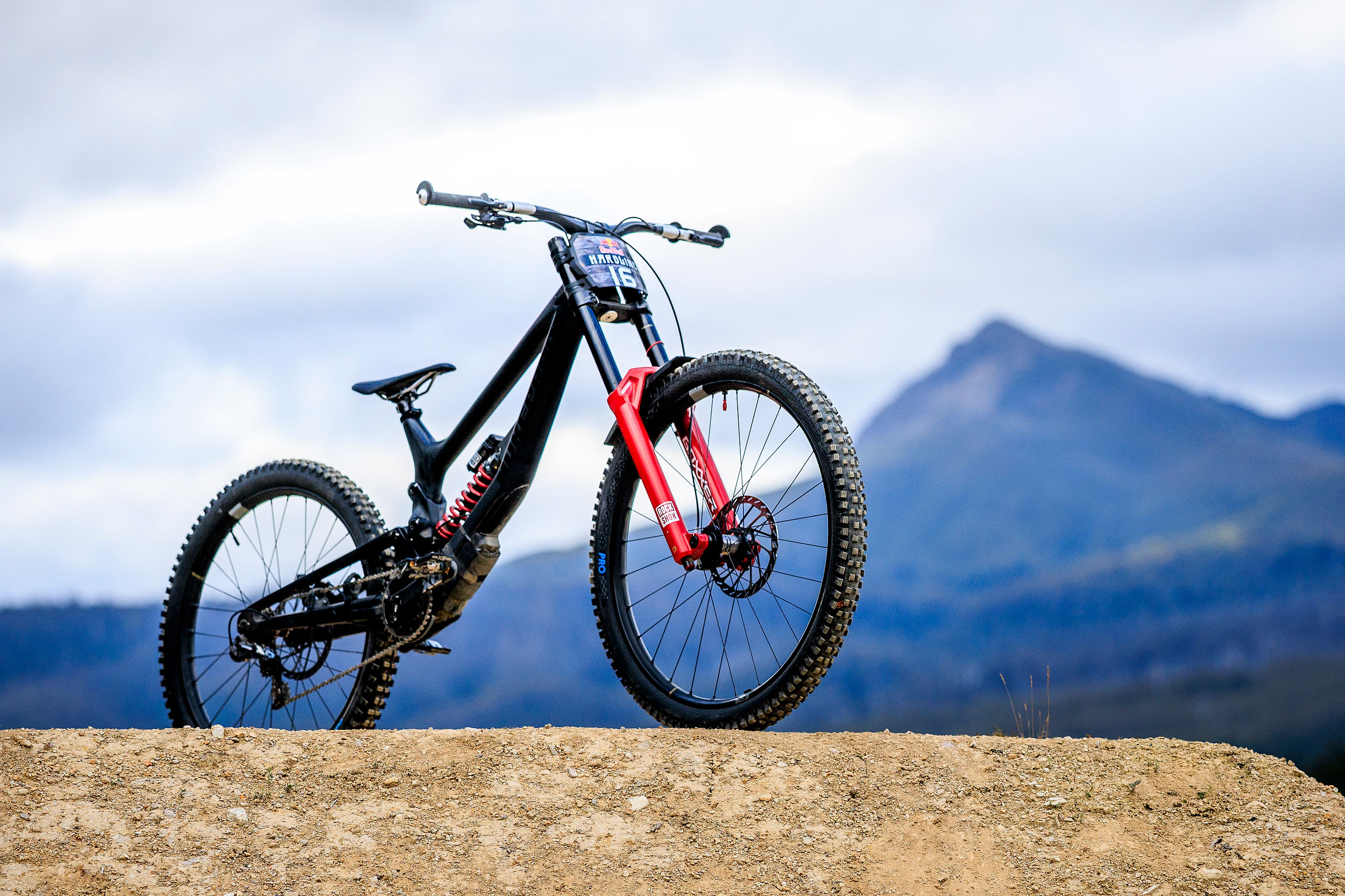
JB: Nukeproof has a stock bike that was designed before the company went under a couple of years ago (Wiggle/CRC). Before we signed the contract, we made sure the bike was competitive as it was, with no work needed on it. I know how difficult and time-consuming it can be to develop a new bike, and there’s a lot of risk in doing that.
We tested it, and it was right out of the box. The most attractive thing was that they were already committed to building a new bike from the ground up for 2027, and that process was starting imminently. I’ve had a lot of experience with this with other brands and am motivated to be a part of this and its development.
The original Nukeproof engineer was immediately rehired by BCF (Belgian Cycling Factory) and had been designing bikes unpaid since Nukeproof stopped, so they already had new prototype plans ready to go. We came in and immediately started testing new rear ends as a learning process for the new downhill bike.
We’re getting a lot of information from testing new rear ends, kinematics and different axle paths, and putting this into developing the best possible bike for 2027. We’ve been testing for several months already and will use the rest of this year for testing and improvement.
If all goes well and if we find the best bike possible, hopefully, it will go to production in 2027. But it’s important to be flexible and not to force a bike to production because of a deadline if it’s not quite right. It’s a long process, at least a year.
Being a racer
ORCC: What are you personally looking forward to with racing?
JB: The next few years are a really big time for my career. As we know, we can’t do this forever; I’m going to be 27 in May and hopefully coming into the prime of my career. If you look at the average winning age in Elite men’s downhill, it’s 27. You kind of have enough youth, fitness, motivation and testosterone to be at peak performance, and at the same time have the experience from past years and mistakes to have learned a lot.
It’s a very valuable career time, and I want to make sure I retire knowing that I gave it absolutely everything I had. For me, that means committing everything to training and racing, approaching the races with a fresh mindset – not under pressure because the team isn’t operating properly.
It’s to get myself in a mentality, mindset and physical state to know that I can turn up at a race knowing I’m 100%, and then to give it everything. I am nervous, and it’s exceptionally difficult to make that happen because the team has an impact and benefit (as mentioned earlier), so I need to make sure the team is managed very well. Then I can focus on myself at the races and on training, as races are won in the winter, and if you don’t do the work now, there’s no chance in the summer.