


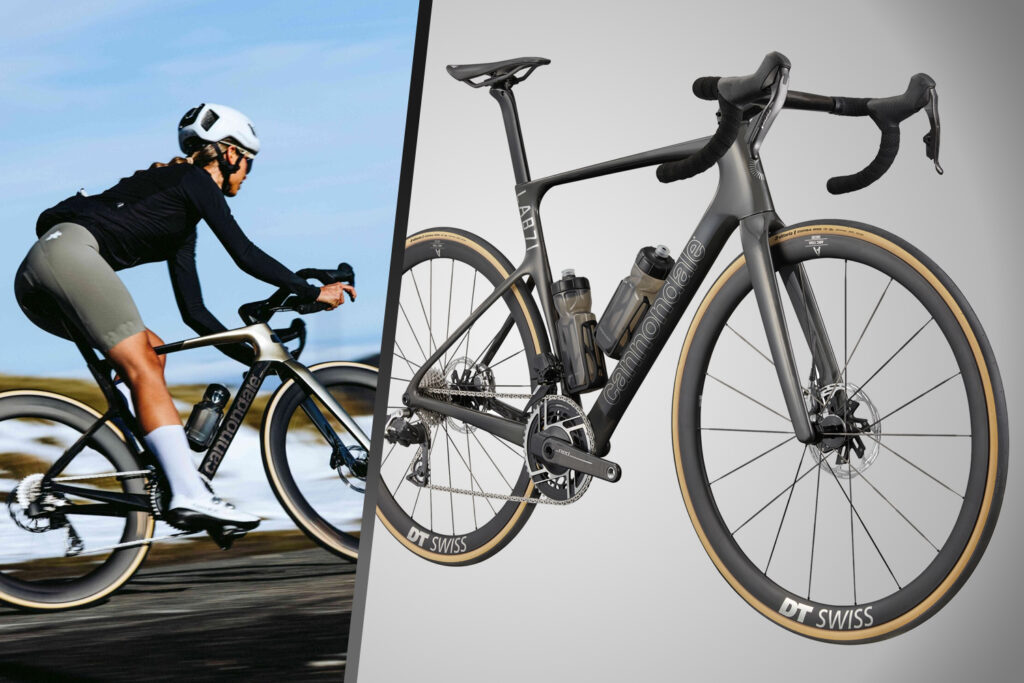

Cannondale has launched the fifth generation of its SuperSix Evo road bike with claims that the new model is faster than its predecessor at all tested yaw angles (from 20° to -20°), and that the frameset is the lightest disc-brake option the brand has ever produced. Cannondale is offering a complete bike in a 6.4kg build, and reckons sub-6kg is possible with superlight components. There’s a new SuperSlice time trial bike too, which saves 10 watts at 50km/h (31mph).
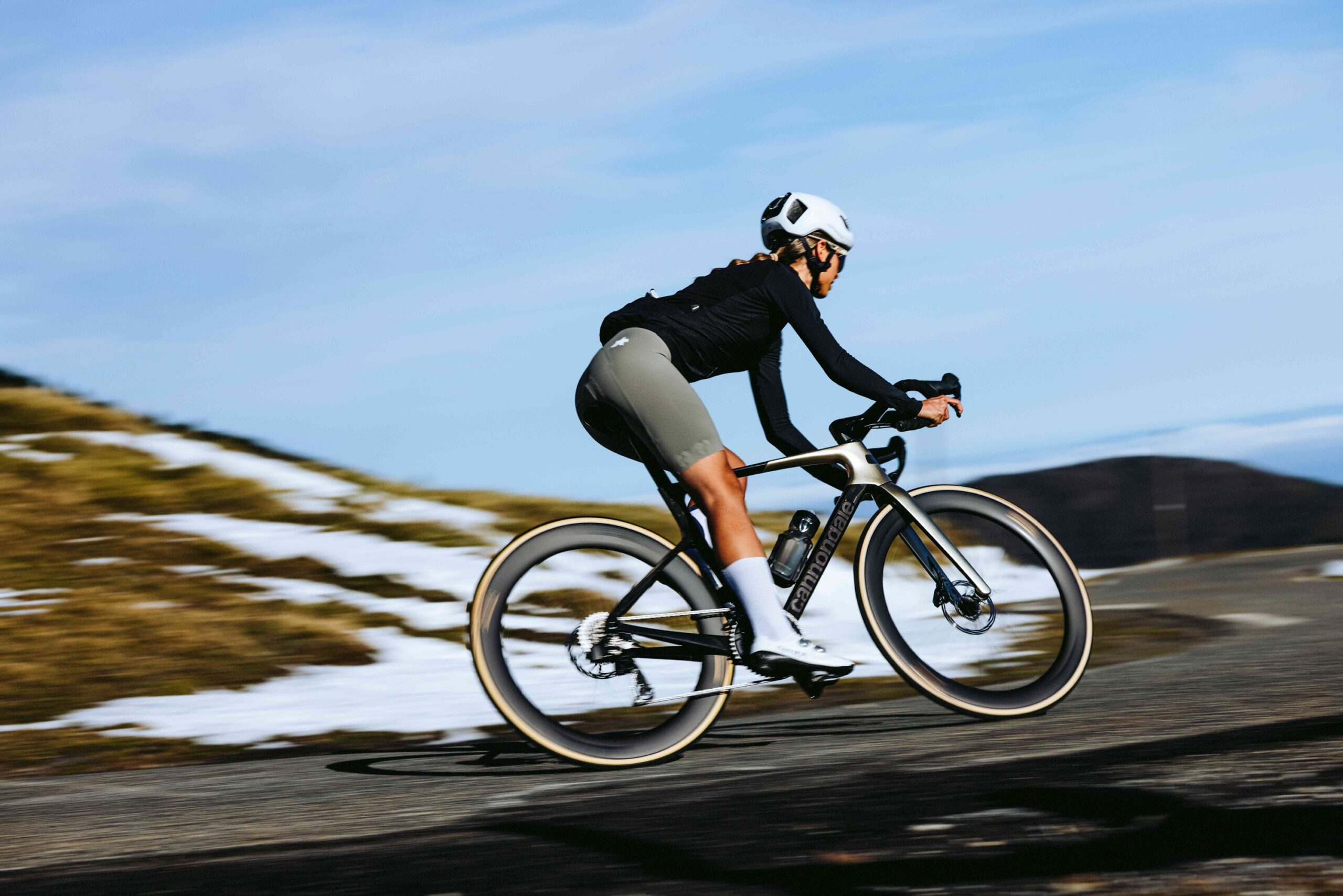
“For this new fifth generation of Evo, our mission was clear – keep the unmatched speed and handling while shaving weight everywhere we could,” says Cannondale.
“The results are stunning. The lightest disc frame and fork we’ve ever made. Even less aerodynamic drag. All wrapped in a package that looks as fast standing still as it does crossing the finish line. We’ve even created a few SL variants for the true weight-weenies out there, with setups so light that the UCI wouldn’t approve them.”
The UCI sets a minimum race bike weight limit of 6.8kg, of course.
Long story short: Cannondale says that the previous SuperSix Evo delivered aerodynamic performance on par with competitors’ dedicated aero platforms while maintaining a light weight, and that the new version is better across the board.
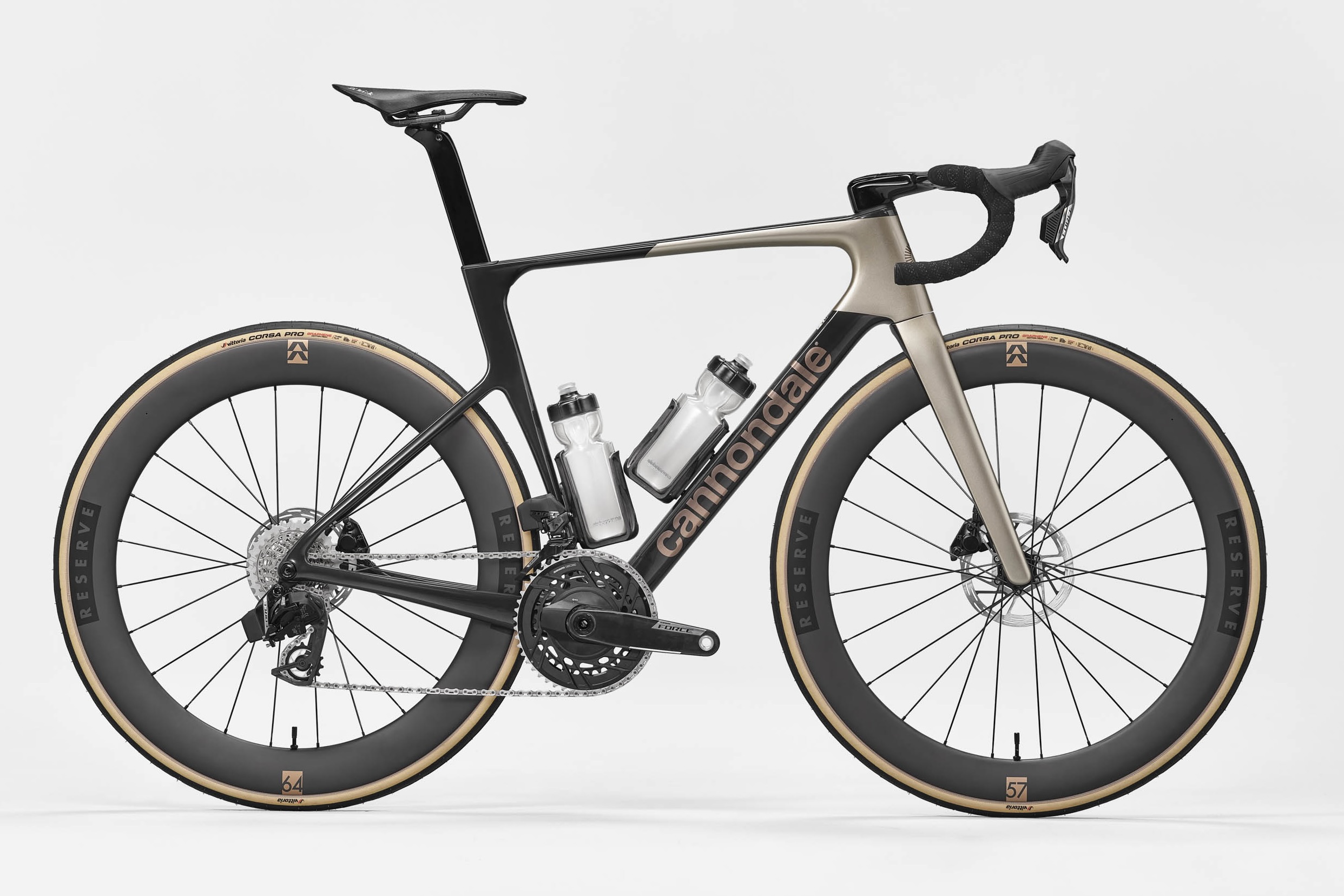
“With this latest version, our designers went through every piece of the prior version and improved nearly every element,” says Cannondale. “If SuperSix Evo does one thing well, it’s everything.”
Okay, that’s the marketing spiel, but you get what Cannondale is aiming at here. The SuperSix Evo is designed to be the brand’s one bike to rule them all (to steal a phrase from Specialized). A master of all trades race bike.
Cannondale’s road engineering manager Steve Smith says, “[The SuperSix Evo is] the perfect balance of aero efficiency and light weight, allowing us to create the ultimate race bike.

“It all started just as Evo 4 was launching [in 2023]. The engineering team sat down, they went through the current bike with a fine-tooth comb, analysing the design and each step of the manufacturing process to maximise the performance.
“The fork is a really good example of this. You can see how we’ve refined the shape of the legs and the crown to allow us to maintain the aerodynamic performance whilst optimising structural efficiency, lightweight and aesthetics. Then we took that same approach and applied it to the whole bike.”
Weight
We all know how road cycling has an unhealthy obsession with weight, so let’s get the figures out of the way right at the start. The new SuperSix Evo frameset comes in three flavours:
Frame Fork
Series 0 728g 392g
HiMod 781g 414g
Carbon 910g 427g
Those weights are for a fully painted 56cm frame and a 45mm offset fork. Cannondale says that the performance characteristics are the same across all three; it’s just the weights and prices that change.
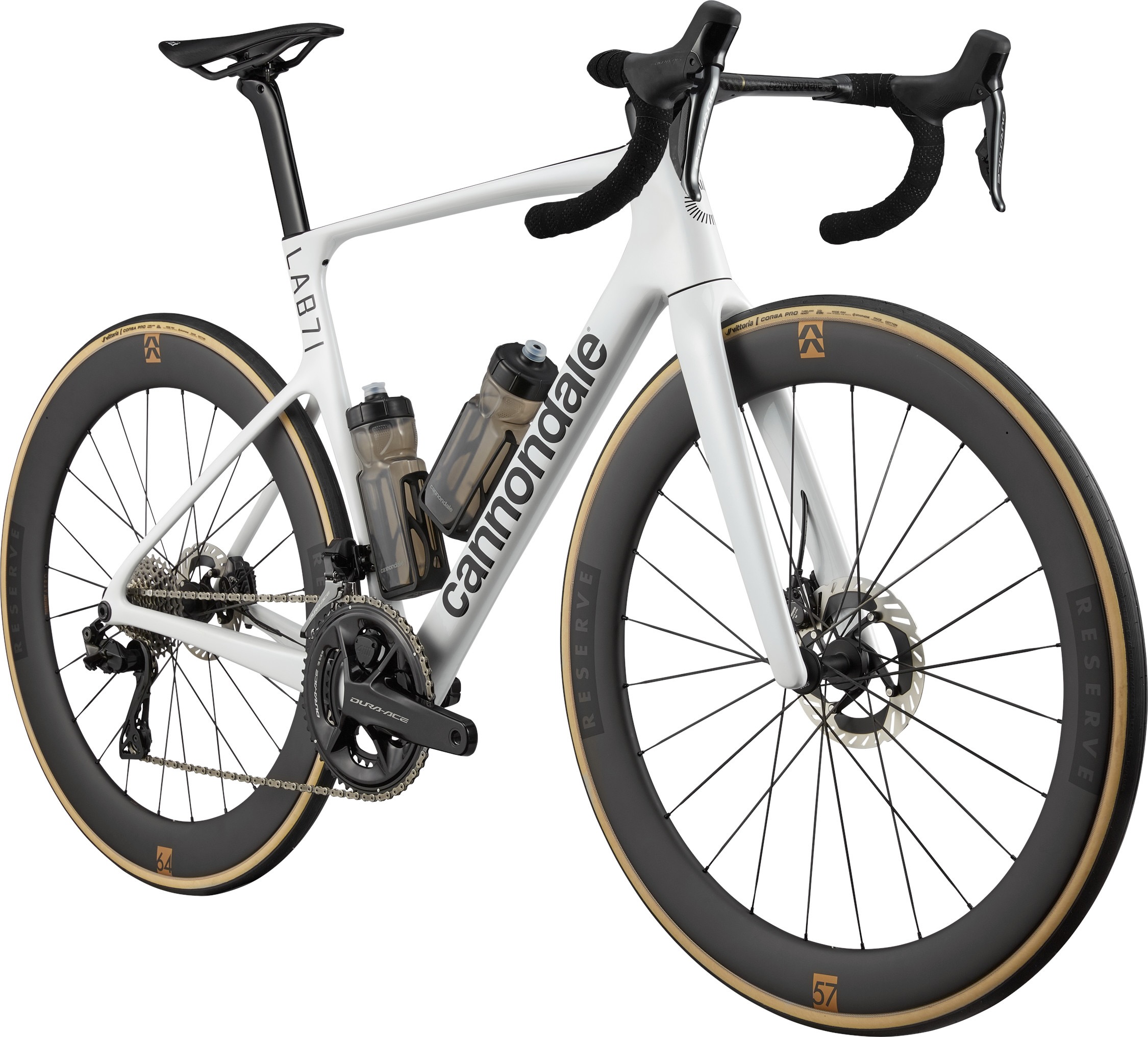
How big are the weight savings over the prior generation? Cannondale describes them as “significant”, although we’re talking about 72g, 37g and 35g for each of the framesets… Enough for Cannondale to boast about its “lightest disc frameset ever”.
Taking the frame, fork, cockpit (see below), bottle cages, computer mount and seatpost into consideration, Cannondale claims a net saving of 148g over the SuperSix Evo 4.
Aerodynamics
Talking about weight isn’t exactly missing the point, but it’s just a small part of the story. Cannondale engineers and designers, like most others, are always keen to emphasise the importance of aerodynamics in determining your speed. Although the first iteration of the SuperSix Evo – introduced back in 2011 – was all about weight and stiffness, reducing drag has gradually become central to the platform’s story.
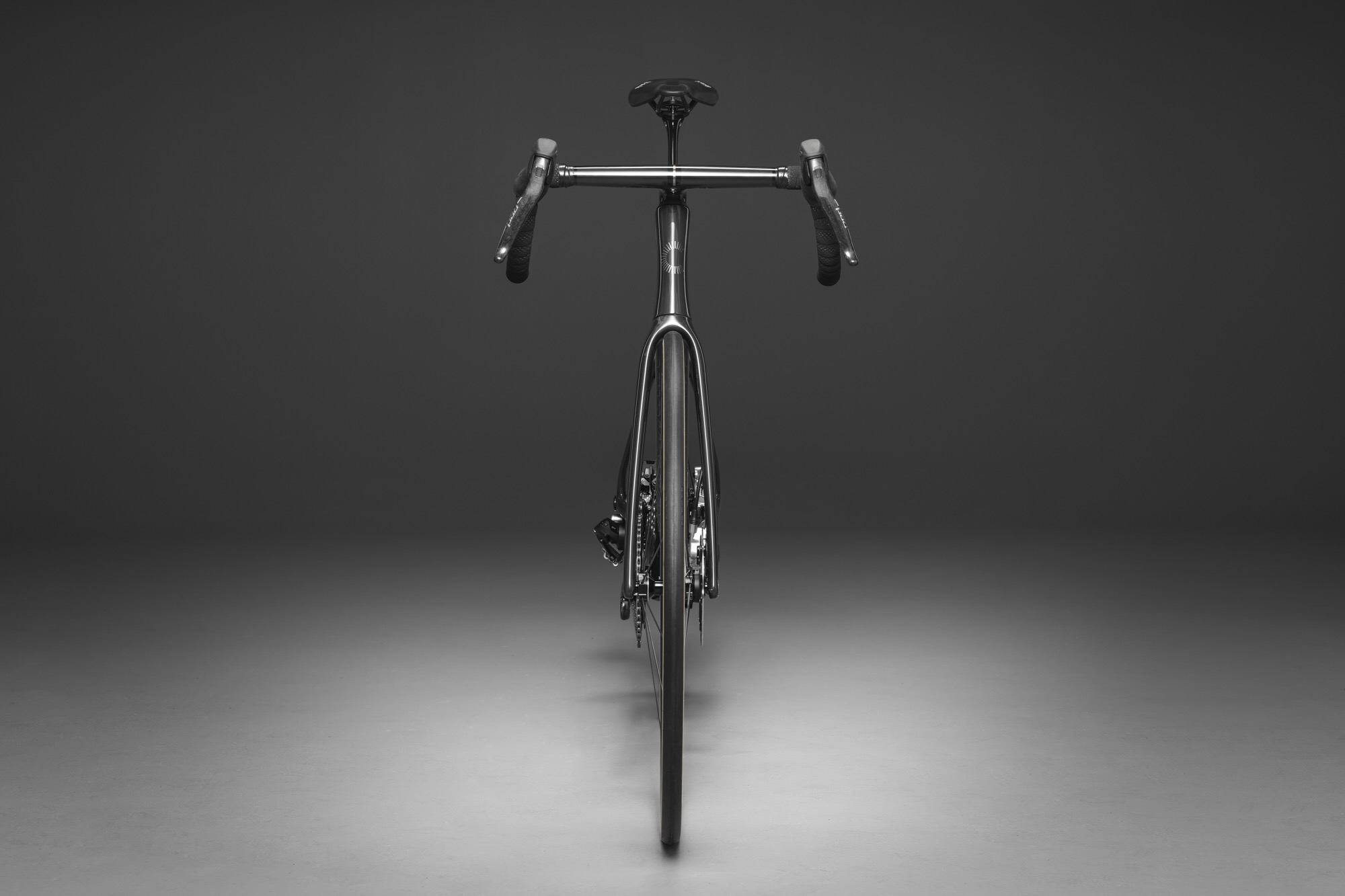
In its White Paper supporting the launch of the SuperSix Evo, Cannondale says, “Each tube on Evo is derived from a true NACA aerofoil, but the shape is heavily truncated at the rear, and sometimes also the front, and replaced with new curvature.”
NACA Airfoils are shapes developed by the US National Advisory Committee for Aeronautics, and they’re widely used in the bike industry.
Senior design engineer Dr Nathan Barry says, “Every single tube on the bike is unique. When we’re approaching any of our bikes, we effectively start from a blank sheet of paper each time. We’re not copying and pasting. We’re not replicating stuff throughout the bike. Every single piece of the bike gets its own attention.
“In the case of tube construction, we start from a heavily modified aerofoil base, and we build that tube up based on the unique aerodynamic requirements of the tube, what local flow it sees, and also the structural requirements of the tube. We combine those. We’re chasing minimum drag, but at the same time, we are balancing that with a need for structural efficiency. And that’s really the ultimate challenge of a bike like an Evo – perfecting that balance.
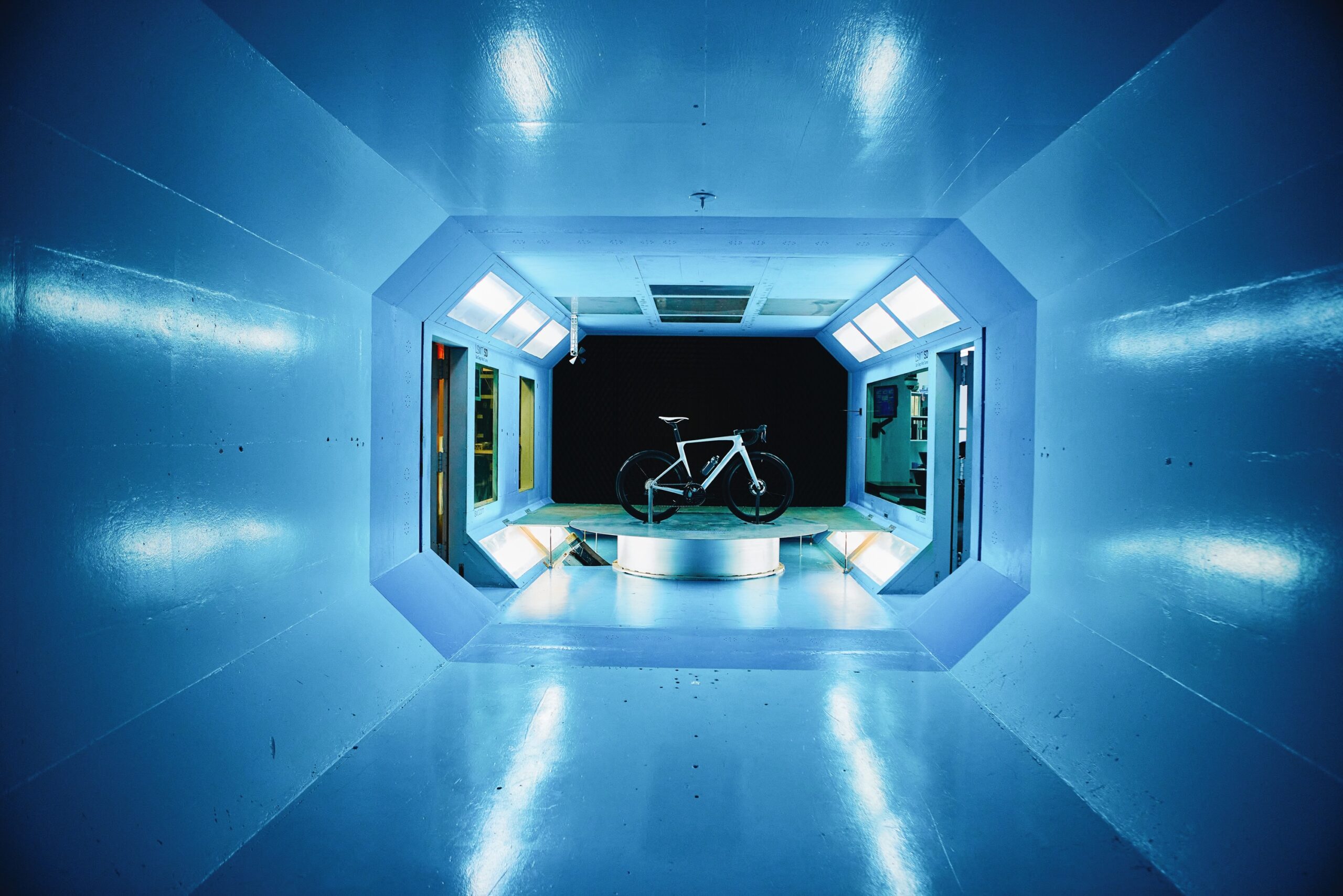
“If you see some similarities in the profile between the new fifth-generation bike and the prior one, that’s not by accident. We’re applying a similar formula. The fourth-gen bike and the fifth-gen bike are chasing this ultimate blend of aerodynamic performance and low weight.
“The fourth-gen bike, we were really proud of. It really did meet its initial goal of matching the aerodynamic efficiency of some dedicated aero bikes, but without the weight penalty. What we see with Evo 5 is a refinement of that formula – taking some of that raw performance and taking it to the next level. The problem, of course, is that we are comparing against something that is already a really excellent bike, so it does become a large challenge to take a step forward.
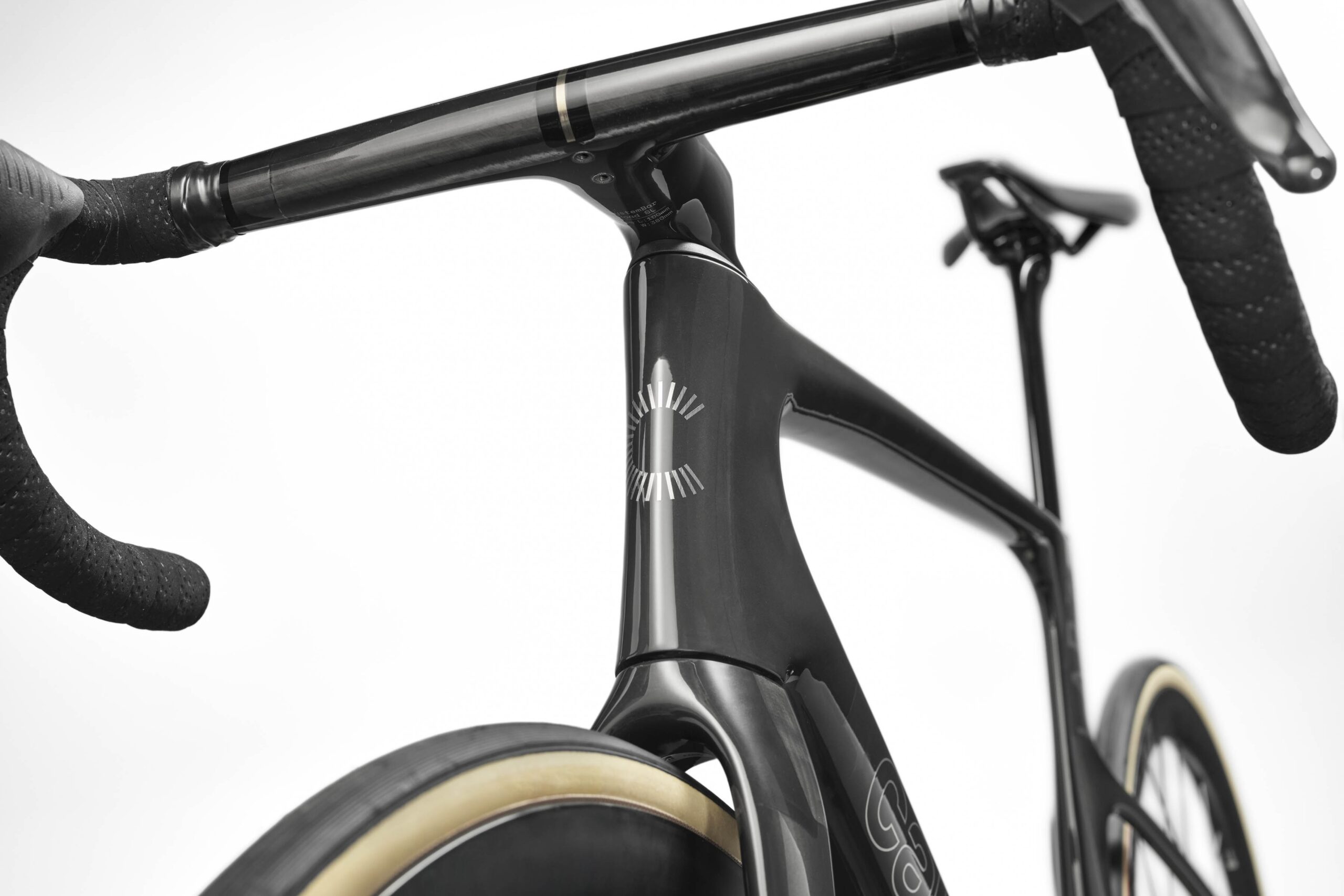
Cannondale says that it focused heavily on the front end – an area that sees a significant proportion of the total drag. Through many CFD (computational fluid dynamics) iterations, it trimmed excess material from the fork crown and head tube without adding drag to the system, saving weight from both.
Nathan Barry says, “Our original goal for this platform was to refine every piece of the bike so that we could reduce the weight across the board, but without any penalty in aerodynamic drag. We really hit the goal, but we also exceeded it. Across the yaw spectrum, the new bike is faster than the old one. We’re really impressed to see that, but keep in mind, the old bike is already really good. Having taken a step forward, we’re very confident that it will be difficult to find a faster bike than Evo in the peloton.”
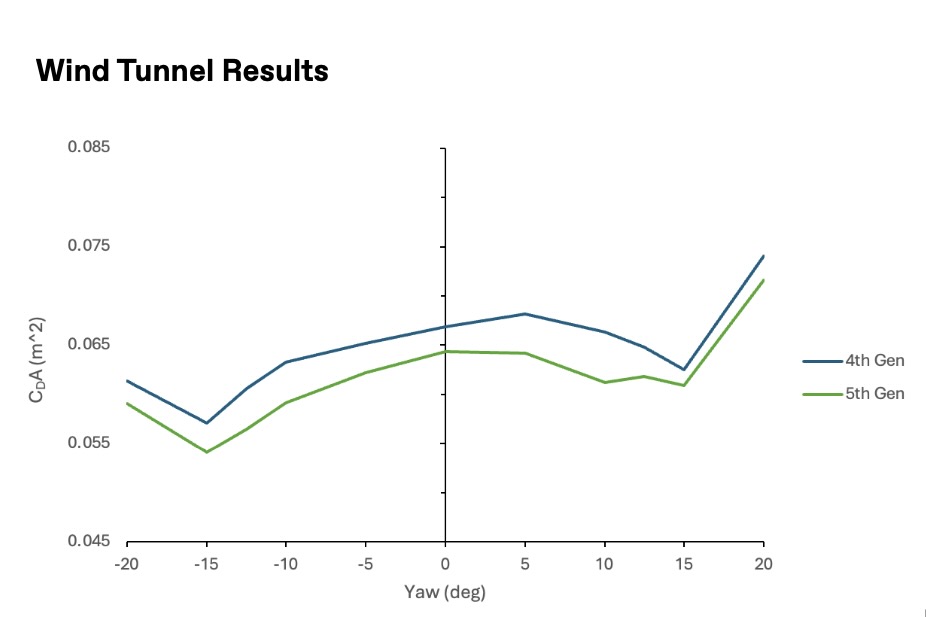
Cannondale claims a yaw weighted drag saving of 0.003 m2 vs the prior generation, weighted at 40km/h (25mph) road speed.
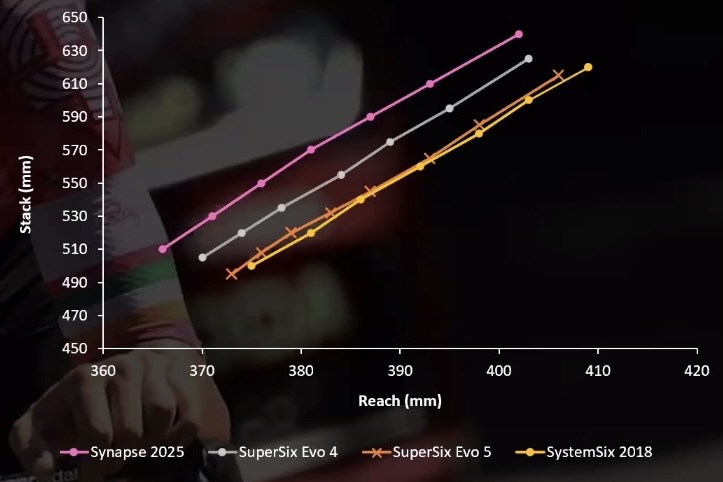
The fact that Cannondale has reduced the stack (the vertical distance from the bottom bracket to the top of the head tube) by 10mm from that of the SuperSix Evo 4 across the size spectrum doubtless contributes to this aero saving. The stack and reach of the Evo 5 are similar to those of Cannondale’s SystemSix aero road bike, introduced in 2018.
Frame stiffness
Like most brands, Cannondale talks a lot about frame stiffness and its unwillingness to make sacrifices here to save weight.
It says that stiffness at both the bottom bracket and head tube increases progressively with frame size. Cannondale has been talking about what it calls ’Proportional Response’ for years – where the mechanical properties of the bike are scaled so that every rider has the same experience, more or less.
It says that stiffness doesn’t vary between the three carbon layups, though. It is able to reduce weight as a result of using different composite materials and layup without altering the ride characteristics.
SystemBar
Stuck out at the front of the bike, the handlebar/stem always has an important part to play in overall aero performance, and Cannondale has introduced two new cockpits (combined handlebars and stems) with the new SuperSix Evo.
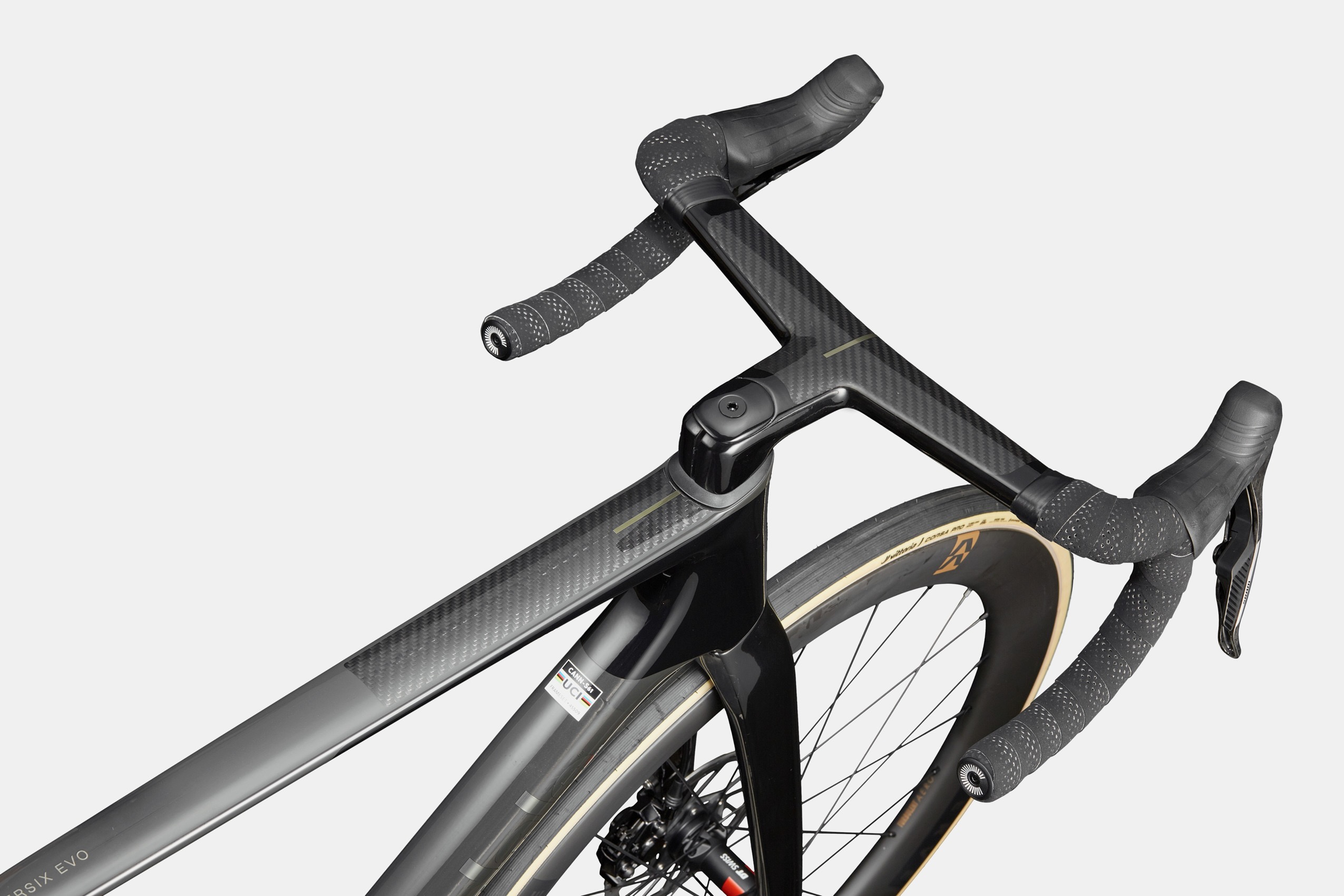
First up, there’s the SystemBar Road, which has been reworked with the aim of creating a smoother, lighter, more efficient cockpit. The top sections are a truncated airfoil profile. It’s narrow up top (340-380mm) with 20mm of flare on each side. In other words, your hands sit wider on the drops than they do on the hoods, intended to improve the handling.
The SystemBar Road comes in at a claimed 375g (in the version that measures 360mm across the tops with a 100mm stem section). That’s about 40g lighter than the SystemBar R-One on the fourth-generation SuperSix Evo.
Cannondale says. “Classic round handlebars represent a significant drag penalty. It is for this reason that round handlebars have rapidly become outliers in elite racing. With our SystemBar Road cockpit we are able to deliver a low drag package that is lighter than a conventional two-piece setup.”
That said, Cannondale does offer the SystemBar Road SL with round-profiled top sections and a claimed weight of just 265g – so you get a lighter weight but lower aero efficiency. This model is found on the SL-spec LAB71 and 1-level bikes. You get the same 20mm flare on each side as on the SystemBar Road cockpit.
Superlight builds
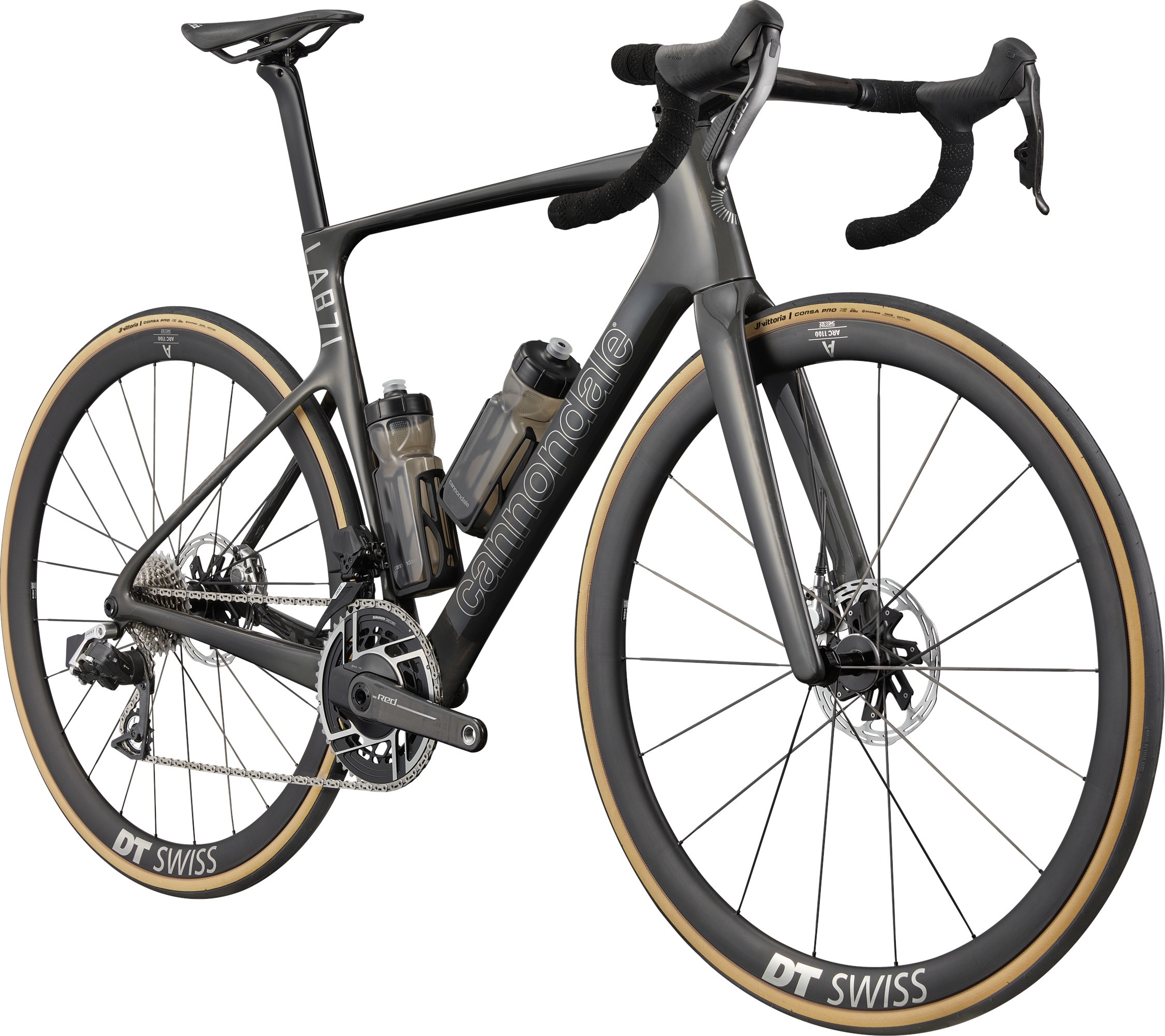
What’s with this talk of SL-spec? Cannondale has introduced SL variants to the SuperSix Evo lineup, built up with the SystemBar Road SL one-piece cockpit (above) and shallower, lighter wheelsets. The LAB71 SL version comes in at a claimed 6.4 kg.
Mart Otten, Cannondale’s senior product manager (road), says, “We wanted to underline how good this frame is – both being superlight and being superfast – so we decided to do some dedicated builds. They are really all about addressing that sensation that comes with riding a superlight bike, especially up a steep hill, accelerating and feeling that speed and how fast it goes forward when you put a little bit more effort in.
“We use the same frameset and seatpost on those models, but we made some changes to the other parts, like the cockpit. It’s really all about being minimalistic. If you look at the top cap, for example, it’s super-flat machined aluminium.
“Like the cockpit, this frameset comes with a special super-light finish. I think it’s the lightest finish we have ever done, mainly clear coat. With lightweight components – climbers’ wheels with TPU tubes – we come out at 6.4kg.
“We also sell this specific colourway as a frameset. We expect a lot of sub-6kg special builds to come out. It’s definitely possible with some exotic parts on there.”
Cannondale is keen to point out that it doesn’t consider the SL models to be racing editions of the SuperSix Evo.
“The standard build of the bike represents the pure racing version of our ultimate race bike, fully dialled for speed,” it says.
In other words, Cannondale reckons it has got the balance between aerodynamics and weight right with the standard (non-SL) versions of the SuperSix Evo, but it knows that some people can’t resist the urge to go lighter. You know who you are.
More details
Just to nip back up to the frameset for a second: if you’d like to fit wider tyres, Cannondale says that the new SuperSix Evo has space for 32mm (measured) with at least 4mm of clearance on each side.
First introduced on the 4th-generation SuperSix Evo, Cannondale uses its Delta fork steerer – its ’pizza slice-shaped steerer tube’ – to manage the internally routed brake hoses.
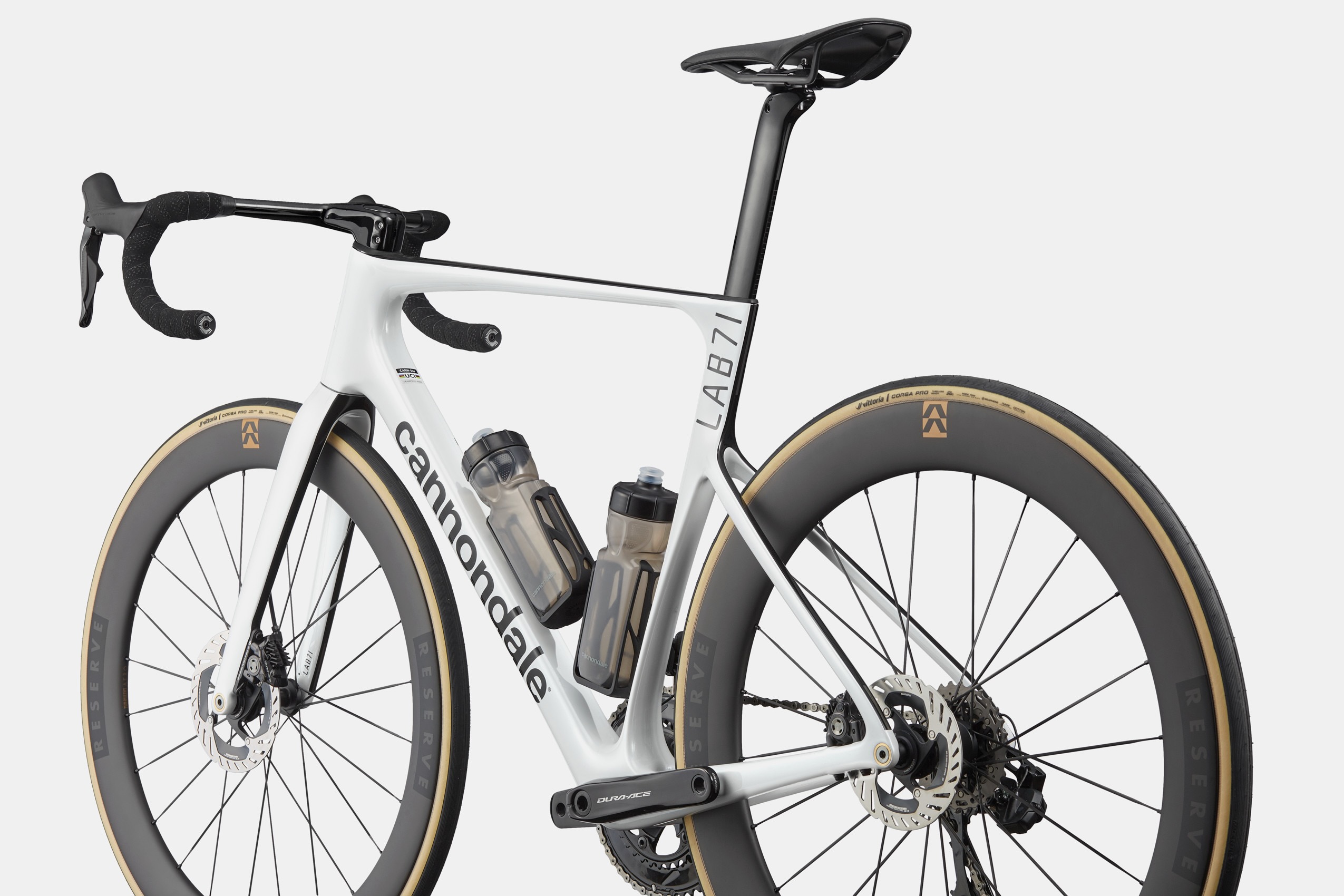
All LAB71 and Hi-MOD SuperSix Evos come with new CarbonGrip Aero Cages that feature injected carbon and are claimed to be 26% lighter than previous options.
“Paired with the Gripper Aero Bottles, they integrate seamlessly with the SuperSix Evo, further reducing drag and making the bike even faster,” says Cannondale.
The new SuperSix Evo (like the new SuperSlice, below) is UDH compatible.
> What is UDH and is it the future of all bikes? SRAM’s Universal Derailleur Hanger explained
The Cannondale SuperSix Evo range
SuperSix Evo LAB71 £12,000
Frameset LAB71 SuperSix Evo, Ultralight Series 0 Carbon
Handlebar Cannondale SystemBar Road
Groupset Shimano Dura-Ace Di2 (inc power meter)
Wheels DT Swiss 180 DiCut hubs, Reserve 57|64 Carbon rims
Claimed weight 6.95kg
SuperSix Evo LAB71 SL £12,500
Frameset LAB71 SuperSix Evo, Ultralight Series 0 Carbon
Handlebar Cannondale SystemBar Road SL
Groupset SRAM Red AXS (inc power meter)
Wheels DT Swiss 180 Spline hubs, DT Swiss ARC 1100 Spline 38 CS rims
Claimed weight 6.35kg
SuperSix Evo 1 £8,995
Frameset SuperSix Evo Hi-MOD Carbon
Handlebar Cannondale SystemBar Road
Groupset SRAM Force AXS
Wheels DT Swiss 240 hubs, Reserve 57|64 Carbon rims
Claimed weight 7.3kg
SuperSix Evo 1 SL £8,795
Frameset SuperSix Evo Hi-MOD Carbon
Handlebar Cannondale SystemBar Road SL
Groupset Shimano Ultegra Di2 (inc 4iiii Precision 3+ PRO power meter)
Wheels DT Swiss 240 hubs, Reserve 34|37 Carbon wheels
Claimed weight 6.8kg
SuperSix Evo 2 £5,995
Frameset SuperSix Evo Carbon
Handlebar Vision Trimax Carbon Aero
Groupset Shimano Ultegra Di2
Wheels DT Swiss 370 hubs, DT Swiss ERC 45 rims
Claimed weight 7.6kg
SuperSix Evo 3 £6,995
Frameset SuperSix Evo Carbon
Handlebar Vision Trimax Carbon Aero
Groupset SRAM Force AXS
Wheels DT Swiss 370 hubs, DT Swiss ERC 45 rims
Claimed weight 7.6kg
SuperSix Evo 4 £5,495
Frameset SuperSix Evo Carbon
Handlebar Vision Trimax Carbon Aero
Groupset SRAM Rival AXS
Wheels DT Swiss 370 hubs, DT Swiss ERC 45 rims
Claimed weight 7.9kg
SuperSix Evo 5 £4,495
Frameset SuperSix Evo Carbon
Handlebar Vision Trimax Carbon Aero
Groupset Shimano 105 Di2
Wheels Vision SC45 SL i23
Claimed weight 7.9kg
SuperSix Evo LAB71 A/M Frameset £4,995
SuperSix Evo Hi-MOD A/M Frameset £3,995
There’s also a SuperSix Evo 6, built up with a Shimano 105 (mechanical) groupset and Vision SC45 SL i23 wheels, but it’s not being brought into Europe. That one is US$2,999 (which converts to about £2,200).
SuperSlice TT bike: Cannondale lowers the drag
Cannondale has updated its SuperSlice time trial bike too, claiming that it “pushes the envelope of aerodynamic physics, material science, and UCI regulations further than ever before in the pursuit of ultimate speed”.
Nice line!
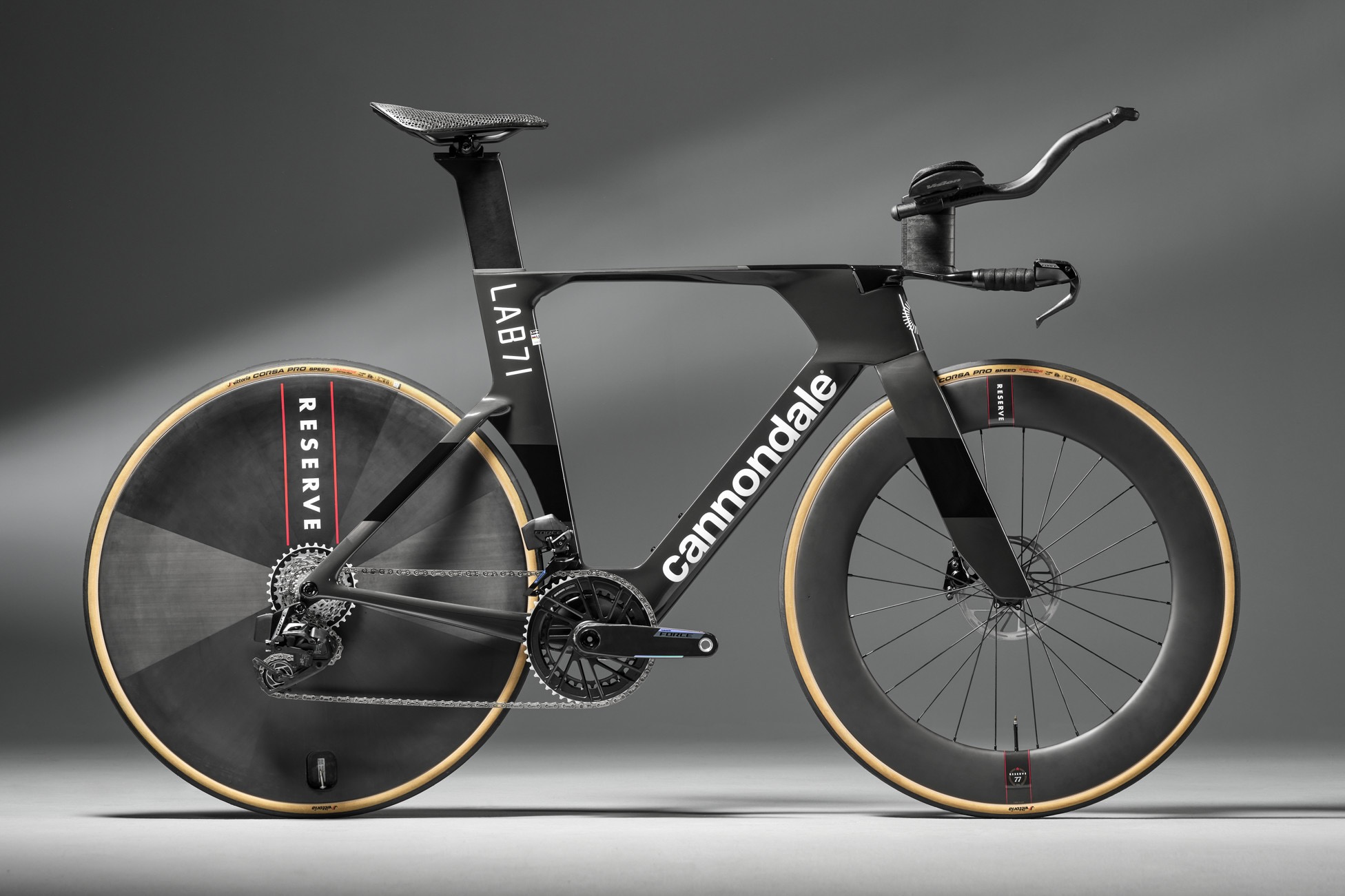
Cannondale says, “The previous SuperSlice was already one of the fastest TT bikes out there and impressively light, so the goal for the new version was pretty simple: keep it light, and make it even faster. Easy to say. Hard to do. But our team did just that.
“Every tube shape, junction, and component was painstakingly refined through hundreds of hours of CFD and wind tunnel analysis, resulting in a frameset system that produces 14% less drag than the previous version, saving 10 watts at 50km/h [yaw weighted drag], while weighing just 60g more.”
Heavier? Cannondale has moved away from the standard bike updating script here, then. The rules, handed down through generations of bike company marketeers, say that a new bike must be a smidge lighter than its predecessor. It’s for the greater good, though, according to Cannondale: a faster overall speed.
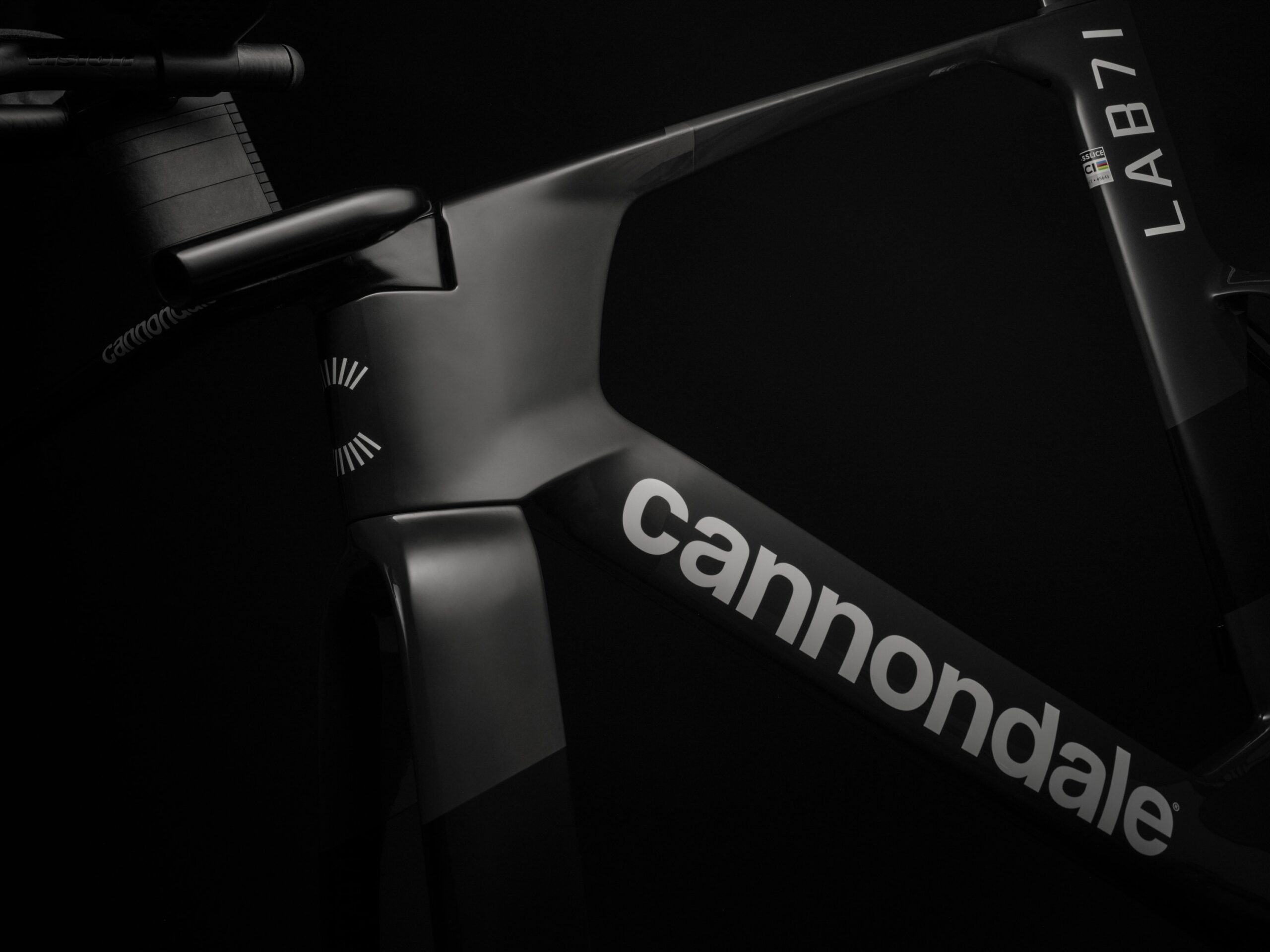
“Geometry and handling are kept virtually the same, but a greater range of seat angle adjustability, and more pad stack and reach range allow even more aero positioning,” says Cannondale. “Head tube and bottom bracket stiffness are increased as well.”
Like the SuperSix Evo, the SuperSlice has a maximum tyre size of 32mm (with 4mm of clearance all round).
“It goes without saying, a time trial bike is all about speed,” says Cannondale’s product manager (road) Will Gleason. “Time trial bikes really are the distillation of what a brand knows about aerodynamics. It’s where we can push our aero development the furthest, really digging into the UCI rule book, digging into the simulations to find every bit of speed we can, taking out every gram of drag we can find, making the fastest machine possible. This is a bike that allows us to innovate, to learn. It pushes technology forward that we then spread to our whole lineup: SuperSix, Synapse, SuperX.
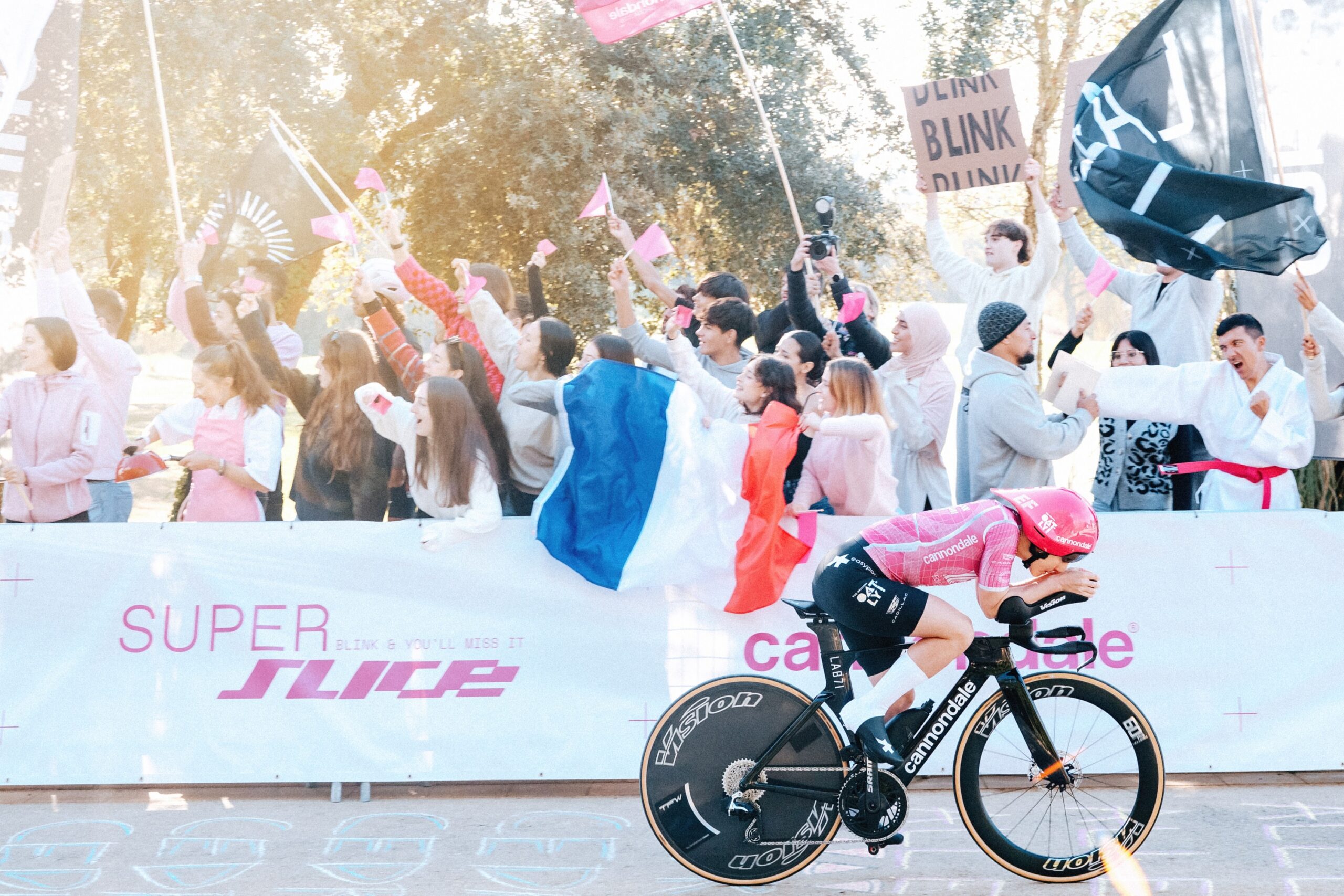
“So how do we get there? At the root of it, a time trial bike is all about sculpted airfoils and an integrated chassis, trying to find the smoothest airflow over the machine as possible. The first thing you’ll notice is this massive fork up front. By really building out the front end of that bike, we were able to find a good chunk of drag to pull out.
“But that fork’s big, so we had to save some of that weight somewhere else. We don’t want bikes to get too heavy. We want to get as much speed as we can while keeping the weight in check. By making the fork larger, we would take a step forward in speed. To support that, we developed an entirely new one-piece carbon base bar, taking a ton of weight out of the cockpit, making up almost all that weight we gained from the fork, while also creating a much more streamlined profile from cockpit to head tube. The result is a super-efficient front end with very minimal weight gain.”
It’ll take a chainring up to a whopping 68T.
The SuperSlice LAB71 frameset is £6,995. That includes the new SystemBar TT cockpit and post.




9 thoughts on ““It will be difficult to find a faster bike in the peloton” – Cannondale updates SuperSix Evo: lighter, more aero, same race-everything brief”
I’m really struggling with that yaw v CdA graph. Reading the numbers, this bike has a CdA of .065 at 0 degrees wind, and 0.055 at 15 degrees. So… somehow this bike is 18% more aerodynamic if the wind is coming at a 15 degree angle – which makes no sense at all.
I think they’ve messed something up?
Or else this bike is getting a sail effect from yaw angles, reducing the CdA somehow but very likely also inducing a moment on the bike – which they’re of course not reporting. Such moments are _not_ desirable (I don’t have these cannondales, but I do have aerofoil shaped tri-spokes, which have a sail effect in quartering head winds and it is not fun – especially if the wind is not steady).
Any aerodynamics people here able to shed some insight?
When air comes from an angle it generates an element of lift in the same way a sailboat can sail into wind.
Yes, as I mentioned in my comment. Problem is, such a lateral lift effect is not really desirable.
I’m sure it’s a lovely bike and a worthy upgrade for my first gen. Would it kill them to hire a designer for the paintwork though? Do they not have colours any more?
£1000 premium for SRAM Force AXS, not even Red. Even better reason to avoid buying stuff from the US while the Orange Groper is in charge.
Cannondale and SRAM might like to still market themselves as American companies, but if you’re buying the bike in the UK, I can’t imagine any of it has actually ever touched American soil. Cannondale, now owned by the Dutch company Pon Holdings, has a large assembly facility in the Netherlands which I believe supplies the UK market. As far as I can tell, pretty much all the manufacturing of the frames and stock components is done in Asia somewhere.
So whilst the oompa-loompa-in-chief can be blamed for many things, I think the pricing just reflects industry trends rather than being a result his trade policies.
That’s correct to a large degree but I suspect the Mango Mussolini’s influence may still be being felt: with bikes imported to the USA facing tariffs up to 56% and the consequent fall in sales companies must be looking to make up the profit shortfall elsewhere, one assumes.
The’re about as American as Yorkshire puddings.
American Yorkshire Puddings are Dutch too.
https://en.wikipedia.org/wiki/Dutch_baby_pancake