



The Dutch government is investing up to €1 billion in cycling infrastructure to connect hundreds of homes nationwide.
The investment is part of a broader package of €2.5 billion, which will fund the construction of roads, cycle paths, tunnels and tram lines to the new homes.
€1.3 billion of this is earmarked for projects before 2030, which includes more than €64 million for the VeluweWaalpad, a continuous cycling route connecting Arnhem and Nijmegen.
.jpg)
A further €43 million will go to municipalities in the Gelderse Vallei region to encourage people to cycle between Ede, Rhenen, Veenendaal and Wageningen.
The country aims to build 100,000 new homes per year to counteract the housing crisis, and will have integrated sustainable transport from the outset.
“You can’t just build a neighbourhood and then figure out how people will get to and from it,” Chris Bruntless, International Relations Manager at the Dutch Cycling Embassy, told Zag Daily.
“We have to develop the housing plans and collaborate with the transport sector at the same time. This is something the Netherlands does remarkably well.”
In contrast, recent emergency rules in the UK to encourage housebuilding and counteract the housing crisis have allowed reduced requirements for the building of cycle parking.
The rules, announced by the UK government and the Mayor of London, allowed developers to pay financial contributions instead of building bike storage, or are able to build the storage off-site, to avoid “costly requirements”.
It has also been reported that the UK government plans to reintroduce a spending cap on purchases made as part of the Cycle to Work scheme.
Sources familiar with the budget, which will be unveiled at the end of the month, told the Financial Times that the Conservative decision to lift the scheme’s previous £1,000 cap in 2019 was not the best use of public funds.
One source concluded that “taxpayers shouldn’t be footing the bill for luxury leisure.”
Cycle to Work Alliance said in a statement to road.cc regarding this news, “In 2019 a spending cap of £1,000 was abolished, as it was preventing people from being able to access the equipment they needed for everyday commutes. By effectively excluding e-bikes and adapted cycles from the scheme, the cap discriminated against older people and those with disabilities.”
However, the national investment from the Dutch government will largely be focused on cycle highways connecting rural villages and suburban areas with metropolitan centres, providing access to jobs, healthcare and education.
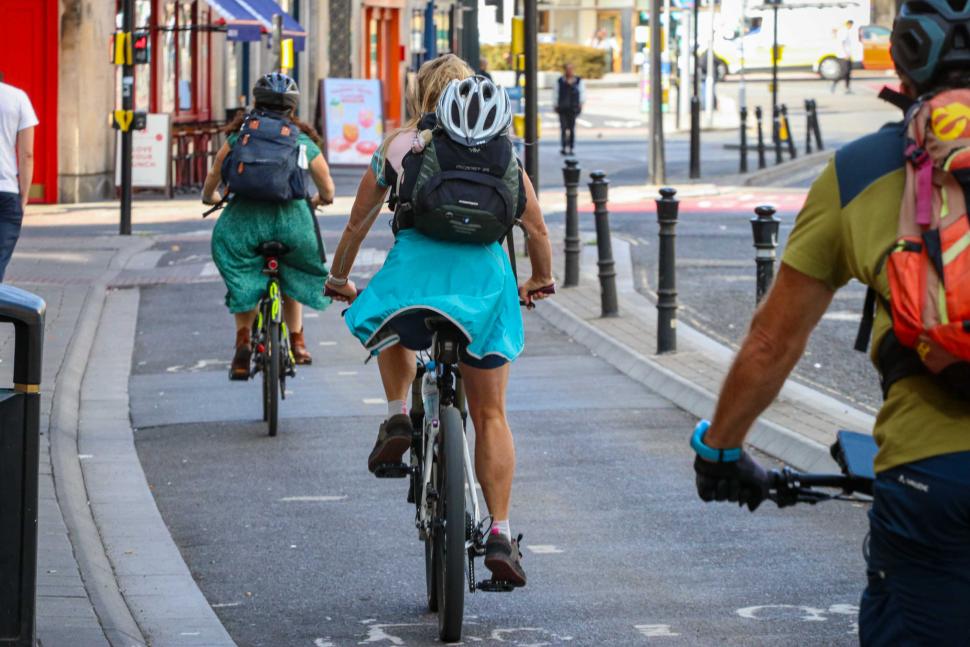
Bruntlett emphasises that accessibility in terms of access to opportunity, housing, jobs, healthcare, and education is a priority.
“The bike, train and car are three ways we can access opportunity. But in the Netherlands, there’s an understanding that not everybody can afford a car and not everybody wants to use a car,” he said.
“If we’re to provide housing that’s affordable to everyone, accessible and sustainable, then we must invest in cycling and public transport. This time, it’s a €1 billion investment just for cycling.
“That’s a pretty big statement of intent as to what kind of transport the Netherlands wants to encourage at a national level.”
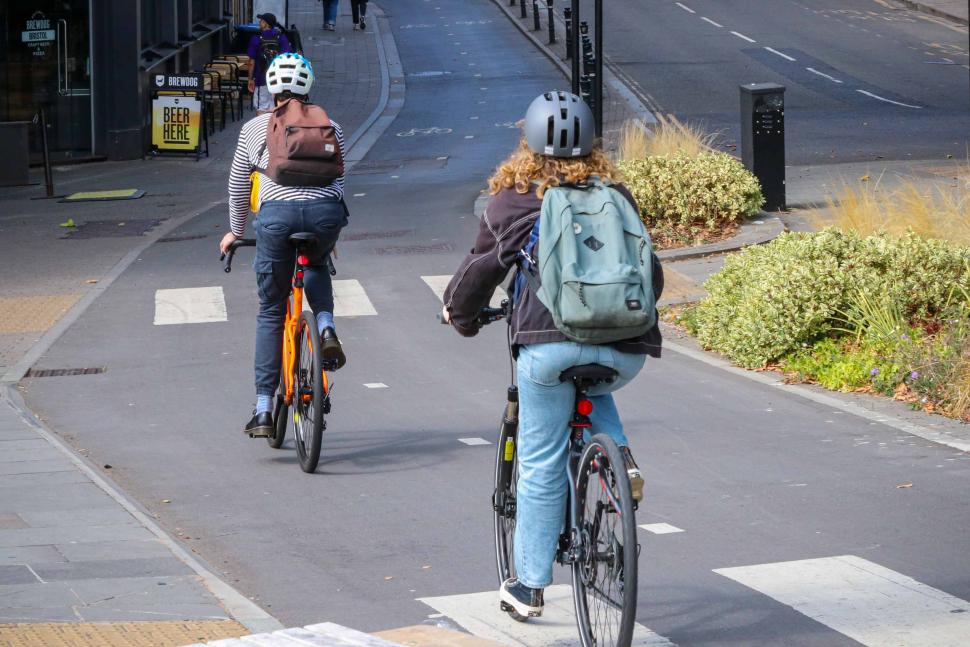
As Bruntlett emphasises, a €1 billion investment from the Dutch government shows that it considers cycling and active travel to be a priority.
In February 2025, the UK government pledged £291 million to a national active-travel scheme projected to enable 30 million extra walking or cycling trips annually.
However, Cycling UK’s report from February revealed that just 2% of the transport budget in England goes towards active travel infrastructure. It was estimated that outside of London, this was as low as £1 per person spent per year.

The Dutch government also plans to invest in cycling infrastructure and train networks, with secure bike parking at railway stations for first and last-mile connectivity.
This contrasts to the recent news that bikes stolen from train stations in the UK that were left for more than two hours would not be investigated.
Bruntlett went on the explain that due to the nation’s “systemic” approach, it is difficult to exactly know how much is spent on active travel and cycling in the Netherlands.
“Cycle paths are often built as part of standard road projects rather than as separate add-ons, so it can be difficult to parse out exactly what counts as cycling investment.”










8 thoughts on “Dutch government commits €1 billion to cycling infrastructure to connect new homes”
It’s a shame that we never
It’s a shame that we never get to vote for these kinds of committments in the UK. Why does it always seem like our politicians behave like children and just chase after authoritarianism whilst plundering all our assets?
I do when I vote Green, just
I do when I vote Green, just a shame we’re stuck with First Past the Post.
A certain Northern Labour City Mayor who keeps prancing around the question of whether he wants to the the PM is in favour of Proportional Representation however.
Boopop wrote:
Well, we’ve got a Green MP and a Green council here in Bristol, but there’s still endless debate about the Liveable Neighbourhoods and whether they’re listening to people. It’ll be interesting to see the end results of the EBLN next year as to how much people changed their transport habits.
They should just do an in
They should just do an in-person vote on in, after all the antis are apparently trapped in their homes / streets, so…
‘ . . . . . the national
‘ . . . . . the national investment from the Dutch government will largely be focused on cycle highways connecting rural villages and suburban areas with metropolitan centres, providing access to jobs, healthcare and education’
can you imagine that ever happening in the UK? The sum of money is astonishing (compared to the rest of Europe) but also the vision.
It is a lot, but not when you
It is a lot, but not when you compare it to other “strategic” travel infra. Or even a couple of miles of “roads” and their associated infra (junctions, works on utilities etc).
(Also I believe the design standard will usually cope with the weight of the few motor vehicles needed for maintenance – and where this is a “cycle street” it’s obviously the same spec as the former street).
Agree about the vision. Like all things there is probably some “this is what we hope for” as well as a cold cost balance. But that same cold financial evaluation will show that more motor infra may well bring economic costs, while cycle infra is overall a benefit.
(Some people benefit a great deal from road infra but we *all* end up paying for the large negative externalities. And road infra strongly drives demand for more road infra – having displaced other modes. We’ve literally built it in – to settlement patterns and provision of jobs and amenities. And after the early decades of promoting and funding it over many people’s objections).
chrisonabike wrote:
And also, hasn’t it been calculated that the Dutch government gets roughly a 3,800% ROI on active travel infrastructure, current investment €595 million per annum, saving to the state €19 billion per annum for increased productivity, reduced absenteeism and lateness, better physical and mental health (estimated 6500 premature deaths prevented per annum) and so forth? Got to be the best billion euros a government could possibly spend, hasn’t it? To coin a phrase, the Dutch government do no-brainers, other governments just are no-brainers.
“You can’t just build a
“You can’t just build a neighbourhood and then figure out how people will get to and from it,” Chris Bruntless, International Relations Manager at the Dutch Cycling Embassy”
Yes you can, us Brits do it all the time, and we never learn.
While the Dutch show us the way, we stubbornly refuse to see or hear the message, because the car lobby has such a stranglehold on our politicians that it is very difficult to get anything useful done. And even if you could, there’s no money to do it, despite the fact that Active Travel is the best national investment, most rewarding use of government money that can be done.