



[This article was last updated on November 9, 2019]
Your car has tubeless tyres. Mountain bikes have by-and-large moved over to tubeless tyres in the last decade. And now it’s available for road bikes. Well it has been available for some time, though it’s been slow to catch on; but there’s ever-increasing choice now and a growing number of cyclists are making the leap. Is it time you did too?
But what are the advantages to ditching the inner tubes? Just what are the pros and cons?
Read more: How to fit tubeless tyres
What is tubeless?
Tubeless is basically a clincher tyre inflated onto a rim with no inner tube. Instead of an inner tube holding the air pressure, an airtight chamber is created with a tubeless-specific tyre, developed with a special (commonly carbon) bead, and a compatible rim. The tyre bead locks into the rim and forms an airtight seal that maintains the pressure.
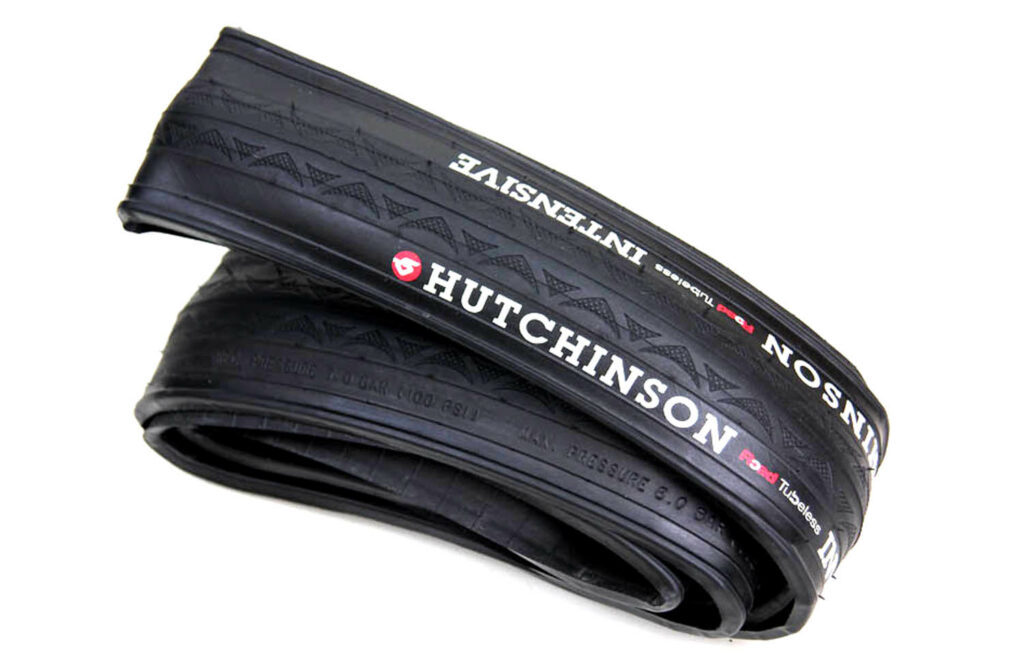
Road tubeless was first brought to market by Hutchinson and Shimano in 2006 (though Mavic and Michelin had a stab earlier in 2004) but it’s fair to say it wasn’t immediately a runaway success.
Why is that? For starters, most professional riders don’t use tubeless, which for a lot of cyclists is enough reason not to use it. Tubular tyres are still dominant in the professional peloton because it’s a weight obsessed sport, and tubulars still offer the lightest setup. It’s also because a tubular stays on the rim during a rapid loss of air. Fitting a tubular tyre is a lot of hassle though, and much more tricky than fitting a tubeless tyre.
Clincher tyres with inner tubes are still popular because they’re simple and work well. Most people can easily change an inner tube and punctures can (if you’re lucky) be quite rare. There’s also no issue with compatibility. Any tyre will fit to any rim, and the market is awash with a staggering choice of both.
The last holdouts enter the fray
The biggest news in tubeless tyres is the recent arrival in the sector of tyre giants Continental and Michelin, the last major tyre manufacturers to announce tubeless tyres. Continental came in with a tubeless version of their new top-end road tyre, the Grand Prix 5000, and followed up with gravel tyres. Michelin have launched a tubeless member of their Power series, the Power Road, an all-round racing and training tyre.
But you have to wonder if those two tyre manufacturers would have got into tubeless without the invovement of wheel maker Mavic, which announced its Road UST (Universal System Tubeless) wheel/tyre system in June 2017.
Mavic says Road UST is easier to use and safer than previous tubeless systems and has put its production facilities where its mouth is, with a range of 15 wheels.
The difference between Mavic’s system and others is that there’s tight control over production variances, Mavic says. Variation in tyre bead stiffness and size affects safety as well as ease of installation and removal. Keeping the tolerances small is crucial to the success of the system.
Mavic says that Road UST is going through the approval process to become a standard recognised by both ISO (International Organization for Standardization) and ETRTO (European Tyre and Rim Technical Organisation) working groups.
Read more: Buyer’s guide to tubeless tyres — all your options in new technology rubber
What are the advantages of tubeless?
Why go tubeless at all then? The main advantage, and it’s a big one, is the substantially reduced risk of puncturing. There is no inner tube to puncture, whether from sharp objects penetrating the tyre or, more rarely, pinch flats when the inner tube is squashed between the rim and tyre.

To get the best out of tubeless, and to provide the extra puncture resistance in the absence of the inner tube, there is one extra ingredient that is needed: liquid sealant. This sloshes around inside the tyre and then reacts with air when the tyre casing is punctured, and plugs the hole. It can seal most small holes caused by flint or thorns and while you might suffer a small drop in pressure, you can continue riding.
They’re faster. Because there aren’t two layers of material (tyre and tube) pressing against each other and the tyre can deform more easily, the rolling resistance is often claimed to be lower. If German tyre company Schwalbe’s claims are to be believed, its latest One Pro tubeless tyre is the fastest tyre it has ever manufactured. It could be just saying this to sell tyres of course, but it still produces top-end clincher and tubular tyres, so it’s not like it has abandoned traditional tyre technology just yet.
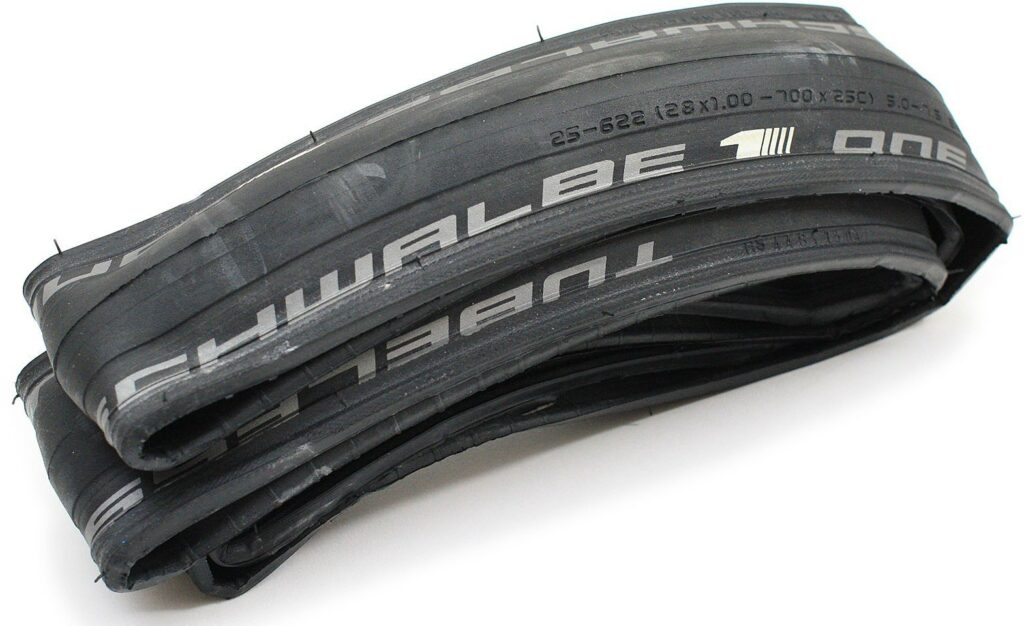
Review: Schwalbe One Tubeless tyres
Moreover, with no inner tube and therefore no risk of pinch punctures, a tubeless tyre can be run at a lower pressure. This provides increased comfort as there is more cushioning from the tyre. Tubeless tyres, in our experience, provide exceptional comfort with a compliant and supple ride that surpasses most clincher tyre and inner tube combinations.
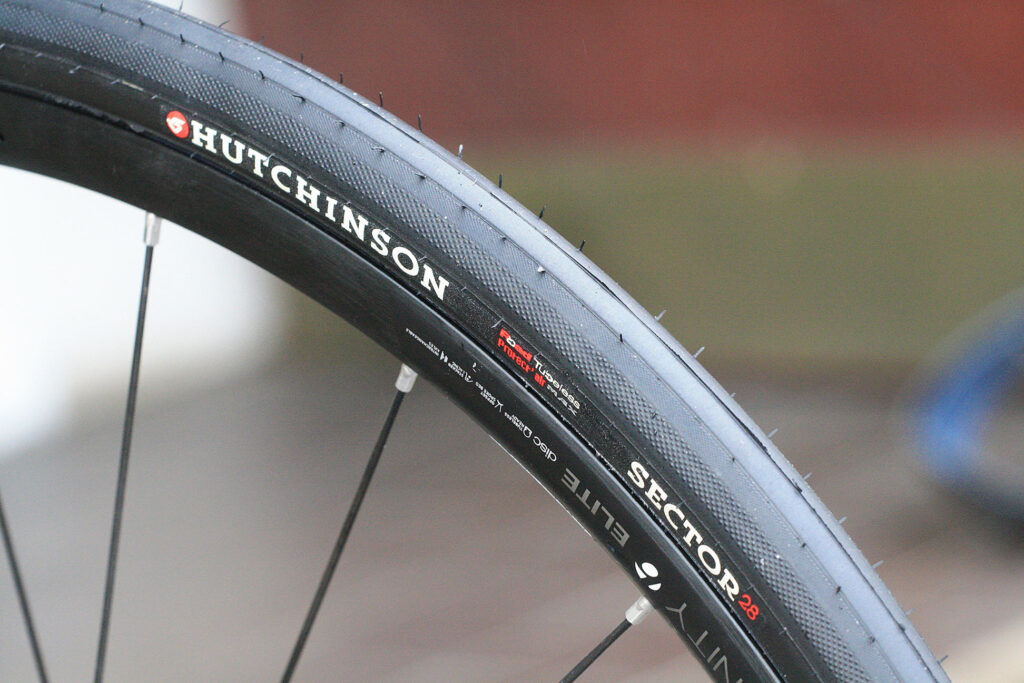
However, while this ability to run lower pressures is appealing to mountain bikers, who appreciate the increased grip and elimination of pinch flats, traditional road cyclists are unlikely to be interested in dropping pressure in narrow tyres. If your track pump only knows 120 psi, then the advantages of tubeless might be lost on you.
In our experience, a tubeless tyre is best run 10-20 psi lower than an equivalent clincher tyre with no degradation in performance. As the trend moves towards wider tyres though, being able to safely run reduced pressures makes a lot more sense. The prevalence of endurance bikes with 28mm and wider tyres, and gravel and adventure bikes with even wider tyres, make a strong argument for tubeless.
Are there any downsides?
Unfortunately, there are a few downsides to converting to road tubeless. You don’t have quite as wide a choice of wheels and tyres, but that has improved dramatically in the last couple of years. Many wheel manufacturers now offer tubeless compatible wheelsets, with some providing dual compatibility with regular clincher tyres, providing an ideal upgrade path. If you’ve bought a new bike recently, it might very well have tubeless-ready rims.

Review: Stan’s NoTubes Alpha 340 Wheels
While wheel choice has improved, tyre choice is still a bit restricted and is really the big hurdle to converting to tubeless. The tyre company showing the most interest, and commitment, is German company Schwalbe. I’ve been really impressed with their recent tyres, and there’s very little weight penalty or difference in ride quality. Other choices include Vittoria, Bontrager, but so far big players such as Continental and Michelin have shown little interest in offering tubeless tyres.
Most critically, installing a tubeless tyre isn’t quite as straightforward as popping an inner tube in. That’s not helped by a lack of a single unified standard that all tyre and rim manufacturers adhere to, leading to some compatibility issues between certain combinations of rim and tyre. As well as a tubeless tyre, you need a compatible rim which might involve fitting a special rim strip, a tubeless valve (and it needs to be long enough and threaded so you can get the pump on it) and a bottle of sealant.
If you’re upgrading it’s quite a costly exercise. If your bike has tubeless wheels when you’re in luck as you just need the tyres, valves and sealant. Some manufacturers are starting to sell bikes with tubeless-ready tyres and even supply the valves, so making the tubeless conversion is much less costly. The benefits however might outweigh the initial outlay – and you’ll save money on inner tubes.
A tubeless tyre isn’t invincible. The sealant can deal with most smaller holes but anything big, like a slash or cut, will require you to fit an inner tube, so you still need to carry a spare or two. To be fair to tubeless, any cut of a reasonable size would also cause a puncture in a tubed setup.
Converting to tubeless: a brief guide
If you like the sound of tubeless, what do you need?
Read more: Reviews of tubeless tyres, wheels and accessories
You need tubeless compatible rims. There is now a lot of choice (Shimano, Campagnolo, American Classic, Stan’s etc) and they either come with a rim bed that doesn’t have any spoke holes, or a rim strip ready fitted. With some tubeless ready wheels you need to remove the basic rim tape and install a special rim strip. This makes the rim airtight.
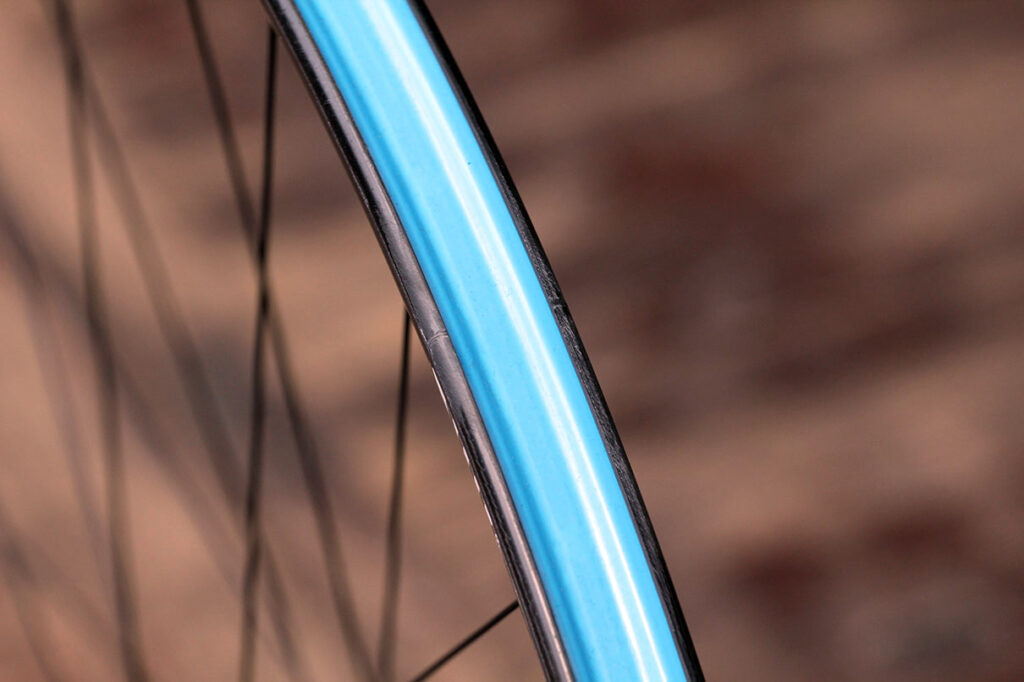
Review: Bontrager Affinity Elite Road Disc wheelset
Then you need a tubeless tyre. Schwalbe is arguably leading the way at the moment, with the One Pro race tyre but also wider options for the emerging gravel market. Vittoria, Bontrager, and Hutchinson also offer tubeless ready tyres.
Review: Hutchinson Sector 28mm tubeless tyre
While it is possible to bodge a tubeless set-up with a regular clincher tyre and non-tubeless rim, it really isn’t recommended and could be potentially dangerous. Tubeless tyres are designed to ensure the tyre bead locks securely into the rim so it can’t dislodge at high pressure, which is something you definitely don’t want to happen. This is the critical element of a successful tubeless setup and is why some companies haven’t developed a tyre yet. You might get away with regular rims but you definitely need proper tubeless tyres.
A regular tyre uses an aramid bead, and without an inner tube, can blow off the rim at high pressure. Tubeless tyres use a non-stretch carbon fibre bead — this was the big breakthrough by Hutchinson — that prevents the tyre blowing off the rim.
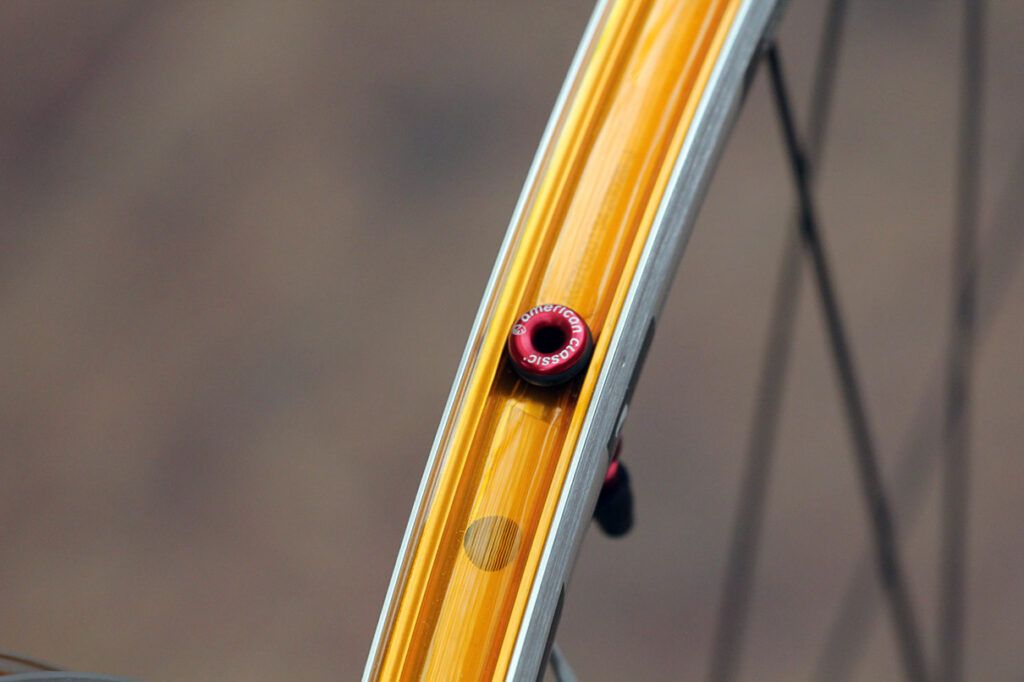
Tubeless valves. These are standalone valves with a rubber bung on one end that butts up against the inside of the rim, and a locking nut that tightens the valve onto the rim. There are many different makes of tubeless valve, our recommendation is to get one that is compatible with your rim. Look for a removable core – this can make inflating and adding sealant easier, and a lots of thread to screw a track pump onto. The valve needs to be long enough for the depth of your rim.
And don’t forget a bottle of sealant. There is plenty of choice on the market and it’s more or less the same stuff. The sealant should remain liquid in the tyre for up to six months, provided you have no punctures that allow it to escape during that time. Some sealants are 100% free of ammonium so is environmentally harmless.
Bontrager offers an upgrade kit (it’s pricey though) that includes everything you need to convert to tubeless, bar the wheels. It includes tyres, rim strips, valves and sealant.
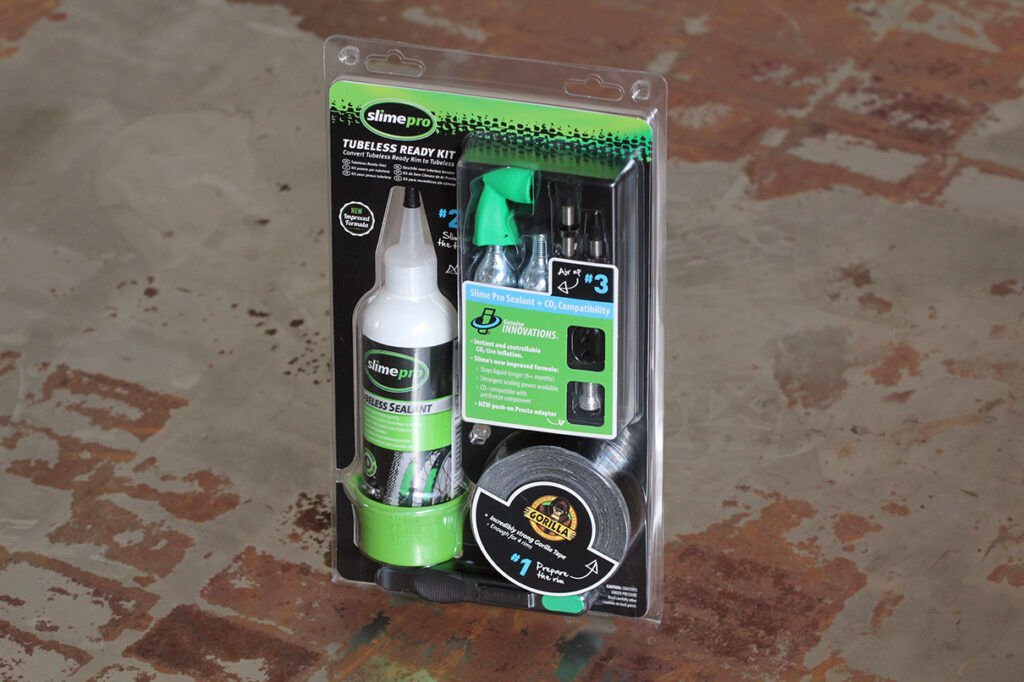
Another option is the Slime Pro Tubeless Ready Kit, which provides a bottle of sealant, a roll of rim tape, tubeless valve, tyres levers and a CO2 canister for inflating the tyres. It aims to allow you to use a regular non-tubeless rim but you must use a proper tubeless tyre.
See our in-depth guide to fitting tubeless tyres
Should you convert to tubeless?
Tubeless still has a little way to go before it is as universal as it is in the mountain bike world. For tubeless to really take over from conventional clincher tyres, the installation process needs to be much easier, as at the moment it requires an investment of time and expertise. It’s also costly, especially if you need to factor in the cost of new wheels and tyres.
Tubeless also needs commitment from other tyre and wheel manufacturers to widen the choice, and there needs to be a common standard to provide the compatibility to eliminate the current installation woes that can create a sour first experience of road tubeless. One thing is for sure, people that have converted to tubeless have become fans, as once you experience it, it’s very hard to go back.
There are clear benefits to tubeless (reduced flats, lower pressures, ride quality and they’re faster) but it won’t save you any weight. However, if you’re prepared to invest the time, and money, in converting to tubeless, you probably won’t look back. It won’t be for everyone, but tubeless is here to stay and its future looks bright if our experience is anything to go by.










88 thoughts on “Should you get tubeless tyres? Are they your best option?”
Sorry to be pedant of the day
Excellent informative article, and sorry to be pedant of the day sir, but I don’t understand this “While it is possible to ghetto tubeless a regular clincher tyre, it really isn’t recommended and could be potentially dangerous”
Nick0 wrote:
Danger is it could blow off the rim at any time. That’s apparently why Conti haven’t jumped on the bandwagon – something to do with tubeless needing thicker/heavier (?) rubber to prevent blowoffs, which impairs performance, and this not being worth it for any cost/weight saving on the road.
I find it odd that so many of
I find it odd that so many of you complained about pinch flats with tubed tires, I haven’t had a pinch flat in 35 or 40 YEARS!!
I ride mostly road bikes, up until the last couple of years I rode exclusively on 700x23c tires, I now use 25’s. I ride mostly on surface streets; and most the streets I ride on are poor quality, from the streets in Los Angeles that the city couldn’t afford to repair, to roads in the Mojave Desert of California that buckled from the heat, to streets in NE Indiana that crack due to the freeze and thaw cycles. So I don’t ride on pristine roads.
I find it odd that so many of
I find it odd that so many of you complained about pinch flats with tubed tires, I haven’t had a pinch flat in 35 or 40 YEARS!! I ride mostly on surface streets; and most the streets I ride on are poor quality, from the streets in Los Angeles that the city couldn’t afford to repair, to roads in the Mojave Desert of California that buckled from the heat, to streets in NE Indiana that crack due to the freeze and thaw cycles. So I don’t ride on pristine roads.
I find it odd that so many of
I find it odd that so many of you complained about pinch flats with tubed tires, I haven’t had a pinch flat in 35 or 40 YEARS!!
He thinks he’s Pedant Of The
He thinks he’s Pedant Of The Day? May I highlight, “….Because there isn’t two layers of material (tyre and tube) pressing against each other…”, so that the Sub’ responsible may hang their head in shame.
😉
Well, if this is the game,
Well, if this is the game, how about this?
“If your bike has tubeless wheels when you’re in luck as you just need the tyres, valves and sealant.”
Happy to help! 🙂
If you use standard tyres,
If you use standard tyres, they are cheap to replace and if you get a big cut you can repair a pucture with a small pack of patches. Tubeless are expensive to replace and if you need to carry a tube in your pocket the gains seem pretty marginal.
musicalmarc wrote:
I’ve been riding tubeless for pretty much two years now – almost every day over really terrible roads. I’ve had one puncture and that was the day that the back tyre wore out. I only carry a spare tube if I’m going a long way.
That’s not the reason I’d never go back to a conventional set up though – it’s because the ride feel is so much better because of the lower rolling resistance. I was extremely sceptical until I rode some and now I wouldn’t ride with anything else.
which tyres do you use and
which tyres do you use and what’s what kind of milage do you get from them? Do you have to top up the sealant often?
Teehee! And this:
Teehee! And this:
“Tubeless tyres are designed to ensure the tyre bead locks securely into the rim so it can dislodge at high pressure, which is something you definitely don’t want to happen.”
Uh “can’t” I think : -)
And “ghetto” refers to various methods of DIY tubeless, mostly in MTB’s. Eg http://www.singletracks.com/blog/mtb-repair/tech-how-to-ghetto-tubeless-for-mountain-bikes/
I’ve used the Schwalbe One
I’ve used the Schwalbe One tubeless on my Campy Shamal two-way fits. They got sliced by road debris twice. The latex solution I had installed couldn’t cope and the deeper and more secure bead recess seating required of tubeless meant that removing the tyre and fitting an inner tube was very difficult (had to call my other half out to rescue me on one of those occassions). I was willing to put these incidents down to experience and continue with tubeless but worst of all was the impossibilty of sourcing replacement Schwalbe One TL tyres (at c£50 a throw!). On balance, the performance gains, which were noticeable but marginal, weren’t worth the downsides and the insecurity of the system for a road bike set up (IMHO). I’ll be happy to revisit the system as it evolves.
billsukhbir wrote:
Have to agree on the Schwalbe Ones. Found them to be very fast and super comfortable but too delicate and suffered cuts.
Switched to Hutchison Sector 28s. They don’t feel quite as quick as the Schwalbes but are wonderfully comfortable. Far more so than the Michelin tubed tyres I replaced when switching to tubeless.
Recently completed the first 9 stages of this year’s Tour de France course, without a puncture and with the tyres still looking like new.
Each to their own but I love’em.
As the writer was saying cars, motorbikes etc have been tubeless for many years so why has it not taken off for bikes well for me its price ..i.e. Motorbike front tyre approx price £70 know this is a good quality sports bike tyre giving roughly 6000 miles, now in the say in comparison say a Schwalbe One TL tyre cost £50 now there is nowhere near the same amount of rubber or the same amount of money gone towards the technology and I get nowhere near the same mileage so why is the such a huge price on the bike tyre, we could also go on about car tyres as well but I think we will just stop there….. is it supply and demand or is it a good money making technique who knows but I will stay with my cheaper tyres for a good while yet until the price comes down.
I put Schwalbe One Pros on my
I put Schwalbe One Pros on my DT Swiss wheels at the beginning of the year. They went on easily and inflated with my track pump. Wasnt much of an effort really. They stay up really well. Run at low pressures now. the ride is definitely cushier than with my Conti’s.
Have had one puncture – on the Dragon Tour this year. Tyre held up fine until i got back home (happy with that because the weather was terrible) but did go down overnight. There was quite a big hole in the tyre. I put a tube in for the next day due to time constraints in the morning before we rode again. Then went back tubeless when i got home. the tyre actually just sealed itself when i put more gunk in.
I really like the tubeless setup. Not sure I save much weight as i still carry a tube with me to be on the safe side.
I’ve been riding tubeless
I’ve been riding tubeless (currently Hutch Sector 28s, previously Bonty R3s) at weekends now for 4 years and have only had a single non self sealing puncture due to a 1cm side wall cut – that’s in around 12k kms. Booted it and fitted an inner tube and cycled 50km home – no problem.
Commute is on inner tubes though, mainly due to wanting bulltetproof archetype rims – probably had 5 punctures in the last couple of years but that’s over a much higher mileage and some pretty nasty conditions.
The tubeless setup feels so much smoother that i certainly wouldn’t go back to tubes on my weekend bike. Will probably swap over the commuter at some point when the rims need replacing.
Yes they need the sealant topping up every few months but as far as i’m concerned, that’s a small price to pay for the additional comfort, nicer rolling and reduction in punctures.
Each to their own.
I ran road tubeless for a
I ran road tubeless for a couple of years. At the time, I was convinced the ride was smoother – I could run the tyres at lower pressures without fear of pinch flats and I rarely punctured. I found a few issues though:
– if a puncture/cut was too big for the sealant to seal it, it sprayed latex all over my mates. Not a regular occurrence, but not something easily forgotten either…
– once I’d helped them peel the fast drying latex from their bikes and faces, I was left with the job of trying to fit a tube to a tire with a seriously strong and stiff bead. It was always a pig to get a tube in and inflated without pinching it. Doable, but took a lot longer than a normal tube change.
– fitting new tyres was a hit and miss affair: the aforementioned very stiff bead meant they were hard work to get on the rim. Then sometimes they’d seal easily, other times not. When they didn’t go first time, it could be quite difficult to get them to go up at all.
When I eventually went back to clinchers, I got wider clincher rims which meant I could run lower pressures and get some of the comfort advantage I had on the tubeless. I also didnt notice a difference in rolling resistance between a good standard clincher and a good tubeless tyre – a bit of talc on the tubes helps to keep the friction low anyway. All in all, I didn’t feel like it was worth the expense or the (admittedly occasional) hassle. I doubt I’ll go back to tubeless unless the standard clincher dies a death…
Mixed feelings – when it’s
Mixed feelings – when it’s all working they’re brilliant, but if you’ve got a hole that’s just a little bit too big, or just the wrong shape they’re a PITA. However, that is easily fixed once you recognise the problem and stick a patch insiode the tyre.
So back off two weeks’ hols: was getting seriously fed up with being covered in a fine spray of rubber solution every ride and so patched the offending rear tyre. Note that while everything was sticky, the tyre never became too soft to ride.
All good, so off I went on hols. First ride out, front tyre goes – sealant everywhere, but seals OK. Finish ride, top up sealant and reinflate. Next ride – repeat – same hole. Finish ride, patch tyre. Next day, same again. Different hole, sealant everywhere but still able to ride. Learning now, so test inflate to full pressure and it goes again. Patch tyre and all good for remaining hols.
Key tips – always travel with sealant, a ghetto inflator and a track pump of some description (I’ve got a folding zefal one). I would not have fancied patching tyres and replacing sealant without an inflator. I just make sure it’s behind me and wear glasses, so that if it fails I’m not going to lose an eye. Frankly, I don’t think it would make much of a bang anyway – the air comes out as a loud hiss just like pushing the valve in on a tyre that’s inflated to 100 psi. If the top comes off, it might shoot off for a foot or two at most I think. Still, better safe than sorry.
On balance, I’m sticking with tubeless, but it was a close run thing at the beginning of the hols. Done a year with them now on one of my bikes. Schwalbe Pro One. Had to replace two because they were no longer round (markedly so) but the current set are fine. At 100 psi, they are seriuosly slippery in damp or wet conditions (compared to Michelin Pro 4 at the same pressure). They run happily at 80 though and are more comfy at that pressure. If they’ve deflated, they will still bowl along happily at 40 psi
I’m definitely a tubeless
I’m definitely a tubeless convert, I’m using IRC Roadlite 25mm tyres fitted to a pair of handbuilts from Malcolm Borg at the The Cycle Clinic. So far the tyres have covered 6300km with absolutely no issues and I run them at 70psi and they are fantastic. I no longer bother to carry a spare tube with me as there’s no way one will fit, so I take an Innovations Tubeless repair kit and a tube of flexible super glue to deal with anything that the sealant can’t handle and as the IRC tyres have a butyl layer they can be patched inside just like a regular inner tube.
I’ve been running Schwalbe
I’ve been running Schwalbe Pro Ones and S-Ones on Hunt 4 Season wheels for over two years now. They were all dead easy to set up and have been superb. I don’t actually know how many punctures I’ve had. I only know about the ones that have lost a little more air pressure because they have always sealed themselves. A couple of times I’ve gone to the garage to find the bike with a flat tyre from the last ride. Quick spin of the wheel to distribute the sealant and pumped up again to let it do it’s thing. Then gone out riding as normal. The added bonus of increased grip and comfort is the icing on a very lovely cake in my experience. Never going back!
It’s a shame that a whole
It’s a shame that a whole tyre system, tubular, is pretty much dismissed with the statement “Fitting a tubular tyre is a lot of hassle though, and much more tricky than fitting a tubeless tyre.”
This is simply incorrect. I run tubulars on all my bikes, use Jantex tub tape for glueing them and Conti latex sealant inside. I can fit/remove a tubular without any tyre levers; NO HASSLE. Still the best ride characteristics, with the sealant I’ve got added flat protection and if worst comes to worst tubs can run flat and get you home.
And I’ve never had a tub roll off using the Jantex tape.
And my wheel rims are lighter than the equivalent clincher/tubeless model.
Fact not opinion.
if you have a hole too big to
if you have a hole too big to self seal then Genuine Innovations make an awesome product called a a bacon strip – it’s a plug for holes (similar in idea to cars/M-bikes), you simply drive it into the whole, pull the handle out and the plug sits in place sealing it up.
i just road 2,000km with one in my front tyre, only needing to inflate slightly after about 800km
really useful product!!
http://road.cc/content/review/183575-genuine-innovations-tubeless-tire-repair-kit <– reviewed last year!
My tubeless setup is 45g per
My tubeless setup is 45g per wheel lighter than tubes, including sealant.
Thelma Viaduct wrote:
I’m sure you’re right but if you’re not carrying at least one tube how will you fix a flat that won’t respond to the sealant?
mike the bike wrote:
I’m sure you’re right but if you’re not carrying at least one tube how will you fix a flat that won’t respond to the sealant?— Thelma Viaduct
Who said I’m not carrying spare tubes???
If you’re standard tubed you’re carrying 4 including the two on the wheels.
If you’re tubeless, you’re carrying 2 spare tubes, so less weight, comfier and no chance of a snakebite puncture.
Follow???
I have 3 bikes in regular use
I have 3 bikes in regular use, all with schwalbe tires on stans rims. All 3 setups are 3 years old now. In all cases i have never had a failure or puncture, never carried a tube, never changed sealant (!), And they all were a cinch to fit and get seated. A lot of the stuff that people seem to be worried about just dont really seem to be issues.
A couple of caveats.
A couple of caveats.
In a nutshell, you have messy, difficult installation/maintenance all for a quarter teaspoon of comfort and rolling resistance and you really are in for some ass pain if you do flat out on the road. I’d say they are harder to maintain than tubulars (unless you use conti competitions) and everyone groans about tubular. At least with tubs, you get the benefit of shaving 200-300g of the weight of the wheelset and they are at least, if not more ‘comfortable’ than tubless.
Hi,
Hi,
Just thought i’d add my take on the whole tubeless tyre/wheelset situation. Around 2 years ago I was looking to venture into the tubeless revolution but after reading all manner of reviews with regards to hard to fit tyres, leaky sealant, pressure loss I decided to not bother and stick with my standard clincher setup which I’ve been accostomed to for several years….
A riding friend of mine told me about a new road tubeless system called UST from Mavic which promised better tolerances with regards to fitting their branded Mavic tyres(made by Hutchinson) and I took the plunge and bought a Mavic Krysium Elite wheelset and it’s been fantastic. I’ve yet to flat, however prior to installing the supplied sealant I could easilly remove and refit the tyres by hand with no tyre levers which made for a pleasant change as my last wheelset which I returned was a total nightmare trying to install any clincher/tubeless ready tyre and I promptly went back to clinchers for this reason as I couldn’t see the point in faffing around on the side of the road for over 45 mins trying to fit a tyre that I could normally do in 2 minutes maximum being clinchers that I was previosuly using.
My take is that Mavic(I’m not getting paid to promote them by them way) really have created the almost perfect road tubeless tyre system in terms of ease of fit, inflation(standard track pump) so no inflation tanks needed to seat the tyre on the rims….with just one real caveat…..you have use the Mavic UST tyres which have the correct tolerances which makes this system so simple to use. It’s downside is that it’s not a widely adopted standard amongst wheel and tyre companies so you are limited in tyre choice to Mavic and maybe Hutchinson until a standard is agreed by the other companies and ETERO which from looking at it another way, is a pain as I like to have tyre choice like I had with clinchers before, so until this happens(if ever) you are limited as to what tubeless ready tyres fit easily or work well with the UST system. You can fit clinchers as well on a UST rim, but it’s generally not advisable due to the difference in internal bead lip inside.
Mavic Yksion Pro UST tubeless
Mavic Yksion Pro UST tubeless here. Best tyre I have used so far: fast, grippy, puncture resistant, durable (3500km so far and rear tyre looks like new). Made in France by Hutchinson.
I originally ran my Hunt 4
I originally ran my Hunt 4 Seasons tubeless for a few months but gave up because of all hassle involved. I recently switched to latex tubes and they give a very similar feel, faster and less rolling resistance. I still carry butyl tubes on rides in case of a puncture but I’m in no hurry to try tubeless again.
Im a convert to tubeless,
Im a convert to tubeless, primarily because of their puncture resistance. I still use inner tubes tyres on some of my bikes but with either Stans or Orange sealant to protect against punctures. I’m currently using my Schwalbe G Ones (40mm). These are a fantastic tyre if you can fit them in your frame. They have great comfort and grip, super smooth ride over all kinds of surfaces. I run between 45-50psi on the inflation this gives a lovely cushioned ride, I dont worry about picking my lines, I just ride over everything, grates, gravel, small bumps etc. These tyres just absorb the road. Also they’re are quick rolling. I can ride at >20mph on flat roads and not feel that there is drag from the tyres. Ive averaged 17.5 over 100 miles, 19 @ 60 miles so these tyres dont slow you down. A fantastic all purpose tyre.
Does anyone else that is
Does anyone else that is currently running tubeless find that the tyres don’t hold pressure for as long as a regular inner tube & clincher set up does?
Whilst i have always checked tyre pressures prior to a ride, I find I am adding more air now I am running tubeless than I used to.
Bowks wrote:
Up until recently, no, but I’ve got one bike which I’ve had to use slightly wider rim tape than I wanted to with.. that bike, yes and I can attribute it totally to the rim tape not quite being as perfect as I’d normally run.
Tubeless can be finikity, but is solid as a rock once done right.
Bowks wrote:
I had issues, things improved when I started using muc off sealant. They still don’t hold pressure for as long as tubes do though, but i tend to check the pressure before each ride anyway and always have.
My issue is that pro ones don’t lock on to my reynolds rims. Once the deflate they pop off the rim. The odd thing is that GP4000 do lock on to the rim but aren’t a tubeless trye. So next tyres will be GP 5000 and I will see how they go.
For me the real benefits are
For me the real benefits are a combination of puncture resistance and ride quality. With normal tubes I could generally have one of these but not both.
My rides are mixed, and I’m fond of dicerting off roads onto gravel or even some bridleway. Running 28mm tubeless tyres on 27mm external rims works a treat.
I was previously a serial puncturer. Since converting about a year ago I have had one puncture, and the result was a loss of about half the tyre’s pressure to a point where the sealant was able to kick in, and I was still able to ride home with reduced pressure.
Some of the negatives on here
Some of the negatives on here haven’t really aged very well.
martybsays wrote:
Neither, unfortunately, have some of the advantages. This year’s Paris – Roubaix saw Alex Kristoff riding tubeless and, despite the propaganda surrounding the likelihood of punctures, he suffered three separate flats that ruined his day. So much for the sealant keeping the tyres inflated.
When asked about his plans for next year he said he would be back but the tubeless tyres would not!
mike the bike wrote:
He is a big rider using 25mm tyres on the most unsuitable surface. Whilst most were using 30mm tyres. He just pushed the limits too far in the search for faster tyres.
I’ve been using tubeless road
I’ve been using tubeless road tyres for years now. The biggest problem is the tyre companies – just look at the drivel up above “The difference between Mavic’s system and others is that there’s tight control over production variances.”
Does this mean all those other two-bit tyre manufacturers (Panasonic, Hutchinson, etc.) are just crap? I suspect they also have tight controls. And pick a friggin’ standard boys.
OTOH, they sell the tubed and tubeless versions of tyres with the same names, or bring out a “Tubless compatible/easy/ready” version of a tyre with the same name, so evn hands-on you can’t figure out which is which.
More than once a “knowlegable” retailer like CRC has sent me the tube version when I ordered and paid for tubeless. Not 100% their fault. One well-known manufactuere explained to me that if the tyre brand name on the package was blue, it was tubeless ready. If brown, then not. So that’s obvious…
My other pet peeve is why-oh-why anyone makes tubeless Presta valves without removable cores? (Thanks Shimano)
Quote:
Like the rolling resistance, think one of the German magazines showed (and Road.cc referenced in their recent review) that the new Conti GP5000 clincher with a latex tube rolled faster than the tubeless equivalent.
I discovered this on the mountainbike, using a non-tubeless tyre witha ghetto tubeless setup and sealant felt light and fast rolling, with the added benefits of no pinch punctures. But of course the lighter sidewall of a non-tubeless tyre could still pinch flat, and they leaked! Switched to a bona-fide UST tyre and the ride quality vanished. Obviously on an MTB the low pressure/pinch flat resistance was a much bigger deal so I stuck with it (actually as a side note, I’m now running latex tubes on my 29er XC hardtail, pinch flat free so far!).
Tubeless on road bikes seems like disc brakes on road bikes, a valid solution to a very specific problem, that might not actually benefit everyone.
Tubless, like disk brakes, is
Tubless, like disk brakes, is a solution to a specific problem… namely the need to sell more bikes.
Or it is just an alternative
Or it is just an alternative when you need new wheels (or fancy an upgrade on your wheels).
hirsute wrote:
I question your phrase “upgrade”. I tried really hard for the last 2 years to kid myself that tubeless was great but I have gone back to tubes. There is probably a very specific niche somewhere that makes tubeless sense but it is not to me for general road riding.
I’m a total convert.
I’m a total convert. Expensive, but worth it because it’s making my gravel rides safer and more pleasurable. It’s an utter revelation to me just how well a 650B full-mud tyre (WTB Sendero) rolls on the road sections, considering how happy it is to dig in and winch up a muddy hill. Great on sand too. Running around 40psi as I’m a heavy rider on a something that’s the touring side of a gravel bike.
Problem is, when I go back to my road bike (700c, 28mm, tubes, 100psi) it feels like I’m riding on some old-school 21mm rubber.
A couple of years back I was
A couple of years back I was having a bike-related chat with the young bloke re the 25mm tyre trend. He said “It’s not about the tyres,Dad-next they’ll want to sell you wider wheels to go with them.”
To which I replied to the effect of “What-new wheels for a 2mm difference-bike riders may be gullible but they’re not that stupid”.
Looks like he was right.But tubeless,that’s life-changing,isn’t it?
What the article does not
What the article does not mention is what happens when you have a tubeless flat on the road…. First you and your bike will have sealant all over… then you have to pry the tire off (much harder than a clincher), deal with the mess inside and install a tube and ATTEMPT to get the tire back on (much harder than a clincher). Do it once and you will go back to clinchers.
Or you just plug it with a
Or you just plug it with a dynaplug tool or Stans dart tool.
I spent the best part of £50
I spent the best part of £50 on a Stan’s dart tool and spare plugs, after I got fed up of all punctures on the Schwalbe G-One Alrounds on my gravel bike – I also switched to Stan’s Race sealant and Vittoria (Terrano CX Mix) tyres at the same time. Unfortunately I’ve not had a puncture to test them with in the past 4 months – I was barely going 2 weeks/100 miles commuting without a puncture on the G-Ones (I’d often get two or three punctures in a week).
Unfortunately…
Unfortunately…
Once you get the hang of it
Once you get the hang of it fixing a puncture on a tubeless tyre is quicker than changing an inner tube.
Once you get the hang of it
sorry, error message made me doublepost
I just changed back from
I just changed back from tubeless to clinchers for the same reason. I got a hole in my gp5000 to which neither the sealant nor dynaplug could deal with. Struggled to get the tyre off , which got me worried. Inner tube in, ..and then , over an hour trying to get the b…tard back on. Just did it.but blimey. I had ran gp4000s before and no punctures. So.. fitted gp5000 clinchers today..and they were not that easy either but still less than 10 minutes
If the dynaplug could not fix
If the dynaplug could not fix it, then the hole was so big, a new tyre was on the cards or there was something awry about how you tried the repair.
Exactly the same here. After
Exactly the same here. After two years on tubeless, I’m back to (latex) tubes. I really can’t understand anymore why people want to ride road tubeless. It’s a hassle fitting the tire, checking the sealant level now and then, and dealing with the mess and the horrible smell when a puncture isn’t sealed. A tubeless setup with 30ml sealant per wheel is heavier then a non tubeless setup with a latex tube. It also becomes heavier over time because of all the dried sealant inside. And if you get a puncture: it takes far less time to change an innertube than trying to do the same thing with a tubeless tire that’s filled with sealant. And you’ll have to fit a tube anyway in most cases, because a large puncture will unbead the tire from the rim, which you can’t rebead with a mini-pump.
The claimed advantages of tubeless are not convincing to me.
Lower rolling resistance? No: a latex tube has similar or even lower rolling resistance.
More puncture resistant? Not my experience: a good quality non tubeless tire (GP5000 in my case) has similar puncture protection. A tubeless setup might seal a small hole on the go, where you’ll need to fit an innertube with a non-tubeless setup. But the chance of having a puncture is very low anyway with such a decent tire.
Lower pressure needed? Not my experience: I’ll ride exactly the same pressures (70 psi front, 85 back) with latex innertubes with no increased amount of (pinch) punctures. The latex innertube feels more suble and comfortable than the tubeless setup with the same pressure.
Interesting to read your
Interesting to read your experiences. Maybe tubeless is a low pressure thing? Does it struggle more to seal a hole at 80psi that it would succeed with at 35psi? That appeals to reason.
My own experience is that I have not had a puncture in years, despite cycling down tow paths, bridleways and farm tracks. Would I have been better off for messing about with filling, checking, topping up and cleaning out of sealant over the years? Should I have “invested” in that expensive tank pump, syringe kit, special formula sealant and whatnot? It just doesn’t add up the way the reviews and feature articles sell it.
I’ve been runnig tubeless on
I’ve been runnig tubeless on the MTB since 2002. I’ve benn running tubeless on the gravel bike since 2016. I’ve also been (trying) to run tubeless on the roadie with very mixed results (for the last three years). Most sealants are useless at anything above 50 psi – spurting out of tiny holes until none left, which means road tubeless is not a winner… yet. Now, I must add that I have had better results with Stan’s Race as this has got some very clever stringy things in it – so much so, you cannot use a syringe to put it in the tyre in the first place – it blocks instantly.
I’m still undecided on road tubeless and I think when I need new tyres I’ll go back to tubes.
I find it odd that so many of
I find it odd that so many of you complained about pinch flats with tubed tires, I haven’t had a pinch flat in 35 or 40 YEARS!!
I ride mostly road bikes, up until the last couple of years I rode exclusively on 700x23c tires, I now use 25’s. I ride mostly on surface streets; and most the streets I ride on are poor quality, from the streets in Los Angeles that the city couldn’t afford to repair, to roads in the Mojave Desert of California that buckled from the heat, to streets in NE Indiana that crack due to the freeze and thaw cycles. So I don’t ride on pristine roads.
I find it odd that so many of
I find it odd that so many of you complained about pinch flats with tubed tires, I haven’t had a pinch flat in 35 or 40 YEARS!!
I ride mostly road bikes, up until the last couple of years I rode exclusively on 700x23c tires, I now use 25’s. I ride mostly on surface streets; and most the streets I ride on are poor quality, from the streets in Los Angeles that the city couldn’t afford to repair, to roads in the Mojave Desert of California that buckled from the heat, to streets in NE Indiana that crack due to the freeze and thaw cycles. So I don’t ride on pristine roads.
Sharing my experience. n=1.
Sharing my experience. n=1.
So I bought a Pinnacle Arkose R2 with tubeless ready Exposure 30C tyres. I cycle in London, initially to commute but now that my company has gone bankrupted, I use it to cycle around Richmond, Hampton and further south.
First two weeks of commuting with the tyres set as tube: two punctures. I got Decathlon to fix them because I just could not remove the tyre from the wheel. A real nightmare!
I then decided to convert the tyres to Tubeless. Drop the tyres at Evans, at first they could not convert one of the tyres, but they eventually did it (weird!). Set with Muc-off sealant.
After a few months I decided to move back to tubes, using Continental 4 seasons (size 28). So far so good but the riding is slightly better with the exposure (not sure if that’s due to tube or tubeless), it just feels smoother with the Exposure.
I am still in two minds. Tubeless is more involved in maintenance (change the sealant every 6 months) and requires a special pump to set on the wheel. I also had recurrint events of “sealant squirts” jetting out of the front tyre which dirty the bike (and it’s not easy to remove dried sealant) – this is not a nice feeling.
On the plus side: some of those “squirt” events did not even require a re-pump of the tyre, allowing me to carry on! I once had such an event that the pressure when done to near flat, I figured I lost most of the sealant by then, I refilled the tyre with sealant from the Muc-off pouch, repump the tyre using a basic pump and it sealed. So in that case this was easier than fitting a tube.
When I convert back to tube, it took me a while to remove the tyre from the wheel, at least for the front wheel, then for the back wheel I decided to really push out most of the air and sealant away from the tyre (by removing the valve) and it seems to make the tyre removal way easier (or it’s a coincidence).
I might go back to tubeless one day, probably with a more puncture resistant tyre…but I will only consider this if my 4 seasons is failing me.
So… as this article bobs
So… as this article bobs back to the top of the page, is there a new bit in there?
Yes and no…
Yes and no…
[This article was last updated on November 9, 2019]
Just needs topping up every
Just needs topping up every couple of months.
Edit oops – just seen 20[b]19[/b], yikes, it’ll be proper gummed up by now
Tubless is really expensive
Tubless is really expensive and time consuming, especially if like many of us you maintain a small fleet of bikes.
Checking sealant condition and topping up every 4 months is a faff and very expensive. I get through a £20 bottle of sealant every 10 months for three bikes, in addition to time taken unseating 6 tyres, pouring more money milk in and reseating/sealing every 4 months.
When all I had to do before was pump up occasionally and maybe replace a £3 tube once or twice a year. Aaagh!
You must be broke, spending
You must be broke, spending all that money on sealant! It equates to at least 2 bucks a month! It’s a minor faff checking sealant in tyres but you’re probably checking tyre pressure and tyre condition regularly anyway so checking sealant will take all of 5 minutes longer.
Quick tip: rather than unseating tyres to top up sealant, which I acknowledge is a pain in the @rse, deflate the tyre, unscrew the valve-core and use a 20ml syringe with 20cm of silicone pipe attached to the end. Pop the pipe over the now-empty valve stem, poour some sealant into the syringe and squeeze away. 20ml per couple of months ought to keep you topped up.
OK so tubeless tyres can be fiddly to fit (but so can open tubular clinchers, for example) and do require a little extra maintenance but for me, the almost complete absence of punctures, the added comfort from lower pressures and the noticeable-reduced rolling resistance outweight the minor quibbles.
Watch me get a puncture on my next ride . . .
You are doing it wrong if you
You are doing it wrong if you unseat the tyres. Get a syringe, undo the valve, suck sealant out to have a look-see and estimate the quantity and quality. Squirt back in, top up.
In the UK, sealant lasts for ages. Lots of manufacturers and articles seem to be written thinking about riding in the California sunshine. Sealant longevity really only gets to be a problem in hot weather, whatever that is.
Add in discs so you don’t accidentally wreck the sidewall with a brake that has crept up due to wear, I’ve only practised my tyre changing for other people in the last couple of years.
IanMSpencer wrote:
The MilkIt valves are designed to make syringing easier and although they’re expensive they do work well.
Although sealant may last for ages, it also depends on what condition your tyres are in and whether the sealant has been plugging a few holes. I think 2-3 months is about average for me between topping up.
hawkinspeter wrote:
I saw them some years ago (2015 bike show?) and was put off by the cost, but the general idea of the syringe was not forgotten.
Since then I’ve decided that removing the valve is a good thing. A valve is a hole that sealant wants to seal, and I’ve had a valve leak due to sealant, so although I pump in the top half of the rim, removing the core and giving it a clean on a very occasional basis will avoid valve jams due to sealant
The MilkIts have a little
The MilkIts have a little rubber seal at the bottom for stopping sealant fouling the valve.
IanMSpencer wrote:
The MilkIt valves are designed to make syringing easier and although they’re expensive they do work well.
Although sealant may last for ages, it also depends on what condition your tyres are in and whether the sealant has been plugging a few holes. I think 2-3 months is about average for me between topping up.
— IanMSpencer I saw them some years ago (2015 bike show?) and was put off by the cost, but the general idea of the syringe was not forgotten. Since then I’ve decided that removing the valve is a good thing. A valve is a hole that sealant wants to seal, and I’ve had a valve leak due to sealant, so although I pump in the top half of the rim, removing the core and giving it a clean on a very occasional basis will avoid valve jams due to sealant— hawkinspeter
A syringe and a little flexible tube which fits on the end small enough to go through a valve = very useful for sucking out sealant to see if it’s gone off. (Tip if it’s gone watery and see through or brown – it’s useless.) Before I got one of those.. it was guesswork and ‘sealant anxiety’.
Also those milkit kits are nice but pricey, lots of syringes available from other brands, however there’s nowt special about them apart from the attachments which could easily be heath robinson’ed.
I think no-one has mentioned
I think no-one has mentioned the entertainment of tubeless ready rims, but using tubes, and the satisfying twin noise when the beads seat. I have no intention of going tubeless.
A beautiful 80k ride in the
A beautiful 80k ride in the sunshine today. Noticed a bit of sealant on my saddle bag at the coffee stop. Gave the tyre a quick squeeze to check the pressure and thought no more of it.
That’s why I run tubeless.
This article isn’t aging well
This article isn’t aging well. What’s the current (checks sundial…May 2022) split between tubes, tubular and tubeless in the pro peloton?
About choice of wheels and tyres, I’d say that if you were looking to upgrade to a nice new carbon wheel set, your choice is actually broader with tubeless (although hookless maybe complicates that).
And Mavic UST…is that still a thing?
Up until now(I’m trade BTW) I
Up until now(I’m trade BTW) I would usually say….off road only….road don’t bother…. Now….. I like to road test stuff before handing out advise to customers, so I ‘ve run Gravelking SK and AC’s on Tubeless for the gravel bike….super…. I also used the Mariposa rim strips on the Mavic wheels I put the GK AC’s on …..brilliant way to convert non tubeless to tubeless, works first time and easy, better than messing with rubbish tubeless rim tape and really….cheaper dare I say. I have now gone Tubeless with the latest Schwalbe One TLE Addix on the road bike(a customer has been on S ones for a few years with various outcomes but now with the Addix version he’s happy. So far these TLE tan walls for me are going well, ride nice, lower pressures and were great in the Yorkshire Dales as well as locally in Cambridgeshire. Been out with a couple of customers today on a Gravel ride…. no one had a puncture on the route (much was stoney ground) and it was 2 tubed and 2 tubeless…… Now I’ve done real time testing…. rather than cycle press/distributer/manufacturer hype…… Tubeless has come of age….if you want it
No thanks
No thanks
“Updated May 28, 2022” ?!
“Updated May 28, 2022” ?! Continental and Michelin certainly do make road tubeless and this article is full of other out of date information. Maybe actually read the article when you’re updating it 😉
PS. My 2c- road tubeless is excellent if you have the right wheels and tyres. Very easy setup with Zipp rims and Schwalbe tyres. But, it can be a nightmare to set up with poor quality tyres/rims.
Now we have to work in feet
Now we have to work in feet and inches, what size tyres do I need to make tubeless work?
hirsute wrote:
This f*king country. Schools have been teaching metric since 1970. I was there and I cannot tell you what a relief it was, as a child, to ditch stupid, useless imperial units (and doesn’t that name explain everything) and go metric.
Ask most kids nowadays how
Ask most kids nowadays how many 16ths in an inch and they’ll look at you blankly.
WTF is wrong with ‘metric’ … hell, its been in use over 50 years, why do we still even bother calling it metric.*
Oh … yeah … thats right; there’s only 3 countries in the world that use the Imperial sytem, so I guess we’ll be keeping up with the massess.
Oldfatgit wrote:
I always thought that a 16th was a measure of weight
Oldfatgit wrote:
If they can’t work out how many 16ths in… anything, I think there are bigger problems than what system of weights and measures they’re using.
The funny thing is, thanks to
The funny thing is, thanks to the dominance of the UK bike industry back in the day, the vast majority of components have an underlying size that is imperial, seat tubes, head sets, chains and cogs, 26″ wheels 29ers. The main metrication on bikes has been the adoption of metric threads as opposed to the imperial threads (or which there are several standards).
My rims are 27.5inches with
My rims are 27.5inches with an internal width of 45mm.
Or 26 inch with 17mm.
Aren’t the inches an
Aren’t the inches an approximate value ?
You may have a point in the
You may have a point in the UK if you go back more than 50 years – but the wealth of info on Sheldon Brown’s site suggests it may just have been “less imports” everywhere back in the day. The bike industry is of course noted for its love of standardisation…
I’ve not had much luck with
I’ve not had much luck with tubeless. Current tyre ‘weeps’ a tiny amount of sealant. I have tried 2 types and same issue.
Swapped to a used tyre I had patched on the inside and could not seat the tyre despite copious washing up liquid. Didn’t fancy getting another pump or co2, so decided to try tubolito inner tube instead.
hirsute wrote:
Where does it weep the sealant from? Your difficulty seating another tyre suggests to me that your rim/rim-tape/valve is leaking air.
From the main bit where it
From the main bit where it contacts the road. I had caffelatex and stans race but in the morning, the tyre would have wet patches. Then when I got to about 15mph, the pressure must have forced a bit of sealant out as I could hear this annnoying noise like there was something stuck to the tyre. I did flirt with making the holes bigger, but I thought I’d end up with too many.
The michelin power road were hard to get on. I think I had a 20 year old track pump the first time, but the head eventually gave out and I have an sks one, but it won’t push enought air in and it goes out of the schrader bit instead (unless it’s faulty?). Hence thinking I need co2 or a different pump.
hirsute wrote:
That’s odd – it sounds like the sealant is oozing out from the tyre itself.
The closest that I’ve seen is some bubbling out of the sidewall when the level of sealant was low, but I think that was a “tubeless ready” tyre. Tubeless Ready means that the tyre is slightly porous and needs the sealant in it to work, whereas proper tubeless tyres can be installed and inflated without sealant if you’re lucky (I usually try a dry-seating of the tyre before putting in sealant).
I can’t think why you’d get a noise from the tyre unless you’d left something inside it. I’ve had little balls of sealant trapped in a deep rim but it doesn’t sound like what you describe.