


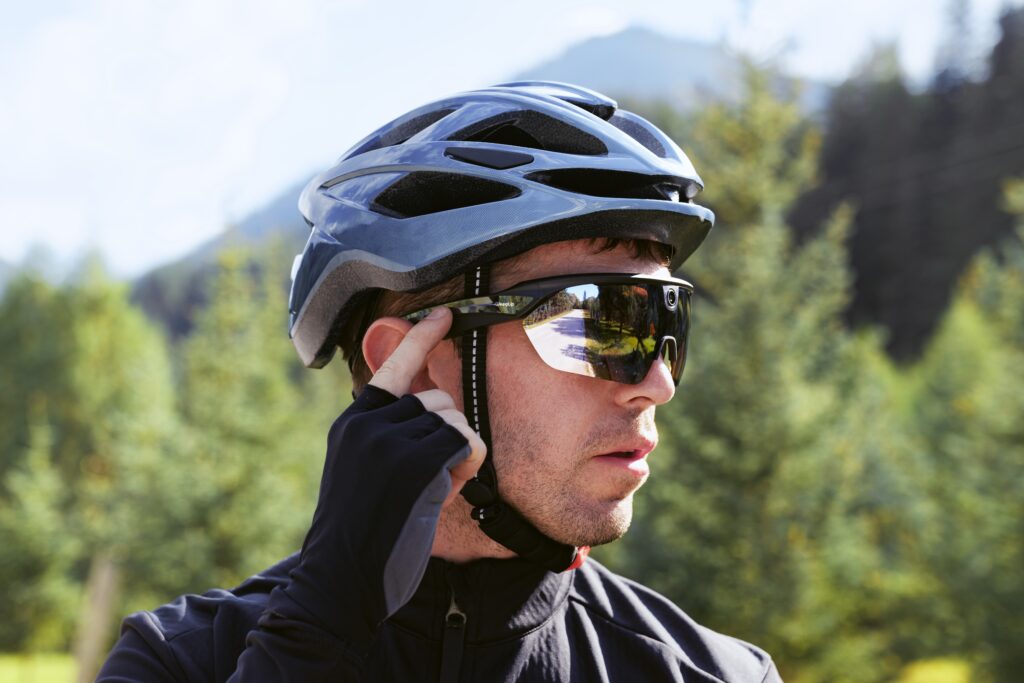

Ever wished your cycling glasses could do more than sit on your nose while you sweat? BleeqUp clearly thinks the answer is yes. Its new Rover sports glasses are being pitched as “the world’s first AI sports companion built into eyewear” – they’re designed to be an action camera, cycling safety system, training assistant and video editor, all positioned on your nose.
If you like to keep your cycling as simple and tech-free as possible, this really isn’t one for you.
What are BleeqUp Rover AI sports glasses?
According to BleeqUp, Rover is: “A device that uses AI to support training, safety, and content creation all at once, pushing sports eyewear from a recording tool toward an AI sports assistant, and redefining the next generation of smart sports wearables.”
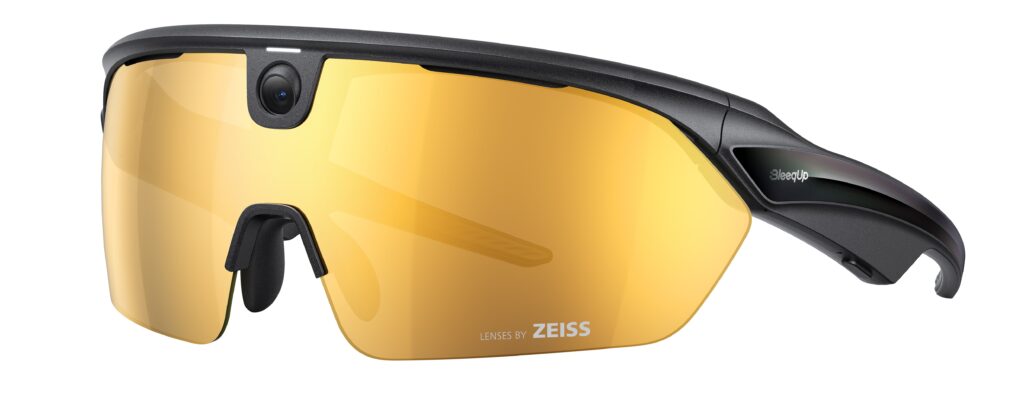
First, featuring a Sony 16MP sensor, Rover can record 3K 60FPS HDR video and 4K/16MP photos. A three-level adjustable camera angle is designed to give you “the optimal first-person perspective across different riding positions and activity scenarios”.
Beyond that, though, BleeqUp says, “[Rover] is powered end-to-end by AI, designed to give users a flexible, reassuring, and effortless experience across training, safety monitoring, and smart content creation.”
For example?
“During activity, users can simply use voice commands to wake the AI Sports Assistant for voice Q&A about their activity,” says BleeqUp. “After each session, users receive a personalised activity summary, along with real-time breathing performance and breathing-based body monitoring data.”
Safety is another concern.
“While cycling, Rover automatically detects close passes, collisions, and hard braking, and automatically preserves the 10 seconds of footage before the event as evidence,” says BleeqUp.
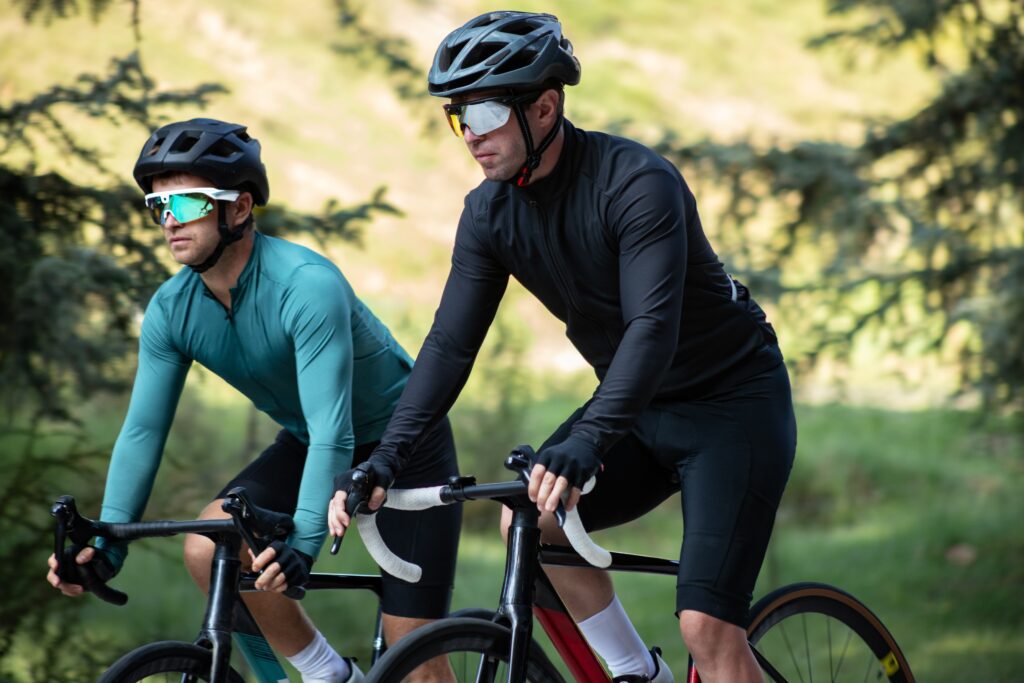
“It also recognises climbs, descents, sharp turns, and changing weather conditions to deliver advance alerts — and, based on breathing and heart rate data [supplied by a compatible third-party heart rate strap], issues fatigue/strain prompts so users can respond to safety risks ahead of time.”
Essentially, if Rover detects what it deems to be fatigue or excessive strain, it tells you to adjust your pace and stay in a lower training zone.
Once you’ve finished your ride, Rover creates what BleeqUp calls “an AI Roadbook”, combining the route, activity data, and “key moments of video” into a visual story.
The idea is that you can revisit your ride or share it with friends.
“Users can also rely on AI to detect highlights, edit with one tap, and use AI Master Motion to turn POV cycling footage into dynamic third-person perspectives, making it easier than ever to produce creative content,” says BleeqUp.
The BleeqUp Rover glasses weigh 53g. To put that in perspective, most of the standard cycling glasses we review here on road.cc hit the scales somewhere between 30g and 35g (although there’s some variation in that), and the Oakley Meta Vanguard smart glasses we reviewed earlier this year were 68g. Those glasses left reviewer Jez Ash feeling a little underwhelmed.
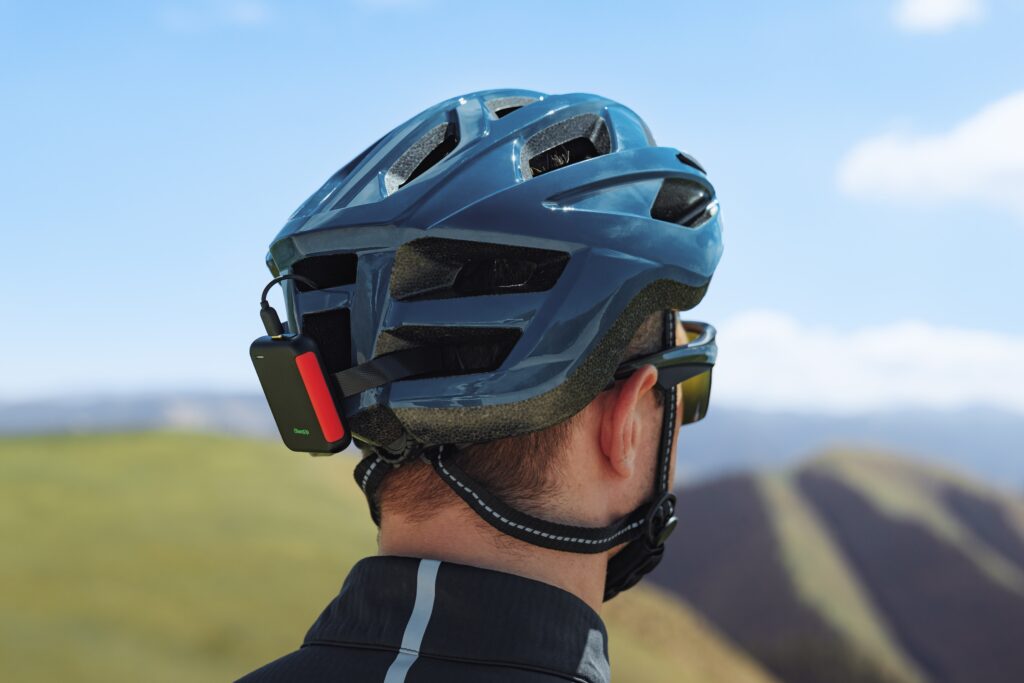
The Rover offers one hour of continuous recording on its internal battery in 1080p at 30FPS, or up to eight hours of music playback via the open-ear headphone. With BleeqUp’s Power Plus external battery pack, which you can mount to the back of your bike helmet, recording time extends up to five hours and music playback up to 48 hours. The BleeqUp Rover glasses (64GB) are priced at £409.














9 thoughts on ““The world’s first AI sports companion built into eyewear”: BleeqUp Rover wants to be your co-pilot”
AHahahahhahaaaa.
No.
Aren’t things quite bleeq enough these days? Why would I want to up the bleeqness?
Why would I want to pay even more to be a muppet Bleeqer to some Dr. Musk’s mad scientist?
Some very interesting information on this in their FAQs:
[Not sure why that’s a reply – it wasn’t meant to be. 🤷♂️]
The incompetence of these AI start ups would be funny if the general public weren’t being overwhelmed with such volumes of absolute shit.
Overprices glasses which barely work as glasses, over-encumbered with tech which needs an external battery pack to use for a period of a decent ride. No word on how the ‘compute’ is achieved; local model on device, app on phone, does it send a constant datastream to remote servers? What model are they using? Does it need connectivity? Are you going to be charged an ongoing subscription for tokens? Is it going to be overpriced junk when they rug pull with all the data they’ve collected on users and shut the servers down?
Thus i refer people to my previous comment, or the reply given in the case of Arkell v. Pressdram [1971]
I’ve been working on some glasses with an overlay that sees up to 5 seconds ahead. Idea is to warn of upcoming collision or hazard. Have developed a working software model using AI, but I’m struggling with the product design aspect – like how to get this into the glasses but in a way that doesn’t distract the rider. Maybe it only appears when an imminent collision is identified? I’m kind of looking for help with developing the product – have sent PoCs to Smith, oakley, and Apple but no response – I’m excellent with the tech/software, but not partnerships or product development. Will be doing a kickstarter but let me know if anyone is interested in chat first and potentially coming onboard. Could be a complete gamechanger!
I’d be interested if they could see a couple of hours ahead and tell me when I’m going to run out of energy half an hour from home, so I can cut the ride short.
@Kadinkski Why not go full H2G2 and bring out peril-sensitive sunglasses – they could help people develop a relaxed attitude to danger?