Having unveiled a 32-inch wheeled bike not too long ago, Starling Cycles is a brand that’s known for pushing the boundaries a touch. And that sentiment rings very true with its latest release, the Girder. Living up to its name, it employs an I-beam as its downtube in a bid to increase weight for better performance.
- Can 32″ wheels live up to the hype?: Starling Big Bird first ride review
- Starling Cycles moves manufacturing away from the UK in a bid to cut lead times
- Industry Insider – MTB Career insights with Joe McEwan of Starling Cycles
The world of cycling marketing is rammed full of ‘lighter means better’ promises, but with top-level downhill athletes strapping lead weights to their bikes, it looks like the trend is going in the opposite direction. Starling has noticed that, and has gone whole-hog by building the Girder’s downtube with new IBEEM tech – an actual I-beam.
“The industry’s obsession with weight just doesn’t hold up scientifically,” says Joe McEwan, Starling’s founder.
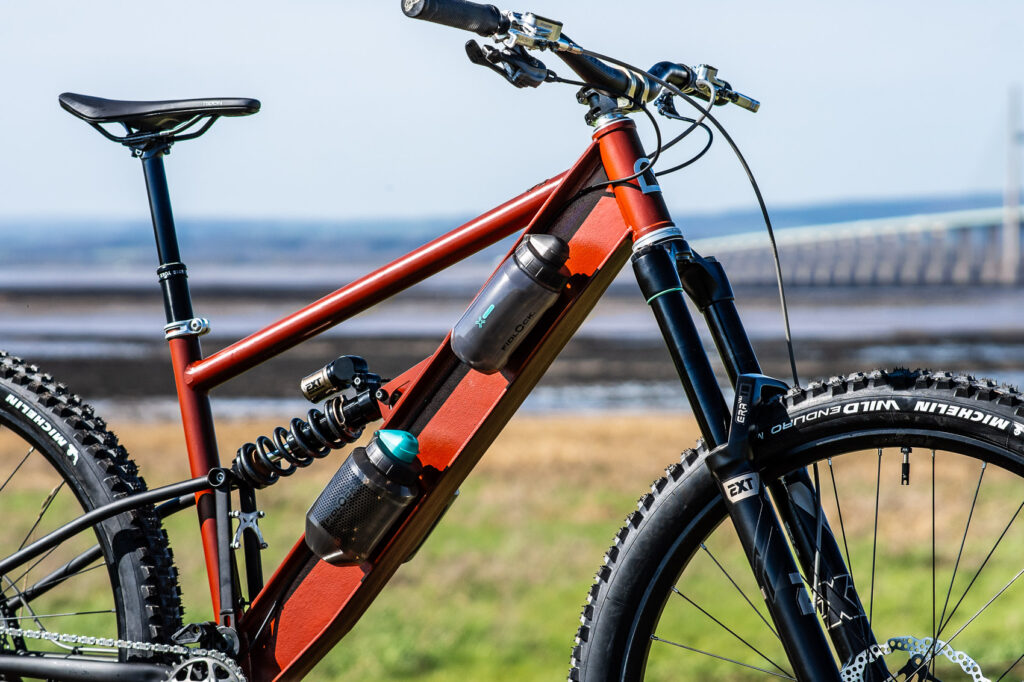
This move hasn’t been done just for the fun of it either, as McEwan reckons that the simple act of unweighting the bike means that the bike is “essentially riding itself”. With that in mind, he thinks that in that scenario, a bike needs to be weighted for a more stable and sure-footed ride. Thus, adding an I-beam to the bike’s frame looks set to fix that problem.
In classic Starling style, welding an I-beam in place of the downtube is simple to weld, easy to source, and “structurally overbuilt”. That said, the brand didn’t want to make a bike that diverted from the ride feel of the rest of its range, rather it wanted a Starling bike, but heavier. That’s where an I-beam became of interest, owing to its torsional stiffness, or torsional constant.
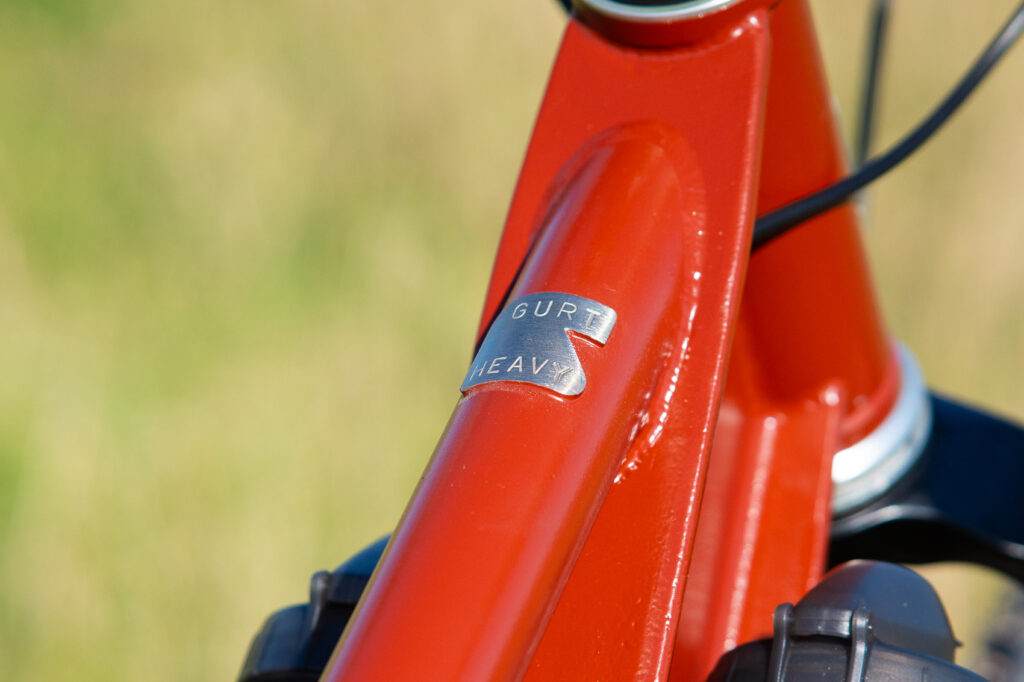
“A solid steel tube would be an easier solution for manufacture,” he concedes, “but it would result in a much stiffer frame, and as we know, ride feel is super important to us. The I-beam, even though it contains dramatically more material, actually gives us a torsional stiffness much closer to our current bike than a solid tube would.” Says McEwan.
As for the weight, Starling says that the I-beam adds an impressive seven kilos to the frame.
Oh, and there are adjustable tuned mass dampers, too
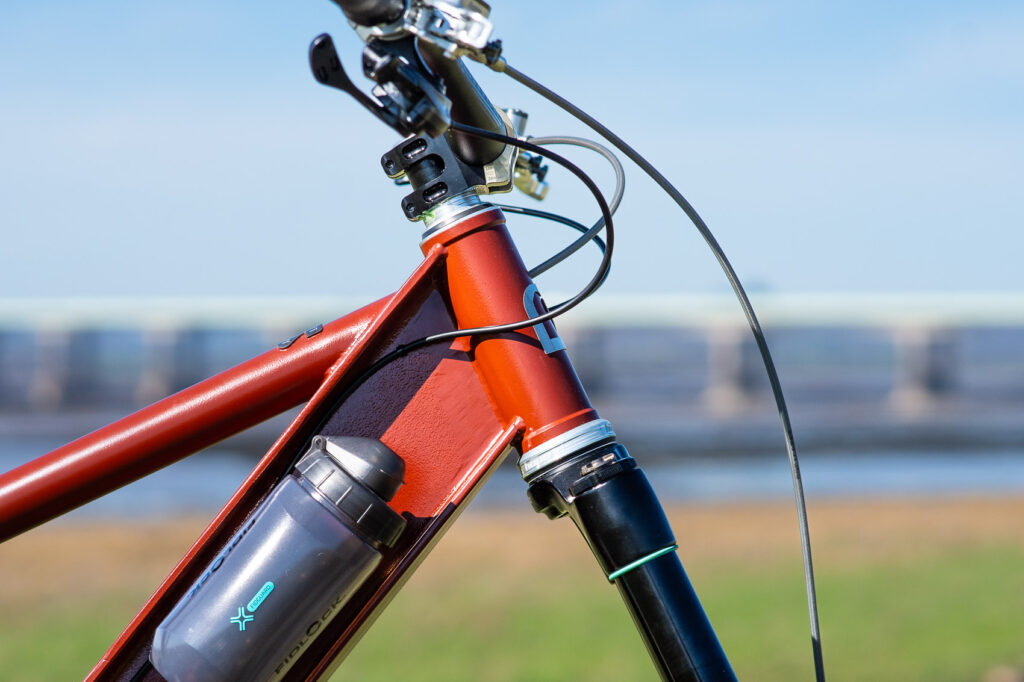
… Or well, four bottles filled with fizzy water.
Starling says that the carbonated water-filled bottles act like a mass damper, with collapsing bubbles absorbing the kinetic energy of the water’s movement. So it’s similar to a weight held between two springs… kind of. Beer might also work in this case.
At the moment, this bike is a proof of concept, so it’s not available to buy, but it looks like Starling might work on some frames if there’s enough interest. The IBEEM technology also isn’t available as an upgrade kit.