Much like every other type of cycling, mountain biking is divided into a whole bunch of genres, and with that come a range of bikes and components designed to suit each riding type – but unlike other cycling disciplines, there are tons of different kinds of helmets built to cater to cross-country, trail, enduro, and downhill riding. Let’s dive into each one to find out which might be best for you.
What to check before you buy
Even before putting your bum on the saddle, we very thoroughly recommend investing in a good helmet. A well-equipped and certified helmet is a vital piece of personal protective equipment that could help prevent your brain from turning to mush should you take a nasty spill. The good thing is, decent helmets for mountain biking needn’t cost the earth, and there are a few clear things to look out for so you can ensure that you’ve bought a solid piece of protective equipment before you spend the cash.
First up, an easy way of finding out whether or not your prospective helmet is safe to use nowadays is to head over to Virginia Tech’s website. Virginia Tech has a helmet lab that specialises in injury biomechanics, and it rates a whopping range of helmets through the STAR testing system, which assesses a helmet’s ability to reduce and protect against linear acceleration and rotational velocity. After its rigorous testing, a helmet will receive a rating of up to five stars. Virginia Tech then recommends helmets that have been rated four stars or higher, although not every helmet is tested.
Then, there’s safety standards certification. These can be found as things like EN 1078 / EN 1080, ASTM F1952-15, and NTA 8776 (to name a few). These certifications certify a helmet’s safety in different regions around the world. Find one of these with the helmet you’d like to buy, and you’ll know that you’re buying something that will work.
Lastly, there are systems like Mips. These are integrated into a helmet to increase its protection against rotational impacts. While regular EPS-constructed helmets do a good job of protecting during a fall, helmets equipped with Mips or similar claim to boost protection further.
The types of mountain bike helmet
Cross-country helmet
Helmets built for cross-country are constructed to achieve two goals: protection and lightweight. Grams count when it comes to cross-country, so every sliver of weight saved is weight that you don’t have to carry when pedalling long distances, or knocking elbows between the tapes.

As such, cross-country helmets can be rather minimal, and many carry over from road cycling. On top of lightweight and protection, cross-country helmets prioritise ventilation to keep heads cool when cranking hard up a hill.
Though they’re designed to be light and every bit as protective as they can be, they do sacrifice overall coverage for those weight savings, and they may not have useful features such as a visor, glasses storage and other neat bits and bobs.
An example of a road-style helmet that translates to cross-country is ABUS’s Airbreaker 2.0, or the gravel-focused Taipan. Some may even opt for helmets designed with an aero swing, like the Gamechanger 2.0
Half-shell trail helmet
Half-shell helmets cover a lot of ground. In fact, those designed for cross-country fall under the half-shell umbrella. But such a helmet that’s built for trail riding is the most common you’ll see for more casual mountain biking, or trail through to enduro riding styles.

These helmets can come absolutely rammed full of features. Often, they’re equipped with adjustable breakaway visors with some offering space for goggle storage underneath. Proper sunglasses storage is also common.
While low weight is always a plus, unlike cross-country-focused helmets, it’s not as high a priority. Instead, these helmets aim to boost coverage with half-shell helmets’ rims reaching further down the back of the head and over the temples.
The ABUS Cliffhanger is a great example of a half-shell helmet for trail and enduro riding.
Full face helmet
Full face helmets come in one of two guises. One’s built for enduro, where riders are expected to pedal uphill more frequently, whereas the other is built only for downhill protection. Both cover the entire head and feature a chin bar, to keep your teeth looking mighty fine should the worst happen.
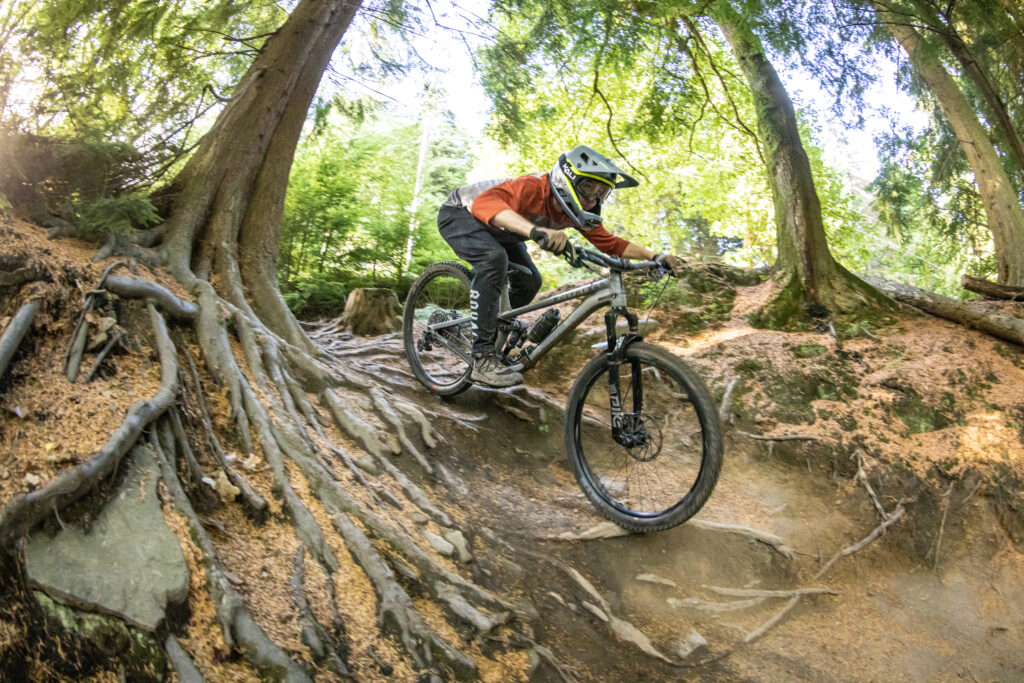
Some full face helmets up the protection game a touch, like ABUS’s Airdrop, as it comes with EVA inserts that are designed to protect the rider’s collarbones should the helmet come in contact. Many also come with adjustable breakaway visors.
Full face helmets built for enduro racing typically feature a lot of vents to provide airflow during pedally sections and slow-going climbs. Generally, they’re lighter, too, in a bid to reduce neck fatigue, as they’re often worn over greater periods of time. On a full face helmet designed for enduro, expect an external dial for fit adjustment, too.
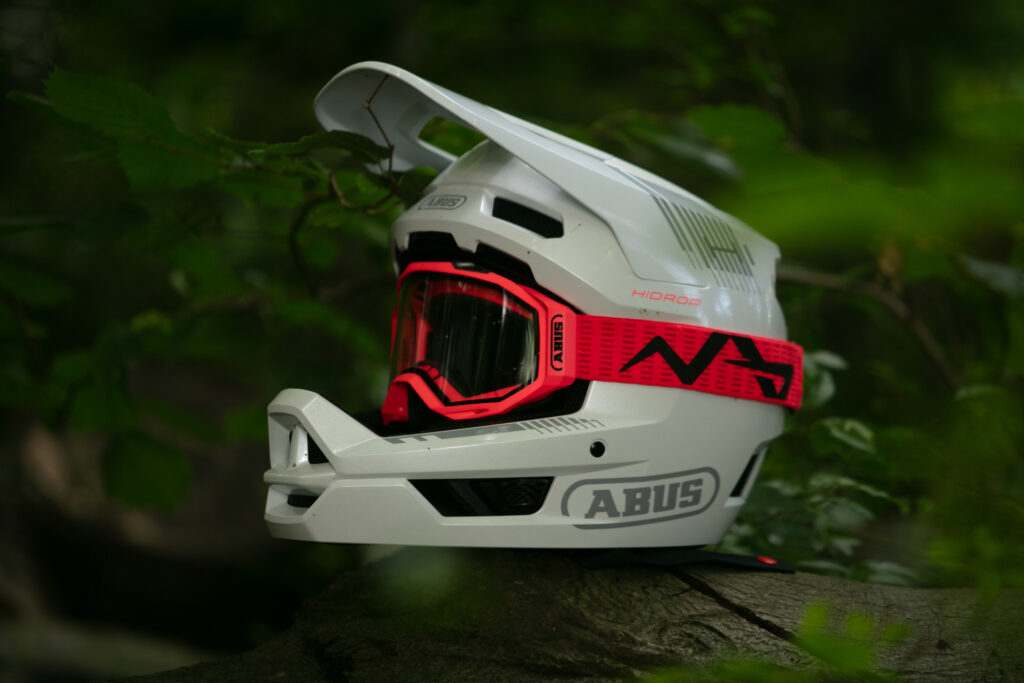
If it’s downhill thrills you’re after, then full face helmets such as ABUS’s HiDrop boost the protection game even more. Generally, these helmets aren’t worn while pedalling uphill, so they can sacrifice breathability at slow speeds for even more coverage. That said, they do come with vents that are designed to welcome airflow at the speeds typically reached when descending. On full face helmets designed for downhill protection, expect mega-secure Double-D buckles that offer loads of easy adjustment and breakaway visors for added protection.
All full-face helmets are primarily designed to be paired with goggles, but many can also be combined with glasses, if that’s your thing.
The downside of a full-on downhill helmet is that they’re often the heaviest of the bunch. But, as they’re primarily built to be worn on the descents, that’s usually not much of a problem.
Convertible helmet
If you want to buy one helmet for all types of riding, a convertible helmet may be the best choice for you. Where a quality half-shell helmet can cost upwards of £100, and a decent full-face helmet costs double that, investing in one helmet that’s both in one can be a more cost-effective investment.

A convertible helmet is pretty much what it says on the tin. One day, it can be worn as a half-shell helmet. Another, it can be a full face. That’s thanks to the fact that the chinguard can be removed and installed depending on the kind of riding you’re doing. In fact, some helmets are so simple to configure that the chinguard can be removed and carried for the climbs, and clicked into place when the interesting stuff happens.
As these types of helmets are designed to cover a breadth of riding styles, they’re fairly similar to enduro-style full face helmets, as they’re built for breathability while being able to provide a similar level of protection as a proper full face lid.
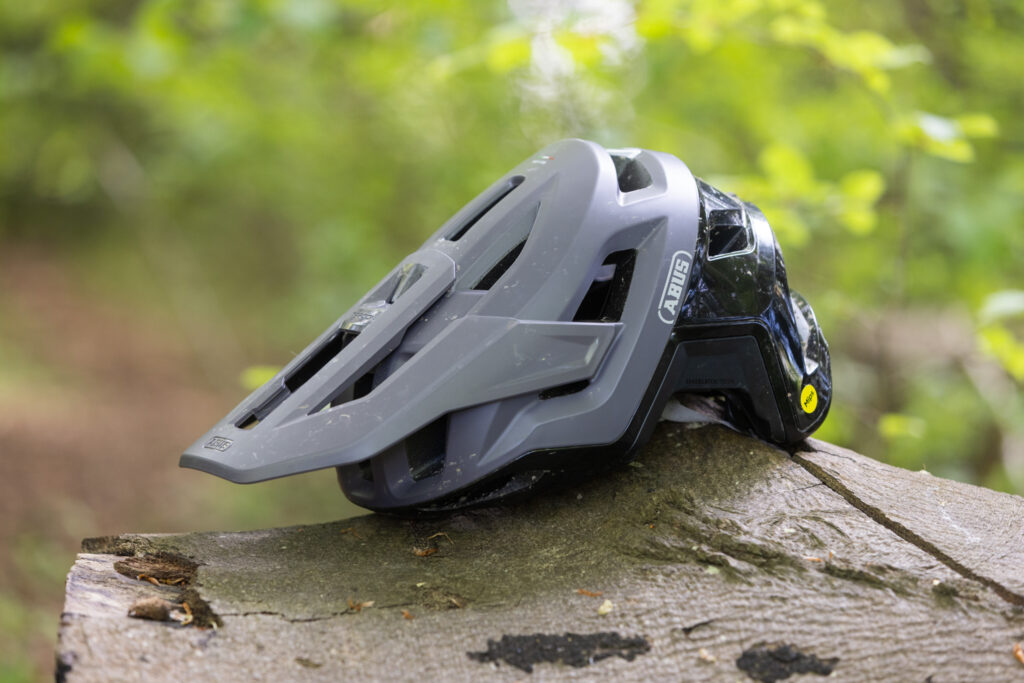
They’re not without their downsides, however. When in half-shell mode, they can be heavier than their standalone half-shell counterparts. Some chinguards can also be tricky to install on the fly and need a bit of practice to get the process nailed down. But if you’re set on the riding style you’ll be enjoying on the day, that shouldn’t pose much of an issue, especially when there’s the potential saving you’ll be making by buying one helmet, rather than two.
ABUS’s freshly released Targon is an example of a convertible helmet.
Find out more about the Abus MTB helmet range at abus.com