Cutting your handlebar for any reason is a really straightforward process, but once you start, there’s no going back, and a few things can go wrong, costing you your nice and likely expensive handlebar. But fret not; I’ve got a few tips to help you get the job done as simply and as quickly as possible for carbon and aluminium handlebars.
Why you should consider trimming your handlebar
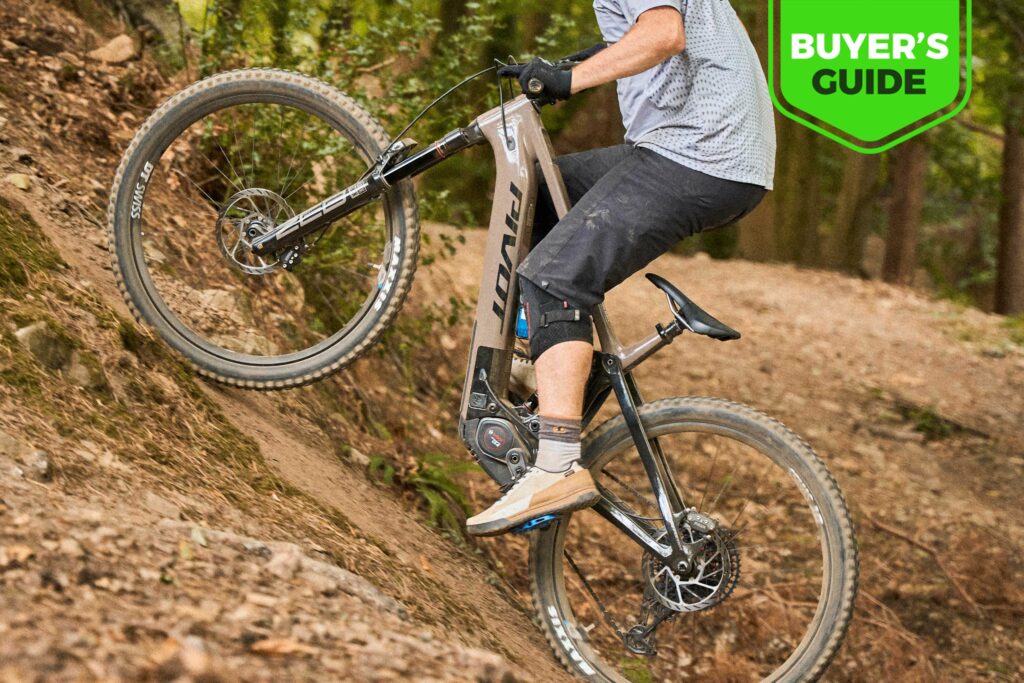
Generally, new mountain bikes come with handlebars that are 800mm wide, though some new cross-country rigs will come with narrower bars. Now, an 800mm bar is very wide, and for many, that width won’t be ideal. That’s because running a bar that’s too wide can reduce your arms’ ability to effectively absorb front-wheel impacts. After all, we’re basically doing lots of push-ups while riding. Running a handlebar that’s too narrow for you will be exactly the same.
Your bike’s handlebar is the main contact point that affects how you handle your bike, and riding with a bar that’s not the right size for you can make simple things like cornering more difficult than they should be.
But there are also personal and environmental factors to consider. If you ride in a very heavily wooded area, you’ll likely want to trim your bar to make threading through trees much easier, without the fear of clipping a bar end. You might also just like the feel of a certain bar width, and there’s nothing wrong with that at all.
How to find your perfect bar width
There are three ways of finding the bar width that might work best for you. Firstly, you can get into the push-up position, with proper form and run a tape measure under your hands. Take the measurement, and then you should have a solid starting point.
If you’re replacing an old handlebar or just have another lying around, you can go for the ol’ trial-and-error approach, narrowing down your bar after each ride to find out which width worked best for you.
If you have mates who run different bar widths than you, you could always ask to borrow theirs for a ride.
What you need
The tool list for carbon and aluminum bars is pretty much the same, but there is one key difference. You will need a hacksaw with a standard blade for aluminium, but for carbon you’ll need a fine-tooth blade or a dedicated blade for carbon fibre.
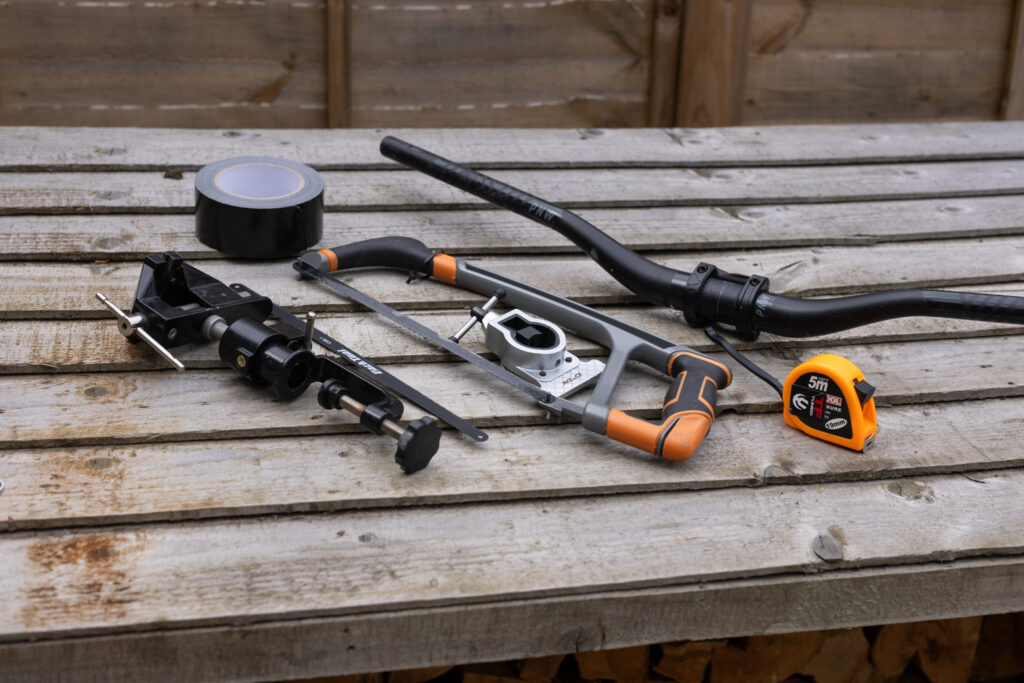
You’ll then need some kind of saw guide to ensure a straight cut. This can be a proper tool, which also comes in handy for cutting fork steerers, but if you’re in a bind, a pair of spare grip lock rings will do the job just as well. Just be prepared to sacrifice them for the job because they will likely get damaged as you cut.
You can absolutely cut an aluminium handlebar with a pipe cutter. But beware: as you’ll be putting pressure on the metal, the bar does deform as a pipe cutter does its thing. This runs the risk of permanently ovalising the bar, which will write it off.
Other things that’ll make the job a bit easier are a file and a deburring tool if you’re trimming aluminium. A table vice can then add stability to your cut if you’re cutting your bar off the bike. That said, a handlebar can be cut while on the bike.
For carbon, some thick tape helps avoid fraying the fibres, and a fine sandpaper will help achieve a smooth finish. Lastly, a method of sealing the bare fibres after a cut will help your carbon handlebar last longer. That can be super glue, resin or nail varnish.
A tape measure is also a very handy addition to your bar cutting tool kit. I’ll expand on that in a bit.
How to cut a handlebar
Prepare your work area and handlebar
While a handlebar can be cut on the bike, placing a saw guide into a vice and working off the bike can achieve better and straighter results. It’ll also avoid aluminium or carbon particles from dropping onto your bike and fork seals. You definitely don’t want that, as such particles can damage your pricy components if not cleared away.
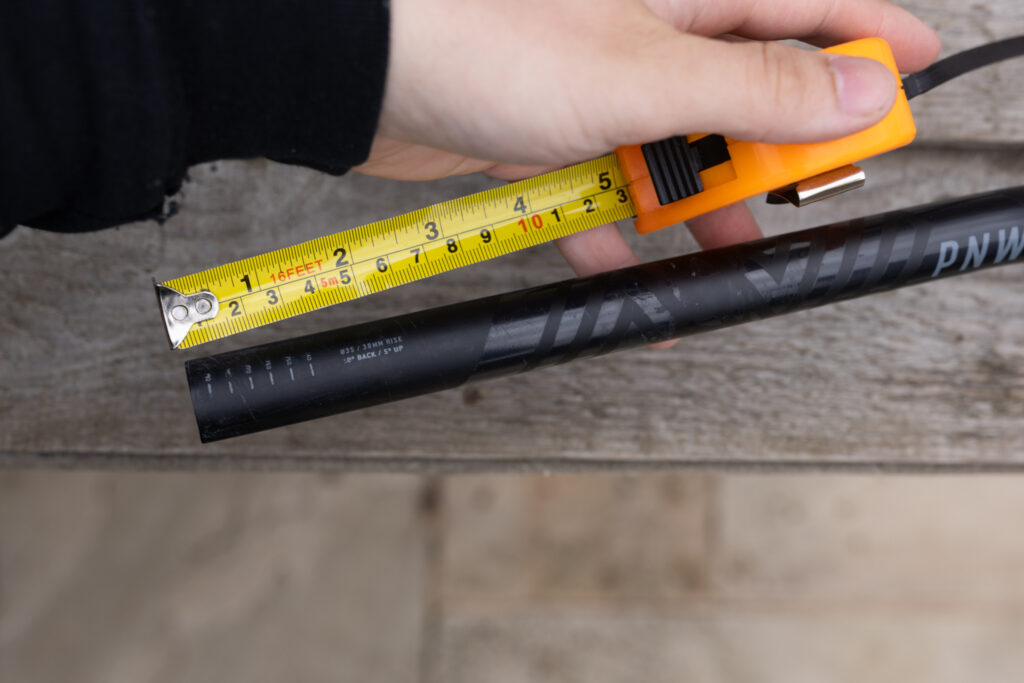
Then, whip out your tape measure and double-check that the cut markings on your handlebar are actually correct. Unfortunately, in rare instances, they’re not. You might also be working on a used handlebar, and those markings may have worn away. Definitely double-check every time.
If working on an aluminium bar, it’s helpful to score where you want to cut so you can clearly see it when slid into the saw guide. If you’re cutting a carbon bar, wrap a bit of tape inboard of where you want to cut. This both acts as a marker and helps stop the fibres from fraying as you cut.
Get to cutting
But hold on one minute. Once again, check that your mark is lined up properly in the saw guide, and when cutting carbon, spray a bit of water or soapy water onto the bar. This will stop carbon particles from floating about and being inhaled.
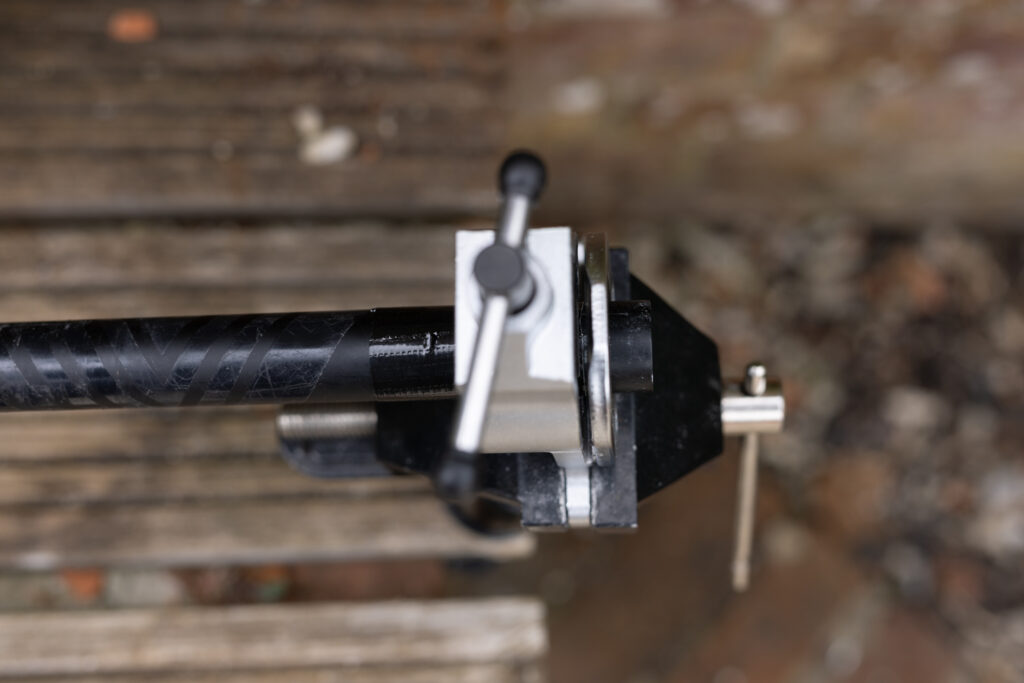
Now, it’s time for the easy bit. Just cut the bar, but do your best to let the saw do the work. Apply soft but even pressure. Allowing the saw to do its thing will make the job less strenuous but also result in a better, cleaner and straighter cut. If you’re cutting carbon, make sure to reapply water as you go.
With the bar cut, clean away any leftover swarf or carbon dust.
Finish the bar ends
With both ends cut, you’ll be left with two very sharp surfaces rife with burs that can make installing grips difficult, and they may well cut you. So it’s important to remove these sharp edges, and you’ll achieve a smoother, more professional finish, which is no bad thing.
If finishing up an aluminium handlebar, file the end down a touch to smooth it off, and twist a deburring tool around the inside and outside of the bar end.
If you’re working on carbon, give it a sand with some fine sandpaper, and it’s good practice to seal the now unfinished carbon to protect it against water ingress and further fraying. Super glue, nail varnish or resin will do the job here.