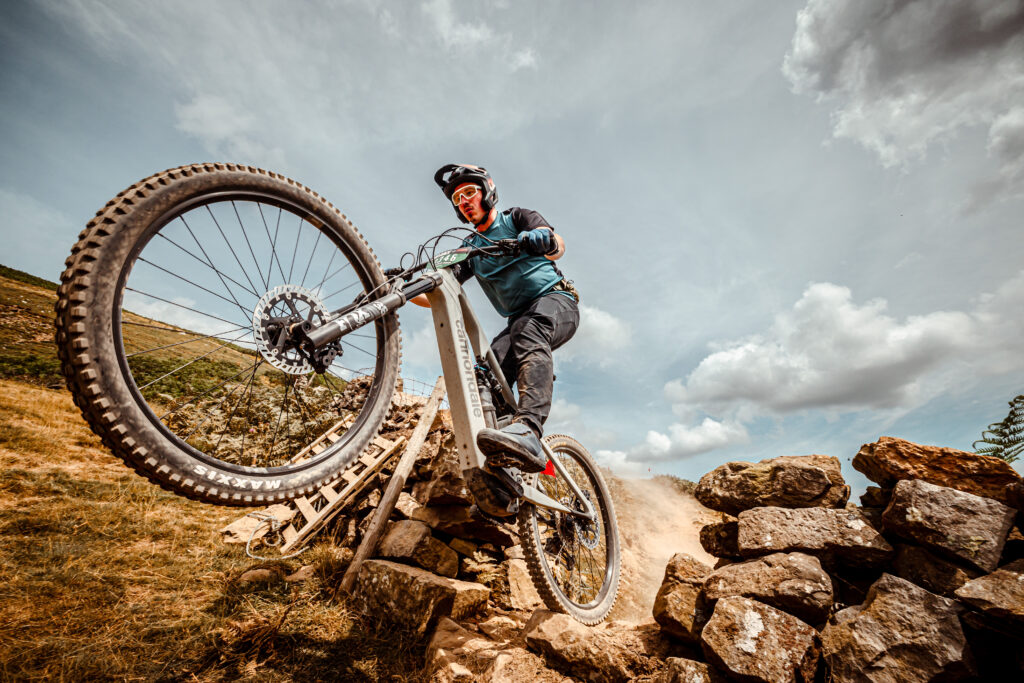

Although e-MTB racing is often overshadowed amongst top-level racing, e-mountain bikes are still becoming increasingly popular. That means that more and more are popping up in between the tapes, with more than 600 e-bike entrants taking on 2025’s Ard Rock. Even though they do the same thing as regular mountain bikes, there’s a lot more to consider when racing e-mountain bikes, so we caught up with Tracy Moseley (who since came third at the 2025 UCI E-EDR World Championships) to get some top tips on how to successfully race an e-mountain bike.
- Electric mountain bikes might be getting lighter, but they’re still a bit too heavy for me
- Electric mountain bikes are getting too powerful
- “There will always be haters in life, though I think there is a shift for acceptance”: What happened to eMTB racing and can it be fixed? Tracy Moseley weighs in
Learn your bike and know your course
It goes without saying, but e-MTBs have a finite battery life before they become very heavy non-assisted machines. If you use all of the battery’s power before the end of the race, you’ll find yourself at a serious disadvantage compared to your competitors. Because of that, battery management is key, and the best way to nail your battery management strategy is first learning how much assistance your bike can give you and the elevation (or ascent) its assistance can last for. And to do that, you’ll need to ride your bike and drain its battery completely.
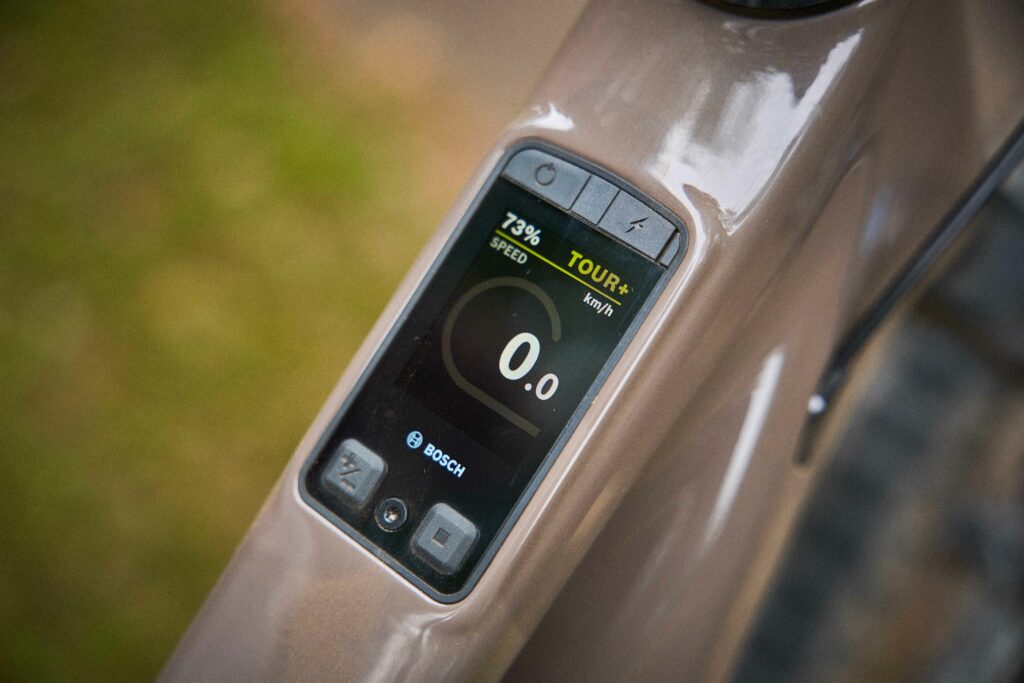
Moseley says, “What size battery you’ve got and the elevation of the course you’re racing on is important to know.
“Take your bike out and go somewhere you know and ride it to the point where it actually becomes dead. Record that elevation so you’ve got an idea of what you can get out of the battery, and then when it comes to the race, you’ll know that you can afford to go around in e-MTB [mode], rather than Tour, let’s say, and then judge your effort or assistance level.”
If you know what elevation your bike can manage in each of its modes, you’ll then be able to apply that to the course ahead. If it’s a longer course, dial back the assistance and vice versa.
More power isn’t always better
To the layman or weekend warrior, flicking your e-MTB into turbo will make things easier. The bike’s chucking out more power and putting less strain on your legs. While that’s absolutely fine during your Sunday bimble, during racing, relying on all of the bike’s power can become a hindrance and reduce control over the bike.
“Depending on your confidence and how much you’ve ridden your e-bike, definitely don’t go down in full race or turbo because, if you do tap your pedals and you get that surge, and you’re on a really sharp hairpin corner, then obviously it’s not going to give you much help. But the more confident you get, you can actually get some benefit of going down in a high power mode because you can get the acceleration out of the corners, and every little pedal stroke gives you those extra few seconds.
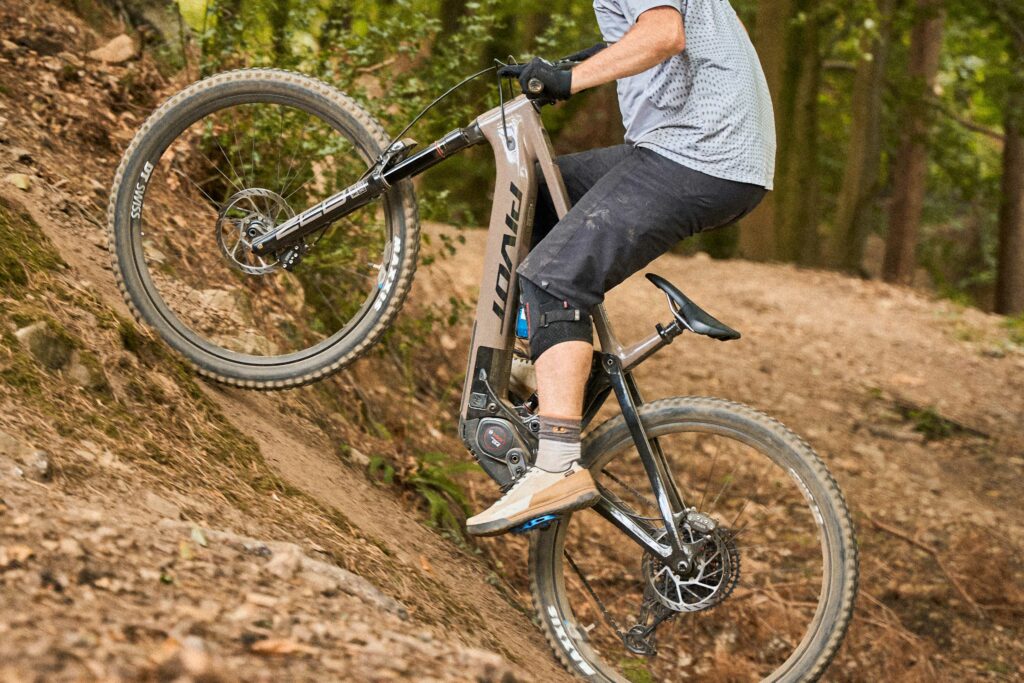
“Another one of the big ones I see a lot of people doing is not knowing what mode to ride in when they come to a steep, gravelly, loose climb. They think, “right, let’s give it full power”, when actually it’s the worst thing you can do. Because often the motor wants to give you that power, but you don’t have the weight you need on the rear wheel, and then you spin out. So actually, you need to turn down the power and maybe go for e-MTB, or Tour, or your equivalent, and you need to put some input into the back wheel. You need to get your weight squatted down low so you’ve got some weight over the rear wheel.
“It can sometimes be that you need a higher cadence to get that speed, so it’s just a lot of trial and error and not just assuming that more power means that ‘I’m going to get up that”. It’s definitely a lot of technique, changing your body weight forward, back, dipping your elbows to stop the front wheel rising. There is loads of you moving your body weight that you also need to do, rather than just relying on the motor.
“And sometimes slow down your cadence. It’s the only time I’ll say slow it down. Generally, you always need more cadence, but sometimes you need to go a bit slower and let you and the motor work together. It’s definitely a feel thing that comes with experience and not just hammering into something.”
Keep your cadence up
Just like on regular bikes, e-mountain bikes have a cadence at which the motor, or rider, works most efficiently. When trying to preserve battery capacity over the course of a race day, doing anything you can to keep the battery in a good place is vital. One of those is working with the bike’s preferred cadence.

“You see people on an e-bike in a massive gear, and the cadence is super low. You need to basically always be at 80 to 90rpm. You’ll feel like you’re over-spinning compared to how you’ll normally feel, but it gives you the most efficient use of the motor. You get more battery range, you’ll get more assistance, and you can then stay on top of it. You’re not just labouring.
“And use your gears, use them a lot more, those will definitely help beginners get used to what an e-MTB feels like.”
Think about getting to the gym
e-MTBs are heavy. As well as all of the usual bits and pieces, you’re also carrying a few extra kilos worth of motor and battery. With an e-bike’s extra weight comes an extra toll on the rider’s body because with extra mass, e-mountain bikes require more strength to corner and maneuver.
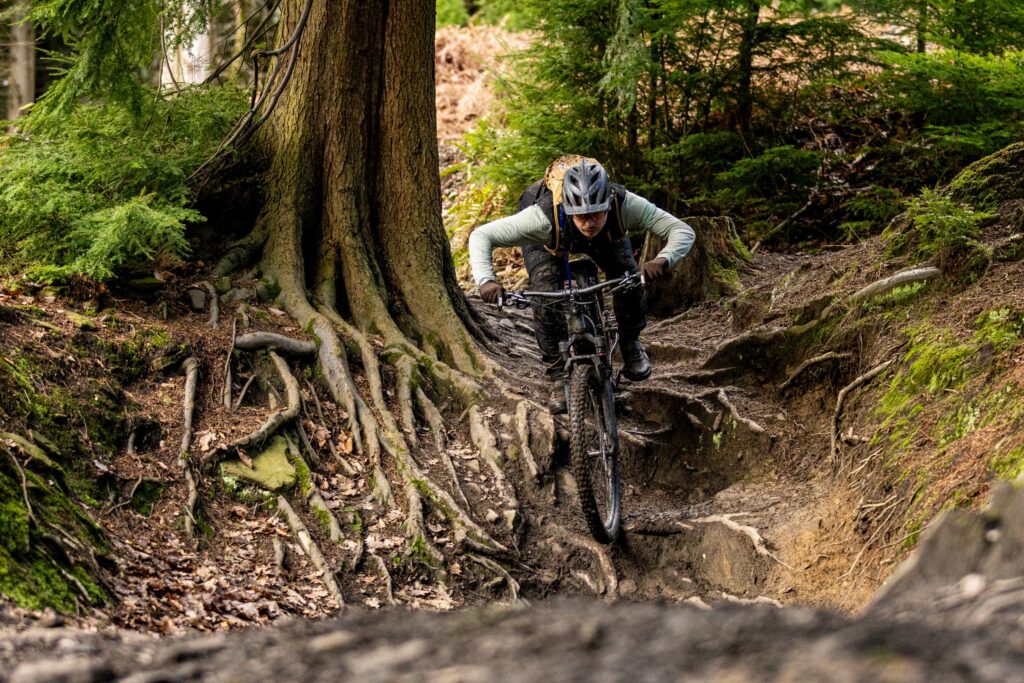
While jumping into the gym will be helpful for all kinds of cycling, Moseley reckons that a bit of time in the gym can pay back with greater bike control over a longer period of time.
“E-bikes are always going to be heavier than your traditional mountain bike, so I think that [strength is important] when you first transition, and certainly for girls who are naturally not as physically strong.
“Every time you turn a corner, you’ve got more weight to lean and pull back. It’s definitely more intensive on the upper body, and if you’re going to want to ride e-bikes more, think about doing some gym stuff to improve the upper body.
“They should come together [gym work and e-bikes] because there is more strain on the upper body from that extra weight, and if you’re stronger, you’ll be able to then be more in control and not be that passenger that we sometimes see – people getting dragged and off stuff.
“It’s an e-bike, so people often think that they don’t need to be fit, but actually, like everything, the fitter you are physically, strength-wise, and anaerobically, you’ll get so much more out of your riding, with or without an e-bike.”
Always be a nice e-biker
“We’re seeing more and more e-bikes getting bought and getting ridden, and I want to make sure that people’s attitudes are good. My big message is that it’s all about how we interact with other users out there.
“It’s always annoying when someone on an e-bike passes you while you’re sweating away [on a regular bike], but there’s no harm in just saying hello. You’re both out enjoying the same ride on the same trails.
“Just be a nice e-biker is my biggest message. Be courteous, be responsible. Don’t go and rip up terrain if you can’t ride it. Go back to basics and learn rather than just rip up a horrible rock in a trail just because you haven’t got the skills.
“I really want to feel like we need to evolve with the sport. The sport’s going to have e-bikes, and we need to learn to use them in a positive and nice way, and again, within the rules. There are rules there for a reason.”