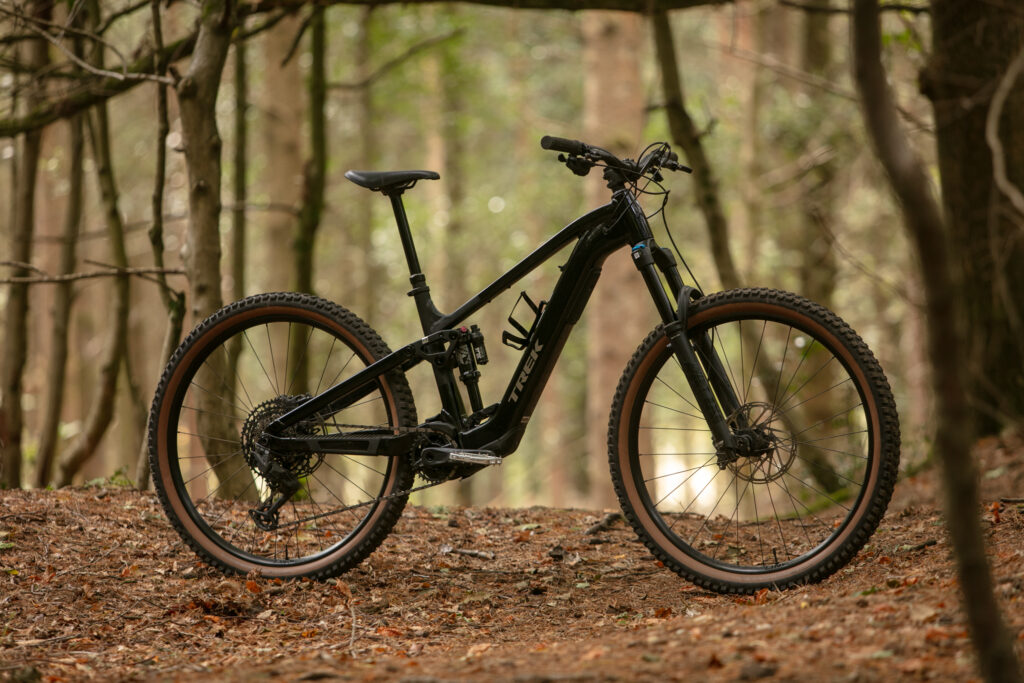

Ditching the old Fuel EXe moniker to fit with a new range of super adjustable bikes, Trek’s Fuel+ EX nails its trail duties. Thanks to a class-leading suspension kinematic and a geometry that’s tough to moan about, the Fuel+ EX delivers an excellent trail character that’s fun, engaging, and lively, but capable beyond its means. Though the whole of its adjustability is a stretch for those short of coin, and it could do with stronger tyres.
- Best e-MTBs 2025 – top-performing e-mountain bikes for every situation
- Scott Lumen eRide 900 e-MTB review
- How to store an e-MTB – storage solutions and best practices
Trek Fuel EX+ 8 Gen 2 – Technical details
First released in 2022, Trek’s Fuel EXe was a bit of a statement piece as it was the first to introduce a TQ motor to e-MTB. Now in its latest iteration, not only has it received a name change, but it’s a rather different beast altogether. That’s because it’s available in EX, MX, and LX builds, with the former (the bike on test) being the 145mm travelled bike, the MX ups the travel to 150mm and uses mixed wheel sizes, and the LT being the 29in-wheeled enduro bruiser with 160mm of rear travel.
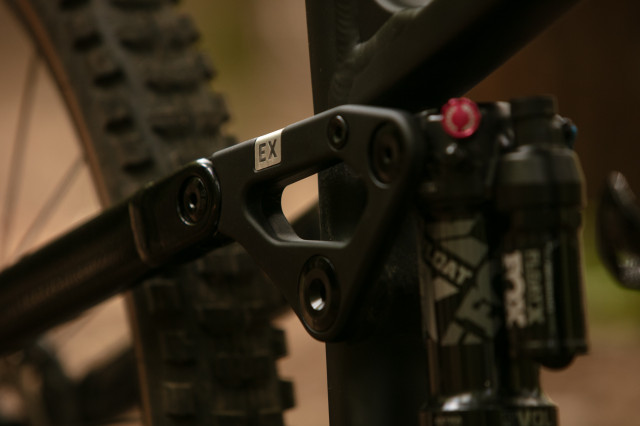
However, what makes all of these bikes interesting is that each can be transformed into the other. By taking full advantage of Trek’s Adaptive Trail System, the user can switch the EX to the MX or LT by swapping out the rocker link and lower link to the respective configuration, and change out the fork or fork’s airspring to up the travel to fit the model you’re looking to achieve (you may also need a correctly sized shock). For the MX, you’ll then need a smaller rear wheel. Granted, all of this doesn’t come free, nor cheap. A rocker link set will cost at least £95, and lower shock mounts are around £22.50 – That’s ignoring any extra expense on air springs, forks, and wheels.
But this does pose a sizeable level of adjustment. You can switch the EX to a mullet with the 27.5 lower shock mount set, for example. Yep, you can go between models, though there are some configurations that Trek doesn’t recommend, as the bottom bracket can get a little too low.
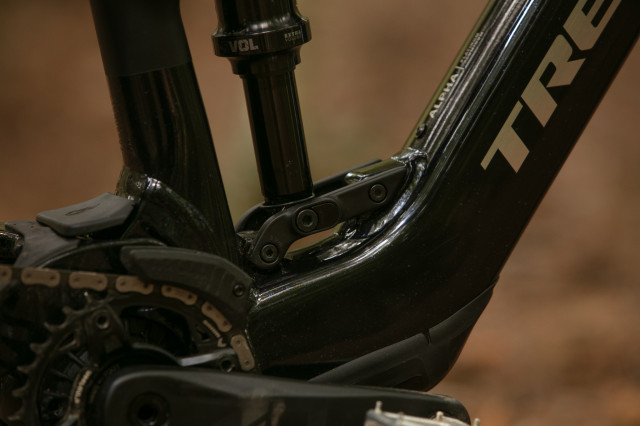
That’s not all, either. As standard, the Fuel+ EX provides leverage rate adjustment via a flip chip at the lower shock mount, and if you were to spend a little more again, you could install a head angle adjust headset. Expect to spend £27.49 on one of them.
Adding to all of the cool stuff, this bike uses TQ’s HPR60 drive system that puts out 60Nm of torque and up to 350W of power, resulting in 200% support. We’re told that it weighs under two kilos, too. That’s combined with TQ’s 580Wh battery, but it can be boosted thanks to a range extender.
Other than that, the bike carries the usual Trek hallmarks. There’s the brand’s Active Braking Pivot design that promises to help the suspension perform under braking loads. There’s also a straight seat tube to accommodate long travel dropper posts, there’s room in the front triangle for a bottle cage, and there’s an accessory mount under the top tube. Though with a bottle in place, space in the front triangle is rather confined, so you’re limited as to what can fit in that mount. For example, I like to carry OneUp’s EDC pump, but it wasn’t able to fit in this case.
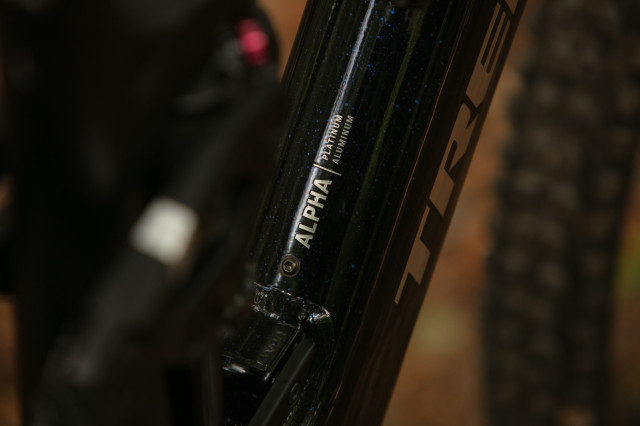
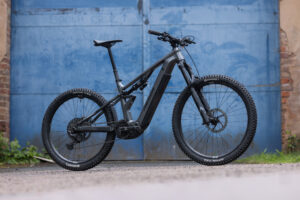
The EX 8 is built around Trek’s Alpha NEXT Platinum aluminum frame, runs a 150 mm-travel suspension fork, and again, boasts 145mm of rear squish. That frame can then fit up to 2.5in wide tyres.
Geometry-wise, it’s all rather modern. In the standard configuration and a large frame, there’s a 64.5-degree head tube angle, a 77.3-degree effective seat tube angle, a 444mm chainstay, and a 485mm reach. There’s nothing crazy going on here, but it’s all proper trail bike numbers.
Trek Fuel+ EX 8 Gen 2 – Componentry
Coming in at £5,000, the EX 8 Gen 2 is one of the most affordable TQ HPR60-equipped bikes currently on the market, aside from the £4,400 EX 5 Gen 2.
Plugged into the bike is a Fox Rhythm 36 fork paired with a Fox Performance Float X shock. It’s definitely budget-level kit, but it certainly doesn’t hold the bike back for the most part.
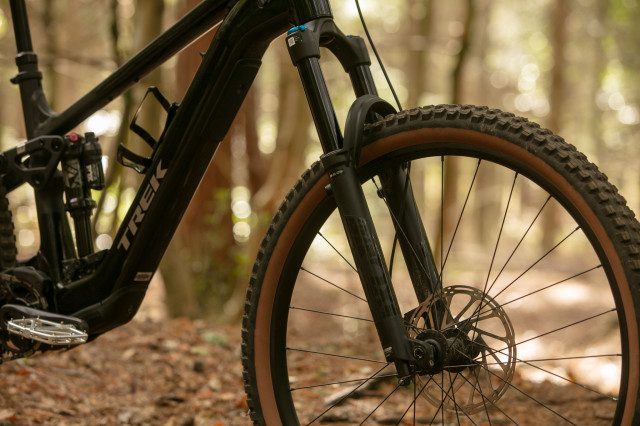
Shifting is provided by SRAM’s Eagle 70 Transmission drivetrain. As its most affordable OEM-only T-Type drivetrain, I’ve been impressed with the quality of shift it provides. It’s definitely nothing to sniff at, all while providing many of the benefits that come with T-Type stuff. Those are outright consistency and reliability.
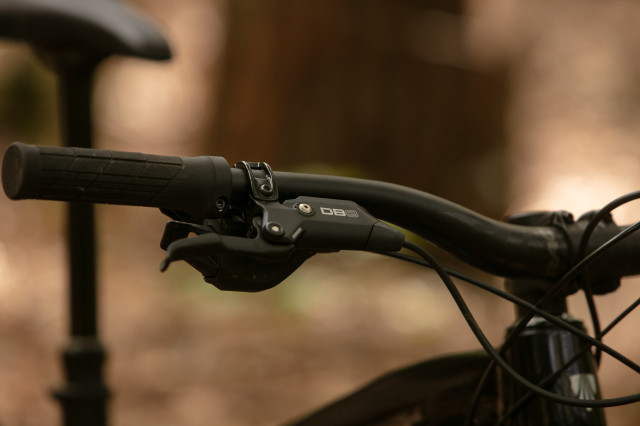
SRAM also covers the braking with the most recent DB8 brakes that use the new Stealth layout. They use four-piston calipers at each end and slow a pair of 200mm Centreline rotors.
The bike then rolls on a pair of BontragerLine TLR 30 wheels that are wrapped with a pair of Bontrager Brevard Pro XR tyres. While these do provide decent traction, I expected better puncture protection, having picked up a pinch flat without realising when riding a trail that wouldn’t usually pose quite a hazard.
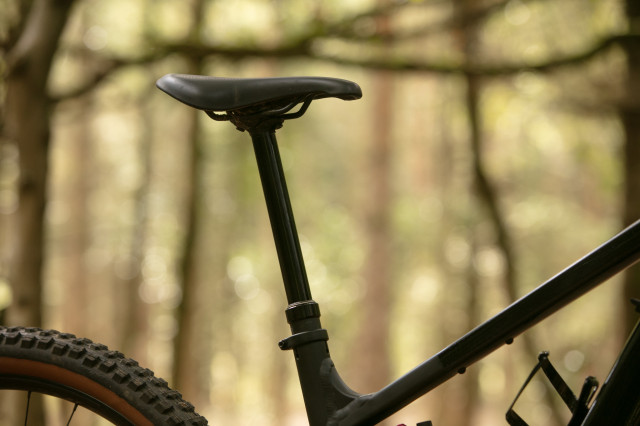
Wrapping up the specification, there’s a Bontrager Line Dropper offering a generous 200mm of travel, a Race Face Turbine alloy bar, and Bontrager grips. Although basic, they’re not bad at all.
That all weighs in at 21.62kg, which is reaching lightweight full-fat e-MTBs, but those are usually well north of the Trek’s asking price, and of course, this is an alloy frame we’re talking about.
Trek Fuel+ EX 8 Gen 2 – Performance
The Fuel EXe has been around for a little while now, and in the brand’s tweaks and improvements to the Fuel+ EX, Trek has nailed the assisted trail bike experience. To start, it’s a solid climber both thanks to both its balanced geometry but also that new TQ motor.
The seat tube angle is plenty steep enough to keep weight balanced. At some points, I even thought it was steeper than it said on paper, as there were a few scenarios in which I felt it was difficult to lift the front end over obstacles. On the other hand, this means that the front end is planted, which is important as the climb gets steep. This counteracts the chain stay, which is a smidgeon on the shorter side, given that such measurements are settling around the 450mm mark on e-mountain bikes. Then throw in the sensitivity of the suspension, and the Fuel+ manages to deliver confident traction.
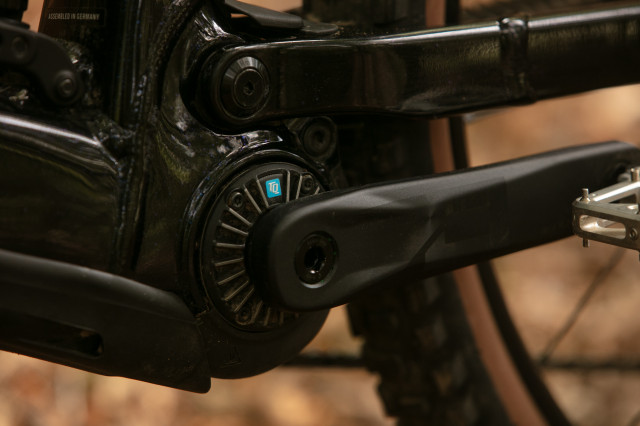
But to touch on the motor, the HPR60 hits perhaps the best balance of power and neutrality that I’ve experienced on a motor to date. It rustles up enough assistance to either take the sting out of punchy climbs or take over completely for lunchtime power hours. But it does so while feeling like an extension of what you’re putting in, rather than taking the reins altogether. It’s quiet, too, and super manageable. Oh, and with that 580Wh battery, I was able to dispatch 32km and 1,150m of ascent with a good chunk of battery left in the tank.
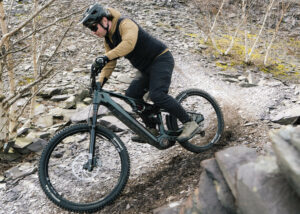
Where trail riding pretty much consists of a little bit of everything, the Fuel+ EX is primed for such antics, and its suspension performance is the jewel in the crown. It’s super supple, so grip comes easily, but the adjustments between its linear and progressive settings make a tangible difference to its ride. With the flip chip in its linear setting, well… It’s more linear. It’s happier to use more of its travel liberally, as it works to plow through technical sections to a point where it feels as if the bike’s packing more than just 145mm. But that’s all without feeling vague and wallowy.
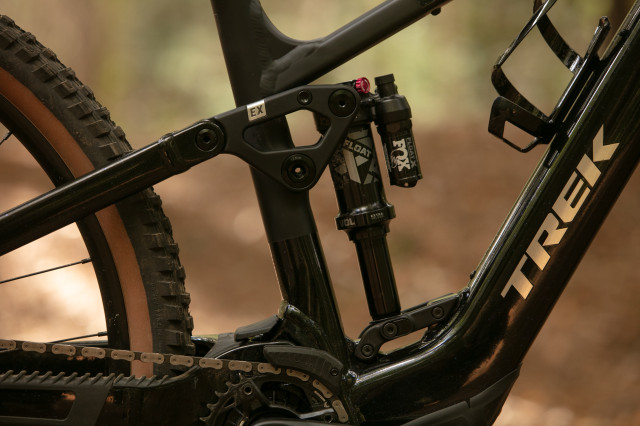
Flicking the chip into the progressive setting isn’t just easy enough to do on the trail, but the difference is very real. I generally prefer a progressive kinematic and found myself enjoying the firmer platform, especially when pumping terrain and pushing into corners. However, that extra hint of progression doesn’t compromise that initial plushness and sensitivity of the shock’s stroke. There’s still plenty of traction on offer. But the story here is that this adjustment provides two discernible characteristics to the bike, which will certainly come in handy when changing up your own riding from natural tech to bikepark speed flow, all without having to resort to dropping more money on the array of extra linkages and such to shapeshift the bike into its MX or LX guises.
Of course, top-notch suspension performance would be nothing without a decent shape, and while the Fuel+ EX isn’t pushing the envelope, Trek has decided on measurements that complement its do-it-all charm. The 339mm bottom bracket height is plenty low enough to keep the centre of gravity in a very good place, where it translates to planted, confident, and predictable cornering. With a head angle slightly steeper than 64 degrees, the bike brings a responsive front end that’s easy to initiate a turn with, and the rest of the bike simply follows, rarely putting a foot wrong.
The Fuel+ EX delivers a ride that’s really tough to complain about. It’s fun and lively, and planted and plowy, depending on where that flip chip sits. And where usually I might moan about the Fox Rythm 36 feeling a little undergunned, the e-MTB weight compensates to a point where it does little to harm the bike’s overall ride.
However, I found the fork to get a little overwhelmed when the trail got steeper. The Rythm-level fork doesn’t come equipped with a low-speed compression adjustment, so when weighted heavily as it would be during steeper sections of trail, it sits deeper into its travel. This shifts the bike’s dynamic geometry a bit, effectively making the head angle steeper, leading to a more uncertain and twitchy character. This wouldn’t be a problem on the pricier, £7,625, 9.8 Eagle 90 model (or the XT-equipped build), as it’s built with a posher fork, but for general trail riding, this hint of uncertainty would rarely be an issue.
Trek Fuel+ EX 8 Gen 2 – Verdict
As I mentioned before, TQ-equipped bikes don’t really come at this price, which makes the Fuel+ EX 8 rather attractive, if you’re looking for a mid-power, light(er)weight e-MTB. A key competitor for this bike is Canyon’s Spectral:ONfly CF 8, which is priced at £5,200. It runs Shimano’s Deore 12-speed drivetrain and a RockShox Lyrik fork, which should perform a little better during those steep moments, but it’s equipped with TQ’s HPR50 motor and a smaller battery, so you’ll get less power and less ride time. Although the bike rides excellently (I tested the Spectral:ONfly CF CLLCTV), the motor upgrade still makes the Trek well worth considering.
Propain’s Shresh SL starts at £5,994, and it boasts the same TQ motor and a carbon frame, but a somewhat similar build with an Eagle 70 drivetrain. You do get RockShox suspension, and it fixes my tyre woes with a pair of Schwalbe Albert Gravity tyres. That said, you could upgrade the Trek’s tyres and save money against the Propain.
To throw another lightweight but full-power bike into the mix, Whyte’s E-Lyte EVO RS is worth a glance, as its ride is fantastic. This one uses a full-power Bosch motor with a smaller battery and a range extender, but you’ll be spending £7,250. The Kado S is worth a mention as it’s £4,000, but this is a full-fat, weighty e-MTB.
Suppose you’re looking for a somewhat lightweight e-MTB, are allured by the TQ motor and a shed-load of adjustability, Trek’s Fuel+ EX 8 Gen 2 delivers an excellent ride character thanks to both a spot-on geometry and superb suspension performance. But to access the majority of its adjustability, you’ll need deep pockets. That said, the adjustments that come as part of the asking price provide real and useful differences. Throw on some decent tyres, and you’ve not only got a dialled trail e-MTB, but a platform that’s ripe for upgrades.
You might also like:
- Trek Top Fuel 8 Gen 4 mountain bike review
- Trek Checkpoint SL 7 AXS Gen 3 gravel bike review
- Trek’s updated MTB helmet range features enhanced WaveCel
About the bike
Tell us what the bike is for, and who it’s aimed at. What do the manufacturers say about it? How does that compare to your own :
State the frame material and method of construction. List the components used to build up the bike.:
Alpha alloy frame, Fox 36 Rhythm fork, Fox Float Performance shock, Brontrager wheels, Bontrager tyres, SRAM Eagle 70 drivetrain, SRAM DB 8 brakes, TQ HPR60 motor, 580Wh battery.
Frame & Fork
How much suspension travel does the fork have?:
Was the bike comfortable to ride? Tell us how you felt about the ride quality.:
How was the bike in terms of sizing and angles? How did it compare to other bikes of the same stated size and intent?:
Overall rating for frame
How much suspension travel does the rear end have?:
Did the bike feel stiff in the right places? Did any part of the bike feel too stiff or too flexible?:
Tell us about the build quality and finish of the frame:
Tell us about the geometry of the frame:
Tell us about the materials used in the frame:
Riding
How did the bike transfer power? Did it feel efficient?:
How would you describe the steering? Was it lively, neutral or unresponsive?:
Tell us some more about the handling. How did the bike feel overall? Did it do particular things well or badly?:
Rate the bike for high speed descending
Rate the bike for technical descending:
Rate the bike for flat cornering:
Rate the bike for technical climbing:
Rate the bike for climbing efficiency:
Rate the bike for agility:
Suspension
Rate the fork for performance:
Any comments on fork performance?:
Rate the rear suspension for performance:
Any comments on rear suspension performance?:
Rate the balance and performance of the suspension overall:
Drivetrain
Rate the drivetrain for performance:
Wheels & tyres
Rate the wheels for performance:
Rate the tyres for performance:
Rate the tyres for durability:
Controls
Rate the controls for performance:
Summary
Did you enjoy riding the bike?:
Would you consider buying the bike?:
Which components had the most effect (good or bad) on the bike’s performance? would you recommend any changes?:
Would you recommend the bike to a friend?:
Rate the bike overall for performance:
Rate the bike overall for value:
Use this box to explain your score:
All the deals displayed on our review pages are pulled from a constantly updating database feed of the best affiliate deals available. The criteria for deciding on what are the best deals is who is offering the lowest, delivered price. In most cases we will be showing the very best deal available online, but sometimes you may be able to find an item cheaper. If you can please feel free to post a link in the comments box below. To find out more about affiliate links on road.cc click here.