-1024x683.jpg)

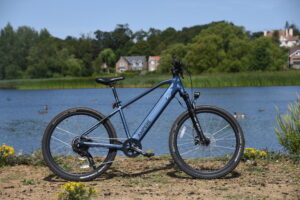
The Megamo Reach HT may look like a hardtail mountain bike, but on Megamo’s website it bears the strapline ‘limitless performance, everyday comfort’. The variant I tested, the HT 10 Equipped, features a rear rack, hardwired lights, mudguards and kickstand. It also features the latest (2026) Smart System enabled Gen 5 version of the Bosch Performance Line CX mid-drive, meaning extra peak power and torque can be tuned via a smartphone app. All in all, this puts it in the premium, very versatile, ‘SUV’ category of off-road capable e-bikes that can perform all sorts of other functions. With these performance improvements on offer, naturally I was keen to try it out.
Megamo is a Spain-based bike manufacturer founded in Girona in 1987. Its designs are high performance but also look to offer value for money via e-bikes like the Reach. The brand recently caught the headlines as one of the first to use the super-powerful DJI Avinox mid-drive which features on its full suspension Reason range. It also produces the ‘minimalist’ full-sus e-MTB Native range, equipped with the lightweight TQ motor system, as well as the Lande e-gravel range. (A Lande review is in the pipeline.)
What’s an SUV then?
The abbreviation SUV has been appearing in the description of an increasing number of e-bikes, but without any real concrete definition in a bike sense. You may well be familiar with SUVs from the world of motor vehicles, where the term stands for ‘sports utility vehicle’. They started out life as road-going four-wheelers with some off-road features, such as raised ground clearance and four wheel drive, but there is no set list of SUV criteria.
.JPG)
.JPG)
.JPG)
.JPG)
.JPG)
.JPG)
.JPG)
.JPG)
.JPG)
.JPG)
.JPG)
.JPG)
.JPG)
.JPG)
.JPG)
.JPG)
.JPG)
.JPG)
.JPG)
.JPG)
.JPG)
.JPG)
.JPG)

My take on what constitutes an SUV e-bike is equally subjective, but based on the idea that they are most useful when they set out to have the widest range of uses for the widest variety of riders over the widest variety of terrain.
You might also see SUV-style e-bikes referred to as ‘adventure’ or ‘crossover’ e-bikes or even ‘all mountain’ or urban e-MTB’. Whatever the terminology, it’s a design that aims to let you use your e-bike whenever and wherever you want – clearly an enticing prospect.
So here’s my take on how the Megamo Reach HT 10 spec sheet measures up against a wishlist of ideal SUV criteria.
In terms of off-road credentials, it has 100mm travel front air suspension thanks to a Suntour XCR 34 fork and offers a nice compromise between speed and off-road grip via Maxxis 29in x 2.25in Recon Race tyres. I do however feel the bike is crying out for a dropper post – as much for comfort as for a performance feature. I’m not singling out Megamo here. I feel most e-bikes could benefit from them.
An SUV should be able to haul plenty of stuff. Whilst the SKS GT4 PLUS rear pannier rack is rated at a disappointing 12kg – half a typical rear carrier rack rating – I feel that’s extremely conservative and this rack in reality will comfortably take around 20kg, which is plenty of carrying capacity for shopping and touring.
And of course you want plenty of power to go wherever you want with plenty on board. The Reach HT 10 looks ideal in this respect. I was particularly excited to try it out as this was my first experience of the latest Gen 5 Bosch Performance Line CX mid-drive with peak power increased from 600W to 750W and max torque upped from 85Nm to 100Nm compared to previous generations. A refined, updated Hill Start Assist feature has also been added. More on that in the Real World Testing section below.
Bosch Gen 5 motors first appeared on 2025 e-bikes – primarily on premium e-MTBs. It seems they may well appear on a wider variety of designs in 2026.
An SUV also benefits from general commuting features, like powerful hardwired lights, mudguards and a kickstand and the Reach HT 10 has all these. It was great that the front mudguard stays are solid, strong alloy, but disappointing that the guards themselves are plastic.
I was expecting the bike to be a bit lighter than the 25.2kg it measured on my scales given that the Gen 5 motor weighs a healthily trim 2.8kg – although against that, the sizeable 600Wh battery weighs 3kg. It’s an easy task to pop it out of the frame if you need to lift the bike onto a car rack or up stairs.
Trail, road, touring… real world testing
The Reach HT is a superb hill climber and set an all-time record up my ultra steep test climb. Testing it side by side against an e-bike with the older version of the Performance Line CX as well as a brand new Performance SX model, the Reach HT was way ahead of the SX and considerably quicker than the older Performance Line CX.
Note I did this test after tweaking the software on the Reach HT via the Bosch eBike Flow app. I upped the peak power and torque settings to the maximum possible and this certainly makes a big difference over the defaults, resulting in super powerful assistance up some very challenging on and off road hills of well over 20%.
Do you really need all that power? It’s certainly a legitimate question. Undoubtedly some will – and even if you don’t ‘need’ it, you might want it for the sheer enjoyment of breezing up what would be almost unconquerable hills for those without motor assistance. Heavier riders and those who want to haul big loads or go off-road camping may find this extra grunt very valuable.
However, it’s worth saying the lighter SX motor is a great system for sportier riders who want more of a workout, while pre Gen 5 Bosch motor systems – as featured in our review of the MMR X-Bolt – will be more than enough for many riders.
There are four power modes that you can easily switch between at the touch of a button – Eco+, Tour , the semi-automatic eMTB and Turbo mode. In addition, each individual power mode can have its respective performance parameters tweaked within Bosch’s eBike Flow app under the headings Assistance, Dynamic, Torque and Max Power. It sounds complicated, but in practice if you want a livelier response, you just dial up the settings, bearing in mind that will also mean reduced range.
The only jarring note was that Eco+ felt not to be kicking in immediately, which is very disconcerting on a bike known for its high quality torque sensing system. This turned out to be due to the revamped software and I needed to up the Dynamic setting in this particular mode to get an immediate response from pedal pressure, after which I was quite happy with it. Bosch uses this default setting in Eco+ for power saving purposes, but I felt it was just not what most riders would want in a high quality e-bike.
Overall though, the new Gen 5 motor is a superb bit of engineering. At 2.8kg, it’s light, very quiet and super smooth, with better software integration than ever before. The Purion 200 display and control unit is among the most ergonomic and easiest to use I’ve tested and displays all the basic metrics you expect. The range estimator settled on 28-44 miles fully charged – presumably taking into account the fact I had upped the power available in most of the different power settings – and that seemed about right.
It’s my bet most people would similarly increase the power levels. Whilst you could get considerably more range by toning things down, if you have all that power and responsiveness right there, it’s just too tempting not to use it. In any case, if you buy the latest iteration of the top of the line Bosch motor, it’s really what you’re paying for.
Ideally, I would have liked to have seen the bike specced with the larger 800Wh battery as the increased motor power capability and load hauling rack all point to greater power consumption than on your average e-bike. You could always buy a Bosch PowerMore range extender style battery from around £360,
As well as the motor power I really took to a couple of other aspects of the Reach HT. The Cues 10-speed gearing was really smooth and slick. I can’t tell if Shimano’s claims that it is more durable than derailleur systems of a previous design are true, but it certainly felt like it worked well with the most powerful mid-drive motor I have tried. It never felt to be under undue strain, nor did it make any of the graunching noises I’ve sometimes had on other mid-drives combined with other derailleurs. The huge 48-tooth bottom gear on the rear sprocket should also mean you never run out of climbing gears, even in the most extreme situations.
I also got on well with the Maxxis Rekon Race tyres. Whilst they are often billed as fast on tarmac and good in the dry and off-road, I found they also offered plenty of grip up steep and slippy off-road climbs; conditions not traditionally seen as their forté.
Overall, this a super powerful ride on a well-equipped bike with all the components working either well or superbly well. I do however have a few niggling criticisms.
Whilst it’s a pretty relaxed ride overall, the geometry of the handlebar stem meant quite lively handling, while the comfort and usability of the bike would have increased for me immeasurably if it had come ready fitted with a dropper post, as already noted. Whilst originally fitted as performance aids for off-road downhillers, many riders find them really useful simply for getting on or of the bike or for adopting a safer-feeling ride position during steep descents. The fact the water bottle attachment points on the seat tube project into the inside of the frame mean you can’t drop the seatpost right down, so you’d need to check with a bike shop if that would be an issue if you wanted them to retrofit a dropper. Of course you could always get a shorter seat post if you want a lower riding position, but this just seems an unnecessary irritation when most bikes do let you drop the post right down.
Plastic mudguards and a plastic kickstand also seem a bit below par on a £4k e-bike, though the supporting mudguard struts looked stronger than many I’ve seen. A final quibble was the tricky to get at bolts on the kickstand. These had worked loose and you’ll need decent quality long length hex keys with ball ends to keep them tight.
Overall though, Megamo’s Reach HT 10 is a versatile e-bike at the cutting edge of e-bike mid-drive tech. It would suit very demanding everyday utility riders with cash to invest in a high quality product as well as electric tourers looking to take on tough terrain in all weathers. If that’s you, add it to your shortlist.
The competition
There are other Reach models that may suit you better, all detailed on their website. The pick of the bunch in performance terms is the £4,399 05 Equipped variant with a bigger 800Wh battery and a snazzier Kiox 500 display and an extra gear. Less pricey variants have less powerful motors or less equipment. Note there are also step-through Reach LOW models of similar specs across numerous models.
The standout competitor from other brands appears to be the Canyon Pathlite ON: SUV range which starts at £2,799, but which is currently discounted to £1,869 – quite ridiculous value for a Performance Line CX motor with the Smart System. We tried the top end Pathlite:ON 9 LTD SUV back in 2023 and were very impressed.
Haibike’s Trekking 7 offers a similar level of spec and performance as the Megamo Reach HT 10 Equipped from one of the pioneers of the modern e-bike world.
It may be you can find discounted offers for the Reach online – distributors Alsobikes look to have done an impressive job building up a UK dealer network in a short space of time, so whilst the bikes are generally built up and shipped out from Spain (to UK spec) on request, there should be some samples in shops and local backup to hand if you decide to buy.
All the deals displayed on our review pages are pulled from a constantly updating database feed of the best affiliate deals available. The criteria for deciding on what are the best deals is who is offering the lowest, delivered price. In most cases we will be showing the very best deal available online, but sometimes you may be able to find an item cheaper. If you can please feel free to post a link in the comments box below. To find out more about affiliate links on road.cc click here.