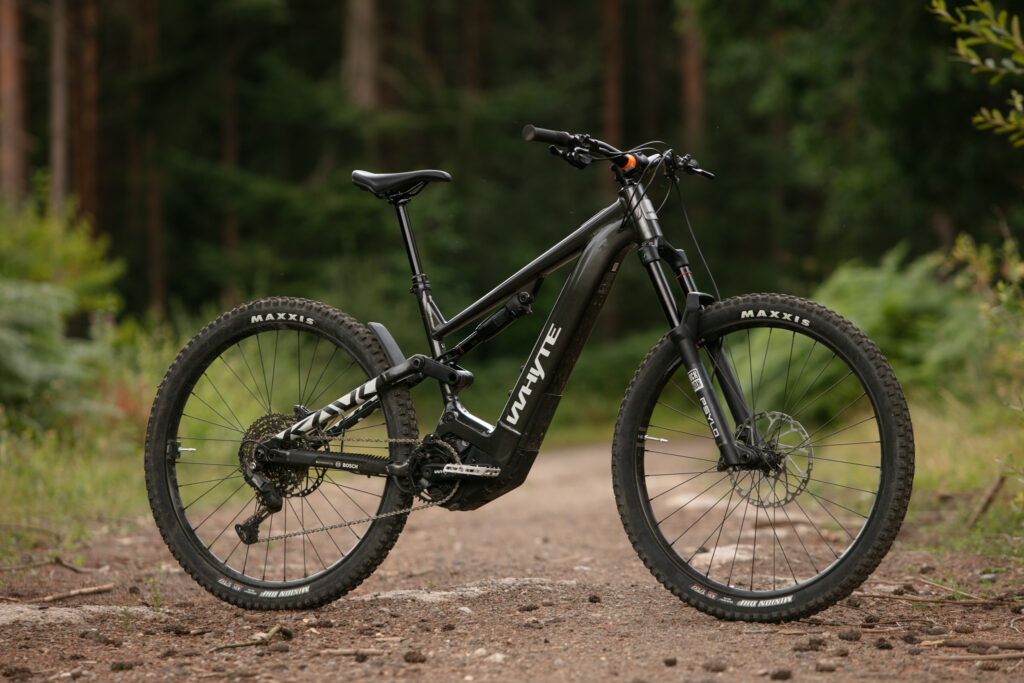

The Kado S is the latest bike to hit Whyte’s e-mountain bike lineup, and it aims to bring big pedal-assist performance at an attainable price point. With it, the brand has done very well to deliver an excellent ride both through Whyte’s known low centre of gravity and through very wise spec choices. That said, not every component on this bike elevates its ride, rather, some hold it back. Either way, it’s an affordable platform that’s primed for upgrades.
- Best e-MTBs 2025 – top-performing e-mountain bikes for every situation
- Whyte E-Lyte Evo RS e-MTB review
- “There will always be haters in life, though I think there is a shift for acceptance”: What happened to eMTB racing and can it be fixed? Tracy Moseley weighs in
Whyte Kado S – Technical details
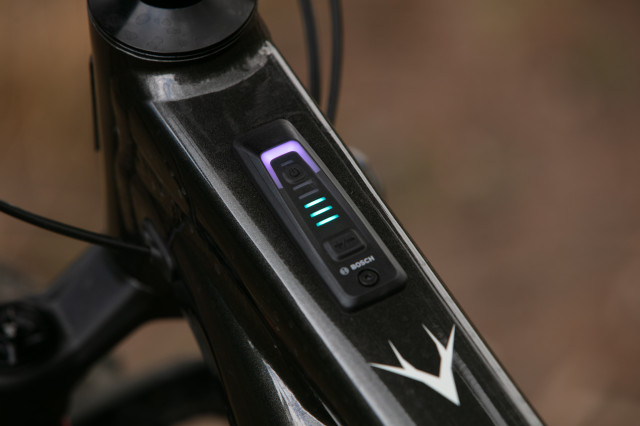
At the heart of the Kado is Bosch’s Performance Line CX motor. After the recent update, it kicks out up to 100Nm of torque and 750W of peak power. For the Kado S, specifically, that’s fuelled by a 600Wh battery, rather than the 800Wh unit on the pricier models in the range. This sheds some grams off the bike’s hydroformed 6061-T6 alloy frame, while dropping the price tag a touch. All sizes of the Kado can accommodate Bosch’s PowerMore range extender too, apart from the Works build, due to the shock specification.
With the motor and battery system, Whyte has done a couple of pretty cool things. First and foremost, it follows the brand’s renowned design, where the motor is tipped up to allow space for the battery to sit lower in the downtube. That’s all in a bid to lower the Kado’s centre of gravity. Additionally, Whyte has made it even easier to remove the battery. Now, all it requires is a quick pull of a lever beneath the motor, the unscrewing of a 6mm Allen bolt, and the removal of a connector. Then, it slides out.
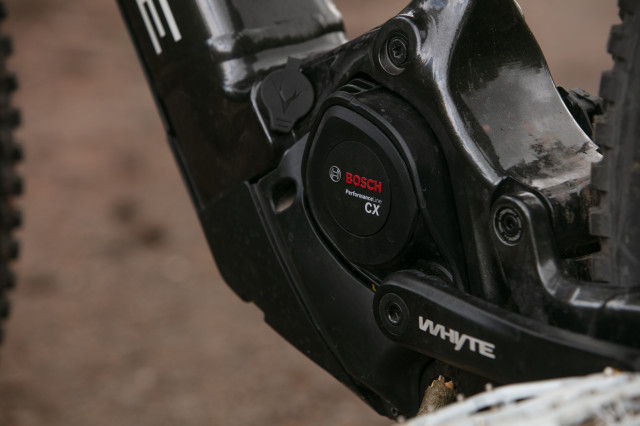
It’s super easy, it doesn’t take much more than a couple of minutes, and importantly, it’s allowed me to charge the battery indoors, without having to drag a filthy bike into the house. With all of this, the Kado can accommodate the included 600Wh battery, or the larger 800Wh battery if you were to purchase one aftermarket. Of course, it’s also compatible with the 250Wh PowerMore range extender. But note, it only fits on the M to XL frame sizes. Sorry, small riders.
Running on 29in wheels as standard, the Kado provides 150mm of squish at the rear, combined with 160mm up front. That rear suspension has been ‘custom tuned’ to achieve ‘the very best grip, feedback and control’, says Whyte.
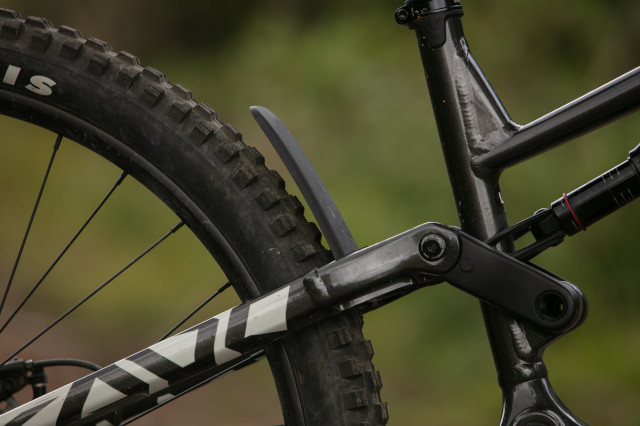
Wrapping up the tech specs, there are the usual Whyte hallmarks, including a gater around the seat post to stop crud from getting into the seat tube. There’s internal cable routing that exits either side of the head tube, and the bike is covered by Whyte’s lifetime frame and pivot bearing warranties. There’s a neat mudguard built onto the seat stay, too.
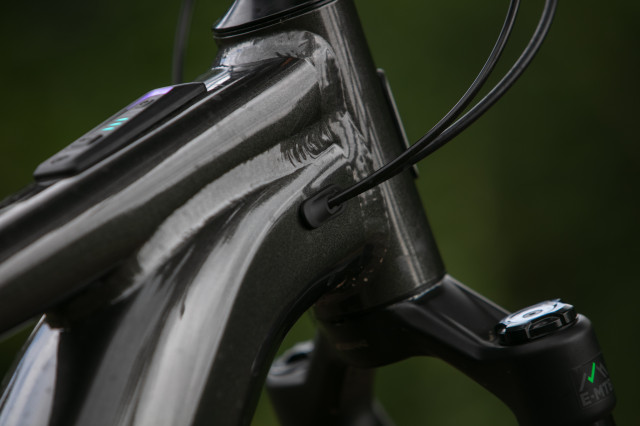
Moving onto the geometry, I’ve got a large frame on test that is sorted with a 77.7-degree seat tube angle, a 65-degree head tube angle, a 350mm bottom bracket height, and a 485mm reach. There’s a flip chip in the shock yoke too, so the head angle can be slackened by just over half a degree, and the BB height can be lowered by 8mm.
As for the weight, the Kado S tips the scale at around 25kg. For an alloy bike, that’s far from bad.
Whyte Kado S – Componentry
As a bike priced at £4,000, it features componentry that keeps its price low, without compromising performance. The brand has managed to strike a fairly balanced approach, providing kit that performs well enough for the bike’s intended purpose, but without being overblown by unnecessary bling. However, there are a couple of things I would change, which will boost the bike’s overall capability.
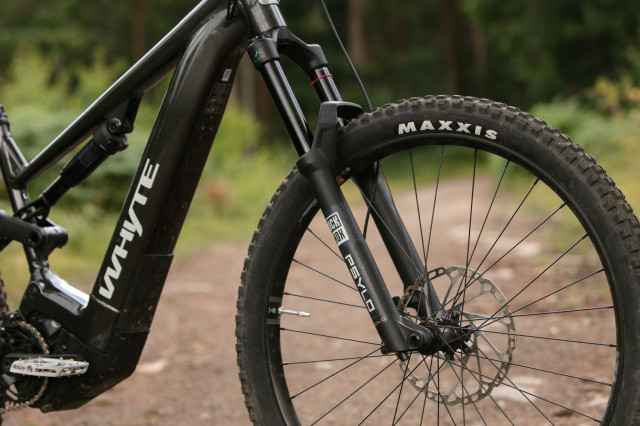
But first, the RockShox Psylo Gold fork with that 160mm does an impressive job for a price-point fork. It’s not as beautifully refined as pricier models, but it’s well-damped while providing a useful range of adjustment. That fork is combined with a RockShox Deluxe Select R shock.
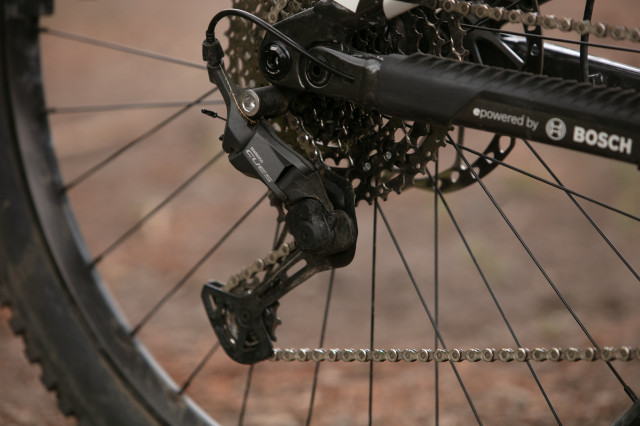
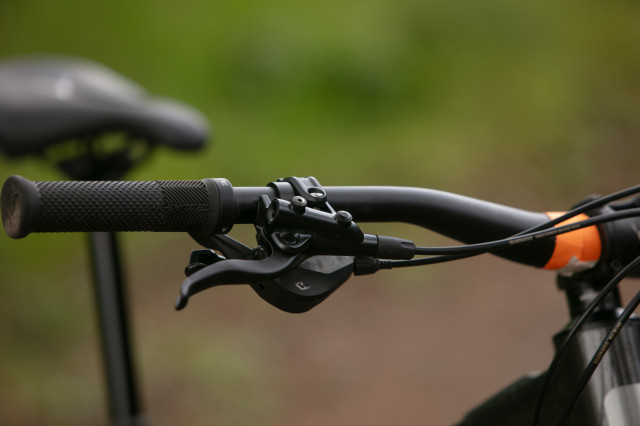
Shifting is provided by Shimano’s CUES U6000 drivetrain, which is far from shabby, providing prompt and clean shifts even under power. However, the Shimano M4100 four-piston brakes have fallen slightly short of expectations. On a regular mountain bike, they’re excellent low-end brakes, but when employed to slow 25-odd kilos, the power and lever feel isn’t really enough. These do work, but not with the finesse and urgency of even slightly pricier brakes.
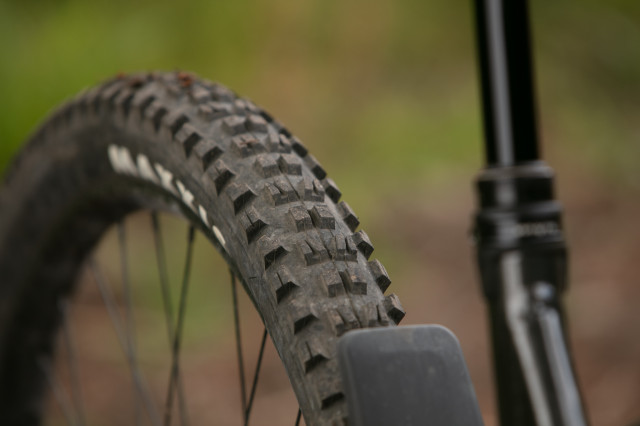
The Kado S then rolls on a pair of 29in WTB ST Tough-rimmed wheels. Those are laced to Shimano hubs and wrapped with Maxxis Minion DHF tyres with EXO casings and wire beads. While this tyre choice has certainly been made to keep the bike affordable, these are the first things I would upgrade. They’re weighty, owing to their wire beads, and the EXO casing isn’t really resilient enough for an e-MTB of any sort. That said, the real hiccup is in the traction they provide.
These tyres use a simpler version of Maxxis’s rubber that’s fairly firm. While for the most part, they work, they’re not particularly predictable, and their window of traction is fairly slim. This is compounded by the wibbly EXO casing that lacks the ability to support the bike’s overall weight during compressions. I’ve had to take flat corners with a hint of caution, where with a posher tyre, I’d have been much happier.
The rest of the kit comes from Whyte, and I’ve got to say, I’m a fan of the saddle.
Whyte Kado S – Performance
Niggles with some componentry choices aside, there’s an awful lot to like about the Kado S in the ride character that it offers. As a bike that uses the full heft of Whyte’s research into centre of gravity and keeping it low, while taking geometry cues from other bikes in its range, everything about the Kado’s ride is very ‘Whyte’. And making a ride cohesive throughout a whole bike lineup is no easy feat.
After swinging my leg over the bike for the very first time, I was surprised by how small the cockpit felt, given its 485mm reach, which would otherwise be rather roomy. This is because of that seat tube, which is bordering on steep. The result is a fairly upright riding position that keeps the back straight and the bike in general very comfortable.
When the trail points up, these geo choices make more sense, as that steepish seat tube keeps weight on the handlebar, while the longer chainstay (another modern Whyte hallmark) works to keep both wheels glued to the ground, and helps keep the traction coming. Then, it’s just a case of picking your power mode and cranking up the hill. Generally, climbing the Kado S is a fuss-free experience.
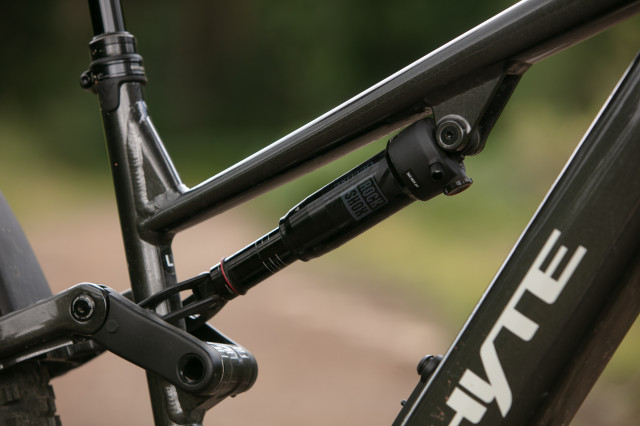
The bike’s ability to rustle up impressive traction up a hill, and anywhere else, for that matter, comes from the suspension kinematic. Although Whyte doesn’t divulge the details too much, it’s an active platform that’s open to track the ground. It’s rich in small bump sensitivity, which is good going, given the budget-spec shock.
In fact, the suspension kinematic is a shining aspect of the Kado S. Its small bump sensitivity keeps things comfortable and general traction fairly high (or as high as the sub-par tyres would allow), while providing decent support under heavier compressions. Through high-load, high-frequency turns, there’s a good hint of liveliness as the bike springs out of those compressions, ready to take on another. Then, over rougher terrain, it helps to keep the bike composed.
That heft of composure, the handling and the bike’s general ride feel is Whyte’s undying pursuit of a low centre of gravity. In the corners, as the weight isn’t anywhere near the head tube, the Kado is easy and keen to tip into turns. Then, as most of its weight is between your feet, or just in front, the amplifies the suspension’s ability to work, helping the bike hold its line valiantly through flat corners – again, this is limited by the tyre spec.
But as weight is low and behind the front axle, it helps the bike drive through technical sections, boosting composure and making for a properly sure-footed machine when combined with the sheer capability of the Kado’s rear end. This is also where the lengthier chainstay works to bring just enough stability to keep things sensible.
Where the Kado brings such a composed ride, it’s easy to push that bit harder, but then the brakes put a bit of a dampener on the party. I’m not going to slag them off too hard because they do work, and it’s great that they’re paired with sizey rotors, but they don’t provide quite the bite and urgency that you would expect of something a little pricier, like Shimano’s Deore brakes. Because of that, there’s been an air of caution while riding the bike, where I’d rather be throwing it to the wind.
It’s also great to see that the brand hasn’t gone mental with the Kado’s head angle. Keeping it steeper than 64 degrees has gone down very well with me. As an e-bike can utilise its weight to achieve stability, the steeper (although not steep by any means) head angle claws back responsiveness, especially when there’s the 450mm chainstay at play. It keeps the whole bike super manageable and easy going in the corners, without sacrificing the Kado’s overall ride character.
Whyte Kado S – Verdict
The Kado S’s price of £4,000 is mighty competitive, and it sweetens the deal with the lacklustre tyres and brakes. Although it leans further into enduro riding, Giant’s Reign E+3 will set you back £5,000. For that cash, you do get an 800Wh battery, but it’s somewhat downgraded with an SR Suntour Durolux 38 fork and a Fox Performance shock. This bike gets Shimano Cues 11-speed shifting and similar brakes.
Specialized’s lowest-end Turbo Levo 4 Alloy is quite a compelling option. It’s more expensive at £5,200 but you get SRAM Eagle 70 Transmission shifting and the brand’s 101Nm, 666W 3.1 motor. Its build is a little more enduro with a Marzocchi Z1 fork and Spesh Butcher tyres, but it is £700 more. Here’s our review of the top-end S-Works Levo 4.
The serious competition comes in the form of Merida’s eOne-Sixty 400. This will set you back £4,450, and it gets a similar build, apart from the Shimano EP801 motor and 630Wh integrated battery. It’s a little downgraded compared to the Whyte with a Psylo Silver R fork, Tektro brakes and Cues U4000 nine-speed shifting. This all makes the Kado S’s value look even better. Here’s our review of the Merida eOne-Sixty 875.
There’s then Saracen’s £3,000 Ariel 50E. This gets you Shimano’s lesser-powered E7000 motor that offers 60Nm of torque and a 700Wh battery. It uses Shimano Deore shifting with an SLX derailleur. It then gets a Marzocchi Bomber Z1 fork, a Fox Float X Performance shock and DT Swiss H552 rims. For £1,000 less, the Saracen is certainly a compelling option.
All in, Whyte has done a great job with the Kado. It’s confident, manoeuvrable, and it’s yet another positive step forward with its low centre of gravity pursuits. While the Kado S has a lot to give, in its impressive ride character, it tugs on the leash held by its tyre and brake choice. Upgrade these, and this is one serious bike to start your e-MTB career with, or a budget-friendly e-ripper for filthy winter rides.
You might also like:
- E-MTB geometry explained: how weight and geometry affect your ride
- e-MTB items you never knew you needed
- How to store an e-MTB – storage solutions and best practices
About the bike
Tell us what the bike is for, and who it’s aimed at. What do the manufacturers say about it? How does that compare to your own :
State the frame material and method of construction. List the components used to build up the bike.:
Alloy frame, RockShox Psylo fork, RockShox Deluxe shock, Shimano brakes, WTB rims, Maxxis tyres.
Frame & Fork
How much suspension travel does the fork have?:
Was the bike comfortable to ride? Tell us how you felt about the ride quality.:
How was the bike in terms of sizing and angles? How did it compare to other bikes of the same stated size and intent?:
Overall rating for frame
How much suspension travel does the rear end have?:
Did the bike feel stiff in the right places? Did any part of the bike feel too stiff or too flexible?:
Tell us about the geometry of the frame:
Tell us about the materials used in the frame:
Riding
How would you describe the steering? Was it lively, neutral or unresponsive?:
Tell us some more about the handling. How did the bike feel overall? Did it do particular things well or badly?:
Rate the bike for high speed descending
Rate the bike for technical descending:
Rate the bike for flat cornering:
Any comments on flat cornering?:
Rate the bike for technical climbing:
Rate the bike for agility:
Suspension
Rate the fork for performance:
Rate the fork for durability:
Rate the fork for efficiency:
Rate the fork for value:
Rate the rear suspension for performance:
Rate the rear suspension for durability:
Rate the rear suspension for efficiency:
Rate the rear shock for value:
Rate the balance and performance of the suspension overall:
Drivetrain
Rate the drivetrain for performance:
Rate the drivetrain for durability:
Rate the drivetrain for weight:
Rate the drivetrain for value:
Wheels & tyres
Rate the wheels for performance:
Rate the wheels for durability:
Rate the wheels for weight:
Rate the wheels for comfort:
Rate the wheels for value:
Rate the tyres for performance:
Rate the tyres for durability:
Rate the tyres for weight:
Rate the tyres for value:
Controls
Rate the controls for performance:
Rate the controls for durability:
Rate the controls for weight:
Rate the controls for comfort:
Rate the controls for value:
Summary
Did you enjoy riding the bike?:
Would you consider buying the bike?:
Which components had the most effect (good or bad) on the bike’s performance? would you recommend any changes?:
Would you recommend the bike to a friend?:
Rate the bike overall for performance:
Rate the bike overall for value:
Use this box to explain your score:
All the deals displayed on our review pages are pulled from a constantly updating database feed of the best affiliate deals available. The criteria for deciding on what are the best deals is who is offering the lowest, delivered price. In most cases we will be showing the very best deal available online, but sometimes you may be able to find an item cheaper. If you can please feel free to post a link in the comments box below. To find out more about affiliate links on road.cc click here.