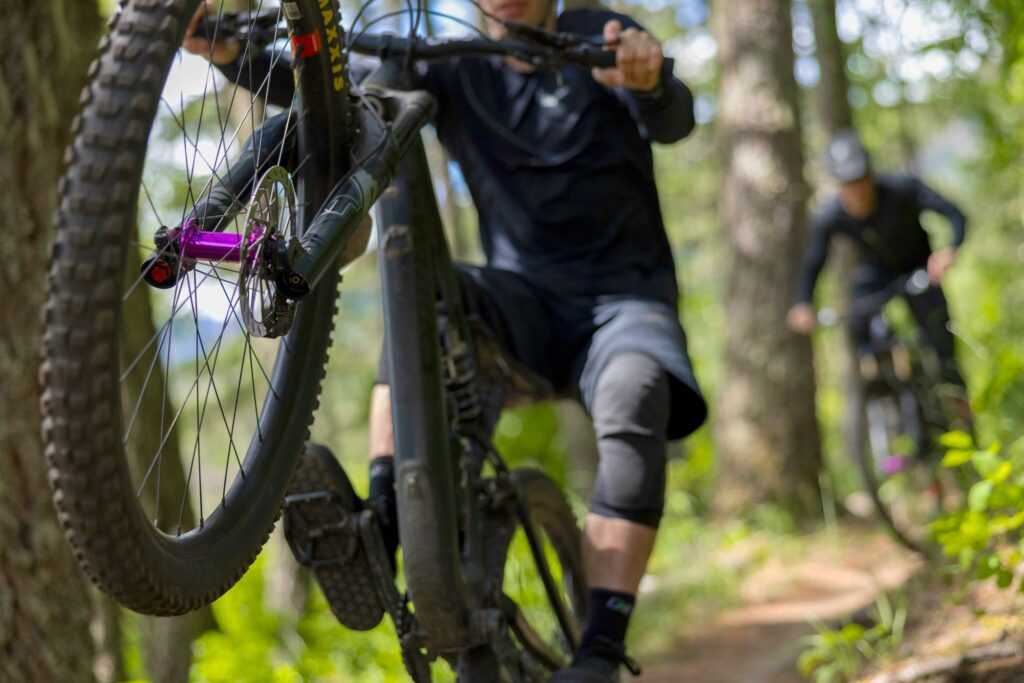

OneUp Components is known for its clever EDC tool and some of the best mountain bike handlebars on the market but the brand is now producing wheel components – more specifically, hubs. The brand’s new hubs revolve around simplicity resulting in reliability, lightweight and an accessible price.
- Volume spacers – what are they and how they work
- Mountain bike tyre inserts – everything you need to know
- How to bleed SRAM, Hayes and Magura brakes
Built using a machined 7075 aluminium body, OneUps’ new hubs use fewer parts to reduce weight and boost reliability. And those weight claims are something as compared to Industry 9’s Hydra hub set, OneUp’s is said to be 100g lighter and against Hope’s Pro5 pair, 133g lighter.
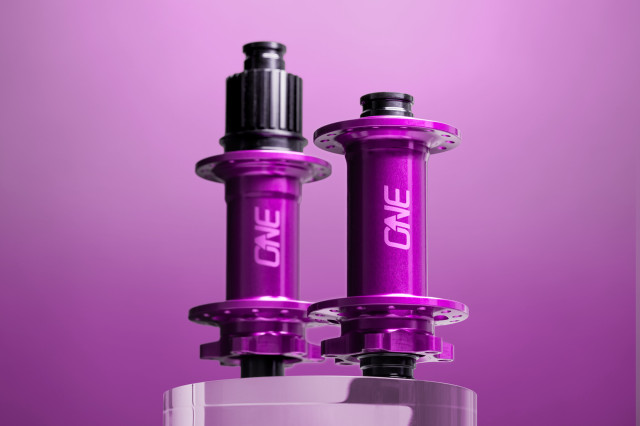
In the name of durability, OneUp’s hubs employ Enduro ABEC 5 cartridge bearings in sizes readily available at most bike shops. They’re then spaced as widely as possible to reduce wear through less sideloading. OneUp then says that the hub is designed to make bearing replacements easily done at home.
As for engagement, the OneUp Hub uses a 44T ratchet that DT Swiss’s 350 hub has inspired. This ratchet has been chosen for its balance of performance, value and reliability. The brand didn’t go too far with loads of engagement because the designers didn’t see enough improvement in ride performance to make the hub more complicated.
The hub’s flange spacing has been ‘optimised’ to boost stiffness and strength, and they’re compatible with J-bend spokes. Handily, wheel specs are laser etched onto the hub’s body for ease when building wheels. Freehubs are then sold separately which OneUp says will make life easier for bike shops.
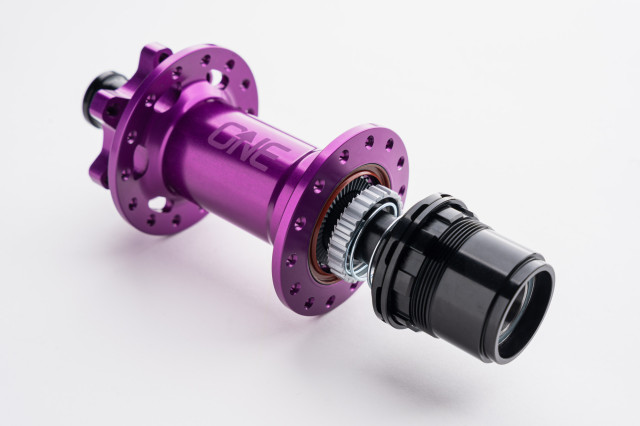
These hubs use Boost spacing with 28 and 32 holes at the front and rear. OneUp claims 44 points of engagement with its 44T ratchet which kicks in at 8.2 degrees. There are options for XDR, Microspline and HG freehubs and the brake mount is six-bolt only.
Claimed weights come in at 142g for the front and 220g at the rear and prices start at £85 for the front hub, £186 for the rear and £315 for the pair. Freehubs can then be bought for £44.