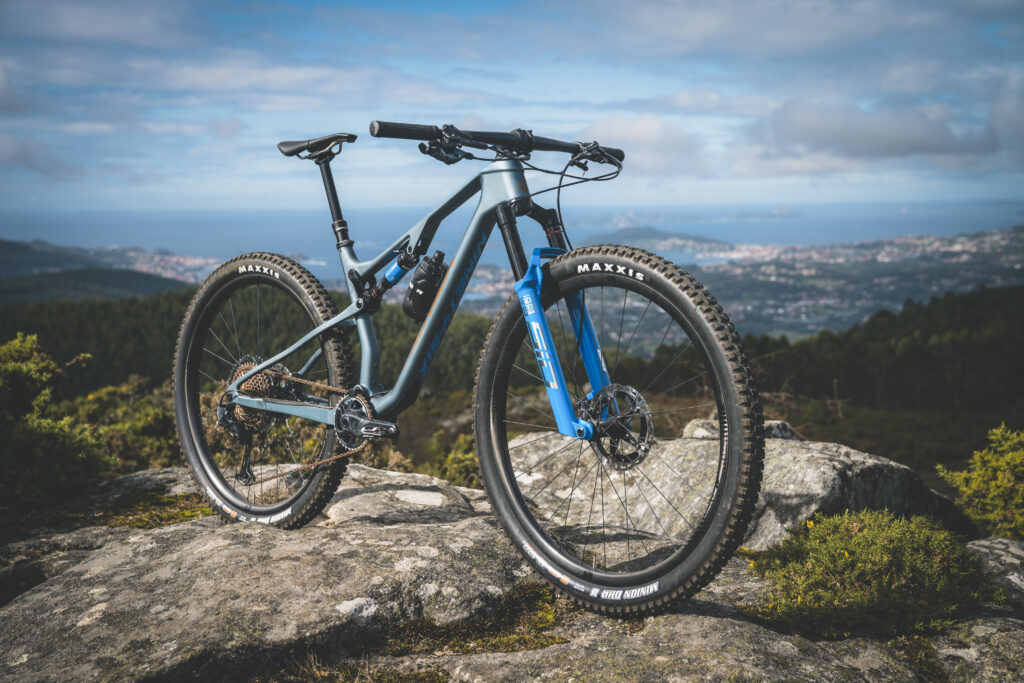

Merida’s XC rig, the NinetySix has gotten a complete refresh for its new model. It sees in a new frame design, it loses hardware at the lower pivot and comes with a more downhill orientated, dare I say it, ‘down-country’ model option.
- The best mountain bikes for under £1,000 – the best budget buys ridden and rated
- Buying your first mountain bike: the complete guide
- Best MTB’s that you can get shipped straight to your door
Bringing the Ninety-Six into this decade, Merida has redesigned the frame to make it a more capable bike on the downhills to match the increasingly demanding XC courses that we’re beginning to see on the calendar. To cater to a larger range of riders, the new bike also comes with the choice of a slightly longer travel machine. The RC models get 100mm of travel both front and rear and the Ninety-Six 8000 gets a longer, 120mm travel fork.
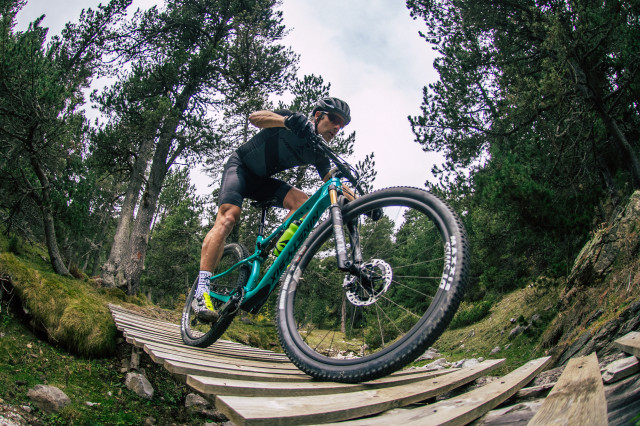
On the RC bikes (the full-on XC models) they receive a 68.5° head angle, a 76° seat tube angle (76.5° on S and M sizes), and a 435mm chainstay. The reach on an L frame is 473mm. There’s also a 45mm BB drop.
The non-RC model gets an extra 20mm of travel at the front and as such the geometry gets altered a bit. This model has a 67° head angle, a 75° seat tube angle (74.5° on an XL), and on an L frame the reach shortens a bit to 460mm and there’s a 36mm BB drop.
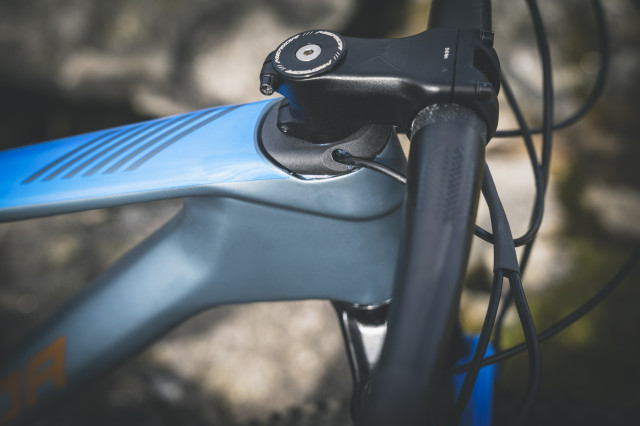
As well as an update to the geometry, the frame itself gets a number of changes in the name of durability, weight-saving, and tyre clearance. Starting off the chainstay, Merida has given it a pretty significant redesign. To offer space for a larger volume tyre while keeping the important Q-factor minimal Merida has built the chainstay to be at least 10mm thick to also balance strength. Having found that a 5mm cable won’t fit into the super narrow chainstays (without sacrificing strength) the brand has built the stays with a specific cable routing channel which isn’t integral to the integrity of the built.
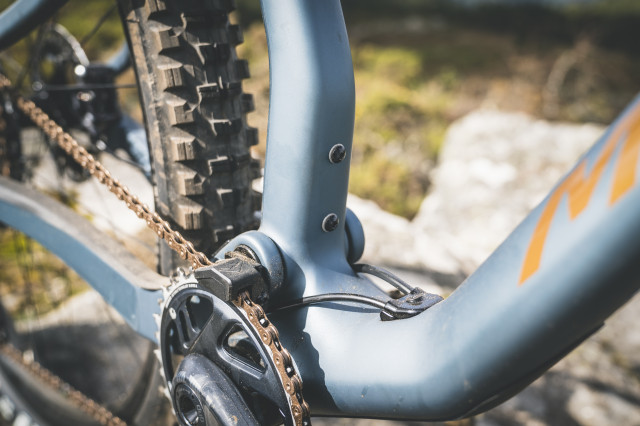
Another cool feature is that Merida has done away with the seat/chainstay pivot point, instead opting to use the flexy properties of the frame material to allow enough flex without impacting durability. The brand has dubbed this, P-FLEX. This also stiffens the frame.
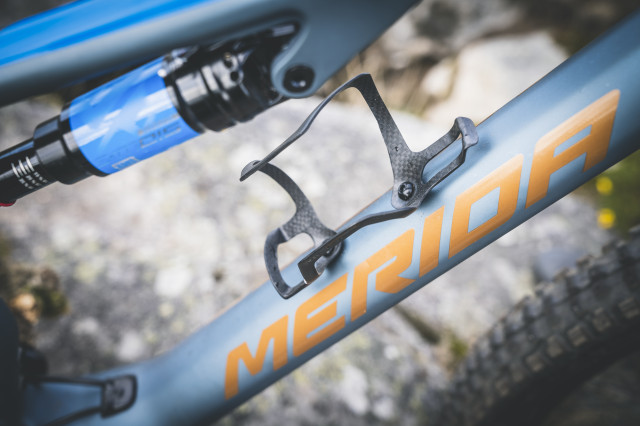
The new Ninety-Six benefits from Non-Slip Tightening, it’s a system that means that all pivot bolts can be adjusted from on side of the bike using a single Torx 30. There are also bigger, more durable bearings, a deeper seat tube insertion depth, space for two bottles in the frame, and the Trail Mount, a purpose-built space to attach spares to the bike.
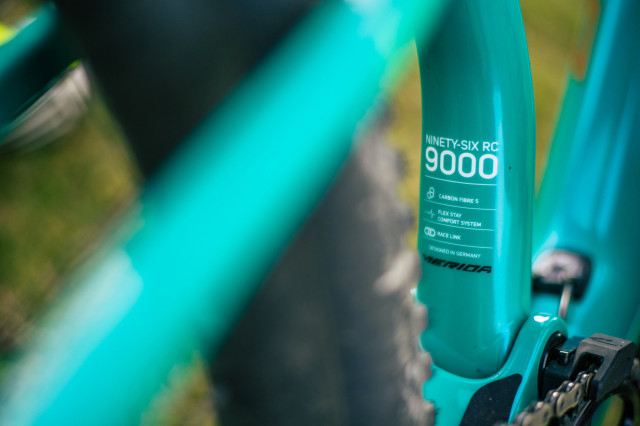
The frame also comes with a flat-mount rear brake, a dual-suspension lockout, a chain guide, and frame protectors around the chainstay, downtube, and rear of the seat tube.
Opening the range even more to a wide range of riders, Merida offers the Ninety-Six with two grades of carbon. The CF5 is around 150g lighter than the more cost-effective CF4 but both are said to share similar stiffness properties.
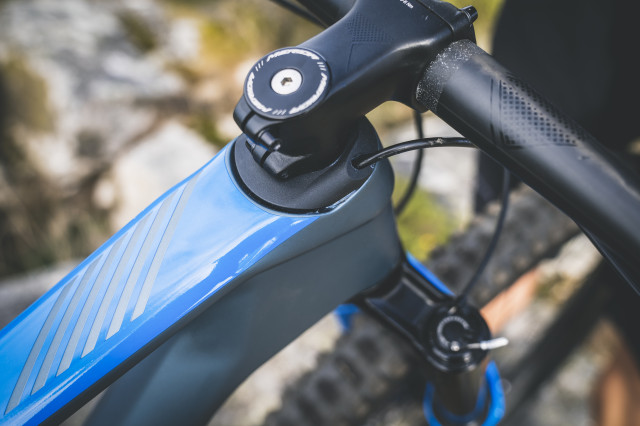
The Merida Ninety-Six is available in four models with the top-end RC-9000 coming kitted with the CF5 carbon frame and the Ninety-Six 8000 gets the longer fork and slightly different geometry.
The bike comes in four sizes, S up to XL.
Prices for the Merida Ninety-Six start at £4,000 for the base RC 5000and go up to £7,300 for that top shelf RC-9000 model. If that longer travel option is more your style, that one is set to cost £6,200.