
[Header image by Steve Thomas]
Another Brick in the Wall, by Pink Floyd, topped the UK Christmas charts back in 1979, heralding the imminent arrival of the 1980s, an era of great strife, innovation and revolution. One thing that was not on any young Brit’s Christmas list that year was a mountain bike, because at that time they didn’t really exist beyond a couple of heretic prototypes, adaptations, wild and seemingly unfulfillable dreams of a few renegades.
- Should you turn your old MTB into a gravel bike?
- Electric pumps are cool, but I’m yet to be convinced
- How to get the most out of your 360 camera
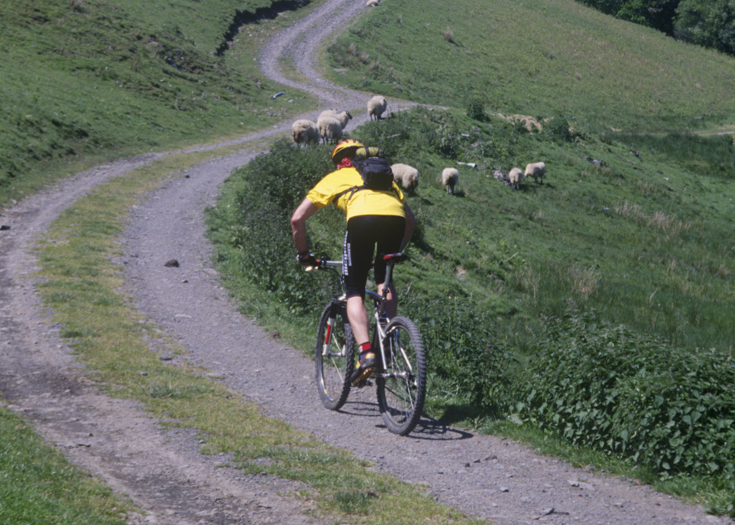
Way back in the mid-1950s, the Rough Stuff Fellowship was formed in the UK, which was the first official off-road cycling club in the world. For decades, these wild and woolly folk roamed the remote trails and mountains of the land, taking on epics that most of us would cower at today, even with all our fancy bikes and apps. These folk were often seen as cycling outcasts back then, yet today they are revered and regarded as gnarly pioneers of off-road adventure – though they didn’t have mountain bikes, mostly just regular touring rigs with dropped handlebars.
Then there came Geoff Apps
Mid 1960s, in a home workshop on the edge of the Chilterns, a young lad named Geoff Apps (RIP) had a vision – not of the holy kind, although in hindsight we could well consider it to be; he dreamed of creating and adapting bikes to ride off-road, in the UK mud and grit.
Do forgive and fine print glitches, but details, memories and exact timelines from this pre-digital era are sketchy at best, so this story is not intended as any kind of biblical epic of precision – for that we’d need a book and a time machine to pull it all together, but these are the scattered bones of things.
By bodging, thinking sideways, and adapting all sorts of bike and motorbike parts, Apps evolved his ideas over the years, to eventually sketch out a wildly different kind of bicycle; a high-rise, flat-bar bike made for roaming the trails of the UK. Back then, creating a whole new kind of bike was not easy; few existing components fit the plan, and when things such as big knobbly Nokia tyres were sourced, he would often trade them and concepts with his klunker crew counterparts in California.
In 1979, he took his plans and drawings to a local bike builder to create a couple of prototypes of his Range Rider, and Cleland Cycles was born. For a while, he honed his ideas, while always working around supply constrictions – had they been available at that time, we may well have had 650B wheels from the get-go (as he hoped); but they simply weren’t.
UK mountain biking: the making
Somewhere around 1982, Apps hooked up with Telford-based frame builder named Jeremy Torr (English Cycles), who, amongst other things, had dabbled with RSF adventures in the past too, so grasped the idea of building the Cleland off-road dream machine, and making/bodging parts and solving problems to make it work.
Also, in the early ’80s, other frame builders and brands started tinkering with the concept of American-style mountain bikes in the UK. Meantime, Apps continued evolving his, then considered, slightly eccentric bikes, and English Cycles (and then others) also built bikes for him and under their own brand names. With this, a whole new sport, an idea started to emerge, and these guys were very much at the forefront of this UK bicycling revolution.
In around 1983, American-style mountain bikes arrived in the UK, first with Ridgeback as the first major British brand, and very soon after that came Muddy Fox; ladies and gentlemen, mountain biking had well and truly arrived in the UK. Sadly, a supplier forced Cleland into liquidation around 1984.
You racing? You asking?
Riding against the old school cycling establishment and tradition, these pioneers began to develop, evolve, promote and shape what would become the British mountain bike scene. More and more small brands joined the party, such as Overburys in Bristol, which built high-end US-style and UK-made MTB frames from the early 80s.
Driven by passion and ideas, a UK event and race scene emerged, with Apps organising events such as the Wendover Bash and the Kielder Classic, while Torr set about running mountain bike weekends in Shropshire. In 1985, Man Vs Horse race promoter and local pub landlord, Gordon Green (RIP), opened up his event for mountain bikers in Wales. A small bunch of new devotees to the sport lined up, and all were upstaged by the American star of the era, Jacqui Phelan, who scored a solo on a Muddy Fox.
After putting on a couple of events and figuring they were on to something, Jeremy Torr joined forces with Max Glaskin to form the Mountain Bike Club in around 1986, born of ideals of peace and harmony. From a handful of members to around 2500 by the time things turned serious, this was an organisation that inspired many a cycling career and brand.
How did the old school cycling establishment react to these flat bar and dayglo antics? “A bit old boys club, to be honest. But it didn’t really impact us because the people that we were attracting to the MTB events weren’t traditional club cyclists anyway, so they didn’t care about us being affiliated or not. It was all a bit wild west, but it worked, and almost everybody had a great time,” says Jeremy Torr.
From a bunch of fun races to a national series and title race in 1987, things were taking shape with UK mountain biking. Needless to say, success garners attention, and that rings in change.
When things got serious
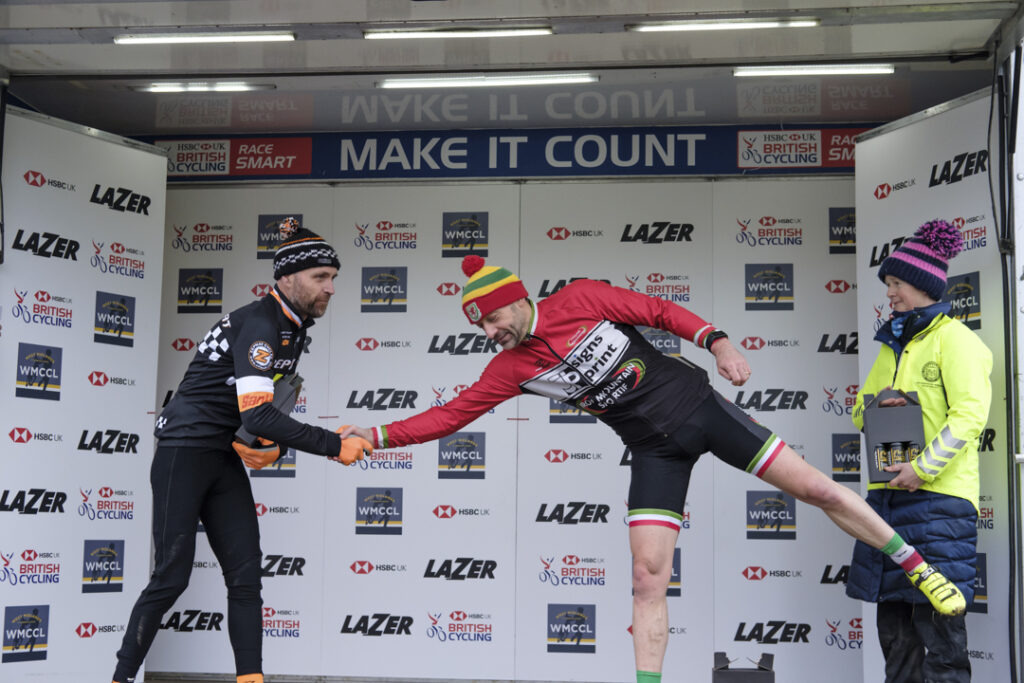
In 1988 two UK cyclo cross and road stars turned up to an MBC (although some remember it as an early federation race), then riding box standard Peugeot bikes and armed with almost no knowledge of mountain biking – David Baker and Tim Gould, and they won, by a long way, as Tim recounts; “The first MTB race I did was a Mountain Bike Club race in Peebles, Scotland. We were new to the scene and did not know all the details of tyre choice pressures, etc, which we would know if it were a cyclo cross. But by this time I had won the Three Peaks Cyclo Cross a few times and knew that I was suited to longer off-road events, so it was like a dream coming true to be able to do endurance off-road events more often.”
[Image by Steve Thomas]
Around about this time, Torr and Glaskin decided their dream had fulfilled a natural conclusion, the sport was positively raging in the UK, and the BMBF (British Mountain Bike Federation/British Cycling) took the reins, as Jermey Torr recounts, “I think it was inevitable – the major companies in the business saw how much money was to be made, and our ‘suck it and see’ approach became a bit too random for folks looking at cashflows and insurance indemnities. But we had a fantastic time, and I feel privileged to have been there when it was purely about the riding; some racers would smoke a joint, put on a pair of goggles (no helmet), then plunge off down an almost vertical root-strewn trail. Brilliant!”
But, hey, that was only the start, and thanks to those who came before, the sport had a home-grown and vague template for the future. There was a hugely evolving and blurry transition period from unregulated events to BMBF-affiliated racing and organisations. I have spoken with many involved in the process, but few can navigate the precise details of that Bula hats to blazers hand over time, and there were a lot of passionate folk involved who helped set things on an agreeable path.
The 80’s were drawing to a close. Pace, Orange and other pure Brit MTB brands had emerged. In 1989, Tim Davies won the unsanctioned national MTB series, while Tim Gould nabbed £5,000 as the first cyclist to win Man vs Horse outright. On November 9th, the Berlin Wall fell, as Lisa Stansfield topped the UK charts with “All Around the World.”
The “golden era” of mountain biking was just about to rise in the UK, but that’s a story for another day.