



Trek has paid more than $300,000 to bridge prize money gaps for its women’s riders in recent years.
Between 2021 and 2025, the US manufacturer paid approximately $308,000 to top up prize money for riders on its Lidl–Trek women’s team at races where female winners were awarded less than their male counterparts.
However, disparities remain in 2026. At Liège–Bastogne–Liège Femmes, the total prize fund for the women’s race stood at just over €22,000, compared to €50,000 for the men’s event.
This is also clear on an individual level. Isabella Holmgren’s sixth-place finish would have earned around €400 in official prize money, compared to €1,500 for the equivalent men’s placing, meaning Trek would have topped up her winnings by roughly €1,100.
Speaking to Fortune, Trek CEO John Burke said: “One of the things we do with the bike company is we try and make a difference in the world.”
Similar disparities have also been seen at the Tour de France Femmes compared to the men’s Tour de France.
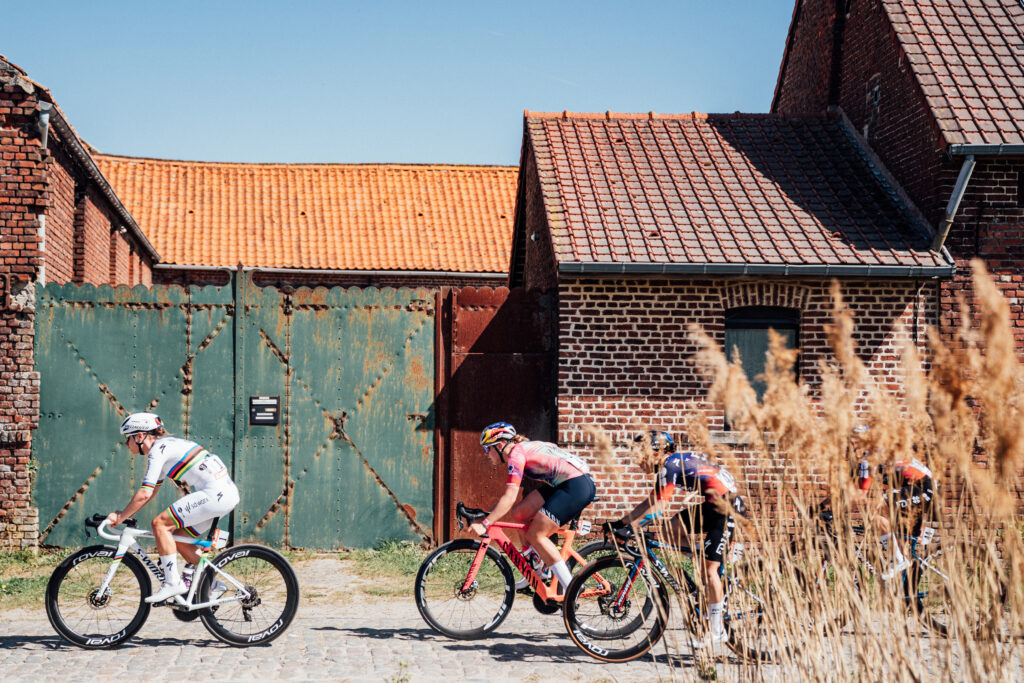
One of the most pointed examples came at Paris–Roubaix Femmes in 2021, where the women’s winner received €1,535 while the men’s winner took home €30,000.
Alongside financial backing, Trek’s team is built on parity, offering riders comparable salaries, equipment and support to their male counterparts. At the time, such an approach was far from the norm, with many female riders still balancing elite competition with second jobs.
He recounts when the team was set up, when Trek CFO Chad Brown walked into his office in 2017, after visiting women’s races in Europe.
“He goes, ‘Do you know what’s going on with women cycling?’” Burke said. “He said, ‘I was just over there in Europe, and it’s embarrassing. Most of the women are making less than $10,000 a year. They get secondhand bikes. They stay at s—-y hotels. They’re flown in the night before the race. Nobody cares.’”
“We said we’re going to treat women the same way the men are treated,” Burke said. “We’re going to pay them liveable wages, we’re going to give them the best equipment, we’re going to give them great coaching. We’re going to take really good care of them the same way we take care of men. And nobody was doing this. This was a revolutionary idea.”
The shift towards fully professional conditions has been key, according to Lizzie Deignan, who joined the team while pregnant despite being ranked number one in the world at the time, following her 2015 world title.
“To be a professional athlete in every sense of the word is transformative in terms of performance,” she said. “There’s no way that anybody managing all those extra things that come with a second job has the capacity to perform at the same level as someone who’s full time.”
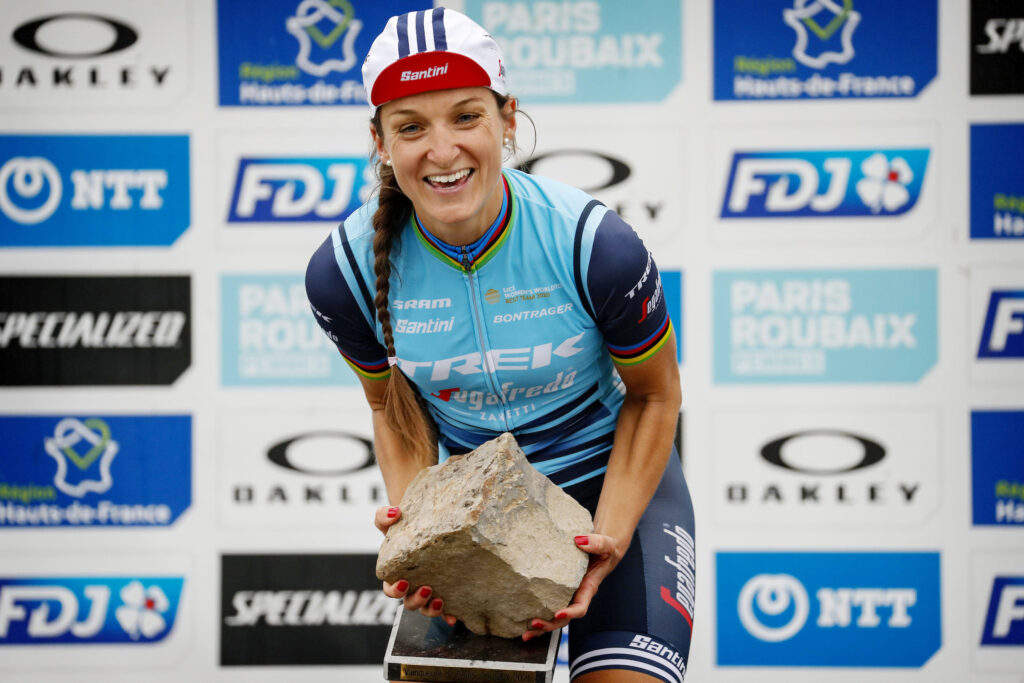
“I felt incredibly grateful to Trek for the opportunity to join the team, because when I announced that I was pregnant, I didn’t know what my future looked like in the sport,” Deignan said. “Despite being ranked number one in the world at the time, I didn’t have a secure team.
“Trek came in, and there was no tokenism about it. They really came in at the top level and gave me an amazing opportunity.”
While Deignan acknowledged that gaps remain, she pointed to continued issues around visibility at major races, an issue that has again come into focus in 2026.
“There are definitely still gaps,” she said. “This previous weekend at Paris–Roubaix, for instance, there still wasn’t full TV coverage. Fans are growing, but they still only get to watch around 50% of the race, and that only tells half the story.”
At Liège–Bastogne–Liège this weekend, the women’s broadcast did not begin until over 30 minutes after the men’s race had finished, partly due to the men’s race running ahead of schedule.
Demi Vollering said: “We used to start very early but the live broadcast was longer,” she said. “Now we only get short coverage on TV, because the stream only begins after the men’s race. But it really doesn’t have to be that hard.
“If the timings stay as they are now, you could either show both races at the same time or switch between them. To me, that should be entirely doable.”
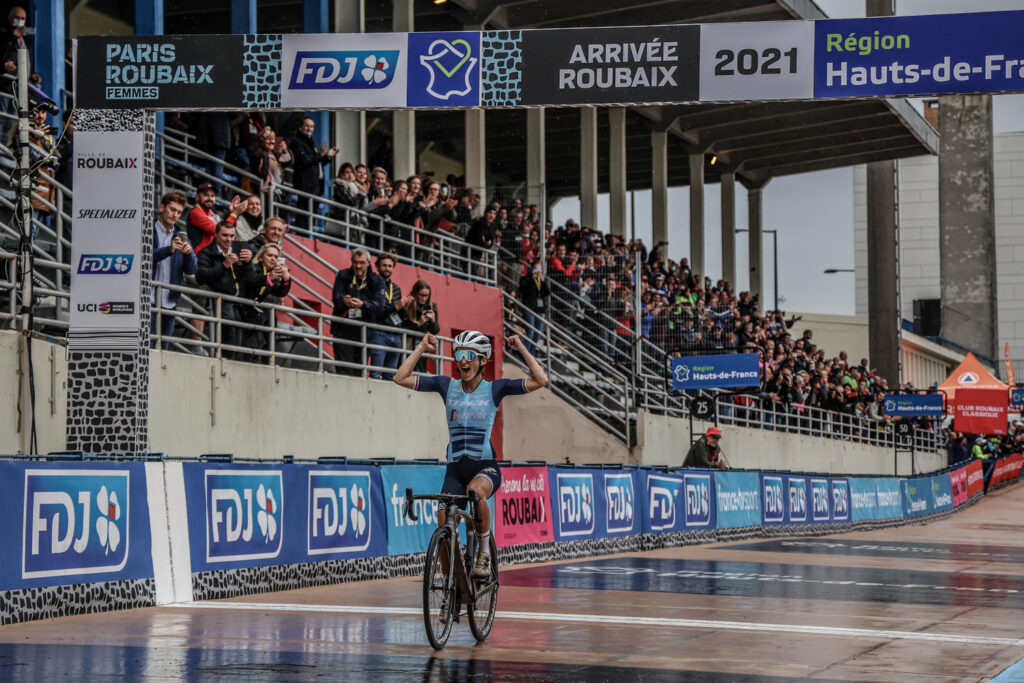
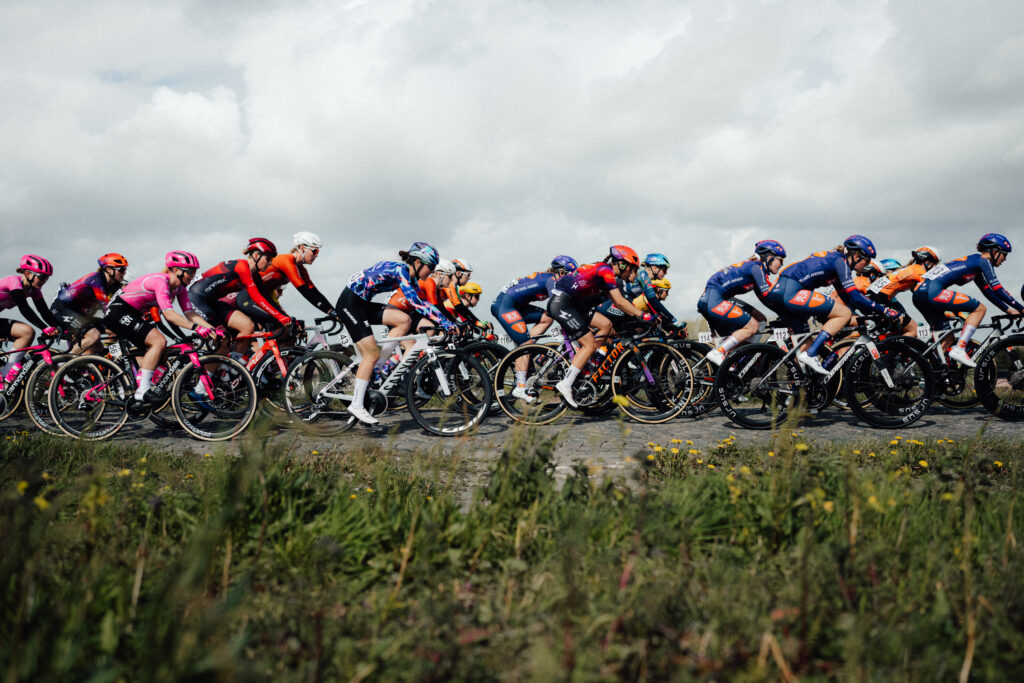
Similarly, at Paris–Roubaix Femmes, TV coverage only began in the latter part of the race. This meant viewers missed key sections and early breakaway moves in the opening stages.
For Burke, the wider impact of Trek’s investment has always been the goal.
“The biggest thing that we do is be an example,” he said. “The impact that Trek’s made on women’s cycling isn’t just the Trek team. It’s all of the teams who saw what Trek was doing, and they made big changes.”
“Too many people are focused on the short term and on what they get,” he added. “Doing good things builds a brand over a long period of time.”
“To me, you can’t quantify it,” Burke said. “There’s something about doing the right thing.”










16 thoughts on ““It’s embarrassing”: Trek has invested $300k matching unequal prize money so their female cyclists earn same as men”
Kudos to Trek for supporting their women squad, financially, humanly and technically. It seems to pay off as the Lidl-Trek win loads of silverwear.
One may struggle to understand why TV channels are reluctant to broadcasting women’s pro races live. Female riders are fast, fierce, furious. They always deliver a great show because races are shorter and more tactical than men’s. In terms of ad revenue and market growth, which company doesn’t want to capture both men and women at the same time?
What are the UCI bureaucrats doing, beyond official statements about equality and inclusivity, to change the status quo?
Because people aren’t so interested in watching a slower race?
I mean the media, businesses and many a good hearted soul have done their best. But the market is the market…
I agree that the women can serve some great action. But it is second best to the men and the second fiddle position pays a lot less whether you are a man or a woman. If you look at the Championship, the players there are not far of the Premier League but their salaries are significantly less. Why? Because the premium is to see the best. You could watch a non-league game or go watch kids at a velodrome and see drama. But you recognise the difference. I’m not making this up. This is reality despite what some people would like to happen – were a woman be paid £5m for cycling I would say fair play where it was based on market demand.
Look at the World Cup – the tickets sell for immense prices for the men – the women: the events are subsidised, cheaper tickets and you’ll still find it hard to sell out in all but a few games.
I mean the media, businesses and many a good hearted soul have done their best. But the market is the market…
have they really because the examples of prize money for the women after accounting for inflation seems similar to what my wife was racing for 40 years ago as a UK amateur.
Have you watched the kids racing at the velodrome, at the older end they have awesome skills and are absolutely fearless which makes for great watching!
Quotes around the first paragraph not working!
The “media” have clearly not done their best. Could it be that the embarrassing lack of coverage of women’s cycling (well, women’s sport in general – it took the Red Roses winning World Cups before mainstream media was bothered at all) that is contributing. Think of it like cycling & cycling infrastructure. “Nobody uses it”. Yeah, except of the pitiful amount available, the meeja does its best to generally just sh*t on it rather than highlight the positives & make it appear “normal”.
Non-league football by the way – well worth a go. I can recommend Forest Green Rovers, the gammonati just looooooove what they’re about
I think what hes trying to suggest is that there isn’t a huge amount of logic to it. People watch the pinnacle of every sport even if the lower levels are more exciting. People watch F1 despite it being far less exciting than some of the lower levels. Same with football.
I could hypothesize why women’s pro cycling has fewer viewers than men. I do know – it’s not because the men are faster and it’s not because the racing is less exciting.
One thing to consider is that women’s gymnastics is more popular than the men’s. I would hypothesize in this case it’s due to a long history of the sport and the athletes.
Regarding excitement – watch the end of the Women’s 2026 Strade Bianche!
Regarding the speed … here are some real numbers.
On the Mur de Huy – final climb of the Fleche Wallonne:
Me: 4:44 (2026 – day before Pro’s race. 342W, 165bpm, 1300 height meters / hour. I’m a decent rider at ~4 watts/kilo)
Paul Seixas: 2:24 (Strava KOM, 2026 = win)
Demi Vollering: 2:58 (Strava KOM, 2026 = win)
Tadej Pogačar: 2:58 (Strava, 2023 = win)
… BTW … Elise Chabbey, who won the 2026 Strade Bianche, is a medical doctor. If fans were given the chance, I think they’d find it interesting to hear the commentary about her life and her interview.
I like and respect Lizzie a lot and she’s done a huge amount for Women’s Cycling (no I’m not being patronising), along with Lidl-Trek, who took her on when she was pregnant with her first child, and paid her wages even before she rode a race for them. I went to see her evening talk at Rapha in London last week. Out of an audience of around 40 I’d say about five were men.
The plain fact is though, that Women’s Cycling isn’t and won’t be watched/streamed by the same number of viewers as Men’s Cycling. Therefore it generates less advertising revenue, less sponsorship. To complain about less Women’s Cycling being shown on TV is asking all stakeholders to take a financial hit for something which won’t be watched as much.
Women’s Cycling is far more competitive and entertaining than it used to be but it’ll never be as big as the Men’s sport. Women should certainly be able to make a reasonable living from being a Pro, and that’s becoming more and more possible even for domestiques. Top riders should be on very good money, but they’ll never earn as much as the Men because pro Cycling is a business, based on level of demand.
Great to see a positive story on road.cc!
A good investment to attract better quality riders which should heighten the level of competition.
The same money for less work – that’s not equality.
Whilst I do agree to a certain level, the women *could* race the same distances, they don’t however partly because of length of race (and interest levels in such things) but partially because the womens races benefit from being a bit shorter due to fitness levels. The same argument is made for womens football. Should the pitches/goals be made smaller to account for the fundamental differences in athleticism in men and women in order to make it a better spectacle.
Blimey some of these comments are depressing.
Women’s cycling doesn’t get the sponsors because it doesn’t get the coverage. When it gets equal coverage (on TV, predominantly) there is something for sponsors to sponsor. Events where women’s sport is treated wholly equally to men’s (eg the Olympics, or the Boat Race) show that similar numbers will watch the women’s events when they’re presented in an equal way, and also where the women race the same distance as the men – there is no good reason why women’s one-day classics are as much as 100km shorter than the men’s. Maybe the men’s could be shortened slightly and the women’s lengthened until we get equality of distance.
As for women’s cycling being “slower” or “second best” – sorry, that’s just a rubbish excuse. Can you really tell the difference in speed from watching the race? Why is the women’s peleton second best? Because we’ve all grown up being told this, being shown men’s sport to the detriment of women’s. Yes, the average speed might be slightly slower, but the peletons are smaller for a start – 120 riders in a bunch is going to be slower than 180 riders in a bunch, it’s just physics. What Trek is doing is the right thing – forcing the change, helping their riders become better, elevating the sport. Now the organisers and TV need to get behind women’s cycling to do the same, so the sponsors will start to also see something that will give them the return on investment. Then you get into a virtuous circle of improvement for everyone, including fans.
Well said, Joanne.
Drama is what attracts people to watch sports—regardless of whether women or men are competing.
In addition, half the population (i.e., potential viewers) are women. That’s a big potential market for sponsors to ignore!
“In addition, half the population (i.e., potential viewers) are women. That’s a big potential market for sponsors to ignore!”
True … to a point.
It is only anecdotal, but within my main (loose) friendship group of around 12 couples, my wife has always been affectionately referred to as “one of the lads” as she is the one (literally, the only one) with more than a passing interest in sports.
I don’t think it is controversial to state that interest in sports (and particularly the slightly obsessive interest many cyclist fans have) is higher among a higher percentage of the male population compared to the female population.
That means that developing the commercial performance of womens’ sport requires capturing and keeping the attention of a higher percentage of the sports-interested women, or also being able to capture and keep a percentage of the men too.
Not impossible but when a lot of those men are already invested in the male version of the sport(s) getting them equally invested in the womens’ is going to be tough.
To put cycling’s issues into context – Total prize money for the MENS race – €50,000. A monument in an elite sport and the shared pot is slightly more than £43000. Its incredible to think that paltry figure in itself is all that’s available.
Pro Cycling needs to find a way to restructure itself. This isnt sustainable in the long term for either genders events. With TV coverage being reduced I don’t understand how sponsors see much benefit from cycling as a shop window. Forget the ultra rich state sponsors who use sport for dubious reasons, how does anyone make this sport make sense financially?