



At the 2009 Giro d’Italia, during the Italian grand tour’s oddly subdued centenary edition, a mid-race trip to Milan descended into chaos and farce, as safety concerns gripped the peloton. A day after Rabobank’s Pedro Horrillo was seriously hurt after falling down a ravine, the tight corners, cobbles, and street furniture of the Milanese city centre circuit laid on by the organisers proved too much for a disgruntled peloton, led (at least vocally) by a certain Lance Armstrong.
The riders protested, arguing the course was too dangerous, staging a go-slow for eight of the ten planned urban laps. The organisers, at the last minute, agreed to neutralise the GC times, but only once the peloton had set off, adding to the confusion. The protesters finally relented, the pace was picked up in the final 30km, and Mark Cavendish won. And nobody was happy (well, except maybe Cav).
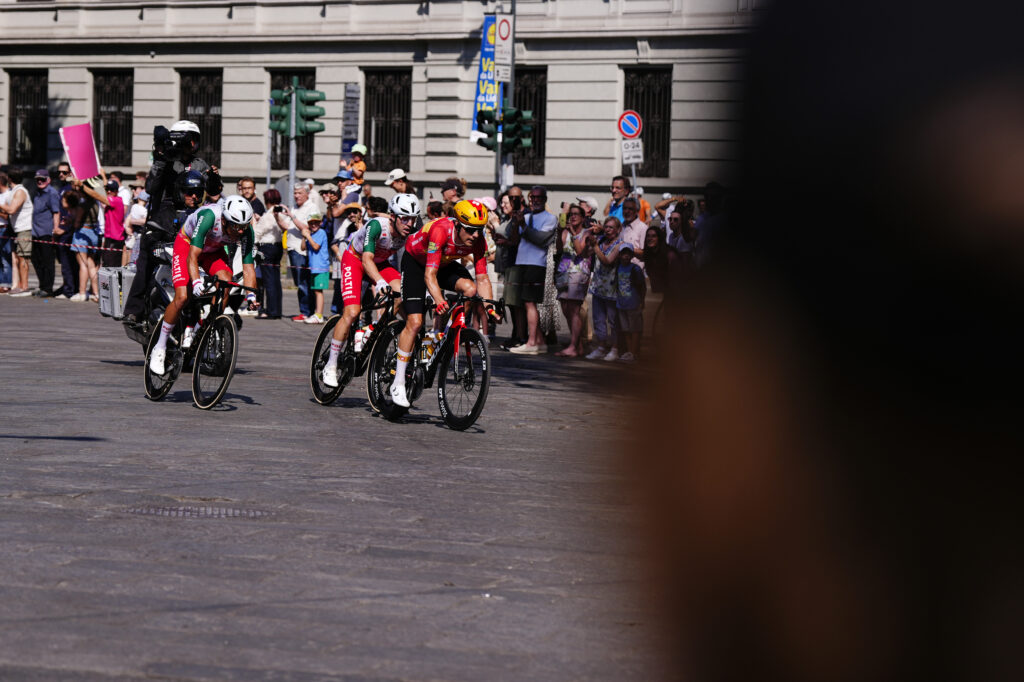
A lot has changed in professional cycling since 2009. But the same issues keep cropping up. On Sunday, an urban circuit in Milan was once again the centre of a safety controversy at the Giro. After hitting the first of four 16km laps in the spiritual home of Italian cycling (and the administrative home of the Giro), the complaints began to mount.
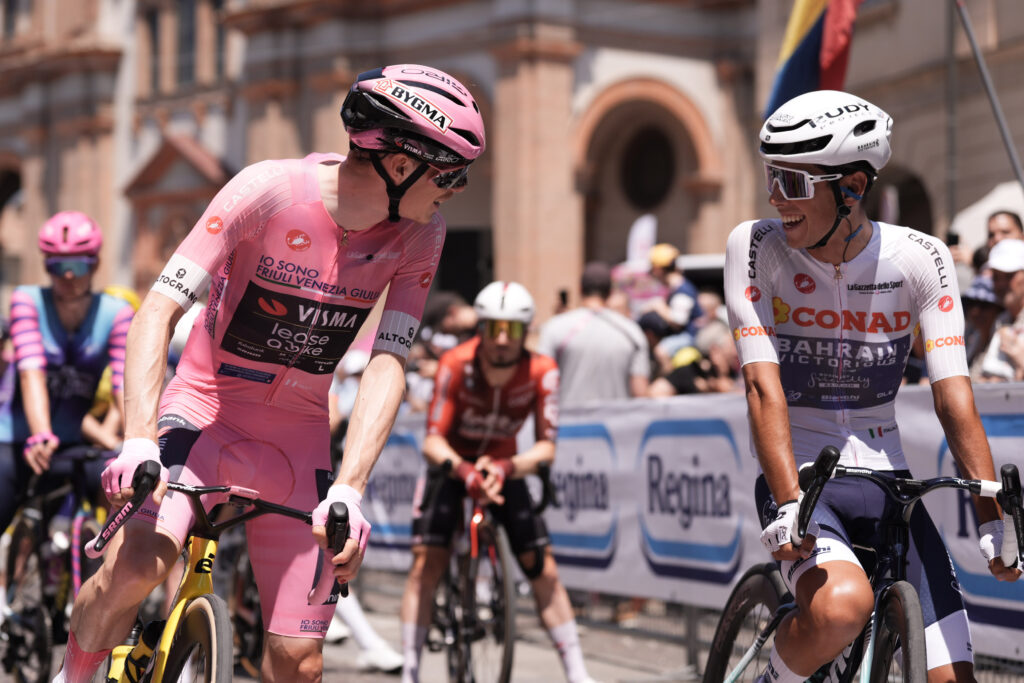
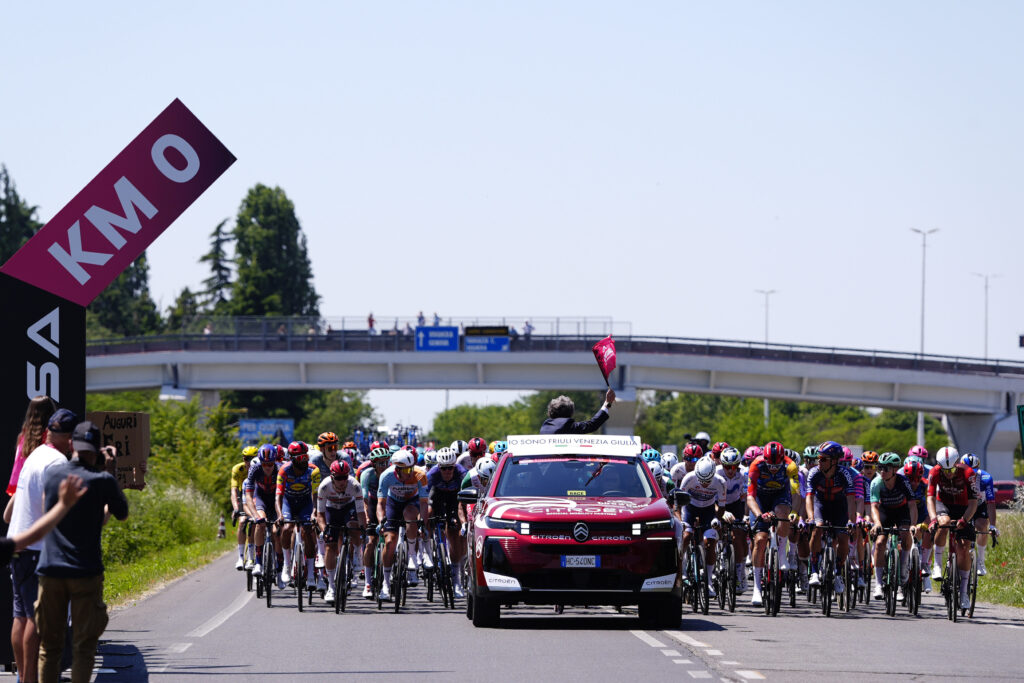
Victor Campenaerts, Giulio Ciccone, and Jonas Vingegaard all took turns to head back to the race director’s car, bouncing over Milan’s stone slabs as they pleaded the peloton’s case, Vingegaard taking his first ever day in pink, and as the Giro’s padrone, extremely seriously.
Pinch points, traffic furniture, the size and proximity of the crowds, cobbles, slabs, potholes, and the frequent appearances of the city’s infamous tram tracks were all cited as reasons why, in the eyes of the riders, the course was just too dangerous. Especially during what was, at over 51kph, one of the fastest stages in the Giro’s history.
This on-the-go, mid-race safety meeting resulted in some quick decision making on the part of the organisers, who initially announced that the GC times would be taken with 5km to go. This was soon amended to the start of the final lap, the riders signed off on that change, and everyone was happy. Kind of.
“We all thought the circuit was too dangerous,” Vingegaard said after the stage. “I think during the race when we hit the laps, we realised it probably is not the most safe course. We were speaking in the bunch. And I don’t think you could actually see it on television, normally you cannot see how it is.
“If I’d been the only one with this feeling, it would have been different, but everyone had the same vision. I felt I had a certain responsibility on my shoulders, and I went to speak to the president. They were really friendly with us, listened to what we had to say, and I think we as riders should thank them for meeting us somewhere.
“I will take responsibility for going to the car, but we also spoke within the bunch, and we took care of each other. I think that safety in cycling is in everyone’s interest. We can’t just point fingers at each other. Everyone has a responsibility.”
Fingers, however, have been pointed following Sunday’s stage – and at Vingegaard himself. Corriere della Sera, owned by Giro organisers RCS, described the pink jersey’s intervention as “an ugly loss of class”, while renowned Italian journalist Cristiano Gatti, writing for Tuttobicweb, concluded that the “whiners won”.
“Ability has been abolished, it’s all about watts, the riders don’t even take 0.01 per cent risk,” he said, rather cuttingly.
Perhaps more diplomatically, TNT Sports commentator Rob Hatch argued on air that the right decision had ultimately been made, but that the chaotic mid-race shenanigans needed to get there had made professional cycling once again “look a bit silly”.
The criticism of the peloton’s protest wasn’t confined to the sport’s journalists. RCS CEO Paolo Bellini also took aim at his race’s leader and winner-in-waiting Vingegaard.
“I think the riders went too far in what they said. The Milan circuit was beautiful, well-designed and not dangerous,” Bellino wrote in Monday’s La Gazzetta dello Sport.
“We inspected every metre of the course and the safety of it was perfectly guaranteed. This is my personal opinion, but I think it would have been enough to take the GC times with five kilometres to go.”
“There are bumps in the road everywhere”
So, what impact will Sunday’s successful protest have on both cycling’s safety debate and the future of route design and city centre circuits?
Speaking to road.cc during the rest day, two-time British champion Brian Smith believes the Giro’s Milan stage could set a precedent for increased rider power when it comes to safety-based decisions.
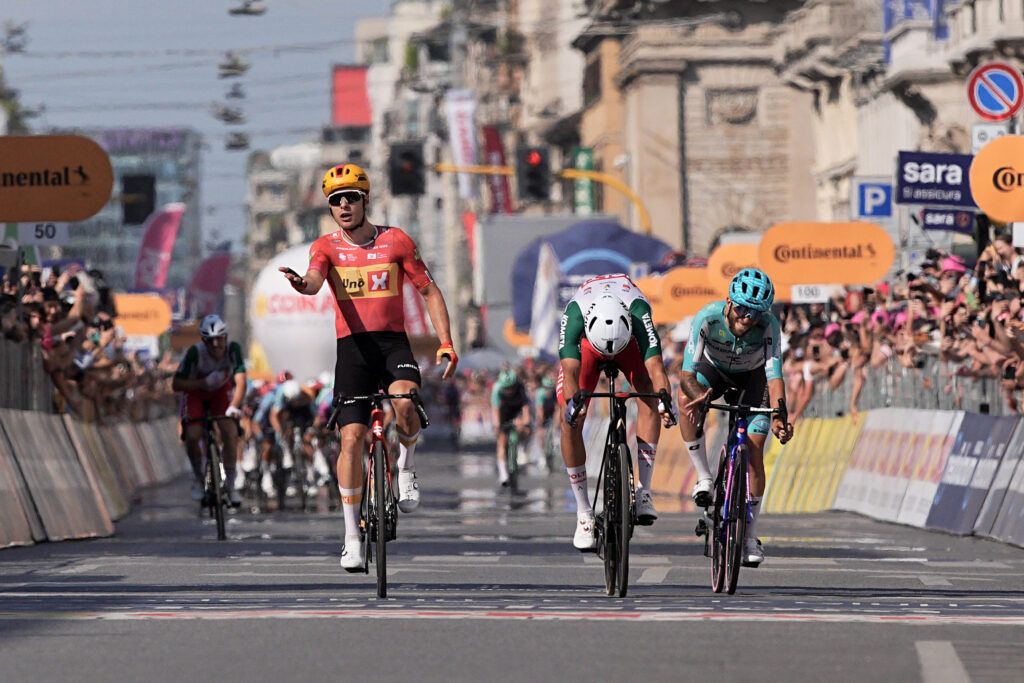
“For me, the circuit wasn’t that bad,” Smith, who is commentating on the Giro for Eurosport’s international feed, told road.cc. “There were a couple of pinch points, but it was the speed they were hitting the circuit at. There were big crowds, a lot of nerves in the peloton, lots of teams riding, and it was fast.
“Everyone know what these circuits are like. Normally, sprints get full on with 25km to go, but due to the circuits, and needing to be in position for them, it all starts even earlier. And it’s hard to bring the breakaway back as it’s so difficult to organise the chase. But everyone should know that.”
According to Smith, it was the “heightened tension” of the stage – caused by the speed of the race, the earlier-than-usual beginning to the finale, and the fervent atmosphere of the spectators – that was to blame for the increased danger, rather than the circuit itself.
“I think riders and teams are getting a little bit too sensitive around safety,” he says. “I know we’ve had deaths in the peloton, but it’s a little too sensitive now. For example, in the rain in Naples, the riders were more at fault than that final corner. It’s always been slippery.
“But I could totally understand why they were protesting. It was like the final stage of a grand tour, when everyone goes nuts. There was a lot of pressure to deliver for a lot of teams.
“And because of the pinch points, the crowds, the noise, they were having to ride faster than they maybe expected, there were a lot of nerves, and the fact that there hadn’t been a sprint stage for a few days, so it was full on. The stress for the peloton starts, and is at its highest, as you enter Milan. And when you do laps, the longer that stress period is for the GC guys.
“Obviously it was dry, but in city centres, because of the usage, there are bumps and holes, manhole covers, drain covers. You have to be in the race to feel it. From the TV, it didn’t look bad. From the moto, Alessandro De Marchi, our guy on the bike, said that it didn’t look bad, that it was safe. From my perspective, it looked safe enough.
“I think it was soft, but I can understand why Ciccone, Campenaerts, and Vingegaard went back. It was a bit chaotic if you needed to go back to the car, because it was full on. And the whole stress and tension was the reason behind the protest. I don’t think the circuit was to blame.”
He continued: “To get there and to neutralise it wasn’t good for the race organisers, but I thought they dealt with it very quickly and sensibly. But it’s not good seeing race leaders go back to the commissaires to moan about the safety. I thought the safety was fine, it was just everything that was added.
“There was just a feeling in the bunch. And you can’t write that down in the rules, it’s not in the safety protocol. It wasn’t raining, the circuit looked okay. There are protocols for rain, bad weather, cobbles, but there’s no protocol for tension and riders taking more risks.”
For Smith, the biggest mistake, on the part of both the organisers and the teams, was the inability to come to a decision on the safety of the circuit and the GC times before the start of the stage.
“There were the usual bumps, but they would have known that in the morning,” he says. “And they should have said before the race, we’ll take the times the first time across the line.
“I think the riders and teams are becoming more sensitive because what’s happened in the past, and they seem to have a right to decide what will happen. They talked to the UCI, who granted them what they wanted. It did get sorted quite quickly, but that shouldn’t be happening at this level. It should have been decided beforehand. But I think the teams thought it was going to be okay.
“Any circuit on a city centre has risks. I don’t like to see races neutralised, but the races need to sit down and look at this more. They’re too happy to just sign it off. There needs to be a group that looks at the finishes in grand tours in detail and thinks about how safe the riders will feel.”
Asked whether the organisers’ decision to acquiesce to the peloton’s demands could have long-lasting implications for race safety, Smith said: “It was a decision that maybe was a first for cycling, that the riders said they felt unsafe. It was one of those situations where the GC contenders were facing maybe an hour and a half of stress, rather than 45 minutes.
“The only excuse I saw was that there were bumps in the road, and they couldn’t get bottles. But that’s rubbish. There are bumps in the road everywhere. They were looking for excuses. At the end of the day, it was down to how they felt on the circuit, they felt it was too risky.
“The riders have a right to ask, they could have said no. But it shouldn’t have happened like this. And it’s opened the door now for GC riders, if they feel unsafe, to say we have to have a compromise here.”














6 thoughts on ““Riders are getting a little bit too sensitive”: Has the Giro d’Italia’s Milan farce set a new precedent for peloton-powered race safety calls?”
Appreciate the article, but is it just me or was it twice as long as it ought to be?
On a tangent, the TV directors lingering on shots of Victor Campenaerts bringing water bottles up from the car to his team was great.
@Paul J I noticed that! Conversation after the race, Victor, “Were you guys taking the piss?” Director, “No Victor, we were just checking you weren’t.”
@Rendel Harris Imagine being one of his teammates and having him come along side and give you a bottle.
I’d make *him* take a sip first!
I watched the last 30 km or so and I did wonder if having the GC teams removed the front for the last 16k increased the workload on the sprint teams, contributing to their failure to catch the breakaway group.
The race finish in Naples was probably also a factor. That was very obviously poorly designed and caused some crashes. Maybe if that hadn’t been fresh in the riders’ minds, they might have been more tolerant of this stage.