



The latest bike lane row to erupt in local politics appears to be this one from Merseyside, Conservative councillors taking issue with the Labour-run local authority’s message to leave the car at home and make active journeys; a call being supported through the installation of new cycling infrastructure.
We have seen similar events unfold across the United Kingdom in recent years, councils keen to use active travel funding to improve cycling, walking and wheeling routes and in turn enable residents easier and safer access to the health and environmental benefits that active journeys can enable.
It is with this in mind that Sefton Council this summer outlined its consultation on a Local Cycling and Walking Infrastructure Plan (LCWIP), including a network of active travel routes and 15 cycling corridors, notably featuring plans aiming to improve accessibility and safety around busy, major roads such as the A5036, A565 and A59.
While cycle lanes, as they often do when it comes to press attention of active travel schemes, have made the headlines here, Sefton Council also mentions footways, junctions, pedestrian crossings and signage in its plans.
Cllr Daren Veidman, Cabinet Member for Housing and Highways commented in July: “Switching to active travel makes our streets safer, less polluted, nicer to use and reduces our carbon footprint. Ditching the car for some shorter journeys and walking, wheeling and cycling instead, can benefit our physical and mental health.
“We want the Local Cycling and Walking Infrastructure Plan to provide the blueprint for that switch. It needs to cover all sorts of journeys including the walk to school and work and visits to local shops and other services such as GP surgeries and health clinics. This means accessible routes for wheelchair users and mobility scooters, and parents pushing prams, as well as better routes for people who would cycle if they felt safer.”
However, Conservative councillors have criticised the proposal claiming it is “wasting time and taxpayer money” and “crackpot stuff”.
“This is just the latest attempt by Sefton Council to impose more of these ridiculous schemes on our local communities,” Cllr Mike Prendergast wrote on Facebook. “The cycle lanes in Southport town centre have reduced town centre parking, negatively impacted local businesses and need to be scrapped.
“In the new LCWIP, the proposed route for much of the Southport plans are almost identical to those overwhelmingly rejected by local people several years ago when Labour wanted to extend the existing town centre scheme across the whole town. They just won’t take no for an answer and have now repackaged their failed proposal with a new name in the hope that people won’t notice.
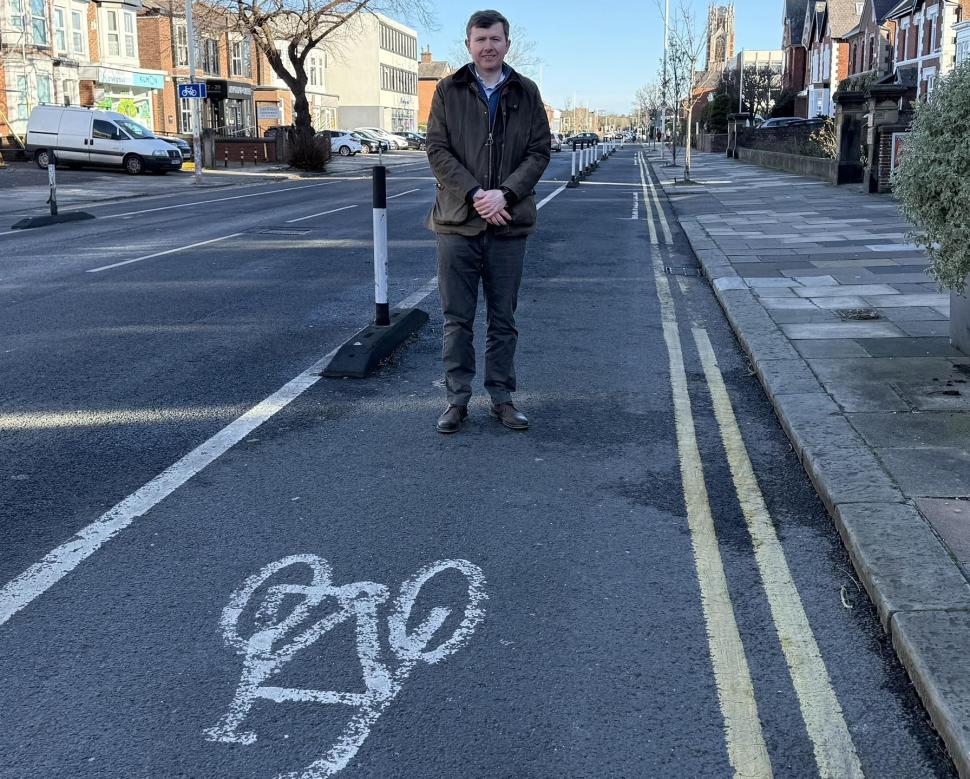
“There is also the bizarre proposal to put a cycle lane down the middle of The Promenade and make Nevill Street left turn only. It really is crackpot stuff from people who haven’t got a clue how to improve our town and who seem utterly determined to make it harder for local businesses to make a living.”
It is worth noting that Sefton Council has been Labour-run since 2012 and of 66 seats, the Conservatives hold just four compared to Labour’s 51.
In another social media post, a Conservative campaigner from Southport Benjamin Younis claimed the proposals were “absurd” as council data suggested on one street included in the plans there were “an average of nine cyclists per hour during the summer, a time when you would expect cycling levels to be higher”.
While some expressed support, the video also received questions from many. One commenter suggested judging need based on cycling levels prior to infrastructure being built was “the equivalent of seeing how much a bridge crossing crocodile infested waters is needed based on the amount of people swimming across”.
Others questioned Younis’s figures. For example, one commenter wrote: “Your figure of nine cyclists per hour is based on usage over 24hrs and seven days per week. Do you really expect cyclists to be riding in the dead of night? Anyhow, using that calculation you’ve rounded down to nine when the actual figure is 9.8, so basically ten. However, I think a more realistic calculation is to use an eight or ten-hour period per day when most people use the roads. Based on an eight-hour period the number of cyclists jumps to almost 30 per hour and 24 per hour for a 10-hour period.
“Now, speaking as a cyclist I welcome more cycle lanes as I use the Sefton network extensively to avoid the roads. Speaking as a motorist, keeping up to 30 cyclists per hour off the road is a good thing as it speeds my journey up and more importantly keeps road and cycle lane users safer.
“Finally, speaking as a Dukes Ward resident, I don’t see this issue as binary, as you seem to view it. Why can’t we have cycle lane infrastructure built and the roads maintained to a good standard? It’s not a lot to ask and in my opinion you should be fighting for both.”
The Labour council disputes the Conservatives’ claims, Cabinet Member for Housing and Highways, Cllr Daren Veidman stating: “Encouraging active travel is part of our Net Zero commitment and supporting the infrastructure for people to make the switch to sustainable travel, making Sefton greener, healthier and safer place to be.”




















16 thoughts on “Fuming politicians claim “ridiculous” new cycle lane scheme is “crackpot stuff”, but council encourages residents to “ditch the car for some shorter journeys””
Local authorities are
Local authorities are required to take steps to increase active travel, no matter whether they are Labour, Tory, Lib Dem, or that fascist lot. So, instead of just saying they don’t like whatever plans are proposed it would be helpful if they were to suggest alternative ways to implement the national strategy, otherwise it just sounds like they’re being difficult for the sake of it.
It’s laughable how, every
It’s laughable how, every time the weary narrative about the supposed evils of cycle lanes crops up, some deluded commentator points the finger of blame at existing cyclists for insufficient numbers using the cycle lane. They fail to see that an underuse of cycling infrastructure generally is because the rest of the non-cycling community are unwilling to get their lazy backsides out of the car and onto a bicycle.
This bovine mentality just confirms what we know already -that cyclists are considered an alien species set apart from the rest of humanity. They couldn’t possibly be real people who also drive a car, who have families and who hold down responsible jobs. They are merely cyclists .
“It really is crackpot stuff
“It really is crackpot stuff from people who haven’t got a clue how to improve our town and who seem utterly determined to make it harder for local businesses to make a living.”
It isn’t hard to see why so many people are deserting the tories, as their lack of logic, lack of sense and lack of an alternative are only too depressingly laid out for all to see. The fact that so many of those voters are turning to the absolutely abominable RefUK is hard to understand though, as their policies are worse.
Still, it’s great to see that another failed tory minister, Nadim Zahawi, chancellor for ten minutes, has joined them, after saying that he would be scared to live here with Farage as PM. RefUK, beautifully defined by someone yesterday as “The recycle bin for failed tories.”
So who are you claiming to be
So who are you claiming to be better than RefUK
Geordiepeddeler wrote:
Clippy.
“It looks like you’re trying to run a council / country – can I help with that?”
Ronald McDondald!
Ronald McDondald!
Geordiepeddeler wrote:
Just anyone who isn’t a racist piece of shit
Geordiepeddeler wrote:
Me. As world dictator, I’d end all wars, make friendship compulsory and stop climate change, all without letting the power go to to my head.
eburtthebike wrote:
That sounds great. Just sounding a note of caution because of a recent businessman (using his power to fix things for his dynasty and businesses) who also claimed to be stopping wars, that “climate change” would disappear in his watch, was all about frankly transactional relationships and acted as if he’d a very large head indeed.
@chrisonabike Indeed. That ‘recent businessman’, fawned over by the appalling crook Farage, and his war don’t seem to be working out too well.
eburtthebike wrote:
I don’t think the policies of Reform actually matter – they’re just going for the racist votes and everyone knows that Farage will do jack-shit to help anyone other than himself. If he gets in power, he’ll just arrange lots of back-handers to fill his pocket and then just go on reality TV shows for a laugh.
hawkinspeter wrote:
I can’t think where he might have got that idea from…?
Another of those councillors
Another of those councillors who thinks ‘I won’t use cycle paths, so they are not needed’
‘In the new LCWIP, the
‘In the new LCWIP, the proposed route for much of the Southport plans are almost identical to those overwhelmingly rejected by local people several years ago ‘
However the LCWIP would have had to be consulted on before approval, so the routes can’t be that unwelcome.
Cllr Prendergast standing in
Cllr Prendergast standing in an empty cycle lane while at the same time there is a perfectly deserted road he could stand in the middle of.
I concur, and what about all
I concur, and what about all of these crackpot footpaths everywhere, what a waste of money they are, although very handy for parking ?