



Why don't cyclists use cycle lanes pt. 784
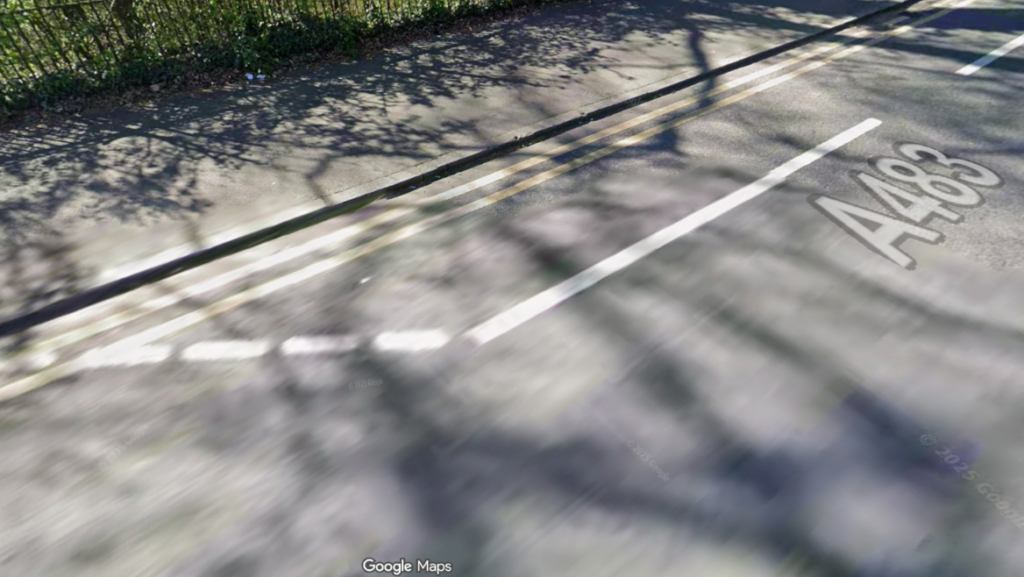
“I would like to raise concerns about cyclist behaviour along the A483 between Overleigh Roundabout and Grosvenor Roundabout in Chester,” writes local resident Cherik Rezaie to The Chester Standard.
Our shoulders tighten, we brace ourselves.
“A well-designed two-way cycle lane has been provided on this route, yet there appears to be little signage reminding cyclists to use it.
“On numerous occasions, while walking on the pedestrian pavement, I have encountered cyclists riding on the footpath instead of using the designated cycle lane.”
Down the rabbit hole we go, a quick search onto Google Maps will surely make us smile, not least to rejoice at the sight of proper cycle infrastructure…
Oh. A narrow strip of paint, without signage. Right next to a pavement the same width as many a shared-use path. I’m not sure “well-designed” is the adjective we would use.
We don’t encourage law-breaking anywhere, but it only takes the smallest amount of nudge theory to realise that cyclists won’t want to use what is so obviously not suitable cycle infrastructure. If cyclists can’t see it or use it, then drivers almost certainly won’t be able to provide the suitable space a thin white line of paint is intended to.
Still, Rezaie continues, and get your bingo cards out:
“When I have pointed out the existence of the nearby cycle lane, some cyclists have responded dismissively or ignored the concern altogether.
“I am left wondering whether cycling regulations are being adequately enforced in Chester. It is also common to see cyclists riding at night without lights, and many do not appear to use basic safety equipment.
“While most cyclists are responsible and respectful, repeated incidents of unsafe cycling on pedestrian pavements create unnecessary risks for walkers, elderly people, and families with children.”
It is difficult to imagine such a paragraph being written to describe most drivers as “responsible and respectful” but causing such unnecessary risks that something must be done! But alas, this is sadly a median-response from many a road user. Thankfully, he does end things on a note most readers should be able to agree upon, although a mention of cyclists’ rights as well as responsibilities wouldn’t go amiss.
“I hope the relevant authorities will consider improving signage, increasing awareness of cycling rules, and taking appropriate enforcement action where necessary to ensure that both pedestrians and cyclists can use the area safely.”
Fingers crossed by enforcement action he means building some proper infrastructure.
For what it’s worth, Cheshire West and Chester Council have come back with a statement passing the buck, saying signage is not their responsibility and that “Cycling on the footway can be enforced by the police, but is usually focused only on dangerous or inconsiderate riding.”
Cyclist killed after driver distracted by Snapchat and Instagram, then struck by second driver
TTT: Baudin holds on
All on his own, Alex Baudin delivers a fantastic performance, limiting his losses and crossing the line 29 seconds behind the time of Matteo Jorgenson, he keeps yellow ahead of Vauquelin, Onley and Jorgenson. The pre-race favourites of Del Toro and Seixas have a bit of work to do!
TTT: Storming grey-troopers
Netcompany-Ineos are storming, knocking 22 seconds off Lidl-Trek’s time, but will they be rueing a briefly dropped chain for Oscar Onley?
Only Visma look like they could challenge them, whilst EF are out-performing expectations and might hang on to the yellow jersey.
Visma had a 1’30 to tackle the final climb to the finish, Matteo Jorgenson is unleashed by Bruno Armirail and Jorgen Nordhagen, rocking and rolling up to the line he comes home and takes the lead! 9 seconds faster that Netcompany-Ineos, but Vauquelin and Onley will stay ahead on GC, just. But what a statement from Visma. Imagine if Van Aert was fit, or Vingegaard was there. The opening TTT of the Tour de France in Barcelona looks mouth-watering!
TTT: Lidl-Trek motoring
I would like to retract my comments from moments ago. Lidl-Trek are flying and have knocked off a whopping 20 seconds off Movistar’s time. Bodes well for Juan Ayuso and Mattias Skjelmose. But here comes Seixas!
Riding on his own for the final 500m, the motorbike stays with Seixas all the way to the line, his shoulders start to rock and it’s not quite enough. They come in provisionally second, 13 seconds behind.
The provisional data we have meanwhile is that Netcompany-Ineos (with Oscar Onley remember) are flying, whilst Visma Lease-a-Bike have lost Wout van Aert early en course whilst Ben Tulett has suffered an unfortunate puncture that the team won’t wait for.
TTT: On for a Movistar upset?
Wow, there have been signs all year that Movistar have steadily improved on the TT front. They ran a Red Bull line-up comprising both Remco Evenepoel and Florian Lipowitz rather close in Mallorca earlier this year, and with Marlen Reusser on the women’s team there has been a spurring in research and development.
But even so, the Spanish team are the new fastest team, besting the ever-consistent Jayco-AlUla by two seconds. Belgian climber Cian Uijtdebroeks was the one to stop the clock and is now going to end up in a great place on GC.
UAE Team Emirates-XRG crossed the line a little earlier and now sit third but Decathlon are out en course and could put some time on their rivals on behalf of Paul Seixas.
Meanwhile EF Education – EasyPost, the team of maillot jaune Alex Baudin, have just rolled out of the long, wide start ramp.
My new favourite "lazy tandem"
Van Schip postscript: Team manager blasts "inhumane" treatment over latest disqualification
Jan-Willem van Schip’s latest disqualification has proven a popular topic for many of you over the past 24 hours, both on this site and in the trenches of social media. Van Schip himself was rather reserved when we reached out to him, confirming just that some media reports that gendarmes had dragged him to the ground to force his withdrawal from the Ronde de l’Oise were incorrect.

That hasn’t stopped several media outlets reporting it unquestionably however, though we now have comment from his Azerion/Villa Valkenburg team manager Paul Tabak.
Speaking to Wielerflits, Tabak said that Van Schip’s disqualification, for storing a bottle under the front of his jersey, “does not apply yet”.
“In the current regulations we cannot find a rule that explicitly forbids carrying two bottles or gels under the jersey. Jan-Willem knows the rules as well. That is why he did not want to stop.”
road.cc‘s interpretation of UCI rules (yesterday was fun) is that Van Schip was disqualified incorrectly as his clothing was not itself modified. However, in placing a bottle down his front, he was breaching a separate rule about modifying rider ‘morphology’. Separately, the UCI is banning front jersey pockets in July due to the perceived aerodynamic advantages and safety risks of carrying unused gels or bottles. This incoming ban, announced last week, appears to have added to the confusion, among both fans and Tabak.
““In the end he was made to stop by the police. That is a serious step. If that had not happened, the race would have stopped.”
Tabak added that the team reached out to race commissaires every day to clarify what could and couldn’t be done on the bike, but that conversations were vague and guarantees were few and far between. It also sounds like Tabak’s patience is running low with the Dutchman’s actions…
“With his current bike, his position and the things he does, you cannot take him to any UCI race anymore,” he said. “If there is a camera on him, they disqualify him. That can only mean one thing: ride a normal bike.
“It is inhumane that it has come this far. Jan-Willem does not deserve that, certainly not with what he has done in the sport. It makes my cycling heart cry to see how the UCI is dealing with a rider like him.”
New dockless e-bike parking spot revealed...
Why store a bike in a bike storage hub when you can keep furniture?
Megan’s tried to find an answer at the supposedly “car-free” tower block in Croydon.

"It's a Wild West"
The e-bike hire market is, admittedly, a bit mad. Different local authorities have different licensing agreements with different providers. Some contracts are exclusive, others are shared tendering processes. But for London Labour, enough is enough.
The party’s Transport spokesperson in the London Assembly, Elly Baker, has given an interview urging Transport for London (TfL) to use newly awarded powers to clamp down on “nuisance parking.”
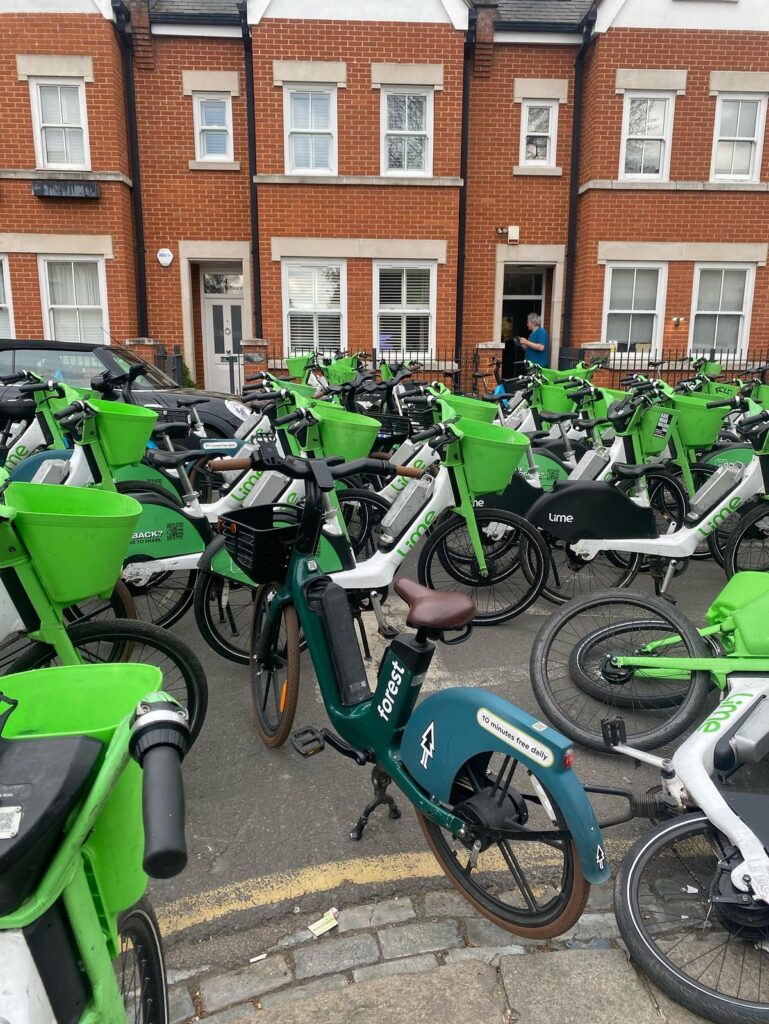
The English Devolution and Community Empowerment Act gives licensing powers to TfL to create a single city-wide set of regulations for dockless e-bike operators. A TfL spokesperson also confirmed they were working “to develop proposals for a London-wide licencing scheme”. Meaning the mild amusement we sometimes have on this page about the territorial conquests of different providers’ fiefdoms in different boroughs could one day come to an end. There goes real-life Risk.
“”Every Londoner will know that it’s a bit of a Wild West for dockless e-bikes,” Baker told the Local Democracy Reporting Service.
“They tend to be parked often on pavements, nuisance, getting in the way of people. Cycling is getting a bit of a bad rap because lots of what most Londoners see is actually just a load of Lime bikes hanging around, rather than people actually getting about and going about their business.
“At the moment, TfL and the boroughs don’t have enough powers to make sure these bikes are parked in appropriate places and being used in ways that complement our public transport system, rather than actually compete against it. Dockless e-bikes are really convenient for lots of people but need to work in harmony with the rest of our transport.”
The proposal means TfL could also conceivably put caps on the number of electric hire bikes in the city, but if I had to hazard a guess, I reckon the number of councils with exclusive tendering contracts would probably see an increase in the numbers of bikes if, as expected, multiple providers would someday be licensed across the city. There’s also the dilemma of wanting to expand dock-less parking options, which means taking up a car parking space or two (good, but not exactly popular), or widening pavements (time-consuming). Or asking people to park their bikes nicely and hoping a local bad-person doesn’t push them over after they’ve been parked. One can dream…
Meanwhile, in the United States, which is in America...
Dauphiné preview: a weird TTT
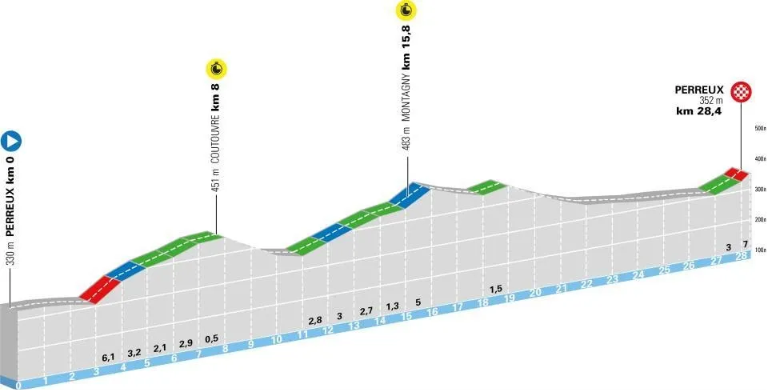
It’s been a rather odd race over at the Tour Auvergne-Rhone-Alpes,. Sorry, the Dauphiné Liberé.
The race organisers have leant into the last bit of their new name and set a course so hard that none of who we would consider a ‘big hitter’ is there. Besides Paul Seixas, but he’s French and riding for a French team so does he count in this discussion?
After the first two days of breakaway triumphs, enabling our Ryan to break into a panic on the streets of County Down, today the GC racing gets underway with a 28km TTT. Although it’s the new-fangled format that I frankly don’t think is a TTT at all.
Rather than riders having to ride, y’know, as a team with the fastest time being that of the fourth or fifth rider, every rider gets their own time, which could lead to the bizarre spectacle of riders pulling the pin on the first uphill gradients, domestiques effectively doing very long lead-outs for GC favourites, or skinny climbers hanging on for dear life on the wheel of their bigger rouleurs.
Anyway this should be a chance to get some proper gaps among the overall favourites ahead of an explosive finale in the coming days. Visma’s Ben Tulett and the Netcompany pair of Kevin Vauquelin and Oscar Onley are among a cluster of riders who start today with a 12 second lead over the rest of the GC favourites. Race leader Alex Baudin has 32 seconds over his nearest rivals and is not bad against the clock, but it would still probably go down as an upset if he retains the yellow jersey tonight.
Great Scott!
Jill Scott has started her utterly insane Sport Relief challenge, and has already reached my neck of the woods.
View this post on Instagram
Setting off from Wembley Stadium and finishing at Sunderland’s Stadium of Light, the England international-turned-broadcaster is zig-zagging across the country and cycled 180km (112 miles) yesterday before finishing at Villa Park.
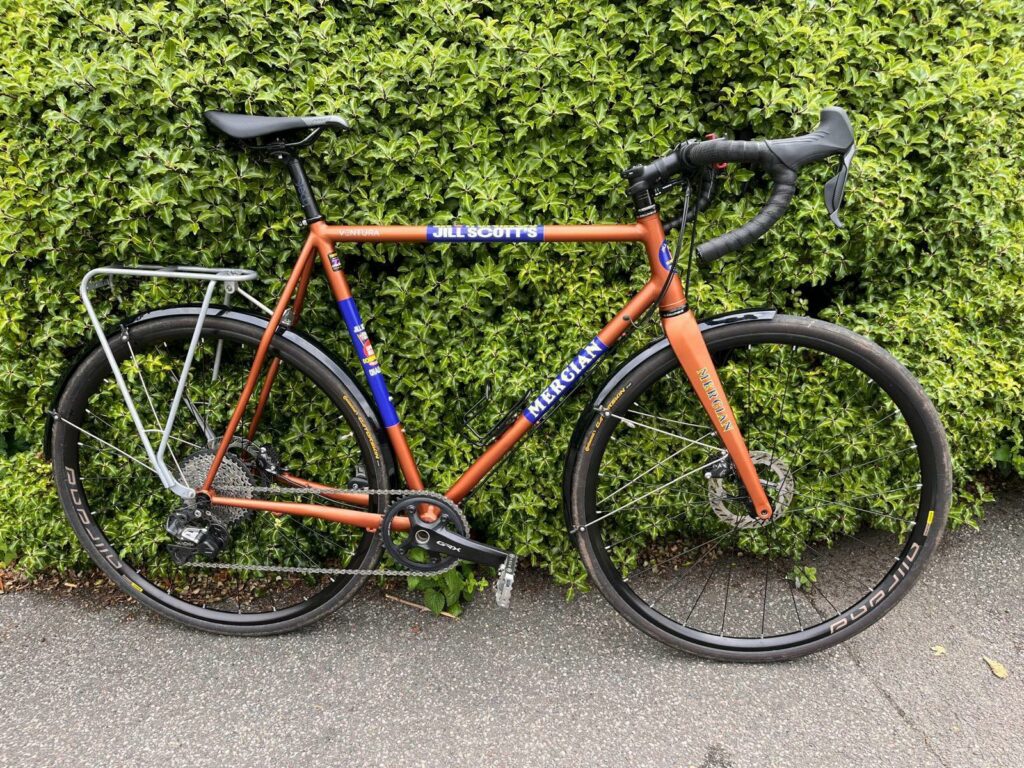
Worryingly, partway through yesterday Scott admitted the bike seat was already starting to hurt, which doesn’t bode well ahead of today’s 99 mile ride to Liverpool, to Everton’s Hill Dickinson stadium. Ideally that’ll be the terrain though, rather than the rather lovely customised Mercian bike Scott’s been given by the Derbyshire frame builder.
Thankfully she’ll be able to rest her bum the following day, by running 38 miles instead.
Just bonkers…
Horror as council issues report saying e-bikes can help women to meet their "traditional domestic responsibilities"
Speaking of the possibility that individual boroughs may not be best equipped to evaluate city-wide transport provision, we were brought back to a very different era yesterday. And not exactly the good old days either…





















26 thoughts on “Pedestrian annoyed by cyclists not using “well-designed” cycle lane… despite no signage or physical separation; “Wild West” e-bikes in London could be capped under new TfL powers; TTT day at Dauphiné + more on the live blog”
If they think hire ebikes are a problem wait until self-driving cars are choking the streets.
@billymansell Self-driving cars have the potential to be a big improvement over normal private cars. A car sits unused for probably 95% – 99% of the time, taking up a lot of space on the carriageway (I’d say road, but of course many take up space on a pavement). If self-driving cars operate more like taxis, then the number of cars per person could drop dramatically, plus the cars on the road would spend a lot less time parked up.
@AidanR I don’t know of evidence that people are giving up private car ownership for driverless cars.
Also, if private cars are static 95%-99% but conversely driverless cars are active the majority of the time then there will be more cars on the road increasing congestion plus, as Waymo has shown, they clog the streets waiting on people leaving large events and cause huge disruptions when they stop working altogether having lost signal or confused for multiple reasons.
Then there’s the cost to current livelihoods and that they’re ableist as there’s no-one to assist the disabled, elderly or infirm when they need it.
I’m all for offering transport choices that could reduce dependency on private cars but putting more cars on the road is bonkers.
@billymansell “Also, if private cars are static 95%-99% but conversely driverless cars are active the majority of the time then there will be more cars on the road increasing congestion” – this ignores that many of those static cars *are* on the road and in some cases that itself contributes to congestion, reduces visibility for/of pedestrians etc.
Indeed, although we’ve had this one chewed over before here.
Some folks say it will be a massive improvement, while others suggest it’ll herald a new apocalypse for active travel and another corporate takeover of public space (the notjustbikes YouTube channel has a particularly dystopian analysis of this).
I’m on the skeptical side – these already exist but seem niche. Although the autonomous vehicle industry now has almost unheard-of resources to … persuade … political decision makers.
While people do take taxis often in some places and robotaxis may have some advantages over those, I’m pretty sure people are still usually strongly in favour of *their* private transport.
We’re very adverse to sharing, so if the robotaxis do become very well used I suspect they’ll start to be disfavoured like public transport (“smelly buses”). They’re also unlikely to gain an occupancy advantage over normal cars (others have more belief in “pods with private compartments” of course).
But in a poor part of a rich future “autonomous techno-jeepney” maybe?
@billymansell No, of course there isn’t any evidence yet of people giving up private car ownership for driverless cars – it’s far too early.
Driverless cars will first replace normal taxis, and only then might they start to replace private cars. This would of course be uneven – the economics of it would make much more sense in cities than in small towns and the countryside (much like with dockless hire bikes).
I agree that putting more cars on the roads is a bad idea, but I don’t see why driverless cars wouldn’t simply replace existing taxis/cars. If they do become a viable alternative to the private car, then one driverless car ha the potential to replace many private cars.
@billymansell
There is the potential they might just end up clogging up and adding to congestion on roads. If i’m sat behind a fleet of cars with people going places then fair dos, but if we then have streets filled with empty autonomous cars moving about between fairs them how is that solving anything?
Being active more of the time just means more journeys per car, not more cars. i.e. the same number of journeys, achieved with fewer cars.
Driverless cars picking up people from large events shouldn’t produce any more traffic than human driven cars leaving that event at the same time.
Have you not seen the congestion caused when ordinary cars stop working or their drivers get confused.
Most of the driverless car journeys would replace personally driven journeys, so livelihoods won’t be affected as much as you think (plus, jobs are constantly being eliminated/invented, as society evolves)
There’s no reason why manned vehicles could still exist, to accommodate ability issues.
For somebody who’s for more choices, you sure are coming up with lots of tenuous objections.
Finally – and again – it will not lead to more cars.
In London you will here lots of people say that e-bikes should be parked in specific parking bays, but then don’t want to lose any car parking space to provide a dockless e-bike bay (or they will park in the bay if it’s empty).
I don’t understand why they don’t work on a specific docking location arrangement – isn’t that how ‘Boris bikes’ work?
They can do, but that’s part of the issue of all the different boroughs doing things differently. Some boroughs do have allocated parking spaces amd you’re not able to park a bike outside of one, or at least as reasonably close as GPS will allow. Other boroughs don’t do this and allow parking anywhere.
@belugabob I think docking is the better model overall *if* the goal is serving the public.
BUT … is it? In a given case, follow the money. Who is paying whom for what?
AFAICS in large public schemes nobody makes even the bulk of their money off the actual rentals *.
So who pays the piper (because that influences the tunes)? Funding streams can include: ads on the bikes (or associated infra), selling info about the hirers (to advertisers). It’s also possible the council chips in … but I believe most of the dockless folks still get most of their cash from venture capital. Your guess as to the degree which that aligns with “the public good”.
Even councils involved may only have moderate interest. Obviously sometimes it’s “what we *can* do”. But if they *really* wanted more travel choice they’d (also) be putting in road diets, improving cycle parking and other infra, pushing public transport…
(A cynic said “public bike share is a council’s fig leaf covering failure to provide adequate street-level mass transit”).
* For mass casual public bike hire costs are too high relative to what the general public will pay. This is the case even in eg. the really big Dutch national OVFiets. There it’s the (nationalised) railway company that pays. The benefit to them being making using the train more convenient and thus attractive: very many train journeys begin / end on bike, and the bikes are supplied at stations.
Yes, it’s complicated and, as you say, there are vested interests (not particularly those of society in general) involved
@thereverent you hear the loud people say that, but that’s only because they’re loud.
I’m in London and I’d happily see every car parking space, on both sides of my street, allocated to shared bike parking. Far more pleasant!
The way some people “park” hire bikes certainly leaves a lot to be desired.
However. ““They tend to be parked often on pavements, nuisance, getting in the way of people.” I thought she’d just described the way people park their cars around here…..
@Clem Fandango
Indeed, just changing a few words, apply it to cars and…
“They tend to be parked often on pavements, nuisance, getting in the way of people….
At the moment, TfL and the boroughs don’t have enough powers to make sure these cars (/motor vehicles) are parked in appropriate places…
Cars are really convenient for lots of people but need to work in harmony with the rest of our transport.
The proposal means TfL could also conceivably put caps on the number of cars in the city…
Or asking people to park their cars nicely…”
Imagine how much more pleasant things could be…
@mitsky and if cars were only parked on one side of side-roads cars it would be a lot safer and easier for cyclists to use these roads without fear of being forced to yield in narrow sections by motorists who won’t wait their turn.
Well, that depends on the direction of travel, and the consideration of the driver involved…
While this elite copper was tackling a peaceful but fast cyclist, his colleagues had to deal with widespread rioting triggered by football hooligans and violent thugs in a dozen of French cities. Attaboy!
@MaxiMinimalist
The riots were on Saturday May 31st after PSG won the Champion’s League. This incident was on Sunday June 7th. Can you work out why your comment is a bit silly?
What was silly was instead of sending a regular officer, they sent Robocop.
@MaxiMinimalist Also, Van Schipp has said that he wasn’t tackled by the policeman.
My gripe with these complaints have always been that they come from people that don’t cycle and understand first hand why they aren’t being used. If it was so brilliant, a cyclist would never actively choose to mingle with cars…
RE: Why don’t cyclists use cycle lanes pt. 784
It’s also an “advisory cycle lane” so it doesn’t mean almost nothing, it *does* mean nothing!
Indeed due to loopholes many “mandatory cycle lanes” don’t even stop people legally parking in them, and if course in reality nobody gives a stuff when they *have to stop* for any reason. Or contractors need somewhere to put signs etc.
Not worth the paint that will soon be worn off, that.
About the cycle lane thing (keep in mind that I don’t know regulation in the UK): why don’t the cyclists ride on the road?
Where I am, it is absolutely illegal for any cyclist over the age of 10 to ride on a footpath that’s not explicitly designated as ‘dual use’. Either you ride on a mandatory cycle path or if that’s not present, on the road. If it’s a type of road prohibited to cyclists (e.g. a highway) and there’s no cycle path running next to it, you don’t ride there at all.
Biggest issue here are the shared-use paths. Cyclists get annoyed because pedestrians take up the entire width and don’t make way or pedestrians get annoyed (and imo rightly so) because cyclists maintain very high speeds riding very close to pedestrians, even small kids.
A good question – perhaps best answered with other questions. Why do they cycle *at all* (and not eg. drive)? Who actually cycles in the UK and why?
Then: do people only avoid certain activities because they are illegal? Are some laws effectively just to “seal the agreement” eg. effectively “self-enforcing” (for the vast majority)?
I don’t know why particular people are cycling in pavements. First – why are they cycling at all? Is this a “leisure” activity, to be with friends (kids)? Is it the most convenient way (short trip / alternative to walking, there’s no public transport, they don’t have a car)?
So why not use the road? Most people (around the world) simply won’t cycle in traffic where there’s lots of it / speed is high. Even if it isn’t illegal only a *tiny* few cycle along “highways” in the UK because it feels horrible. Even if the odd motorist didn’t take it upon themselves to let you know by beeping or shouting or “giving you a scare”. This is effectively self-enforcing. Although we’ve reduced it in many places in England, Scotland and Northern Ireland the *default* urban speed limit is 30mph.
Similar effect applies for riding amongst pedestrians – where there are many it simply becomes inconvenient to cycle (legal or no). BUT in many places (outside of urban centres) there are normally very few pedestrians (because we drive).
In the UK it’s sometimes unclear whether cycling is permitted somewhere or not, particularly because much cycle infra has been “built” simply by declaring a particular existing footway “shared use”.
What is legal usually comes a distant second to “what I can get away with” (including degree of *social* sanction or not). That’s usually because rates of detection and charging are very low – the punishment is often the last thing that people think about…