


Forum Replies Created
-
AuthorReplies
-
quiff
Your cynicism may be well
Your cynicism may be well founded in Lancashire, but since I have been to court on one of my reports, I do actually believe them.
From the post title I was
From the post title I was hoping this might be a new collab.
We’ll see. Positive action
We’ll see. Positive action taken on every report I’ve made so far, but my guess is it’s just warning letters so far for the zig zag line offence.
I was pleased this week that,
I was pleased this week that, although Operation Snap can’t tell you the outcome of individual reports (beyond “positive action taken”) they did proactively respond to some of my reports to tell me how I can better evidence the offence so they can take further action. Turns out they prefer video evidence to prove beyond doubt a car is parked on zig zag lines; a still won’t do.
December 17, 2024 at 6:03 pm in reply to: Through traffic to be banned in parts of Bristol for ‘liveable neighbourhood’ scheme #1012329Perhaps the speed
Perhaps the speed differential not quite as bad as it looks though – the section of M32 (Maja Rd?) before and after the Mina Rd turn-off has a 40mph limit anyway.
December 17, 2024 at 4:48 pm in reply to: Through traffic to be banned in parts of Bristol for ‘liveable neighbourhood’ scheme #1012325Looks like the school is
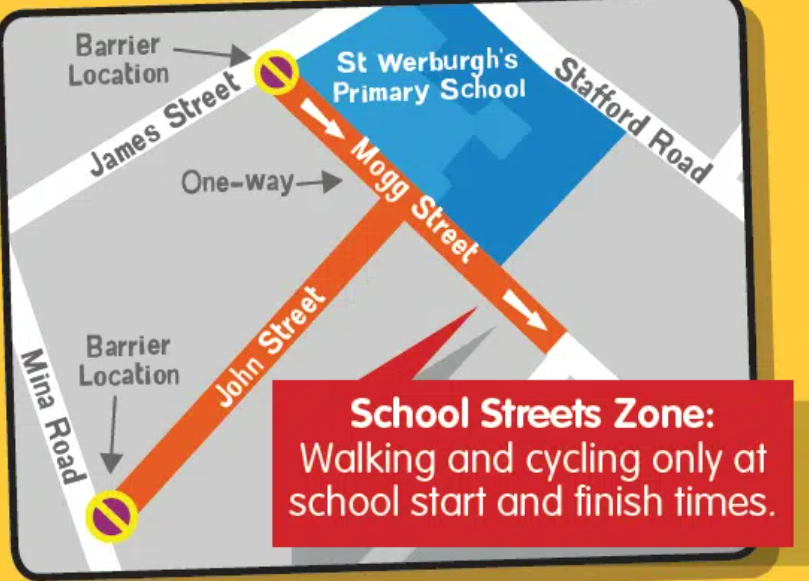
Looks like the school is split site, and it’s the other part of the site on Mogg St that’s getting a school street: https://travelwest.info/projects/bristol-school-streets-st-werburghs-primary-school/
I was going to suggest the
I was going to suggest the Fairlight Strael too, and went to check if it came in on budget. While there, I finally ordered the frameset I’ve been hankering after. Merry Christmas to me!

If the sashes are original
If the sashes are original (single glazed?) then it’s likely any company quoting will be quoting for new, sympathetic, double-glazed sashes. It’s not cheap. And unless you’re in some sort of similar industry, it’s not something I would DIY.
I would guess Jem PT, below,
I would guess Jem PT, below, might also have been thinking of one of the fully reflective ones (happy to be corrected), but didn’t get the same short shrift.
November 6, 2024 at 5:58 pm in reply to: Public order offence for swearing during close pass #1024385Strictly speaking that blog
Strictly speaking that blog is correct to say they do not need to prove intention but it looks like they do need to prove either intent or awareness:
s.6(4) POA 1986: A person is guilty of an offence under section 5 only if he intends his words or behaviour, or the writing, sign or other visible representation, to be threatening [F1or abusive], or is aware that it may be threatening [F1or abusive] or (as the case may be) he intends his behaviour to be or is aware that it may be disorderly.
But I think it’s right that only a likelihood of alarm is required, not actual alarm.
November 6, 2024 at 5:09 pm in reply to: Public order offence for swearing during close pass #1024379I think that relates to a
I think that relates to a different offence under s.4A – causing intentional distress. It’s quoted from here: https://www.cps.gov.uk/legal-guidance/public-order-offences-incorporating-charging-standard#:~:text=This%20can%20usually%20be%20proved,or%20distress%20as%20a%20result.
However, I’m an interested amateur and this speculation probably isn’t helping the OP! Get a qualified solicitor if it goes to court!
November 6, 2024 at 3:54 pm in reply to: Public order offence for swearing during close pass #1024373My reading of the offence is
My reading of the offence is that you don’t need to prove actual distress – only that the swearing was within hearing of a person likely to be caused distress etc. HoarseMann’s link below says so too. So while you need to prove there was an actual (not hypothetical) person to hear the words, you don’t need to prove that they were actually distressed by them. In theory therefore video evidence of the swearing could be enough, without needing to establish the driver was actually alarmed. In practice I don’t know, this is just speculation.
November 6, 2024 at 3:21 pm in reply to: Public order offence for swearing during close pass #1024367Not sure the driver would
Not sure the driver would necessarily need to be present for the police to prosecute the public order offence? In theory they just need to prove someone was proximate who was likely to be alarmed etc. However, also spotted that you also need to have intended your words to be threatening or abusive, or aware that they may be – s.6(4) Public Order Act. (IANA(Crime)L)
November 6, 2024 at 11:26 am in reply to: Public order offence for swearing during close pass #1024331the little onion wrote:Yeah, that’s what I’m talking about – in other incidents where people involuntarily swear, they sometimes NFA it based purely on what they mutter. The example was someone exclaiming “F***er” during a close passThat’s what I was getting at – I wonder if would make any difference if it was “f***” (exclamation) rather than “f***er” (arguably directed at the individual). I suspect their reasoning doesn’t get into that level of detail though and, either way, it’s nonsense. But I will do my best to restrain my mouth in future…
November 5, 2024 at 4:42 pm in reply to: Public order offence for swearing during close pass #1024309I was referring to your point
I was referring to your point 2 – where they told you they’d NFA’d others for swearing during a pass.
-
AuthorReplies
