


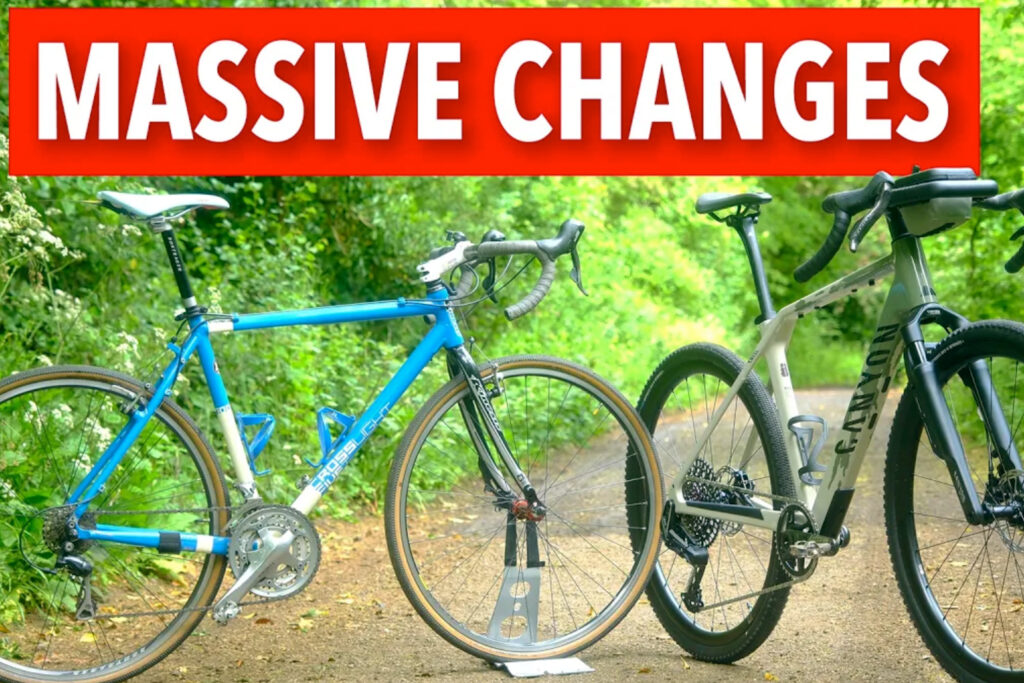

Gravel bikes, in many people’s eyes, are just a bike industry invention to get us to buy new bikes – a bit like SUVs in the car world. But whether you love them or loathe them, there’s no denying they’ve progressed massively in a relatively short space of time, and they’re seriously good fun to ride.
What if I told you the DNA of the modern gravel bike actually goes back donkey’s years? More than 100 years, in fact, to a time when everything was in black and white…
The Tour de France on gravel bikes
The roads dictated the bikes. Outside of major towns and cities, much of Europe still relied on dirt tracks and cobbles rather than smooth tarmac, so riders needed machines that could cope with rough surfaces for hour after hour.
Especially when the Tour ventured into the mountains for the first time, these riders were genuine adventurers. Their bikes had to be stable, comfortable and durable enough to survive terrain that would make many modern riders wince.
Also, the kit and aesthetics: big moustaches, sustainable wool jerseys, sturdy leather shoes – they were basically a modern gravel riders. Although something tells me he won’t be stopping for a skinny matcha and banana bread. Red wine and cigarettes were probably more the nutrition strategy in the 1923 Tour de France.
Almost modern times
View this post on Instagram
As we’ve established then, once upon a time pretty much every bike was a gravel bike – but let’s spool forward into the era of asphalt roads, and even colour photography. With better roads came the road bikes that we know today, but with much skinnier tyres.
Did people stop riding on gravel, or off road generally at this point? Well, most people did (most people stopped cycling altogether, but that’s another story). Some though pined for rougher terrain, so in the UK the Rough Stuff Fellowship formed. For a long time they were lauded as the fathers of UK mountain biking, but we now realise they were in fact the grandfathers of UK bikepacking. And of course there was cyclocross.

In the 90s, the mountain bike exploded into the mainstream rapidly, evolving from rigid steel-framed machines to complicated full suspension bikes. By the early 2000s they’d become too capable for many of the trails a lot of mountain bikers originally rode, leading some to seek a less complicated alternative for fire road blasting such as their original rigid or hardtail mountain bikes, or ‘cross bikes.
Meanwhile, in the US where gravel roads weren’t in short supply, a gravel riding scene started to emerge…
Touring and cyclocross
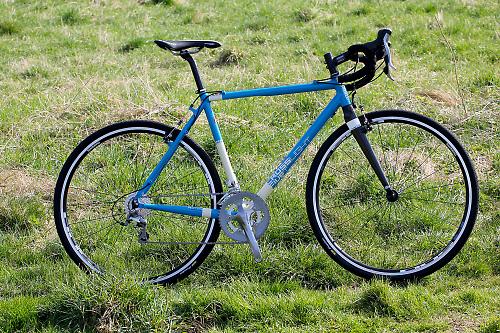
The modern gravel bike as we know it evolved largely from touring and cyclocross bikes in the early 2000s. Touring bikes brought stability, comfort and luggage-carrying practicality, while cyclocross bikes added speed, versatility and off-road capability. The first purpose-built gravel bike, the Salsa Warbird, didn’t actually appear until 2012 – surprisingly late given gravel had already been a ‘thing’ for a few years by then.
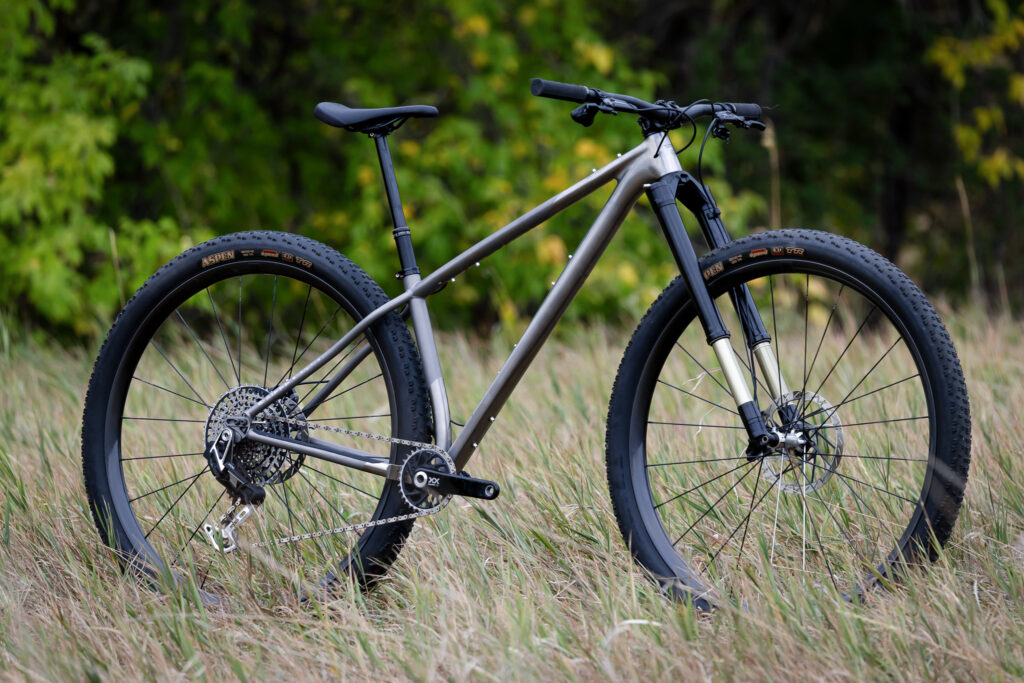
Take something like a Kinesis CrossLight, a cyclocross bike as the name suggests, from around 2005. Compared with a modern gravel bike, it looks basic, but the foundations are all there. It has wider tyres than a road bike of the time along with a slightly taller geometry for off-road rides. The designers of these bikes worked in additional clearance for mud and rough surfaces, though tyre width was limited by the chainstay design at the bottom bracket.
Disc brakes wouldn’t make it onto cyclocross bikes for another five years, so it was cantilever brakes for stopping power, and manufacturers generally focused on building a strong frame rather than chasing the lowest weight.
Modern gravel
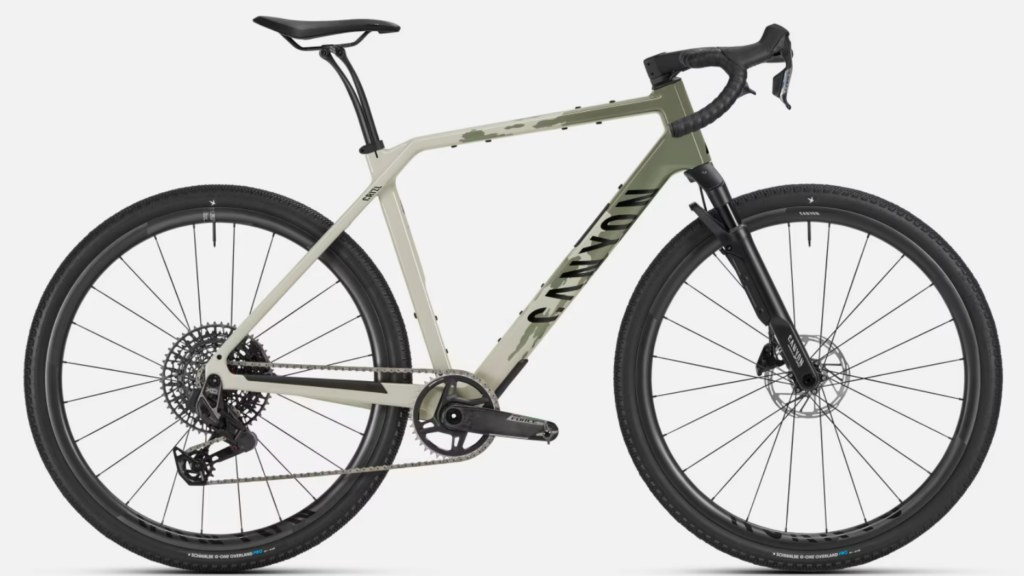
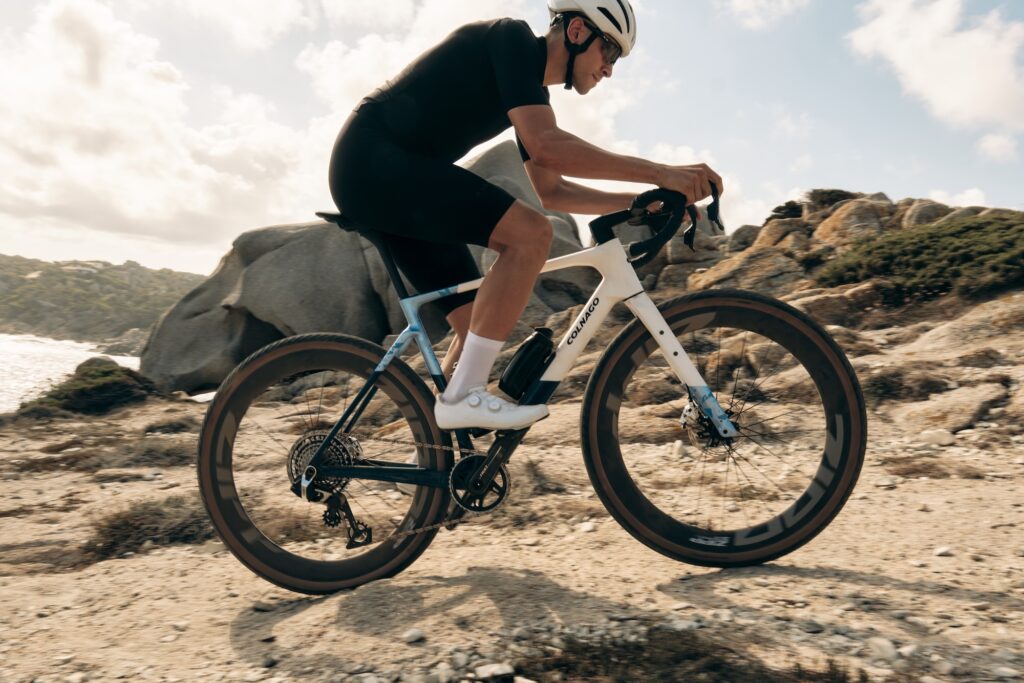
Now compare that to a modern gravel bike such as Canyon’s Grizl CF 9.
Today’s bikes are packed with technology that would have seemed completely excessive 20 years ago. Carbon frames have reduced weight a little while improving stiffness and comfort, and many bikes now feature fully integrated cockpits and internal cable routing that would once have been reserved for whacky concept bikes.
Electronic wireless gearing has become increasingly common too, making shifting cleaner and more reliable in muddy conditions, while hydraulic disc brakes have transformed braking performance altogether. Add tubeless wheels and tyres into the mix, and riders can now run lower pressures for extra comfort and grip without constantly worrying about punctures.
Some modern gravel bikes even include suspension forks, flex-stays or suspension seatposts to smooth out rough terrain further. Then there’s internal frame storage, allowing riders to stash tools and spares neatly inside the bike itself.
But the biggest difference for me is tyre clearance. Modern gravel bikes can take seriously wide rubber, and that completely changes what they’re capable of. You can ride technical trails, chunky descents and rough forestry tracks with a level of confidence that older bikes simply couldn’t offer.
They’re also far more refined overall. Geometry has evolved to provide better stability at speed without making bikes feel sluggish on smoother surfaces. The result is a machine that genuinely bridges the gap between road riding and mountain biking.
Singletrack test
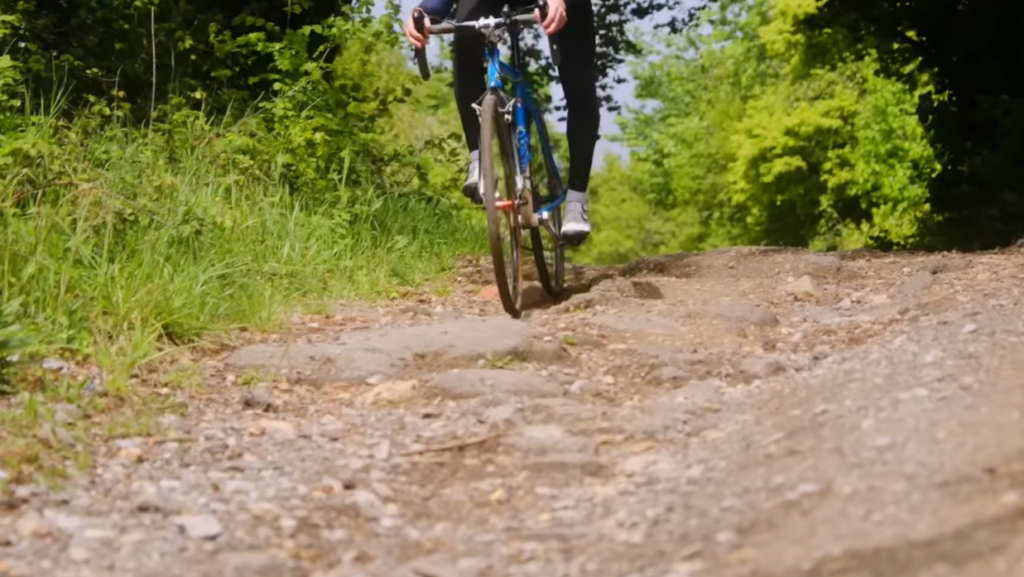
To see what 20 years of development has actually achieved, I took both the Canyon Grizl CF 9 and the 2005 Kinesis Crosslight for back-to-back runs of a tight and twisty section of singletrack.
Straight away, the modern gravel bike feels calmer and more controlled. The slacker geometry gives the front wheel more stability on steeper sections, while the wider tyres generate noticeably more grip through loose corners. Modern frame compliance and lower tyre pressures also help smooth out roots and rocks that would otherwise bounce you around.
The older bike still feels lively and surprisingly capable, but you have to work much harder to keep it composed. There’s less margin for error, especially when the trail gets rough or speeds increase.
You end up choosing smoother lines more carefully, braking earlier before corners and generally riding with a bit more caution. The modern gravel bike simply allows you to carry more speed and attack rough terrain with greater confidence.
That can’t detract, however, from the fun you can have on the old bike. Trails are more of a technical challenge, and the bike is still very fast on well-graded gravel.
Price
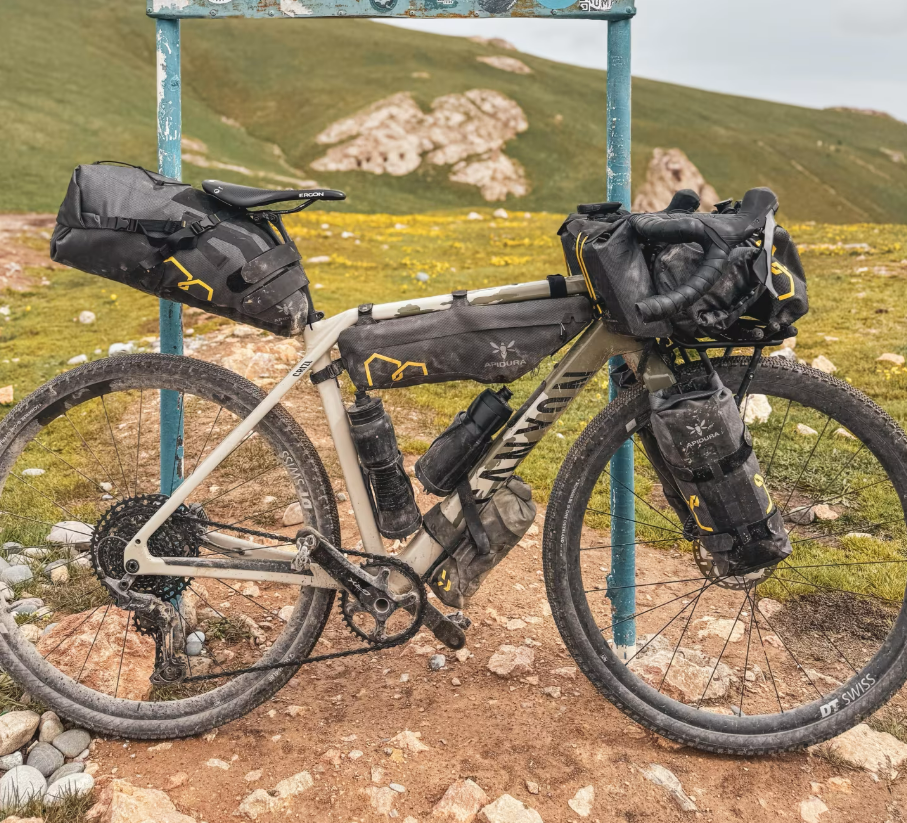
As you’d expect, there is a big difference between the price of these two bikes.
The Kinesis cost around £935 back when we reviewed a similar model in 2012. Adjusted for inflation, this would be around £1,600 today.
The Canyon, meanwhile, costs £5,599. While this is rather a lot more money, you have gained a huge amount of tech which makes the bike faster and, arguably, more fun to ride off road.
However, old cyclocross bikes such as the Kinesis can be found online for only a few hundred pounds, and the fun that they bring for such little financial outlay is impossible to beat.












11 thoughts on “Gravel bikes are a lot older than you think: how the gravel bike evolved, plus comparing a 2000s ‘cross bike with a cutting edge gravel racer”
That Kinesis Crosslight FiveT was my wife’s touring/adventure/commuter bike for several years. Lots of fun had on it, including some extreme trips along hiking paths in the Swiss Alps near where we live, plus many more sedate kms. It was a great machine. It’s also far more practical than the new Canyon that you’re comparing it to because it has full mounting points for a proper rack and mudguards. Too many of the modern gravel bikes are made more for racing than for practicality, which is a shame.
@Chris RideFar You can put mudguards and racks on a Grizl if you want, although you might need to either use Canyon’s specifically designed parts and/or require a bit of fettling. This image is direct from Canyon’s website: https://dma.canyon.com/image/upload/w_1439,h_1439,c_fill/f_auto/q_auto/v1778062194/2027_TOP-2_grizl_al-5_4443_R124_P01_mounts_va4ya4
It’s true that “gravel race” bikes are becoming a segment in their own right, and often these aren’t especially practical. However, I would say that there are still plenty of “adventure” focused practical gravel bikes, with brands increasingly offering more than one gravel bike depending on whether you want racey or adventure focused (sticking with Canyon, the Grizl is the practical option whilst the Grail is race-oriented; Specialized have the Diverge or the Crux; Trek have the Checkpoint or the Checkmate; etc.)
Way back in the mid 60’s when I was a kid I was a big speedway fan. Me and my mates started putting cow horn handlebars and knobbly tyres on our bikes to broadside them on gravel in cycle speedway races.
We also found that these stripped down machines were great fun off road on paths and bridle ways.
There’s not much that’s genuinely new.
@Martin1857 Cycle speedway actually originated in the 1920s, then really took off in the UK in the 1940s due to the availability of numerous bomb sites on which to race. By the 1950s you could even buy specific bikes for it…
@Rendel Harris by the 70s it was moped forks (NSU if I remember correctly) & cowhorns. I made do with a couple of moped wheels with drum brakes on my single speed bike. Great downhill and good for the leg muscles going back up.
@Rendel Harris We were never fans of real cycle speedway. Never thought those bikes looked cool and they didn’t really slide around the corners.
We used to make a track on the gravel car park at the Rayleigh Weir Stadium (home of our beloved Rockets) and try and make the longest rear wheel broadsides we could. Great days
Hmm… the front end looks a lot like a Jones bike (truss fork, bars sloped towards you) – now available (if you wait…) for orders of magnitude more that 10 pounds!
No new ideas indeed…
(If only I could justify the money I’d still rather the Jones though…)
@Rendel Harris by the 70s it was moped forks (NSU if I remember correctly) & cowhorns. I made do with a couple of moped wheels with drum brakes on my single speed bike. Great downhill and good for the leg muscles going back up.
“Disc brakes wouldn’t make it onto cyclocross bikes for another five years” 5 years from the 2005 Crosslight? There were disc brake, drop bar, CX tyre bikes around in 2007-2008.
@james-o Think they mean CX racing bikes rather than CX style; discs weren’t approved for CX racing by the UCI until the 2010-11 season.
‘New’ in cycling terms usually means up-to-date rather than novel. After all while I do keep thinking (lusting would probably be nearer the mark) about a Mason Bokeh or Fairlight Secan my one and only bike – a Litespeed Appalachian – still does everything that I want even if it’s rider has had a few downgrades over the years.