



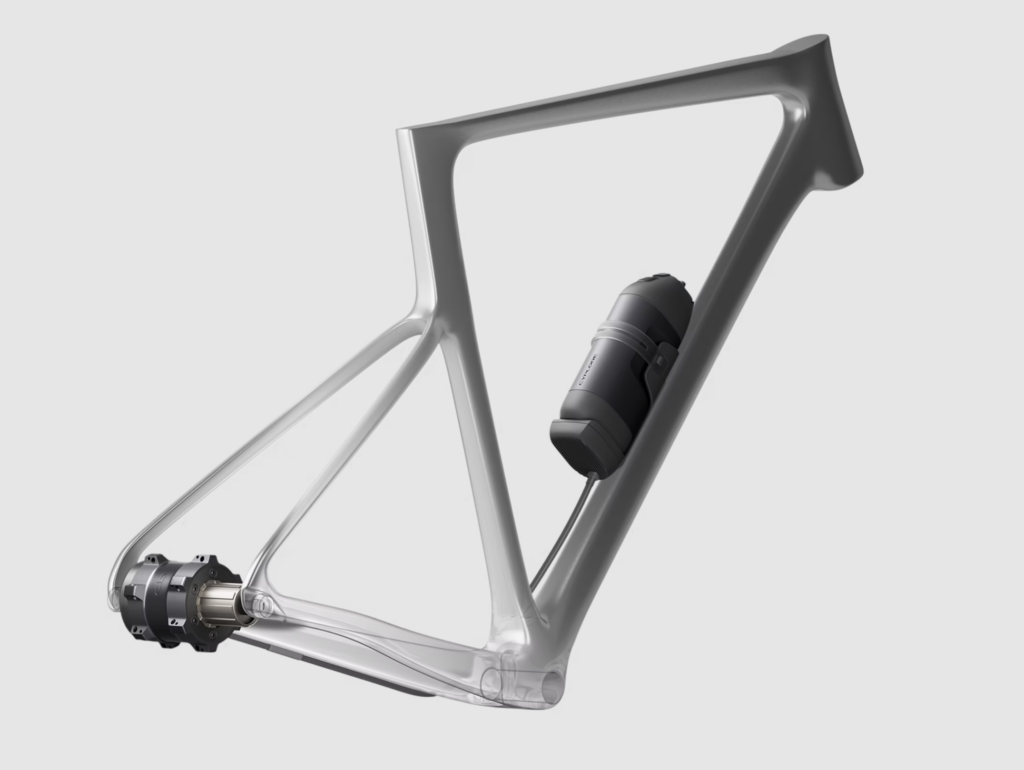
Cyplore is a new e-bike conversion kit designed for road and gravel bikes, aiming to bring lightweight electric support to existing set-ups. It uses a rear hub motor, aero bottle-style battery and wireless control system, and is offered in two versions: a ready-to-ride wheel, or a build kit. It’s also just launched on Kickstarter with early bird prices starting at $599 (around £444) for the build kit, and the modest crowdfunding target was surpassed minutes after the campaign went live.
E-bike conversion systems aren’t a new idea, and several manufacturers now offer conversion kits designed to turn standard bikes into e-bikes.
We first reported on the Copenhagen Wheel back in 2009, and the product eventually went on sale around a decade ago. The concept never really took off, and it was discontinued in 2020.
More recently, however, more successful systems have emerged such as Swytch, which has featured regularly on ebiketips over the last few years with positive reviews of its e-bike conversion kits.

The Swytch system is aimed more at commuter bikes, typically using a front hub motor, which is simpler to install on most bikes and avoids the need to deal with drivetrain components such as cassettes, and a large battery mounted to the handlebars or under the top tube.
Cyplore says it offers a more “discreet” pedal assist system designed for seamless integration into your existing bike, with “no messy retrofits”.
“The system uses a compact hub motor and bottle-style battery to keep the setup visually clean, while a built-in torque sensor delivers proportional support based on pedalling input”, says Cyplore.
It made its debut at Eurobike 2025, and has just launched on Kickstarter. Developed by engineers at Samsung, Xiaomi and Alibaba, Cyplore takes a more performance-focused approach aimed at road and gravel riders looking for an extra boost.
It’s available in two configurations: the One, a ready-made powered wheel and battery, and the Flex, a kit that allows you to build your own powered wheel system.
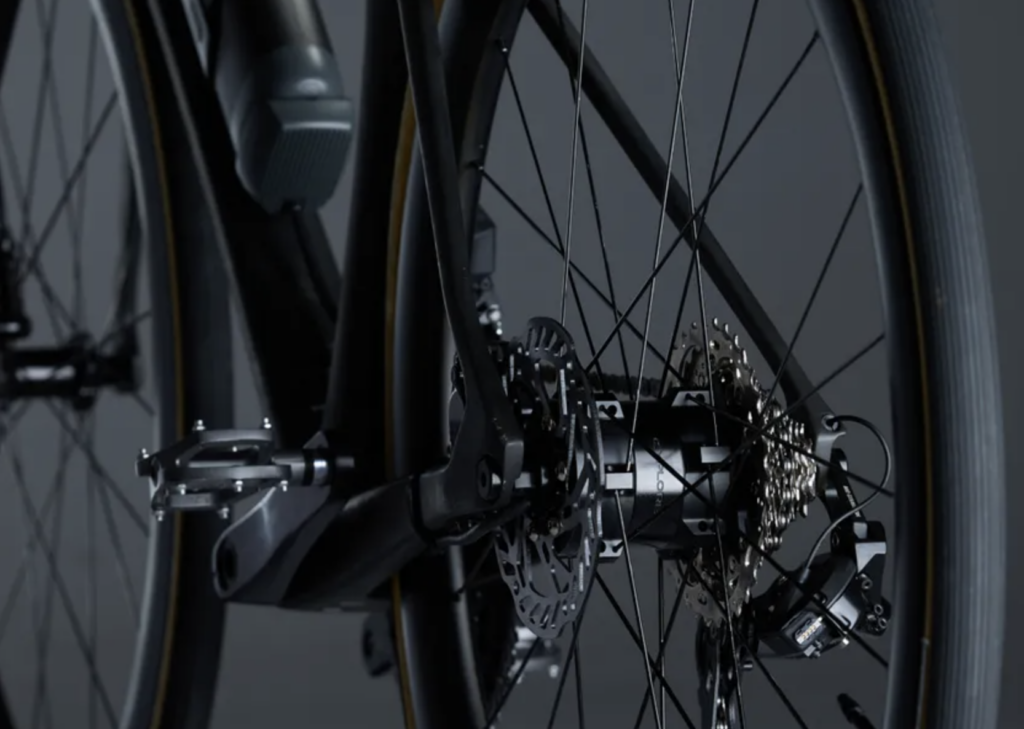
The rear hub motor is compatible with 142×12mm thru-axle dropouts and drivetrains up to 12-speed, with the brand claiming it’s “the world’s lightest e-bike kit” – 50% smaller than “mainstream” hub motors.
The rear hub motor delivers up to 23Nm of torque, with a 250W power output and a claimed range of 50km. For the UK and EU, assistance is limited to 25km/h (with a 32km/h version for the US).
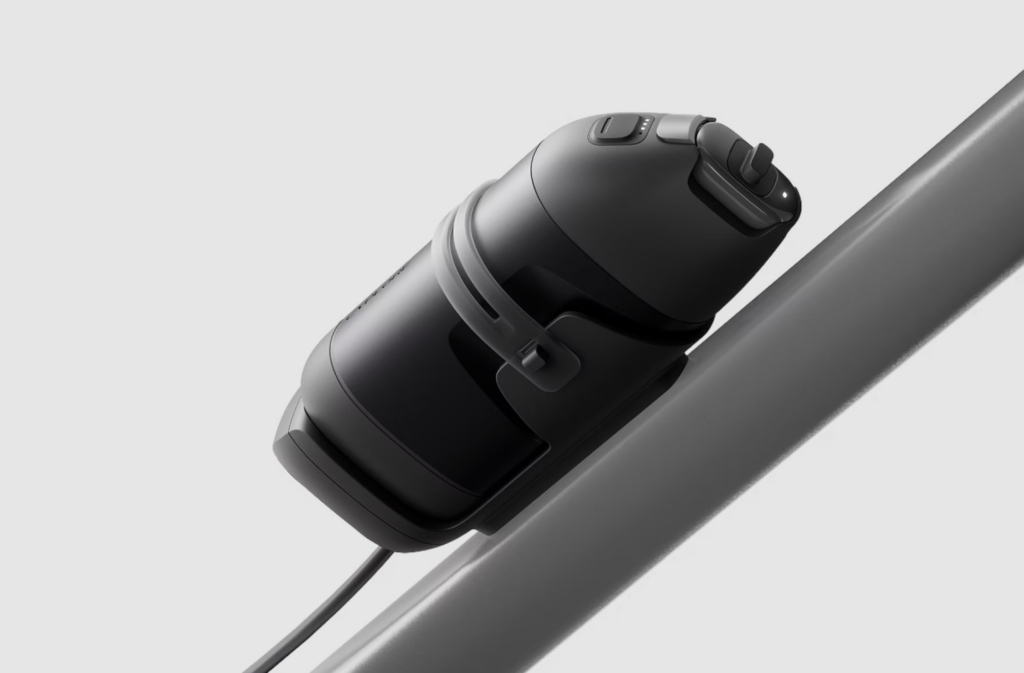
2026 Cyplore e-bike assist system battery (Image Credit: Cyplore)
The 111Wh battery then mounts like a standard water bottle, and is shaped to mimic an aero bidon, which helps it blend in neatly. As Cyplore puts it, it is “a battery that looks like it belongs”. However, it does mean you lose the space for a second bottle.
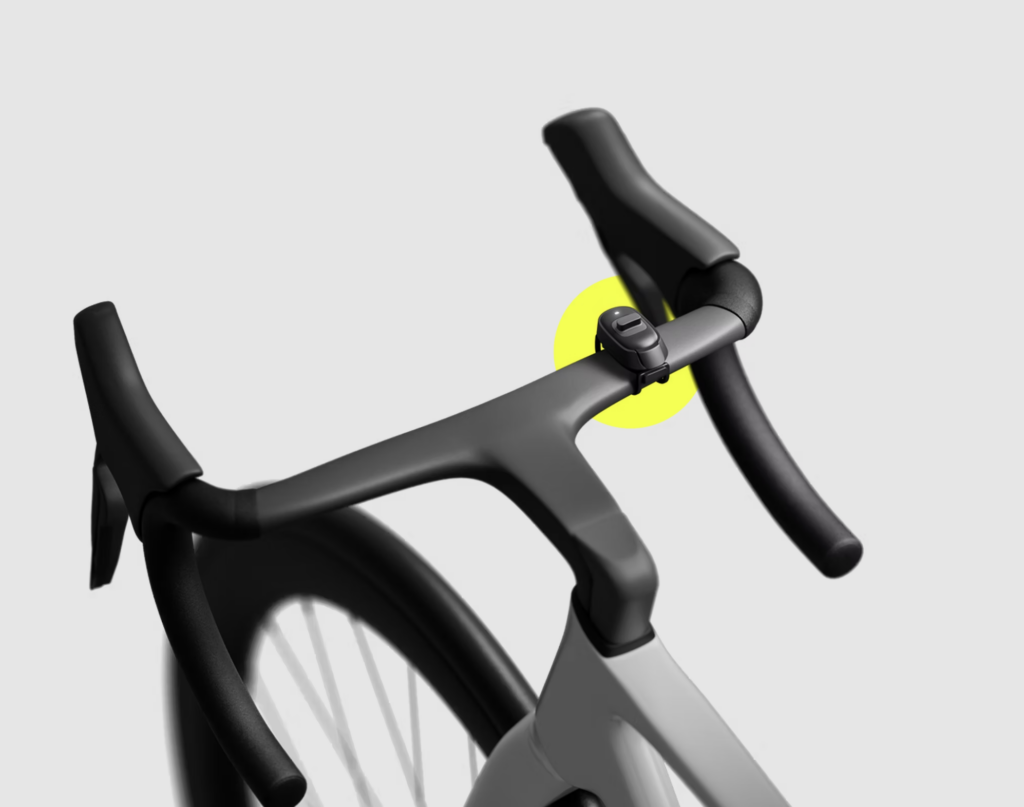
The magnetic wireless remote then attaches to the battery or your handlebar so there’s no need for a cable to the motor. The system also supports Strava and ANT+ integration.
Ready-made or build-your-own?
The One is a complete, ready-to-ride system, supplied as a carbon wheel fitted with a hub motor and battery, with a claimed total weight of 2.5kg. In comparison, the Swytch Max+ e-bike conversion kit adds around 3.6kg to a bike, with the power pack itself weighing around 2.1kg.
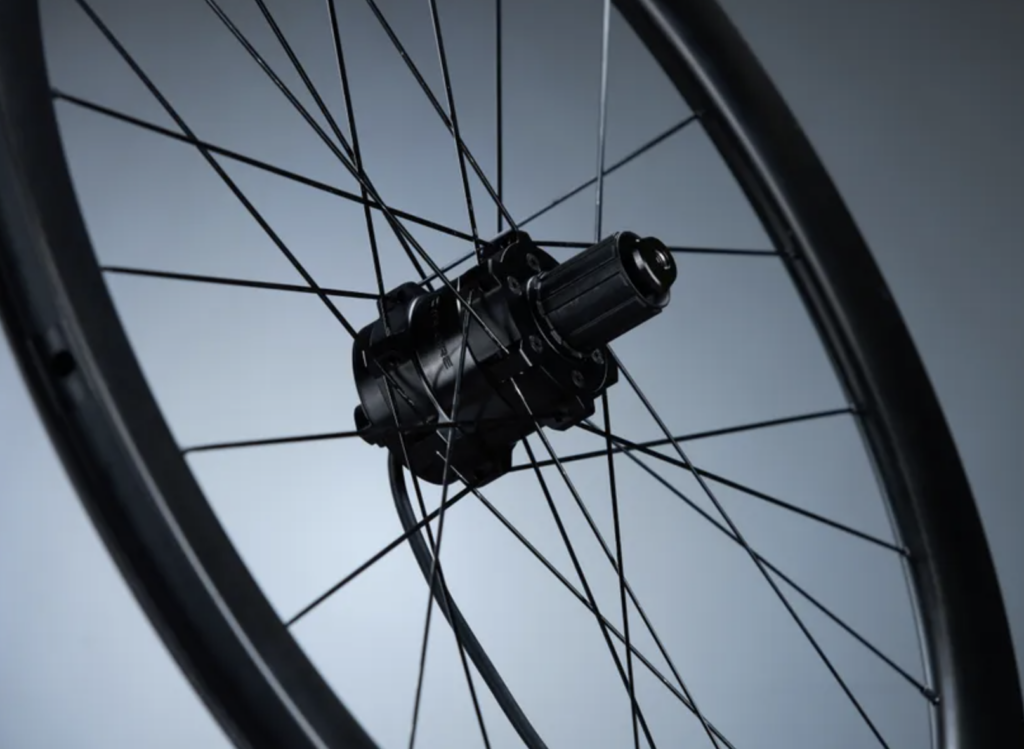
It’s compatible with disc brake bikes and the rim supports clincher or tubeless tyres, with recommended widths of 25-32mm. Therefore, if you’re looking to set this up on a gravel or all-road bike with wider tyres, the Cyplore Flex is likely the better option for you.
The Flex is a kit supplied as the hub motor and battery, designed to be built into a rider’s wheel of choice, with a claimed weight of 1.7kg. It’s compatible with both rim and disc brakes and a wider range of tyre options depending on the rim used.
As always, the prices on Kickstarter are advertised as heavily discounted over the eventual RRPs, should Cyplore’s products make it into full production. At the time of writing, the Flex can be reserved for $599 (~£444) with ‘Super Early Bird’ pricing for a 48% discount, and the One is priced at $779 (~£577) with a 49% discount. You can also get the One with a matching carbon front wheel and additional battery for $1,088 (~£806) – also a 49% discount over the RRP Cyplore is quoting.
Of course, if you’re interested, do read Kickstarter’s T+Cs thoroughly and be prepared to take some risk when backing something on it, or any crowdfunding platform. It appears there are plenty of backers who have faith in Cyplore to deliver, because the £7,555 crowdfunding target has already been obliterated on the day of its launch on the platform. The running total is currently at over £43,000 and rising fast at the time of writing, with 42 days left to go.
Let’s hope Cyplore doesn’t go the same way as some of the entries in our guide to the best, worst and wackiest cycling crowdfunders, and all being well we’ll be able to give it a go later in the year.
The Cyplore website can be found here, and the Kickstarter campaign is here.

















5 thoughts on “The “world’s lightest” e-bike conversion kit just launched on Kickstarter and has already smashed its crowdfunding target: Cyplore is aimed squarely at road and gravel bikes with a performance focus”
How is this a review? It’s basically an advertising pitch, uncritically copy pasting Cyclpore’s press release. Poor show.
It isn’t. The clue is the bit up the top where it says ‘Tech news’ rather than ‘Reviews’.
It isn’t a review as a moment’s thought would indicate, given that it’s a Kickstarter project that hasn’t yet been delivered. It’s a news report on a potential product and has appropriate caveats about things being “claimed” rather than reporting all claims as facts.
Although, the review does have a caveat around crowd funding – there should be more analysis and critique. I don’t get why you would sign up and commit £500 minimum for a product that hasn’t been made never mind tested in the real world. It seems a little underpowered with a suggested range of around 30 miles. If it does get made – I’ll wait for Gen 3 or 4.
23nm of torque is low for an EAPC. The fazua motor used by Boardman bikes and others is 40nm and that’s described as gentle assist