
When you think of bikepacking, you probably imagine either touring bikes laden with panniers filled to the brim, or sleek modern setups with frame bags and carbon fibre racks. But when Markus Stitz thinks of bikepacking, he thinks why not do something a bit different? Why not do it on an e-bike?
The idea of using an e-bike for longer rides isn’t anything new. In fact in Europe there’s an entire ‘trekking’ category dedicated to it. But in the UK, it’s not as common an occurrence – especially on something like the Tern Orox.
Stitz, a mountain biker, gravel rider, events planner, ultra rider, writer and published author, knows a thing or two about planning bike trips. He’d always wanted to do a winter-focused trip, so with the launch of the Tern Orox last year, he got planning and came up with two ideas: one in Canada, and one in Norway.
But why the Tern Orox? And why pick a time of year when most people swap the outdoors for the safety of Watopia? We spoke to him ahead of the launch of his latest film, which covers his Norwegian trip, to get some insight into the mind of one of the most intriguing riders on the planet.
“I think cargo bikes are seen as super useful, but because they’re big and heavy many people to tend to use them in towns or on shorter journeys. So I thought it would be really cool to do something which is a bit different to that – because they’re super capable bikes.
“And compared to a classic bikepacking setup, they open bikepacking up to a much larger group of people who maybe don’t want to kind of reduce themselves to the absolute bare minimum [when they] go on a trip.”
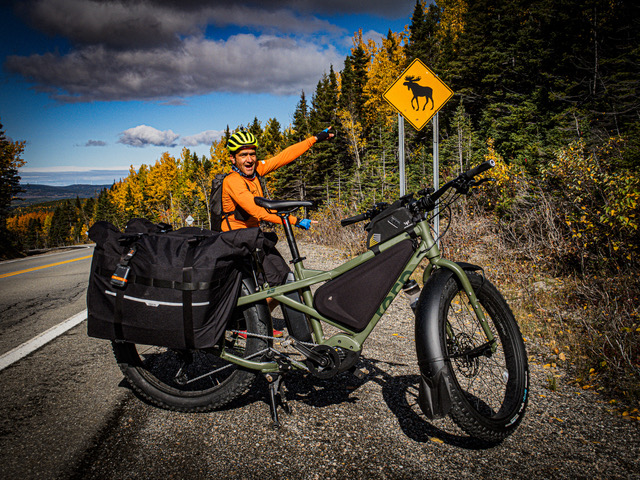
The Tern Orox, Stitz’s bike of choice, looks like something you’d see in rural USA – perhaps with some big game laid across the back. So how can a bike like that be considered a bikepacking option?
“When I saw the Tern Orox, I couldn’t really figure out who was going to use it. It took a bit of convincing, but then I had a I had a quick ride on it, and it started to make sense – it was fun. So I got in touch with Tern and they were keen to do a small project in Scotland.”
The small project in Scotland turned out to be an e-bikepacking adventure along the Moray Coast with fellow rider Jenny Graham. (We’ve included the video above). For Stitz, this became a great way to get to know the bike’s capabilities.
“It was interesting, because we were quite amazed by how well the bike handled. I mean there are things you need to consider – like you don’t want to have it falling on you and it has a much bigger turning circle – but apart from that, it was super nice to ride.”
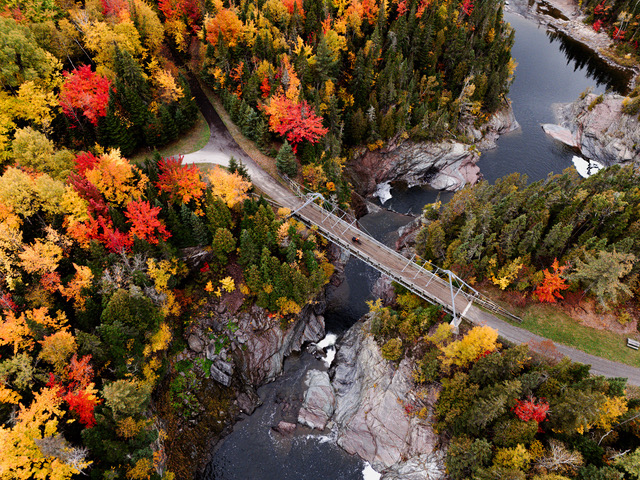
Stitz’s subsequent trip to Canada then served as something of a shakedown experience to help him understand the bike’s capabilities in preparation for a bigger adventure in Norway. One thing he discovered was that a second battery would be advantageous – although he was quick to point out the bike wasn’t impossible to ride without motor assistance.
“The trip in Canada, we didn’t ride the bikes to their full potential. They could have done more. Canada was more to see, ‘how much can you do on this bike?’
“I only had one battery on for this trip, so I thought, am I going to have to shorten the trip, or just use pedal power more?”
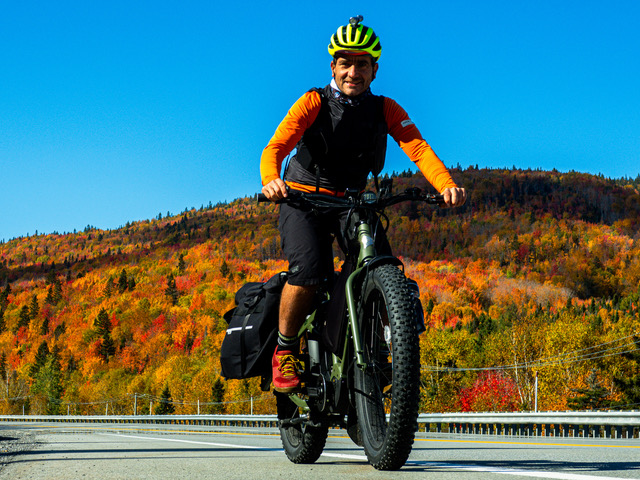
The Canada trip ended up being a casual 448 miles over the course of six days, starting in Quebec City before heading along the coast and dipping back inland to finish in Gaspe.
“I’m used to riding bikes, heavy bikes and long distances,” he added. “It’s much more pleasant to ride that bike with the motor, but it’s doable without it. But for Norway and riding in deep winter, it’s where this bike comes to life.
“I think what Tern kind of intended with the Orox is it’s a bike for people who live in an urban place, with countryside around and they want to mix up their riding. Go to the shops, drop the kids at school, and enjoy the terrain around them at the weekend.”
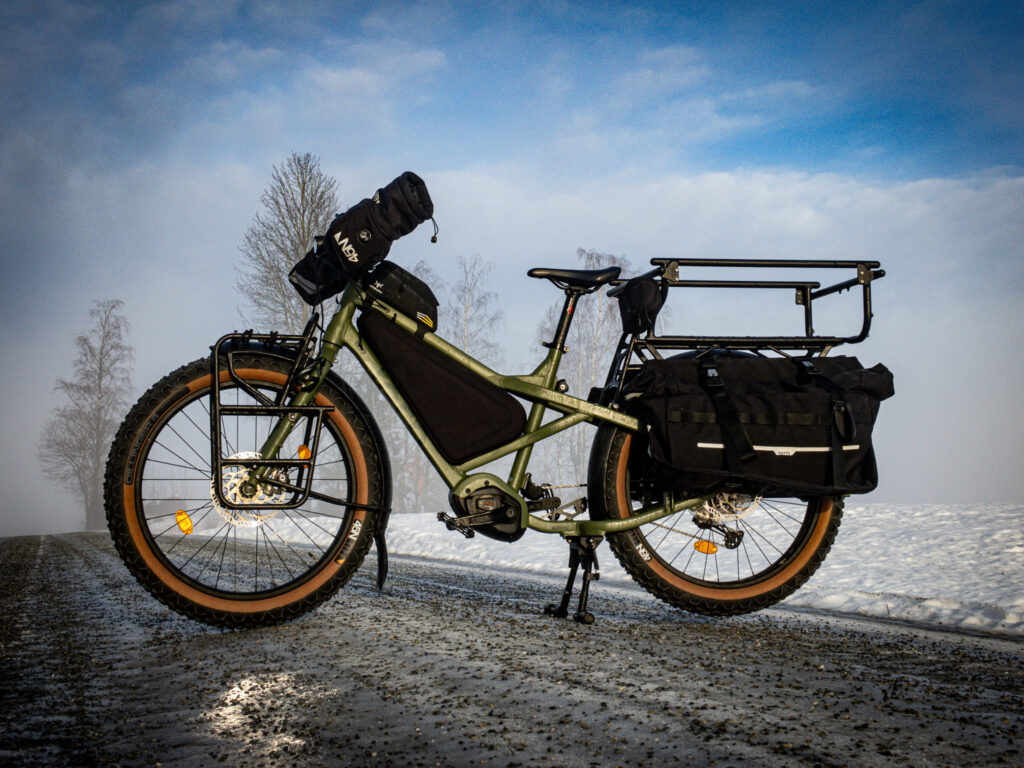
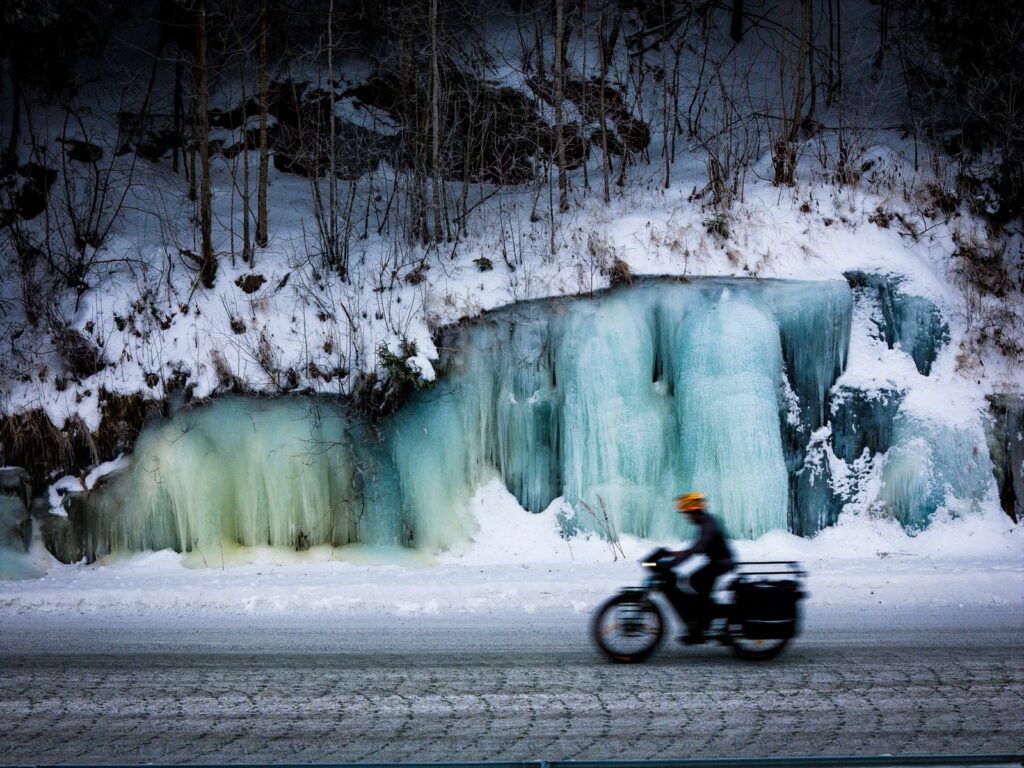
But riding in Scotland in summer is very different to riding in the Norwegian countryside in the depths of winter. And Stitz had to make a few adjustments to the Orox setup to make it a successful trip – one that would see him cover 421 miles, beginning and ending in Råholt.
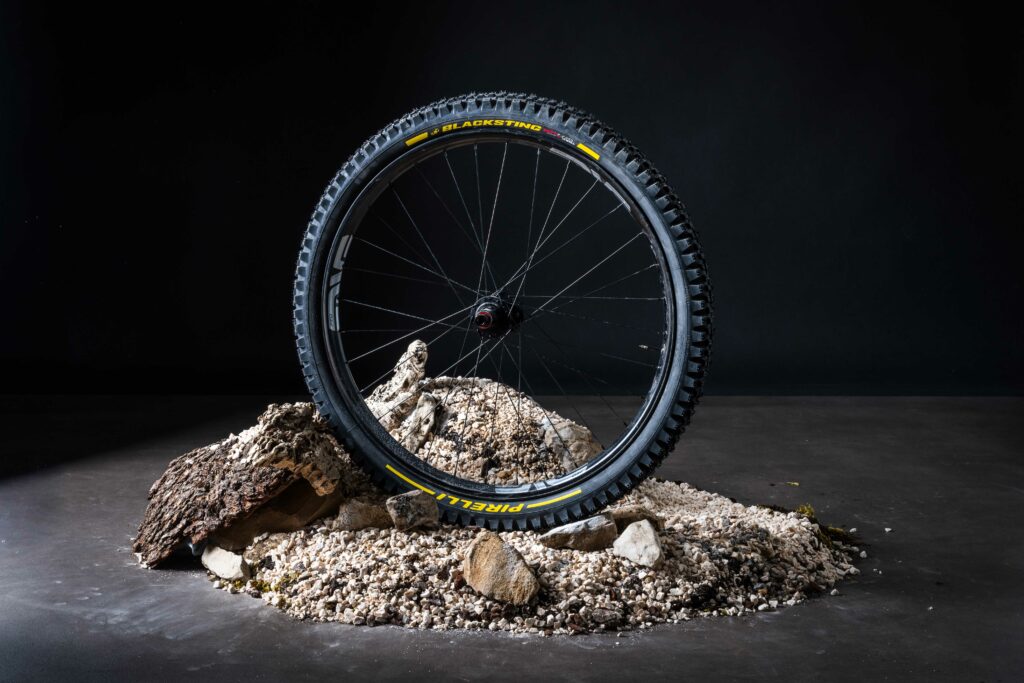
“I swapped to wider tyres, which is essential in Norway. It snows and then warms up, and then it freezes over. So basically, underneath any road, you’ve got a solid ice surface.
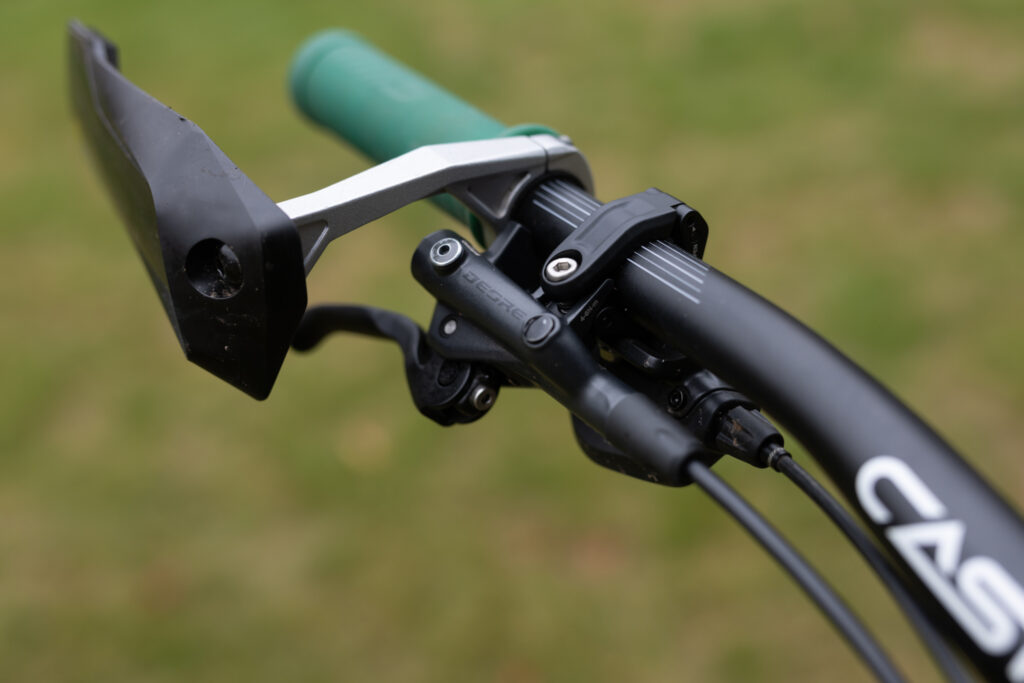
“The bike originally came with one battery, but I had two: a 725Wh, and 800Wh. The other significant thing – I put some hand covers on the handlebars, just to keep the cold out. I also used a GPS computer for navigation rather than the e-bike display, but the bike was generally well set up for travelling in winter.
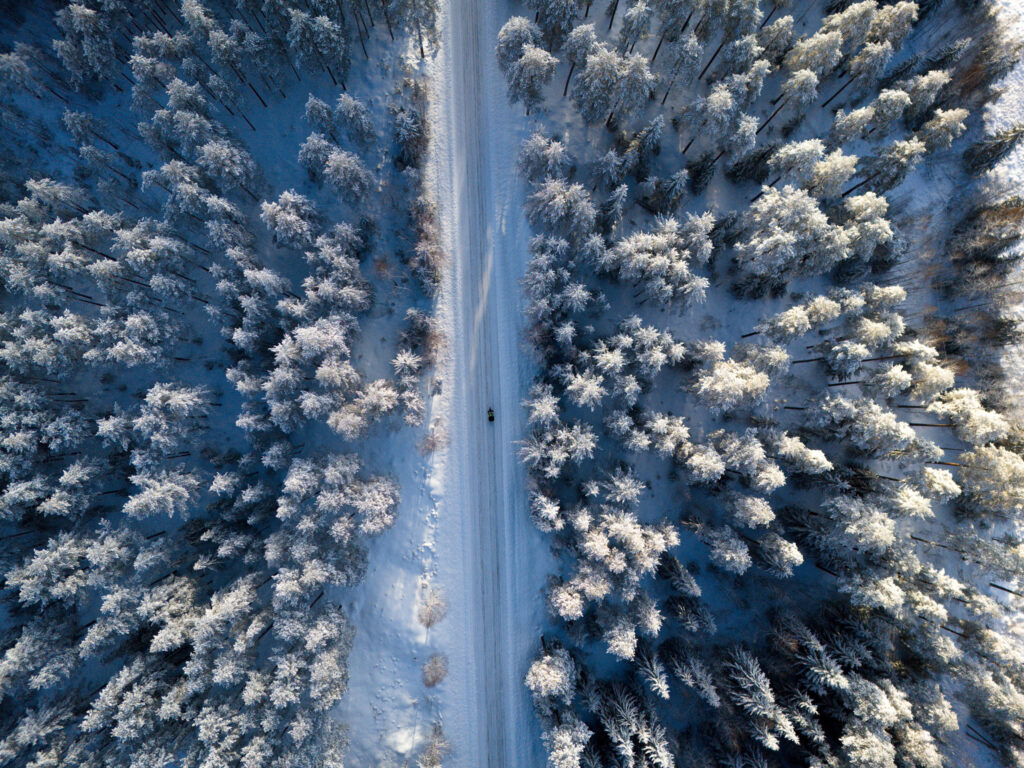
“One thing that stood out to me was that the lights on that bike are good enough to ride at night. And I think if you look at the bike, you think there’s a lot of stuff on there – but then you ride the Orox and you think all that makes perfect sense.”
For many of us, a winter adventure isn’t on the radar; it’s not even a thought – let alone a Norwegian winter. But for Stitz, he believes we should focus on the beauty of the different seasons.
“I think it’s time people talk about winter in a different light. Yeah the weather can be poor, but the landscape looks so different. If you look at the landscape in Norway now and what it looked like when it’s winter, it’s pretty magic.
“I think all those things can change people’s perception of various seasons.”